Lifestyle
Restaurateur Rose Previte shares recipes she learned from women around the world


TONYA MOSLEY, HOST:
This is FRESH AIR. I’m Tonya Mosley. One of the first lessons restaurateur Rose Previte learned early in life was what she calls the secret code – the ways her family used food to hold on to culture. Previte grew up in a small town in Ohio eating almost exclusively home-cooked Lebanese dishes that were passed down from her great-grandparents who immigrated to the U.S. But as she writes in her new cookbook, “Maydan: Recipes From Lebanon And Beyond,” it took a life-changing move to Russia for her to discover that following in her family’s footsteps was her calling. In her new cookbook, which Bon Appetit recently named one of the best cookbooks of the year, Previte shares some of her family’s tried and true recipes, as well as recipes from home cooks throughout the Middle East and Eastern Europe. Many of these recipes come from areas we often think of as conflict and war zones like Lebanon, Georgia, and Ukraine.
Previte owns four D.C. area restaurants – Compass Rose, which serves street food from around the world like Jamaican curried conch, Mexican tacos al pastor and Algerian vegetable tagine, the Kirby Club in Virginia, which specializes in kebabs, and the Michelin star-rated Maydan, which serves food from Lebanon and other parts of the Middle East. She also runs the neighboring cocktail bar Medina.
Rose Previte, welcome to FRESH AIR.
ROSE PREVITE: Thank you for having me. That was a kind introduction.
MOSLEY: Maydan is such a rich word because as we learn from you, it’s a word that carries across regions and languages and it means the same thing.
PREVITE: I find it a really powerful word. And, you know, ironically, it is an Arabic word that I learned in Kyiv, Ukraine, which seems like not a place where you would hear a lot of Arabic. But as I was sightseeing while my husband was working back in, like, I guess it was 2009, I just kept hearing everyone say meet at the Maydan, meet at Maydan. And I came to find out it was sort of the slang, you know, or the colloquial, local way of saying, like, the main square, which I believe is Freedom or Independence Square, technically, but generically it’s called Maydan. And so I looked into it a little bit more and realized in Tbilisi, Georgia, in Tehran, Iran, in all of these countries, the word is used in the exact same way to mean this kind of central gathering place. And I thought that was the power of what I wanted my restaurant spaces to be. You know, like where the food is very similar throughout a vast region but it’s actually all the same at the end of the day.
MOSLEY: In this cookbook, we not only learn recipes from home kitchens that span across the Middle East and Eastern Europe, we also learn your origin story, how you came to this idea of bringing home kitchen food from the world into a restaurant setting, so I think it’s best to start there because your journey started with a three-year stint in Russia beginning around 2009. And your husband is journalist David Greene, who folks may know as the former host of Morning Edition. At the time, he had gotten a job as a foreign correspondent in Russia. This was his dream job. But this is not – it was not part of your life plan.
PREVITE: Oh, no, no, no, no, no. Absolutely. I don’t know if any of my life plan went the way I expected after I met David, but (laughter) most of that is a very good thing, actually. We were living in New York City just one year exactly when he came home and said that there was an opening in the Moscow bureau. And nowhere in my whole life had I desired to live in Russia. But…
MOSLEY: Had you ever visited before?
PREVITE: Oh, heck no. No. I had done study abroad in the south of Spain, I traveled Europe and I had an amazing sense of adventure, and the travel bug had 100% bit me after that study abroad experience. So I wanted the adventure. I wasn’t quite 30 years old, we didn’t have kids, so logically, I could justify the decision, right? And, you know, I was also probably overly confident that study abroad had prepared me for Moscow because it didn’t. I assure you, nothing prepares you for that. And I also think I underestimated the difficulty of not knowing the language before we went. Nothing I anticipated – and probably that’s why we went, ’cause had I realized how hard everything would be, I might not have agreed.
MOSLEY: You would have said no right away.
PREVITE: Yeah.
MOSLEY: The thing, as well, was that you had a career that you were headed towards in public policy.
PREVITE: Oh, yeah. I was fresh out of grad school with, like, the vigor of, you know, a young person who thinks they can go out and change the world now that they’ve studied, you know, the law and policy. And that’s what I went to D.C. for in the first place was to change the world and fix things. And I felt policy school was going to be that way. And I had worked for just one year exactly with the New York City Council, was really enjoying it. I was a policy analyst. So yeah, it wasn’t exactly in the cards to get on an airplane to Moscow exactly a year after moving there.
MOSLEY: So you all were stationed there in Moscow. You and David also, though, while you were living there, visited lots of other places. I think more than 30 countries. And this is where most of your culinary discoveries happened. You write about how you and David would try to eat local foods wherever you went.
PREVITE: Always. And David has a stomach of steel. I should also give credit to that. He can eat anything. That was the greatest part. We learned a lot in Russia, but the fact that we were able to travel was really powerful. It was to places we would never have been like, oh, let’s go on vacation to Kazakhstan. No.
MOSLEY: Yeah.
PREVITE: Like, Americans rarely say that, right? But there we were, Kazakhstan, Belarus, parts of Central Asia, and then in the Middle East, which I didn’t travel to as a child, so it was very cool to start going to Egypt and Turkey regularly. So it was all around, yeah, like, a food-filled travel experience. When David wasn’t working, we would explore together and often get lost together. And, you know, this is – by the way, he has a black market iPhone. I don’t. This is on just the cusp of iPhone. So we’re still getting around with, like, maps and stuff.
MOSLEY: Oh, you’ve got, like, “Thomas Guide”-type…
PREVITE: Oh…
MOSLEY: …Maps.
PREVITE: …We’ve got our “Let’s Go” books. We’ve got all that because truly, we don’t have that access that we have now. So we were getting lost a lot. But what would end up happening is almost always, we would find some amazing place to eat and find directions but then, you know, stayed for something, some snack, and then get back on our way once we figured out we weren’t forever lost and we were going to get home, you know?
MOSLEY: You all had something called the kebab test…
PREVITE: Oh.
MOSLEY: …Where you would have a kebab, and it would tell you something about a place.
PREVITE: We have this theory that, you know, almost all the countries we went to had a kebab culture of some sort, and it was always tied to street food. And that’s why Compass Rose’s first menu was based on…
MOSLEY: Your first restaurant.
PREVITE: …Street food from – yes. I’m sorry, Compass Rose, which we opened in 2014 after getting back to the U.S. But it was a menu of street foods from around the world because that is – was David and I’s favorite thing. And that tended to be where our greatest memory was held was, again, in some street stall, rarely a food truck. Let me tell you, the places we go, food trucks are really a privilege and luxury. Like, most of the time, you’re just talking a grill or a fire on the side of the road.
MOSLEY: Like a stand.
PREVITE: Just a stand. Yeah. There’s nothing fancy about it like we have here. So I’m talking just grills, fire, sometimes a whole goat is just hanging and they’re cutting off slices of goat and throwing it on the fire. Sometimes it’s camel. We did that in Oman. But we ate all of it, and we couldn’t have been happier. And then always had, like, some memory, like getting lost or finding someone amazing to talk to. And it always came back to the food. But the kebabs, like, to me, they carry, like, the flavors of whatever country you’re in. So often, it’s whatever spices – like, when we were in Oman, it was tamarind. Tamarind rubbed and marinated shrimp, and tamarind was a flavor that, for example, in Lebanese cooking, we don’t use that often. So it was just a profile that I will always associate with that trip, with that experience with the guy who was grilling the shrimp, who we begged for the recipe, who was really confused why we would want it.
MOSLEY: Oh, really?
PREVITE: Yeah.
MOSLEY: When you asked, he thought…
PREVITE: Yeah. I’m just, you know, there isn’t, like, some big food culture, restaurant culture in a lot of these places. So for me to say I’m dreaming of opening a restaurant one day, I’d really love to know how you made this, it takes a minute, and then usually there’s an element of, you know, kind of surprise and then flattery that’s like, oh, OK, you like it so much you would bring it back to America and put it in a restaurant.
MOSLEY: Yeah.
PREVITE: And, you know, we had that experience over and over again. But I feel like, yeah, the kebab tends to be a real, you know, example of what you’re going to find when you dig deeper into the food culture of that country.
MOSLEY: Well, what’s interesting about your restaurants and this cookbook is that you all traveled all around the world, but your eyes are kind of set on Eastern Europe and the Middle East and specifically places where we consider them conflict zones. Where anytime those areas are brought up, it’s in the context of something that has happened there. But you’re drawn to those areas.
PREVITE: Definitely. And I think my sense of adventure is great. So that overcomes fear, often. And David, as a travel companion who’s gone into war zones for his entire career, is not afraid of anything, you know, so we were definitely not afraid to travel to parts of this region, like, you know, generally called the Middle East, where, you know, a lot of us are trying to get away from that terminology, but for purposes of the cookbook, it was definitely easier to use that to describe the region. But I like to say we traveled from, you know, Tangier to Tehran and from Batumi to Beirut.
So if you think of that region of the world, that’s where we concentrated a lot of our travels from – while we were in Russia and since we’ve been back in the States, I go repeatedly back to Lebanon and to Turkey. I’m dying to go back to Oman, but I haven’t been there recently. And then the Republic of Georgia, which a lot of times is not associated – right? – with the Middle Eastern food, but it is the crossroads of everything. And you will hear me talk about it and you’ll hear it in the book…
MOSLEY: It’s in the cookbook.
PREVITE: …Over and over again.
MOSLEY: Yes.
PREVITE: Yeah. I’m sorry. I’m obsessed.
MOSLEY: You have a love affair with Georgia.
PREVITE: And not a drop of Georgian blood. I mean, you know…
MOSLEY: Yeah.
PREVITE: …23andMe will confirm.
MOSLEY: What is it about the people and the places and the food?
PREVITE: It is such a beautiful place physically. But the people, the hospitality, the food and the wine are like nothing I’ve experienced. And now we’ve been to over 60 countries. And Georgia reminded me so much of Lebanon or Lebanese culture where it’s like our love language is food. We are going to invite strangers to our table. We’re not afraid of you. We want – regardless of the fact that you don’t know who we are because, like you said, of conflict. If – it was part of the Soviet Union for so long that so many Americans just lump it with Russia, and it couldn’t be more different.
MOSLEY: One thing that you write about so beautifully in this cookbook is kind of the realization that you had given up your dreams for your husband. And so I want to go into that moment because it’s what Russia represented for you in that moment of time. Was there a particular moment or culmination of moments while you were there in Russia that you realized I’m not sure who I am in this moment?
PREVITE: It was a culmination, but – and it happened slowly, you know, and I think it was slow because I think I went in thinking I’d figure out something workwise. I figured I would, worst case, bartend ’cause that – I was a 10-year bartender back in D.C., you know, I was like, there’s – I’ll figure it out. But as it became more and more apparent there was nothing I could do. I couldn’t get a visa. I couldn’t speak the language. I was starting to get, you know, the realization that I was a housewife ’cause we didn’t have kids. And while I was traveling, it’s like everyone says, the grass is always greener. You’d think it’s so romantic, and my girlfriends at home are like, wait, all you do is follow your…
MOSLEY: Go to different countries.
PREVITE: …Husband around traveling?
MOSLEY: Yeah.
PREVITE: What the hell are you complaining about?
MOSLEY: Eating wonderful food.
PREVITE: Yeah.
MOSLEY: Yeah.
PREVITE: I’m like, I know, I know, and this is an enormous privilege and I’m 100% recognizing that. But I’m a little worker bee. I just got out of school. I’d never not worked in my whole life, and because I grew up in a very patriarchal home, it was very traditional and we came from a very traditional background of women stay home and men work, I was determined that I was not going to follow that pattern, and I think that’s why it really, really got me when I figured out that that’s what I was doing. And I talk in the book about cleaning this chicken – and it’s true. I was in the kitchen with, you know, my phone to my ear talking to David, who’s in the office, about what he wanted for dinner. And I’m literally holding a whole chicken over a sink. And I’m looking at – and I look in the mirror, there’s this big mirror, and it’s dark because it’s winter. So even though I’m making dinner, it’s pitch black…
MOSLEY: It’s 4 o’clock in the…
PREVITE: …Because…
MOSLEY: …Evening. Yeah.
PREVITE: Sure is. It’s 4 o’clock, and I have no idea what time it is ’cause it’s never gotten light because it’s winter in Russia. And I see this reflection of myself – chicken in hand, you know, phone on my ear. And I had seen my mother in…
MOSLEY: You saw your mother.
PREVITE: …In this pose…
MOSLEY: You saw your mom’s reflection.
PREVITE: …So many times. And my mother is so beautiful and so amazing in so many ways, but I knew that she didn’t get her dreams of what she wanted her life to be because she was raising kids and following a very old-fashioned way of being. And I had been so determined. And there I was, looking at myself like, well, here you are.
MOSLEY: If you’re just joining us, my guest today is restaurateur Rose Previte. She has a new cookbook called “Maydan: Recipes From Lebanon And Beyond.” We’ll continue our conversation after a short break. This is FRESH AIR.
(SOUNDBITE OF MUSETTE EXPLOSION’S “SWING VALSE”)
MOSLEY: This is FRESH AIR, and today, we’re talking to Rose Previte, owner of four restaurants and writer of a new cookbook called “Maydan: Recipes From Lebanon And Beyond.” Previte’s restaurants include the Kirby Club in Fairfax, Va., and the D.C.-based Michelin star-rated Maydan.
There was this important trip that happened near the end of your stint. You and David traveled the full route of the Trans-Siberian Railway, which – let me get this right – it spans 6,000 miles.
PREVITE: Yes.
MOSLEY: I bet a lot of contemplation about life and purpose happened with you on that train trip.
PREVITE: It comes full circle. This is, like, a full year – from the chicken moment to the train is probably, like, a full year of brooding – right? – because it was toward the end of the trip. I was really antsy to go back to work at this point. And then David says, my finale story is going to be this train from Moscow to Vladivostok, and it’s the length of the largest country in the world. And we’re going to take the regular old train. And so I…
MOSLEY: You got to describe this train.
PREVITE: I mean…
MOSLEY: But anyway, yeah.
PREVITE: There – surprisingly, I think everyone sees the vision of the train as cold. What’s funny is it’s below freezing every single day. Not one day did it ever get above freezing that we’re in Siberia in December in 2011, OK?
MOSLEY: So you’re wearing – what are you wearing on the train? Your full…
PREVITE: Well, by this point, I figured out what kind of winter coat. So, yeah, we’re all bundled up. But the train itself is actually very hot because it’s fueled by coal. It’s very warm. There’s a samovar full of water at the end of every train car. So the one gift the train gives you is constant hot water. So we’re eating, you know, ramen noodles and stuff like that, because the train car that has the dining car that has this huge menu actually turns out to have none of the food that’s on the menu. And it ended up being a joke with us because we – you know, after days – we’re talking, like, you go 60 hours without getting off the train, right?
MOSLEY: Yeah.
PREVITE: And the only thing you have to look forward to is the meal car. So we’d go down regardless of what train we were on because we would get off. We took three weeks to take this trip. You can do it in four days if you don’t get off at all. But we’re getting off in villages. We took three weeks to do it, so we were on different trains. But the one thing that every train had in common – and as a food person, you could understand my utter dismay – was a completely wretched food car. And there’d be this elaborate menu, as thick as the Bible.
MOSLEY: And you couldn’t get anything on it.
PREVITE: No.
MOSLEY: What could you get?
PREVITE: Borscht. You could get borscht.
MOSLEY: And you have to describe what that is.
PREVITE: I mean, the only thing they had was borscht, and we still laugh about it because we – like, chicken Kyiv, stuffed cabbage. We’d point to all these beautiful things, and they’d say, nyet, nyet, nyet – just no, no, no in Russian over and over and over. And then finally they’d say borscht, which is a beet-based vegetable soup. You can add meat if you want, but oftentimes on the train there was no meat. It was just vegetables in, you know, beets basically, so this red broth. And while good at first, it gets real, real old. Like, I couldn’t eat beets when we got back to the States for a couple of years. Like, it was memory of these long journeys and the just complete disappointment of thinking that you were going to get a nice hot meal, and all you would have was borscht.
So that was the state of the train – lots of tea, lots of ramen noodles. You would get off for a minute maybe at a stop, and you could buy, like, sausages or these stuffed baked goods. They were stuffed with potatoes or cabbage or whatnot, you know, on the side of the train tracks or something when we could jump off for a few minutes. But it really wasn’t enjoyable because it was freezing wherever you were. So to get off, it was like a shock of cold, and then you’d get back on the hot train, so…
MOSLEY: You did have these hosts though. You’d stop, and…
PREVITE: Oh, yeah.
MOSLEY: …People would host you. So what were some of the things that they fed you when you would stop at these homes?
PREVITE: It – and that’s the beauty. And that’s where I wanted to make the distinction between Moscow, because when we were out in – you know, deeper into Russia, into smaller towns and villages, we were very welcomed. People were very friendly. You know, David’s approaching them as a journalist, so often we would just be talking to strangers, but they would never just leave it at, I’m going to do this interview. They would always…
MOSLEY: They would always make you something.
PREVITE: …Invite us into their houses. Yeah. And so we were getting these beautiful pickled tomatoes, pickled cucumbers, pickled anything and vodka. Like, there’s really – that stereotype is real. Everyone did give us vodka. But again, what is in the heart of all of these stories that I’m telling you? It’s always food, and that I carried right back on to the train. And that started to bring me back to, you know, my somewhat angry, angsty, you know, musings about not knowing what to do with my life ’cause now we’re on the cusp of going back to the U.S. I haven’t worked in three years. We’re not moving back to New York. We’re moving back to D.C., where I hadn’t even worked a year before that. So now I’m, like, looking at five years of nothing on my resume and not knowing, you know, what was going to happen. And truly, those many, many days of frozen tundras and little wooden houses covered in snow – I mean, that’s what you’re looking at out the train window.
MOSLEY: As you’re looking out the window.
PREVITE: And again, no iPhone, and even if we did, there’s no charge, so, like, you can’t even charge your devices. There’s no electricity. So we are just thinking and talking and thinking. And that is really – if you’ve already been kind of musing on something, if you really want to hit it home, hit home, you know, the question you’re asking yourself, sit on the Trans-Siberian for 60 hours at a time over three weeks, and you will start to have clarity. And I realized, like, food was such a part of my life. By denying myself, you know, even contemplating how to make a career out of it, I was kind of denying part of myself.
And when I started to think about, you know, my mom, after all those years of taking care of us, she finally, at 60 – six-zero – years old, got her own restaurant, and she did finally use food to propel her dream of having a restaurant and start to feed the entire community. And she’d been doing that out of our house while she catered, you know, just from her kitchen growing up. But for 10 years, she did have her own business. And I saw her pride in that, and I saw her success, and it warmed my heart so, so much. But what I felt bad about was she got it so much later in life that she didn’t get to enjoy it.
And I had always been very, I think, conservative or not trusting myself up to this point. So this was a moment of also trusting myself that I can make a career out of food. And everyone knows the statistics on restaurants. Like, everyone knows that it’s not a good business to go into if you want any kind of stability or work-life balance. So most of the odds are against you. But in that moment, I was like, you know what? Why don’t I just do it now? That’s what I’m going to do. I’m going to go back to America, and I’m going to at least explore how you start your own business in food, having no idea how, but I would figure it out.
MOSLEY: Our guest today is Rose Previte. She’s a restaurateur with four restaurants in the Washington, D.C., area. She has a new cookbook called “Maydan: Recipes From Lebanon And Beyond.” More after a break. I’m Tonya Mosley, and this is FRESH AIR.
(SOUNDBITE OF AARON GOLDBERG AND GUILLERMO KLEIN’S “AIRPORT FUGUE”)
MOSLEY: This is FRESH AIR. I’m Tonya Mosley. And if you’re just joining us, my guest today is restaurateur Rose Previte. She’s the owner of three restaurants and the writer of a new cookbook called “Maydan: Recipes From Lebanon And Beyond.” Previte’s restaurants include the D.C.-based Compass Rose, which serves street food from around the world, the Kirby Club in Fairfax, Va., and the Michelin-starred Maydan, which specializes in North African and Middle Eastern cuisines. Previte is also the co-founder of the wine company Go There Wines. Her love of Lebanese food comes from her upbringing. Her great-grandparents migrated from Lebanon, and she grew up with her mother cooking Lebanese dishes almost seven days a week.
Rose, one of the really interesting threads in your book is what you call the inherited immigrant experience, and I was really drawn to that way of describing it because as Americans, we tend to separate ourselves from our immigrant heritage after a few generations. We separate ourselves and really don’t connect it to our current-day identity. Did you ever have a phase in life where you pulled away from your heritage?
PREVITE: You know, interestingly enough, no, because I think my parents’ generation did because of when they grew up. They grew up in civil rights era Detroit – my mom did – and it was a time of danger to look different or not American. And that was very much what my mom’s Lebanese family was. And so Arabic was taken away. Like, don’t speak this in school. Even though my mom grew up with her grandparents and as a kid did speak it, it was taken away for safety. And so their generation pulled away. But they kept it behind closed doors, you know, in the home. It was always the food. And then in moving us to a small town in Ohio where I grew up…
MOSLEY: Ada, Ohio.
PREVITE: Ada, Ohio, population 3,000. It is not a suburb of anything. The closest cities are Dayton, that’s about an hour away. Toledo was about an hour and a half away. And there, they knew they were going to have to overcompensate because there were no Lebanese restaurants until you got to Toledo…
MOSLEY: Yeah.
PREVITE: …About an hour and a half away. So we were going to have to – they were going to have to go on overdrive of passing down culture, and food was the way that they did it. And it was very much – my mom did an amazing job of making sure we were proud of it, even though it was quickly realized that we were different. That was part of our identity and something to be proud of. And I grew up in a place that while very – we were very different, we weren’t made fun of. I was very fortunate. Like, we weren’t made fun of for being different. We always felt a little odd, especially with…
MOSLEY: You felt other.
PREVITE: We felt other. We had the garlic-smelling house and we had, you know, we went to school with our clothes smelling like food. Nobody else’s did. Our lockers – and we had all those stories, but we were very welcomed. And by high school, it was, like, we were the house to eat at. Like, that’s definitely where you went for the good food, you know?
MOSLEY: What kinds of stuff would your mother make?
PREVITE: Oh, my gosh, I mean, all of the favorites. I mean, back then – this is like ’90s Ohio. You were drinking Mountain Dew and pizza at other people’s birthday parties.
MOSLEY: (Laughter) Yeah.
PREVITE: But at ours, we were either doing, like, authentic Sunday sauce, which, let me tell you, includes pig’s feet and things like that. That’s, you know, if we did the Italian stuff. But my mom would do, you know, kousa, like, the cored-out squash that are stuffed with lamb and rice, which is one of the recipes in the cookbook. Tabbouleh instead of just a green salad. We’d have a parsley tomato bulgur salad. You know, that was how the messaging was. This is who you are, and we’re not going to hide from it. In fact, we’re going to present at all of these parties…
MOSLEY: The teenagers were eating well, huh?
PREVITE: They were eating well. And I have three brothers, so there was constantly food. There was a lot of big boys who were eating in our house. And, you know, there was always food on the table, regardless of what time you stopped by. And we just came to identify pride with it. And again, because we weren’t – you know, we were accepted in the community, it was probably a little bit easier. And I know that’s harder for people who do deal with bullying and things like that. But we didn’t. And very quickly, we almost became cool for it. It’s still a little odd to be called exotic in high school, but that was a word often…
MOSLEY: You were called exotic.
PREVITE: I was called exotic. Other things, as well. But again, often by just – almost like people who didn’t know they were saying something inappropriate. Or asking what I was, that was, like, a daily basis. Like, well, what are you? Because you couldn’t be placed, exactly. So I quickly had to become, you know, articulate in how to explain where I’m from and why.
But that inherited immigrant experience was like, but I’m not, you know, myself, internally, I felt guilt because I knew I wasn’t born there. I knew my mother wasn’t born in Lebanon, but I was claiming this history and this culture and wanting to make sure that was OK because I hadn’t suffered through the immigration that my grandparents had gone – you know, generation had really suffered through. But so much of what they went through was passed on. Like, my mom grew up with her grandparents who were the ones that came from Lebanon. And she – you know, the hard work, the poverty was inherited, you know? And there’s just certain traits that are passed down to you from that that I felt were a huge part of my life and defined who I was. So it was kind of saying it’s OK for me to own this.
MOSLEY: You all would go to Detroit often, though. Your parents, your mother in particular, is from Detroit. Your aunts and uncles lived there – your grandparents. And Detroit has a very large Lebanese population. It actually does hold the distinction – or it held for a long time as having the largest Middle Eastern population outside of the Middle East. So you can get all types of food there. Lebanese food is just a regular thing that you can get just about anywhere. What did visiting Detroit as a kid mean to you?
PREVITE: Oh, well, you know, I mean, it was so fun ’cause all our cousins were there. So there was cooking, there was family, and then there was the stocking up. Because we lived a little bit farther away, for my mom to keep catering and keep Lebanese food on our table, we had to go to all the stores in Detroit and also in Toledo, and I was shocked when I got to D.C. and I couldn’t find the Lebanese stores that seemed so prevalent in, you know, Toledo and in Detroit. So those little trips were, like, a huge part of my upbringing and such a fun part of it.
MOSLEY: Let’s take a short break. If you’re just joining us, my guest today is restaurateur Rose Previte. She has a new cookbook called “Maydan: Recipes From Lebanon And Beyond.” We’ll continue our conversation after a short break. This is FRESH AIR.
(SOUNDBITE OF GILAD HEKSELMAN’S “DO RE MI FA SOL”)
MOSLEY: This is FRESH AIR. Today we’re talking to Rose Previte, owner of three restaurants and one cocktail bar and writer of a new cookbook called “Maydan: Recipes From Lebanon And Beyond.”
So I want to talk just a little bit about some of the dishes in the cookbook and some of the things you discovered just through your travels. Like, there’s a recipe in your book for something really simple – tomato cucumber salad. But you write how you don’t know if there’s a country in the world that does not have a version of this salad. Did you start to see patterns or similarities like this as you moved through these different regions?
PREVITE: Oh, for sure.
MOSLEY: I’m thinking about the bread too.
PREVITE: Yeah, the bread, the kabobs. The tomato cucumber salad was just on repeat with slightly different spices or oils. You know, the Georgians put walnuts in it. Lebanese put mint in it. You know, it was just, like, places that seemed very different but did have a similar dish. In fact, our bread – and the recipe’s in the book – but is the flatbread that we use at Maydan. People always try to call it, like, pita or naan. And I’m like, no, no, no, no, those are different. And we actually don’t title it. We just call it flatbread because the recipe was inspired by multiple places and even the journey of bread that’s made in a tandoori-style oven. So we use a clay oven that’s fueled by fire.
MOSLEY: Yes.
PREVITE: We don’t use a commercial oven. It’s kind of crazy, actually. But it works.
MOSLEY: Do you have a favorite dish that your mom would make for you when you were a child?
PREVITE: I mean, the kibbeh nayeh. It’s basically a lamb tartare in more common terms.
MOSLEY: And how do you make it?
PREVITE: You have to go to, in my world, the Lebanese butcher or a halal or Middle Eastern butcher to get a very fat-free grade of finely ground lamb. So the fat content is basically the important thing. You got to take most of it out. So it’s like a very pure, very lean lamb that’s cut with a certain die. And then bulgur, which is the basically, you know, wheat germ, as it’s referred to. That’s basically what makes kibbeh kibbeh. You can put bulgur in potatoes – that recipe’s in the cookbook – in pumpkin. As long as there’s bulgur in Lebanese cooking, it is, at that point, kibbeh.
So kibbeh nayeh is raw lamb. Our recipe is very basic. It has ground onion in it, you know, salt and pepper. It’s served with olive oil. It’s served with raw onions and pita – what you guys – what’s called pita bread. We called it Syrian bread growing up – but Lebanese flatbread. And you make a bite with the onion and the oil and the ground lamb. And it’s a beautiful dish which – my family is Syrian Orthodox. So as a Christian family, we also put a cross. We make a cross in the middle because, my mom always told me, it was to pray that no one got sick on the raw meat. So you pray and you put a cross, and that’s how it’s presented to you. Sounds a little weird, but I think the nostalgia of it and just the flavor is super unique. And we only did it for special occasions. You know, it wasn’t an everyday dish. And so I also associate it with really special holidays.
And when I traveled in Lebanon, though, I’ll tell you, I went to both my grandfather’s village and my grandmother’s village. They actually make this dish very differently. And so…
MOSLEY: Does it taste different?
PREVITE: I acknowledge that in the book, actually.
MOSLEY: Yes.
PREVITE: There’s the recipe from Bishmizzine, which is northern Lebanon, where my grandfather’s from. They use a lot more spice, and they serve it with a pepper sauce that’s almost like a harissa – so different than the way my mom’s family does it, which is just way more flavor of the ingredients and the raw meat, not covered up by any spices. And the harissa was just, like, a – mind-blowing to me. We never did that. But my grandfather’s family did. And probably someone from North Africa who immigrated at some point to Lebanon brought that to this village, and everyone just from this village makes it that way.
MOSLEY: You have a section in the book where it’s, like, a list of maybe a dozen things that we should all have in our pantry if we want to delve into these recipes. Can you give us a simple recipe to use for something like za’atar, which is an ingredient that is typical in Lebanese food?
PREVITE: I mean, the most simple is just what we call talami bread, which is just dough that has some olive oil on top of it and then sprinkled with za’atar. So I’m not pushing you in the book to make your own za’atar blend. That would be hardcore, and you can do it if you want. But there are amazing mixes available in a lot of stores now, even in not specialty Middle Eastern stores. Za’atar is a plant. It, in itself, is an herb, but it’s blended with a bunch of other herbs. And that is, you know, the beauty of the region too. It’s the same name, but different regions have different ones. Like, there’s Lebanese, Palestinian, there’s even Aleppo blend. So specifically from Aleppo – not just from Syria, but from Aleppo.
So it’s a very, like, regional specialty that families are very proud of. So don’t go making your own. You can buy a lot of really good ones. And all I have to do – and I just did it at Christmas with my mom – is she had some – she had bought some pita that she decided was not acceptable at the local grocery store. So we cut it up, we put olive oil on it, we spread za’atar – we mixed it with olive oil and za’atar, threw it in the oven and made za’atar chips. And then you can use those for any of the dips. It makes your hummus a hundred times more exciting. You can just put some olive oil – I recommend unfiltered Lebanese olive oil – on top, and then you sprinkle za’atar on your everyday grocery store hummus, and it just makes it so much more exciting. I hope you use our recipe to make your own.
But za’atar changes everything. And so I think keep it in your pantry, even if you’re not making an elaborate recipe. You have old dough that you didn’t – you had left over from the bread recipe, or you made homemade pizza and you had some left over. Use that za’atar. Throw it over olive oil, stick it in the oven and it will taste like you spent hours making it.
MOSLEY: Food is political – what we choose to eat, who has access to it. I mean, it’s a story shaped by economics and geography and immigration. These are all things you’re thinking about.
PREVITE: All of the time. And I think, you know, the moment it all collided was in my realization, living in Russia, that I couldn’t actually get Georgian wine at the time. It was embargoed. At the time, Russia was punishing Georgia for a skirmish that they had had a few years before we got there. So all the expats are like, you got to have the Georgian wine. It’s the cheapest, highest quality wine you’ll ever have. But, oh, sorry, you can’t actually get it here right now.
MOSLEY: You can’t – access to it.
PREVITE: And once I dug in to, like, the politics of it, I’m like, this is crazy. But then I thought, for the first time after policy school, oh, my God, wine is geopolitical? This is all my worlds crashing together. You’re punishing this country because the only people buying Georgian wine back then were Russia. And it really affected the economy. The bright side is it caused Georgia to have to start selling to other countries, which is now why we can get it so easily, and a lot of people in Europe can get it so easily.
MOSLEY: Oh, interesting.
PREVITE: But that was a shift out of necessity because they were – like, the wine industry was decimated once Russia did that. But then I said to myself – that’s where the policy person came in and thought, well, when I open this restaurant, I’m going to sell as much Georgian wine as humanly possible. It’s my Putin protest. And, you know, I have to say, I was very proud. Compass Rose, for the first few years, did sell more Georgian wine than any other restaurant in America. But then as we traveled, I realized Georgia’s not the only place. They have this 8,000 years of winemaking that nobody knows about, because in the U.S. – in the Western markets, we’re always like France and Spain and Italy.
MOSLEY: There’s a certain place. Absolutely, yeah.
PREVITE: That’s it. There’s, like, three European countries – that’s it. And I was like, wait a second, Lebanon, my ancestral homeland – full of amazing wine that is very hard to access in the United States. And so I realized this is a political problem because why don’t we – because of geography, because of politics, because of socioeconomic reasons, because of war? That’s the only reason we don’t know about Georgian wine or Lebanese wine. And so, yes, I’ve made it partially my mission to combine my, you know, policy – combine my food and policy background in this way.
MOSLEY: There’s so much conflict happening in these regions at this very moment. I’m thinking about the origin of Maydan for you came from a visit to Ukraine and you hearing that term. How do you reconcile all of that as you’re trying to provide joy, a space where people are consuming food that comes from these places, while also holding space for people who are really dealing with terrible things?
PREVITE: No, from Day 1 of opening Maydan, my hope was to welcome people into the space the way people had in the countries that we visited. So our opening team went to Tunisia, Morocco, Lebanon, the Republic of Georgia and Turkey. Those were the five countries where we did a research trip. A lot of countries you do associate with conflict, and we had the absolute opposite experience, right? We could not have felt safer. We could not have felt more welcomed.
And so Maydan’s intention from Day 1 was to extend that hospitality and again inform people that the places that they only associate with things like the Arab Spring or communism actually have people just like us trying to be just like us, which is safe, and care for their families and feed their families. And, you know, food to me has always been that equalizer, the thing we all need. And what we hope with the cookbook and what the restaurants are always, you know, trying to do, even in the hardest of times like we’re in right now, is to continue that message of, like – again, back to the obligation that I have to keep telling people, you know, about these beautiful places I was fortunate enough to see and to try to make them seem more approachable through the food.
MOSLEY: Rose Previte, thank you so much for this conversation and this cookbook.
PREVITE: No, I appreciate you letting me have it. Thank you for listening.
MOSLEY: Rose Previte’s new cookbook is called “Maydan: Recipes From Lebanon And Beyond.” Coming up, we remember actor Tom Wilkinson, who died on Saturday at the age of 75. This is FRESH AIR.
(SOUNDBITE OF TOMMASO / RAVA QUARTET’S “L’AVVENTURA”)
Copyright © 2024 NPR. All rights reserved. Visit our website terms of use and permissions pages at www.npr.org for further information.
NPR transcripts are created on a rush deadline by an NPR contractor. This text may not be in its final form and may be updated or revised in the future. Accuracy and availability may vary. The authoritative record of NPR’s programming is the audio record.



Michael B. Jordan plays twin brothers Smoke and Stack in Sinners.
Warner Bros. Pictures
hide caption
toggle caption
Warner Bros. Pictures
Ryan Coogler’s supernatural horror stars Michael B. Jordan playing twin brothers who open a 1930s juke joint in Mississippi. Opening night does not go as planned when vampires appear outside. “In a straightforward metaphor for all the ways Black culture has been co-opted by whiteness, the raucous pleasures and sonic beauty of the juke joint attract the interest of a trio of demons … they wish to literally leech off of the talents and energy of Black folks,” writes critic Aisha Harris. The film made history with a record 16 Academy Award nominations.
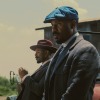

We asked our NPR audience: What movie would you recommend to someone who loved Sinners? Here’s what you told us:
Near Dark (1987)
Directed by Kathryn Bigelow; starring Adrian Pasdar, Jenny Wright, Lance Henriksen
If you want another cool vampire movie with Western kind of vibes, check out Kathryn Bigelow’s Near Dark — super underseen and kind of hard to find, but really gritty and sexy and another very different take on what you might think is a genre that had been wrung dry. – Maggie Grossman, Chicago, Ill.
30 Days of Night (2007)
Directed by David Slade; starring Josh Hartnett, Melissa George, Danny Huston
It follows a group of people in a small Alaskan town as they struggle to survive an invasion of vampires who have taken advantage of the month-long absence of the sun. Both this and Sinners revolve around a vampire takeover and the people’s fight to outlast the “night.” – Nathan Strzelewicz, DeWitt, Mich.

The Wailing (2016)
Directed by Na Hong-jin; starring Kwak Do-won, Hwang Jung-min, Chun Woo-hee, Jun Kunimura
In this South Korean supernatural horror film, a mysterious illness causes people in a quiet rural village to become violent and murderous. A local police officer investigates while trying to save his daughter, who begins showing the same disturbing symptoms. The film blends folk horror, religion, and psychological dread, exploring themes of faith, evil, and moral weakness. Like Sinners, it centers on a supernatural force corrupting a close-knit community, builds slow-burning tension, and examines spiritual conflict and human frailty. – Amy Merke, Bronx, N.Y.
Fréwaka (2024)
Directed by Aislinn Clarke; starring Bríd Ní Neachtain, Clare Monnelly, Aleksandra Bystrzhitskaya
In this Irish folk horror film, a home care worker, Shoo, is assigned to stay with an elderly woman who’s convinced she’s under siege by malevolent fairies. Like Sinners, Fréwaka blends folk traditions and social commentary with horror. The social failures Shoo copes with (untreated mental health issues, religious abuse) are just as frightening as the supernatural forces. – Kerrin Smith, Baltimore, Md.
And a bonus pick from our critic:
Ma Rainey’s Black Bottom (2020)
Directed by George C. Wolfe; starring Viola Davis, Chadwick Boseman, Glynn Turman
This is an adaptation of August Wilson’s play about a legendary blues singer (Viola Davis) muscling through a recording session with white producers who want to control her music. Chadwick Boseman’s blistering in his final role. – Bob Mondello, NPR movie critic
Carly Rubin and Ivy Buck contributed to this project. It was edited by Clare Lombardo.

The tiny town of West Goshen, Calif., was exactly the kind of place that community solar was designed for.
Near Visalia, most of its 500 residents live in mobile homes, where companies won’t install rooftop panels without a solid foundation. And until recently, they used propane for heating and cooking, with price fluctuations in the winter posing hardships for low-income families.
Community solar, in which residents get a discount on their bills for subscribing as a group to small solar arrays nearby, was designed to help low-income residents, apartment dwellers, renters and others who can’t put panels on their own roofs.
Over the last 11 years, New York, Maine, Minnesota, Massachusetts and other states have built thriving community solar programs. But California has built, at most, only 34 projects since 2015, and experts say that’s a generous accounting.
“We’ve had community solar for a dozen years, and it simply has not produced anything of scale and anything of note,” said Derek Chernow, director of Californians for Local, Affordable Solar and Storage, a developer trade group that’s pushing to get a more robust program off the ground. “Projects don’t pencil out.”
The West Goshen residents were among the lucky few, becoming part of a community solar project in 2024.
“It has kind of allowed us to kind of breathe a little bit,” said resident and community organizer Melinda Metheney. Her bill has dropped by about $300 in the summer months, thanks to the 20% community solar discount, stacked with other low-income discounts and clean energy incentives, she said.
West Goshen’s panels sit about 10 miles out of town, in a field surrounded by farms. Energy and climate experts agree California must add much more clean energy to its grid, some 6 gigawatts by 2032, the California Public Utilities Commission said in a new plan last week.
Assemblymember Christopher M. Ward (D-San Diego), who in 2022 authored a bill to create a more effective community solar program, said the state needs to double its annual solar installation rate to reach that goal and is not on track to do that using only large utility-scale solar farms and individual rooftop arrays.
“We need mid-scale community solar,” he said.

Energy and climate experts agree California must add much more clean energy to its grid, some 6 gigawatts by 2032, the California Public Utilities Commission said in a new plan last week. Above, solar panels at Extra Space Storage in Pico Rivera.
(Kayla Bartkowski / Los Angeles Times)
He and a coalition of environmental groups, solar developers and the Utility Reform Network, a ratepayer advocacy group, worked to put his 2022 law into effect. They coalesced around requiring utilities to pay community solar developers and customers for the electricity they feed to the grid using the same formula they use for people who install rooftop solar.
But in May 2024, the California Public Utilities Commission decided to go with a late-in-the-game proposal backed by the state’s investor-owned utilities to pay community solar at a lower rate.
The agency, along with its public advocate’s office, argued that crediting solar developers at the higher rate would raise bills for customers who don’t have solar, who would still have to shoulder the cost of grid maintenance. It’s similar to the argument they’ve made to cut incentives for rooftop solar.
The new program relied on federal money, including the Biden administration’s Solar for All, to sweeten the deal for developers. But the utilities commission spent very little of the $250 million available under that grant before the Trump administration tried to claw it back last summer, and now it is held up in litigation.
At a legislative oversight hearing last week, Kerry Fleisher, the commission’s director of distributed energy resources, blamed the loss for the new program’s failure to launch.
“There’s been a tremendous amount of uncertainty in terms of the Solar for All funding that was intended to supplement this program,” Fleisher said. “That’s part of the reason why this has taken longer than normal.” She said the commission still plans to release a program in the next several months.
Ward, the San Diego lawmaker who wrote the community solar bill, called the program “fatally flawed” in an interview.
He’s now considering a bill to bring the community solar program more in line with what he initially envisioned — higher incentives, requirements for battery storage, and compliance with state law that mandates new houses be built with solar.
A study last year funded by a solar trade group found that could save California’s electric system $6.5 billion over 20 years. But Ward’s effort to revive his program last year failed to pass the Assembly appropriations committee.
“All the other states in our country that have adopted similar community solar program models, they are working,” said Ward, adding that 22 states have programs comparable to the one solar advocates want in California. “The writing on the wall suggests that, exactly as we feared years ago, this was not the way to go.”
California Public Utilities Commission spokesperson Terrie Prosper called California “a leader in cost-effective, least-cost solar deployment overall compared to any other state,” in an emailed statement.
Under the commission’s definition, the state has brought on 34 projects, representing 235 megawatts of community solar. But studies from groups such as the Institute for Local Self-Reliance and Wood Mackenzie use different definitions for community solar, and they show California far behind at least 10 other states.
Meanwhile, advocates and developers involved in successful community solar projects in California say they were difficult to get off the ground.

Homes in the Avocado Heights area of Los Angeles County are part of a community solar project.
(Kayla Bartkowski / Los Angeles Times)
One that came online in May in the unincorporated communities of Bassett and Avocado Heights in the San Gabriel Valley provides solar electricity to about 400 low-income residents. They get 20% discounts on their electric bills for subscribing to panels installed on two Extra Space Storage building rooftops in Pico Rivera.
Organizers said it took nearly five years to find the right location and comply with utility requirements. They also got a grant in addition to funding provided by the state utilities commission’s solar program.
It “would not have happened if it hadn’t been for the grant,” said Genaro Bugarin, a director at the Energy Coalition nonprofit that proposed and coordinated the project.
Brandon Smithwood, vice president of policy at Dimension Energy, the developer for the project in West Goshen, said he still hopes to see a community solar program in California that compensates projects for the way they help out the grid.
“We’ve seen it can work, and we know what we have won’t work,” Smithwood said at the hearing.

There’s a three-story house in Baltimore that looks a bit imposing. You walk up the stone steps before even getting up to the porch, and then you enter the door and you’re greeted with a glass case of literary awards. It’s The Clifton House, formerly home of Lucille Clifton.
The National Book Award-winning poet lived there with her husband, Fred, starting in 1967 until the bank foreclosed on the house in 1980. Clifton’s daughter, Sidney Clifton, has since revived the house and turned it into a cultural hub, hosting artists, readings, workshops and more. But even during a February visit, in the mid-afternoon with no organized events on, the house feels full.

The corner of Lucille Clifton’s bedroom, where she would wake up and write in the mornings
Andrew Limbong/NPR
hide caption
toggle caption
Andrew Limbong/NPR
“There’s a presence here,” Clifton House Executive Director Joël Díaz told me. “There’s a presence here that sits at attention.”
Sometimes, rooms where famous writers worked can be places of ineffable magic. Other times, they can just be rooms.

Princeton University Press
Katie da Cunha Lewin is the author of the new book, The Writer’s Room: The Hidden Worlds That Shape the Books We Love, which explores the appeal of these rooms. Lewin is a big Virginia Woolf fan, and the very first place Lewin visited working on the book was Monk’s House — Woolf’s summer home in Sussex, England. On the way there, there were dreams of seeing Woolf’s desk, of retracing Woolf’s steps and imagining what her creative process would feel like. It turned out to be a bit of a disappointment for Lewin — everything interesting was behind glass, she said. Still, in the book Lewin writes about how she took a picture of the room and saved it on her phone, going back to check it and re-check it, “in the hope it would allow me some of its magic.”
Let’s be real, writing is a little boring. Unlike a band on fire in the recording studio, or a painter possessed in their studio, the visual image of a writer sitting at a desk click-clacking away at a keyboard or scribbling on a piece of paper isn’t particularly exciting. And yet, the myth of the writer’s room continues to enrapture us. You can head to Massachusetts to see where Louisa May Alcott wrote Little Women. Or go down to Florida to visit the home of Zora Neale Hurston. Or book a stay at the Scott & Zelda Fitzgerald Museum in Alabama, where the famous couple lived for a time. But what, exactly, is the draw?

Lewin said in an interview that whenever she was at a book event or an author reading, an audience question about the writer’s writing space came up. And yes, some of this is basic fan-driven curiosity. But also “it started to occur to me that it was a central mystery about writing, as if writing is a magic thing that just happens rather than actually labor,” she said.
In a lot of ways, the book is a debunking of the myths we’re presented about writers in their rooms. She writes about the types of writers who couldn’t lock themselves in an office for hours on end, and instead had to find moments in-between to work on their art. She covers the writers who make a big show of their rooms, as a way to seem more writerly. She writes about writers who have had their homes and rooms preserved, versus the ones whose rooms have been lost to time and new real estate developments. The central argument of the book is that there is no magic formula to writing — that there is no daily to-do list to follow, no just-right office chair to buy in order to become a writer. You just have to write.

10-month-old found safe, North Las Vegas police cancel AMBER Alert

NH Senate Votes To Hike Turnpike Tolls for Out-of-State Vehicles

How much are World Cup tickets? FIFA sells $2,000 tailgate tickets

New Mexico confirms latest measles case at a local jail

Video: A look at North Dakota’s 2026-2028 Fishing Guide

Florida High School Football Rankings: Top 25 teams – Oct. 21

Cleary's 21 help Le Moyne down Central Connecticut State 69-64 in OT

How old is Bo Nix? What to know about Oregon quarterback ahead of 2024 NFL Draft

99th annual Pony Swim held in Virginia

Indiana Members Credit Union announced as new anchor tenant at Bottleworks District

Map: 4.9-Magnitude Earthquake Shakes Louisiana

Paxton vows he’s ‘staying in this race’ even if Trump backs Cornyn in Texas GOP clash

Which Kurdish groups is the US rallying to fight Iran?

Man accused of plot to assassinate Trump testifies Iran pressured him, says Biden and Haley were other possible targets

DHS defends McLaughlin against allegations husband’s company profited millions from ad contracts: ‘Baseless’
-

 World1 week ago
Exclusive: DeepSeek withholds latest AI model from US chipmakers including Nvidia, sources say
-

 Massachusetts1 week ago
Mother and daughter injured in Taunton house explosion
-

 Wisconsin4 days ago
Setting sail on iceboats across a frozen lake in Wisconsin
-

 Maryland5 days ago
AM showers Sunday in Maryland
-

 Florida4 days ago
Florida man rescued after being stuck in shoulder-deep mud for days
-

 Denver, CO1 week ago
10 acres charred, 5 injured in Thornton grass fire, evacuation orders lifted
-

 Massachusetts3 days ago
Massachusetts man awaits word from family in Iran after attacks
-

 Oregon6 days ago
2026 OSAA Oregon Wrestling State Championship Results And Brackets – FloWrestling