Lifestyle
New book explores the real-life KGB spy program that inspired 'The Americans'


DAVE DAVIES, HOST:
This is FRESH AIR. I’m Dave Davies. The FX TV series “The Americans” portrayed a seemingly ordinary couple raising two children in a suburb of Washington, D.C., except that Mom and Dad were actually Soviet spies working on long-term assignment for the KGB. In this scene, the couple, played by Matthew Rhys and Keri Russell, are talking after learning that their new neighbor is an FBI counterintelligence agent. The husband’s telling his wife maybe it’s time to give up their ruse and defect to the U.S. government.
(SOUNDBITE OF TV SHOW, “THE AMERICANS”)
MATTHEW RHYS: (As Phillip Jennings) We just get relocated, take the good life, and be happy.
KERI RUSSELL: (As Elizabeth Jennings) Are you joking? Is this a joke?
RHYS: (As Phillip Jennings) No.
RUSSELL: (As Elizabeth Jennings) You want to betray our country.
RHYS: (As Phillip Jennings) Well, after everything we’ve done, I don’t think it’s such a betrayal.
RUSSELL: (As Elizabeth Jennings) Defecting to America?
RHYS: (As Phillip Jennings) America’s not so bad. We’ve been here a long time. What’s so bad about it, you know? The electricity works all the time. Food’s pretty, great. Closet space…
RUSSELL: (As Elizabeth Jennings) Is that what you care about?
RHYS: (As Phillip Jennings) No, I care about everything.
RUSSELL: (As Elizabeth Jennings) Not the motherland.
RHYS: (As Phillip Jennings) I do, but our family comes first.
DAVIES: The series, which earned a host of honors, including two Peabody Awards, was fiction. But our guest today, investigative reporter Shaun Walker, has written a new book about the real-life espionage program that inspired it. Among others, Walker interviewed two members of the family the show was partly based on – brothers who had no idea their parents were Soviet agents, born in Russia until the day when the boys were 16 and 20, that the FBI raided their home in Cambridge, Massachusetts, and arrested their parents. We’ll hear more on that later.
From the beginning of the Soviet Union, Walker writes, its leaders put enormous effort into training spies in the language and culture of targeted foreign countries and sent them on missions that could last for decades. The book explores the agents’ efforts at espionage, but also the emotional strains they endured living a lie for so long. The program largely fell apart with the collapse of the Soviet Union, but Walker says it’s been revived in Russia under Vladimir Putin.
Shaun Walker is an international correspondent for The Guardian. He reported from Moscow for more than a decade and is the author of “The Long Hangover: Putin’s New Russia And The Ghosts Of The Past.” He currently divides his time among Warsaw, Kyiv and London. His new book is “The Illegals: Russia’s Most Audacious Spies And Their Century-Long Mission To Infiltrate The West.” Well, Shaun Walker, welcome back to FRESH AIR.
You know, so many countries spy on each other, and one typical technique that is used is to give their agents cover when they go to another country by having them employed as a diplomat at the embassy or as a businessperson traveling in the host country. This practice you write about is very different. How common is this idea of training agents to impersonate an ordinary citizen and embed in another country?
SHAUN WALKER: Well, it’s great to be back talking to you again, Dave. And yeah, I mean, the Soviet and then Russian illegals program, it does have some similarities with spying programs that a lot of countries use, but it’s really something quite unique. And that was sort of what kind of got me obsessed with the program over the last years when I’ve been researching this book, because I just felt that, like, somehow understanding the illegals and understanding the way this extraordinary program evolved from right at the beginning of the Soviet Union, through the Cold War, through the collapse of the Soviet Union, and up to now.
At all these moments – there were so many moments in this program where you just think, OK, this doesn’t quite make sense anymore to do this, to train these people for years, to spend, you know, one-on-one, really intensive training for years on end until you have an operative that’s ready to be sent out into another country and pose as someone with no links at all to Russia. There’s pretty much no other intelligence service that does that in this kind of scale.
DAVIES: You know, you write that the roots of this program date back to the beginnings of the Soviet Union, really before the Russian Revolution. So what were Lenin and, you know, his compatriots doing that led to this kind of espionage?
WALKER: So Lenin was the head of the Bolsheviks, and the Bolsheviks, at this point, before the revolution, were a kind of close-knit conspiratorial underground group, fighting the czar. Some of them were inside Russia, some of them were in exile. And Lenin developed this concept that, on the one hand, they were going to organize openly inside Russia. They would send people to the Parliament. They would work through trade unions. These would be the legal workers. But they’d also have illegals, who would do clandestine organization. They would often live in disguise. They would be trying to keep one step ahead of the czar’s secret police.
And these illegals, they often had fake foreign identities. They lived under false documents. They had code names. They wrote each other letters in invisible ink. Basically, they used a lot of spy craft. And so when Lenin and the Bolsheviks take over after the October Revolution in 1917, they readapt a lot of the spy craft for their brand new intelligence service. And it’s that heritage of the Bolsheviks as an underground clandestine organization that really kind of informs this idea of sending illegals out into the field.
DAVIES: In the 1920s and ’30s, when the new Soviet Union had a lot of international enemies, it ended up with a lot of these embedded spies, so-called illegals in the field. But things changed when there were these purges instituted by Joseph Stalin, the dictator of the Soviet Union, in which many people in many aspects of Soviet society, particularly government, were accused of disloyalty and tortured and forced to make public confessions. This happened to the illegals, too. Why did Stalin target those who presumably were among the most loyal of his followers?
WALKER: Yeah. I mean, so the logic of the purges was such that even the most loyal people were subject to suspicion, and everybody was desperate to show they were more loyal than everybody else. A key feature of the purges was accusing people of having links with foreign intelligence services. So essentially, spying for the enemies of the Soviet Union to bring down the Soviet state. And of course, the illegals here were kind of first in the firing line because, unlike your factory director in Siberia or your train worker in the Urals, who might be accused of working for German or Japanese intelligence – and it’s fanciful – here were people who were traveling all through the world. They were posing as capitalists. They had all kinds of links. And so suspicion, when it was so ubiquitous, naturally fell on them very quickly.
And so what you see is that these people who, you know, in the case of someone like Dmitri Bystrolyotov, he had spent years posing as a Hungarian, as a Brit, as different brands of capitalists, and he hadn’t been uncovered in the West. He comes back to the Soviet Union, and he’s accused that this whole career when he was working for Moscow, was all a sham. He actually – there’s another layer to his cover, and the whole time he was this secret enemy spy. Now, this is ridiculous, but to get him to admit to this, there are weeks, months of interrogations, violence, torture, until eventually, he feels his life slipping away from him, and he agrees to sign whatever they put in front of him just to make it stop.
DAVIES: And ends up with a very long prison term.
WALKER: Yeah. I mean, in some ways, luckily for him, he managed to hold out long enough that by the time he signs, the real peak is winding down. He doesn’t get shot, like many of the other illegals, but he does end up with 20 years in the gulag, which completely breaks him.
DAVIES: You know, I think one of the most interesting points of this description is when he is being repeatedly tortured, beaten and tortured by this operative who is trying to get him to sign a statement making this false admission that he had betrayed his country, and at some point, he realizes what his interrogator is going through. Tell us about this.
WALKER: Yeah. I mean, the – it’s a really extraordinary scene. And actually, the – Dmitri’s description of his interrogations, it’s some of the most interesting and evocative writing about the purges that I’ve ever seen. And yeah, there’s this moment where the guy who’s been in charge of his torture, suddenly – it sort of suddenly dawns on him this life that Dmitri had had in the West – wearing nice suits, going out to bars, traveling, having money. And he just looks at him and he says, you know, so you mean to say you could have just run off somewhere with all this money, and you could have lived in luxury until the end of your life? But you chose to come back here and face a bullet. I mean, what an idiot. And he starts beating Dmitri, like, why on earth did you come back here? And I think there’s this moment where Dmitri sort of sees – there’s a little bit of – the kind of curtain of the theater raises a bit, and he sees this guy as maybe someone who’s also a bit of a victim of this crazy system, even though he’s the torturer and Dmitri is the tortured.
DAVIES: We’re going to take a break here. Let me reintroduce you. We are speaking with Shaun Walker. He’s an international correspondent for The Guardian. His new book is “The Illegals: Russia’s Most Audacious Spies And Their Century-Long Mission To Infiltrate The West.” We’ll continue our conversation in just a moment. This is FRESH AIR.
(SOUNDBITE OF NATHAN BARR’S “THE AMERICANS MAIN TITLE THEME”)
DAVIES: This is FRESH AIR, and we’re speaking with Shaun Walker, an international correspondent for The Guardian. His new book is about a program run by the Soviet Union, and later by Russia, to train intelligence agents to learn the language and customs of a foreign country and then go there in missions that could last for decades, posing as ordinary citizens. His book is called “The Illegals: Russia’s Most Audacious Spies And Their Century-Long Mission To Infiltrate The West.”
I want to move to the postwar era when, you know, Germany was defeated, and it was clear to the Soviet leaders that their greatest rival would be the United States. They refer to it as the main enemy, right? So a new crop of these sleeper agents, these illegals, were trained and dispatched to the United States, typically going through Canada. They go to Canada, and then they eventually make their way to the U.S. One difficulty was that this life was hard on these agents – mostly single men – and would lead them to make mistakes or abandon their missions. You want to give us an example of this? You cite some of this in the book.
WALKER: Yeah. So you have a few of these early postwar spies, illegals, who are sent out to the U.S. And yeah, as you say, it’s very hard on them. There’s one – the one case that springs to mind is a chap called Yevgeni Brik (ph). So he arrives in Canada with the ultimate goal of getting to the U.S., and he’s supposed to spend a bit of time in Canada brushing up on what the KGB called the legend of the spy – so his backstory, basically. So he would go around several Canadian towns. He would visit the places where, supposedly, he had grown up, and he would sort of get himself a nice cache of stories that he’d be able to tell about these places.
But he shows up, and in one of the first places he stays in in Winnipeg, he’s in a guesthouse. And he’s missing his wife, who’s back in Moscow. His family is in Moscow. Of course, he has absolutely no links. He’s not allowed to contact them and not even allowed to contact the local Soviet Embassy. And so, rather lonely, he starts drinking in this guesthouse. He meets the daughter of the guesthouse owner, decides that he’s in love with her and, basically, at the first opportunity, sort of spills the whole story – who he is, what his training was, what his mission is. She’s absolutely horrified and persuades him to go to the police and confess everything. This story, much later, ends with Brik going back to Moscow and being arrested because the Soviets had realized that he talked to the Canadians.
But yeah, there’s a whole bunch of these stories where illegals would sort of get drunk. They would confess. They would defect. And the whole idea of this program is that they have to be on a very long leash, that the Soviets can’t be watching them from the embassy because they can’t have any links. So it becomes a real problem of, what do you do? How do you send these people out and make sure that they’re loyal when you have no oversight?
DAVIES: Another issue was – and this is fascinating – that a lot of these agents had advanced education in the Soviet Union, but they couldn’t carry their degrees with them. So they would often get trained in blue-collar employment and then be sent to, you know, the United States, in many cases, often through Canada, and then given instructions that were pretty unrealistic, right? There was this guy who adopted the name Rudy Herrmann – right? – who was – he was a delivery man. And what was his instruction?
WALKER: So he was actually a cameraman, Rudy Herrmann.
DAVIES: Cameraman. That’s right. OK.
WALKER: Yeah. So Rudy Herrmann, exactly as you said – I mean, he had this wonderful degree from Charles University in Prague. He was an incredibly clever guy. And he was posing brilliantly as a right-wing German. But he was very, very good at the job. But the problem was he didn’t have any German or American qualifications. So he was very resourceful guy. He learned how to be a cameraman. He got a good job at CBC, Canadian Broadcasting. Then he moved to New York.
He was doing very well. Like, he was making movies for IBM, doing all kinds of interesting stuff. But the KGB really wanted him to penetrate decision-making circles in Washington, D.C., and they particularly were interested in the Hudson Institute, which they were sure was a kind of front for the CIA. And Rudy Herrmann kept saying to his handlers, like, how do you expect me to do this? Like, I don’t have a degree. And they would just sort of say, well, do the best you can. And, yeah, I mean, it’s sort of emblematic of the way that as the decades go on, it gets harder and harder to do this job. The missions are longer and longer. The psychological strain is more and more. And the espionage results, with some exceptions, seem to get fewer and fewer.
DAVIES: Right. Well, I want to talk about the couple that – we mentioned this earlier – that actually were – partly inspired the TV series “The Americans.” This was a couple that came from the Soviet Union to Canada, and eventually to the United States, and stayed for a long, long time. Their names were Andrey Bezrukov and Elena Vavilova, right? They were actually recruited as college students from a university in Siberia – right? – where they were both in school.
WALKER: Yeah, that’s right. So by the time you get to the early 1980s, which was when they were starting their university in Tomsk – yeah, all these people that we were talking about at the beginning, the Dmitri Bystrolyotov characters who had already traveled the world and spoke many languages – they were long gone. The Soviet Union was quite a closed, quite a paranoid society. Anyone who actually had traveled would be a magnet for suspicion.
So instead, what they’re doing is they’re looking for very, very talented young students who come from what would be considered politically reliable families who are clearly clever, have an aptitude for languages. And they have spotters in universities all across the Soviet Union to look for these ideal candidates. They get short lists. They start interviewing them. They wouldn’t – they – at this early stage, they won’t even tell them, you know, we’re considering you might become an illegal spy. They just start to have conversations once a week. And eventually, they sort of whittle it down to a short list of really promising candidates, which Andrey and Elena were both on.
DAVIES: Tell us what their training was like – this is really interesting – when they decided they are going to be sent to a foreign country to embed as an – so-called illegal.
WALKER: Yeah. So the early-stage training will happen when they’re still at university. That will be personality tests and just sort of checking they’re compatible. And then they were sent – when it was decided that they really could be illegals, then they were sent on to the full training course. And by the early 1980s, this would last four or five years. It would be entirely one-on-one or, in the case of couples like Andrey and Elena, one-on-two.
They would have – they would – and one of the things that runs through the program – so they would never – it wouldn’t be that they would go in the morning to their, you know, training room at KGB headquarters and attend classes for the day. So they would never set foot inside a KGB building. They would never see any of their trainers in KGB uniform. They wouldn’t even know the real names of most of their trainers. This was all done in safe houses, secret apartments across Moscow. So you would go to one for your language classes. You’d go to another one for your etiquette classes. You would sit – so if you have a Canadian cover, you would sit in an apartment for hours on end reading Canadian schoolbooks year by year, so you would imbibe the things you would have imbibed if you really had been to Canadian school.
And then you’d have a whole set of tests for loyalty because, you know, the – almost nobody – the illegals, in fact, are the only Soviet citizens who are allowed to travel freely, and the KGB is very worried about kind of how to do this. I mean, how – it’s such a paradoxical situation that you have to shape these sort of virtuoso, maverick spies who are going to go out in the field and lie to absolutely everyone about everything, including their own children. But at the same time, without any oversight, you have to make sure they stay slavishly loyal to you.
And I think in all of the stories I heard from different people about the training, it – I mean, it almost sounds a bit like an induction into a cult. I mean, they’re really trying to break you. They’re trying to show you that they’re watching all the time. They will engineer different situations, fake arrests where you’ll be sort of, you know, pressured. And if you finally break and say, listen, there’s been a terrible mistake. I work for the KGB. Please call my handlers – that’s it. You’ll be kicked off the program. So just endless tests to make sure that you have what it takes for this, like, really quite intense psychological endurance that it’s going to be to live abroad for these years. And then it’s only after you’ve kind of passed all of those tests and learned how to look for surveillance, learned how to receive the messages in code – all of this stuff is incredibly time-consuming. Finally, after four or five years, they’re ready to go.
DAVIES: We need to take another break here. Let me reintroduce you. We are speaking with Shaun Walker. He is an international correspondent for The Guardian. His new book is “The Illegals: Russia’s Most Audacious Spies And Their Century-Long Mission To Infiltrate The West.” He’ll be back to talk more after this short break. I’m Dave Davies, and this is FRESH AIR.
(SOUNDBITE OF BLACKOUT & STEFON HARRIS’ “UNTIL”)
DAVIES: This is FRESH AIR. We’re speaking with Shaun Walker, international correspondent for The Guardian. He reported from Moscow for more than a decade. And he has a new book about a unique espionage program operated by intelligence services of the Soviet Union, in which agents were trained in the language and customs of a target country and then sent there to pose as citizens for missions that would last for years. In some cases, spy couples would raise families in their adopted country, keeping their true identities from their own children. Walker’s book is “The Illegals: Russia’s Most Audacious Spies And Their Century-Long Mission To Infiltrate The West.” When we left off, Walker was talking about Andrey Bezrukov and Elena Vavilova, a married couple recruited from their college in Siberia and trained for years to be sent on a mission to embed in the United States.
So they had two sons, Timothy and Alexander, who, as far as they knew, were Canadian, right? And the couple were making their way to the United States when, to their shock, the Soviet Union was changing rapidly. You know, Gorbachev was opening up the society. And in 1989, the Berlin Wall falls, and the satellite states around the Soviet Union are demanding independence. And this couple, who are known as Don Heathfield and Ann Foley, are in a motel room in Buffalo in 1991. And what do they see on CNN?
WALKER: Yeah. They turn on the TV, and they see the Soviet flag being lowered over the Kremlin for the final time. They see President Bush talking about the collapse of the Soviet Union, the fact that the U.S. has won the Cold War. And here they are, sitting in this cold motel room a few years after their deployment. They’ve had this intense training. They’ve sworn an oath to defend the motherland, and now the motherland doesn’t exist.
DAVIES: Right. So all of these agents that are all around – in 1991, I guess, the KGB is disbanded, right? So the instructions stop coming, the money stops coming, and they have to decide what they’re going to do. What do all these agents that are around there, the so-called illegals, do? I guess they took different courses.
WALKER: Yeah, many – I mean, it’s – it was a really kind of individual moment. So some of them decided to come home, see – be with their families. Others had a look at this choice and decided not to come home. They – you know, maybe – in the way that Andrey and Elena tell it, they were always patriotic and they were just waiting for Russia to kind of come back, to – OK, to get back off its knees and they could spy again. I think the reality was probably a little bit more complicated.
I think for a lot of these people, they looked, and they saw, OK, well, we’ve started building a life in the West. We’ve got quite a comfortable life. We’ve made solid foundations. This is what we’ve spent years training to do. We have kids who were born in the West. So we can either stay here, see what happens – maybe Russia and the U.S. will become friends, but then, OK, we don’t need to be spies. We’ll just live this other life that we’ve created for ourselves. Or we could go back to the Soviet Union, which is in chaos, where there’s economic turmoil, where it’s uncertain what will happen, where it’s – also, at this stage, it’s uncertain, I mean, will there be trials for top people in the KGB?
Suddenly, this – the work they were doing that was seen as sort of patriotic, wonderful work, maybe it’s not going to be viewed like that in the new Russia. So some of them maybe just decide to wait and see. Perhaps they’ll come back into the fold if and when there is a renewed demand for spying. Or maybe they will just start their new lives in their cover identities, and no one will ever know that once upon a time, they were from Siberia.
DAVIES: All right. Well, we’ll see what happens to this couple after we take a break here. Let me reintroduce you. We’re speaking to Shaun Walker. He’s an international correspondent for The Guardian. His new book is “The Illegals: Russia’s Most Audacious Spies And Their Century-Long Mission To Infiltrate The West.” We’ll continue our conversation after this break. This is FRESH AIR.
(SOUNDBITE OF HOWARD FISHMAN SONG, “DIRTY”)
DAVIES: This is FRESH AIR, and we’re speaking with Shaun Walker, an international correspondent for The Guardian. His new book is about a program operated by the Soviet Union – and later Russia – to train spies to learn the language and culture of a target state and then embed there for decades. His book is called “The Illegals: Russia’s Most Audacious Spies And Their Century-Long Mission To Infiltrate The West.”
So the Russian government begins to revive the program under Vladimir Putin, And so once again, they are now filing reports on things they’re observing in the United States. Unfortunately for them, the FBI got on to them, in part because a Russian agent who knew all about this, who was right in the middle of this program, flipped and started providing information. And in 2010, the FBI swooped in and arrested them. Tell us what happened that day in Cambridge.
WALKER: Yeah. So after this nearly quarter of a century of living in these cover identities, they’re very comfortable. They’ve got the two kids. They think that everything is going very well. But of course, as with all spies, you’re only ever one turncoat, one defector, away from being exposed. And for some years, they’d actually – every move had been tracked by the FBI. And this was a day – the FBI had been tracking illegals across the United States. There was about 10 of them, and this was the – finally the time. The defector wanted to be exfiltrated. They needed to round them up. And this was the day, in June 2010, that it was decided it was going to happen.
So across the U.S., coordinated raids and arrests. And it’s actually Tim, the older son – it’s his 20th birthday. There’s a knock at the door. Everyone thinks it must be somebody come to wish him happy birthday. It’s actually the FBI, who put Andrey and Elena – Don and Ann – into separate cars, drive them away. And Tim and Alex, the two sons, are left there kind of asking, you know, what on earth is going on? And they’re basically told, well, your parents have been arrested for being agents of a foreign government. And it’s only a few days later that they will start to hear the full details and, even then, not really believe it.
DAVIES: Now, what’s fascinating about this is that at the time that this arrest happens – I mean, the boys have never been told anything about their true identities. As far as they know, they’re all Canadians. And their grandparents live so far away, they never see them. There’re various excuses for that. The family had been planning – they had traveled a lot, but they’d been planning a trip to Moscow. They’d been all over Europe, but never to Russia. And so they had visas to go there. The couple are taken to an American court where they have to admit their guilt. And you wrote a fascinating story because you talked to the two boys in 2018 and wrote the story in The Guardian. But as I – if I have this right, the sons, who were taken to a hotel by the FBI, didn’t really know what to think about any of this, and they have a brief conversation with their mom in court. She’s still wearing an orange jumpsuit from prison, right? What is that conversation like?
WALKER: Yeah. So she tells them, you should fly to Moscow. And they do. And this is like – I mean, this is one of these kind of slightly confusing moments here. So what on earth was this trip that they were going to do to Moscow that summer? In their telling, this was just going to be an ordinary tourist trip. You know, they’d traveled all over the place. One of the kids had said, oh, let’s – what about Russia? We’ve never been there. They were going to go. They were going to stay in character the whole time as Canadians, Americans and leave again.
Now, of course, I’m a little bit suspicious about this. I do wonder if, you know, we had that story decades earlier of the illegal trying to recruit his son as a second generation, maybe this was a trip where they were going to reveal – they’d decided it was time – and see if their children would join their mission. The FBI have suggested they believe that might be the case. Parents and the children fully deny it. I think we’ll never know the truth of that. But, yeah, I think at the moment when your mom tells you, (laughter) what I think you should do is fly to Moscow, I guess that’s the moment where you realize, OK, looks like this is true.
So these poor kids, they fly off to Moscow. Their parents arrive a couple of days later in a spy swap. They swapped on the tarmac at Vienna Airport, and they arrive back in Moscow. And yeah, and the – one of – the younger brother said to me that the moment he realized it was all true was when one of these – one of the people who met them at the airport, and they introduced themselves as, you know, we’re friends of your parents. We work with them. And they showed the two brothers pictures of their parents in KGB uniforms, which had been taken just before they were sent off to the – to Canada back in the late 1980s. And Alex said, you know, this was the moment where I realized it was all true.
So they have this, I mean, unimaginable sort of family summit back in Moscow. They meet grandparents they didn’t know they had, or at least they thought they were living somewhere in remote Canada rather than in Siberia. They’re taken to the Bolshoi Theatre. They have these long discussions with their parents about, you know, what on earth has just happened. And they’re given Russian passports with new names. They can’t even pronounce their names properly. And, yeah, it was meeting the two of them – it was actually back in 2016, when I wrote a story about them and their battle to have their Canadian citizenship restored, that was the sort of first impulse for me – this crazy, twisted family story that sort of set me on this path of getting obsessed with the illegals over the years.
DAVIES: Yeah. It is a fascinating story. I mean, suddenly their lives are turned upside down, these boys. The couple stays in Russia. You know, they hadn’t been there in decades. What were their lives like? Are they – are you still in touch with them? Are they comfortable with it? You did speak with Elena, right?
WALKER: I spoke with Elena a couple of times, yeah, a few years ago. We’re not – we haven’t been in touch a lot recently. I think context has changed a bit since the full-scale invasion of Ukraine in 2022. I – you know, I used to go to Russia very regularly. I’m now on a blacklist, so I can’t visit. But, yeah, I mean, they were essentially – I mean, what’s fascinating about them – so with earlier illegals, who achieved an awful lot, they were often, as we discussed, sent to the gulag, shot. Some of them were disgraced because they were caught. And despite having, you know, given years of their lives to this program, what you see with Andrei and Elena is sort of the opposite. I mean, they definitely did a very impressive job to integrate so well and live many years undercover.
But because of this defector, for 10 years, the FBI knew exactly what they were doing. So essentially, their value as espionage agents was pretty much zero. But that’s slightly glossed over or rather fully glossed over when it comes to the sort of modern Russian telling of their story. And, of course, now under Putin, there is a really big focus on finding patriotic stories on nationalist mythmaking. And the illegals are perfect for this. These people who sacrificed everything, they – you know, they lived abroad for years. They gave everything for the motherland. And that’s now their position in Russian society.
So they came back. They were given a very nice apartment. They were both given quite lucrative jobs in state-controlled companies. They met with Vladimir Putin in the Kremlin and sang songs together. And then, you know, they’re introduced on chat shows as legendary spies, and they will give the talking points. Well, more Andrei, actually. Andrei will often be on chat shows, giving the talking points of the day about Russia’s war in Ukraine or how the evil West is trying to bring down Moscow. So they fit quite nicely into this system. What they say to each other in their quieter moments in the evenings, I don’t know.
DAVIES: And what about the two boys, Timothy and Alexander? Do you know where they live, what they do, how they regard their parents?
WALKER: So I think it was very difficult for them, particularly I think Alex, the younger son. They had both found ways to live outside Russia, but they were struggling with getting visas. You know, I know Alex had been applying to various schools in Europe and then not – had not been able to get visas. And I think with their parents, it was not an easy conversation. But they somehow – you know, they felt they’d had a loving childhood. They felt their parents had been very good to them in many ways, and they tried to find a way, I think, to sort of sidestep this big deception. And, you know, I guess there are ways in which with all of these families – and it was the same talking to Peter Herrmann, the guy whose father tried to recruit him. In many ways, these – the dilemmas these kids face and these families face are similar to a lot of families. You know, there might be a secret affair or a secret past history that parents don’t want to talk about. You have the dilemmas of immigrant parents coming to a new country, and, you know, they want their children to integrate, but they also don’t want to lose them to the new culture. And Illegals had all these same dilemmas, but they were just heightened 10 times over by this kind of extraordinary secret that they had a second life as Soviet citizens.
DAVIES: You spent more than a decade reporting in Russia. You mentioned earlier that you’re on a blacklist, which prevents you from traveling there now. How did that happen? What got you there?
WALKER: While I’d love to say it was a phenomenal journalistic scoop that infuriated Vladimir Putin, but it was basically early on in the full-scale war in the summer of 2022, I think the Brits must have put sanctions on a certain number of Russians, and as the Russians love to do, they put reciprocal sanctions on whoever’s sanctioning them. If you sanction me, I’m going to sanction you back. So they released a list of about 50 British journalists, politicians, analysts, all kinds of people. My claim to fame is I was No. 1 on the list, but there was also every other journalist for The Guardian who’d reported from Ukraine, pretty much was on this list.
And, yeah, and actually, most of the – what was frustrating about is most of the people on this list were not people who were ever going to Russia, so they get to sort of very proudly put on their biographies that, you know, I’ve been banned by the Kremlin whereas, yeah, I mean, I was last there a few months before the war started, the full-scale war started. I was continuing to go back. I’m obviously – you know, it’s really quite sad and depressing to see what’s happened to the country, but I would – it doesn’t feel a good feeling to not be able to go after I spent so many years reporting from there.
DAVIES: Well, Shaun Walker, we’ll look forward to more of your reporting. Thanks so much for speaking with us.
WALKER: Thank you very much for having me.
DAVIES: Shaun Walker is an international correspondent for The Guardian. His new book is “The Illegals: Russia’s Most Audacious Spies And Their Century-Long Mission To Infiltrate The West.” Coming up, jazz historian Kevin Whitehead pays tribute to the versatile tenor saxophonist Gene Ammons, born a hundred years ago this week. This is FRESH AIR.
(SOUNDBITE OF CHARLES MINGUS’ “SELF-PORTRAIT IN THREE COLORS”)
Copyright © 2025 NPR. All rights reserved. Visit our website terms of use and permissions pages at www.npr.org for further information.
Accuracy and availability of NPR transcripts may vary. Transcript text may be revised to correct errors or match updates to audio. Audio on npr.org may be edited after its original broadcast or publication. The authoritative record of NPR’s programming is the audio record.

Lifestyle
Terry Tempest Williams on why women with big ideas get labeled ‘crazy’ : Wild Card with Rachel Martin

A note from Wild Card host Rachel Martin: I met Terry Tempest Williams about 25 years ago at a writer’s conference in Yosemite Valley. I was a young reporter who was there to do a story about how literature was addressing climate change and she made such a huge impression on me. I had never heard someone talk about the natural world the way Terry did and she had a spiritual depth I hadn’t encountered in my life at that point.
To this day, Terry’s writing always reorients me towards what is good, what is beautiful, and what is true. Her newest book is called “The Glorians.”

For its upcoming Los Angeles venue, experiential art firm Meow Wolf will focus on the art of storytelling, with a specific eye toward skewering our city’s moviemaking magic. To help bring that vision to life, Meow Wolf has entered into a creative partnership with Titmouse, one of L.A.’s most renowned independent animation houses.
The Hollywood-based studio behind popular series such as “Big Mouth” and “Star Trek: Lower Decks” will create animation that will be shown throughout the West L.A. venue, which is on target for a late 2026 opening at the Howard Hughes entertainment complex.
It’s a move that represents a shift for Santa Fe, N.M.-based Meow Wolf. Over the last decade-plus, the art collective has grown beyond its anything-goes, punk-meets-psychedelic roots into an organization with full-scale, maximalist installations in its hometown, Denver, Las Vegas, Houston and the Dallas suburbs. In the past, Meow Wolf kept most of its media in-house.
As part of its larger-than-life participatory art installations, Meow Wolf L.A. will feature a mix of live action and animation, the former filmed by Meow Wolf in its Santa Fe studio. Meow Wolf’s James Stephenson, a senior VP with the company and its creative director of emerging media, said the degree to which the L.A. exhibition will lean into various animation styles necessitated an outside partner. Titmouse’s work, in development by a number of directors with contrasting tones, will be shown on a variety of formats, ranging from cinema screens to full-room projections.
“I really believe in animation as an art form, and I know the Titmouse folks do too,” Stephenson says. “Animation is made by artists. It’s made by artists with their own hands. It’s something that is still very rooted in craft.”
Meow Wolf’s L.A. space is set in a former cinema complex, and will champion its location, taking guests on a journey through a converted movie house and beyond, into a sci-fi-inspired fantasyland with sentient spaceships and a 30-foot-tall mushroom tower. Meow Wolf creatives have spoken of the fantastical movie theater as one that will feature animated, self-aware candy before attendees enter the main exhibition space, making Titmouse’s work some of the first art guests will encounter. Titmouse co-founder Chris Prynoski has said the studio has lined up at least six directors for the exhibit.
An in-progress art installation destined for Meow Wolf L.A. at the art collective’s Santa Fe, N.M., headquarters. The L.A. exhibition will feature animation from Titmouse.
(Gabriela Campos / For The Times)
Titmouse, says Stephenson, is the right partner because “they’re known less for a house style, and more for a house vibe.” Over the years, Titmouse has been behind such diverse shows as “Scavengers Reign,” owning a Jean Giraud influence rooted in French and Spanish surrealism, the lively “Jentry Chau vs. the Underworld,” with an unique color palette that took inspiration from anime and Chinese mythology, the exaggerated comic book feel of Adult Swim’s “Metalocalypse,” and the approachable yet expressive tone of “Star Trek: Lower Decks.”
“Meow Wolf’s vibe is similar to Titmouse’s vibe,” Stephenson says. “It’s artist-first, artist-driven, independent and kinda edgy. They are always trying to find the edge of what’s possible. They try to see how far they can go, and it’s done for fun and in the spirit of taking risks.”
Prynoski says working with Meow Wolf will give Titmouse a sense of artistic freedom it doesn’t always have when delivering content for more traditional Hollywood partners. He says the multi-director approach is a callback to the early days of Warner Bros. Animation, when individual creators put their own stamp on Looney Tunes material.
“I use Bugs Bunny as an example,” Prynoski says. “You’ve got a Friz Freleng Bugs Bunny short. You’ve got a Chuck Jones Bugs Bunny short. You’ve got a Tex Avery Bugs Bunny short. They’re all different versions of Bugs Bunny, and people who are really paying attention can tell which director directed each one. Even though to the layman, these are all Bugs Bunny, but if you lined them up, they are drawing in different styles, sensibilities and techniques.”
Prynoski says that was a centerpiece of his pitch to Meow Wolf, noting that characters will reappear in multiple installations, each handled by a different artist. Meow Wolf L.A., in fact, will be the firm’s most character-driven exhibition, as guests will follow the storylines of three main protagonists throughout the space.
In announcing the partnership, Meow Wolf and Titmouse released an image from an animated work directed by Luca Vitale. It features a key character having a moment with a hummingbird and it’s done in an elegant, slightly anime-influenced style. It’s an image full of movement, reflecting a character in transition with inviting pastels and bold dashes.
“I like that image because I think it captures some of the sense of wonder that we want people to feel,” Stephenson says. “The character is having an encounter with the elusive nature of creativity and reality in a way that makes them have a different perspective of what’s possible.”
Other contributing animation directors to Meow Wolf L.A. include Space Dawg, Felix Colgrave, Alexander Vanderplank and Phimémon Martin, and Jun Ioneda.
Titmouse’s partnership with Meow Wolf will extend beyond the L.A. exhibition. The two will be working on the development of Meow Wolf New York, which is slated to open some time after Los Angeles, and are collaborating on a planned animated series, which Prynoski is spearheading.
Meow Wolf exhibits are the result of sometimes hundreds of disparate artists coming together in a shared space. Distilling that into a signature, singular style for a series could be a challenge. Stephenson pinpoints some guiding principles.
“You really need to feel the hand of the artist,” he says. “You need to feel a DIY aesthetic. You need to feel the materiality. Those are very specific to what we are.”

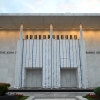
The Kennedy Center on June 28, with its facade signage still covered by a tarp and scaffolding.
Alex Wroblewski/AFP via Getty Images
hide caption
toggle caption
Alex Wroblewski/AFP via Getty Images
On Wednesday, a federal appeals court denied President Trump’s request to stop the removal of his name from Washington, D.C.’s Kennedy Center. The signage on the building has been covered with tarp and scaffolding since June 13, but in a court filing last month, the center’s current executive director said that Trump’s name has been removed.
In their decision, three judges from the U.S. District Court of Appeals for the District of Columbia Circuit said that the president had failed to prove that the arts center would be “irreparably injured” without Trump’s name attached to it.

NPR requested comment from the Kennedy Center, but did not receive an immediate reply.
This latest round of court decisions is part of the ongoing litigation filed by Rep. Joyce Beatty, D-Ohio, against President Trump and the board of the Kennedy Center. In a statement emailed Wednesday to NPR, Beatty said: “Today’s ruling again affirms that this administration’s efforts to rename the Kennedy Center were unlawful. His name no longer desecrates this sacred memorial, which belongs to the American people. Now it is time for the Trump administration to accept this, comply with the law, and take the tarps down.”
In previous court filings, Trump’s legal team had asserted that removing the president’s name from the arts complex, both on the physical building and in its digital materials, would inflict irreparable harm in both time and money already spent. In the denial, the three judges — Patricia Millett, Robert Wilkins and Gregory Katsas — wrote that since Trump’s name has already been removed, “a stay would not avert those harms.”
Furthermore, Trump had claimed that without his name attached, future fundraising would be threatened “and [will] contribute to the financial decline of the Center.” In response, the appeals judges wrote: “Appellants, however, have failed to support this assertion with any specific facts or evidence. They offer only the conclusory assertions of the Kennedy Center’s Executive Director that were made in a factually unsupported declaration.” The center’s current executive director, Matt Floca, specializes in physical plant management.
The presiding judge in the case, Christopher R. Cooper, has ordered that the center provide him a status report on the center’s operation and programming before the end of this month. As of Wednesday, the center’s calendar lists a small roster of programs, including outdoor free movie screenings, workshops for children, and five free live performances in July on its Millennium Stage. In the past, the Kennedy Center presented over 2,000 arts and education events each year, including free daily Millennium Stage performances.

-
Culture27 minutes ago
Which Version of the ‘Odyssey’ Should You Read?
-
Lifestyle30 minutes ago
Terry Tempest Williams on why women with big ideas get labeled ‘crazy’ : Wild Card with Rachel Martin
-

 Technology42 minutes ago
Google’s Nest Thermostat has hit its best price of the year
-

 World45 minutes ago
Argentinian flight instructor jumps to death from plane, 22-year-old student forced to land alone
-

 Politics50 minutes ago
Omar’s disclosures erased millions, leaving her with potential negative net worth. She won’t explain why.
-

 Health57 minutes ago
Dr Oz links obesity to chronic disease surge, says GLP-1s can ‘jumpstart’ better health
-

 Sports60 minutes ago
Pirates star pitcher makes unfortunate history after being taken out in middle of perfect game bid
-

 Technology1 hour ago
Medical identity theft follows you into the doctor’s office

