Lifestyle
Meow Wolf supercharged the way we experience art. Is L.A. ready for the wild ride?

A Meow Wolf exhibition is designed as a dream space, a walk-through floor-to-ceiling collection of psychedelic art with a sci-fi bent and an anything-goes, punk rock spirit.
Apples that melodically squeal when squeezed? One can find those in “Omega Mart,” Meow Wolf’s Las Vegas exhibition. A video game that grapples with an uncompromising, impossible-to-please parent? Head to “The Real Unreal” outside Dallas. A neon-soaked forest in a suburban backyard? That originated in Meow Wolf’s Santa Fe, N.M., home.
“We are undefinable in so many ways, and it makes people think, ‘It’s just entertainment,’” says Meow Wolf curator Han Santana-Sayles, 31, sitting in her newly rented Pasadena home. “But I truly believe we are a wild art experiment.”
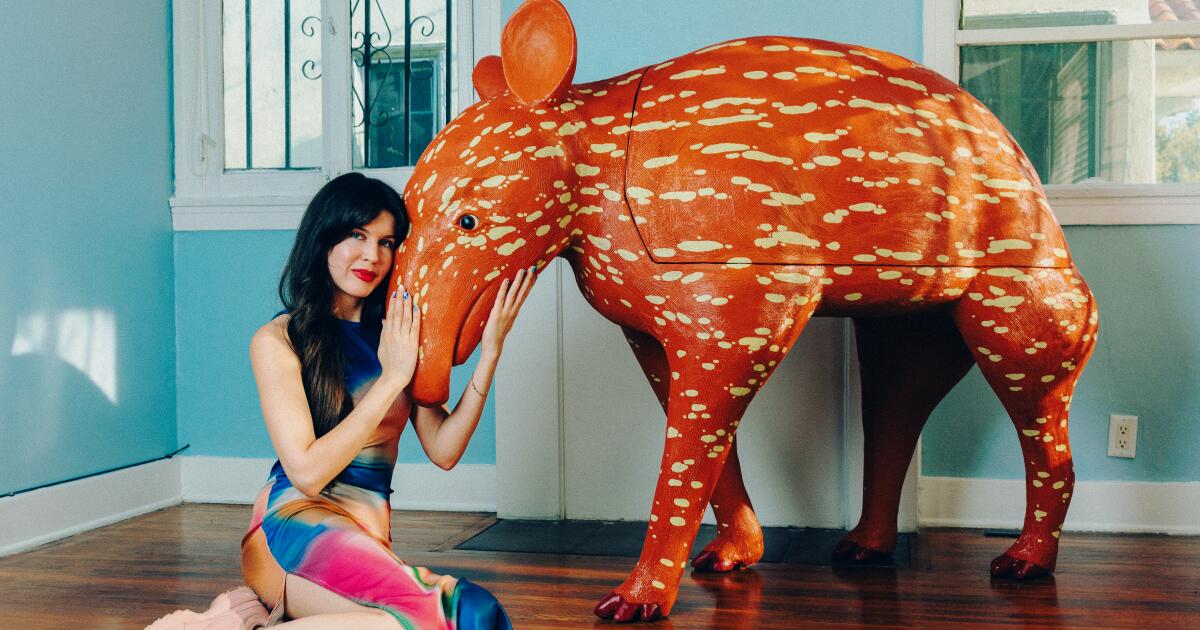
Pasadena-based Han Santana-Sayles recently returned home to SoCal to help curate Meow Wolf’s in-development West L.A. location. The centerpiece of her family room is a desk fashioned to look like a tapir, created by artist Miles Robinson.
(Ethan Benavidez / For The Times)
Meow Wolf spaces, of which there are currently four open, are warped visions of reality, designed to get guests to see the world, and hopefully themselves, differently. They’re spots where the familiar — think a grocery store or a home — is used as an entry point to otherworldly, maximalist art that’s at once a fantastical twist on nature and a deep dive into why-are-we-here philosophies.
So what happens when Meow Wolf decides that its next place of expansion is the home of American make-believe?
Meow Wolf is coming to Los Angeles, and it aims to turn our city’s most ritualistic experience — that is, the act of going to the movies — into an interactive, art-driven wonderland.
The Santa Fe-based art collective-turned-capitalistic enterprise — leaders of the so-called “experience economy” — is in the closing round of negotiations that will bring a Meow Wolf exhibition to West Los Angeles, with an opening targeted for 2026. Meow Wolf will be taking over a vacant movie theater complex and intends to fully embrace the spot’s cinematic roots. Meow Wolf’s move into its largest market yet is intended as a statement piece, a declaration that weirdness and art-focused ventures still have a place in an immersive economy that’s been racked by closures and layoffs, Meow Wolf included.
“A movie theater is representative of the history of L.A., a city that has been known for over 100 years with Hollywood and moviemaking,” says Meow Wolf Chief Executive Jose Tolosa. “I think the location we picked is one of the components that embodies the richness and the history of the city, and the artistry of the city.”
Anticipate multiple rooms of narrative-based art that strive to test perceptions, grappling with not only the stories we tell one another but why we tell them, says co-founder Sean Di Ianni, 39, who is overseeing the L.A. project.
If Disney and Universal theme parks ask us to “ride the movies,” Meow Wolf will be challenging guests to question their communal power, exploring, via hallucinatory art, the minds of those who make them, sell them and love them. Expect it all to be delivered with hints of mysticism, as Meow Wolf artists will dabble in themes of ritual and religion.
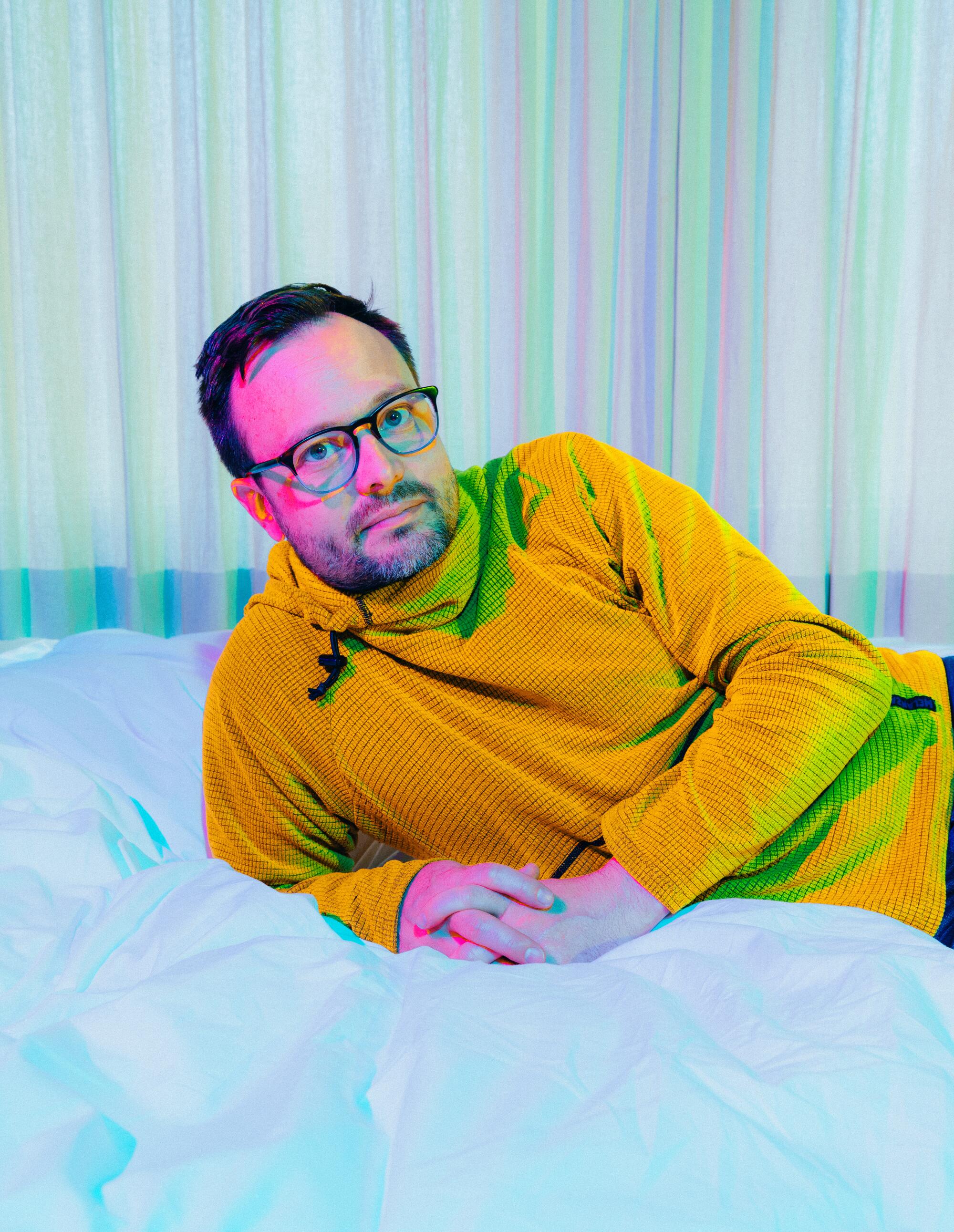
Meow Wolf co-founder Sean Di Ianni says the L.A. locale will explore the communal power of film.
(Ethan Benavidez / For The Times)
Like past Meow Wolf exhibitions, a significant number of installations will come from the local art community. Santana-Sayles, a Murrieta native who now resides a few blocks from where her grandmother once lived, will lead the outreach into L.A.’s art world, a process that is in its infancy. A Meow Wolf exhibition is a mix of elaborately designed environments and commissioned works from artists who reside in the host city.
“I’m looking for a super broad range,” she says. “I want to include people who do wild projection mapping. But I also want to find people who do just pastels — really, really well. Or they’re painters. Or they draw. They’ve homed in on this one thing. We don’t want it to read as a theme park. We’re a contemporary arts platform.”
I want to include people who do wild projection mapping. But I also want to find people who do just pastels — really, really well. Or they’re painters. Or they draw.
— Meow Wolf curator Han Santana-Sayles
And yet the company’s rise from experimental art collective in 2008 to an “experience economy” corporation has been meteoric, attracting creative talent from theme park giants such as the Walt Disney Co. and NBCUniversal. It has been embraced by the likes of the Themed Entertainment Assn., and Meow Wolf’s play-focused, active approach has shifted the industry, encouraging environments with multiple access points that increasingly push guests to lean in and participate.
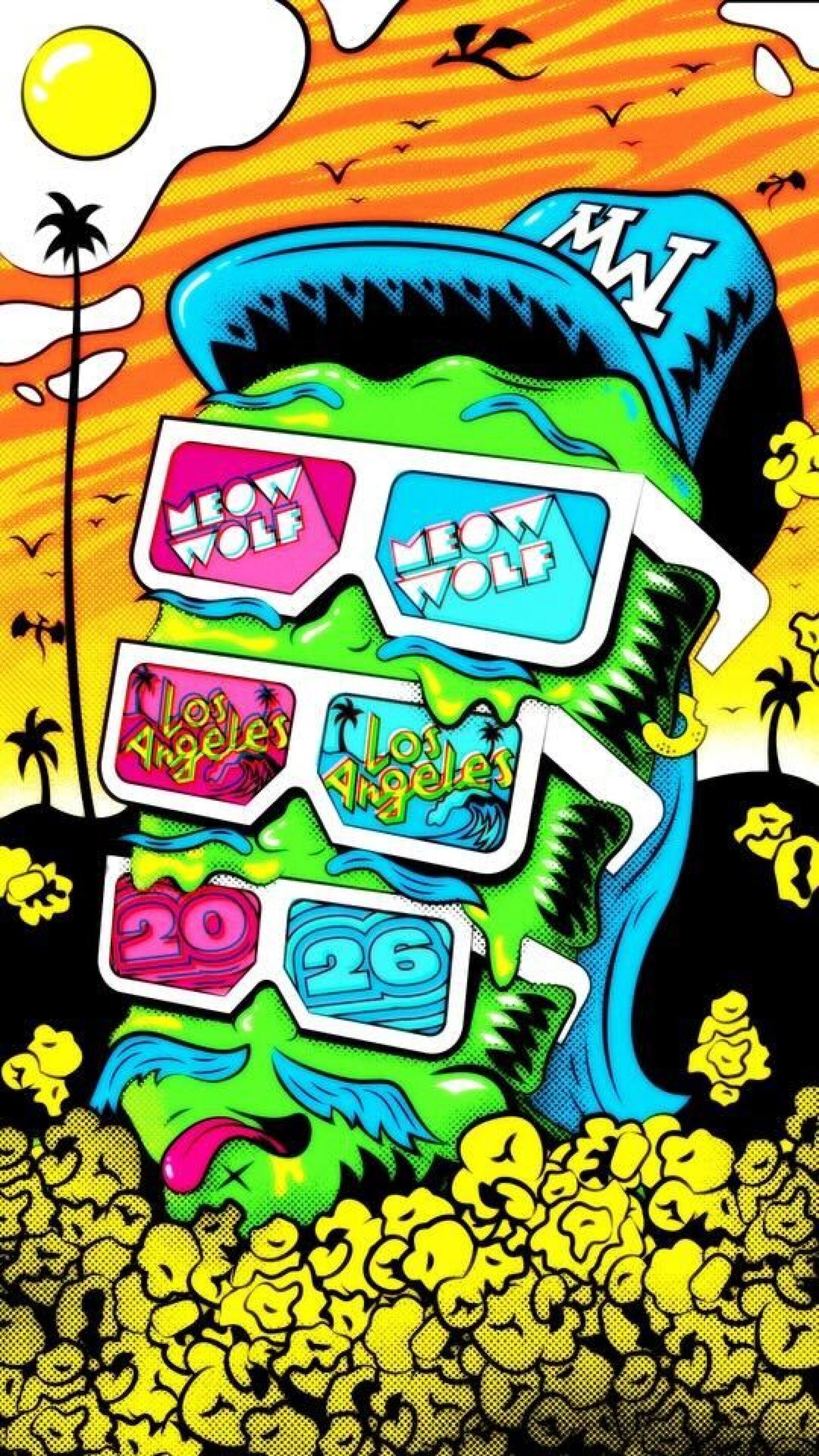
Meow Wolf’s poster art for its in-development West Los Angeles space.
(Meow Wolf)
Meow Wolf’s roots in underground art and its penchant for flirting with popular culture have resulted in a specific kind of tension. Meow Wolf is a corporation, but one that staunchly believes in original intellectual property. Meow Wolf stands by the power of the individual creator, having long supported independent muralists, game designers or sculpture artists, but it also traffics in interconnected storylines that require the sort of environmental storytelling defined by Disney’s theme parks.
Its ambitions are high art, but it’s also extremely populist. And that says nothing of Meow Wolf’s outspoken penchant for progressive politics. Melding all of this with a capitalistic enterprise could seem like a contradiction, but it also feels uniquely fit for Los Angeles.
“I love the chaoticness of it,” Santana-Sayles says of Los Angeles. “I love that yesterday I was on the street and someone was flipping a sign, really incredibly. He had a Walkman on and was doing a dancing Jesus sign movement. On the other corner was a juggler, a Cirque du Soleil-qualified juggler. Then on the other side of the street was a kid skateboarding with a dog under his arm.
“It’s an active, creative, chaotic mix of things,” she says. “It feels like art.”
The Los Angeles announcement arrives at what has become a reflection point for the immersive community.
Meow Wolf, along with long-running New York-based theatrical production “Sleep No More,” defined the immersive space. Since 2016, when the once-scrappy Meow Wolf art collective opened Santa Fe’s “House of Eternal Return,” the company has welcomed about 10 million visitors across its four venues. Yet in April Meow Wolf announced it would cut 165 employees; exhibitions in Denver and Las Vegas were heavily affected. “Sleep No More,” meanwhile, which has been running since 2011, will end this year.
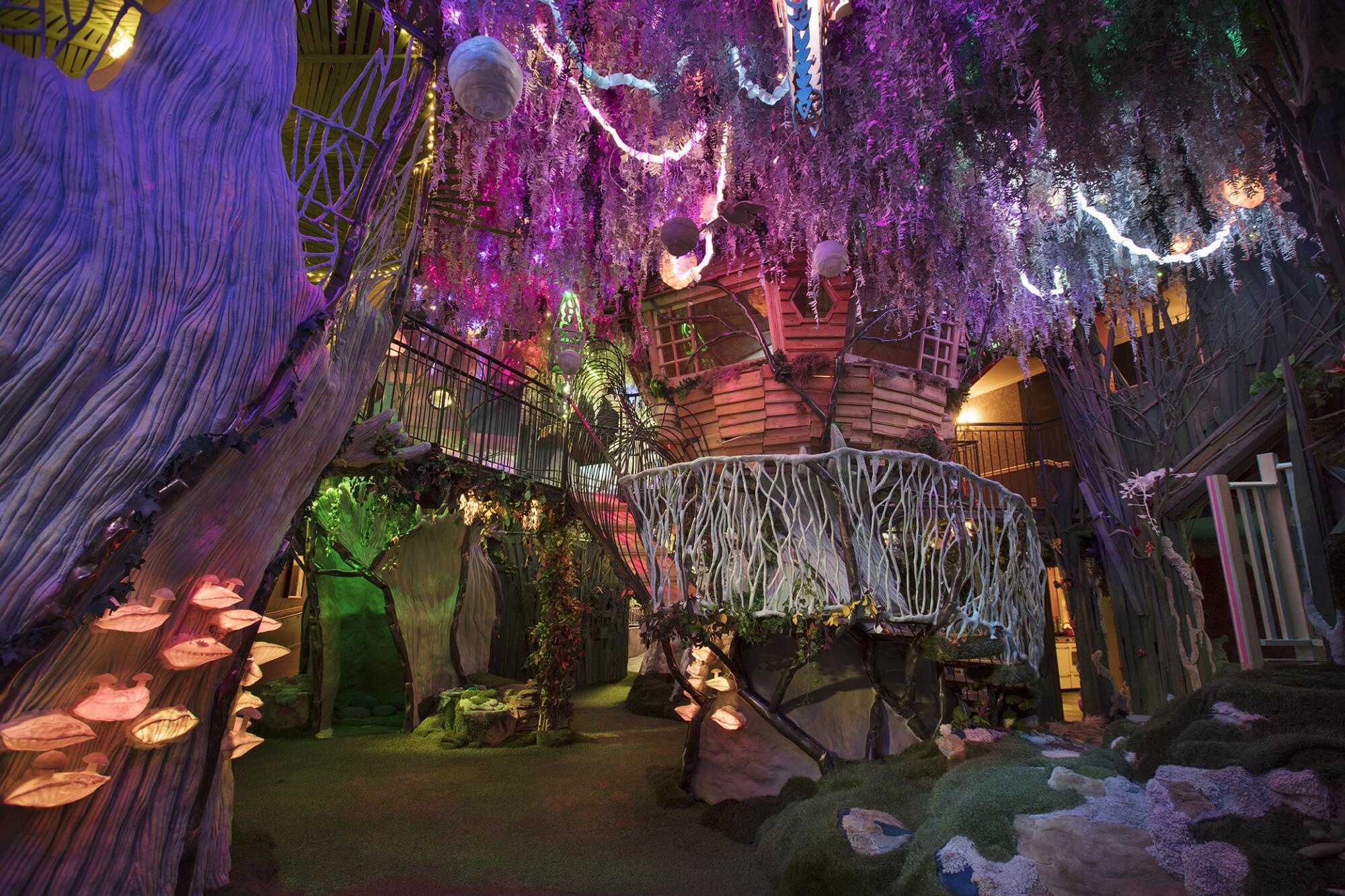
A suburban house leads to a fantastical twist on nature at Meow Wolf’s “House of Eternal Return” in Santa Fe, N.M.
(Kate Russell / Meow Wolf)
The two spawned an industry of interactive, social media-primed spaces, one that saw the rise and fall of everything from projection-based exhibitions such as “Immersive Van Gogh” to Lost Spirits, a heavily themed Las Vegas rum distillery with circus trappings, which just shuttered. The Walt Disney Co. even got in on the action via the Star Wars: Galactic Starcruiser, a two-day live-action role-playing game that utilized a mobile phone app to drive gameplay with real-life actors and sets. It lasted about a year.
Meow Wolf’s Tolosa pins the recent layoffs on two factors. One, he says, the company has become better at understanding its staffing needs, having opened a Denver exhibition with more than 300 employees. Last year’s “The Real Unreal” in Grapevine, Texas, in contrast, launched with a staff of around 100. He also notes that attendance tends to peak from a period of opening to around 18 months after, necessitating that the company adjust its models.
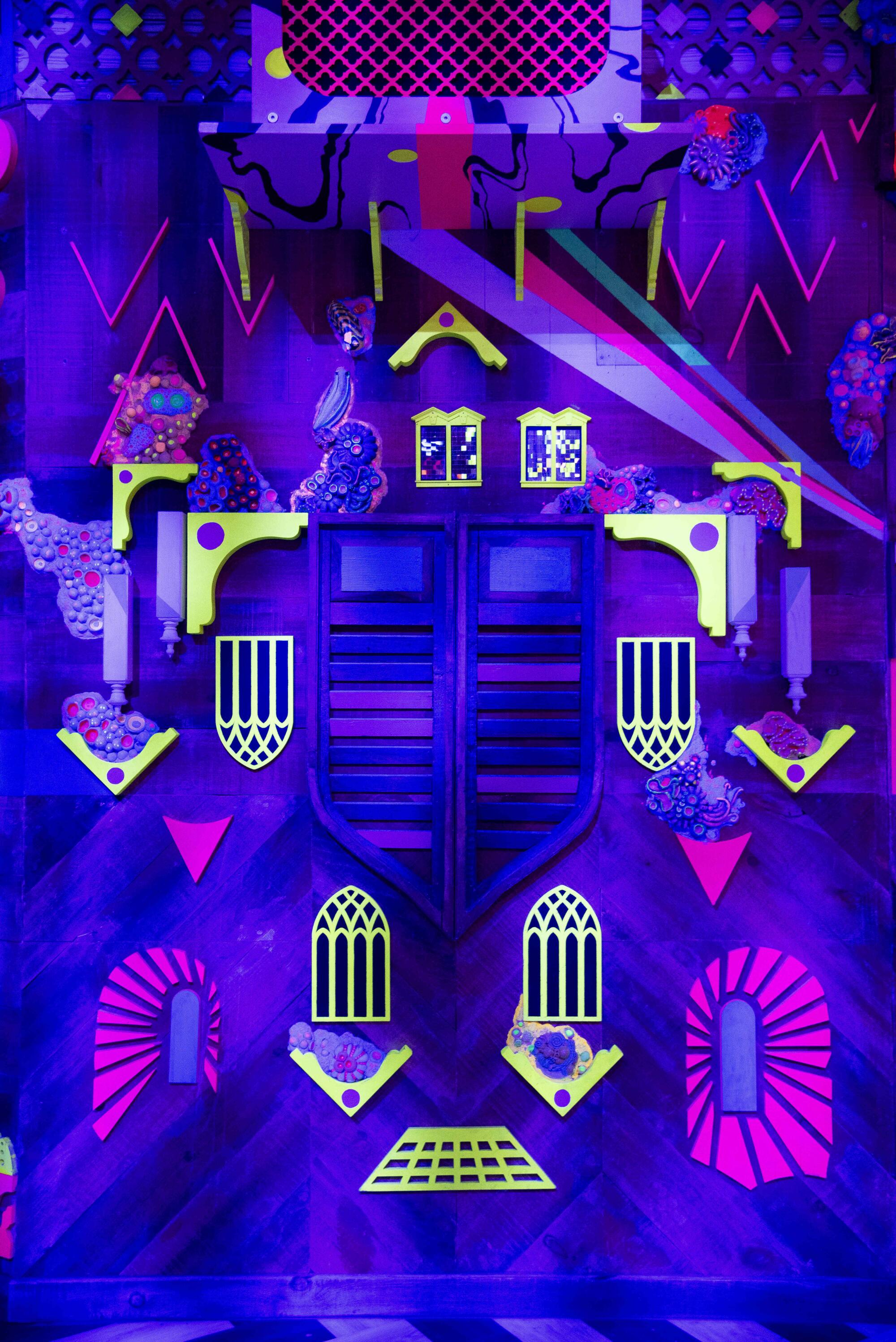
A fixture in a neon city at Meow Wolf’s “The Real Unreal” in Grapevine, Texas.
(Emil T. Lippe / For The Times)
“We remain committed to a growth path,” Tolosa says. “Not only in L.A. but beyond. We’re already looking into other cities.” Tolosa adds that Meow Wolf is continuing to build an app that will connect all of its exhibitions, and is exploring other mediums such as gaming.
Meow Wolf, says Noah Nelson, founder of immersive entertainment site No Proscenium and its accompanying conference, is still one of the most recognizable names in the sector. While the layoffs raised eyebrows, the pledge to future exhibitions is an argument that the audience isn’t eroding.
“Meow Wolf represents the paradox,” Nelson says.
“It was born from a wild artist collective that created these family-friendly psychedelic sandboxes,” he says. “It morphed into a business that became increasingly a business and is still trying to hold onto that family-friendly psychedelic sandbox energy. It’s still trying to maintain its soul. That’s a tightrope that is very hard to walk, and it has at times been downright scary to watch them walk it. The upside is that they’re still walking it.”
Meow Wolf represents the paradox. It was born from a wild artist collective that created these family-friendly psychedelic sandboxes. It morphed into a business that became increasingly a business and is still trying to hold onto that family-friendly psychedelic sandbox energy.
— Noah Nelson, founder of immersive entertainment site No Proscenium
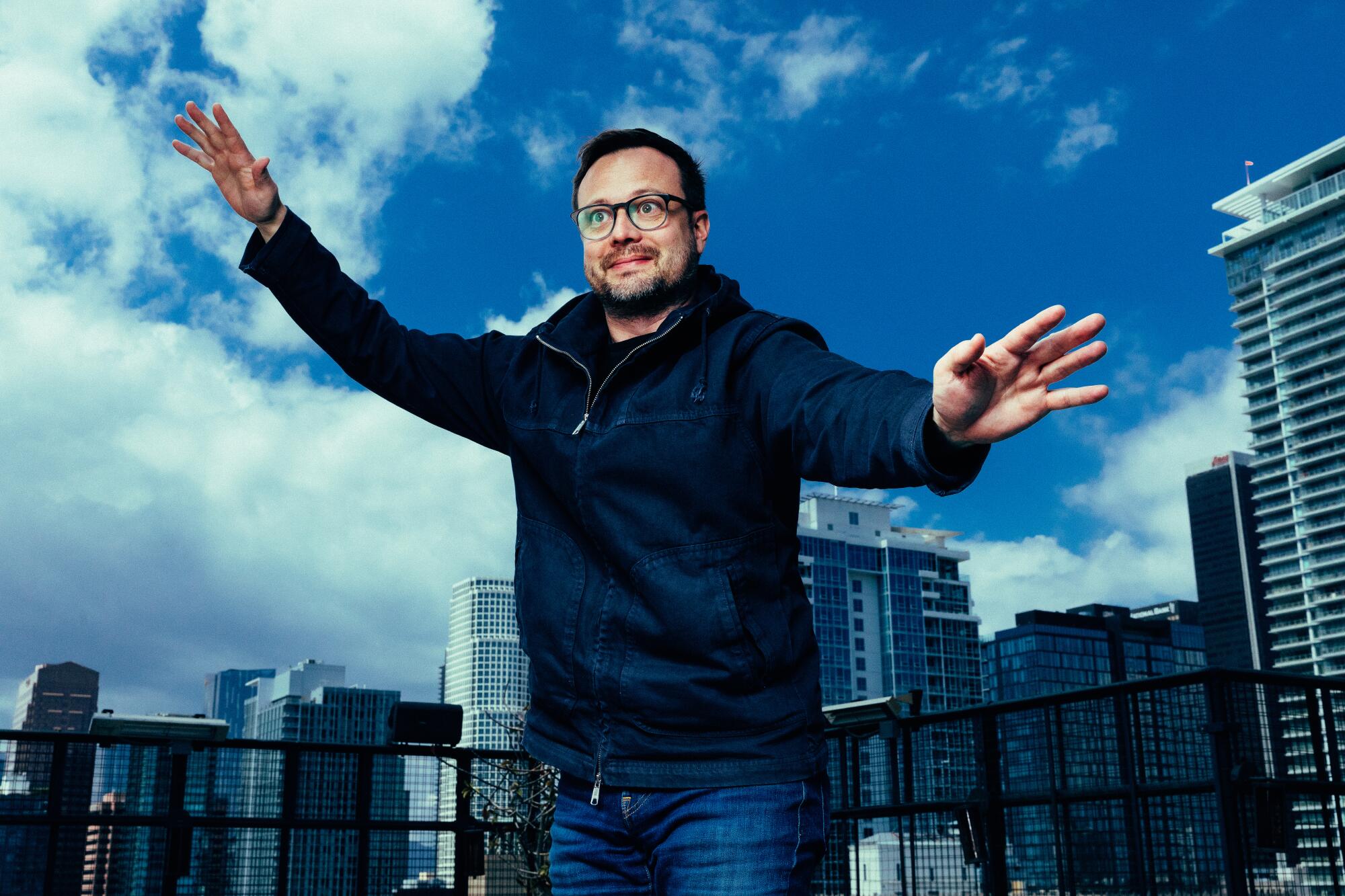
Meow Wolf’s Sean Di Ianni has seen the art collective through ups and downs. “I’ve felt the pain, the struggle, the beauty and the mystery and magic in all different ways,” he says.
(Ethan Benavidez / For The Times)
Di Ianni helped grow Meow Wolf from an artist community into a corporation.
“I’ve been on all sides of this,” Di Ianni says. “I’ve created things. I helped organize things. I helped form the business. I’ve conducted layoffs myself. I’ve felt the pain, the struggle, the beauty and the mystery and magic in all different ways. It’s still happening. We’re still experiencing it. People, sometimes people who weren’t around for it, think of the early days as some utopian fantasy. It wasn’t that. It was a chaotic, anarchic mess.
“I guess what I’m saying,” he says, “is it’s always been a struggle.”
Di Ianni and Santana-Sayles hope Los Angeles will be a point of healing. After all, it just may be Meow Wolf’s most personal artistic statement yet.
The large thematic touchpoints for what would become Meow Wolf’s L.A. space were sketched out about two years ago. Many of them originated with Matt King, whom Di Ianni credits for leading a significant portion of Meow Wolf’s philosophical bent. King died by suicide in July 2022.
While Di Ianni is keeping much of the narrative a secret, he said the team envisioned as its setting “a world at a distant crossroads” in the midst of some sort of ritual. “What if this place we’re creating has some event that occurs, and people are drawn to this event the way people are drawn to a panda being born at a zoo?” Di Ianni says.
Santana-Sayles digs deeper.
She was King’s fiancée at the time of his death, and at various points a conversation with her delves into a discussion on how to process grief. An art piece of King’s, a woven portrait of flowers, sits in her living room waiting to be hung. After his death, she says, she made the decision to return to L.A. to be closer to her family. That Meow Wolf would center its next project here became a fortunate coincidence.
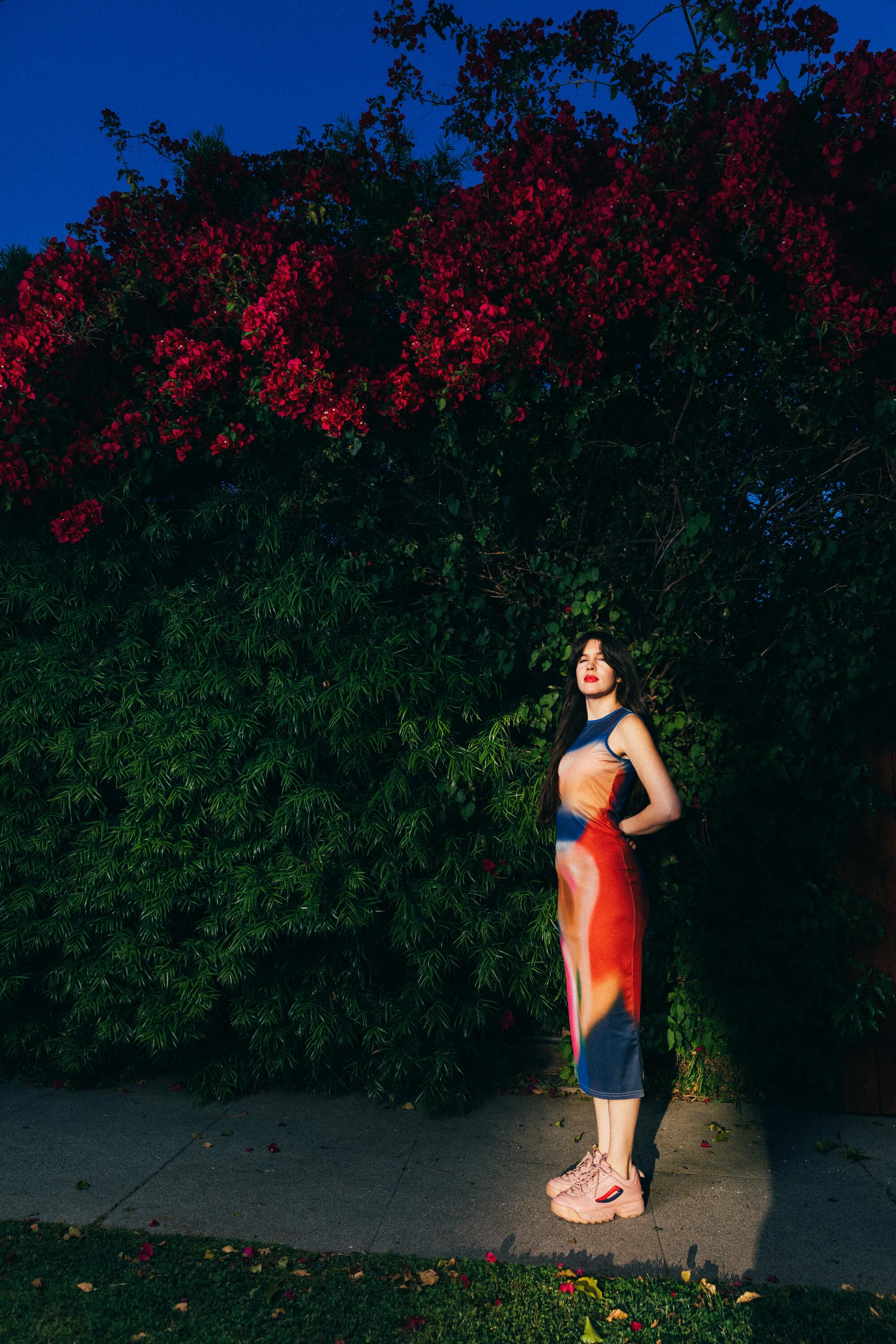
Han Santana-Sayles is eager to work on an exhibition in her home region. “I love the chaoticness of it,” she says of Los Angeles.
(Ethan Benavidez / For The Times)
“It’s so hard to be split from people,” she says of the last two years of her life. “They become you, and you become them.”
She takes comfort in being able to bring one of King’s final Meow Wolf ideas to fruition, and she and Di Ianni speak of wanting to protect what King was envisioning. “It’ll be harder for me to work on a Meow Wolf that he had nothing to do with,” Santana-Sayles says. “That won’t be far off. It’s the project after this. That will be way more challenging for me. I feel like I still get to hold his hand.”
When discussing some of the themes for the Los Angeles exhibition, she heads to her bookshelf and digs out a stack of King’s books, specifically ones he was reading in the last year of his life. King, she says, was becoming heavily fascinated with theories that interwove astrology and the Bible.
“He would come to dinners and say, ‘I’m so excited to tell you that this chapter of the Bible is actually parallel to this incredible spring equinox and the equinox is a metaphor for the way Moses parted the sea,’” she says. “I thought Matt, frankly, was sometimes extremely discerning about his sources and sometimes not at all. He would flip between different texts — historic texts, and then things that were on the verge of conspiracy theory. He just wanted to absorb.
“This exhibit,” Santana-Sayles says, “I do think, in the funniest way, grapples with big mystical and religious questions. Not overtly, but in a way people will read themselves into. I think there’s a lot to be explored there.”
Santana-Sayles and her team will have a significant say in how. It’s early days but she’s in the midst of working with consultants to create demographic surveys of Los Angeles, striving to ensure the exhibit will fully represent the diversity of the region. As a SoCal native from a Mexican American family, Santana-Sayles says, “I would be dishonored” if the exhibit failed in its mission to capture the breadth of the L.A. population. A cultural engagement specialist has been hired for outreach to Indigenous artist groups.
“It’s really important to make that intentional,” she says. “I’m not just going out and saying, ‘They have art I like. I’m going to bring them in.’ It’s a combination. Yes, they’re an amazing artist, and they have a really important story for this region.”
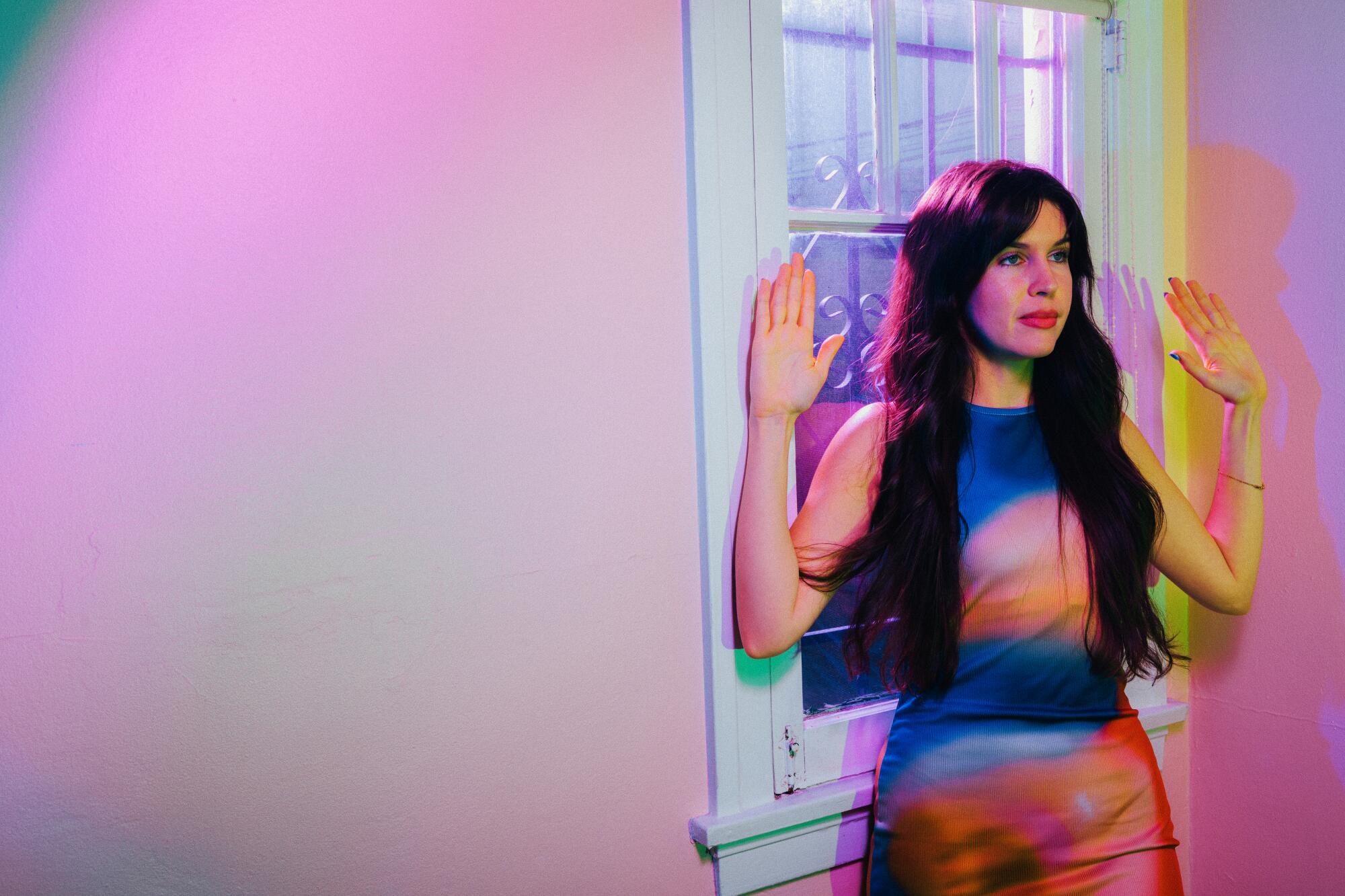
Han Santana-Sayles will be leading Meow Wolf’s outreach to the L.A. art community. “It has to be immersive in some way that playfully subverts reality,” she says, when asked what she’s looking for.
(Ethan Benavidez / For The Times)
Santana-Sayles is asked what makes a Meow Wolf artist. It’s not always an easy answer. In Grapevine, for instance, “The Real Unreal,” housed in a former Bed Bath & Beyond, is centered around a family story of grief. On a tour of the space last summer, many of the locally commissioned pieces appeared designed to celebrate community and healing, be it a calming tower of reflective geometric shapes that feels like a place of worship, or murals that reference Greek mythology and hint at being at an emotional crossroads.
“We’re really looking for experiential art — it has to be immersive in some way that playfully subverts reality and that thematically connects with what we’re doing as a whole with the exhibition,” Santana-Sayles says. Then she references works from other Meow Wolf exhibitions.
“There’s so many different ways to do that,” she continues. “Ways people do that are with materials, characters and concepts. We have people doing Indigenous futurism. We have people working with only trash art, reconstructing everyday items. We have people making completely different planets that have their own interesting logic. The umbrella feels quite broad, but that’s really what I’m trying to find. I’m looking for people who have a really defined sense of what they do.”
Regardless of what is conceived, don’t assume a passive experience. The Meow Wolf design philosophy is one that’s based on active participation by the guest, a shift from less assertive forms of entertainment of yore, be it a museum or the early days of theme parks. Stray, not-so-hidden paths and an assortment of nooks dot a Meow Wolf exhibition, inviting guests to choose their own narrative. Story threads are peppered throughout. “Omega Mart,” for instance, grapples with environmental distress and corporate responsibility.
Meow Wolf’s West L.A. theater, says Di Ianni, also will be built for discovery. The byzantine paths and shifts in art direction are what he refers to as “good mystery confusion.”
“That was one of the challenges of using a movie theater as a point of entry,” Di Ianni says. “It’s passive. But there are stories told in movie theaters, and then there are stories of movie theaters and stories of the people who work at movie theaters. But when you get into that auditorium, it’s meant to be a blank space where stories are told. It’s a little meta. This is a storytelling space about storytelling.”
For those looking for further hints as to where the Los Angeles exhibition may veer, Di Ianni mentions that he and the team back in Santa Fe soon will be doing a group watch of Wolfgang Petersen’s “The Neverending Story.” The 1984 film is a fantastical work about the beauty of our imaginations and how art can bring dreamlike worlds to life.
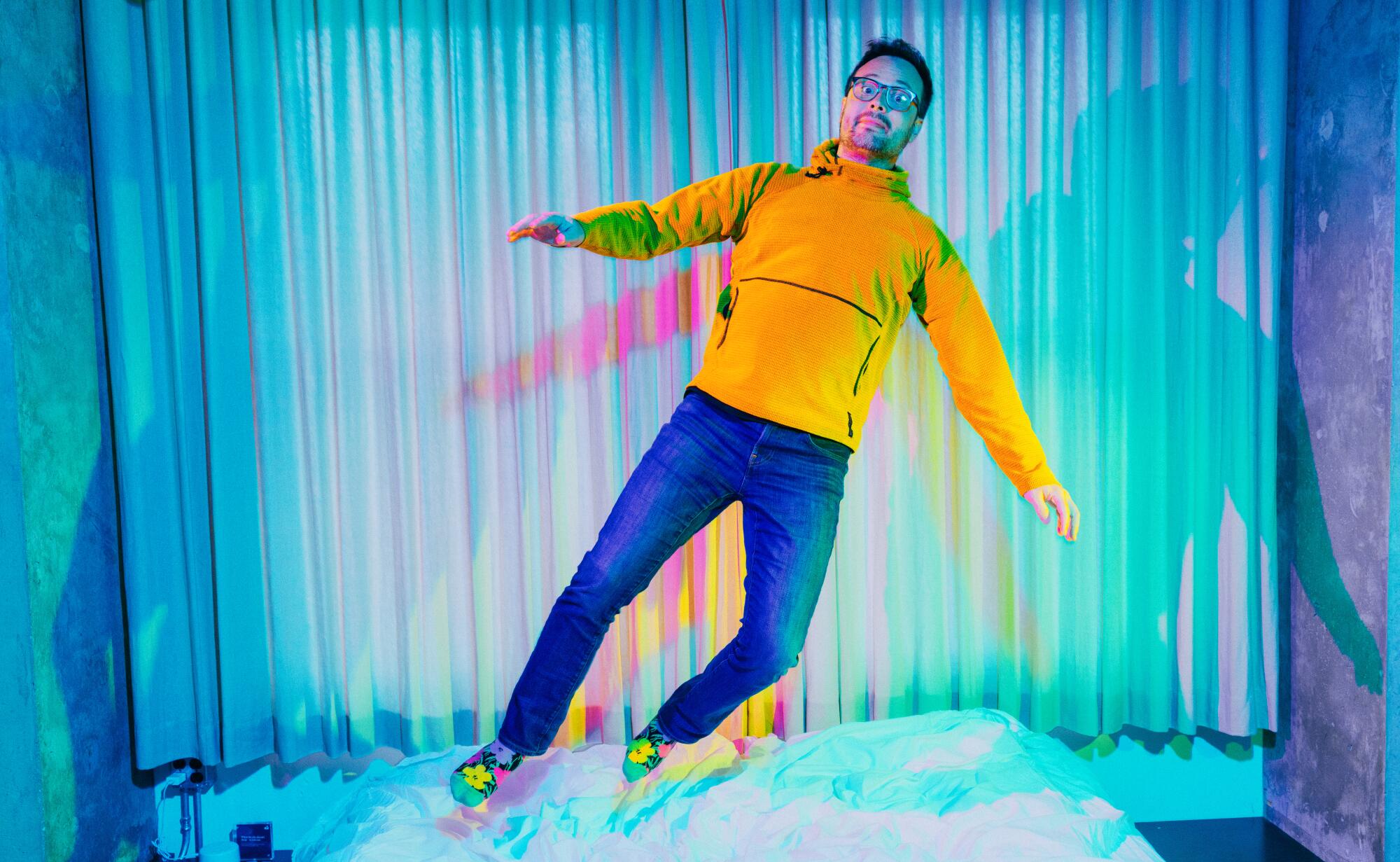
Sean Di Ianni, based in Santa Fe, N.M., says Meow Wolf’s L.A. location will be “a storytelling space about storytelling.”
(Ethan Benavidez / For The Times)
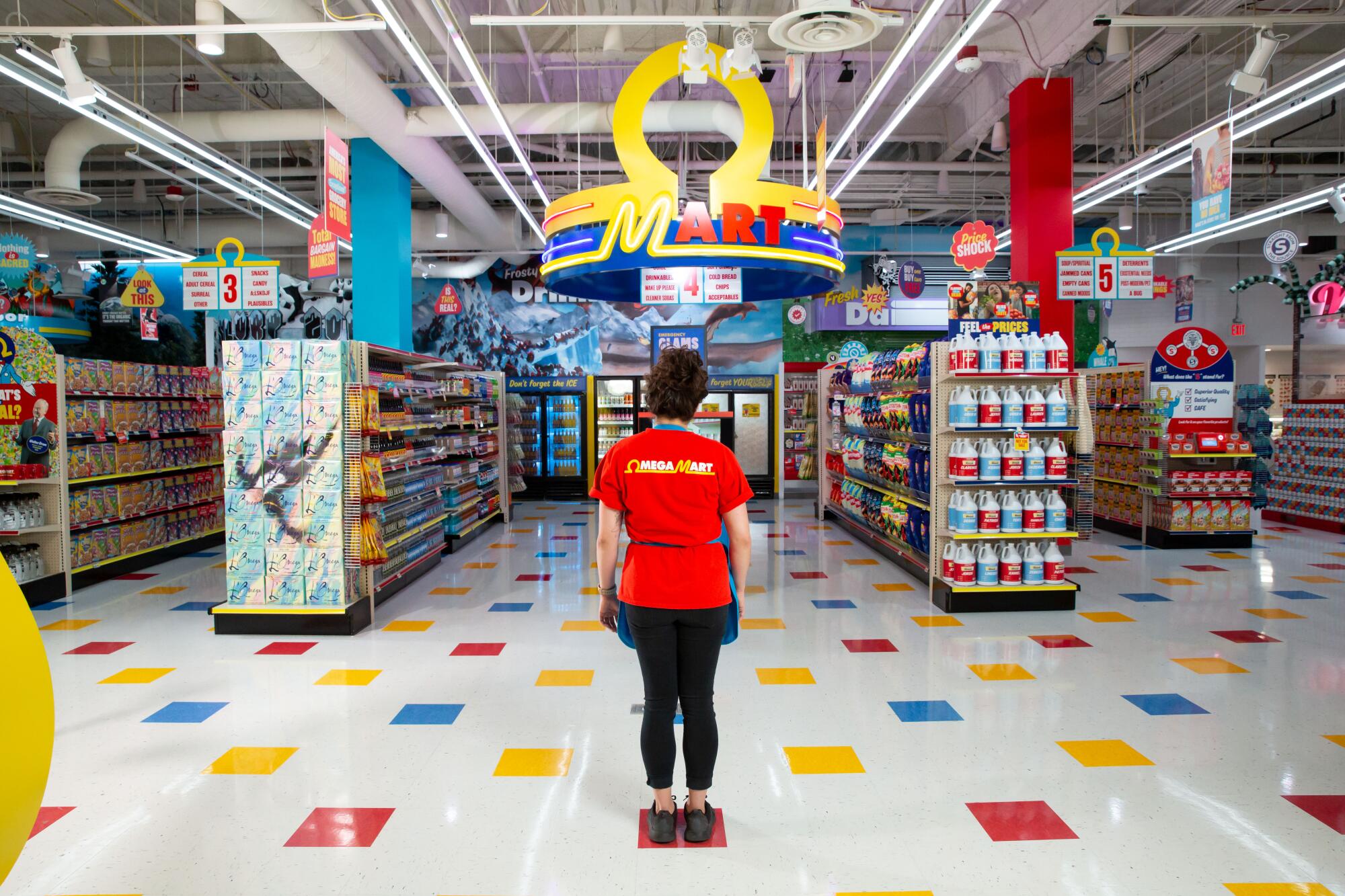
At Meow Wolf’s “Omega Mart,” guests first enter a satiric take on a grocery store, where portals lead to otherworldly art exhibitions.
(Christopher DeVargas / Meow Wolf)
And that’s ultimately fitting for a Meow Wolf exhibition. While there are narrative threads and elaborate ideas, Meow Wolf spaces are essentially places of wonder, where dozens of disparate artists come together to create something akin to an explorable fairy tale.
“We can’t control whether you decide to change your perception of the world, or change yourself or change the world,” Di Ianni says. “But we can set up the conditions for people to have a little more access to that possibility. It’s very high-minded and very activist in a way. That’s what art and entertainment does. That’s why we go on vacation. That’s why we go to Disneyland. We want to see the world differently. We want to open up possibilities.”
Meow Wolf’s exhibitions have always been theaters for fantasy, centering the guest as the performer. Eventually, they were bound to find themselves in a city whose primary industry is known for creating dreamers.



Tracy Morgan, left, and Daniel Radcliffe star in The Fall and Rise of Reggie Dinkins.
Scott Gries/NBC
hide caption
toggle caption
Scott Gries/NBC
Tracy Morgan, as a presence, as a persona, bends the rules of comedy spacetime around him.
Consider: He’s constitutionally incapable of tossing off a joke or an aside, because he never simply delivers a line when he can declaim it instead. He can’t help but occupy the center of any given scene he’s in — his abiding, essential weirdness inevitably pulls focus. Perhaps most mystifying to comedy nerds is the way he can take a breath in the middle of a punchline and still, somehow, land it.
That? Should be impossible. Comedy depends on, is entirely a function of, timing; jokes are delicate constructs of rhythms that take time and practice to beat into shape for maximum efficiency. But never mind that. Give this guy a non-sequitur, the nonner the better, and he’ll shout that sucker at the top of his fool lungs, and absolutely kill, every time.
Well. Not every time, and not everywhere. Because Tracy Morgan is a puzzle piece so oddly shaped he won’t fit into just any world. In fact, the only way he works is if you take the time and effort to assiduously build the entire puzzle around him.
Thankfully, the makers of his new series, The Fall and Rise of Reggie Dinkins, understand that very specific assignment. They’ve built the show around Morgan’s signature profile and paired him with an hugely unlikely comedy partner (Daniel Radcliffe).
The co-creators/co-showrunners are Robert Carlock, who was one of the showrunners on 30 Rock and co-created The Unbreakable Kimmy Schmidt, and Sam Means, who also worked on Girls5eva with Carlock and has written for 30 Rock and Kimmy Schmidt.
These guys know exactly what Morgan can do, even if 30 Rock relegated him to function as a kind of comedy bomb-thrower. He’d enter a scene, lob a few loud, puzzling, hilarious references that would blow up the situation onscreen, and promptly peace out through the smoke and ash left in his wake.
That can’t happen on Reggie Dinkins, as Tracy is the center of both the show, and the show-within-the-show. He plays a former NFL star disgraced by a gambling scandal who’s determined to redeem himself in the public eye. He brings in an Oscar-winning documentarian Arthur Tobin (Radcliffe) to make a movie about him and his current life.
Tobin, however, is determined to create an authentic portrait of a fallen hero, and keeps goading Dinkins to express remorse — or anything at all besides canned, feel-good platitudes. He embeds himself in Dinkins’ palatial New Jersey mansion, alongside Dinkins’ fiancée Brina (Precious Way), teenage son Carmelo (Jalyn Hall) and his former teammate Rusty (Bobby Moynihan), who lives in the basement.
If you’re thinking this means Reggie Dinkins is a show satirizing the recent rise of toothless, self-flattering documentaries about athletes and performers produced in collaboration with their subjects, you’re half-right. The show feints at that tension with some clever bits over the course of the season, but it’s never allowed to develop into a central, overarching conflict, because the show’s more interested in the affinity between Dinkins and Tobin.
Tobin, it turns out, is dealing with his own public disgrace — his emotional breakdown on the set of a blockbuster movie he was directing has gone viral — and the show becomes about exploring what these two damaged men can learn from each other.

On paper, sure: It’s an oil-and-water mixture: Dinkins (loud, rich, American, Black) and Tobin (uptight, pretentious, British, practically translucent). Morgan’s in his element, and if you’re not already aware of what a funny performer Radcliffe can be, check him out on the late lamented Miracle Workers.
Whenever these two characters are firing fusillades of jokes at each other, the series sings. But, especially in the early going, the showrunners seem determined to put Morgan and Radcliffe together in quieter, more heartfelt scenes that don’t quite work. It’s too reductive to presume this is because Morgan is a comedian and Radcliffe is an actor, but it’s hard to deny that they’re coming at those moments from radically different places, and seem to be directing their energies past each other in ways that never quite manage to connect.

Precious Way as Brina.
Scott Gries/NBC
hide caption
toggle caption
Scott Gries/NBC
It’s one reason the show flounders out of the gate, as typical pilot problems pile up — every secondary character gets introduced in a hurry and assigned a defining characteristic: Brina (the influencer), Rusty (the loser), Carmelo (the TV teen). It takes a bit too long for even the great Erika Alexander, who plays Dinkins’ ex-wife and current manager Monica, to get something to play besides the uber-competent, work-addicted businesswoman.
But then, there are the jokes. My god, these jokes.
Reggie Dinkins, like 30 Rock and Kimmy Schmidt before it, is a joke machine, firing off bit after bit after bit. But where those shows were only too happy to exist as high-key joke-engines first, and character comedies second, Dinkins is operating in a slightly lower register. It’s deliberately pitched to feel a bit more grounded, a bit less frenetic. (To be fair: Every show in the history of the medium can be categorized as more grounded and less frenetic than 30 Rock and Kimmy Schmidt — but Reggie Dinkins expressly shares those series’ comedic approach, if not their specific joke density.)
While the hit rate of Reggie Dinkins‘ jokes never achieves 30 Rock status, rest assured that in episodes coming later in the season it comfortably hovers at Kimmy Schmidt level. Which is to say: Two or three times an episode, you will encounter a joke that is so perfect, so pure, so diamond-hard that you will wonder how it has taken human civilization until 2026 Common Era to discover it.
And that’s the key — they feel discovered. The jokes I’m talking about don’t seem painstakingly wrought, though of course they were. No, they feel like they have always been there, beneath the earth, biding their time, just waiting to be found. (Here, you no doubt will be expecting me to provide some examples. Well, I’m not gonna. It’s not a critic’s job to spoil jokes this good by busting them out in some lousy review. Just watch the damn show to experience them as you’re meant to; you’ll know which ones I’m talking about.)
Now, let’s you and I talk about Bobby Moynihan.
As Rusty, Dinkins’ devoted ex-teammate who lives in the basement, Moynihan could have easily contented himself to play Pathetic Guy™ and leave it at that. Instead, he invests Rusty with such depths of earnest, deeply felt, improbably sunny emotions that he solidifies his position as show MVP with every word, every gesture, every expression. The guy can shuffle into the far background of a shot eating cereal and get a laugh, which is to say: He can be literally out-of-focus and still steal focus.
Which is why it doesn’t matter, in the end, that the locus of Reggie Dinkins‘ comedic energy isn’t found precisely where the show’s premise (Tracy Morgan! Daniel Radcliffe! Imagine the chemistry!) would have you believe it to be. This is a very, very funny — frequently hilarious — series that prizes well-written, well-timed, well-delivered jokes, and that knows how to use its actors to serve them up in the best way possible. And once it shakes off a few early stumbles and gets out of its own way, it does that better than any show on television.
This piece also appeared in NPR’s Pop Culture Happy Hour newsletter. Sign up for the newsletter so you don’t miss the next one, plus get weekly recommendations about what’s making us happy.
Listen to Pop Culture Happy Hour on Apple Podcasts and Spotify.
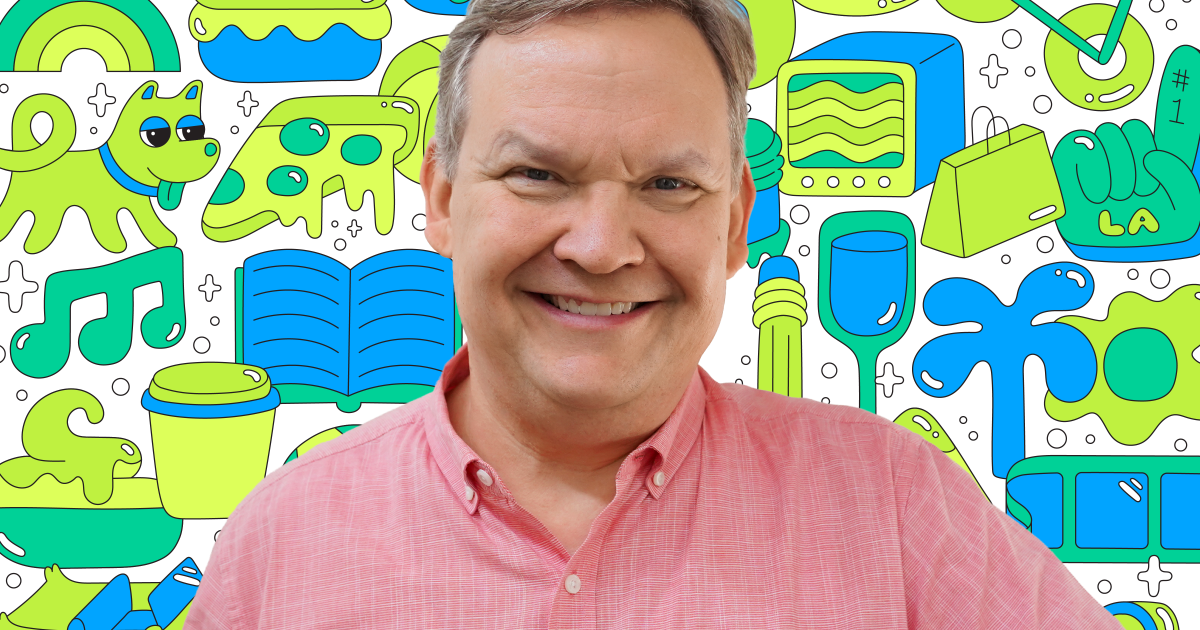
Andy Richter has found his place.
The Chicago area native previously lived in New York — where he first found fame as Conan O’Brien’s sidekick on “Late Night” — before moving to Los Angeles in 2001. Three years ago, he moved to Pasadena. “Now that I live here, I would not live anywhere else,” he says.
There are some practical benefits to the city. “I am such a crabby old man now, but it’s like, there’s parking, you can park when we have to go out,” Richter says. “The notion of going to dinner in Santa Monica just feels like having nails shoved into my feet.”

In Sunday Funday, L.A. people give us a play-by-play of their ideal Sunday around town. Find ideas and inspiration on where to go, what to eat and how to enjoy life on the weekends.
But he mostly appreciates that Pasadena is “a very diverse town and just a beautiful town,” he says.
For Richter, most Sundays revolve around his family. In 2023, the comedian and actor married creative executive Jennifer Herrera and adopted her young daughter, Cornelia. (He also has two children in their 20s, William and Mercy, from his previous marriage.)
Additionally, he’s been giving his body time to recover. Richter spent last fall training and competing on the 34th season of “Dancing With the Stars.” And though he had no prior dancing experience, he won over the show’s fan base with his kindness and dedication, making it to the competition’s ninth week.
He hosts the weekly show “The Three Questions” on O’Brien’s Team Coco podcast network and still appears in films and TV shows. “I’m just taking meetings and auditioning like every other late 50s white comedy guy in L.A., sitting around waiting for the phone to ring.”
This interview has been lightly edited and condensed for length and clarity.

7:30 a.m.: Early rising
It’s hard for me at this advanced age to sleep much past 7:30. I have a 5 1/2-year-old, and hopefully she’ll sleep in a little bit longer so my wife and I can talk and snuggle and look at our phones at opposite ends of the bed, like everybody.
Then the dogs need to be walked. I have two dogs: a 120-pound Great Pyrenees-Border Collie-German Shepherd mix, and then at the other end of the spectrum, a seven-pound poodle mix. We were a blended dog family. When my wife and I met, I had the big dog and she had a little dog. Her first dog actually has passed, but we like that dynamic. You get kind of the best of both worlds.

8 a.m.: Breakfast at a classic diner
Then it would probably be breakfast at Shakers, which is in South Pasadena. It’s one of our favorite places. We’re kind of regulars there, and my daughter loves it. It’s easy with a 5-year-old, you’ve got to do what they want. They’re terrorists that way, especially when it comes to cuisine.
I’ve lived in Pasadena for about three years now, but I have been going to Shakers for a long time because I have a database of all the best diners in the Los Angeles metropolitan area committed to memory. There’s just something about the continuity of them that makes me feel like the world isn’t on fire. And because of L.A.’s moderate climate, the ones here stay the way they are; whereas if you get 18 feet of winter snow, you tend to wear down the diner floor, seats, everything.
So there’s a lot of really great old places that stay the same. And then there are tragic losses. There’s been some noise that Shakers is going to turn into some kind of condo development. I think that people would probably riot. They would be elderly people rioting, but they would still riot.
11 a.m.: Sandy paws
My in-laws live down in Long Beach, so after breakfast we might take the dogs down to Long Beach. There’s this dog beach there, Rosie’s Beach. I have never seen a fight there between dogs. They’re all just so happy to be out and off-leash, with an ocean and sand right there. You get a contact high from the canine joy.

1 p.m.: Lunch in Belmont Shore
That would take us to lunchtime and we’ll go somewhere down there. There’s this place, L’Antica Pizzeria Da Michele, in Belmont Shore. It’s fantastic for some pizza with grandma and grandpa. It’s originally from Naples. There’s also one in Hollywood where Cafe Des Artistes used to be on that weird little side street.

4 p.m.: Sunset at the gardens
We’d take grandma and grandpa home, drop the dogs off. We’d go to the Huntington and stay a couple of hours until sunset. The Japanese garden is pretty mind-blowing. You feel like you’re on the set of “Shogun.”
The main thing that I love about it is the changing of ecospheres as you walk through it. Living in the area, I drive by it a thousand times and then I remember, “Oh yeah, there’s a rainforest in here. There’s thick stands of bamboo forest that look like Vietnam.” It’s beautiful. With all three of my kids, I have spent a lot of time there.

6:30 p.m.: Mall of America
After sundown, we will go to what seems to be the only thriving mall in America — [the Shops at] Santa Anita. We are suckers for Din Tai Fung. My 24-year-old son, who’s kind of a food snob, is like, “There’s a hundred places that are better and cheaper within five minutes of there in the San Gabriel Valley.” And we’re like, “Yeah, but this is at the mall.” It’s really easy. Also, my wife is a vegetarian, and a lot of the more authentic places, there’s pork in the air. It’s really hard to find vegetarian stuff.
We have a whole system with Din Tai Fung now, which is logging in on the wait list while we’re still on the highway, or ordering takeout. There’s plenty of places in the mall with tables, you can just sit down and have your own little feast there.
There’s also a Dave & Buster’s. If you want sensory overload, you can go in there and get a big, big booze drink while you’re playing Skee-Ball with your kid.
9 p.m.: Head to bed ASAP
I am very lucky in that I’m a very good sleeper and the few times in my life when I do experience insomnia, it’s infuriating to me because I am spoiled, basically. When you’ve got a 5 1/2-year-old, there’s no real wind down. It’s just negotiations to get her into bed and to sleep as quickly as possible, so we can all pass out.

new video loaded: Prada Peels Back the Layers at Milan Fashion Week
By Chevaz Clarke and Daniel Fetherston
February 27, 2026
‘The Fall and Rise of Reggie Dinkins’ falls before it rises — but then it soars

Xiaomi 17 is a small(ish) phone with a big(ish) battery

World leaders split over military action as US-Israel strike Iran in coordinated operation

Iran fires missiles at US bases across Middle East after American strikes on nuclear, IRGC sites

Common nighttime noise exposure may trigger heart problems, study suggests

Florida High School Football Rankings: Top 25 teams – Oct. 21

Cleary's 21 help Le Moyne down Central Connecticut State 69-64 in OT

How old is Bo Nix? What to know about Oregon quarterback ahead of 2024 NFL Draft

99th annual Pony Swim held in Virginia

Indiana Members Credit Union announced as new anchor tenant at Bottleworks District
Iran fires missiles at US bases across Middle East after American strikes on nuclear, IRGC sites

Israel strikes two schools in Iran, killing more than 50 people

Anthropic CEO says he’s sticking to AI “red lines” despite clash with Pentagon

ICE blasts Washington mayor over directive restricting immigration enforcement

Did the EU bypass Hungary’s veto on Ukraine’s €90 billion loan?
-

 World3 days ago
Exclusive: DeepSeek withholds latest AI model from US chipmakers including Nvidia, sources say
-

 Massachusetts3 days ago
Mother and daughter injured in Taunton house explosion
-

 Montana1 week ago
2026 MHSA Montana Wrestling State Championship Brackets And Results – FloWrestling
-

 Louisiana5 days ago
Wildfire near Gum Swamp Road in Livingston Parish now under control; more than 200 acres burned
-

 Denver, CO3 days ago
10 acres charred, 5 injured in Thornton grass fire, evacuation orders lifted
-

 Technology1 week ago
YouTube TV billing scam emails are hitting inboxes
-

 Technology1 week ago
Stellantis is in a crisis of its own making
-

 Politics1 week ago
OpenAI didn’t contact police despite employees flagging mass shooter’s concerning chatbot interactions: REPORT