Lifestyle
Looking to vacation on the California coast? Marin County just made it harder

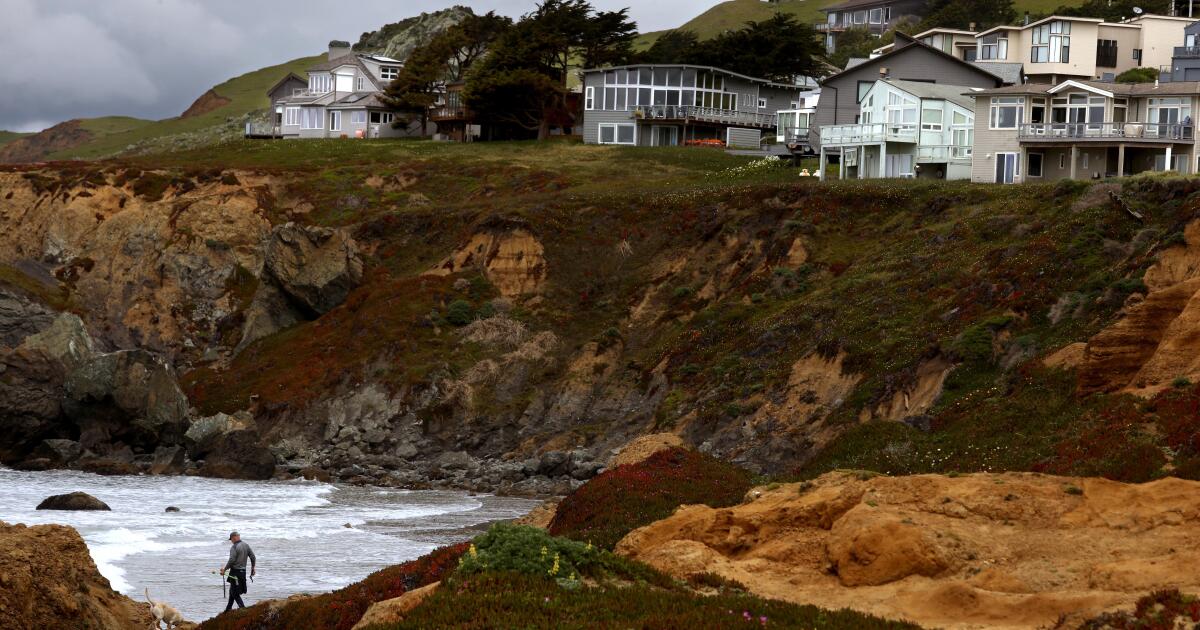
A stay in Brian Maggi’s house, per the Airbnb listing, is what coastal California dreams are made of.
“Bathed in natural sunlight,” it reads, you can “enjoy unobstructed panoramic views of the ocean and Point Reyes.” You can bring your dog. Walk to the sand. Savor “the perfect getaway” in the 1928 “BoHo surf shack.”
The little house in Dillon Beach, a remote town in western Marin County, is a second home for Maggi, a software designer who lives full time in Livermore, a hundred miles southeast.
He and his wife stay here a few weekends a month: Enough time to befriend neighbors and know the gossip, like who put in a new hot tub and who moved here to please a girlfriend despite hating the foggy weather.
“We’re not full-time residents,” Maggi said, “but we’re not absentee owners.”
“We’re really fortunate, and I get it,” Brian Maggi says of owning a second home in Dillon Beach. But he says cracking down on short-term rentals hasn’t made houses more affordable.
When Maggi is not using the house, he rents it on Airbnb for about $300 a night.
That’s a pretty common practice in Dillon Beach where, according to county estimates, a whopping 84% of the town’s 408 housing units are second homes and 31% are used as licensed short-term rentals.
Are those vacation rentals ruining California’s rugged little beach towns? Or are they opening up the coast to people who can’t afford to live there? Depends who you ask.
In Marin County, on the northern end of the San Francisco Bay, short-term rentals have become a lightning rod amid an affordable housing shortage in one of the most expensive — and beautiful — places in California.
This month, the Marin County Board of Supervisors approved a hard cap on the number of short-term rentals it will allow in unincorporated places, including the bucolic towns hugging iconic Highway 1 and the Point Reyes National Seashore.
The ordinance imposes a cap of 1,281 short-term rentals for unincorporated Marin County, where there were 923 licensed as of January.
The county has placed specific limits for 18 coastal communities, most of which will be allowed no more than the existing number of short-term rentals — while some will have to reduce their numbers. The exception is Dillon Beach, a historic vacation town where the short-term rental market will be allowed to significantly grow.
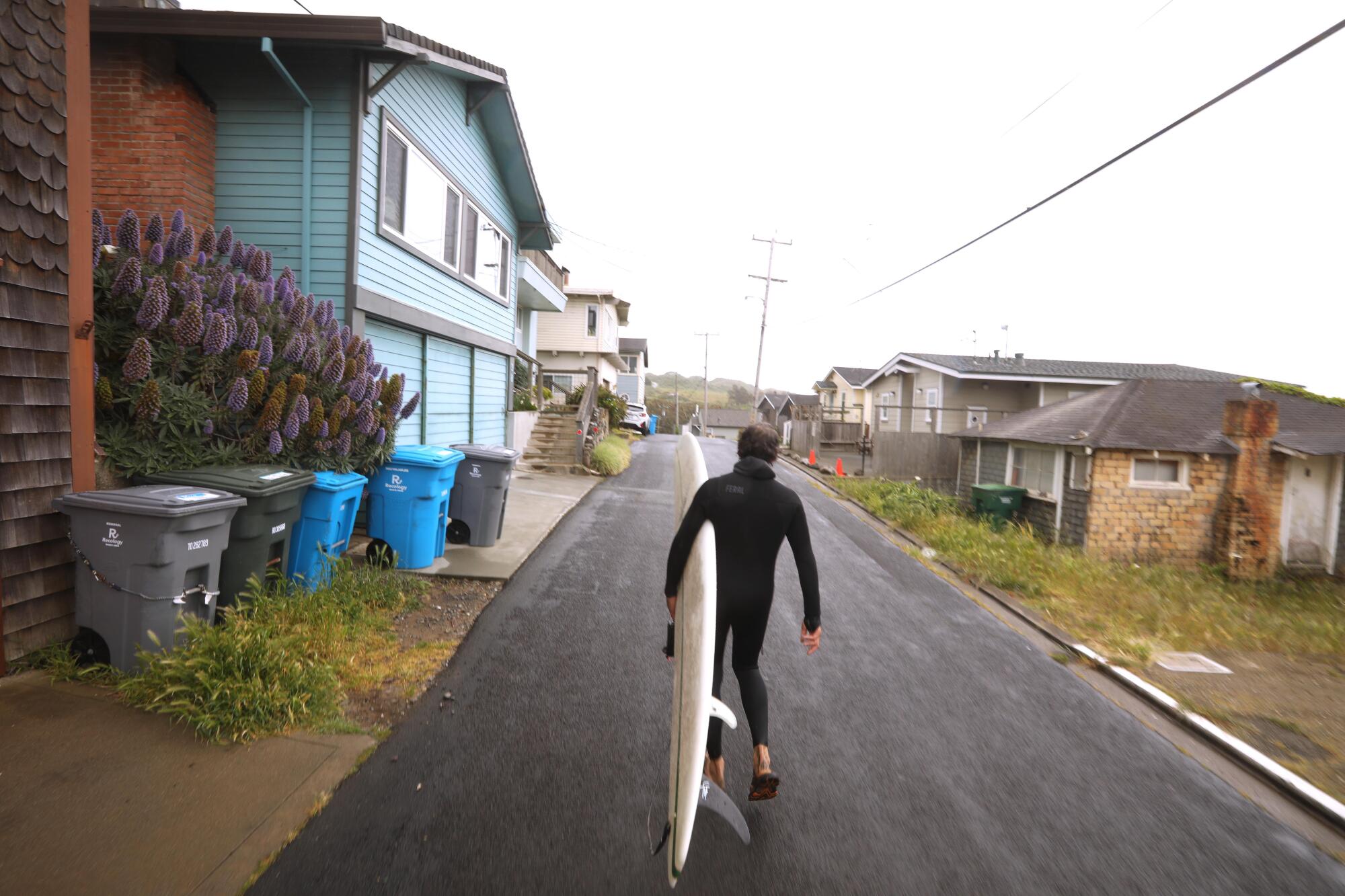
Dillon Beach homeowner Paul Martinez walks home after surfing. “Rent it responsibly,” Martinez says about owners renting out their houses when they are not in town.
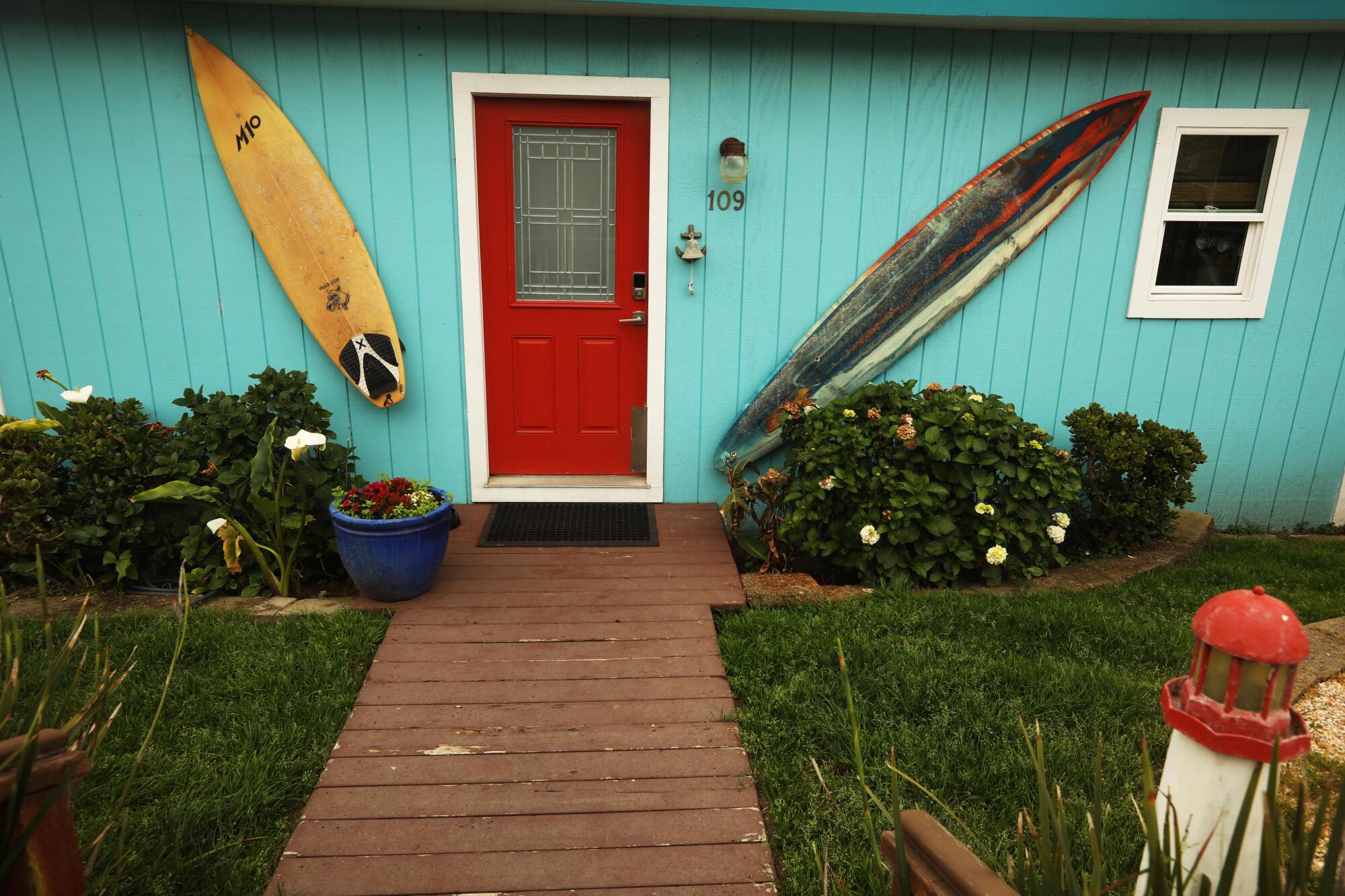
Mounted surfboards add to the charm of this colorful home in Dillon Beach.
In Point Reyes Station, population 383, there are 32 short-term rentals, according to the county. Under the new rules, 26 will be allowed. In Stinson Beach, the cap will allow the amount of rentals that currently exist: 192.
In Dillon Beach, vacation rentals will be allowed to grow 63%, from 125 to 204. The town has no school and the only businesses are a resort and its general store, which supervisors noted make for a different kind of community than many of the other towns dotting the Marin coastline.
County officials said they expect the number of existing short-term rentals to shrink through attrition. Current license holders will have to reapply and adhere to stricter regulations, which can include expensive septic upgrades. The new rules allow just one short-term rental property per operator, and licenses will not transfer to new owners if a property sells.
Debate over the issue has raised questions not just about limited housing in Marin, but also about whether Airbnbs have become a critical means of providing public beach access — a right enshrined in the California Coastal Act — in seaside towns with few hotel rooms.
“Please do not codify this anti-visitor, exclusionary behavior. Do not turn a region dense in coastal public recreational lands into an exclusionary playground that only the elite can access,” Inverness resident Rachel Dinno Taylor, founder of the West Marin Access Coalition, a citizens group that fought the measure, said in a speech last month before the California Coastal Commission.
The Coastal Commission regulates development in the Coastal Zone — which is generally the first 1,000 yards from the shoreline but extends a few miles inland in some areas — and increasingly is weighing in on local efforts to limit short-term rentals.
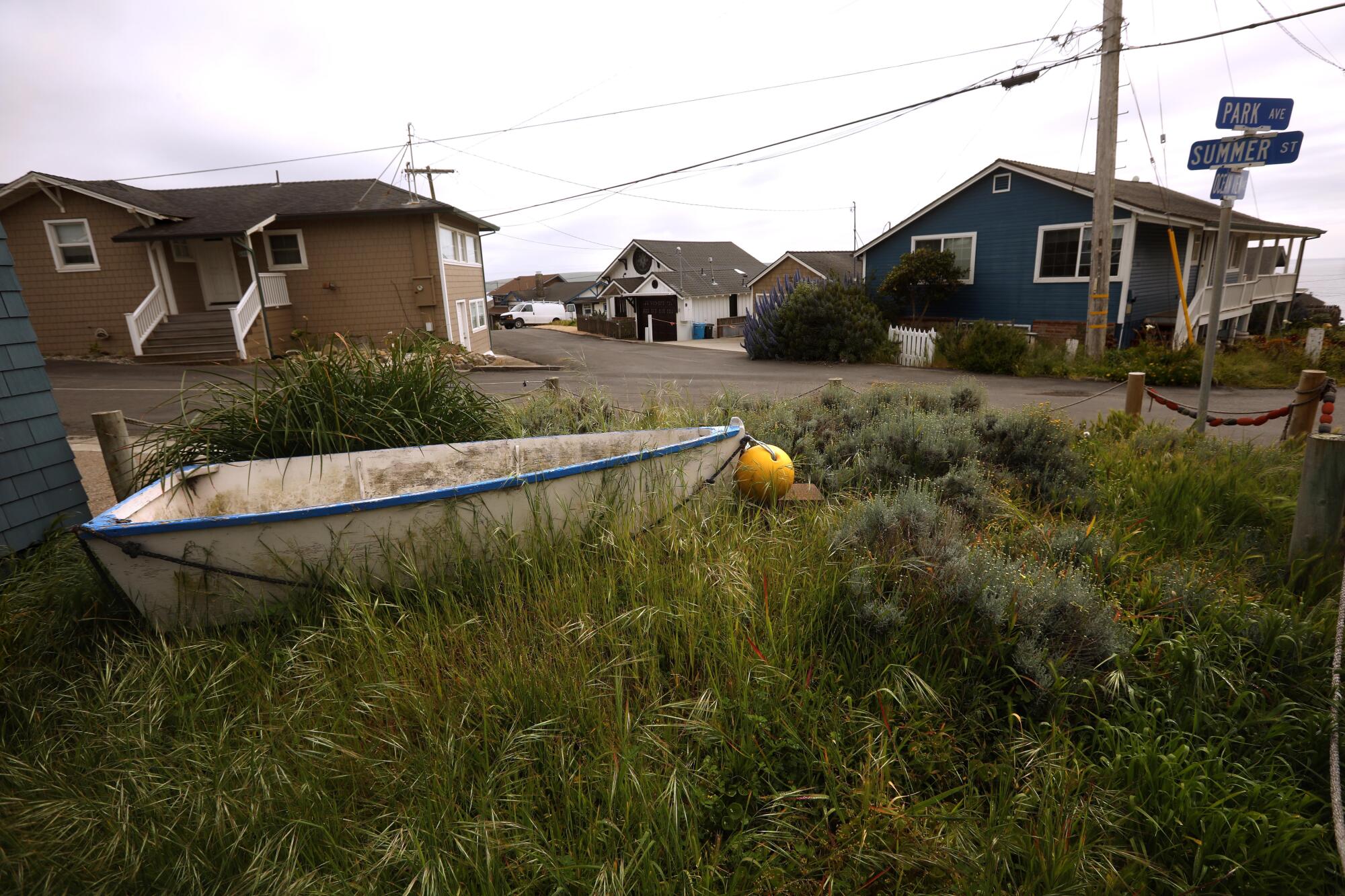
If it weren’t for vacationers — who fill the village with laughter and kids and wagons and dogs — Dillon Beach would be dead most days, residents say.
Since 1992, the Coastal Commission has considered at least 47 short-term rental ordinances. It has approved all but four, including Marin County’s new ordinance.
“Vacation rentals can provide important public access to the coast, especially where hotels are scarce. But without thoughtful guidelines, they can also have unintended impacts on local housing availability,” Kate Huckelbridge, executive director of the Coastal Commission, said in a statement to The Times. “We think Marin County achieved the right balance for their unique and world-famous coastline.”
The West Marin Access Coalition, many of whose members rent out their homes and so have a financial stake in the debate, argued the county did not have enough data to prove short-term rentals directly affect housing availability. Many residents rely upon income generated by their rentals to afford staying in their homes, Sean Callagy, a member of the coalition, said in an email.
The county’s new policy, he wrote, will “create hardships for low- and middle-income residents, worsen housing insecurity and deny visitors access to the coast.”
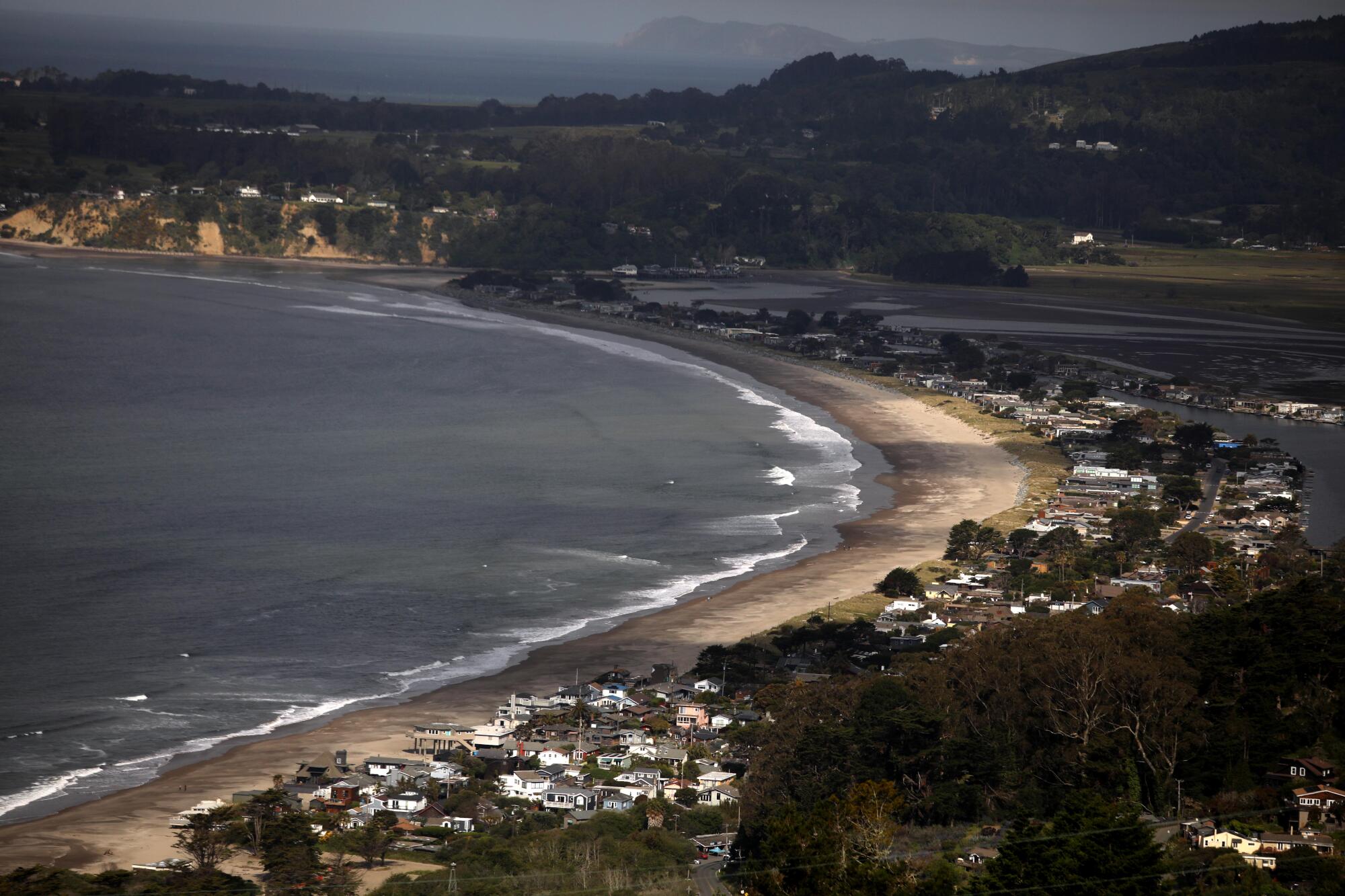
An aerial view of Stinson Beach in Marin County.
For years, high-demand destinations across California — including Los Angeles city and county, Palm Springs, Malibu, Ojai and San Francisco — have tried to rein in rental platforms such as Airbnb and Vrbo, citing the need to prevent housing from being converted into de facto hotel rooms .
In Marin County, the explosive growth in short-term rentals has been particularly divisive in smaller towns. There, the number of full-time residents is dwindling while millionaires’ second — and third — homes, many of which are used as seasonal rentals, sit empty much of the year.
That’s a cruel paradox when there are not enough affordable homes for people who work in those communities, proponents of the cap say.
In unincorporated Marin County, the median sales price of a single-family home rose 98% from 2013 to 2021, to $1.91 million, according to a countywide housing plan adopted last year.
“Housing affordability and housing supply were really the driving factor in why we’re addressing short-term rentals right now,” said Sarah Jones, director of the Marin County Community Development Agency. “There’s not housing being built. And the housing that’s available, people are just seeing that it’s more profitable and easier to use it as a short-term rental than to rent it out long term.”
Although Marin County has much open space, it has little room to expand housing. Roughly 85% of its land, including the Point Reyes National Seashore and the Golden Gate National Recreation Area, is public space or agricultural land protected from development.
Marin County Supervisor Dennis Rodoni, who represents the scenic West Marin towns where vacation rentals are most heavily concentrated, said they have transformed “tiny communities where even losing a few homes is a big deal.”
“Our volunteer fire departments are losing volunteers,” he said. “Our schoolteachers, we’re having a hard time locating them in the community; they have to commute long distances.”
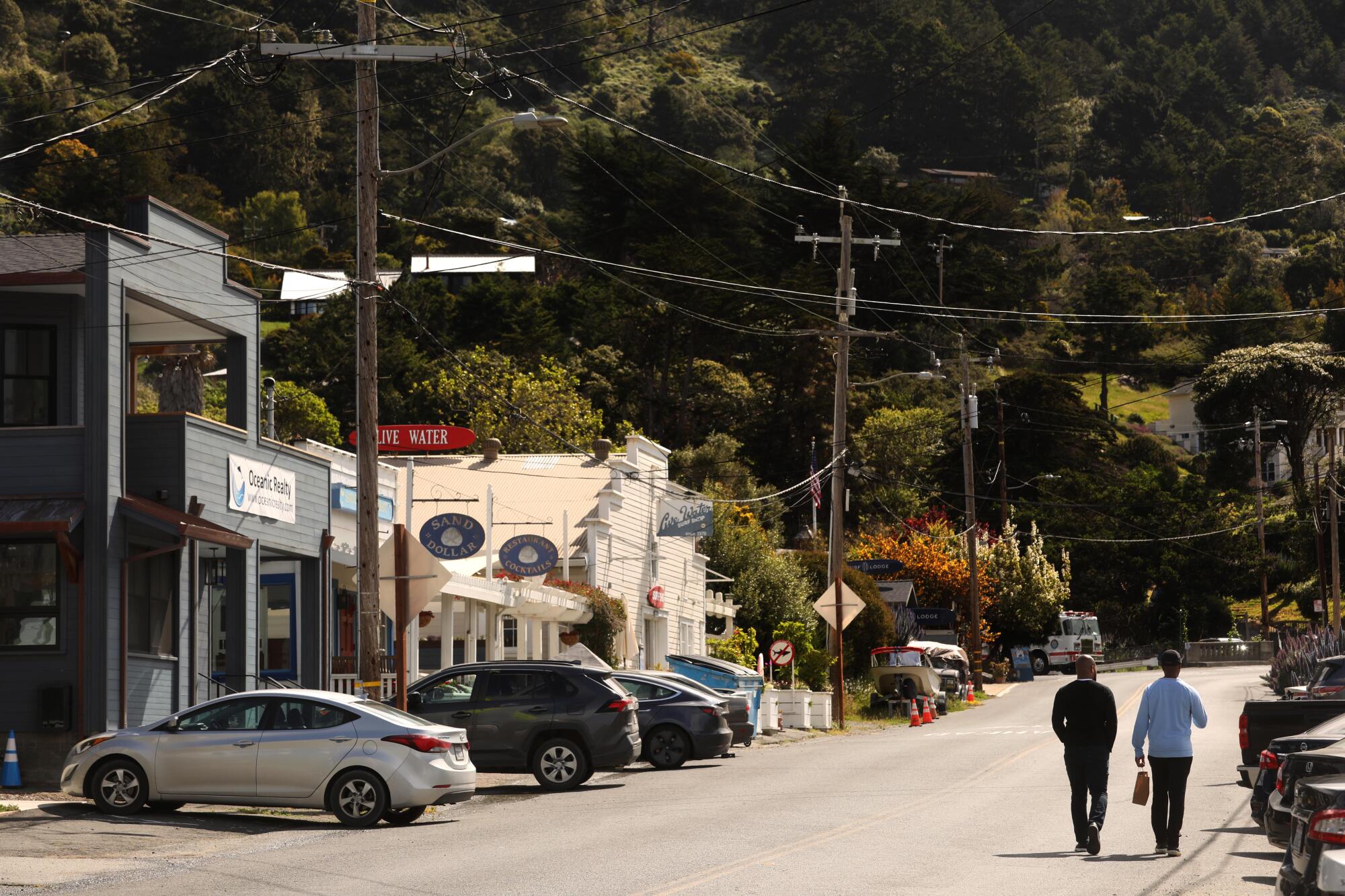
Visitors stroll through downtown Stinson Beach along Highway 1 in West Marin County.
The elementary school in Stinson Beach, he noted, is “having a hard time keeping its doors open” because so few children now live there. The town’s population, according to census data, plunged 38% from 2016 to 2022, to 371. In 2022, there were no children younger than 15.
According to county estimates, 27% of housing units in Stinson Beach are used as short-term rentals — many of which are in the gated neighborhood of Seadrift, a flood-prone sand spit.
The town has “become like Martha’s Vineyard on the West Coast,” said August Temer, co-owner of Breakers Cafe on Highway 1 in Stinson Beach. “It’s not people’s primary residence.”

August Temer, center, co-owner of Breakers Cafe in Stinson Beach, says as a business owner he likes Airbnbs and the tourists they bring. But it’s sad, he says, that his employees can’t afford to live in town.
Standing behind the outdoor bar on a windy afternoon last month, Temer, a 45-year-old who grew up in Stinson Beach, said that as a business owner he likes Airbnbs and the money-spending tourists they bring in. But it’s sad, he said, that none of his employees can afford to live in town and must commute — which makes it difficult to keep workers.
Mac Bonn, the general manager, said he drives 45 minutes “over the hill,” traversing a winding mountain road, to his home in Fairfax.

“We used to know this as very much a vibrant neighborhood,” says Bruce Bowser, seated with his wife, Marlie de Swart. “A lot if it’s thinned out. A lot of people are older and have passed or moved on.”
In nearby Bolinas, artist Marlie de Swart and husband Bruce Bowser welcomed the new rules, telling the Coastal Commission in a letter that their town “is being changed from a characteristic village to a vacation rental suburb.”
The county ordinance limits the number of short-term rentals in Bolinas to 54. There are now 63.
The septuagenarian couple bought their century-old house with picture windows and redwood ceilings in downtown Bolinas in 1992 for about $230,000. They were stunned when a nearby house recently sold for nearly $3 million after its owner died.
Bolinas is so famously opposed to outsiders that, for years, a vigilante band called the Bolinas Border Patrol cut down road signs on Highway 1 that pointed the way into town.
Alas, Google Maps directed tourists to Bolinas. And the Airbnbs kept them there.
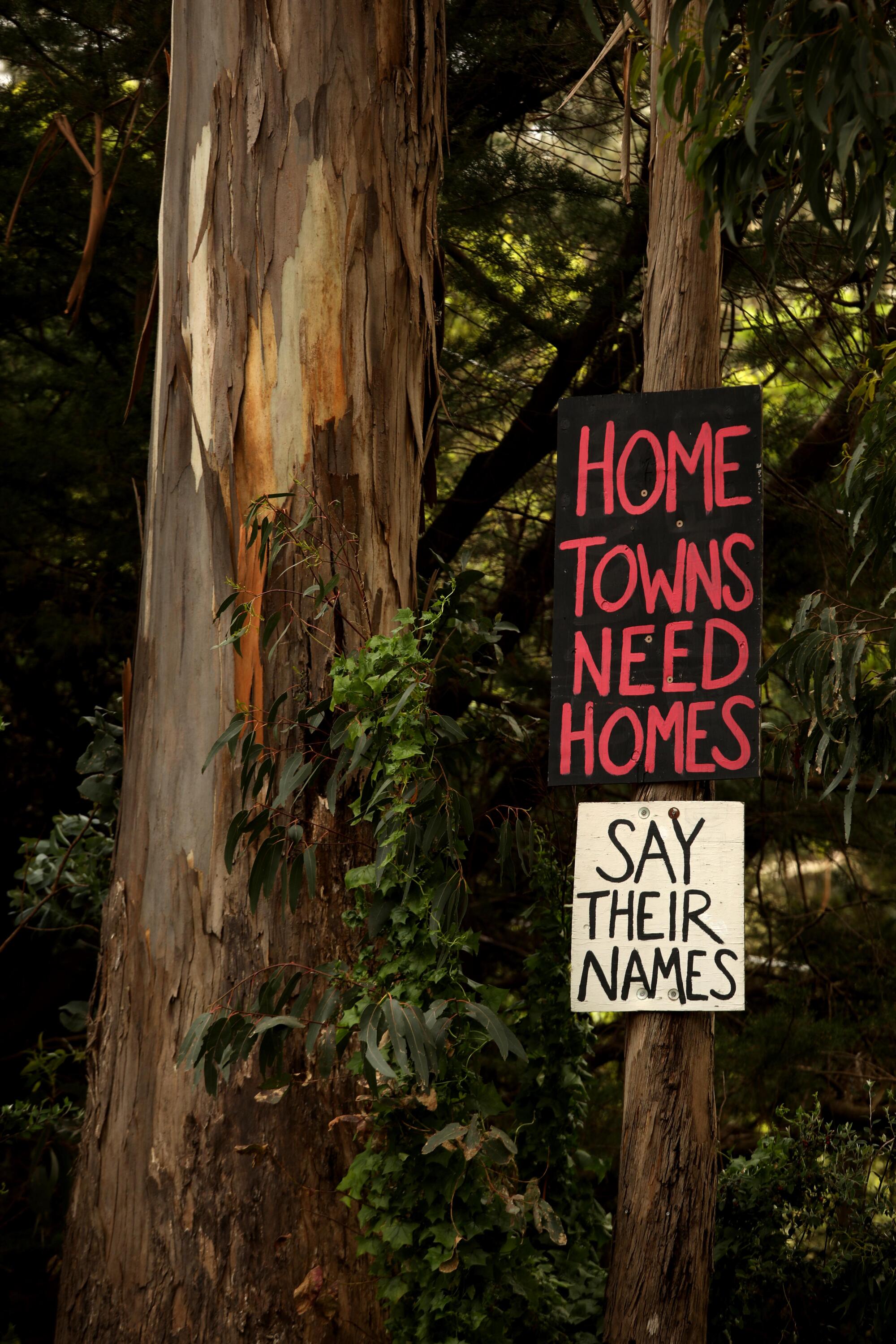
Bolinas residents say neighbors have been replaced by short-term guests and empty second homes, making the town feel more like a vacation rental suburb than a cozy hometown.
(Genaro Molina / Los Angeles Times)
During the summers, De Swart said, the town is overrun by visitors whose cars idle on narrow streets for more than an hour as they wait to park. Neighbors have been replaced by short-term guests and empty second homes.
“We used to know this as very much a vibrant neighborhood,” Bowser said. “A lot if it’s thinned out. A lot of people are older and have passed or moved on. We used to look out on this valley, and there were a lot of lights at night. Now, it’s mostly dark.”
Sitting on the couple’s living room table was a copy of the Point Reyes Light newspaper. On Page 11 was a classified ad that read: “In Search of Affordable Home,” placed by their friend, Tess Elliott, the newspaper’s publisher.
“We are the publishers of the Point Reyes Light and the assistant fire chief at the Inverness Fire Department,” the ad reads. “Please help us become permanent residents and continue to contribute to the place we love.”
Elliott, 44, said she and her husband have been running such ads for years. The mother of two young children, Elliott and her family live in an Inverness house that has been “rented to us at well below market rate” for the last decade by “a generous family.”
“It’s very fragile,” she said of life as a renter in Inverness, a town of 1,500 on the Tomales Bay with 93 registered short-term rentals. “People with kids, like us, can only take that so long. You want some stability. You want to invest in a property.”
Lately, she said, “we aren’t feeling very hopeful.”
Frank Leahy, a software engineer, bought his house a mile northwest of the newspaper office in 2020 and got a short-term rental license just before the county, in 2022, enacted a two-year moratorium on new operating licenses.
Leahy and his wife live full time in Inverness. But they travel a few weeks a year and list their house, with a bocce court out front, on Airbnb for $300 to $500 a night. Leahy said the county clamped down too broadly on short-term rental owners, conflating those who rent their homes full time and others who, like him, only rent a few weeks a year.
“I can name people who live up and down the street. If those were just rentals? It would be kind of weird,” he said. “I don’t have a problem with people wanting to rent out their home for a short amount of time.”
Leahy said short-term rentals are being scapegoated for the housing shortage in a place where it is prohibitively difficult to build.
About four years before they bought their home, he and his wife purchased an empty hillside lot nearby, planning to build a house. It took years to get all of the permits and to have the required bird, bat, geological and traffic surveys done. During that time, the cost to build rose by several hundred thousand dollars, he said. They gave up and sold the land.
On a chilly Wednesday morning last month, Dillon Beach was virtually silent — save for the plop-plop of sandals worn by a lone wetsuit-clad surfer walking home, and the tinkling of raindrops on Maggi’s windows.
With its gloomy weather, bad cell service and lack of jobs, Dillon Beach, on the south end of Bodega Bay, isn’t for everyone, Maggi said.
“A lot of the bugs in this place are its feature,” said Maggi, 54. “There’s no town. There’s no main drag. … This place has always been made of vacation homes. It’s not conducive to full-time living. It’s really far from everything.”
If it weren’t for vacationers — who fill the village with laughter and kids and wagons and dogs — the place would be dead most days, he said.
Maggi and his wife bought the house in 2020, when they and their adult children were going stir-crazy amid the pandemic. It was a financial stretch, but renting it out has helped. A gregarious Illinois native, Maggi joked that he had become a “California cliche” — a middle-aged guy with a beach house, a cool van, a border collie mix and a surfboard, even though he can’t surf well.
“We’re really fortunate, and I get it,” he said. But he finds it “kind of shameless” for the county to use the affordable housing crisis to justify cracking down on short-term rentals. The two-year ban on new licenses, he said, did not suddenly make houses cheap.
“You had this moratorium!” he said with a laugh. “How’s your affordable housing going?”


Inside the World Cup Cultural Exchange
Getty Images/Getty Images
hide caption
toggle caption
Getty Images/Getty Images
What does America look like to visitors?
We’re finding out in real time as fans and athletes from all over the world visit the United States for World Cup matches across the country. From Ranch dressing, to the wonders of all-you-can-eat buffets, tourists are getting a taste of all the USA has to offer, but how do we square the warm welcome for the World Cup with the United States’ recent stances on immigration? Brittany is joined by immigration reporter Jasmine Garsd, and NPR reporter Juliana Kim to find out.
Want more global perspectives on culture? Check out these episodes:
How often do you think about the American Empire?
Make life harder (and better): Learn another language.
Support Public Media. Join NPR Plus.
Follow Brittany on Instagram: @bmluse
For handpicked podcast recommendations every week, subscribe to NPR’s Pod Club newsletter at npr.org/podclub.
This episode was produced by Liam McBain and Corey Antonio Rose. It was edited by Neena Pathak. Our Supervising Producer is Cher Vincent. Our Executive Producer is Barton Girdwood. Our VP of Programming is Yolanda Sangweni.


In central London’s Waterloo Place, a life-size statue that emerged overnight in late April has been creating a stir. When I visited a few weeks after it was erected, local authorities had already set up protective barriers around it.
The installation — signed by the famed street artist Banksy — depicts a man in a suit hoisting a flag as he strides over a precipice. As he marches on, the flag blows backward to cover his face, leaving him unaware he’s only a step away from a perilous fall.
Set among grand monuments celebrating Britain’s past, the “flag man” takes on a particular visual irony at a time when the country — and much of the world — is debating its path forward.
Like many viewers there, I found myself wondering whether this statue is Banksy’s warning about the consequences of uncritical nationalism, or simply a reflection on human shortsightedness. Or, perhaps, it is just prompting us to ponder a broader question: What happens when devotion to a symbol prevents us from seeing what lies ahead?
Whatever the message, the work feels remarkably attuned to the current moment.
For more Far-Flung Postcards, click here.
-
 Arizona1 minute ago
Records: Toddler found alive in hospital morgue after being pronounced dead by Arizona doctor
-

 Arkansas8 minutes ago
Get to know: Arkansas QB commitment Cason Myers | Arkansas Democrat Gazette
-

 California11 minutes ago
California gets Bruce Lee Day in a first for US state’s Chinese Americans
-

 Colorado16 minutes ago
Colorado governor fires two clemency board members who spoke out about Tina Peters’ commutation | CNN Politics
-

 Connecticut23 minutes ago
Police investigating double homicide in Hartford
-

 Delaware26 minutes ago
65-year-old Delaware man killed after camel falls on him, police say
-

 Florida31 minutes ago
New Florida domestic violence laws take effect, adding tougher penalties and new victim protections
-

 Georgia38 minutes ago
Georgia launches address protection program for violence, trafficking survivors

