Lifestyle
L.A. aims to rebuild Griffith Park’s historic pool for $40 million by 2029


Replacing Griffith Park’s historic but idle swimming pool is likely to take at least three years and cost $40 million while delivering a competition pool, a neighboring recreational pool and a rehabilitated pool house with a gender-neutral bathhouse facility, city officials and designers told Los Feliz residents at an open house meeting Thursday night.
“The pool is being completely replaced. It leaks like a sieve,” said Stephanie Kingsnorth, principal of the architecture firm Perkins Eastman, addressing about 50 community members in a room next to the park’s visitor center.
Perkins Eastman, which is leading the design of the pool site, also worked on the renovation and expansion of Griffith Observatory from 2002 to 2006, when the firm was known as Pfeiffer Partners.
While neighbors look on, an artist’s rendition shows the proposed replacement of the Griffith Park Pool and rehabilitation of the pool house. The meeting was held at the Griffith Park Visitor Center Auditorium.
(Gina Ferazzi / Los Angeles Times)
The pool and pool house at Riverside Drive and Los Feliz Boulevard date to 1927, long before Interstate 5 was routed just east of the site in 1964. After decades as a popular spot for children’s swim lessons and recreational lap swimmers, the pool was shut down amid COVID-19 pandemic measures in early 2020. When the city tried to refill the pool, workers found that it no longer held water.
At one point early in planning to replace it, the city Bureau of Engineering forecast construction costs of $28 million. City officials say the project is complicated because of the nearness of the freeway and the Los Angeles River.
Kingsnorth said the project is nearing the end of its design development stage, with many details still under discussion.
In place of the existing seasonal pool, schematic drawings now show a new year-round competition pool, 50 meters long, 25 yards wide and from 3-foot, 6-inches to 12-foot, 9-inches deep.
Next to it, drawings show a training pool 25 yards long and 50 feet wide, with an ADA-compliant gentle slope down to about 4 feet deep.
The two-story pool house’s red tile roof, wooden trellises and Spanish Colonial Revival features will look roughly the same on the outside, Kingsnorth said, and the rehabilitation will comply with federal standards for historic structures.
But some formerly open-air areas will now be covered. An elevator and second set of stairs will be added inside, along with features to boost energy sustainability and meet modern accessibility laws. The site’s open-air showers will be rinse-only.
On the ground floor, the building’s open-air male and female changing rooms will merge into one larger indoor gender-neutral area with private changing rooms and toilet stalls, Kingsnorth said.
“Every single toilet room and dressing room is an individual room,” Kingsnorth said.
Kingsnorth said the gender-neutral dressing room design was not mandated by state or federal restrictions but was a priority for the city’s Recreation and Parks Department. On projects like this, Kingsnorth said, “this is something that’s more common for equity and inclusion.”
Questions from the community focused on features of the pool, public access, cost and effects of the construction work.
“We’re very anxious to have the school come back, so that the kids can learn to swim,” said Marian Dodge, a longtime area resident and past president of the Los Feliz Improvement Assn.

The Griffith Park Pool, seen here in 2023, has been closed since 2020, when city workers found major leakage problems.
(Dania Maxwell / Los Angeles Times)
The pool site is within City Council District 4, represented by Nithya Raman, who was not present. Her staffers organized the meeting and urged residents to send questions and comments to griffithparkpool@lacity.org.
The next steps, a handout from the city and design firm read, include creation of construction documents (estimated at six months), obtaining city permits (five months), selecting a construction contractor (five months), construction (18 months), and “project close-out” (six months). If that schedule is met, completion would come in a little over 40 months, around July 2029.
“This is ambitious, but we’re confident that we can get there,” Kingsnorth said.
In an hourlong presentation, followed by about a dozen questions and answers, Kingsnorth was joined by city officials, including Ohaji Abdallah, assistant division head of the Bureau of Engineering’s architectural division, and
Maha Yateem, the Recreation and Parks Department’s principal recreation supervisor for citywide aquatics.
The plan calls for three rows of shaded concrete bleachers for spectators alongside the competition pool. Yateem said the competition pool will include a diving board, adding that “we’re working on a location for that now.”
Because the project means removing tons of existing pool materials and bringing in new ones, “the construction here is going to be quite intense,” Abdallah said. He and Kingsnorth said the “haul route” of construction trucks has not been decided, and Abdallah said he and other officials are discussing the plan’s possible impact on Los Feliz Nursery School, which stands near the pool.
When considering construction costs and “soft costs” like design and environmental review, “I expect this to be about $40 million,” Abdallah said, adding that the project will be vying with other city priorities for dollars from the general fund. He also noted that current estimates were made “before the war started” in Iran and gas prices surged.
After the meeting, Kingsnorth said, “We’re ready to pause if we need to because of the outlying state of the world.”



Cesar Chavez attends a Labour Party press conference in the United Kingdon on September 17, 1974.
Les Lee/Getty Images/Hulton Archive
hide caption
toggle caption
Les Lee/Getty Images/Hulton Archive
A version of this essay first appeared in the Up First newsletter. Subscribe here so you don’t miss the next one. You’ll get the news you need to start your day, plus a little fun every weekday and Sundays.
My phone kept going off on Wednesday afternoon with texts from different friends — each wanting to trade thoughts on what felt like the second death of Cesar Chavez. His first death happened on April 23, 1993. He was 66 and died of natural causes. Over 50,000 people attended his funeral in Delano, Calif. And he was posthumously awarded the Presidential Medal of Freedom in 1994.

At that time, I was in elementary school in suburban Chicago, far from California. It was then that I first learned of Chavez and his movement’s hard-fought efforts to secure better wages and improved working conditions for farm workers. As a daughter of janitors and a factory worker, I knew what better pay and the right to a union meant for people like us.
Chavez’s second death landed on Wednesday after a The New York Times investigation revealed he had been accused of sexual abuse and rape. NPR has not independently confirmed the allegations against Chavez in the Times investigation.
For several years before joining Morning Edition as an editor, I covered sexual violence for ProPublica, an investigative newsroom. My work there was often not about catching the bad guys but rather about listening, for extended periods of time, to the people they hurt. This work took me to places such as Alaska and Utah where I met a broad range of people who were assaulted in recent years and some, who like Huerta, never spoke of their experiences for decades.
Consistent with national statistics, the perpetrators whom I wrote about were often family, bosses, clergy or others in positions of power.

“I have kept this secret long enough. My silence ends here,” Dolores Huerta, 95, said in a statement on Wednesday.
JC Olivera/Getty Images for State of the Ar/Getty Images North America
hide caption
toggle caption
JC Olivera/Getty Images for State of the Ar/Getty Images North America
This week, many of the voices of the victims I spoke with hearkened back to the experiences that the New York Times‘s investigation revealed in telling of the sexual abuse that Ana Murguia, Debra Rojas and Dolores Huerta shared with the publication. I was grateful to learn Murguia’s and Rojas’ names alongside the much more familiar one of Huerta, the civil rights icon in her own right who co-led the United Farm Workers movement that made Chavez famous.
I’ve learned that there is no timeline for naming what was done to you by people you trusted. I’ve learned that justice for many means the world recognizing the harm done to them — and the difficult work they have done to no longer live defined by it. I’ve learned that people care about protecting others. And that sometimes by sharing their stories, survivors hope to prevent future harm.
My friends and I may be down a hero this week. But, we gained two new heroes in Ana Murguia and Debra Rojas, who, alongside Dolores Huerta, showed us it’s never too late to speak up. In fact, it might be the only way out for them and others.

Taylor Frankie Paul attends the Oscars on Sunday, a week ahead of her scheduled Bachelorette premiere.
Mike Coppola/Getty Images
hide caption
toggle caption
Mike Coppola/Getty Images
The new season of ABC’s reality TV series The Bachelorette was all filmed and set to premiere on Sunday. But parent company Disney now says it will not air as planned.
The decision to shelve the show’s 22nd season came on Thursday, after TMZ published a video it says shows would-be bachelorette Taylor Frankie Paul physically attacking her then-boyfriend, Dakota Mortensen, in 2023.
“In light of the newly released video just surfaced today, we have made the decision to not move forward with the new season of ‘The Bachelorette’ at this time, and our focus is on supporting the family,” Disney Entertainment said in a statement reported by the Associated Press, New York Times and others.
The video, filmed by Mortensen, appears to show Paul hitting, grabbing and throwing three barstools at him. A child can be heard crying on the couch nearby, and Mortensen says at one point: “Your daughter is sitting right there.”
Paul has three children: two with her ex-husband Tate Paul and one, born in 2024, with Mortensen. She confirmed the end of their three-year on-again, off-again relationship in May 2025. NPR has reached out to both of their representatives.
In a statement shared with NBC News, Paul’s representative called the video the “latest installment of [Mortensen’s] never-ending, desperate, attention-seeking, destructive campaign to harm Taylor without any regard for the consequences for their child.”
Paul’s representative told People in a statement that Paul is “exploring all of her options, seeking support, and preparing to own and share her story,” and “very grateful for ABC’s support as she prioritizes her family’s safety and security.”
Mortenesen told Entertainment Weekly that he categorically denies “these baseless claims about me and our relationship,” calling it “a deeply upsetting situation.”
“I am focusing on our son and his safety, and hope that Taylor will do the same,” he added.

NPR has not independently verified the authenticity of the video, which TMZ says was used as evidence in legal proceedings. But it matches Utah’s Herriman City Police Department’s description of a February 2023 incident that led to Paul’s arrest on charges of assault, criminal mischief and commission of domestic violence in the presence of a child.
Court records obtained by NPR show that Paul agreed to plead guilty to the third-degree felony of aggravated assault and has been serving 36 months of probation. When asked about the incident on a 2025 podcast, she acknowledged that her kids were present but said she “never had hurt” her daughter and “never intentionally did anything with my children.”
The couple’s turbulent relationship was a central plot point of the other reality TV show that made Paul famous: The Secret Lives of Mormon Wives, which premiered in 2024 and just released its fourth season last week.
Earlier this week, People and other entertainment outlets reported that filming of the show’s fifth season had been halted amid reports of an investigation into domestic assault allegations involving Paul and Mortensen — presumably a separate incident, though details are scarce.
An unnamed spokesperson with Utah’s Draper City Police Department told People that “allegations have been made in both directions,” and “contact was made with involved parties” on Feb. 24 and 25, though declined to elaborate as the investigation is ongoing. NPR has reached out to Draper police, but did not hear back in time for publication.
There’s a lot we still don’t know. But if you’re just tuning in, we can help fill in some gaps.

(Left-right) Jennifer Affleck, Mayci Neeley, Mikayla Matthews, Taylor Frankie Paul, and Miranda McWhorter of The Secret Lives of Mormon Wives attend an event at SiriusXM Studios in May 2025.
Rodin Eckenroth/Getty Images
hide caption
toggle caption
Rodin Eckenroth/Getty Images
Who are we talking about?
At the center of the controversy is Taylor Frankie Paul.
She’s a 31-year-old influencer best known as the self-proclaimed creator of “MomTok,” a friend group-slash-collective of Utah-based Mormon moms that rose to social media fame in 2020.
They posted dance trends, beauty routines, skits and lifestyle videos to TikTok, promoting a more modern side of Mormonism and challenging its traditional gender roles. But it didn’t take long for controversy to strike, in the form of the 2022 “soft swinging scandal.”
The what scandal?
Paul revealed in a May 2022 livestream video that she and her then-husband, Tate Paul, had been “soft swinging” with other couples in their social circle. She described it as “when you hook up but don’t go all the way.”
“The agreement was just like, as long as we were both there and we saw it and we knew it, it was okay, and the second it goes behind without each other, then you’ve stepped out of the agreement,” she said. “And I did that.”
Paul and her then-husband, who had been in an open relationship, divorced later that year (she called the swinging situation “the tip of the iceberg” of their problems). Her confession also caused rifts in the MomTok community, since she had claimed — without naming names — that other members were involved in the swinging group.
When did Mortensen enter (and leave) the picture?
Paul and Mortensen confirmed their relationship on TikTok in September 2022, several months after she hinted at it online. It quickly turned rocky.
The couple broke up in December, then got back together in January 2023 — a month before the domestic violence incident that prompted Paul’s arrest. The relationship, while turbulent, continued, and Paul announced her pregnancy in September. Their son, Ever, was born in March 2024.
The Secret Lives of Mormon Wives, the documentary-style show following Paul and her #MomTok circle, premiered on Hulu later that year.
The first season ended with the birth of Paul’s son and cliffhanger claims about Mortensen’s alleged infidelity, raised by another cast member, which he has denied. The two split in December 2024, but sparked reconciliation rumors the following spring. Their dynamic has remained a focus of the TV show, including in the most recent season.
What about these Mormon wives?
The Secret Lives of Mormon Wives, aka SLOMW, follows eight Mormon moms-slash-influencers (and their families) as they navigate marriages, friendships, faith and increasingly, the personal and professional pressures of fame.
“I feel like if anything, it’s had a positive impact and it shows people that they don’t have to be perfect to be part of a religion, and be close to God and Jesus,” cast member Macyi Neeley told NPR last year.
Filming for the first season began in 2023, though paused and resumed after Paul’s arrest.

The first episode of its first season, which premiered in September 2024, shows Paul trying to smooth things over with the moms after the swinging scandal. It also covers the domestic violence incident, featuring body camera footage of police arresting a tearful Paul outside the house (though no footage of what transpired inside).
Hulu said the show’s premiere was its most-watched unscripted season debut of 2024, surpassing The Kardashians and leading to a rapid renewal of more episodes.
SLOMW has maintained a near-constant filming schedule, releasing two 10-episode seasons in 2025 and another earlier this month. Season four covers the fall of 2025, as Paul was preparing to film The Bachelorette.

The show’s popularity has catapulted several of its stars, not just Paul, into other high-profile roles. Two cast members, Whitney Leavitt and Jennifer Affleck, appeared on Dancing with the Stars. Leavitt is now doing a stint as Roxie in Chicago on Broadway, and helped the show smash its box-office record this week.
How did Paul become The Bachelorette?
Paul confirmed her relationship with Mortensen was officially over on a September 2025 episode of the Call Her Daddy podcast. That’s also where she announced she had been chosen as the bachelorette.
It was an unusual pick, not only because of Paul’s complicated relationship with her ex and her high profile, but because she hadn’t previously competed in the Bachelor franchise. That’s a first: Each bachelorette so far has been a fan-favorite contestant from the season of The Bachelor before it.
Disney is the parent company of both Hulu (SLOWM) and ABC (The Bachelorette). The choice to bring in an existing influencer-slash-reality star was seen as a move to revitalize the Bachelorette, which has seen a sharp decline in viewership in recent years. Part of that is, ironically, due to casting controversies including unexpected, post-season revelations about contestants on both sides of the rose.
What’s next for each show?
ABC plans to air a rerun of American Idol in the show’s place on Sunday. It’s not clear if Paul’s season of The Bachelorette will ever air. NPR has reached out to Disney for comment.
It’s also not clear when or whether filming of SLOMW will resume. At a press event for The Bachelorette earlier this week, Paul weighed in on the production pause, telling People: “my heart hurts to see it, to go through it, especially at this time.”
“It’s a heavy time, and it’s unfortunate,” she continued. “I’m struggling for sure, but also at the same time I feel like if I don’t show up, then I’m just giving these opportunities away and not enjoying what we’ve worked on and something super exciting that’s coming.”

My father spent the 1970s selling hunger to America: soda, waffles, chips, anything that promised satisfaction in 30 seconds flat. He also weighed 450 pounds and was always on a new diet with me as his little diet coach. All his best material came from our kitchen table: “L’eggo my Eggo,” “Once You Pop, You Can’t Stop,” “Coke Is It” — the lines he’d toss out between bites.
My grandma Beauty did the opposite. She fed me comfort, one recipe at a time, until I believed emotions had a flavor. My dad could sell the American consumer comfort, but he couldn’t quite give that same safety to the girl sitting across from him. Between my dad, who treated cravings like a religion, and my grandmother, who treated food like therapy, I grew up thinking connection was something you could taste before you could name it.
So when I met my Bumble date years later after my divorce, it wasn’t fireworks. It was something quieter. A sense memory. A familiar click in the body before the mind catches up.
The first meal we ever shared was at Dan Tana’s: rare steak and shrimp swimming in oil and garlic. He ordered quickly, confidently, passing plates back and forth like this was something we’d always done. Somewhere in that meal, I felt that oyster-like disbelief when something simple tastes better than expected, and you pretend not to notice because the surprise feels too intimate to say out loud.
After that night, we slipped into a rhythm. We went out to dinner a lot. Before I could even open a menu, he’d tell the waiter, “Sauce on the side, she eats like a celebrity,” making me feel adored, not demanding.
The dishes were always exquisite. Slow-roasted bone marrow, branzino laced with herbs, the kind of flavors that made us lean in and feed each other. He’d study my face and say, “Love it or hate it?,” shooting me a warm smirk.
On quieter dates, we watched movies in bed, talked about our kids, anything except for whatever was forming between us. On the nights I slept over, he’d bring me matcha lattes in the morning casually like it was no big deal, and every single time, I felt like I’d won an Academy Award.
“Thank you, ladies and gentlemen!” I’d exclaim.
And he’d shake his head, amused. “You’re too easy to please.”
But what he didn’t realize was remembering that I liked only a splash of milk and an extra shot of matcha fed a hunger in me I didn’t know I longed for.
Our banter was fun, constant and warm. Everything worked except for when a question leaned into the future. That’s when something tightened, a brief, instinctual clam-closing and then loosening again just as fast. But I kept going because the present was good. Because we laughed a lot. Because the world felt softer when I was with him.
Then one Sunday evening, I asked, “What are you doing for the Jewish holidays?” He gave a quick, unreadable flicker. It was gone before I could interpret it. We didn’t talk about it. We didn’t need to. We were both leaving for our own family week. When I returned excited to see him and celebrate a big work milestone I’d helped him prepare for, I got “the text.” Careful. Polite. And at the end, a line that blew a hole through my chest.
“I don’t see a romantic future with you.”
I read it again and again until my body revolted. A wave of heat shot through me. I wanted to scream but I just stood there frozen, unable to breathe, like someone had cracked open my chest and scooped the air out.
Suddenly, I wasn’t a grown-up woman living in Hollywood. I wasn’t a mother, not a nutritionist, not someone who has taken care of people for years.
I was 9. I was in Chicago. It was 1975. I was in my grandma’s kitchen, the place I loved most in the world. The only place I ever remember feeling safe. My fingers were gripping her apron. The smell of dill wafting through the air. Her soup was bubbling. Nourishment, comfort, stability in the form of broth and steady hands. Then my mother’s voice sliced through it: “Dawn, get in the car.”
As I was pushed into the station wagon, there were boxes everywhere. Clio Awards, stacks of Playboy magazines with my dad’s byline, and when my mother slid in after me, she bumped into my dad’s cigarette and the ashes ignited the map — burning a hole straight through the Midwest. My stomach was in knots. I kept reaching my hand toward my grandmother.
“Don’t make me go.”
My mom, irritated, honked the horn, and my dad stepped on the gas.
Standing in my kitchen decades later, looking at the text message, the same feeling of nausea washed over me. The ground shifted. My friends, trying to support me, started texting me. “Don’t you dare text him.”
But I did.
“Hi.”
He responded immediately. We met for Japanese that night, and without trying, we fell right back into our rhythm over Santa Barbara uni and lamb chops cooked exactly the way we like them, crisp on the outside, tender on the inside, the kind of dish that cracks when your knife hits it and then gives way like warm silk. We were not awkward. We were not mad. We were not resolved. We were two people who kept finding each other at a table, even when everything else was uncertain.
Then, somewhere between courses, he looked up and said, “You remind me of my mother.”
The words hit something in me I couldn’t name. Not a wound, an internal flinch. He always told me his mother was unpredictable. Warm one moment, stormy the next. Comforting and chaotic in the same breath. I was none of those things. And I knew instantly that whatever he meant was tangled and that my warmth might feel like comfort to him, but also, unconsciously, like danger. That being cared for and being overwhelmed lived very close together in his body.
I didn’t take it personally. I took it as information. Maybe I felt familiar to him in a way that carried both safety and alarm. A green light and a red light at the same intersection. And the strangest thing was, in that same moment, he reminded me of my father, a man who could charm a room, feed America slogans that defined a generation, win awards and still feel shaky where it mattered most — with me.
Two grown-ups sitting across a table, mirroring childhood patterns that neither of us fully understood.
Later, when he drove me home, he dropped something heavy: his story, not mine to tell. The kind of truth that shifts the room without explaining the entire plot.
Sitting there in his car, I realized it was never just the two of us. We both brought our ghosts, and they probably showed up before we even opened our menus. Maybe that’s the real story. You can share the same cravings and still have to adjust the salt and heat as each new combination of flavors come together and unfold.
The author is a nutritionist who wrote the bestselling book, “My Fat Dad: A Memoir of Food, Love and Family, With Recipes.” Find her on Instagram: @DawnLerman.
L.A. Affairs chronicles the search for romantic love in all its glorious expressions in the L.A. area, and we want to hear your true story. We pay $400 for a published essay. Email LAAffairs@latimes.com. You can find submission guidelines here. You can find past columns here.
Editor’s note: On April 3, L.A. Affairs Live, our new storytelling competition show, will feature real dating stories from people living in the Greater Los Angeles area. Tickets for our first event are on sale now at the Next Fun Thing.

I booked a bedroom and a roomette on the same overnight Amtrak train. The bedroom is worth the splurge for longer rides.

Tribes want input, influence on Colorado River drought plan

CT Agency Picked To Lead Federal Career Training Grant Expansion

Delaware County uses AI traffic cameras to ease congestion on Lancaster Avenue

Rocket launch from Florida this weekend. Best places, beaches to watch

Florida High School Football Rankings: Top 25 teams – Oct. 21

How old is Bo Nix? What to know about Oregon quarterback ahead of 2024 NFL Draft

Cleary's 21 help Le Moyne down Central Connecticut State 69-64 in OT

99th annual Pony Swim held in Virginia

Indiana Members Credit Union announced as new anchor tenant at Bottleworks District

Read the Ruling in The Times’s Lawsuit Against the Pentagon

NYC Mayor Mamdani’s wife glorified terrorists in online posts, criticized US military: report

Curro Rodríguez: from bankruptcy to global water empire

Jury finds Elon Musk misled investors during Twitter purchase

Pritzker pushes prosecutions of Trump officials as part of Dem ‘Project 2029’ agenda
-

 Detroit, MI2 days ago
Drummer Brian Pastoria, longtime Detroit music advocate, dies at 68
-

 Oklahoma7 days ago
Family rallies around Oklahoma father after head-on crash
-

 Nebraska1 week ago
Wildfire forces immediate evacuation order for Farnam residents
-

 Georgia5 days ago
How ICE plans for a detention warehouse pushed a Georgia town to fight back | CNN Politics
-

 Massachusetts1 week ago
Massachusetts community colleges to launch apprenticeship degree programs – The Boston Globe
-

 Alaska6 days ago
Police looking for man considered ‘armed and dangerous’
-
 Southwest1 week ago
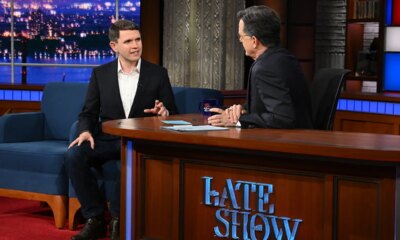
Talarico reportedly knew Colbert interview wouldn’t air on TV before he left to film it
-

 Michigan1 week ago
Michigan-based Stryker hit with cyberattack