Lifestyle
In a hot L.A. neighborhood full of brown lawns, his DIY native plant garden thrives

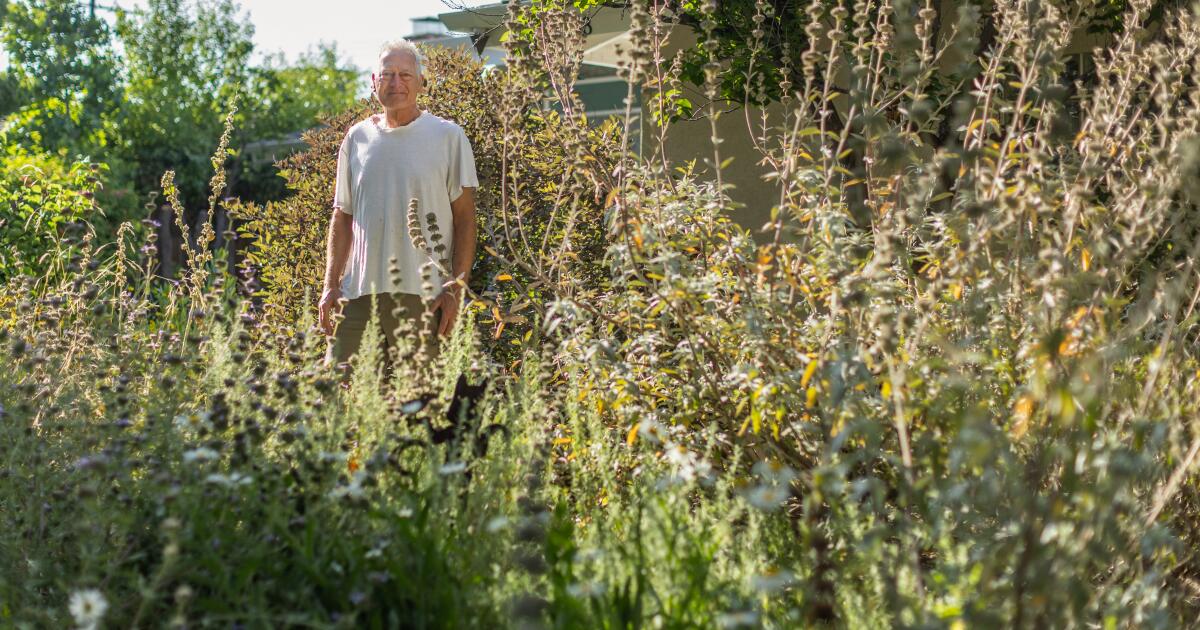
Water-hungry lawns are symbols of Los Angeles’ past. In this series, we spotlight yards with alternative, low-water landscaping built for the future.
The temperature was in the 90s in West Hills, but that didn’t deter an astonishing number of monarch butterflies, hummingbirds and bees from feeding on the California-friendly plants — sages, salvias and flowering milkweed — in Eric Augusztiny’s front yard.
Pollinators, however, aren’t the only ones who call the front yard home. “This is our buddy, Lizzy,” Augusztiny said with a smile as he and his wife, Lise Ransdell, greeted an enormous lizard who crawled out from under a large salvia ‘Desperado’ plant.
“It’s just a postage stamp suburban yard, but there’s a lot going on here,” Ransdell said of the yard’s abundant wildlife, which counts rabbits, skunks, raccoons and possums as visitors.
It wasn’t always like this. When Augusztiny purchased the home in 1996, the traditional yard looked like many others on his street with a Bermuda grass lawn, assorted shrubs and an apricot tree.
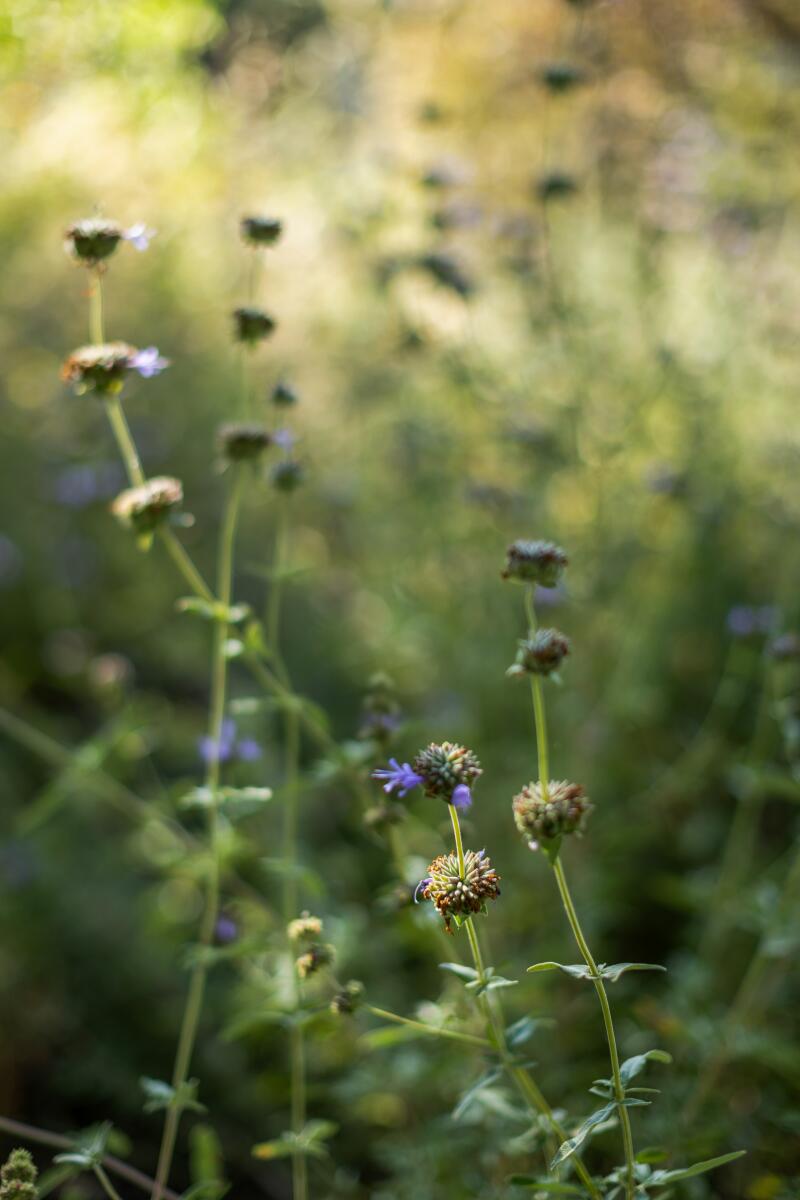
Milkweed, a favorite of monarch butterflies, left. Cleveland sage, Salvia clevelandii. (Myung J. Chun / Los Angeles Times)
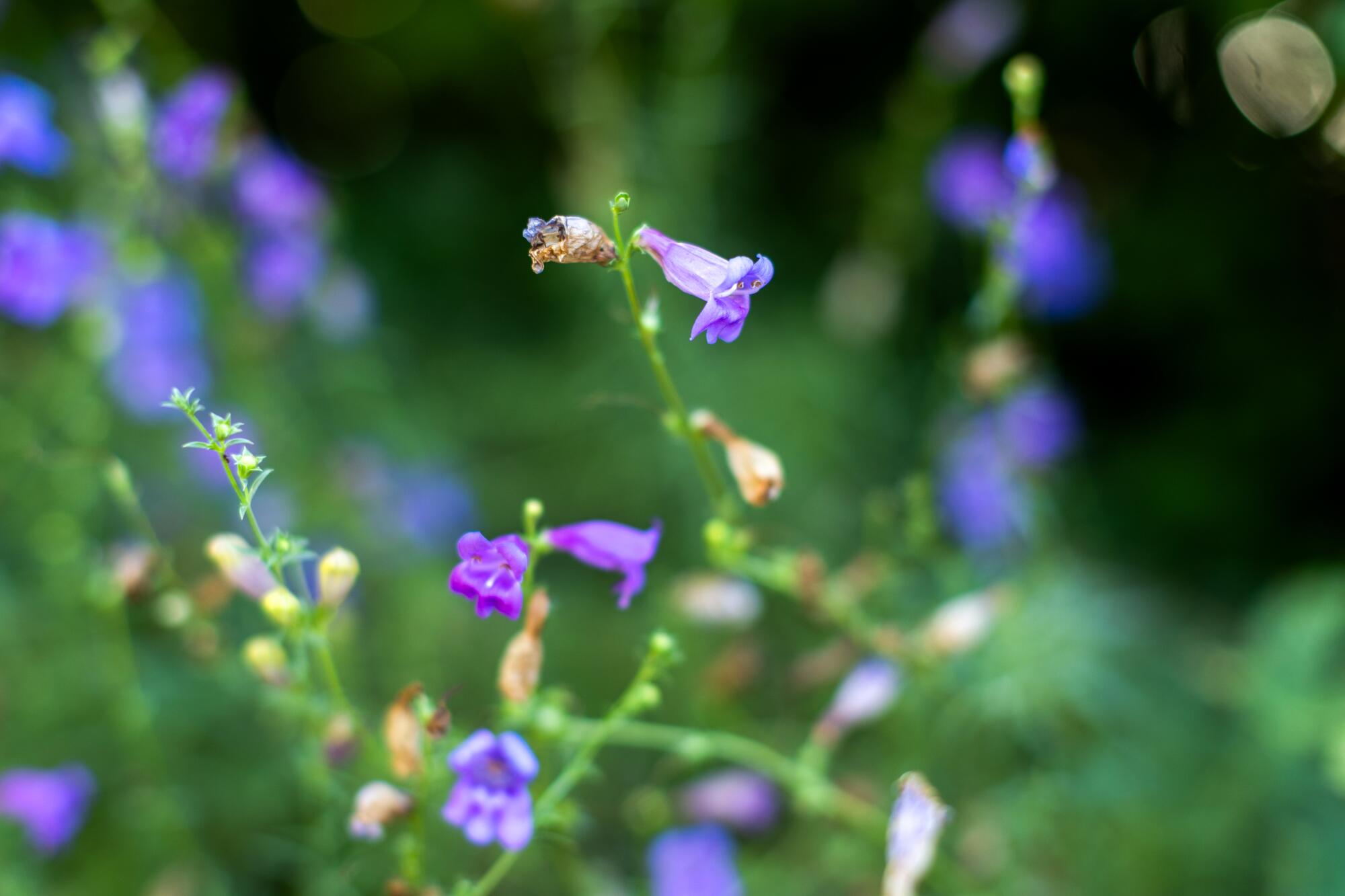
Foothill penstemon grows in Eric Augusztiny’s drought-tolerant front yard.
Yes, Augusztiny acknowledges, lawns have appeal, but not in his West Valley neighborhood where “concrete is the equivalent of a frying pan,” and sustaining thirsty turf in triple-digit heat is impossible. “Even if I wanted a lawn — and I don’t — you can’t keep one alive here,” he said, pointing to the brown lawns that border his tree-lined street.
“The garden goes dormant in the summer but doesn’t die. Drought-tolerant plants are survivors. The sugar bush, toyon, manzanita, coffee berry, ceanothus and hummingbird sage hold their vivid green color year-round. The California fuchsia blooms into the fall, and although the salvias’ spikes above the foliage die back after flowering, the structure and leaves remain vital.”
Besides mowing the lawn, Augusztiny was not much of a gardener before he purchased his home. “I knew how to reseed the lawn. Again and again,” he said with a laugh. So he decided to learn all he could about removing his lawn, building healthy soil and replacing it with a drought-tolerant alternative.
He started by attending a demonstration on lasagna mulching led by artist-in-residence and horticulturist Leigh Adams at the Los Angeles County Arboretum’s Crescent Farm. The class inspired Augusztiny, who then checked out books on California native plants from the Los Angeles Public Library and attended a hands-on workshop at the Metropolitan Water District of Southern California Field Office.
When the couple remodeled their home in 2018, they decided it was a good time to remove the lawn. The LADWP’s lawn conversion program — which currently pays $5 per square foot to remove turf and replace it with low-water landscapes — was an incentive but not the primary driving force. “I wasn’t in it for the money,” Augusztiny said of the $2,000 rebate they received then, “but it helped cover the cost.”

Eric Augusztiny’s front yard in West Hills before he removed his lawn and replaced it with a drought-tolerant alternative.
(Eric Augusztiny)
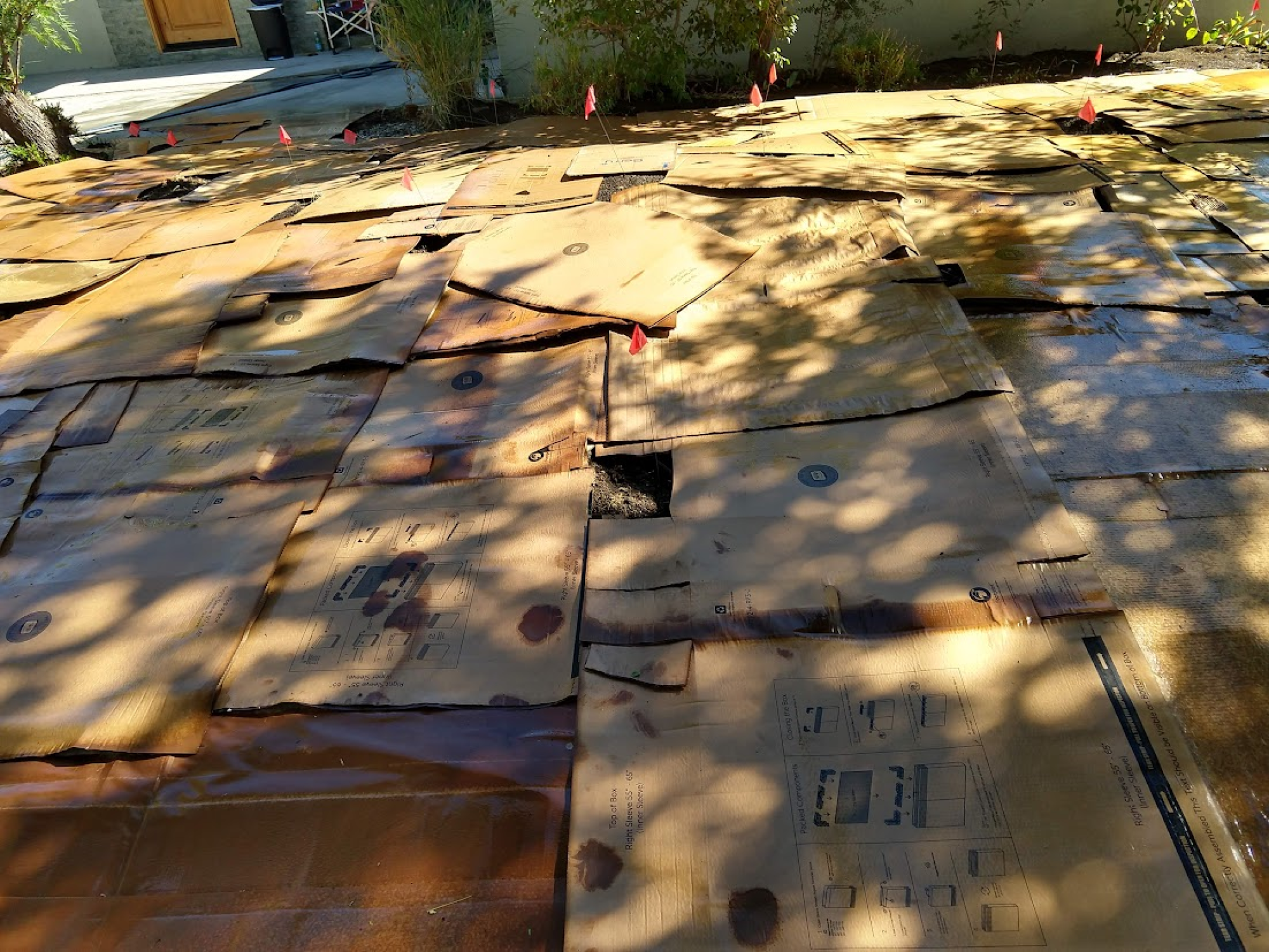
Eric Augusztiny’s front lawn is smothered in cardboard during the sheet mulching process.
(Eric Augusztiny)
Suitably educated, Augusztiny decided to tear out his lawn and plant a low-water substitute himself. Just don’t call him a designer. “It was a process of figuring out a simple design, getting the drip system in and putting down the cardboard,” Augusztiny said of the process known as sheet mulching, where the cardboard is wetted down and covered with 3 inches of mulch.
When he smothered his lawn with cardboard, his neighbors often asked him what he was doing. “I told them I was getting rid of the Bermuda grass,” he recalled. “They all told me, ‘Good luck with that.’”
Taking classes offered Augusztiny some revelations as he planned his garden. He followed Adams’s suggestion to “paint with wildflowers” and scattered wildflower seeds on top of established plants. He planted hummingbird sage after he read that it grows well in the shade of oak trees. Concerned about the depletion of Western monarch butterflies due to habitat loss, he felt it was important to plant Narrow-leaf milkweed (Asclepias fascicularis). “They have since shown up in droves,” he said.
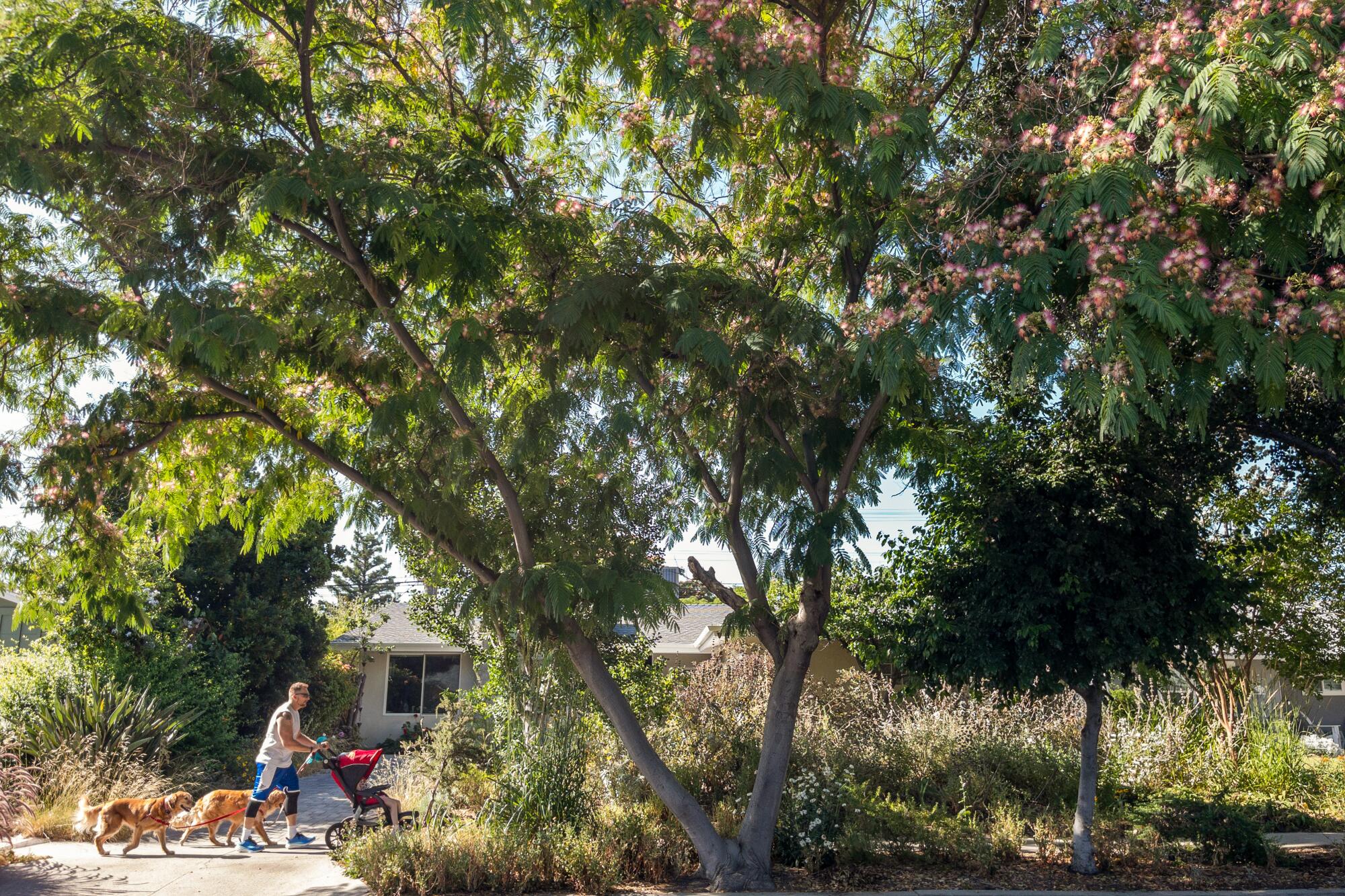
On the parkway, a coast live oak, Catalina cherry and silk tree provide shade. Augusztiny collects water using a rain barrel and rain chains. He also installed drip irrigation.
Regarding plants, Augusztiny made treks to native plant nurseries all over Los Angeles, including the California Botanic Garden in Claremont, Theodore Payne Foundation in Sunland and Pierce College in Woodland Hills. “Now, I have to stop because I’m generating my plants from harvesting the seeds and taking cuttings,” he said. “You can generate and regenerate the garden.” He even picked up free animal waste from the Los Angeles Zoo (known as “zoo doo”) at the Griffith Park Composting Facility.
He admits he killed some native plants initially because he overwatered them in the summer. That ended when he took a three-month hands-on course in native garden maintenance with Antonio Sanchez of the Santa Monica Mountains Fund in 2022. “I learned that drought-tolerant plants strengthen during the rainy season to ride out the dry season,” he said. He stopped drowning plants in the summer because he thought they were thirsty.
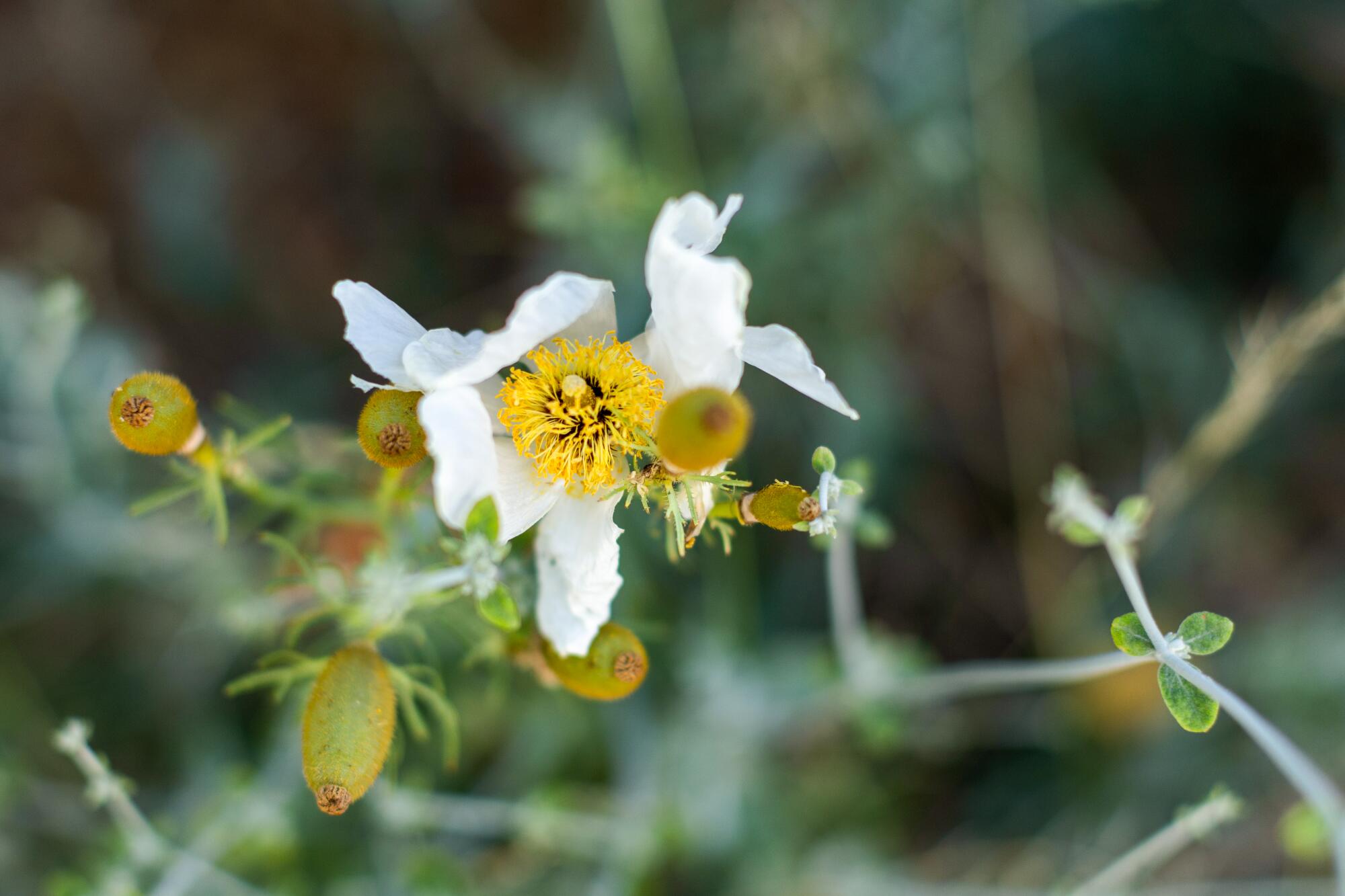
A Matilija poppy grows in Eric Augusztiny’s drought-tolerant front yard.
After six years, Augusztiny thinks Adams’ “sleep, creep, leap” mantra has finally materialized. “She told us the plantings would sleep the first year, creep the second and then leap in the third,” he explained. “Ah, but with only 11.5 inches from 2020-2022, the garden wasn’t moving.”
Fast-forward two years. After two years of record rainfall in Los Angeles, the California native habitat has overwhelmed the front yard.
“I hate to steal a title from a Hollywood film,” said the actor, “but suddenly it was everything, everywhere all at once.”
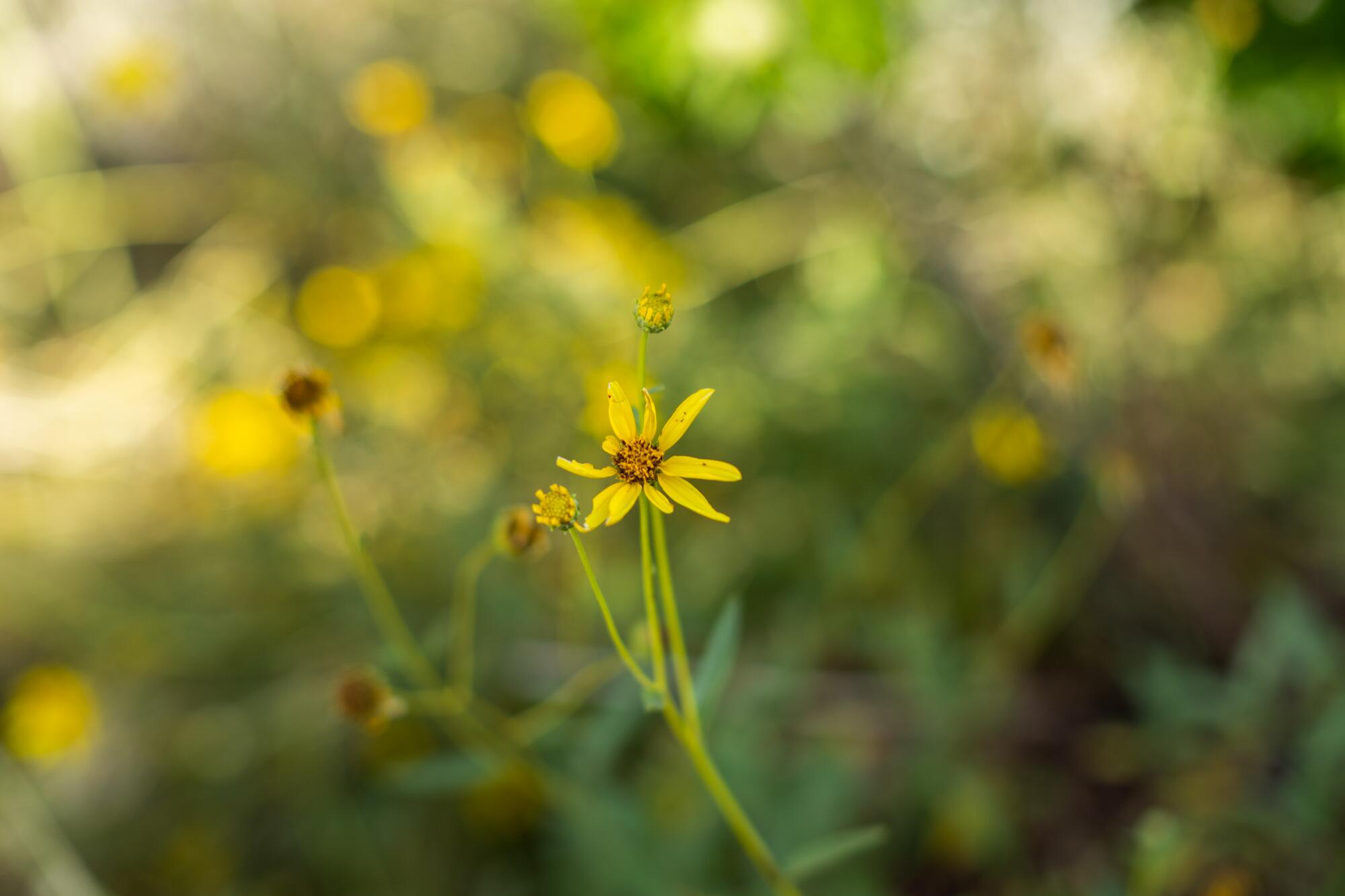
Narrowleaf sunflower grows in the garden.
The garden is wild and colorful with a heavenly fragrance attributed to the exploding sages — Cleveland (Salvia clevelandii), hummingbird (Salvia spathacea) and white (Salvia apiana) — along with colorful wildflowers like the fire-resistant California fuchsia (Epilobium canum) and purple Foothill penstemon (Penstemon heterophyllus).
Although many of the larger drought-tolerant plants are planted away from the street, some, such as bigberry manzanita (Arctostaphylos glauca), are dwarfed by California buckeye (Aesculus californica), coffeeberry (Frangula californica) and sugar bush (Rhus ovata).
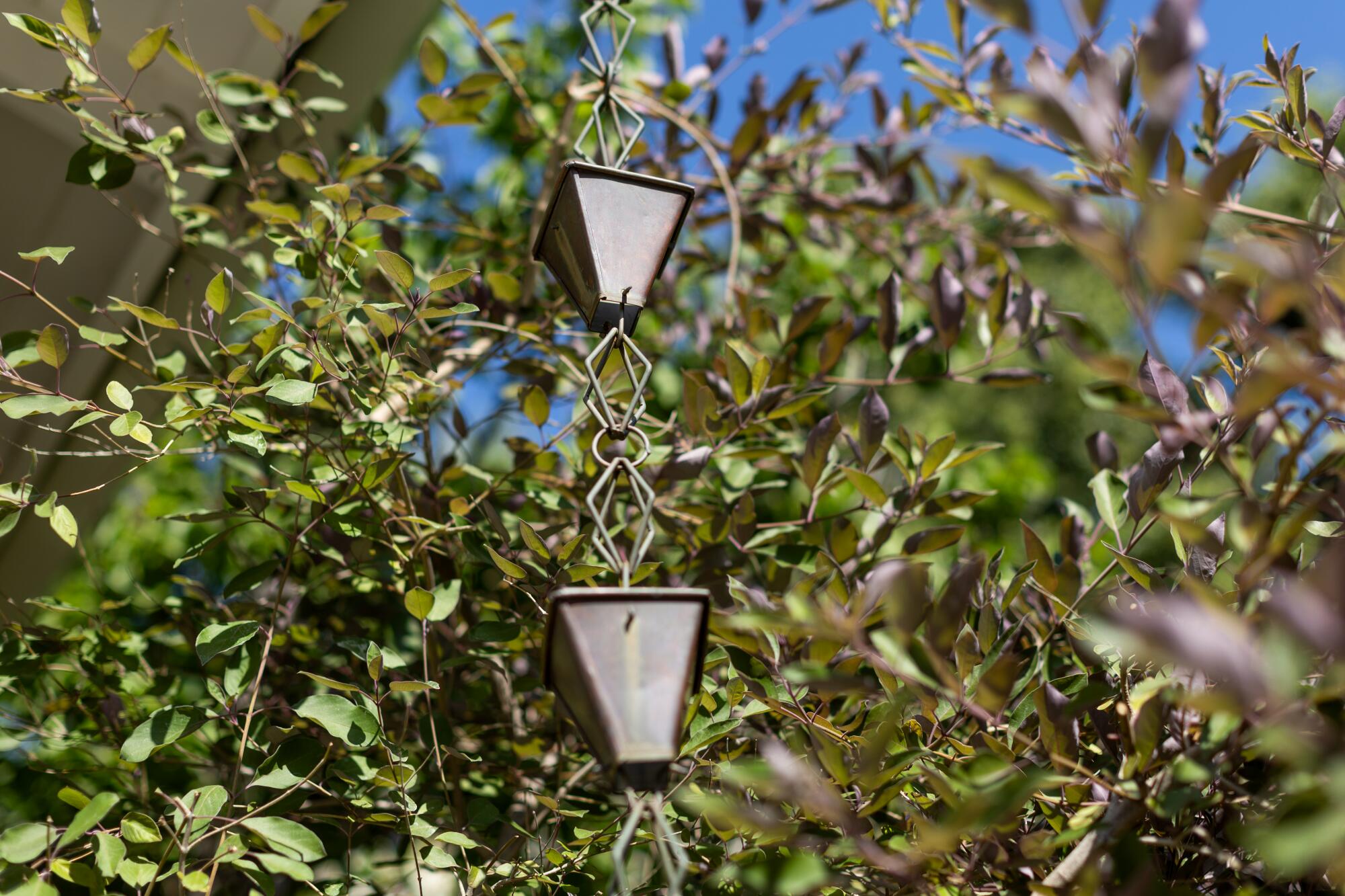
Rain chains capture rainwater from the roof.
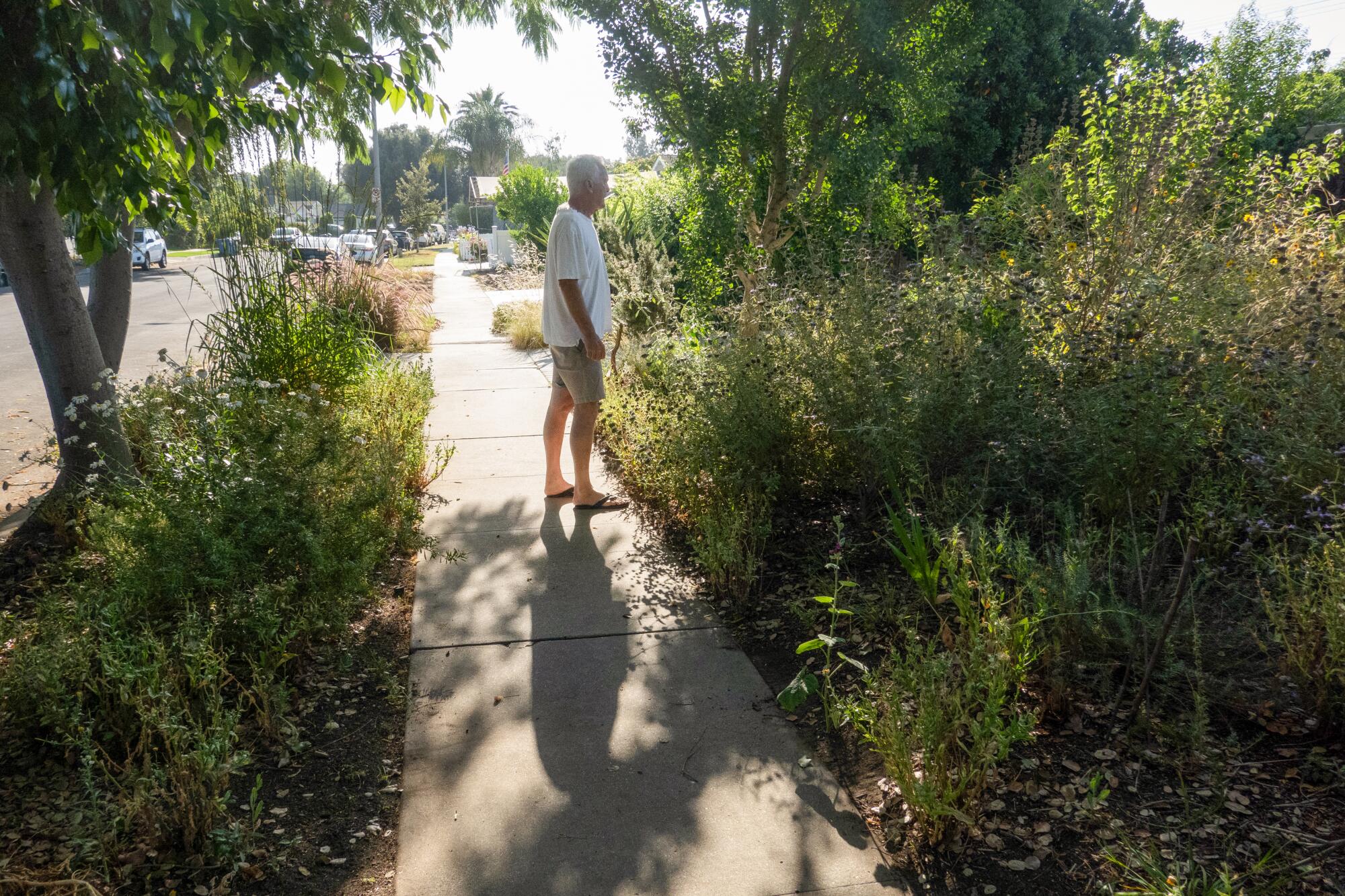
Augusztiny’s front yard and parking strip are overflowing with drought-tolerant plants.
No longer a gardening novice, the Seattle native passionately advocates the “need to do our small part to help stem climate change.” He thinks creating a native habitat in his front yard and installing rain barrels and a permeable driveway in the face of record-breaking heat waves is a good place to start.
“I enjoy nature, and Los Angeles has it all,” he said. “I’m not a purist when it comes to plants. I like to refer to them as climate-appropriate. But the more blacktops we can eliminate and the less stormwater runoff there is, the better our water quality and lives will be.”
Now, when neighbors walk their kids to school, they don’t ask him what he’s doing in his front yard. “They compliment the garden,” said Augusztiny, who waters twice a month. “The garden is not just for me. It’s for everyone.”
Plants in this garden
Arabian lilac (Vitex trifolia)
Coffee berry (Frangula californica)
Sugar bush (Rhus ovata)
Cleveland sage (Salvia clevelandii)
Narrow leaf milkweed (Asclepias fascicularis)
Black sage (Salvia mellafera)
White sage (Salvia apiana)
Purple sage (Salvia leucophylla)
Bigberry manzanita (Arctostaphylos glauca)
Palmer’s abutilon (Abutilon palmeri)
Desperado sage (Salvia desperado)
Penstemon heterophyllus ‘Margarita BOP’
California fuchsia (Epilobium canum)
Purple needle grass (Nassella pulchra)
Australian emu bush (Eremophila glabra)
Snow berry (Symphoricarpos mollis)
California buckwheat (Eriogonum fasciculatum)
Hummingbird sage (Salvia spathacea ‘Las Pilitas’)
Nuttall’s sunflower (Helianthus nuttallii)
Giant wildrye (Elymus condensatus)
Toyon ( Heteromeles arbutifolia )
Dudleya abramsii
Coulter’s Matilija poppy (Romneya coulteri)
Ceanothus griseus var. horizontalis ‘Yankee Point’
Fiesta Marigold monkeyflower (Mimulus ‘Fiesta Marigold)
Mimulus (Diplacus) ‘Fiesta Marigold’






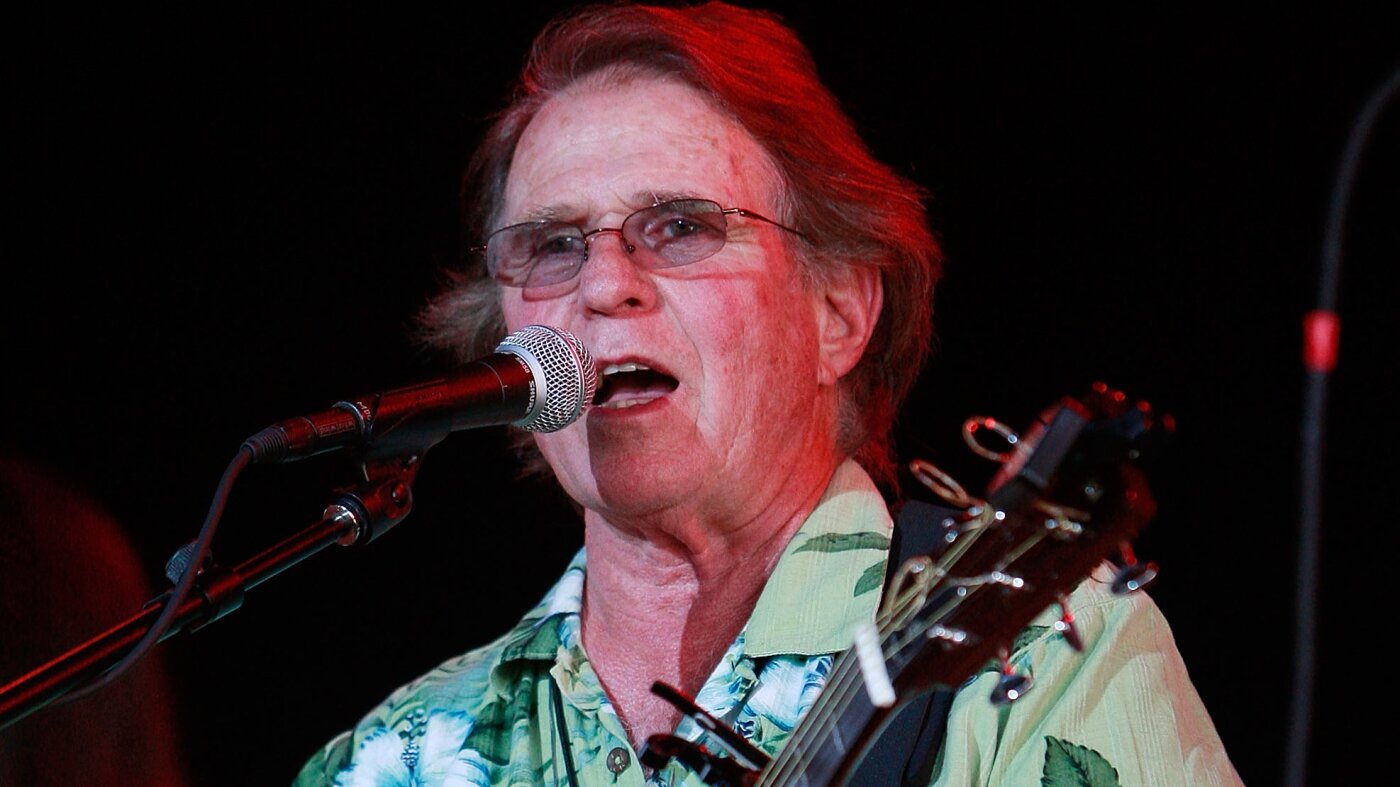
Singer Joe McDonald sings during the concert marking the 40th anniversary of the Woodstock music festival on Aug. 15, 2009 in Bethel, New York. McDonald has died at age 84.
Mario Tama/Getty Images
hide caption
toggle caption
Mario Tama/Getty Images
Country Joe McDonald, the singer-songwriter whose Vietnam War protest song became a signature anthem of the 1960s counterculture, has died at 84.
McDonald died on Saturday in Berkeley, Calif., according to a statement released by a publicist. His health had recently declined due to Parkinson’s disease.
Born in 1942, in Washington, D.C., he grew up in El Monte, Calif., outside Los Angeles, according to a biography on his website. As a young man he served in the U.S. Navy before turning to writing and music during the early 1960s, eventually becoming involved in the political and cultural ferment of the Bay Area.

In 1965 he helped form the band Country Joe and the Fish in Berkeley. The group became part of the emerging San Francisco psychedelic music scene, blending folk traditions with electric rock and pointed political commentary.
The band’s best-known song, “I-Feel-Like-I’m-Fixin’-to-Die Rag,” captured the growing anti-war sentiment of the Vietnam era. With its ragtime-influenced rhythm and sharply satirical lyrics about war and political leadership, the song quickly became associated with protests against the conflict.

McDonald delivered the song to some half a million people at the 1969 Woodstock festival in upstate New York. Performing solo, he led the crowd in a form of call-and-response before launching into the anti-war anthem, turning the performance into one of the defining scenes of the festival.
Country Joe and the Fish released several recordings during the late 1960s and toured widely, becoming closely identified with that era’s West Coast rock and protest movements.
McDonald later continued performing and recording as a solo artist, recording numerous albums across a career that spanned more than half a century. His work drew variously from folk, rock and blues traditions and often reflected his long-standing interest in political and social issues.
Although he became widely known for his opposition to the Vietnam War, McDonald frequently emphasized respect for those who served in the U.S. military. After his own service in the Navy, he remained engaged with veterans’ issues and occasionally performed at events connected to veterans and their experiences, according to his website biography.

Maren Morris to Trump Voters
You Got Bamboozled!!!
Published
Country music star Maren Morris is speaking her mind about what she sees as the failures of the Trump administration, and she doesn’t care if she loses fans over it.
According to Maren Morris, if you supported Donald Trump in his presidential elections, you voted for a “dementia ridden, diaper clad, cornball” and “you got bamboozled.”
Not only that … she doesn’t feel bad for the MAGA faithful who may feel disillusioned by their leader.
In a TikTok posted Friday, she said, “The is literally the result of ploying and voting for losers.”
Morris has expressed her dismay at music becoming so political since she’s jumped onto the scene — something she’s benefitted from due to songs like “My Church” — but she’s clearly not shy about her views.
“If you don’t agree with me … you can’t enjoy my music because of my viewpoints? You’re absolutely allowed to do that,” she said. “But I am only here for an iteration of revolutions around the sun, a couple, and so I do feel like I have sacrificed a lot of my mental health, my financial standing, my family, just because I am so deeply concerned and uncomfortable with the weird status quo of country music.”

Jean, 72, a Chinese opera performer, poses for a portrait before performing in Kuala Lumpur, Malaysia.
Annice Lyn/Everyday Asia
hide caption
toggle caption
Annice Lyn/Everyday Asia
March 8 is International Women’s Day — a date picked in honor of a remarkable Russian protest.
During World War I, women in Russia went on strike. They demanded “bread and peace.” Among the results of their four-day protest: the Czar abdicated and women gained the right to vote.
This bold strike began on Feb. 23, 1917, according to the Julian calendar then used in Russia. That date translated to March 8 in the Gregorian calendar that much of the world uses. So that’s the day chosen for this celebratory event.
True to the spirit of those Russian women, the world pauses on this day to celebrate the achievements of women. This year to mark International Women’s Day, the United Nations is calling for “Rights. Justice. Action. For all women and girls.”
Sometimes, the true achievements are the ones that we barely see. The photographers at The Everyday Projects, a global photography and storytelling network, have shared portraits of women who in ways large and small are determined, like those Russian women over 100 years ago, to improve the lives of women and to build a better world.
Singing with strength
Kuala Lumpur-based photographer Annice Lyn likes to highlight the strength, resilience and the stories of women who are often overlooked.
That’s the inspiration for her portrait of Jean, 72, as she prepares for a performance of Chinese opera at Kwai Chai Hong, a restored heritage alley in Kuala Lumpur’s Chinatown in August 2024.
Such performances, typically staged during festivals and temple celebrations, combine singing, acting, martial arts, elaborate costumes and symbolic makeup to tell classical stories from Chinese folklore, history, and literature.
“Performers like Jean often dedicate decades of their lives to mastering this art form, preserving techniques and stories that are centuries old,” says Lyn. They told her that they may encounter negative reactions — questions like “are you wasting your time” or simply indifference.
“Sustaining a centuries-old practice in a modern urban setting requires both resilience and passion,” says Lyn, who made this picture minutes before the performance. “I wanted to give Jean the dignity she deserves through this portrait, a strong, intimate image that acknowledges her beauty, her discipline and the life she has dedicated to Chinese opera. I hoped to make her feel seen and heard, capturing not just a performance but a living cultural legacy.”
Dreaming of a toilet

Nkgono Selina Mosima, a resident of Thaba Nchu, Free State, South Africa, has hoped for years that she could afford to dig a pit toilet in her yard.
Tshepiso Mabula/The Everyday Projects
hide caption
toggle caption
Tshepiso Mabula/The Everyday Projects
The subject is Nkgono Selina Mosima, a resident of Thaba Nchu, Free State, South Africa, a region where poverty is rampant, Mosima is one of many residents who lack proper sanitation, says Tshepiso Mabula, a photographer and writer based in Johannesburg. Her wish was to hire someone to dig a pit toilet in her yard – in which human waste is collected in a pit and allowed to break down naturally over time – but she couldn’t afford the cost. The alternative is open defecation – finding a secluded place despite the personal risks and the potential health consequences of untreated human excrement.
“I was drawn to Nkgono by her unrelenting faith and positive outlook; despite her difficult circumstances, she constantly reiterated her hope that things would improve,” says Mabula. “This inspired the framing of the portrait: the bright colors, her headscarf and the belt around her waist all serve to highlight her strength, optimism and faith.”
The picture was taken in 2020. Today, Mabula says, many women still lack safe and effective sanitation options. Nkgono was a powerful voice for action and change as she eventually could afford to dig a pit toilet on her property.
Russian footballers

These women from Voronezh, Russia, participated in the country’s short-lived but intense American-style football league. They’re hanging out in the locker room.
Kristina Brazhnikova/Everyday Russia
hide caption
toggle caption
Kristina Brazhnikova/Everyday Russia
It seems improbable — starting an American football league for women in Russia. Not soccer but football. That’s what Portugal-based photographer Kristina Brazhnikova is documenting in her project “Mighty Girls,” which she shot between 2018 and 2021.
Any Russian woman could join, regardless of age, body type or level of training, she says. Coaches from the U.S. women’s national football team participated.
In the photo, the girls from the Voronezh team “Mighty Ducks” (Gabi, Katya, and Olesia) are in the locker room of a training camp preparing for practice. Team members came up with the name, she says.
“Everything was built on enthusiasm, so the players had to study the rules and playbooks on their own. Some women were invited by friends, others were drawn to the unusual nature of the sport, and some simply wanted to improve their physical fitness,” says Brazhnikova, who is Russian herself.
After the first practice, many women decided the game wasn’t for them, she says. It requires not only strength and endurance but the ability to memorize complex plays. Players had to buy their own protective gear, pay for field rentals and cover their travel expenses to competitions in other cities.
“Those who stayed, however, found a new family,” says Brazhnikova — and a new form of expressing emotions, including aggression. The women told her that playing American football made them braver and more decisive. They allowed themselves to step outside their comfort zones and push beyond the limits of their usual lives. They changed jobs and left relationships that had run their course. And the sound of pads colliding on the field became their favorite,” she says.
The league ceased to operate in 2022.
Hunting for missing loved ones

Hilaria Arzaba Medran of Mexico stands with tools she’ll use as she searches a clandestine burial site for the grave of her son, Oscar Contreras Arzaba, who disappeared in 2011 at age 19.
James Rodríguez/Everyday Latin America
hide caption
toggle caption
James Rodríguez/Everyday Latin America
Hilaria Arzaba Medran, 57, is no stranger to loss. Her son Oscar Contreras Arzaba disappeared on May 22, 2011, at the age of 19. A resident of the Mexican state of Veracruz, she’s a member of Solecito, an organization whose 250 members go out and look for their missing relatives on a regular basis. Holding tools in this photograph taken in Feb. 20, 2018, she searches for her missing son and other victims in a location known to have served as a clandestine grave.
“This collective is primarily led by women, and I was awe-struck by their determination to find their loved ones despite horrific violence and real-life threat to their own well-being,” says photographer James Rodríguez.
On this occasion in 2018, Rodriguez and others in the group had received an anonymous tip of a possible clandestine cemetery on the outskirts of Cordoba. She went searching with several other collective members, digging tools in hand. “We went into an isolated rural field that felt macabre in itself and [we] had no sort of security personnel with us. I was truly astounded by their conviction and courage,” he says.
A demand for housing

Janaina Xavier, a community leader, holds her son in a building in São Paulo, Brazil, that was occupied by people without housing in 2024.
Luca Meola/Everyday Brasil
hide caption
toggle caption
Luca Meola/Everyday Brasil
Janaina Xavier, a community leader, holds her son while looking out the window of the building where she lives with six of her 10 children near the Cracolândia district in São Paulo, Brazil, on April 23, 2024.
She currently serves as a council member for the Coordination of Policies for the Homeless Population and advocates for the rights of people living in and around Cracolândia.
“I’ve known Janaina Xavier for many years, since I began my long-term work documenting Cracolândia in São Paulo. She has long been involved in struggles for housing rights for people living in this highly stigmatized region of the city,” says photographer Luca Meola.
This photograph was taken inside a building being illegally occupied by Xavier and dozens of other families – a way for them to secure housing in the city center.
“For many low-income families, occupying empty buildings is one of the only ways to remain in the central area and access essential services and work opportunities,” Meola says.
In 2025, the city evicted Xavier, her family and the other residents.
The mother leaders of Madagascar take charge
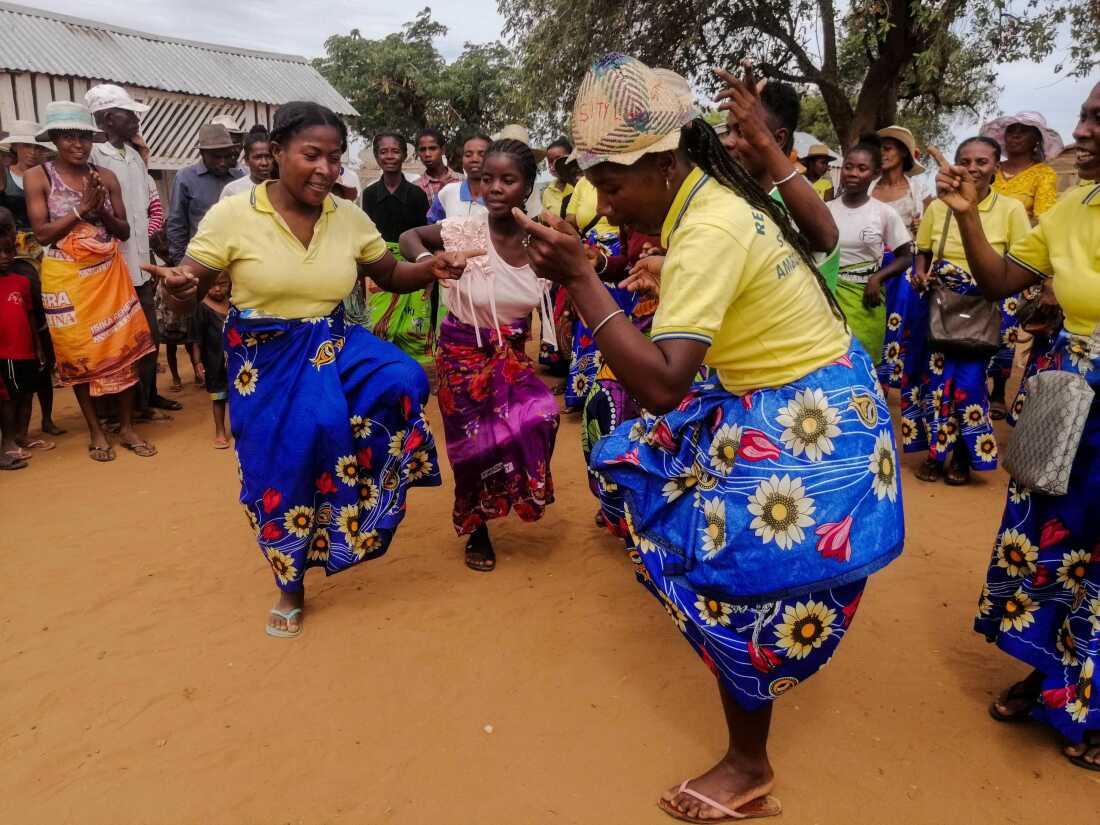
In the Grand South of Madagascar, women known as “reny mahomby,” or mother leaders, perform a welcoming dance before starting a session to teach women in the community how to improve their lives.
Aina Zo Raberanto/The Everyday Projects
hide caption
toggle caption
Aina Zo Raberanto/The Everyday Projects
In this photo from the Grand South of Madagascar, in Amboasary Sud, women known as “Reny Mahomby,” or “mother leaders” perform a welcoming dance.
The “mother leaders” inspire other mothers in the community to make changes in their lives – to improve hygiene, to educate their children, to start small businesses, says photojournalist Aina Zo Raberanto, who lives in this African island nation but had never before visited the Grand South.
The dance took place at the start of a training session, says Raberanto. In this photo from November 2021, she says. “These mother leaders welcome us with a traditional dance from the region. I was deeply moved by their commitment to their community.”
The mothers of Madagascar “are the pillars of the household while sometimes facing difficult realities such as violence or early marriage,” she says. “I took this photograph to show both their strength, their dignity, their joy for life and the warmth of their welcome despite the hardships. Behind their smiles and movements lies a great determination to continue supporting their families and to build a better future for their children.”
Marching for their rights

Members of Puta Davida, a feminist collective advocating for the labor and human rights of sex workers, take part in a march during Carnival in downtown Rio de Janeiro, Brazil, on Feb. 14, 2026.
Luca Meola
/Everyday Brasil
hide caption
toggle caption
Luca Meola
/Everyday Brasil
This photograph was taken during Carnival in Rio de Janeiro this February.
“I have been accompanying the collective Puta Davida for about three years. [It] works to create public debate around sex work, advocating for the recognition of sex work as legitimate labor and for the protection of sex workers’ human and labor rights,” says photographer Luca Meola.
The Puta Davida is a feminist collective from Rio de Janeiro created in the early 1990s by the sex worker and activist Gabriela Leite, a historic figure in Brazil’s movement for sex workers’ rights.
“I have been accompanying the collective for about three years. [It] works to create public debate around sex work, advocating for the recognition of sex work as legitimate labor and for the protection of sex workers’ human and labor rights,” says photographer Luca Meola.
In 2026, one of the community organizations that prepares music, dance, and large performances for Carnival parades chose to dedicate its parade to sex workers
Meola, who photographed the members of this group as they marched, says: “For me, what is powerful about this moment is how these women reclaim visibility in public space. Through political organization, performance and collective presence, they challenge stigma and assert their rights — which I believe strongly resonates with this year’s theme [for International Women’s Day] of justice and action,” says Meola.
Kamala Thiagarajan is a freelance journalist based in Madurai, Southern India. She reports on global health, science and development and has been published in The New York Times, The British Medical Journal, the BBC, The Guardian and other outlets. You can find her on X @kamal_t

Concert promoter Live Nation settles US monopoly case over ticket sales

What defence support could Ukraine offer Middle East states amid Iran war?

Warrants served in New Jersey, Pennsylvania as feds look into possible NYC terrorism

FBI captures Bangladeshi fugitive extradited in massive online child sextortion case

How a Choreographer Lives on $55,000 in Kensington, Brooklyn

Florida High School Football Rankings: Top 25 teams – Oct. 21

Cleary's 21 help Le Moyne down Central Connecticut State 69-64 in OT

How old is Bo Nix? What to know about Oregon quarterback ahead of 2024 NFL Draft

99th annual Pony Swim held in Virginia

Indiana Members Credit Union announced as new anchor tenant at Bottleworks District
What defence support could Ukraine offer Middle East states amid Iran war?
Warrants served in New Jersey, Pennsylvania as feds look into possible NYC terrorism

Video: Airports Struggle to Staff T.S.A. During Partial Government Shutdown

Before-and-after satellite imagery offers a rare look at damage inside Iran
Hungary's opposition leader Péter Magyar calls on Russia to refrain from election interference
-

 Wisconsin1 week ago
Setting sail on iceboats across a frozen lake in Wisconsin
-

 Massachusetts6 days ago
Massachusetts man awaits word from family in Iran after attacks
-

 Maryland1 week ago
AM showers Sunday in Maryland
-

 Florida1 week ago
Florida man rescued after being stuck in shoulder-deep mud for days
-

 Pennsylvania4 days ago
Pa. man found guilty of raping teen girl who he took to Mexico
-

 Oregon1 week ago
2026 OSAA Oregon Wrestling State Championship Results And Brackets – FloWrestling
-

 News1 week ago
2 Survivors Describe the Terror and Tragedy of the Tahoe Avalanche
-

 Sports5 days ago
Keith Olbermann under fire for calling Lou Holtz a ‘scumbag’ after legendary coach’s death