Lifestyle
He built a mini-Disneyland in his backyard — and you can walk through it this spring


The castle is immaculate, its gold etching regal and its towers a bold shade of sky blue. The band at its gates plays no real instruments, but the musicians look dapper and at the ready. Before it all sits an elongated train station, a mix of Victorian grandeur and small-town affability. Look in the distance — there’s a Southern-style mansion, multiple distinct mountains and even another castle, this one nestled at the top of a mound, its spires peering over a wall.
All of it is familiar. It’s Disneyland, mostly.
The iconic entrance to Disneyland, re-created in the Sheegogs’ Anaheim backyard.
(Wally Skalij / Los Angeles Times)
But the setting, the backyard of a modest suburban home in Anaheim Hills, makes it clear this is no official product of the Walt Disney Co. Yet fans flock to it, with free tickets for the rare open house disappearing often in minutes. Welcome to Castle Peak and Thunder Railroad, as David Sheegog calls his backyard garden, home to a miniature love letter to Disneyland and Disney animation. Creating this scaled-down universe has been a passion of his for about a quarter of a century now.
Over the decades, Castle Peak has garnered the attention of local media, become a social media darling and grown with the Sheegog family, as what once was meant to be a gift for his children has taken on a life of its own. The kids have left home, but Castle Peak continues to flourish.
As Sheegog, an independent architect, looks forward to retirement — he turned 65 last year but is still in practice — he speaks of Castle Peak as if it’s just getting started. Walk with Sheegog to the family garage and find not just storage but a workshop, currently home to a model for a “Star Wars”-inspired entryway that Sheegog hopes will someday lead to a new section of his backyard garden, this one inspired by Disneyland’s Star Wars: Galaxy’s Edge.
David and Frances Sheegog pose with their mini-Disneyland in their Anaheim Hills home.
(Allen J. Schaben / Los Angeles Times)
This is no mere modest hobby. That’s apparent not just in the details but in the way Sheegog today thinks of entertaining guests, who are welcomed each spring and fall.
There are small but irresistible touches. Sheegog’s version of the Casey Jr. Circus Train is equipped, for instance, with its own sound module, playing the locomotive’s theme song as it chugs across a bridge. But over the years, Sheegog has embraced his showman side. A recent addition to the patio is what Sheegog calls the “enchanted tiki waterbar,” where a glass window erupts into a thunder and lightning show, complete with a mini-rain storm created by a pump and reservoir.
While the actual Disneyland Resort is just a few minutes from the Sheegog home, Castle Peak speaks to the way the theme park can become a sort of communal hub that can touch multiple generations and stand as something for which people can connect around. For many in Southern California, Disneyland sits somewhere between a landmark and a rite of passage, a place of familial and friendship rituals that stays with you long after the grand finale of the evening’s fireworks.
The Sheegogs’ much smaller version of the iconic statue of Walt Disney and Mickey Mouse, whose real-life counterpart graces the entrance to the magic castle at Disneyland.
A miniature model of the floating balloon house from “Up.” (Allen J. Schaben / Los Angeles Times)
Fans walk in the backyard of the Sheegogs’ home, lifting themselves up over the brick walls to look a little closer at the miniatures laid out in front of them.
(Wally Skalij / Los Angeles Times)
Sheegog believes that’s one reason why his backyard, also home to a 105-year-old Chinese elm bonsai, can barely meet its demand.
“There was a woman here one time, and she was close to 100,” Sheegog says. “She worked in the park on opening day, when Walt Disney was there, and worked in the park her whole life. She had a whole crowd around her, just listening to stories about what it was like. She started weeping. As she was talking, she was reliving her life when she was 20 years old, her first love, where she met her husband. All these memories come back, and a lot of people who come here are that way because we’re in Anaheim. We grew up with the park, and it has a certain sentimental niche in your psyche. People just want to be around it, and our place provides an outlet for that.”
Sheegog kind of stumbled into model railroading. About 25 years ago he was perusing for a gift for a young nephew, now in his 30s, who was a fan of “Thomas the Tank Engine.” Shopping for the latter at a local railroad store, the Orange County native who grew up within walking distance to Disneyland was suddenly hooked by the model railroad industry. Things quickly spiraled.
“This was back in 1997 or so, and I said, ‘This will be a 10-year project.’ As I developed the model — I built a model on our dining room table — we had to decide on the major structures,” Sheegog says. “Most of the garden railroads I had seen people had bought pre-made kits of little plastic buildings that are all about 12 inches by 8 inches. They look like premade little buildings, like a barber shop. No. I wanted to build this from scratch, and wanted them to be impressive, like 5 feet across and 4 feet tall. Or in the case of one our castles, 7 feet tall. I had to plan these out as to where the major buildings would be.”
Mini-riders descend down the slope of a shrunken-down Splash Mountain.
An homage to Mulan in a small potted plant. (Allen J. Schaben / Los Angeles Times)
A mini-Merida stands proudly within a circle of rocks.
References to Disneyland’s It’s a Small World ride are nestled in small pots around the Sheegogs’ attraction.
At the time, he was thinking of set pieces that would look akin to mini-golf buildings. Sheegog once worked at Disneyland on the Davy Crockett’s Explorer Canoes, and the family’s eldest daughter is named Ariel after “The Little Mermaid.” Thus, Disneyland was a natural theme for the family to explore for the backyard garden. And the Walt Disney Co., of course, has a romanticized history with railroads, as Walt Disney once had a backyard railway of his own and is said to have dreamed up Mickey Mouse on a cross-country train trip.
A Disney-inspired backyard is not, necessarily, an anomaly in American suburbia. HGTV once ran a show dedicated to the practice, and in the early days of the pandemic it became a social media trend to re-create Disney rides at home, with fans experimenting with rudimentary special effects and bringing pets into the action. Some have even built makeshift roller coasters in the yards.
Young visitors look out onto a portion of a railroad and lagoon-like setting within the Sheegogs’ massive attraction.
(Wally Skalij / Los Angeles Times)
And today, there are host of businesses that attempt to tap the Disney fanbase. One can find elaborately themed homes for rent, as well as pop-up bars such as Montclair’s the Set, which rotates among Disney motifs throughout the year.
Sheegog’s creation has both a professional sheen and a do-it-yourself quality. It’s important to note that it will always be free, as the family doesn’t want to attract the attention of corporate lawyers — timed reservations are required solely to make sure the home and neighborhood aren’t overrun. Aside from Sheegog’s heavily detailed, multiple foot structures — he’s re-created references to the now-defunct Splash Mountain and Disney/Pixar films such as “Up” — he’s also peppered in hidden nods to most every Disney or Pixar animated film from 1937 (“Snow White and the Seven Dwarfs”) to 2021 (“Encanto”).
“That will be the last one,” Sheegog says of “Encanto.” “I’ve finally put a cap on it. I’ve got 80 films out there. It’s a bunch. I’m running out of room. If they keep coming out, I can’t keep doing something. All my energy is going into other projects with the railroad.”
When Sheegog builds a structure, it’s no simple feat. Occasionally, he says, he’ll get inquiries from guests on the cost of hiring Sheegog to build, say, a Sleeping Beauty Castle. “They think you can do it for $300 or $400, and I say, ‘It’s probably going to be about $70,000 to build that thing again,” he says. “It takes someone six months of their life to build that.”
Money isn’t a topic Sheegog likes to discuss — “We are not wealthy people here, and I’m trying to figure out a way to retire because there’s not a way to do it right now” — and he’s quick to add that the castle didn’t cost him tens of thousands; he’s simply factoring in labor costs. He estimates that over the last two decades he’s sunk what would be the equivalent of buying a pool into his backyard Disneyland.
The investment shows. His initial Sleeping Beauty Castle was built utilizing plywood, PVC, wood turnings and cast resin veneer, but he has since updated the structure with largely polyurethane foam boards and 3D-printed materials. There are detailed galleries on his website documenting the builds of a number of structures, including Rapunzel’s tower and Beast’s castle.
Tinker Bell, nestled in a green forest scene with her fellow Pixie Hollow fairies.
(Allen J. Schaben / Los Angeles Times)
The Skyway, which no longer exists in the IRL Disneyland, is preserved as a reference in the Sheegogs’ backyard attraction.
(Wally Skalij / Los Angeles Times)
A key appeal of Castle Peak is that it doesn’t try to re-create Disneyland, per se: an equal number of miniatures reference animated films as they do park attractions. For the latter, Sheegog includes some that no longer exist, including the Skyway, a set he purchased from Von Roll Model Ropeways rather than built, as well as some references to Florida’s Walt Disney World.
Nothing feels incongruous. Disneyland, after all, exists as much in our memories and our imaginations as it does at 1313 Disneyland Drive.
Castle Peak and Thunder Railroad
Today, Sheegog is talking about moving the retaining wall on the house to further expand Castle Peak, wanting two new sections, one that nods to Disneyland’s Mine Train Through Nature’s Wonderland, which closed to make way for Big Thunder Mountain, and the aforementioned Galaxy’s Edge expansion. Time and money are hurdles, though, and he’s considered crowd-funding for Castle Peak’s continued development.
And yet that’s another aspect to Castle Peak’s enduring appeal. Like Disneyland, it’s never finished. “It’s like little home additions,” Sheegog says. “But rather than putting on a new bedroom we’re going to do another mountain or another rock feature.”
And it’s all in the name of capturing a little bit of magic.



Facts by day, fiction by night! At the end of a long day in the newsroom, many of our journalists head home and escape into novels of all types. We asked our NPR colleagues what fiction they’ve enjoyed reading so far this year, and these are the titles they shared. (You can also check out their nonfiction picks here; and sign up for our Books newsletter for weekly recommendations.)

A Bad, Bad Place by Frances Crawford
The opening chapter of A Bad, Bad Place is delivered in a short burst. We are presented with three characters — Janey, her nana, Sid Vicious (the rescue dog) — and one heck of a predicament. As 12-year-old Janey states: “It’s Sid’s fault that I found the dead body.” It becomes her job to unwind the mystery of her discovery in her rough neighborhood in 1979 Glasgow, Scotland. Recalling what she saw (and admitting what she didn’t tell police) is key. Frances Crawford shapes this world with such care and love, even in tough circumstances. Read this book. — Shannon Rhoades, supervising senior editor, Weekend Edition

A Perfect Hand by Ayelet Waldman
The hero of A Perfect Hand is Miss Alice Lockey, lady’s maid to Lady Jemima Alderwick. Alice falls in love with Charlie Wells, who is the valet to the eccentric Lord Wynstowe, but for the two to be together, they must devise a plot to bring about an unlikely romantic union between their employers, who, naturally, hate each other. What starts as a classic marriage plot, though, evolves into a very different, more complex story. Alice, you see, has been reading about the burgeoning women’s rights movement in her 19th-century England. And maybe, just maybe, she has begun to imagine a future for herself that — gasp! — might not involve marriage after all. — Samantha Balaban, senior producer, Weekend Edition

Cherry Baby by Rainbow Rowell
This is the first novel I’ve read that asks: How do you navigate being fat in a GLP-1-crazed world? And on top of unwanted fame and changing marital expectations? Fortunately, Cherry, Rainbow Rowell’s hero, is proudly fat and fierce, which helps when her husband, Tom, creates a semi-autobiographical comic with a character who looks so much like Cherry (double chin and all) that strangers recognize her. It becomes a hit, and Tom goes to Hollywood, leaving Cherry behind with the dog. But she refuses to stay downtrodden — I found Cherry’s spirit irresistible. — Emiko Tamagawa, senior producer, Here & Now

Cry Havoc by Rebecca Wait
There’s a whole genre of books set in quaint British boarding schools (the Harry Potter series, Tom Brown’s School Days, etc.). Cry Havoc is nothing like any of them. Set in a dilapidated, fifth-rate girls school in the 1980s, this dark and hilarious novel follows a teenage student, Ida Campbell, as she eats inedible school dinners, rooms with a hostile and self-destructive roommate and grapples with a bizarre epidemic that causes members of the student body to jerk their arms and legs uncontrollably. The book also contains one of the most brilliant, side-splitting scenes set at a school play ever written. — Chloe Veltman, correspondent, Society & Culture Desk

Dear Monica Lewinsky by Julia Langbein
This is the only novel of the hundreds I have read where I reread the ending three times: It was that satisfying! Julia Langbein’s comic romp takes us through the summer of 1998, when a college student is out of her depth in a study abroad program surveying the iconography of minor medieval French churches. She’s also out of her head with desire for one of her teachers, mirroring a certain political scandal erupting in the U.S. Who’s she gonna call on decades later when the teacher’s retirement sends her into a middle-aged tailspin? Saint Monica Lewinsky, of course! Insightful, hilarious and, in the end, everybody gets exactly what they deserve. — Melissa Gray, senior producer, Weekend Edition

Discipline by Larissa Pham
Discipline follows the story of an artist whose relationship to her work has been ruined by a lecherous older professor. When she writes and publishes a revenge-plot book about a character much like him, he reads it — and the two have an astounding confrontation about what happened between them. I enjoyed the taut style and the meditation on harm, justice and truth — a really great debut. — Liam McBain, producer, It’s Been a Minute

Enemies to Lovers by Alisha Rai
Pick this one up if you’re looking for a gulpable, plotty adventure. Meet the unlikely crime-solving duo: Krish is an upstanding citizen, while Sejal was born into a crime family and makes a living running small cons on bad men. Their worlds collide when Krish’s FBI agent brother disappears while investigating a crime syndicate. Sejal is his only lead in the case, and the two reluctantly team up. Romance and high jinks ensue as they embark on a cross-country road trip filled with car chases and shared hotel rooms. Pairs well with popcorn. — Lauren Migaki, senior producer, Society & Culture Desk

The Fourth Princess: A Gothic Novel of Old Shanghai by Janie Chang
I love a good story that mixes two women who are orphans, a mysterious guardian, a dilapidated gothic mansion with secrets of its own — that throws in a dash of Chinese superstition, romance and, of course, murder. The first woman in the story, Caroline, was born to what she thought were fabulously wealthy parents, but she finds out after they die that they were broke. So she decides to assume the identity of a dead, wealthy friend, marries well and lives a glorious life. The other, Lisan, is found wandering the streets of Shanghai as a child — a wealthy man takes her in. Caroline ends up hiring Lisan — and a tale ensues full of lies, secrets and daring escapes. — Jeanine Herbst, news anchor

Ghost Town by Tom Perrotta
Tom Perrotta’s latest novel is a memory piece set in the summer of 1974. Jay Perry, a once serious writer who has struck it rich with a kids book series-turned-TV show featuring a paranormal crusader called Ghost Teacher, is invited back to his suburban New Jersey hometown, which he left some 50 years earlier. Most of the novel follows the life of young “Jimmy” during the life-changing summer when he lost his mother, experimented with sex and a Ouija board, and learned the consequences of hanging out with the wrong guys. Perrotta’s view of strip mall suburbs as places where banality, goofiness, grace and tragedy converge is singular. — Maureen Corrigan, book critic, Fresh Air

Into the Blue by Emma Brodie
This book is for everyone who loves a rom-com but secretly hungers for the rom-traum — aka the kind of romance that makes you suffer a little (or a lot!). Into the Blue is the perfect blend of sexy, angsty and gut-wrenching. It follows AJ Graves, an aspiring comedy writer, and Noah Drew, the broody scion of an acting family, as they fall in love in the summer of 2000. The duo is doomed to feel the ache of that unforeseen connection for the decade to come. Their journey is twisted over tangled years of yearning and (seemingly) insurmountable external challenges. It’s tragically compelling and deliciously poignant. Angsty lovers, feast away! — Kalyani Saxena, associate producer, Here & Now

The Jellyfish Problem by Tessa Yang
When marine biologist Josephine “Jo” Ness receives a call from an old friend about a massive, glowing jellyfish terrorizing an island off the coast of Maine, she can’t help but see it for herself. Whether it’s Jo’s obsession with jellies, her nostalgia for that particular friendship or an escape from the grief she has been drowning in since the death of her best friend, dive buddy and jellyfish research partner, Aldo, something is pulling her to that island. The scientific discovery of a lifetime awaits. But if Jo gives in to that thing pulling her into the dark waters, will she be able to leave? — Dhanika Pineda, assistant producer, Weekend Edition

John of John by Douglas Stuart
The latest novel from Booker Prize winner Douglas Stuart sweeps you away to the remote islands of the Scottish Hebrides. Cal returns to his conservative small town after textile college. Cal is gay, which he keeps a secret from his family, and you learn very quickly that his father, John, who is a farmer and a weaver, is keeping secrets too. Stuart’s characters are so lovable, even when they’re treating each other poorly. I was particularly taken by Cal’s tender relationship with his sassy grandmother, Ella, who always has her hands in the other characters’ lives. It’s a beautiful novel about duty, faith and the isolation of keeping secrets from the people closest to you. — Anna Bauman, producer, Fresh Air

Lady Tremaine by Rachel Hochhauser
The most familiar iteration of “Cinderella” is full of flat characters like the one-dimensional wicked stepmother. Rachel Hochhauser’s novel, instead, breathes life, dimension and cultural context into her Lady Tremaine. We first meet this stepmother outdoors hunting — possibly poaching — with her falcon, a welcome and heartening echo of Agnes in Maggie O’Farrell’s Hamnet. Tremaine’s story is one about what it means to gain and lose privilege in a world where money and men are the only protections. It’s a triumphant ode to the countless lost histories of women who gave their all to fight for the dignity of other women — stepdaughters included — in predatory patriarchal societies. — Tayla Burney, director, Network Programming and Production

Last Night in Brooklyn by Xochitl Gonzalez
Last Night in Brooklyn is a bittersweet fever dream of a novel — a sticky summer something that sits somewhere between a telenovela and Succession. For 26-year-old Brooklyn native Alicia Canales Forten, observing the life of her glamorous and enigmatic neighbor beats coming to terms with her withering personal relationships. But this neighbor, dubbed La Garza, quickly turns Alicia’s life (and Brooklyn itself, circa 2007) into something she no longer recognizes. Xochitl Gonzalez’s prose is warm enough to seduce but cool enough to rip it all away — lest any of us gets too comfortable looking into the proverbial neighbor’s window. A truly gorgeous read! — Ivy Buck, production assistant, Society & Culture Desk

The Missed Connection by Tia Williams
To start, I must say this is my favorite Tia Williams book. If you know this author, you know she excels at writing dynamic characters in her romances. This time is no different. In this book, Sasha sits next to a dreamy man on a plane, but they miss the chance to exchange contact info. With a connection this strong, she has to find him, right? Well, that’s exactly what she sets out to do with the assistance of a detective who previously helped her during a traumatic time. That search sets Sasha off on an exciting, funny, freeing and even a little bit sexy adventure, which she hasn’t had in a while. — Brittney Melton, Up First newsletter writer

Little, Brown and Company
New Skin by Sarah Wang
New Skin by Sarah Wang opens with Linli Feng at home in Los Angeles, reluctantly taking care of her mom, Fanny, who is recovering from an infection after too many back-alley plastic surgeries. What starts as an obligatory stint at home spirals into chaos, with Fanny competing on a reality TV show to fix her botched face, while Linli navigates their tortured relationship amid the shadowy underworld of bargain-basement beauty. It’s not just dark comedy and body horror — it’s also a compelling meditation on immigration, labor and intergenerational trauma. The writing is beautiful, and I couldn’t put it down. — Neena Pathak, senior editor, It’s Been a Minute

Offseason by Avigayl Sharp
I had no idea what I was in for when I cracked this open. Sure, I got the gist from the jacket copy: A young woman, her personal and professional aspirations a fresh shambles, tries a new tack with a fill-in gig teaching at an all-girls school, in a seasonal tourist town that’s past its annual sell-by date. But this synopsis utterly fails to capture what awaited me. In fairness, I can’t imagine a synopsis that could have. Avigayl Sharp’s slim, mischievous shape-shifter of a debut novel rendered me a bit of a shambles myself, swinging from giggles to cringes, from dread to discomforting recognition, to the occasional thousand-yard stare. More than one passerby interrupted my reading to ask whether I was OK; in truth, I still may not be. — Colin Dwyer, contributor to NPR’s The Book Ahead

On the Calculation of Volume (Book IV) by Solvej Balle, translated by Sophia Hersi Smith and Jennifer Russell
What would you do if you were stuck repeating a single day of your life? Would you learn all the sounds it makes? The changes in air pressure? Would you explain to your partner what has happened every morning, as time creates a division between you? Maybe you would try to move through each day with an objective, with the aim of seeing different places and experiencing changing seasons. Or maybe you would look for a way out of the day, for rifts in the loop. These are the explorations that wash over Tara Selter in On the Calculation of Volume. Now on its fourth installment to be translated into English, each book is a journey through November 18ths that will make you admire the details in your own days. — Lillian King, producer, Wait Wait…Don’t Tell Me!

The Paris Match by Kate Clayborn
I’ve long admired Kate Clayborn for her crystalline prose and deeply heartfelt stories. Here, she delivers one of my favorite recent romances with the introduction of practical-minded Layla Bailey, who’s in Paris for the wedding of her former husband’s sister. She’s determined to be the dutiful, amicable ex. But Griffin Testa — the frustrating, broody best man — sees through her carefully constructed defenses. Layla and Griffin have their swoony moments, but they also have real, grown-up conversations about the pain they’re harboring and how to be together. These are adults who are putting in the work, and the emotional payoff is well worth it. — Wailin Wong, co-host, The Indicator from Planet Money

Railsong by Rahul Bhattacharya
Railsong is a sweeping novel set in 20th-century India. Charu is a young girl growing up in government housing. Her father, a railway employee, fights against convention and gives her the made-up, caste-less surname of Chitol — setting her up for an extraordinary life. The novel follows her journey from modern-day West Bengal to Mumbai, as she tries to find her own place in the world amid personal and political upheaval. This book made me nostalgic for a life and time I’ve never known. — Anandita Bhalerao, associate producer, Digital Platforms

Rebel English Academy by Mohammed Hanif
This tale is made up of quite a cast of characters: a lusty, drunk intelligence officer, men who seem to spontaneously combust, a runner who can’t escape the rape she experienced, and a gay man living in a mosque who only wants to teach revolution in English and, maybe, fumble about in a darkened movie theater with a stranger. Author Mohammed Hanif, always droll, takes a headline from Pakistan from the 1970s — the hanging of a populist leader, who was also a feudal lord — and turns it into a saturated, layered snapshot of a time and place. You don’t need to be interested in Pakistan or South Asia to read Hanif. Just bring your curiosity and your willingness to see the multitudes contained in one person, and one place. — Diaa Hadid, correspondent, International Desk

The Shampoo Effect by Jenny Jackson
Told from multiple perspectives, The Shampoo Effect is the story of a writer infiltrating (or dating into) a tight-knit group of adults who have been friends since childhood. The plot — which is mostly about domestic life, parenthood, relationships and its entanglements — has lots of twists and turns. A surprise pregnancy! A scandalous past! It’s a quick read, but delightfully satisfying. — Elissa Nadworny, correspondent and guest host

She Waits Where Shadows Gather by Michelle Tang
Mostly happily married, Carlos and Avery move from Canada to their native Philippines, dreams in tow. He wants to sell his childhood home; she hopes to expand their family. But Carlos’ parents just want him to figure out why his grandfather, who died 10 years ago, has returned to the house. Tragedy strikes before anyone gets what they want, trapping the family in the horrors of their superstitions, secrets and sacrifices. Michelle Tang’s debut novel introduces the unfamiliar reader to Filipino folklore in a page-turner where faith, love, skepticism — and ghosts — must play nice to survive. This cozy gothic horror is the perfect book for readers who can’t abide an unsolved mystery, or for those who will stay up all night entrusting their nightmare’s doom to the dawn. — Nikki Birch, video producer

Son of Nobody by Yann Martel
Academia noir, as a subgenre, tends toward the fantastical. Yann Martel’s latest novel, Son of Nobody, set at a major research university, is dark, but it’s also entirely realistic in its portrayal of shattered scholarly aspirations and shattered families. No vampires or mystical portals to other realms. Harlow Donne is a grad student, husband and father who heads off to the U.K. on a classics fellowship, leaving behind his wife and young daughter. Whether he does or does not make an important discovery while there is a major plot point. Regardless, Harlow learns the price of abandonment. — Jason DeRose, religion correspondent, National Desk

This House Will Feed by Maria Tureaud
Meshing gothic horror and history, this book challenges everything you thought you knew about the Irish potato famine, also known as the Great Hunger. The story follows Maggie O’Shaughnessy, a famine survivor who agrees to pose as an eccentric aristocrat’s dead daughter for food and shelter, only to find herself trapped in a haunted estate. The author brilliantly incorporates real historical documents and invokes the supernatural and Irish folklore to open readers’ eyes to the devastating reality of this period of mass starvation. — Julie Rogers, senior manager, Research, Archives & Data strategy
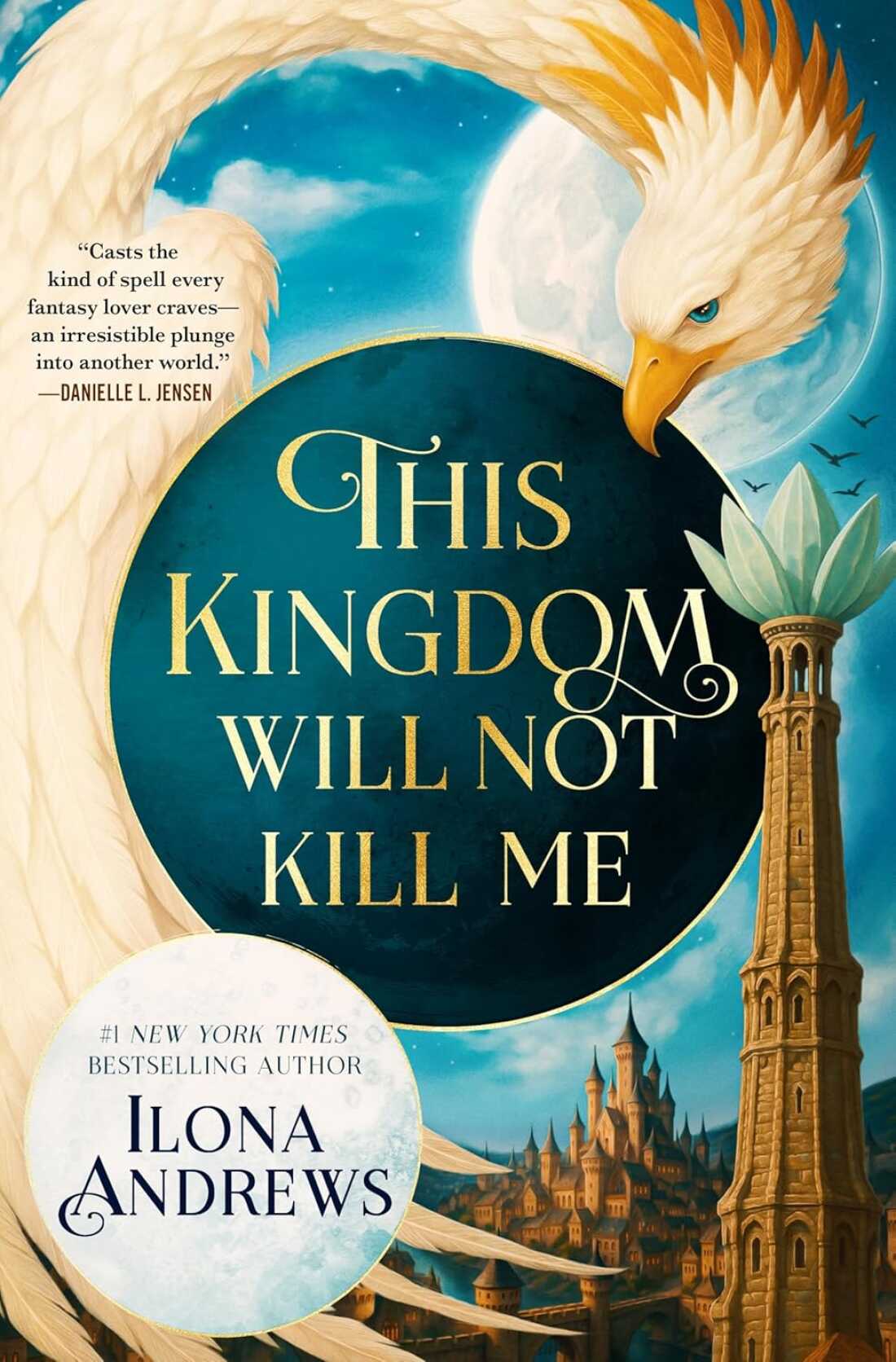
This Kingdom Will Not Kill Me by Ilona Andrews
This is a fun read for anyone who has ever imagined themselves inside a beloved book (and let’s be honest, my fellow Hufflepuffs, who hasn’t?). Modern-day normie Maggie wakes up to find she has been magically transported into the world of her favorite fiction series. But unlike other literary protagonists stuck in this common plot device, Maggie lands in fantasyland with no transferable skills, allure or, even, clothing. Gambling her extensive fangirl knowledge of the original series’ timeline, which changes with every butterfly she steps on, Maggie has to save the kingdom she knows is doomed without becoming a main character herself. Be warned that this is Part 1 of a series in progress. — Liz Baker, producer, National Desk

This Story Might Save Your Life by Tiffany Crum
When podcast hosts Benny and Joy start a survival-story-themed podcast, they have no idea it will become a massive hit. Their lives are busy with tours, captivated audiences and new episodes when one day, Joy and her husband, Xander, go missing. Benny is the main suspect, and he’ll do anything to prove his innocence. He begins a whirlwind investigation to find out what happened to his best friend. This Story Might Save Your Life has the standard trappings of a thriller, but it’s also a surprisingly warm treatise on friendship and found family. — Hafsa Fathima, assistant producer, Pop Culture Happy Hour

Vigil by George Saunders
Vigil is about ghosts and regrets. It’s also about climate change! In it, a parade of restless spirits comes to visit a dying oil company CEO. Some want him to repent for his many lies. Others reinforce his feeling that he has nothing to apologize for. The plot moves through time and space (ghosts aren’t bound by the same rules as the living). This book left me disturbed in a good way. It demands that the reader confront big questions: What does it mean to lie? What do we owe each other? At what point is it too late to apologize? — Rebecca Hersher, climate correspondent, National Desk

Villa Coco by Andrew Sean Greer
Before I read Andrew Sean Greer, I’d never stopped to ponder the rich relationship between humor and honesty. As he did in his Pulitzer Prize-winning book, Less, Greer uses an American abroad to explore how many years, and sometimes miles, you must put behind you before your confusion, despair and grief can become funny stories. And believe me, this sunny book is packed with hysterical stories from some of the most vivid and entertaining characters: You’ll wish you could pull them from the pages and plop them around a dinner table. But the line that stayed with me the longest was this: “The price for seeing things as they really are. It is our youth.” As honest, hilarious and heartbreaking as life itself. — Elena Burnett, producer, All Things Considered
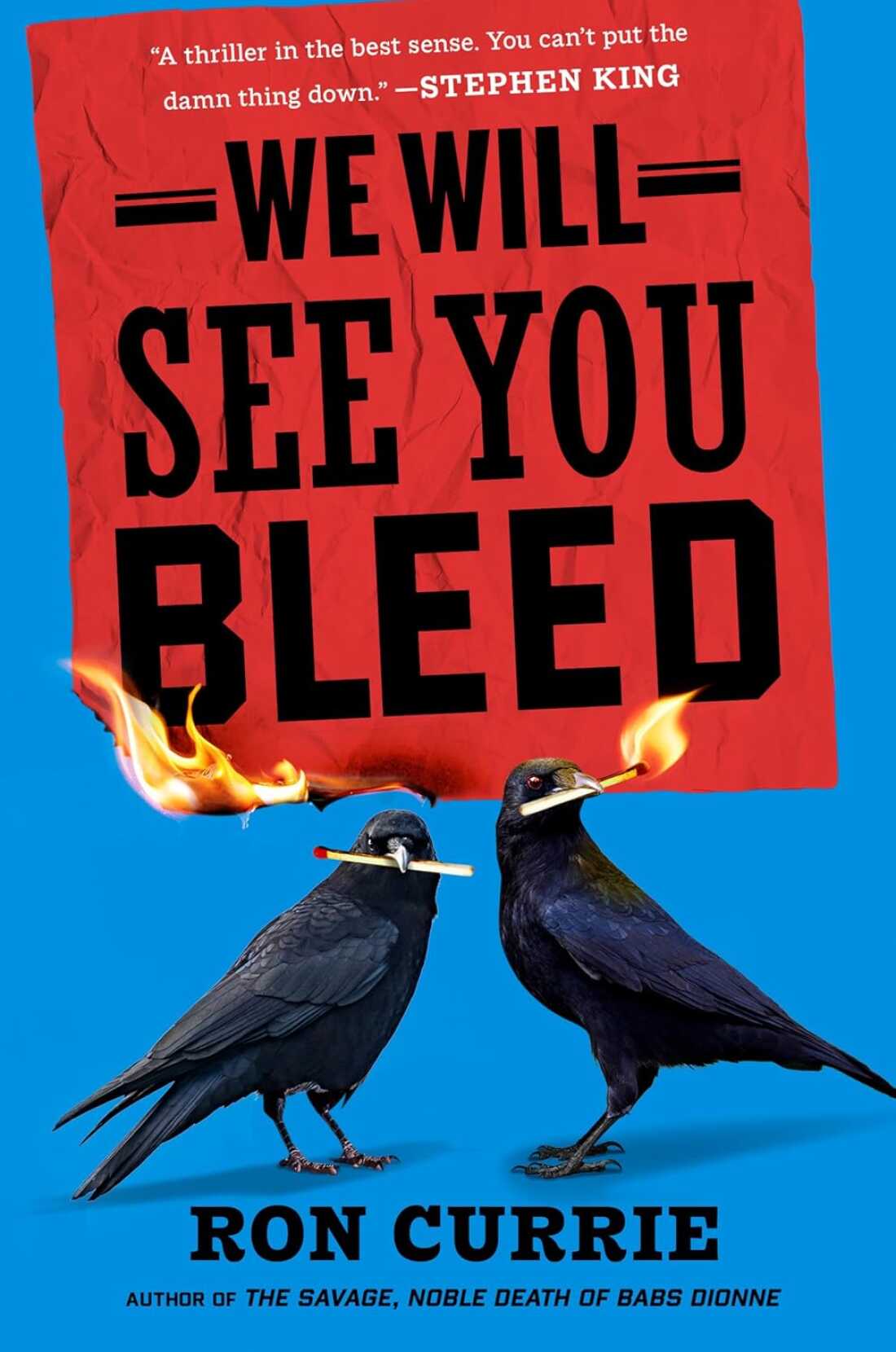
We Will See You Bleed by Ron Currie
Rather than a sequel to his celebrated Canuck-noir novel, The Savage, Noble Death of Babs Dionne, Ron Currie goes back in time to paint Waterville, Maine, in the summer of 1984. It’s a mill-town revolt in the early days of globalization — the death of an industry and of a way of life for local Franco-Americans — and the birth of Babs’ not-quite-benevolent crime syndicate. It’s a brilliant Maine thriller, unfolding 40 miles and an entire world away from the state’s much chronicled rocky coast. — Graham Smith, senior producer, Investigations Desk

Yesteryear by Caro Claire Burke
A hugely popular tradwife influencer — think Ballerina Farm’s Hannah Neeleman — awakens one morning, in what appears to be 1855, and must actually live the life she has been cosplaying on Instagram. This premise couldn’t feel more perfectly targeted to skewer today’s cultural and political moment if it were designed in a lab. It’s a thriller that keeps you guessing to the final twist, but it’s also an unexpectedly complex meditation on power, control, ambition, motherhood — and the fundamentally contradictory demands placed on women, whether or not they wake before dawn each day to bake sourdough. — Shannon Bond, correspondent

It doesn’t take much these days to fall down a GLP-1 rabbit hole on the internet. TikTok, Instagram, Facebook and Reddit all feature streams of testimonials from people touting the miracle — and warning of the risks — of GLP-1 drugs like Ozempic and Wegovy.
In recent years, microdosing — taking smaller doses than what’s generally prescribed for obesity and diabetes — has also cultivated a cult-like following online. Microdosing advocates claim it can help with weight loss by reducing cravings, better metabolic health, reduce inflammation, enhance mood and cognitive function, and even potentially improve longevity, all while coming with less side effects and being more affordable than larger doses.
Microdosing GLP-1s began emerging as a trend after Wegovy, an Ozempic competitor, was approved by the FDA for obesity in 2021. (Previously, Ozempic was being used for weight loss, but had only been approved for diabetes.) In the years following approval, a growing number of household names from Oprah to Elon Musk spoke publicly about their positive experiences using GLP-1s for weight loss. This fueled an exponential growth in interest among the public, but not everyone qualifies for GLP-1s through their insurance or can afford them, even if they do.
All of the major brand-name medications people currently use for weight loss are based on one of two molecules: semaglutide or tirzepatide, and most are self-injected weekly. Ozempic and Wegovy contain semaglutide, which works by mimicking a hormone called GLP-1 that helps regulate appetite and blood sugar. Mounjaro and Zepbound contain tirzepatide, which targets that hormone plus another one involved in metabolism.
The price of weight loss
Brand name GLP-1s cost around $10,000 per year or more if paid for out of pocket, and around $300 to $1,200 per year if covered by insurance. Many insurance plans, however, will only pay for GLP-1s if a person has a diagnosis of diabetes, not obesity. On top of that, one of the biggest complaints about GLP-1s, when taken according to the standard doses approved by the FDA — is that they cause side effects such as nausea, diarrhea and fatigue. Influencers, everyday people and even some medical professionals online now recommend microdosing as a potential solution.
“In three weeks, I have lost 7 pounds and [have] very few side effects. Before now I was terrified of them. They put my husband on [a] standard dose for diabetes and he was just so sick,” reads a Reddit post by MenloShark25, who says they’re receiving their prescription through telehealth provider Midi.
“I’m microdosing. I’m on week 4 of [semaglutide] and my mind is blown,” reads another Reddit post by palenesslitethesky. “I feel so much better than I expected to. The microdosing is great for me because I was super scared about getting constipated. I am down 9 pounds and my tastes changed. I was addicted to sugar!! Addicted. Now I hardly want sugar.”
The DIY injections boom
In 2025, following the surge of anecdotal reports online about microdosing, a number of telehealth companies such as Fridays, Noom and Found Health started offering GLP-1 protocols at lower doses and lower costs. Previously, people who were taking smaller doses of GLP-1s were either getting them “off label” from a physician — which means they were prescribed, but not based on the protocols approved by the FDA — or getting them illegally online and figuring out how to take them on their own. One controversial aspect of microdosing GLP-1s is that, when they’re taken in smaller doses, they often come from compounding pharmacies that make their own versions of FDA-approved drugs. This allows for dose customization but isn’t subject to the same reviews for safety, efficacy or consistency, and may carry added risks related to quality control, potency variation or contamination.
For people like Monika Awadalla, however, they feel they have no choice but to find GLP-1s on their own, unable to afford the cost of treatment through a physician. Awadalla, a 31-year-old caretaker living in Huntington Beach, has been buying a compounded tirzepatide from an illegal manufacturer in China that she connected with through a Facebook group about a year and a half ago. In that time, she’s gone from 245 pounds to 140 pounds.
“I’m extremely happy now,” she says. “I don’t need to stay home, I’m not embarrassed, I’m already looking forward to summer. Everything is just in its right place.” The manufacturer, who communicates on encrypted messaging boards such as Telegram and Signal, charges $290 for 10 vials of compounded tirzepatide, which will last Awadalla about a year.
Based on stories like Awadalla’s, it’s no wonder so many people are curious about microdosing GLP-1s through their doctor, telehealth companies and illegal suppliers. But do we have enough information yet on the benefits and risks? Here’s the deal.
A doctor’s take
For now, there’s no scientific studies looking at the efficacy and safety of microdosing GLP-1s. Dr. Shauna Levy, medical director for the Tulane Weight Loss Center, says that doesn’t mean it doesn’t work, but that the medical community just doesn’t know. Even if it does cause weight loss or a reduction in inflammation, she says, it’s unclear whether those results will persist long-term or whether the practice causes harm.
One of the biggest problems with the term “microdosing,” as it pertains to GLP-1s, Levy says, is that it’s “vague,” and there’s no consensus on what it’s referring to. “Microdosing GLP-1s is almost becoming this buzz word that carries inconsistent meaning. I think there are many people who are using it as a marketing tool because they want people to think you’re not on a full dose of a GLP-1,” she says. “But if we’re really talking about treating obesity, those microdosing doses are not going to be effective for most people, and so I worry people are going to pay for it cause it’s cheaper and then it’s not going to work for them and they’re going to think ‘here’s one more thing that’s not working for me.’”
Levy says GLP-1s, when prescribed correctly, are “fantastic” for treating obesity. In her patients, gastrointestinal effects are common but generally tolerable. She also believes that it’s important to expand the criteria for obesity so that more people qualify for these drugs through the proper channels, but says it’s crucial that patients receive ongoing care from a medical professional who has been licensed by the American Board of Obesity Medicine. “A lot of GLP-1s are being prescribed by untrained in obesity professionals,” Levy says. “My No. 1 issue is who is prescribing it.”
Dr. Sara Siavoshi, a board-certified obesity, neurology and headache specialist, treats about 5,000 patients in her practice. She estimates 30 to 40% of them are microdosing either tirzepatide or semaglutide. Siavoshi defines a microdose as “the lowest dose of a GLP-1 that lowers food noise without causing any significant weight loss.” Food noise, a term used in obesity medicine, refers to chronic unwanted thoughts that make healthful choices (both about how much to eat and what to eat) difficult. If the GLP-1 dosage leads to more weight loss than 3 or 4 pounds, she says, then she doesn’t define it as a microdose. She says most people seem to think a microdose means an amount that’s lower than what’s commercially available, but in her practice, she hasn’t seen it benefit most of her patients when doing that. Generally, she’s found success in putting people on the lowest commercially available dose of a GLP-1. “I’ll tell you the patient satisfaction rate is extremely high and patients are very, very happy on these meds,” Siavoshi says. In addition to reducing food noise, her primary goal is to lower inflammation in patients with autoimmune conditions.
Recommended: continuous, certified care
Siavoshi emphasizes the importance of working with someone who has been trained in obesity medicine, pointing to the American Board of Obesity Medicine’s website, where patients can look up their providers and make sure that they’re certified. She’s not opposed, she said, to all online platforms providing care, but says it’s essential to be getting consistent support from someone who can put together a treatment plan and be there throughout the process.

Alan Greenspan and Ayn Rand are pictured in the Oval Office on Sept. 4, 1974, after Greenspan’s swearing in as Chairman of the Council of Economic Advisors.
David Hume Kennerly/Getty Images/Hulton Archive
hide caption
toggle caption
David Hume Kennerly/Getty Images/Hulton Archive
One of the most important intellectual relationships in the life of Alan Greenspan, the prominent former central banker who died Monday, was with author Ayn Rand, whose 1957 novel Atlas Shrugged has become a perennial favorite among conservatives and which the Library of Congress named as one of the books that has shaped America.
The two first met when he was in his mid-twenties and she was in her forties, and already well-established via her 1943 novel The Fountainhead, which had been a best-seller. They were introduced through Greenspan’s then-wife, the Canadian art historian Joan Mitchell. Mitchell was a close friend of the wife of Nathaniel Branden. Branden was Rand’s protege and longtime lover.
Greenspan and Mitchell wed in 1952, but divorced within a year. By contrast, Greenspan’s relationship with Rand was far more lasting: they remained friends until her death in 1982.

Through the Branden connection, Greenspan joined Rand’s “Collective,” a small group of friends and thinkers who would gather regularly at Rand’s midtown Manhattan apartment to discuss politics, world events and ideas. He became a Collective regular.
According to Greenspan’s 2007 memoir, The Age of Turbulence: Adventures in a New World, Rand nicknamed Greenspan “the undertaker” early on in their friendship, thanks to his penchant for dark suits and his sober demeanor.
His dour reputation was at odds with his early artistic pursuits. He was a talented musician. Before pursuing an economics degree at New York University, he enrolled at Juilliard to study clarinet, and as a teenager played in a swing band alongside jazz legend-to-be Stan Getz. His musical tastes were just as conservative as his politics, however: in his memoir, he dismissed almost every form of post-big band popular music as “on the edge of noise.”

Greenspan wrote for Rand’s magazine, The Objectivist, including contributing an influential essay on the gold standard in 1966 that was later reprinted in her book Capitalism: The Unknown Ideal. When he was sworn in as chairman of the Council of Economic Advisers during the Ford administration, it was Rand who stood with him, along with Rand’s husband, Frank O’Connor, and Greenspan’s mother Rose Goldsmith.
“Ayn Rand became a stabilizing force in my life,” he wrote in his memoir. “She was a wholly original thinker, sharply analytical, strong-willed, highly principled, and very insistent on rationality as the highest value. In that regard, our values were congruent – we agreed on the importance of mathematics and intellectual rigor.”

-

 Los Angeles, Ca42 minutes ago
Air quality concerns remain as the Boyle Heights warehouse fire continues to burn
-

 Detroit, MI1 hour ago
Wenceel Pérez returns home, but when will he return to Detroit Tigers?
-

 San Francisco, CA1 hour ago
San Francisco Supervisor Jackie Fielder to return following mental health leave
-
Dallas, TX1 hour ago
Impact: How Jeffery Simmons’ extension could affect Quinnen Williams
-
Miami, FL1 hour ago
Jaylen Brown bidding war? Haslem drove this? All the fallout from Antetokounmpo trade to Miami
-

 Boston, MA1 hour ago
Your next Uber ride in Boston could be a taxi
-

 Denver, CO2 hours ago
Nuggets 2026 NBA mock draft tracker 2.0: What national experts predict Denver will do
-

 Seattle, WA2 hours ago
How to watch Bosnia vs. Qatar in next Seattle World Cup match

