Lifestyle
Harrison Ford isn’t retiring: ‘I really wouldn’t know what to do with myself’


“I’m happy to be the age I am, and have no impulse to hide it,” says Harrison Ford. He’s shown above accepting the Screen Actors Guild Life Achievement Award in Los Angeles on March 1.
Valerie Macon/AFP via Getty Images
hide caption
toggle caption
Valerie Macon/AFP via Getty Images
After playing some of the most recognizable and beloved characters in cinematic history, Harrison Ford is not interested in retiring. “Without my work, I really wouldn’t know what to do with myself,” the 83-year-old actor says. “I really do love the work. … It constantly changes, and the people change, and the mission and the opportunity change, and it just makes for an interesting way to live your life.”
Ford initially struggled to find his footing in Hollywood. He worked on-and-off as a carpenter for years before landing the breakthrough role of Han Solo in the original Star Wars film. He went on to star in the Star Wars sequels, as well as the Indiana Jones movies and Blade Runner — all the while frequently performing his own action scenes.

“I don’t want to have to hide the face of the character because it’s a stunt guy,” he says. “I want [the audience] to feel the blow. I want them to see the anxiety. I want them to be there when the decision is made or when the decision is missed. I just want them to be there.”
In the current Apple TV series, Shrinking, Ford plays a therapist named Paul who’s been diagnosed with Parkinson’s disease. Thus far, he says, the show’s writers haven’t shared with him the progression of Paul’s disease. Instead, he says, “Like a true Parkinson’s patient, I don’t really know what’s coming. … I’m sort of living with the symptoms I have been last described as having.”

Recently, Ford teared up while accepting a recognition for lifetime achievement at the Actor Awards. “That speech that I wrote was not crafted to be emotional; it just happened to me,” he says. “I feel slightly embarrassed by it, because I have enough experience with these things to want to be able to manage not to be overcome.”
Interview highlights
On being asked to help in Star Wars auditions while on a carpentry job at Francis Ford Coppola‘s office
I was there sweeping up. I was just finishing the job when George Lucas walked in [who Ford knew from appearing in Lucas’ last film, American Graffiti] … and I’m standing there in my carpenter’s work belt, sweeping up the floor. It turned out to be a fortuitous occasion, because weeks later I would end up being asked if I would do them a favor and read with the other actors who were being considered for the parts. … I never was told that I was ever to be considered, and then at the end of the process, I guess they ended up with two groups of three people that were in final consideration. I’ve always been amused that in the second group, the character of Han Solo would have been played by Chris Walken. I would have loved to see that.
On his most famous ad-lib in a film

[It’s] the line in Star Wars where Princess Leia tells me that she loves me and I say, “I know,” instead of saying “I love you too,” which is the scripted line. Simply the impulse was to be more in character. And George Lucas, who had written the line, was not so happy that I didn’t give him the original version. But I really felt strongly about it. So he made me sit next to him when he previewed the film in a public movie theater in San Francisco and it got … a good laugh. And so he accepted it and left it in.
On seeing Star Wars for the first time on screen

I was blown away. I mean, I was really shocked by the power of the film. We shot in England and our English crew were not used to something like Star Wars, and so they were pretty sure that it was going to be a disaster. And we weren’t far from that opinion, ourselves, the actors.
On performing an emergency landing while flying solo in a vintage World War II airplane
Let’s just start by saying that it was a mechanical failure. … It was a 74-year-old airplane, and I was 74 years old at the time. .. Four hundred feet in the air above the airport, the engine quit. And it’s my home airport, and I was familiar with the surrounding terrain, which is cluttered with houses, wires and cars, and people. So I turned to a golf course that was there. …

In my ear was the very clear voice of one of my aviation mentors who always, when talking about mechanical failures or other kinds of failures, the advice was to “fly the airplane as far into the crash as possible.” You think about this thing when you’re a pilot, you think about the potential, the possibility of it happening, and of course you train. So when it happened, it was not really a surprise, and I thought I knew what I had to do to handle it, so I just started doing the things that needed to be done. … I don’t remember actually being scared. [My injuries] were more than described in the newspaper, but I’m over them all, thank you. I got my license back and continue to fly. … I am not a thrill seeker. I am a very conservative pilot. It’s not that I do crazy stuff for the fun of it.
On objecting to the Vietnam War draft
I was facing being drafted and I hired a lawyer to represent me to the draft board. I had to explain why I might qualify as a conscientious objector. I explained that I did not have a history of religious affiliation. My mother was Jewish, my father Catholic. … I was raised Democrat. I’m quite happy to accept other people’s versions of God, but I found in a Protestant theologian named Paul Tillich, a sentence that said: If you have trouble with the word God, take whatever is central and most meaningful to your life and call that God.
And to me that was life itself, the complexity, the biodiversity, the incredible integration and complexity of nature, to me seemed to be the same thing as God. And so I prepared an explanation that was probably so unusual that it found the edge of a desk and had a lot of things piled on top of it because it didn’t fit a niche. They never got back to me, basically. The draft board never got back to me.
Lauren Krenzel and Nico Gonzalez Wisler produced and edited this interview for broadcast. Bridget Bentz, Molly Seavy-Nesper and Beth Novey adapted it for the web.



Since leaving office, former Vice President Mike Pence founded the policy and advocacy organization Advancing American Freedom.
Drew Angerer/Getty Images
hide caption
toggle caption
Drew Angerer/Getty Images

Since leaving office, former Vice President Mike Pence founded the policy and advocacy organization Advancing American Freedom.
Drew Angerer/Getty Images
Former Vice President Mike Pence played a key role in bringing President Trump to power in 2016. By putting his name on the Republican ticket, he helped reassure the Republican establishment and evangelical voters who were wary of Trump’s brash brand of populism.
Pence’s departure from Trump’s leadership of the Republican party began when Trump called on Pence to refuse to certify the results of the 2020 election — pressure Pence rejected.
“For four years, we had a close working relationship. It did not end well,” Pence wrote in his memoir So Help Me God, which was released in 2022.
In the years since leaving office, Pence has been advocating for an ideological restructure of the Republican party, and founded the policy and advocacy organization Advancing American Freedom. Pence builds on the theme of reimagining the Republican party in his new book What Conservatives Want, which provides a critique of the second Trump administration and what he terms the “populist right.”
In an interview with Morning Edition, Pence detailed to NPR’s Steve Inskeep his critique of the second Trump administration, shared his perspective on civil rights legislation and challenged Trump’s tariffs and other interventions in the economy.
Listen to the full interview by clicking on the blue play button above; and read highlights from the conversation below.
‘The populist right’ does not represent conservative beliefs
Pence believes that Trump has embraced “the populist right” over traditional conservatives in the Republican party.
The sale of economic American company U.S. Steel to Nippon Steel in Japan exemplifies this shift, Pence said.
In his first term, President Trump opposed the sale. But in his second term, he approved the sale and took a golden share — a class of shares in which a government can own a very small percentage of the company but has outsized voting rights.
Pence said that he was taken aback by Trump’s decision to take a golden share.
Free trade is essential to American conservatism
Pence takes umbrage with his former boss’ tariff-laden economic policy.
Pence said it violates conservatism’s bedrock belief in the power of free trade, and Trump has gone about granting exceptions to tariffs in an unfair way.
Granting waivers to large corporations from certain tariffs is “one of the lesser reported aspects of the tariff regime that’s been imposed by the administration,” Pence added.
Trump and Pence ran in 2020 on a mission to “drain the swamp,” rooting out government corruption and wasteful spending. However, Pence said Trump appears to have shifted from those goals.
“There’s maybe nothing more swampy than the battle over getting tariff waivers for big business,” Pence said.
Women’s rights on the right
There is a debate among the ultraconservative right about the role of women in civic life.
The concept of “household voting,” has become a familiar talking point for ultra-right-wing communities online. Supporters of “household voting” advocate that every American household should get one vote, the vote being that of the husband’s. This concept has been promoted by figures such as Abby Johnson, a prominent anti-abortion activist who spoke at the 2020 Republican National Convention. When asked about whether he supported household voting, Pence said he is not aligned
“It’s one person, one vote in this country. And people have bled and died for that principle throughout the years of our history,” Pence said.
He added that American families don’t need to be propped up by government programs to boost childbirth. “What American families need is an application of the kind of principles that will create higher wages, more opportunities, more jobs,” Pence said.
Should conservatives stand for civil rights?
Pence said he was an admirer of senator and one-time presidential candidate Barry Goldwater.
Notably, Goldwater voted against the Civil Rights Act of 1964.
“Should conservatives stand for civil rights?” asked Inskeep.
Pence responded that civil rights are important to conservatives, but that equality of opportunity is what legislation ought to enshrine, not equality of outcome.
Pence added that he stood by the Supreme Court’s decision to ban partisan gerrymandering on the basis of race, rendering ineffective a key provision of the Voting Rights Act of 1965.


Milly Alcock in Supergirl.
Warner Bros. Pictures
hide caption
toggle caption
Warner Bros. Pictures
Hollywood’s newest Supergirl is kind of a dirtbag — in the good way. Fearless and grumpy, Supergirl (Milly Alcock) sets out on a quest to support a new pal’s revenge journey and to make a point that should be clear by now: Never mess with a lady’s dog. Also featuring David Corenswet and Jason Momoa, is Supergirl a worthy follow up to Superman?
If you want more DC superhero action, check out these episodes:
‘Superman’ takes off and nails the landing
‘The Batman’ puts the emo in emote
Connect with Pop Culture Happy Hour:
Letterboxd / Facebook
Our weekly newsletter
Support Pop Culture Happy Hour+
-

 Virginia2 minutes ago
Vandals smash windows of nearly 3 dozen cars in Arlington Mill
-

 Washington9 minutes ago
The Washington Capitals Select Oliver Suvanto | Washington Capitals
-
 Wisconsin12 minutes ago
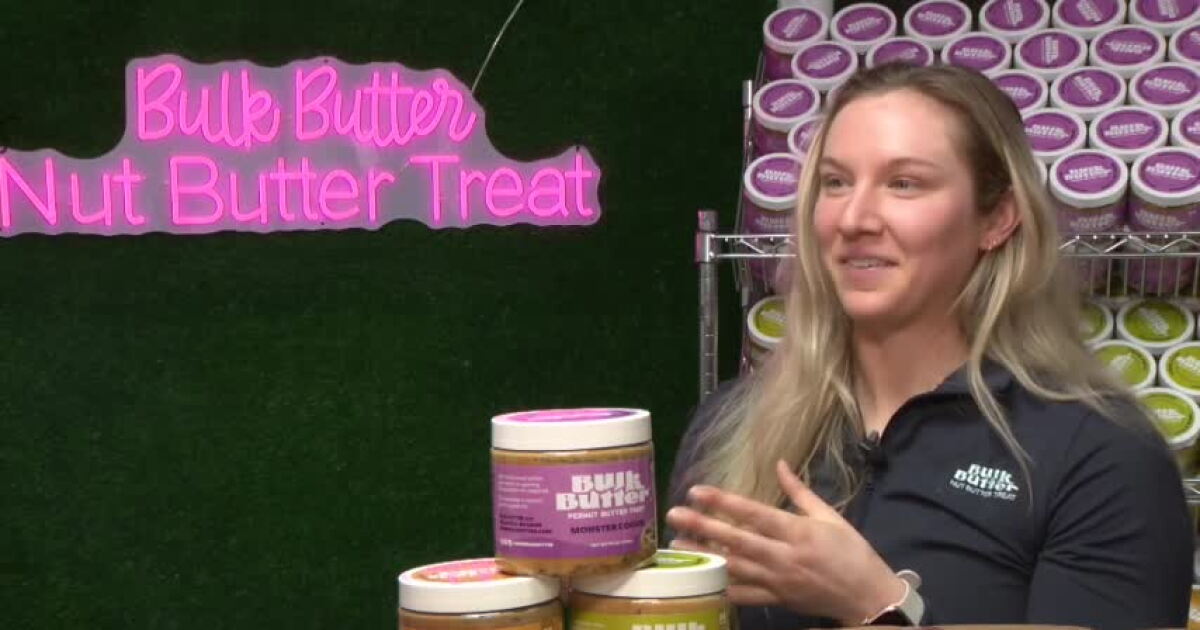
From bodybuilding to business: Wisconsin entrepreneur builds success with Bulk Butter
-

 West Virginia17 minutes ago
West Virginia First Foundation advances key initiatives at second quarterly board meeting
-

 Wyoming24 minutes ago
At 6,000-year-old crossing, Gov. Gordon OKs Wyoming’s first-ever designated pronghorn migration route – WyoFile
-

 Crypto27 minutes ago
SpaceX Lands Nasdaq-100 Spot Weeks After Record IPO
-

 Finance32 minutes ago
Hong Kong vows stronger exchange with reforms, bond futures and gold push
-

 Fitness39 minutes ago
Health Watch: Fitness Friday – exercise and dementia

