Lifestyle
At your service: A restaurant maître d' tells all in 'Your Table Is Ready'


DAVID BIANCULLI, HOST:
This is FRESH AIR. I’m Dave Bianculli.
Across his career, Michael Cecchi-Azzolina says he’s been threatened, cursed at, punched and called every ugly name imaginable. He’s also had people press a hundred dollar bill into his hand, sometimes more than one of them. That’s because for years he controlled a very valuable commodity – the tables at high-end Manhattan restaurants. He’s written about his experience in his memoir, “Your Table Is Ready: Tales Of A New York City Maitre D’,” now out in paperback. Cecchi-Azzolina has encountered celebrities, captains of finance, plenty of nice regular folks and one bona fide mobster who repeatedly threatened him due to a perceived slight. In his book, Cecchi-Azzolina takes us behind the scenes of the restaurant world where we learn who gets choice tables and who doesn’t, but also how restaurant staffs in the 1980s and ’90s worked, fought and loved in adrenaline-fuelled workplaces where booze and cocaine were plentiful. Michael Cecchi-Azzolina has worked as a server, maitre d’ and manager in several exclusive restaurants. Last year, he opened his own bar and grill in New York called Cecchiâs. He spoke with NPR contributor Dave Davies in 2022.
(SOUNDBITE OF ARCHIVED NPR BROADCAST)
DAVE DAVIES: Well, Michael Cecchi-Azzolina, welcome to FRESH AIR.
MICHAEL CECCHI-AZZOLINA: Thank you so much. It’s great to be here, Dave.
DAVIES: So when you were a maitre d’ at a lot of pretty exclusive place – there was one called The River Cafe, which had this – was on a barge in the East River – had this spectacular view of Manhattan. And people would come in and ask for a window table – you know, normal folks who are there on a special occasion – and they would see all the window tables are empty. And you would be steering them to the middle of the room, and they would say, hey, hey, can’t you help me here? Don’t we – we’d love to do this. What would you do?
CECCHI-AZZOLINA: You know, it was one of the hardest things in the world to do. There were nine window tables, and generally, every evening, each table was spoken for. Now, were they spoken for when we opened at 5:30? No. Would people start coming 6:30, at 7? Absolutely.
So you have a guest that’s waited a month for a reservation. It’s the wife’s anniversary or birthday or the husband’s anniversary or birthday. And they see these incredible tables, staring at probably the most incredible view of any restaurant in the world, and they’re not allowed to sit there. Well, people get really, really angry. And what do you do?
First, you tell them I’m so sorry, but those tables are already reserved. What do you mean they’re reserved? There’s no one in the restaurant. Well, they’ve been spoken for by a number of people. Well, who? Well, you can’t tell who the tables are for. You’re not allowed to do that. It’s bad policy.
So you can’t say who they’re for. You can’t say – especially at The River Cafe, the owner never wanted us to say it was held by the owner. So you just have to really deal with irate people quite a bit. And so, you know, you try to get them a nicer table. I’m so sorry. I can’t do this – which leads to a lot of anger, hence me being punched, cursed at, yelled at, screamed at. Most people are very nice about it. And when you can, you’ll give them that window table.
Now, someone walks in, and they want a window table, hands me a hundred dollar bill. What do I do here? Can I give a table up? Sometimes, yes, you can do that because you know that they’re there at 5:30 or 6 o’clock and you need a table at 8 o’clock for, oh, let’s say Barbra Streisand. You’ll say, look, I can do this for you. I’ll need the table back at a certain time. Or you just go for it and say, hopefully somebody’s going to be late.
So, yeah, so tipping absolutely always helps. Being nice always helps. I’ve given a window table and gotten myself into trouble because this lovely couple was there for their 30th or 40th anniversary, and there’s no way I wasn’t going to give them the best table in the restaurant. That’s where you take the risks, and it comes back and haunts you sometimes.
DAVIES: So you’ve got some discretion here. What should we know about whether to tip the maitre d’ or not? Should you always do it? Should you do it when you’re looking for a special favor? How much should you tip?
CECCHI-AZZOLINA: If you are not known and you’re walking into the restaurant for the first time and you really want to eat there and you’re told very nicely and very politely by the maitre d’ that, I’m so sorry, there’s nothing available, I would absolutely tip that person. I do it. If I go out and I need a table, I will do it all the time. And I’ll tip on the way in.
That pretty much guarantees you either the answer that, yes, you’re going to get the table or I’m sorry, I cannot do this at all. I’ve been handed – at Le Coucou, someone handed me five brand-new hundred dollar bills for a table for the next night, and I turned them down. I didn’t have it. And nor was I going to be bought for a table. That I won’t do.
DAVIES: And in that circumstance, you hand them the money back?
CECCHI-AZZOLINA: I handed it right back to them, yeah. My host next to me, their jaws dropped. They couldn’t believe I did that. But, you know, I don’t want to be bought, for one. I don’t want to be indebted for not-great reasons. It just never sat well with me. But have I taken these tips? Of course I have. People are showing gratitude, and I’m in the hospitality business and that’s what you do – the basis of the business.
DAVIES: How do you hand someone the bill? Do you – is it the handshake with the bill in the palm? I mean…
CECCHI-AZZOLINA: Yes. It’s usually – it’s folded. Yeah, it’s folded and it goes in your hand. Though there are those people that walk in the door with swag and they put the hundred dollar bill right down on the stand. That’s for you, sir. If you can help me, I’d truly appreciate it. So – but the best way to do it is to – just to put it into someone’s hand and shake them. See, if you can help me, I’d appreciate it.
DAVIES: You’ve got to be a diplomat here because, you know, people make absurd demands at times. I mean – you know, about the food, about the seating, about the noise, about the temperature or whatever. You describe one person that you nicknamed the Shah, I guess, because he’s so imperious. How do you summon, you know, the gracious kind of voice that you need to deal with that?
CECCHI-AZZOLINA: It can sometimes be the most difficult thing in the world, when this person that you’re dealing with is truly obnoxious and hateful. We’re in the hospitality business, you know? We’re there to make everyone feel welcome. And you do your best. You try. This particular person was egregiously awful. And I probably – and I don’t know why I let this person stay in the restaurant and took his reservations beyond that. I have no idea why I did it, but I did it. And you just summon up this inner hospitable gene that we all have, those – these lifers in the business who we are – and you try and make the best of it. Though I have thrown people out. I just will not take their crap, for lack of a better word.
DAVIES: Well, I thought maybe I – we do a little mini-role-play here where you show me the voice that you use when the answer is no. And this is kind of from something that is in the book. I’m arriving. I’m the assistant of a very important person who I haven’t named and had asked when we called for the reservation for a private room. This is at Le Coucou, where there are no private tables. And we arrive early. And so I’m arriving, and I say, well, you know, as you know, the person I’m with is extremely important. He can’t be in a public place. So I assume you have a private room or a private table for us.
CECCHI-AZZOLINA: We don’t. This is a public restaurant. We have no private rooms. I’m so sorry.
DAVIES: Now, you can’t – you don’t understand her. This person is dating a member of the British royal family. He simply can’t be – she simply can’t be out among the public. There’s – there are partitions. There must be some way you can accommodate us sir, right?
CECCHI-AZZOLINA: There absolutely is not. Like I said, it’s a public restaurant, and people come here to dine and to be seen. If your guest doesn’t want to be seen, I suggest perhaps this is not the best place for you. But I have no private space, nor do I have a partition. I can seat you at a corner table, but there’ll only be one other person next to you. But you’re still in the middle of a very public dining room.
DAVIES: All right. And in this case, that was eventually accepted?
CECCHI-AZZOLINA: Eventually, yes, with great indignation, I have to say. But they wound up taking it. And, you know, they – these people came in early, a half an hour early for a reservation. And this is Le Coucou, and it was the hottest ticket in town. And we booked out weeks in advance. And it was – people waited a year for a reservation. And they came early, wanted to be seated early. Well, I’m obviously not going to have the table. You try and seat tables as close together as possible to maximize revenue. You know, you’re – it’s business. You need to pay the bills.
They came half an hour early and were very angry that the table wasn’t ready. And I apologized. I’m so sorry. Why don’t you just wait at the bar? Well, we can’t wait at the bar. We’ll be seen. Well, you can go – Le Coucou’s in a hotel, the 11 Howard Hotel, downtown New York. And I said, well, they have a lovely library upstairs or a bar. You can go up there. Well, we can’t do that. We came here to have dinner. OK, I’m very sorry then. You need to just stay at the bar. And as soon as the table’s ready, I’ll be glad to seat you.
Well, they went to the bar. And you know what happened? No one knew who they were. Nor did anyone care. So they stood there for half an hour. I don’t even think they had a drink. And then, eventually, the table was ready.
DAVIES: Let’s take a break here. Let me reintroduce you. We are speaking with Michael Cecchi-Azzolina. His new book is “Your Table Is Ready: Tales Of A New York City Maitre D’.” He’ll be back to talk more in just a moment. This is FRESH AIR.
(SOUNDBITE OF MUSIC)
DAVIES: This is FRESH AIR, and our guest today is Michael Cecchi-Azzolina. He spent years in New York as a maitre d’ of some high-end restaurants. He has a new book. It’s called “Your Table Is Ready: Tales Of A New York City Maitre D’.”
This book is full of fascinating, really fun tales of restaurant life. And you did a lot of this in the ’80s, when, as you said, you know, Studio 54 had closed at some point and people started going to high-end restaurants to have a lot of their fun. And it was amazing to me how much drinking was done, you know, by the staff during their shifts – bartenders, servers, others. I mean, did owners know and tolerate this?
CECCHI-AZZOLINA: Good question. You know, I think it’s an old standard in the business that you know your bartenders are going to steal and drink. And so it depends how much you want to lose…
DAVIES: (Laughter).
CECCHI-AZZOLINA: …And what you’re willing to put up with. Now, do they all do that? No, not at all. But people do drink. The ’80s was like the Wild West in New York City. People were partying. You know, you had Studio 54 that glamorized cocaine and alcohol and sex. And it was the lead-in to the restaurant world.
And if you knew the bartender, you got a drink. Even if you didn’t know the bartender, you got a drink. People drank in places that I worked and other restaurants that I know of, many through the whole shift. We had a bartender that was an ex-New York City policeman, and we used to call him Dr. Dewar’s ’cause he’d polish off a bottle of Dewar’s during a shift. It was standard practice back then.
DAVIES: Well, you know, we’re talking about this in general terms. I mean, you talk about doing it yourself. Even when you were at Le Coucou where – you know, it’s stressful to have to be managing people who want all these exclusive tables and telling people no and trying to get tables cleared in time for the next celebrity to come in. And you say, like, there are times I needed a shot of vodka to keep going. Wow. Can you stay mentally sharp when you’re doing that?
CECCHI-AZZOLINA: Well, you’re not getting drunk (laughter), for sure. But sometimes, to steady the nerves, about 8:30, 9 o’clock, when you’ve got 50 people waiting at the bar, waiting for a table. And you’re behind. And everyone’s looking at you with the death stare and about to stab you, I would run behind there, get a chilled shot of vodka and go smile, take a deep breath and get right back into it.
DAVIES: Wow.
CECCHI-AZZOLINA: And were other people drinking? Yeah, of course. People find a way to do it. Through the years, I’ve had to fire people who were on the floor absolutely drunk. I’ve had situations where service would go down to their locker or out back and have a flask and come up. And by 10, 11 o’clock at night, they were slurring their words. People – it’s a very, very, extremely stressful job. The demands, especially in fine dining with a very high-caliber clientele, it’s incredibly stressful. People are demanding. Even ones that aren’t demanding, you’re held to a standard. And that standard must be abided by.
Restaurants were run, and most – some cases, they still are run like the military. This had to be done precisely this way. Food had to – order had to be taken within five minutes. Drinks had to arrive at the table two minutes after they were ordered. Your entrees had to be served 10 minutes after the appetizers were cleared. Then dessert menus. It was a very strict protocol. Now, when you have a restaurant, when each table is booked to the maximum from 5 to 12 o’clock at night, you need to keep this thing moving straight through the night – plus, dealing with people that want to talk to you.
They have questions. They expect you to be pleasant. Customers that you know, they want to hear about your family and what you did that day. And you need to balance all of this. You’re juggling this. You’re juggling a kitchen that’s very stressed out because they’re trying to put the food out, a maitre d’ at the door who needs tables, customers who are demanding. It is incredibly stressful. And people do go to alcohol and drugs to get through it. Historically, my 40 years in the business, it’s always been that way. Not everyone.
DAVIES: The other thing besides booze and cocaine we find is sex, a lot of it – among staff, among guests, between guests and staff, a lot of this on the premises. Was this everywhere? Did owners know about this stuff?
CECCHI-AZZOLINA: Did owners know? You know, it’s really tough to say. Look, as we’ve gotten into the 2000s and the teens and all that, and all the incidents that have been documented and caught where owners were actually abusing staff – so obviously, they did know because they were doing it. This didn’t happen back then.
DAVIES: You mean owners were sexually preying upon staff? Is that what you mean?
CECCHI-AZZOLINA: Yes, preying upon staff. Yeah.
DAVIES: Yeah.
CECCHI-AZZOLINA: I mean, they’re documented cases, you know?
DAVIES: Yeah, not – yeah, that’s not unheard of. Yeah.
CECCHI-AZZOLINA: The #MeToo movement highlighted many of these. And a couple of owners had to divest themselves from their restaurants because of it. But back then, it was – look, like I said, this is after Studio 54. And it was a party. You had customers coming in handing you hundred-dollar bills with a gram of cocaine in them. They expected you to party with them. And they did. Did the owners know? I can’t imagine that they didn’t know.
But at the Water Club, the general manager was getting as wasted as everybody else and eventually got caught for embezzlement. So from the top down, it was happening. Not necessarily just the owners, but the managers were doing it, absolutely doing it. So it would happen. And you have alcohol. You have drugs. Well, the next logical thing is sex to happen. And it happened quite frequently in very different establishments.
DAVIES: You know, and there are some wild stories here, some involving you that I couldn’t come within a mile of describing on this show. But they make for interesting copy. And, you know, I know that as you kind of got a little older, you eventually married and had a daughter. Has your wife read this stuff? Is this going to be news to her (laughter)?
CECCHI-AZZOLINA: Yes, she has. I have two daughters. And, yes, she has read this stuff.
DAVIES: OK.
CECCHI-AZZOLINA: I have the most wonderful wife in the world. And she’s – you know, she’s read the book in bits and pieces, you know, all the way through and actually helped, you know, do some good editing for me. But only recently has she read the entire – the book in its entirety, straight through. And I’d see her sitting on the couch just laughing through the whole thing. She loved it. And, no, she’s not upset by these stories.
And, look, did I have to put all these stories in? And I thought about this. And I thought long and hard about it. And I had to because I wanted to document this exactly the way it was. It’s not about braggadocio. I’m not the, you know, the high school football quarterback bragging about his exploits. I really wanted people to know what it was and what people went through and the detriment that it caused, not just, you know, the party that it was, because the party ended. It didn’t last. Though, this is for me. But the restaurant, yeah, it’s still ongoing. And there’s cases now that things are still happening, which is crazy to me.
DAVIES: When you say the detriment, what do you mean?
CECCHI-AZZOLINA: Well, it – people just didn’t last…
DAVIES: Oh.
CECCHI-AZZOLINA: …I mean, from the alcohol and from the drugs and AIDS. AIDS hit, and the sex killed people. And I was with a bunch of my co-workers that died because of this. And it was a horrific time. So it had to stop at some point, you know? These things don’t go – they stop till, then, people forget about it and start up again, which I think happened in the 2000s.
DAVIES: One of the other things you describe is the two-minute drill that a restaurant would engage in when the food inspector comes. I mean, you’re not particularly fond of food inspectors. You think that they are more interested in piling up fines than actually protecting the public from serious harm. But when a food inspector was spotted, what would happen in a restaurant?
CECCHI-AZZOLINA: It’s a nightmare. It’s – everything stops. That is the worst day of the year for you because – now in New York City, there are letter grades. So you get A, B, C, D, and – or failing. And who doesn’t want an A in that window? You have to post these in the window. So the stress of having an A is incredibly difficult, especially when the system first started. Look, I’ve worked in a lot of restaurants, and many of these restaurants are in very old New York City buildings where it’s very difficult to comply with health standards as they are written. It’s almost impossible, actually. You know you’re not going to hit every point that needs to be hit. So when the health inspector comes in, what you want to do is be as prepared as possible so that the fine you get – and you will get fines, always – is as little as possible so you’re not paying – you know, spending that nice revenue on your health inspector fines.
So what I’ve done in many restaurants is you have a drill. Once the health inspector is spotted and they come in – because they’re wearing a uniform, and they have to show their badge – the word goes out through the dining room. And we’ve used different words in different restaurants – tsunami, souffle, different terms – and to alert the rest of the staff that the inspector’s there. So the maitre d’ or the host – as soon as the inspector comes in, the maitre d’ will stall him as much as possible, and the host will go through the dining room whispering your code word. Let’s say it’s tsunami. So go to the bar – tsunami. The servers – tsunami. Go to the kitchen. And once everyone hears that, they know they have to go to their stations and take care of it.
So bussers will go to the bread station, swipe away all the bread crumbs, throw out all the cut bread ’cause you can’t have cut bread there. There can’t be a crumb in the station. You make sure that’s neat. You run down to the basement. We’ve had managers run down, pick up a vacuum cleaner, and get on their hands and knees vacuuming up mouse poop because there are always mice in restaurants in New York City. It’s impossible to keep them out. The most – the cleanest restaurant, the most – with exterminators and all – cannot stop mice. And there’s always a little piece of poop that you miss. Look, we all try to keep it as clean as possible, but it’s impossible. So someone’s doing that.
Bartenders throw out all the cut fruit at the bar. It just gets thrown out because it’s illegal. It’ll never be up to the temperature that it needs to be. You go into the dairy refrigerator, and you dump out all the milk because in the refrigerator, when you’re making coffee, say cappuccino, the milk is coming in and out. It’s not going to be at the temperature that it’s supposed to be for your health inspector. So that gets thrown out.
In the kitchen, anything that’s ready to cook, that – so you take a piece of fish out of the refrigerator, put it on the sizzle platter – it’s sitting there for the – waiting for the rest of the order to be cooked. So say you’ve got some steaks waiting to be cooked, and then, the fish goes on last. So the fish sits there waiting to be cooked. By the time it left the refrigerator and sat on the counter in that sizzle plate, it’s become illegal because it’s too warm. So if the inspector comes in and puts his thermometer in the fish, you fail that, and it’s more points against you. So every position in the restaurant has a job on basically throwing out a lot of food.
BIANCULLI: Former maitre d’ Michael Cecchi-Azzolina spoke to Dave Davies in 2022. His memoir, “Your Table Is Ready,” is now out in paperback. We’ll hear more after a break. And later, we remember William Whitworth, who was a longtime editor-in-chief of The Atlantic and before that was an editor at The New Yorker. And I’ll review the new MGM+ documentary about Paul Simon which examines his old music about Paul Simon while capturing him making some new music. I’m David Bianculli, and this is FRESH AIR.
(SOUNDBITE OF MUSIC)
BIANCULLI: This is FRESH AIR. I’m Dave Bianculli, professor of television studies at Rowan University. Let’s get back to our interview with former maitre d’ Michael Cecchi-Azzolina about the decades he spent in the New York restaurant world, most of them at high-end eateries. His memoir “Your Table Is Ready” is now out in paperback. He spoke with Dave Davies in 2022.
(SOUNDBITE OF ARCHIVED NPR BROADCAST)
DAVIES: Tell us a little bit about your family.
CECCHI-AZZOLINA: I grew – Bensonhurst at the time was very Italian American, and I’m from an Italian American family. I was raised by my mother and didn’t really know anything of my father till many, many, many, many years later. But things I heard about him were not the best in the world. And the – my uncles and cousins and their friends were – and it was a very tough neighborhood. And my uncles and cousins and their friends were all in some way connected to the mob on various different levels. One was a bookie. One would come home and would have jewelry there. I’m not sure what they were doing. I never knew what they did, but I knew they drove Cadillacs and that they always dressed well, and everyone had a fedora, and it was of its time, you know? This is the days of Sinatra and the Rat Pack and Dean Martin, and my whole family looked up to these guys. They were the role models.
DAVIES: Yeah. Describe the Sunday afternoons after Mass at your house.
CECCHI-AZZOLINA: So I’d go to church and do my thing and come home. And my mother would be – or my aunts would come over, and they’d be making the sauce and, you know, roast beef, etc. And my uncles would come and they’d sit in the living room and they’d play poker. And this was the beginning of my service career – serving mass was because when you – at church, you’re – it’s called serving as an altar boy, and you’re laying out the linens for the altar, and you’re polishing the gold plates for the communion and for the altar, and you’re filling up the cruets for the wine and the water. And so it’s basically setting up a restaurant. And so that’s – began my career. I’d come home, and my uncles would be there, and they’d be playing poker, and they’d be smoking up a storm. And I would go in there, and I’d clean ashtrays, and I would give them shots of their scotch and take it back to the kitchen, and I would clean the room. And they’d sit there playing poker while the ladies cooked.
BIANCULLI: You know, you mentioned that your mom would work in an office. And there was this guy there who you knew as your Uncle Joe, and people would come for – and line up for a few quiet words with him to take care of some mysterious business. Who was your Uncle Joe? What did you eventually learn?
CECCHI-AZZOLINA: Well, my mother worked in a real estate office, and in summers she would bring me there. We – you know, we didn’t have much money, so there was no summer camp or anything like that. And I’d just play on the street outside. And this guy, Uncle Joe – you called – you know, you grow up, you call a lot of people your uncle, your – and they’re not. But so he was Uncle Joe.
He would come in every Friday and sit at this desk at the front and people would come in and have a few words with him and leave. And he always came in, and he’d always – you know, he’d see me, go, Mickey, and he’d squeeze my cheek, and he’d hand me a dollar bill, and then it’d be time for lunch. And he’d say, come on, Mikey, let’s go and have lunch.
And we go around to a bar around the corner where he’d walk in, and there’d be a bunch of guys in fedoras. And he walked in, they all kissed him, and I assumed that he was giving them dollar bills as well. I didn’t know. And I’d get propped up on the bar and we’d eat – I’d have a pot roast sandwich that I could taste today. It was the most delicious thing in the world. And that’s what I knew of this guy.
Jump ahead maybe 15, 20 years later, I’m reading the newspaper, and I see on the front of the newspaper, Joe Colombo shot. And I look at it, and I realize that was my Uncle Joe – the head of the Colombo crime family, Joe Colombo. I had no idea.
DAVIES: Wow. Before we completely leave the world of your family and mob connections, you tell a story of working as a maitre d’ in one of the restaurants – this might have been The River Cafe, which was a really high-end place, where you ended up offending a wise guy. You want to tell us the story?
CECCHI-AZZOLINA: Yeah. It was a quiet night at the restaurant, and I’m sitting down at my table having dinner. And this gentleman comes into the bar, closely followed by a valet who comes up to me and says, Michael, this guy’s drunk. He blocked the door with his car. He won’t give me his keys. We’ve got to get him out of here.
So I turn to the bartender. I give him our signal to cut him off, and he doesn’t do it. He serves him a drink. And the next thing I know, the guy’s sitting there drinking at the bar. Well, I go to the bar to get a glass of water, a glass of wine, and this guy comes over to me – and he’s about 5’8”, 200 pounds – pushes me against the wall. He says, you tried to cut me off. I don’t know who you are, I don’t know what you do, but you disrespected me. And I’m going to take care of you.
And at that point, I thought, they’re going to break my legs or they’re going to kill me. The detective comes back, says don’t worry. You know, we’ll get you out of here tonight. I spent the next couple of weeks in absolute fear of my life. Turned out there had to be a sit-down through one of my regular customers who was in one family with another customer who’s in another family. They had a talk, and they came back to me and said, Michael, next time he comes in, you’ve got to go up to him and say, Mr. Anthony, I’m sorry for having disrespected you. Let me buy you a drink, which is what I did.
He came in about a week later to do that. And then he started getting phone calls at the restaurant and wanting special services. And I thought, I am going to be his lapdog for the next, you know, five years. Walk in the restaurant one night, same bartender’s at the bar, smiling. He says, did you see this? He’s holding up a copy of The New York Post and the headline, this guy – mobster was killed. They offed Fat Anthony in some nightclub he was trying to shakedown, and that ended it.
DAVIES: You said one of the things that you would do as maitre d’ is something you call touching the tables.
CECCHI-AZZOLINA: Yeah.
DAVIES: What is this?
CECCHI-AZZOLINA: It’s – every single table in the restaurant, I would go to, and I would make sure that everything was good that evening. This way – look, if there’s something wrong, tell me. We’ll take care of it. Or you get to meet the guest. I love people. It’s why I do this. I want to create an experience. I want to know who these people are, why they’re there. If they don’t want to be bothered, I walk away. But I just walk in – you touch the table and make sure everything’s OK and move on.
I learned this from the great chef Andre Soltner, whose restaurant, Lutece, was the No. 1 restaurant in America for many, many years. And after every service, Soltner would leave in his starched whites and his toque and go to every single table to check on how things were. You felt as though the pope was there to – greeting you at the end of a meal. It was so wonderful. And I’ve done that my whole career now. I just want to be there and see that the experience is correct ’cause that’s what we do in a restaurant. We provide an experience.
DAVIES: Well, Michael Cecchi-Azzolina, thanks so much for speaking with us.
CECCHI-AZZOLINA: Thank you so much. This has been wonderful to be here.
BIANCULLI: Michael Cecchi-Azzolina speaking with Dave Davies in 2022. Since they spoke, Michael has opened his own restaurant in New York, a modern bar and grill called Cecchi’s. His memoir, “Your Table Is Ready,” is now out in paperback. Coming up, we remember former William Whitworth, who worked first for The New Yorker and then The Atlantic. This is FRESH AIR.
(SOUNDBITE OF MUSIC)
Copyright © 2024 NPR. All rights reserved. Visit our website terms of use and permissions pages at www.npr.org for further information.
NPR transcripts are created on a rush deadline by an NPR contractor. This text may not be in its final form and may be updated or revised in the future. Accuracy and availability may vary. The authoritative record of NPR’s programming is the audio record.



new video loaded: Prada Peels Back the Layers at Milan Fashion Week
By Chevaz Clarke and Daniel Fetherston
February 27, 2026

Bill Cosby
Rape Accuser Says Cosby Won’t Take Stand At Trial
Published
Bill Cosby‘s rape accuser Donna Motsinger says the TV star can’t be bothered to show up to court for a trial in a lawsuit she filed against him.
According to new legal docs, obtained by TMZ. Motsinger says Bill will not testify in court … she claims it’s “because he does not care to appear.”

Motsinger says Bill won’t show his face at the trial either … and the only time the jury will hear from him will be a previously taped deposition.
As we previously reported, Motsinger claims Bill drugged and raped her in 1972. In the case, Bill admitted during a deposition that he obtained a recreational prescription for Quaaludes that he secured from a gynecologist at a poker game.
TMZ.com
Bill also said he planned to use the pills to give to women in the hopes of having sex with them.
Motsinger alleged Bill gave her a pill that she thought was aspirin. She claimed she felt off after taking it and said she woke up the next day in her bed with only her underwear on.
Here, it sounds like Motsinger wants to play the deposition for the jury.
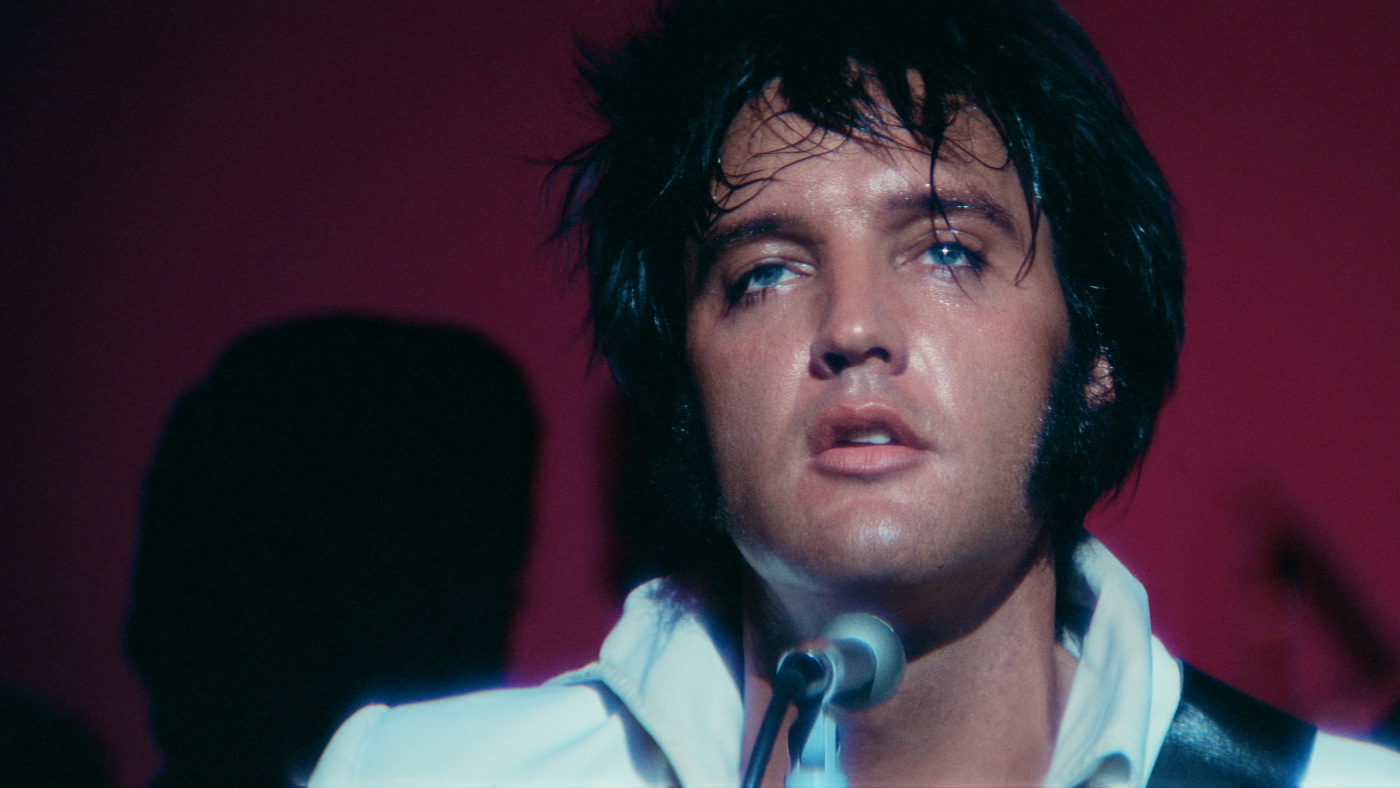
Elvis Presley in Las Vegas in Aug. 1970.
NEON
hide caption
toggle caption
NEON
“You are my favorite customer,” Baz Luhrmann tells me on a recent Zoom call from the sunny Chateau Marmont in Hollywood. The director is on a worldwide blitz to promote his new film, EPiC: Elvis Presley in Concert — which opens wide this week — and he says this, not to flatter me, but because I’ve just called his film a miracle.
See, I’ve never cared a lick about Elvis Presley, who would have turned 91 in January, had he not died in 1977 at the age of 42. Never had an inkling to listen to his music, never seen any of his films, never been interested in researching his life or work. For this millennial, Presley was a fossilized, mummified relic from prehistory — like a woolly mammoth stuck in the La Brea Tar Pits — and I was mostly indifferent about seeing 1970s concert footage when I sat down for an early IMAX screening of EPiC.
By the end of its rollicking, exhilarating 90 minutes, I turned to my wife and said, “I think I’m in love with Elvis Presley.”
“I’m not trying to sell Elvis,” Luhrmann clarifies. “But I do think that the most gratifying thing is when someone like you has the experience you’ve had.”
Elvis made much more of an imprint on a young Luhrmann; he watched the King’s movies while growing up in New South Wales, Australia in the 1960s, and he stepped to 1972’s “Burning Love” as a young ballroom dancer. But then, like so many others, he left Elvis behind. As a teenager, “I was more Bowie and, you know, new wave and Elton and all those kinds of musical icons,” he says. “I became a big opera buff.”
Luhrmann only returned to the King when he decided to make a movie that would take a sweeping look at America in the 1950s, ’60s, and ’70s — which became his 2022 dramatized feature, Elvis, starring Austin Butler. That film, told in the bedazzled, kaleidoscopic style that Luhrmann is famous for, cast Presley as a tragic figure; it was framed and narrated by Presley’s notorious manager, Colonel Tom Parker, portrayed by a conniving and heavily made-up Tom Hanks. The dark clouds of business exploitation, the perils of fame, and an early demise hang over the singer’s heady rise and fall.
It was a divisive movie. Some praised Butler’s transformative performance and the director’s ravishing style; others experienced it as a nauseating 2.5-hour trailer. Reviewing it for Fresh Air, Justin Chang said that “Luhrmann’s flair for spectacle tends to overwhelm his basic story sense,” and found the framing device around Col. Parker (and Hanks’ “uncharacteristically grating” acting) to be a fatal flaw.
Personally, I thought it was the greatest thing Luhrmann had ever made, a perfect match between subject and filmmaker. It reminded me of Oliver Stone’s breathless, Shakespearean tragedy about Richard Nixon (1995’s Nixon), itself an underrated masterpiece. Yet somehow, even for me, it failed to light a fire of interest in Presley himself — and by design, I now realize after seeing EPiC, it omitted at least one major aspect of Elvis’ appeal: the man was charmingly, endearingly funny.
As seen in Luhrmann’s new documentary, on stage, in the midst of a serious song, Elvis will pull a face, or ad lib a line about his suit being too tight to get on his knees, or sing for a while with a bra (which has been flung from the audience) draped over his head. He’s constantly laughing and ribbing and keeping his musicians, and himself, entertained. If Elvis was a tragedy, EPiC is a romantic comedy — and Presley’s seduction of us, the audience, is utterly irresistible.
Unearthing old concert footage
It was in the process of making Elvis that Luhrmann discovered dozens of long-rumored concert footage tapes in a Kansas salt mine, where Warner Bros. stores some of their film archives. Working with Peter Jackson’s team at the post-production facility Park Road Post, who did the miraculous restoration of Beatles rehearsal footage for Jackson’s 2021 Disney+ series, Get Back, they burnished 50-plus hours of 55-year-old celluloid into an eye-popping sheen with enough visual fidelity to fill an IMAX screen. In doing so, they resurrected a woolly mammoth. The film — which is a creative amalgamation of takes from rehearsals and concerts that span from 1970 to 1972 — places the viewer so close to the action that we can viscerally feel the thumping of the bass and almost sense that we’ll get flecked with the sweat dripping off Presley’s face.
This footage was originally shot for the 1970 concert film Elvis: That’s The Way It Is, and its 1972 sequel, Elvis on Tour, which explains why these concerts were shot like a Hollywood feature: wide shots on anamorphic 35mm and with giant, ultra-bright Klieg lights — which, Luhrmann explains, “are really disturbing. So [Elvis] was very apologetic to the audience, because the audience felt a bit more self conscious than they would have been at a normal show. They were actually making a movie, they weren’t just shooting a concert.”
Luhrmann chose to leave in many shots where camera operators can be seen running around with their 16mm cameras for close-ups, “like they’re in the Vietnam War trying to get the best angles,” because we live in an era where we’re used to seeing cameras everywhere and Luhrmann felt none of the original directors’ concern about breaking the illusion. Those extreme close-ups, which were achieved by operators doing math and manually pulling focus, allow us to see even the pores on Presley’s skin — now projected onto a screen the size of two buildings.
The sweat that comes out of those pores is practically a character in the film. Luhrmann marvels at how much Presley gave in every single rehearsal and every single concert performance. Beyond the fact that “he must have superhuman strength,” Luhrmann says, “He becomes the music. He doesn’t mark stuff. He just becomes the music, and then no one knows what he’s going to do. The band do not know what he’s going to do, so they have to keep their eyes on him all the time. They don’t know how many rounds he’s going to do in ‘Suspicious Minds.’ You know, he conducts them with his entire being — and that’s what makes him unique.”

Elvis Presley in Las Vegas in Aug. 1970.
NEON
hide caption
toggle caption
NEON
It’s not the only thing. The revivified concerts in EPiC are a potent argument that Elvis wasn’t just a superior live performer to the Beatles (who supplanted him as the kings of pop culture in the 1960s), but possibly the greatest live performer of all time. His sensual, magmatic charisma on stage, the way he conducts the large band and choir, the control he has over that godlike gospel voice, and the sorcerer’s power he has to hold an entire audience in the palm of his hands (and often to kiss many of its women on the lips) all come across with stunning, electrifying urgency.
Shaking off the rust and building a “dreamscape”
The fact that, on top of it all, he is effortlessly funny and goofy is, in Luhrmann’s mind, essential to the magic of Elvis. While researching for Elvis, he came to appreciate how insecure Presley was as a kid — growing up as the only white boy in a poor Black neighborhood, and seeing his father thrown into jail for passing a bad check. “Inside, he felt very less-than,” says Luhrmann, “but he grows up into a physical Greek god. I mean, we’ve forgotten how beautiful he was. You see it in the movie; he is a beautiful looking human being. And then he moves. And he doesn’t learn dance steps — he just manifests that movement. And then he’s got the voice of Orpheus, and he can take a song like ‘Bridge Over Troubled Water’ and make it into a gospel power ballad.
“So he’s like a spiritual being. And I think he’s imposing. So the goofiness, the humor is about disarming people, making them get past the image — like he says — and see the man. That’s my own theory.”
Elvis has often been second-classed in the annals of American music because he didn’t write his own songs, but Luhrmann insists that interpretation is its own invaluable art form. “Orpheus interpreted the music as well,” the director says.
In this way — as in their shared maximalist, cape-and-rhinestones style — Luhrmann and Elvis are a match made in Graceland. Whether he’s remixing Shakespeare as a ’90s punk music video in Romeo + Juliet or adding hip-hop beats to The Great Gatsby, Luhrmann is an artist who loves to take what was vibrantly, shockingly new in another century and make it so again.

Elvis Presley in Las Vegas in Aug. 1970.
NEON
hide caption
toggle caption
NEON
Luhrmann says he likes to take classic work and “shake off the rust and go, Well, when it was written, it wasn’t classical. When it was created, it was pop, it was modern, it was in the moment. That’s what I try and do.”
To that end, he conceived EPiC as “an imagined concert,” liberally building sequences from various nights, sometimes inserting rehearsal takes into a stage performance (ecstatically so in the song “Polk Salad Annie”), and adding new musical layers to some of the songs. Working with his music producer, Jamieson Shaw, he backed the King’s vocals on “Oh Happy Day” with a new recording of a Black gospel choir in Nashville. “So that’s an imaginative leap,” says Luhrmann. “It’s kind of a dreamscape.”
On some tracks, like “Burning Love,” new string arrangements give the live performances extra verve and cinematic depth. Luhrmann and his music team also radically remixed multiple Elvis songs into a new number, “A Change of Reality,” which has the King repeatedly asking “Do you miss me?” over a buzzing bass line and a syncopated beat.
I didn’t miss Elvis before I saw EPiC — but after seeing the film twice now, I truly do.

Utah Mammoth take down Minnesota 5-2 to end the Wild’s winning streak at 6

Couple sentenced for selling faulty fire extinguishers to Mississippi daycares, businesses – SuperTalk Mississippi
Missouri Lottery Mega Millions, Pick 3 winning numbers for Feb. 27, 2026

Montana cowboys help build trauma ranch for Israeli soldiers

How to Watch No. 12 Nebraska Basketball at USC with Preview, Breakdown, TV Channel

Florida High School Football Rankings: Top 25 teams – Oct. 21

Cleary's 21 help Le Moyne down Central Connecticut State 69-64 in OT

How old is Bo Nix? What to know about Oregon quarterback ahead of 2024 NFL Draft

99th annual Pony Swim held in Virginia

Indiana Members Credit Union announced as new anchor tenant at Bottleworks District

ICE blasts Washington mayor over directive restricting immigration enforcement

Did the EU bypass Hungary’s veto on Ukraine’s €90 billion loan?
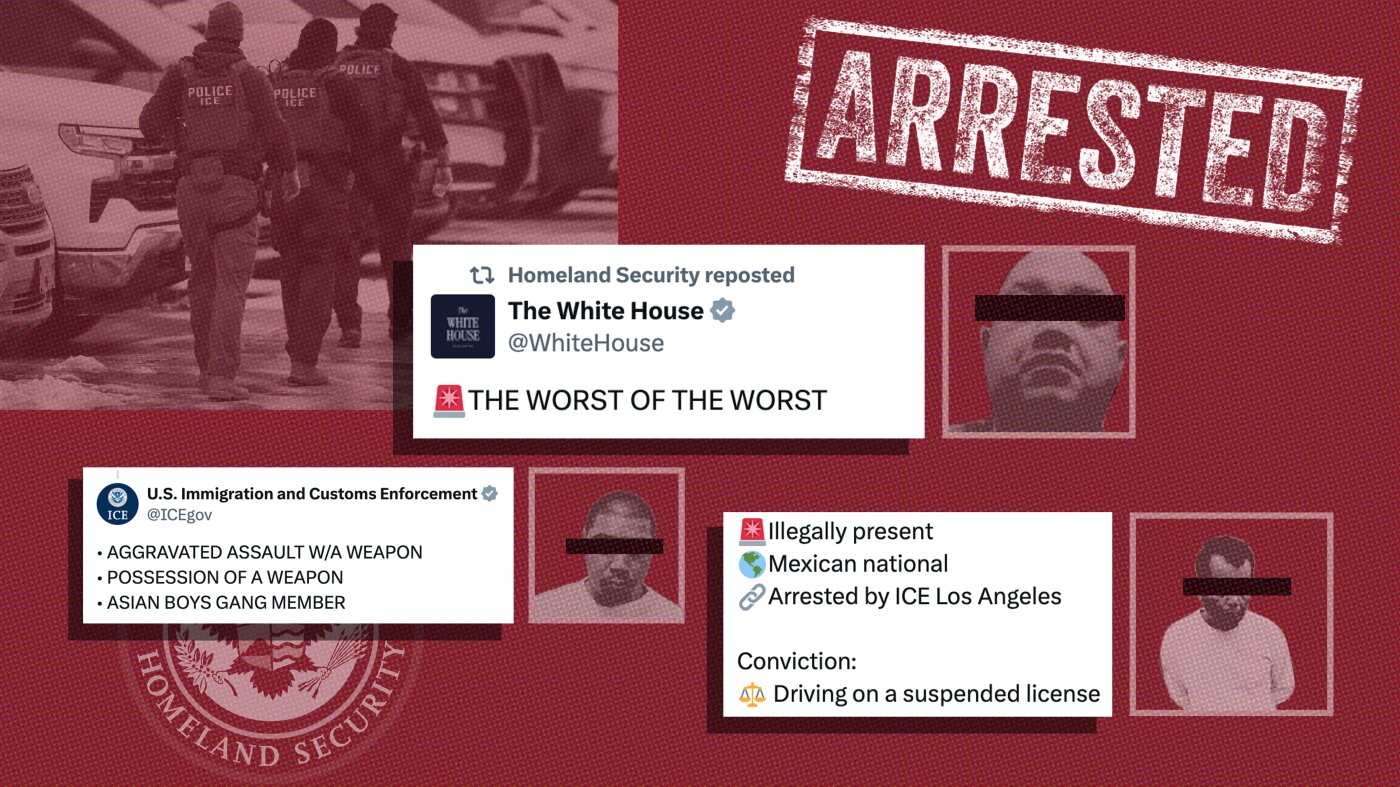
How the federal government is painting immigrants as criminals on social media

Where Iran’s ballistic missiles can reach — and how close they are to the US

Has India’s influence in Afghanistan grown under the Taliban?
-

 World2 days ago
Exclusive: DeepSeek withholds latest AI model from US chipmakers including Nvidia, sources say
-

 Massachusetts3 days ago
Mother and daughter injured in Taunton house explosion
-

 Montana1 week ago
2026 MHSA Montana Wrestling State Championship Brackets And Results – FloWrestling
-

 Louisiana5 days ago
Wildfire near Gum Swamp Road in Livingston Parish now under control; more than 200 acres burned
-

 Denver, CO2 days ago
10 acres charred, 5 injured in Thornton grass fire, evacuation orders lifted
-

 Technology7 days ago
YouTube TV billing scam emails are hitting inboxes
-

 Technology7 days ago
Stellantis is in a crisis of its own making
-

 Politics7 days ago
OpenAI didn’t contact police despite employees flagging mass shooter’s concerning chatbot interactions: REPORT