Lifestyle
A first look inside the weed consumption lounge in Hawthorne near LAX and SoFi Stadium


Barely four hours after he had arrived in Los Angeles from Georgia to attend his nephew’s birthday bash, James Huling was seated at a bar rolling a joint and sipping a cannabis-infused agua fresca on a recent Thursday afternoon.
“I’m trying to find out about that Cali life,” said Huling, 71, with a grin as he sparked the freshly rolled joint of Maven Orange Sapphire. “I’m ready for this to be legal all over the United States,” he added as he exhaled a plume of smoke. “It’s not legal in Georgia yet, but it’s on the ballot. And I cast my vote right before I left.”
Meanwhile, 38-year-old James Milne lounged in a seat not far away, his back against a frosted glass window, observing the scene from behind Ray-Ban sunglasses. As he finished a joint of Pure Beauty Spritzer, a budtender delivered a roll of Starburst candy and a box of water to him on a silver tray.
The Artist Tree’s ninth location, which opened in late September, marks the first dispensary and first cannabis consumption lounge to open in the city of Hawthorne. A total of six dispensaries — three of which will be able to offer on-site consumption — will be allowed to open within city limits.
The novelty wasn’t that Huling and Milne were getting high in a public place, but rather where they were getting legally lit — in the city of Hawthorne, just minutes from Los Angeles International Airport. That’s because, until recently, cannabis consumers in the greater Los Angeles area looking for a licensed cannabis consumption lounge could only find one in a two-mile stretch of West Hollywood, home to the county’s first five licensed consumption lounges.
The change came late last month with the opening of the Artist Tree Weed Dispensary & Lounge Hawthorne.
Located on Imperial Highway less than half a mile from where the 405 and 105 freeways meet, the roughly 4,500-square-foot space is the ninth pot-shop-meets-art-gallery concept under the Artist Tree nameplate and the second to include a consumption lounge. (The first lounge opened in April 2022 in West Hollywood.)
The new outpost is likely to attract travelers as well as South Bay cannabis consumers like Milne, who had driven from Torrance and made the trek to the new location in about 15 minutes. “I’ve been to the Woods and [the other] Artist Tree [lounge],” he said about two of the West Hollywood spots. “And my take? I’ll be back [here]. This place has a relaxed, open vibe to it, and the budtender was really helpful.”
To find that relaxed open vibe Milne speaks of, all patrons need to do is head for the double doors at the back of the 3,800-square-foot dispensary sales floor. Behind them is a 1,500-square-foot interior space dotted with a dozen tables and enough chairs to seat 40 flowerheads (the roomy space can accommodate up to 125 people total).
While the new location has a similar vibe to other Artist Tree shops, with works for sale by local artists adorning the walls, gleaming display cases filled with flower, extracts and edibles, and a glass box in the middle of the room filled with live plants, there are a few ways in which it’s notably different.
The most obvious difference is its freeway-convenient location on the very edge of Hawthorne where it borders Inglewood and El Segundo. It also offers ample parking, which is all but nonexistent at the West Hollywood location. The new shop is easily accessible by public transit, including Metro’s C Line that runs from Redondo Beach to Norwalk. (Under no circumstances should you get behind the wheel of a car after consuming cannabis.)

James Huling, visiting from Georgia, smokes a joint at the bar at the Artist Tree Cannabis Lounge Hawthorne.
“We were looking for an area that was under-served and not saturated, and this location fits that description,” Artist Tree co-founder and Chief Compliance Officer Lauren Fontein said about finding the five-year-old building that had been built but never occupied. “We were pretty excited because it’s adjacent to all the South Bay cities and about eight minutes from Manhattan Beach.”
The location is notable for another reason too: It makes the Artist Tree the first cannabis dispensary and first lounge to open under the city of Hawthorne’s budding cannabis program. According to Gregg McClain, director of the city’s planning department, city ordinances allow for up to six retail stores, with up to three of those having on-site consumption lounges. “We are hoping to see two more retail cannabis businesses open in early 2025,” he told The Times in an email, “and the remaining three in the second half of 2025.”
The Artist Tree’s Vice President of Operations Philip Del Rio said being close to SoFi Stadium, which is about three miles away, has already resulted in some post-game lounge traffic, as has the proximity to Los Angeles International Airport, also about three miles away.
“The other day we had a couple gentlemen come in who were on their way to the airport,” Del Rio said. “And just an hour after that, we had some people stop in who were coming from the airport.”
The good news for those who might have just landed at LAX and want to make a serendipitous stop-in: no reservations are required to use the lounge. You just need to be 21 or older and show up with a valid government-issued photo identification and purchase what you plan to consume on the premises.

James Huling rolls a joint of Maven Orange Sapphire.
If you drop in during the day, you’ll find a lounge area awash with natural light filtered through frosted-glass floor-to-ceiling windows on two sides — one fronting Imperial Highway and the other South Inglewood Avenue. As day turns to dusk and then nighttime, the suffused daylight outside gives way to the firefly-like flicker of passing headlights, while inside the room is bathed in light from a huge TV screen on one wall. Anchoring a back corner is a tile-fronted, mirror-backed bar with five bar stools in front and all manner of high-end, futuristic-looking smoking paraphernalia (for rent starting at $15) lined up on glass shelves.
That bar serves as the lounge’s nerve center; products ordered for consumption (everything that’s available on the dispensary side can be ordered on the lounge side as well) are passed through a small service window at the end of the bar, while all kinds of fun and festive THC-infused (but alcohol-free) cocktails are made to order behind it.
Fontein pointed out that the creative cocktail menu was a lesson learned after opening the West Hollywood lounge and dealing with challenges encountered trying to legally serve food.
“We sort of pivoted away from [trying to make] it feel like a restaurant to focusing on the lounge experience,” she said. “And the craft cocktails are a big part of that. … Drinking is such an integral part of social culture.”
The result is a collection of locally inspired canna-cocktails (created in collaboration with cannabis cocktail maker Pamos) that are as good to look at as they are tasty.
One of the standouts is a riff on the piña colada called “To the Moon,” with a not-of-this-planet look that comes by way of a bright purple butterfly pea flower extract and a dusting of cocktail glitter. “We were originally going to call it the SpaceX cocktail,” the bartender quipped as he placed one in front of me, “until Elon Musk moved the company [out of Hawthorne].” (In July, Musk said he would move SpaceX’s headquarters to Texas.)

The themed THC-infused (but alcohol-free) cocktails on offer include a riff on the pina colada called “To the Moon,” left, and an agua fresca served in a chamoy- and Tajín-rimmed glass, right.
Another is a tart take on an agua fresca served in a chamoy- and Tajín-rimmed glass. All five of the cocktails on the menu right now (some may be switched seasonally) are offered with either 3 milligrams of THC ($12 to $16) or 10 milligrams ($15 to $19). All of them can be made as THC-free mocktails ($7 each). The drinks are all served uninfused with a small bottle of the THC-containing elixir for customer to add themselves.
For the moment, the food menu consists mostly of prepackaged munchie-type sweet and savory snacks and a handful of hefty sandwiches made by Bread Lounge in downtown L.A.
The biggest difference with this spot from the rest of the local places to legally light up is clear. From the beginning, the Hawthorne location was envisioned to have full-scale, on-site food preparation.
Last month, Gov. Newsom signed Assembly Bill 1775 into law, which will allow the new Artist Tree outpost and other cannabis consumption lounges to serve food prepared on site starting Jan. 1. A few of the lounges in West Hollywood had managed to get around current restrictions by operating two separate-but-adjoining businesses — one serving cannabis and the other food.
“We started designing this space when the prior version of the [cannabis cafe bill] was up for consideration,” Fontein said. “So we have the space to do a full kitchen on-site and we’ve already built out the plumbing and the gas and all that. So we’re really well-positioned. We just haven’t decided what kind of cuisine we want to offer. Probably gastropub [fare].”

The interior of the 3,800-square-foot Artist Tree Dispensary includes for-sale artwork on the walls and a range of edibles and combustibles. The 1,500-square-foot consumption lounge is accessed through frosted-glass double doors at the rear of the sales floor.
One of the things that has carried over from the West Hollywood location is entertainment programming that includes Sunday-night sports-watching, stand-up comedy nights on the second Thursday of the month and herbally enhanced art classes. Next up is a Halloween-themed puff, puff paint event scheduled for Oct. 27.
The Artist Tree Cannabis Lounge Hawthorne
Open noon to 10 p.m. Monday through Friday and 10 a.m. to 10 p.m. Saturday and Sunday.
4756 W. Imperial Highway, Hawthorne
theartisttree.com



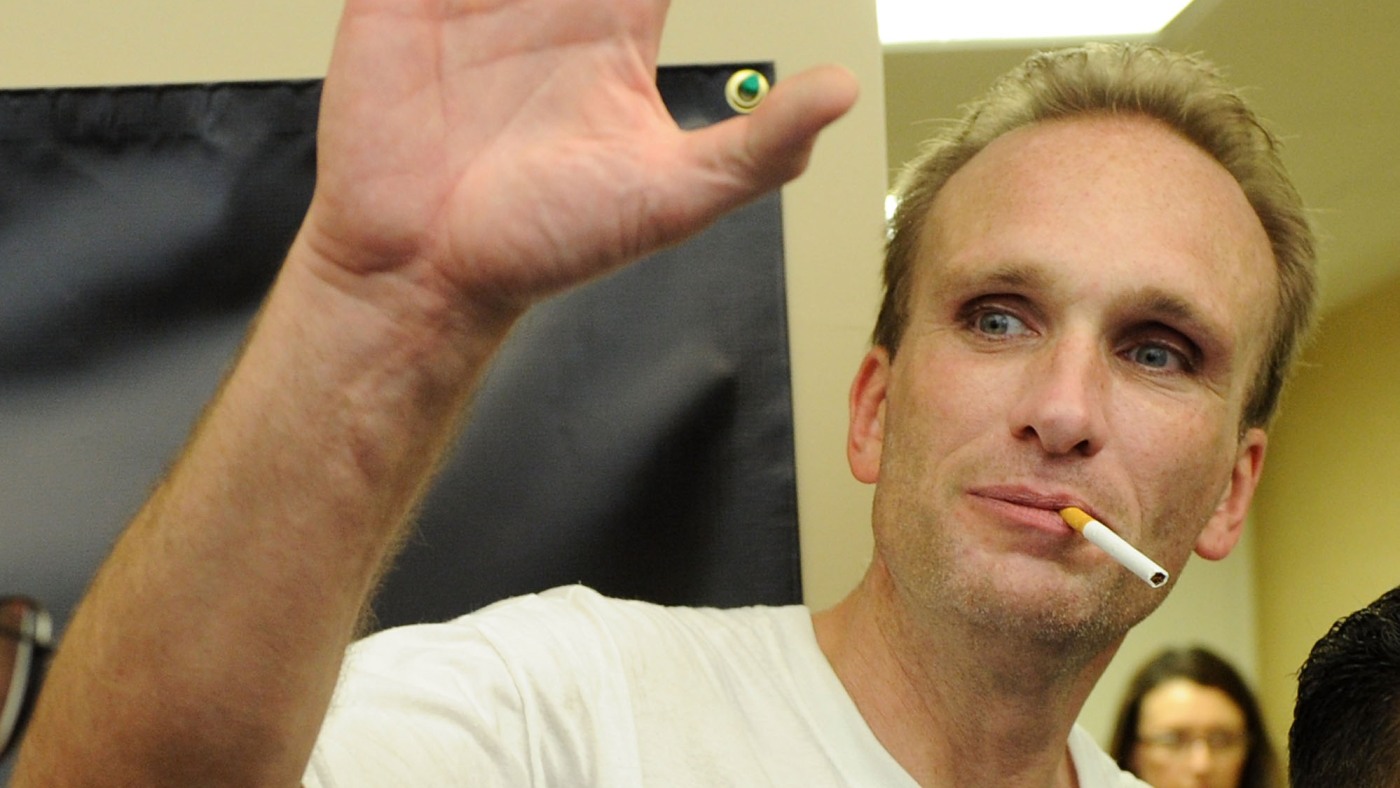
Actor Peter Greene at a press conference in New York City in 2010.
Bryan Bedder/Getty Images
hide caption
toggle caption
Bryan Bedder/Getty Images
Actor Peter Greene, known for playing villains in movies including Pulp Fiction and The Mask, has died. Greene was found dead in his apartment in New York City on Friday, his manager and friend, Gregg Edwards, told NPR. The cause of death was not immediately provided. He was 60 years old.
The tall, angular character actor’s most famous bad guy roles were in slapstick and gritty comedies. He brought a hammy quality to his turn as Dorian Tyrell, Jim Carrey’s nemesis in the 1994 superhero movie The Mask, and, that same year, played a ruthless security guard with evil elan in the gangster movie Pulp Fiction.
“Peter was one of the most brilliant character actors on the planet,” Edwards said.
He went on to work steadily, earning dozens of credits in movies and on TV, such as the features Judgment Night, Blue Streak and Training Day, a 2001 episode of Law & Order, and, in 2023, an episode of The Continental, the John Wick prequel series.
At the time of his death, the actor was planning to co-narrate the in-progress documentary From the American People: The Withdrawal of USAID, alongside Jason Alexander and Kathleen Turner. “He was passionate about this project,” Edwards said.
Greene was also scheduled to begin shooting Mickey Rourke’s upcoming thriller Mascots next year.
Rourke posted a close-up portrait of Greene on his Instagram account Friday night accompanied by a prayer emoji, but no words. NPR has reached out to the actor’s representatives for further comment.
Peter Greene was born in New Jersey in 1965. He started pursuing acting in his 20s, and landed his first film role in Laws of Gravity alongside Edie Falco in 1992.
The actor battled drug addiction through much of his adult life. But according to Edwards, Greene had been sober for at least a couple of years.
Edwards added that Greene had a tendency to fall for conspiracy theories. “He had interesting opinions and we differed a lot on many things,” said Edwards. “But he was loyal to a fault and was like a brother to me.”

Acute solution
The method sometimes works for triangular prisms too. Measuring the height of the triangle at the end of the prism packaging, doubling it and adding it to the overall length of the box gives you the perfect length of paper to cut to cover its triangular ends with paper three times for a flawless finish.
To wrap a tube of sweets or another cylindrical gift with very little waste, measure the diameter (width) of the circular end and multiply it by Pi (3.14…) to find the amount of paper needed to encircle your gift with wrap. Then measure the length of the tube and add on the diameter of one circle to calculate the minimum length of paper needed. Doing this should mean the paper meets exactly at the centre of each circular end of the gift requiring one small piece of tape to secure it. But it’s best to allow a little extra paper to ensure the shape is completely covered or risk spoiling the surprise.
Circling back
If you have bought anyone a ball, then woe – spheres are arguably the hardest shape to wrap. It’s impossible to cover a ball smoothly using a piece of paper, not only because the properties of paper stop it from being infinitely bendable, but because of the hairy ball theorem, says Sophie Maclean, a maths communicator and PhD student at King’s College London. The theorem explains it is impossible to comb hair on a ball or sphere flat without creating at least one swirl or cowlick.
“If you think about putting wrapping paper round a ball, you’re not going to be able to get it smooth all the way round,” says Maclean. “There’s going to have to be a bump or gap at some point. Personally, I quite like being creative with wrapping and this is where I would embrace it. Tie a bow around it or twist the paper to get a Christmas cracker or a present that looks like a sweet.”
If paper efficiency is your goal when wrapping a football, you may want to experiment with a triangle of foil. An international team of scientists studied how Mozartkugel confectionery – spheres of delicious marzipan encased in praline and coated in dark chocolate – are wrapped efficiently in a small piece of foil. They observed that minimising the perimeter of the shape reduces waste, making a square superior to a rectangle of foil with the same area.

Krampuses take part in the annual Krampuslauf or “Krampus Run” on the evening of the Feast of St. Nicholas in the Austrian city of Salzburg. The tradition is centuries-old in the eastern parts of the European Alps.
Rob Schmitz/NPR
hide caption
toggle caption
Rob Schmitz/NPR
SALZBURG, Austria — As you approach Salzburg’s Max Aicher Stadium on the eve of the feast of St. Nicholas, you’d be forgiven if you thought that, from a distance, there appeared to be a Chewbacca convention underway. As you got closer, though, you’d realize the few hundred mostly men dressed in furry brown costumes were not from a galaxy, far, far away, but had instead assembled for a far more traditional, Earth-bound reason: to play, en masse, the alpine character of Krampus, the monstrous horned devilish figure who, according to custom in this part of Europe, accompanies St. Nicholas as he visits children and assesses their behavior from the past year. While St. Nick rewards the good boys and girls, his hairy, demonic sidekick punishes the bad children.
“It’s basically a good cop, bad cop arrangement,” says Alexander Hueter, self-proclaimed Überkrampus of Salzburg’s annual Krampus Run, an event when hundreds of Krampuses are let loose throughout the old town of Salzburg, where they terrorize children, adults, and anyone within the range of a swat from their birch branch switches they carry.

Members of Krampus clubs throughout Austria and the German state of Bavaria gather at a local soccer stadium to change into their Krampus costumes.
Rob Schmitz/NPR
hide caption
toggle caption
Rob Schmitz/NPR
When asked to explain why people in this part of Europe take part in this centuries-old tradition, Hueter skips the centuries of Roman, Pagan and early Christian history that, together, morphed into the legend of the Krampus figure and instead cuts straight to the chase: entertainment.
“If St. Nicholas comes to town on his own, it’s nice,” says Hueter with a polite smile, “but there’s no excitement. No tension. I mean, St. Nick is all well and good, but at the end of the day, people want to see something darker. They want to see Krampus.”
And if it’s Krampus they want, it’s Krampus they’ll get, says Roy Huber, who’s come across the border from the German state of Bavaria to take part in this year’s Krampus Run. “The rest of the year, I feel like a civilian,” Huber says with a serious face, “but when the winter comes, you have the feeling under your skin. You are ready to act like a Krampus.”
Huber stands dressed in a coffee-colored yak and goat hair costume holding his mask which has a scar along the left side of its face, two horns sticking out of the scalp, and a beautifully waxed mustache that makes his monstrous avatar look like a Krampus-like version of the 1970s Major League Baseball closer Rollie Fingers.

Roy Huber, from Bavaria, holds his Krampus mask prior to the Krampus Run. “When the winter comes, you get the feeling to be Krampus,” he says.
Rob Schmitz/NPR
hide caption
toggle caption
Rob Schmitz/NPR
Behind Huber stands a Krampus with a red face and several horns that make up a mohawk. Benny Sieger is the man behind this punk version of a Krampus, and he says children are especially scared of his get-up.
“Very scared,” he says, “but if I act like a sensitive Krampus, it can go well. In fact, our hometown Krampus club hosts an event called ‘Cuddle a Krampus’ to ensure that we are not so scary.”
Sieger, though, says he shows no mercy for young adults, especially young men, who he says “are basically asking to be hit” if they come to a Krampus run. He shows off a long switch made up of birch tree branches that smarts like a bee sting when hit with it.
Normally Nicklaus Bliemslieder would be one of those young adults asking for it at the Krampus run — he’s 19 years old — but his mother boasts of how her son gamed the system by playing a Krampus for 14 years straight since he was 5 years old.
“I was never scared of being a Krampus,” he says, “but I was scared of the Krampus. The first time I put the mask on, I wasn’t scared anymore.”
Blieslieder, Siger, Huber and dozens of other Krampuses pile onto a row of city buses that will take them to Salzburg’s old town, singing soccer songs on the way to rile themselves up. In the town center, they put their masks on, the bus doors swing open, and dozens of Krampuses empty into the streets of downtown Salzburg, lunging at shoppers, swatting them with switches, their cowbells a-clanging. At the front of the procession dressed in a white and gold robe is St. Nicholas, holding a staff, handing out candy with a serene smile, and blissfully oblivious of the cacophony of blood-curdling chaos behind him.

After a city bus drops off more than 200 Krampuses at the entrance to the old town of Salzburg, the Krampuses start to put their masks on and get into character.
Rob Schmitz/NPR
hide caption
toggle caption
Rob Schmitz/NPR
Salzburg resident Rene Watziker watches the Krampuses go by, his 4 1/2 year-old son Valentin perched on his shoulders, his head buried into the back of his father’s neck, and his oversized mittens covering his eyes in terror. As Valentin shakes in fear, his father tries to coax him out of it — unsuccessfully.
“He’s too scared of the Krampuses,” says Watziker, laughing. “This is great, though, because this is my childhood memory, too. I want him to have the same good memories of his childhood. He’s going to look at the video I’m shooting and then he’ll be very proud he came.”

Salzburg resident Rene Watziker watches the Krampuses go by, but his four-and-a-half year-old son Valentin perched is too scared to look at them.
Rob Schmitz/NPR
hide caption
toggle caption
Rob Schmitz/NPR
Further down the pedestrian street, Krampuses hit onlookers with handfuls of branches and smear tar on people’s faces. Onlooker Sabeine Gruber, here with her 13-year-old daughter, manages to crack a smile at the spectacle, but she says the Krampus Run has gotten tamer with time. She points to the stickers on the backs of these Krampuses exhibiting numbers in case you want to complain that a particular Krampus hit you too hard.
“When I was a child,” says Gruber, “this was far worse. You were beaten so hard that you woke up the next day with blue welts on your legs. These days the Krampus run is more like a petting zoo.”
Esme Nicholson contributed reporting.

Why Texas A&M’s former Heisman winner was a generational dual-threat

Walker Kessler’s Desired Extension Price With Utah Jazz Surfaces

Person killed in early morning crash on Route 7 in Pittsford

One OT not enough as Ohio State and West Virginia go to double overtime

Residents clean up, assess damage after waters recede from Washington state flooding

Florida High School Football Rankings: Top 25 teams – Oct. 21

Cleary's 21 help Le Moyne down Central Connecticut State 69-64 in OT

How old is Bo Nix? What to know about Oregon quarterback ahead of 2024 NFL Draft

99th annual Pony Swim held in Virginia

Video: ‘It Didn’t Have to Happen This Way:’ U.Va. Faculty Call for Review of Police Response to Protests

Video: At Least Two Killed in Shooting at Brown University

FBI ousts reinstated whistleblower over unauthorized media talks, ‘poor judgment’

EU dismisses Russia’s lawsuit against Euroclear as ‘speculative’
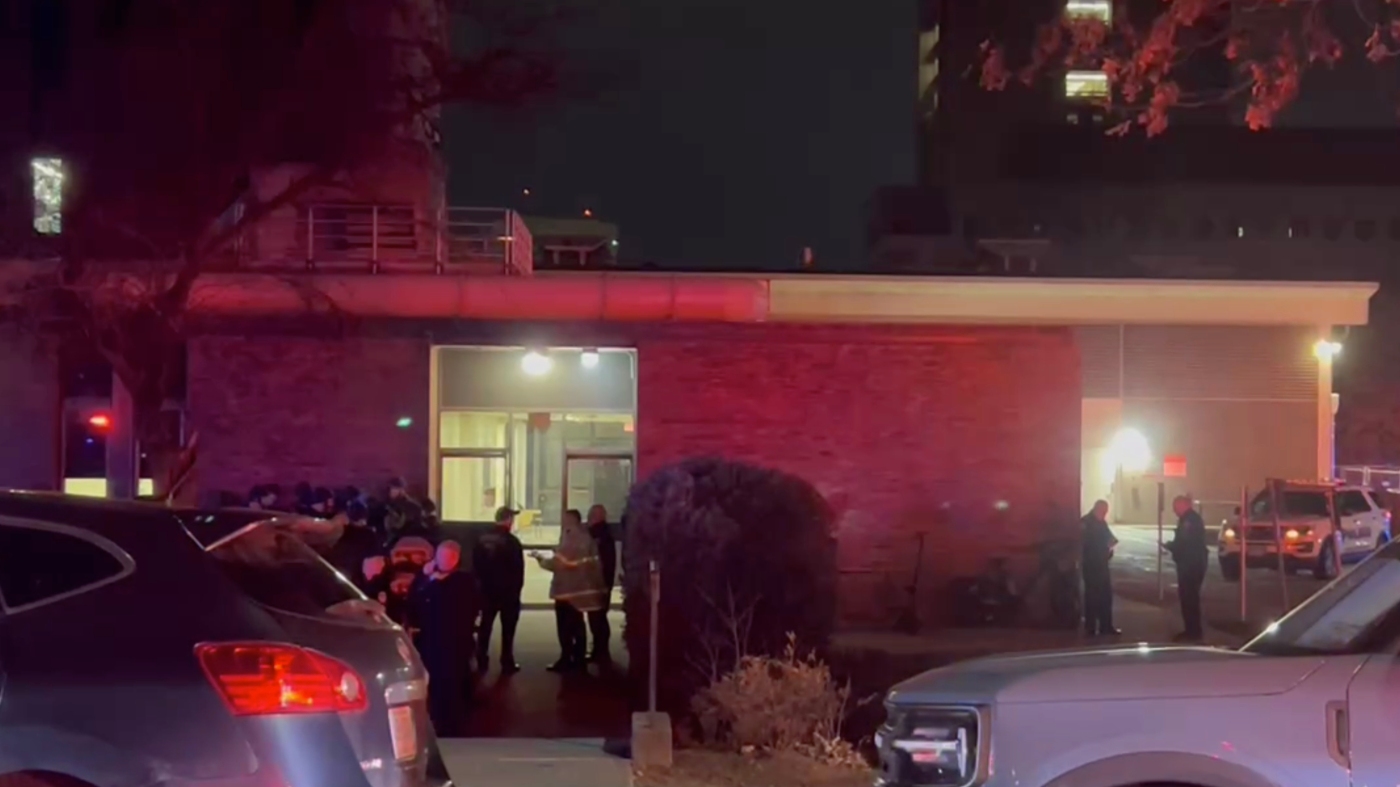
Multiple people shot near Brown University, police say

Inside Minnesota’s $1B fraud: fake offices, phony firms and a scandal hiding in plain sight
-

 Alaska1 week ago
Howling Mat-Su winds leave thousands without power
-

 Texas1 week ago
Texas Tech football vs BYU live updates, start time, TV channel for Big 12 title
-

 Ohio1 week ago
Who do the Ohio State Buckeyes hire as the next offensive coordinator?
-

 Washington5 days ago
LIVE UPDATES: Mudslide, road closures across Western Washington
-

 Iowa6 days ago
Matt Campbell reportedly bringing longtime Iowa State staffer to Penn State as 1st hire
-

 Miami, FL7 days ago
Urban Meyer, Brady Quinn get in heated exchange during Alabama, Notre Dame, Miami CFP discussion
-

 Cleveland, OH6 days ago
Man shot, killed at downtown Cleveland nightclub: EMS
-
World6 days ago
Chiefs’ offensive line woes deepen as Wanya Morris exits with knee injury against Texans

