Lifestyle
30 years ago, ‘Waiting to Exhale’ was the blockbuster Hollywood didn’t anticipate


Loretta Devine, Whitney Houston, Angela Bassett and Lela Rochon.
Merie W. Wallace/20th Century Fox
hide caption
toggle caption
Merie W. Wallace/20th Century Fox
Many (predominantly white) critics weren’t impressed with the movie Waiting to Exhale when it opened in 1995, but moviegoers turned up in droves, making it one of the year’s most profitable blockbusters. In a year in review, The Los Angeles Times dubbed the film a “social phenomenon,” and the NAACP lavished it with Image Awards for outstanding motion picture, lead actress and more.
Ten years after the acclaim and controversy of Alice Walker’s The Color Purple and long before Girlfriends and Girls Trip, the Black women’s ensemble feature was a rarity on American screens — until this modestly-budgeted, big studio adaptation of Terry McMillan’s popular novel made its splashy debut. Before Sex and the City delved into the sex lives and pitfalls of urban daters, audiences thrilled to the sight of Waiting to Exhale foregrounding the romantic lives and misadventures of four successful, single Black women, not just struggling to survive but striving for more.
“I haven’t gotten to the point where I’ll take whatever I can get,” Savannah (Whitney Houston) observes in the movie as she refuses to settle and moves from Denver to Phoenix. “There’s a big difference between being thirsty and being dehydrated.” Her words apply to people craving better representation just as they do women seeking a love connection. In the 1990s, even as Black women were often let down while longing to see themselves depicted fully and lovingly as the center of stories, they kept seeking, often practicing what cultural scholars like Stuart Hall called negotiated reading. As scholar Jacqueline Bobo wrote in 1988 about Black women’s reception of Steven Spielberg’s adaptation of The Color Purple, “we understand that mainstream media has never rendered our segment of the population faithfully … out of habit, as readers of mainstream texts, we have learnt to ferret out the beneficial and put up blinders against the rest.”
A humane and cheeky comedy, Waiting to Exhale exceeded expectations. So women showed up for this movie, surprising even executives at 20th Century Fox, who should have known better given the book’s fans, who swamped readings by the thousands. They gathered. They laughed. They talked. And they cried. And many saw themselves in these four women, regardless of whether they had the wardrobes and lifestyles. They knew the pain of working hard and successfully building a life, when all your family can see is that you don’t have the thing that was still so prized and validating in women’s lives — a socially approved, church-sanctified partner.
The resonance was so deep that, for years to come, the story’s reception and impact would be studied by cultural scholars. When Jacqueline Bobo published her book-length study of Black Women as Cultural Readers, Waiting to Exhale was a recurring reference point. And when Black women authors are asked about their influences, the movie Waiting to Exhale and the novel remain touchstones, the movie often the first point of entry. Danyel Smith called them “era-defining” and Tara M. Stringfellow wrote that McMillan taught her that “sisterhood is as necessary as air.”
Translating the 1992 novel to the big screen
Like its faithful film adaptation, Terry McMillan’s bestselling book is tart, a little raunchy and incisive. Her portraits of four successful, attractive middle class Black women reflected important social changes including dramatic increases in working women and educational attainment in the 1970s to 1990s. While sociologists were debating “the marriage gap” and declining rates of marriage for Black women, McMillan’s characters were commiserating, exploring their options, cracking jokes, and braving the messy realities of life in a series of poignant and laugh out loud funny vignettes.
It’s remarkable to see how well the film and book correspond: While the screenplay compressed some of the novel’s nuance and depth of the characters’ inner monologues and social observation, it retained and even amplified the emotional power. Despite some biases of the time – including fatphobia and the use of homophobic slurs – the themes hold up.
Casting was a major part of the charm. Still hot off her film debut opposite Kevin Costner in The Bodyguard in 1992, Whitney Houston gave the film unmistakable star power. As Savannah, she’s ambitious, the one who isn’t willing to settle no matter how much her mother pressures her, even as she recognizes dwindling odds of marriage and an abundance of frustrating suitors. She doesn’t need rescue or support. What she craves, what she’s holding out for, despite the insistent phone calls from her mother, is soul-deep love. In the book, Savannah admits to herself: “I worry. I worry about if and when I’ll ever find the right man, if I’ll ever be able to exhale… Never in a million years would I have ever believed that I would be thirty-six years old and still childless and single. But here I am.” On screen she’s just 33, and expresses these sentiments in conversation. The point lands just the same.
Savannah’s best friend Bernadine (Angela Bassett) is equal parts fierce and wounded — an impeccably groomed and soon-to-be divorced mother of two who helped build a business with her husband and then got unceremoniously dumped for a younger and whiter version of herself. Loretta Devine is striking as Gloria, a hair salon owner who has all but given up on romantic love, and dreads the looming empty nest after focusing all her attention on mothering her 17-year old son (flawlessly cast in Donald Faison of Clueless). Last, there’s the beautiful yet naive corporate underwriter Robin, played by Lela Rochon, whose taste in men leaves a lot to be desired and provides comic gold in her hapless dating adventures. Robin’s motley crew of suitors include Mykelti Williamson delivering an indelible comic turn, Leon Robinson and Wendell Pierce.


The creative talent behind the scenes was also crucial to the film’s success. It was actor Forest Whitaker’s directorial debut, working with a screenplay co-written by McMillan and Oscar-winning writer Ronald Bass, best known at the time for Rain Man. The film’s episodic structure centering milestone holidays is a little choppy and uneven, but many of the scenes deliver a gut punch or laugh out loud joy. The writing duo faithfully distilled the character and tone from the source material including much of the original dialogue. Scholars Tina M. Harris and Patricia S. Hill argue that McMillan also “influenced directorial decisions and character development” on set, enriching the story’s authentic portrayals of Black women.
In the movie’s single most enduring (and now iconic) scene, after Bernadine’s husband tells her he’s leaving her for the company accountant, she empties his closet and then burns his expensive belongings and car in their driveway. Clad in a black lace nightgown and silk robe, with a cigarette in her hand and a look of disgust and determination on her face, Angela Bassett vibrates with indignation — heightened with sound effects and camera angles, it’s a brilliantly provocative visual translation of the events McMillan imagined in print. In the book, McMillan paints a similar picture with words. Bernadine is “feeling antsy,” fuming over being left after putting up with so much. Anger rising, she reflects on the excessive power her husband had wielded in their home and takes stock — of the “close to a thousand books, most in alphabetical order” and of John’s closet, with shirts “grouped by color” and suits “in order by designer” and of how he “had even counted the number of times they made love.” Concluding, “there was too much order in this damn house,” she frees herself, lighting most of his stuff on fire and throwing a garage sale, pricing every remaining possession at a dollar.
Three decades later, the appeal endures, despite reviews like the one in Salon that likened gender representation in Waiting to Exhale to “male bashing taken to an extreme,” “crack for the female psyche” and “cheap thrills and psychological lies masquerading as social commentary.” Three years after Waiting to Exhale‘s debut, Sex and the City would use a similar formula. Mirroring Whitaker’s production, SATC centered four white professional women pursuing romance and experiencing raunchy, farcical dating and sexual disappointments while embracing each other. It also paired action with contemplative voice overs and gave the women even more upscale and enviable lifestyles. The HBO show premiered to popular delight and somewhat better reviews, eventually garnering 54 Emmy nominations and 7 wins. Today, I see Waiting to Exhale as blazing a trail and deserving appreciation as a deeply human work of commercial art that took Black women’s lives and concerns seriously and executed its vision with style.



Millie Bobby Brown in the final season of Stranger Things.
Netflix
hide caption
toggle caption
Netflix
After five seasons and almost ten years, the saga of Netflix’s Stranger Things has reached its end. In a two-hour finale, we found out what happened to our heroes (including Millie Bobby Brown and Finn Wolfhard) when they set out to battle the forces of evil. The final season had new faces and new revelations, along with moments of friendship and conflict among the folks we’ve known and loved since the night Will Byers (Noah Schnapp) first disappeared. But did it stick the landing?
To access bonus episodes and sponsor-free listening for Pop Culture Happy Hour, subscribe to Pop Culture Happy Hour+ at plus.npr.org/happy.

JasonMartin
Adin Ross Disrespecting Doechii …
Will Not Be Tolerated!!!
Published
TMZ.com
JasonMartin is putting his foot down after hearing Adin Ross call Doechii a “bitch” one too many times … the culture’s not going for it in 2026!!!
TMZ Hip Hop caught up with JM in L.A. this week, and he says Adin being aggressively addressed is vital to preventing outsiders of Black culture from toeing the line in the future.
Adin Ross is lying about Doechii and one of the biggest Twitter Accounts is behind it… pic.twitter.com/VoAwGJefyV
— Mike Tee (@ItsMikeTee) January 5, 2026
@ItsMikeTee
Adin maintains Doechii targeted him on her new track, “Girl, Get Up,” when she blasted people labeling her “an industry plant” … and blamed Complex magazine for helping fuel the fire.
Joe Budden, Glasses Malone, Wack 100, and Top Dawg Entertainment execs have all chimed in on Adin’s comments, and Jason says it’s bigger than internet tough talk … and won’t allow Adin to hide behind religion or freedom of speech to drag Black women.
Adin went on to collaborate with Tekashi 6ix9ine and Cuff Em on an anti-Lil Tjay and Doechii song, but has since said he’ll stay out of the beef; his chat doesn’t matter to him, and it’s not that deep to him.
TMZ.com
War mongering isn’t Jason’s only goal this year. He released 5 albums — “A Hit Dog Gon Holla,“ “I Told You So,“ “Mafia Cafe,“ “O.T.,“ and “A Lonely Winter” — to close out the 4th quarter and just may be in the “Snowfall” reboot with his buddy, Buddy!!!

A firefighter works as homes burn during the Eaton fire in the Altadena area of Los Angeles County, Calif., on Jan. 7, 2025.
Josh Edelson/AFP via Getty Images
hide caption
toggle caption
Josh Edelson/AFP via Getty Images
On New Year’s Eve 2024, journalist Jacob Soboroff was sitting around a campfire with a friend when he made an offhand comment that would come back to haunt him: The last thing he wanted to do in the new year, Soboroff said, was cover a story that would require donning a fire-safe yellow suit.
Just one week later, Soboroff was dressed in the yellow suit, reporting live from a street corner in Los Angeles as fire tore through the Pacific Palisades, the community where he was raised.
“This was a place that I could navigate with my eyes closed,” Soboroff says of the neighborhood. “Every hallmark of my childhood I was watching carbonize in front of me. … There were firefighters there and first responders and other journalists there, but it was an extremely lonely, isolating experience to be standing there as everything I knew burned down around me in real time.”

In his new book, Firestorm: The Great Los Angeles Fires and America’s New Age of Disaster, Soboroff offers a minute-by-minute account of the catastrophe, told through the voices of firefighters, evacuees, scientists and political leaders. He says covering the wildfires was the most important assignment he’s ever undertaken.
“The experience of doing this is something that I don’t wish on anybody, but in a way I wish everybody could experience,” he says. “It’s given me insane reverence for our colleagues in the local news community here, who, I think, definitionally were exercising a public service in the street-level journalism that they were doing and are still doing. … It was actually beautiful to watch because they are as much a first responder on a frontline as anybody else.”
Interview highlights

On the experience of reporting from the fires
You’re choking with the smoke. And I almost feel guilty describing it from my vantage point because the firefighters would say things to me like: “My eyeballs were burning. We were laying flat on our stomach in the middle of the concrete street because it was so hot, it was the only way that we could open the hoses full bore and try to save anything that we could.” …
I could feel the heat on the back of my neck as we stood in front of these houses that I remember as the houses that cars and people would line up in front of for the annual Fourth of July parade or the road race that we would run through town. Trees were on fire behind us — we were at risk of structures falling at any given minute. It was pretty surreal because this is a place I had spent so much time as a child and going back to as an adult. … I had no choice but to just open my mouth and say what I saw to the millions of people that were watching us around the country.
On undocumented immigrants being central to rebuilding the city

These types of massive both humanitarian and natural disasters give us X-ray vision for a time into sort of the fissures that are underneath the surface in our society. And Los Angeles, in addition to being one of the most unequal cities between the rich and the poor, has more undocumented people than virtually any other city in the United States of America. Governor Newsom knew that with the policies of the incoming administration, some of the very people that would be responsible for the cleanup and the rebuilding of Los Angeles may end up in the crosshairs of national immigration policy. And I think that that was an understatement. …
Pablo Alvarado in the National Day Laborer Organizing Network said to me that often the first people into a disaster — the second responders after the first — are the day laborers. They went to Florida after Hurricane Andrew, to New Orleans after Katrina, and they’d be ready to go in Los Angeles. And I went out and I cleaned up Altadena and Pasadena with some of them in real time.
And only months later did this wide-scale immigration enforcement campaign begin … on the streets of LA as sort of the Petri dish, the guinea pig for expanding this across the country. And it’s not an exaggeration to say that the parking lots of Home Depots, where workers [were] looking to get involved in the rebuilding of Los Angeles, has been ground zero for that enforcement campaign.
On efforts to rebuild
The pace is slow and it’s sort of a hopscotch of development. And I think for people who do come back, for people who can afford to come back, it’s going to be a long road ahead. You’re going to have half the houses on your street under construction for years to come. And for people that do inhabit those homes, it’s going to an isolating experience. But there’s an effort underway to rebuild. …
There’s also a lot of for-sale signs. And that’s the sad reality of this, is that there are people who, whether it’s that they can’t afford to come back … or that they just can’t stomach it, I think, sadly, a lot people are not going to be returning to their homes.
On what the Palisades and Altadena look like today

They both look like very big construction sites in a way. There are still some facades, some ruins of the more historic buildings in the Palisades. … But mostly it’s just empty lots. And in Altadena, the same thing. If you drive by the hardware store, the outside is still there. But it’s a patchwork of empty lots. Homes now under construction. And lots and lots of workers. … There are still a handful of people who are living in both the Palisades and in Altadena, but for the most part, these are communities where you’ve got workers going in during the day and coming out at night. …
We have designed this community to be one that’s in the crosshairs of a fire just like the one we experienced and that we will certainly, certainly experience again, because nobody’s packing it up and leaving Los Angeles. People may not return to their communities after they’ve lost their homes, but the ship has sailed on living in the wildland urban interface in the second largest city in the country.
On seeing this story, personally, as his “most important assignment”

Jacob Soboroff is a correspondent for MS NOW, formerly MSNBC.
Jason Frank Rothenberg/HarperCollins
hide caption
toggle caption
Jason Frank Rothenberg/HarperCollins
I don’t think I realized at the time how badly I needed the connections that I made in the wake of the fire, both with the people who have lost homes and the firefighters, first responders who were out there, but also honestly with my own family, my immediate family, my wife and my kids, my mom and my dad and my siblings and myself. I think that this was a really hard year in LA, and I think in the wake of the fire, I was experiencing some level of despair as well. Then the ICE raids happened here and sort of turned our city upside down. And this book for me was just this amazing cathartic blessing of an opportunity to find community with people I don’t think I ever would have otherwise spent time with, and to reconnect with people who I hadn’t seen or heard from in forever.
Anna Bauman and Nico Wisler produced and edited this interview for broadcast. Bridget Bentz, Molly Seavy-Nesper and Beth Novey adapted it for the web.


The first Detroit Lions OC candidate has emerged

San Francisco has a tax plan to save Muni

Dallas County eyes new multibillion-dollar jail to replace aging Lew Sterrett facility

Miami Heat-Minnesota Timberwolves Final Injury Update: Anthony Edwards’ status divulged

Ex-Yankees 1st-rounder among non-roster invitees to Red Sox spring training

Florida High School Football Rankings: Top 25 teams – Oct. 21

Cleary's 21 help Le Moyne down Central Connecticut State 69-64 in OT

How old is Bo Nix? What to know about Oregon quarterback ahead of 2024 NFL Draft

99th annual Pony Swim held in Virginia

Video: ‘It Didn’t Have to Happen This Way:’ U.Va. Faculty Call for Review of Police Response to Protests

Video: Nvidia Shows Off New A.I. Chip at CES

Pelosi heir-apparent calls Trump’s Venezuela move a ‘lawless coup,’ urges impeachment, slams Netanyahu

EU Commission examines childlike sexual images created by Musk’s AI
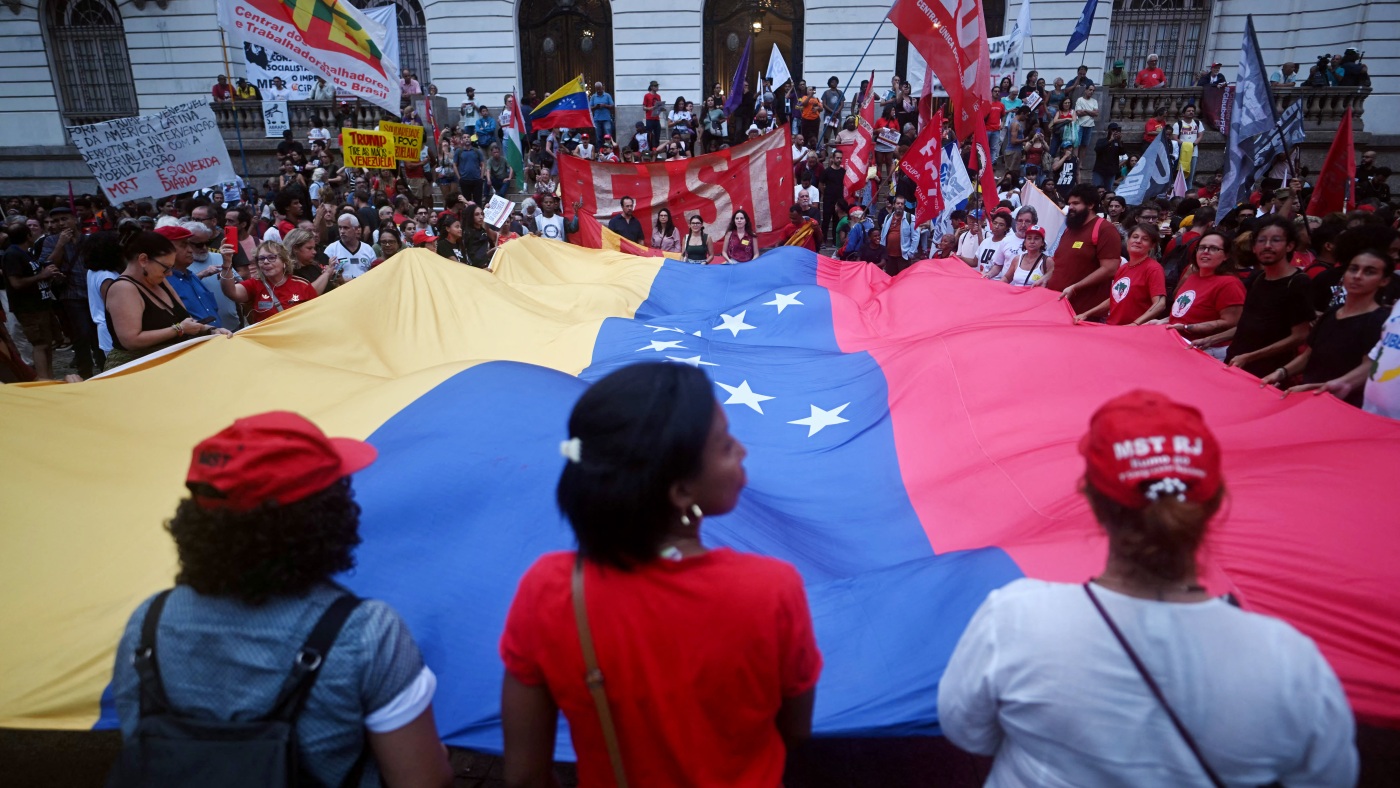
Lawmakers split over Maduro’s seizure. And, CDC cuts childhood vaccine schedule

Federal officials to halt more than $10B in funding to 5 states over non-citizen benefit concerns: report
-

 World1 week ago
Hamas builds new terror regime in Gaza, recruiting teens amid problematic election
-
 News1 week ago
For those who help the poor, 2025 goes down as a year of chaos
-
 Business1 week ago
Instacart ends AI pricing test that charged shoppers different prices for the same items
-

 World1 week ago
Podcast: The 2025 EU-US relationship explained simply
-
 Business1 week ago
Apple, Google and others tell some foreign employees to avoid traveling out of the country
-

 Technology1 week ago
ChatGPT’s GPT-5.2 is here, and it feels rushed
-

 Health1 week ago
Did holiday stress wreak havoc on your gut? Doctors say 6 simple tips can help
-

 Politics1 week ago
‘Unlucky’ Honduran woman arrested after allegedly running red light and crashing into ICE vehicle