Health
Here Are the Nearly 2,500 Medical Research Grants Canceled or Delayed by Trump


In his first months in office, President Trump has slashed funding for medical research, threatening a longstanding alliance between the federal government and universities that helped make the United States the world leader in medical science.
Some changes have been starkly visible, but the country’s medical grant-making machinery has also radically transformed outside the public eye, a New York Times analysis found. To understand the cuts, The Times trawled through detailed grant data from the National Institutes of Health, interviewed dozens of affected researchers and spoke to agency insiders who said that their government jobs have become unrecognizable.
In all, the N.I.H., the world’s premier public funder of medical research, has ended 1,389 awards and delayed sending funding to more than 1,000 additional projects, The Times found. From the day Mr. Trump was inaugurated through April, the agency awarded $1.6 billion less compared with the same period last year, a reduction of one-fifth. (N.I.H. records for May are not yet comparable.)
The impacts extend far beyond studies on politically disfavored topics and Ivy League universities like Columbia or Harvard. The disruptions are affecting research on Alzheimer’s, cancer and substance use, to name just a few, and studies at public institutions across the country, including in red states that backed Mr. Trump.
Use dropdown or start typing to search institutions
“I think people should know that research that they probably would support is being canceled,” said Eden Tanner, a chemist at the University of Mississippi, who had been working with a colleague at Ohio State University to develop a novel approach for treating glioblastoma, an aggressive form of brain cancer. Their grant had been awarded through a program designed to diversify the biomedical workforce; in April, they were notified that it was being terminated.
“I would like to cure brain cancer,” Dr. Tanner said. “I think that’s not particularly controversial.”
Mr. Trump’s campaign against medical research has been carried out without congressional approval, and the legality is unclear. Lawsuits have challenged the slashing or delaying of funding.
Federal officials, who have accused the N.I.H. of wasteful spending, have attributed the cuts to changing scientific priorities.
The N.I.H. “regularly examines its research portfolio” to determine which projects are “the most meritorious,” Andrew Nixon, a spokesman for the U.S. Department of Health and Human Services, said in an email. “Regular reviews of ongoing activities will help us determine the most strategic balance of projects to support and the best way to manage them going forward, especially as we need to be responsive to the often-changing nature of biomedical scientific progress.”
Scientists fear that the sweeping cuts could do long-term damage to U.S. scientific research, which has long driven medical and financial progress for the nation. “The country is going to be mourning the loss of this enterprise for decades,” said Dr. Harold Varmus, a Nobel Prize-winning cancer biologist who served as the director of the N.I.H. during the Clinton administration and the director of the National Cancer Institute under President Barack Obama.
The federal government has announced the termination of 1,389 awards, with more than $820 million in recent funding.
Publicly announced cancellations
N.I.H. grants, awarded in a competitive process, are typically paid out in installments. A researcher with a $1 million four-year grant, for instance, will get about $250,000 a year. Scientists can use this money to buy equipment and supplies and to pay the salaries of the researchers who work in their labs, among other things.
From 2015 to 2024, there have been fewer than 20 terminations a year, on average, according to Jeremy M. Berg, former director of the National Institute of General Medical Sciences at the N.I.H. from 2003 to 2011. They were generally for extenuating circumstances, such as illness or research misconduct.
But since late February, the government has publicly announced the cancellation of 1,389 N.I.H. awards. The agency scoured grants for key words and phrases like “transgender,” “misinformation,” “vaccine hesitancy” and “equity,” ending those focused on certain topics or populations, according to a current N.I.H. program officer, who asked not to be identified for fear of retribution.
Studies focused on sexual and gender minority groups were among the first on the chopping block.
Katherine Bogen, a doctoral student at the University of Nebraska-Lincoln, had been studying post-traumatic stress, alcohol use and intimate partner violence against bisexual women. The termination notice she received assailed studies “based primarily on artificial and nonscientific categories,” calling such research “antithetical to the scientific inquiry” and alleging that it was “often used to support unlawful discrimination on the basis of race and other protected characteristics, which harms the health of Americans.”
The language was “very insulting,” she said. “I get this letter that tells me, ‘Your research is not science. Not only is it ascientific, it’s a useless drain on resources, and, in fact, your research could be used to discriminate against ‘actual’ Americans or ‘regular’ Americans,’ or whatever they mean.”
The cuts spread to grants on health equity and racial and ethnic groups. Affected projects sought to improve access to mental health care for Latino, low-income and rural communities; to reduce maternal mortality among Black women; and to prevent gun violence in Asian American communities.
Tsu-Yin Wu, a researcher at Eastern Michigan University who led the gun violence project, said that community leaders and study participants were “greatly disappointed” by the grant cancellation. “Some felt betrayed that their voices and engagement no longer matter.”
The agency cut grants for research on vaccine hesitancy, disinformation and misinformation, including a Northeastern University study on cancer misinformation on social media.
It also axed research on Covid-19, including studies that could have helped the nation respond to many infectious disease threats. Among them: a grant to Emory University and Georgia State University, where researchers had developed three potential drugs that showed promise against many RNA-based viruses, including coronaviruses, Ebola, avian influenza and measles, said George Painter, a pharmacologist at Emory who was co-leading the research.
In April, the agency terminated, in part or in whole, more than 350 grants meant to support students, early-career scientists or researchers from groups underrepresented in science. Among these terminations were F31 diversity grants, awarded to Ph.D. students who were members of certain racial or ethnic groups, disabled or from disadvantaged backgrounds.
At the University of Pittsburgh, Luzmariel Medina-Sanchez, who was born and raised in Puerto Rico, and Sierra Wilson, a first-generation college student from Utah, both had their grants canceled. “It’s not even about the work I’m doing,” said Ms. Wilson, who studies how liver cells respond to drug overdoses. “It feels like it’s about me.”
Ms. Medina-Sanchez, who studies how a microbe can help treat celiac disease, said she may leave science altogether. “I feel racially targeted,” she said. “I feel like I’m not going to be a professional in the field of science in America, because obviously my name is Luzmariel.”
(Ms. Wilson and Ms. Medina-Sanchez stressed that they spoke only for themselves and not for the university.)
Delayed funding
In addition to publicly announced cancellations, these are the nearly 1,100 grants that have been delayed, with nearly $740 million in funding.
Besides outright canceling projects, N.I.H. failed to distribute annual payments to more than 1,000 grants, The Times found.
The delays have stifled research on drug discovery, blood vessel health and injury response. In some cases, scientists have cut staff, paused hiring, trimmed back supplies or delayed experiments. Health officials have not explained which projects have been held up, why or for how long.
The Times compiled a list of the delayed grants by searching N.I.H. databases as of June 2 for ones that were funded in 2024 and expected to last beyond 2025, but have not gotten disbursements on schedule.
In the past, annual renewals were routine. Scientists submitted progress reports; the N.I.H. reviewed them and usually continued funding them, occasionally with a week or two of delays. But longer delays have become much more common since Mr. Trump took office.
Joshua Kritzer, a professor of chemistry at Tufts University, investigates the basic science behind potential drug candidates, laying the groundwork for future medications. Most of his lab work is supported by a five-year N.I.H. grant that received $1.4 million over the past two years. But since February, he had been waiting for the third year of expected funding to come in. He slashed purchases of essential supplies and contemplated laying off crucial researchers on his team.
On Tuesday, Kritzer finally received word that his funding had been released, several days after The Times asked federal officials about his and other delayed awards.
“Every week that’s delayed, it’s easily probably three to four weeks to get that research back to where it was,” said Dr. Kritzer, who noted that he was speaking for himself and not for his institution.
Mr. Nixon, the Department of Health spokesman, said that the agency would not discuss deliberations about specific awards but encouraged grant recipients to “speak with the designated N.I.H. officials on their award notice when questions arise.”
In some cases, delays have lasted so long that scientists wondered whether their grants were subject to a “shadow termination.”
The delays stem in part from additional screening for whether the grants align with Trump administration priorities, N.I.H. officials said. Other renewals have been delayed as overstretched N.I.H. staff members work through backlogs in funding. And political appointees are now vetting some projects, too, slowing the process further.
N.I.H. officials said they feared being fired if they processed a grant renewal that the administration disfavored.
In early May, Jon Lorsch, a longtime N.I.H. institute director who was recently promoted to acting deputy director of the agency’s external funding arm, emailed staff members denouncing the renewal of grants “that focused on topics that are not supported under N.I.H./H.H.S.’s priorities,” according to a copy of the email seen by The Times.
“The consequences of approving an award that should not have been approved could be very serious,” he wrote.
But Courtney Griffin, who leads a lab at the Oklahoma Medical Research Foundation and studies blood vessel development and disease, including complications due to diabetes, expressed confusion as to why her expected funding is not coming through. She and her colleagues were making contingency plans and looking for other sources of funding.
“It’s, ironically, a really inefficient use of people’s time to be in this guessing game,” she said, adding that the time could be better spent on biomedical research.
Months-long delays are also affecting new grants that were being vetted when the Trump administration cracked down on grant reviews.
A number of major Alzheimer’s Disease Research Centers, some of which have operated for decades, have waited months for the Trump administration to decide whether to award them fresh five-year grants. The funding gaps have set back ongoing studies and curtailed efforts to take images of patients’ brains, though the N.I.H. has recently told some centers that they would soon receive funding.
“These centers have become a safety valve for people who can’t get a neurology appointment at a private center,” said Dr. Ann Cohen, a co-director of the University of Pittsburgh Alzheimer’s center. Now, she said, things have changed. “There are fewer clinic appointments, fewer opportunities for these individuals to get brain imaging.”
The N.I.H. has also said that it will no longer fund projects in which U.S. researchers distribute some of their money to international partners, throwing the future of many global health projects into question and creating funding delays for ongoing research.
Beyond the disruption of individual projects, other proposed changes could undermine scientific research across the board, experts said. One would sharply curb funding for indirect research costs, such as building maintenance and administrative staff. And then there is Mr. Trump’s proposal to slash the N.I.H.’s total budget by about $18 billion, a cut of almost 40 percent.
A budget cut of that scale would be “truly draconian,” said Dr. Varmus, the former N.I.H. director, who said he hoped Congress would not approve such a sharp reduction. It could leave the agency without enough money to fund promising new work, drive some scientists overseas and prompt some up-and-coming researchers to leave science altogether, he said. “You can completely destroy the system in just a couple of years,” Dr. Varmus said.
Methodology
The Times’s analysis of cancellations is based on the list of terminated grant awards published by the Department of Health and Human Services as of May 30, 2025, and on records from RePORT, the National Institutes of Health’s registry of grants and projects, as of June 2, 2025.
Each circle in the graphics represents a grant award. The circles are sized by the total funding that N.I.H. authorized for each award. H.H.S.’s list of terminations includes a mix of main grant awards, supplements and amendments. The list also indicates a “total amount obligated,” but that figure generally is the total amount awarded to a grant over its lifetime, including any supplements and amendments, rather than the amount for the specific award terminated. The Times’s analysis above uses only the amount authorized for the specific award listed. In some cases, scientists had already spent much of the money they had been awarded before their grants were cancelled, but in others, they lost out on their entire awards. Award amounts and totals — including the year-to-year funding shortfall calculated by The Times — do not include N.I.H. grants administered by the U.S. Department of Veterans Affairs, because their funding amounts are not available in RePORT.
The Times examined cancellations of grants intended to train and support research by groups underrepresented in science. These include the R25 education program; the T32 and T34 training programs; F31 diversity grants; R01 research grants under funding opportunity number PAR-22-241 and research supplements under funding opportunity number PA-23-189, both of which are specifically intended to promote diversity among grant recipients.
To identify grants with delayed funding, Times journalists used information about each grant’s planned duration and prior awards, focusing on those that were eligible for continuation or noncompeting renewal. To account for reporting lags in the RePORTER database, The Times limited this analysis to a time period from Jan. 20 to April 30. The Times excluded grants that appear on H.H.S.’s public list of terminations and grants that have been marked in RePORTER as terminated. Based on interviews and an analysis of historical renewal data, The Times found such grants typically receive a notice of award at roughly the same time each year. Each circle representing a delayed grant is sized by the amount its main award received in fiscal year 2024. This list may include a small number of grants whose renewals are not yet recorded in N.I.H. databases, and others whose renewals are expected to be delayed, because of conversion of grant status for an investigator changing roles or institutions.
To classify each grant’s area of research, The Times extracted the title, the public health relevance statement and the abstract from the N.I.H.’s RePORTER database and ExPORTER files. These fields were used as input for a series of automated prompts to a large language model.
The model generated a brief description of the grant’s research objective. The model also determined if grants were related to research in areas like chronic diseases, vaccines, pandemic preparedness, misinformation, sexual and gender identity, health disparities and certain ethnic and racial groups, and diversity, equity and inclusion initiatives, and then assigned categories.
Times journalists read the projects’ public health relevance statements and abstracts, and they checked the assigned categories for accuracy. They also checked hundreds of grant descriptions and edited them for accuracy and clarity. Only the project descriptions that have been edited by Times journalists are displayed in the article.



NEWYou can now listen to Fox News articles!
The Murdoch Children’s Research Institute (MCRI) in Australia will receive a $5 million federal grant to launch a pioneering research team for children’s health.
The grant was announced at MCRI’s 40th anniversary gala in Melbourne on Saturday night.
“For 40 years, MCRI has been a global leader in children’s health research,” Prime Minister Anthony Albanese told guests at the gala, which was attended by 300 of Australia’s most esteemed medical experts, political leaders, philanthropists and sports luminaries.
INTERNATIONAL EFFORT SEEKS NEW TREATMENTS FOR PEDIATRIC HEART DISEASE
“My government is proud to partner with MCRI, so our world-leading researchers have the best opportunities to support healthier childhoods for Australians now and into the future.”
The $5 million will directly support medical research aimed at preventing numerous childhood conditions, including obesity, heart disease, mental health issues and disabilities.
Australian Prime Minister Anthony Albanese speaks at the MCRI gala. (Penny Stephens/Murdoch Children’s Research Institute)
Also announced at the gala, a lead donation from Sarah and Lachlan Murdoch will launch the Horizon Fund — a permanent endowment for MCRI aimed at funding long-term children’s health research and future medical breakthroughs.
THE TEEN ANXIETY EPIDEMIC IN THE US AND AUSTRALIA — AND WHAT TO DO ABOUT IT
The goal is for the fund to raise between $50 million and $100 million in its first year and to reach $200 million within five years.
The fund is designed to back researchers’ immediate priorities while safeguarding long-term capital for future medical breakthroughs in children’s health.
Pictured above, Sarah Murdoch (MCRI co-chair); Jodie Haydon (wife of Prime Minister Albanese); Australian Prime Minister Anthony Albanese; Kathryn North (MCRI director); and Patrick Houlihan (MCRI chair). (Christopher Hopkins/Murdoch Children’s Research Institute)
In 2020, the Murdochs donated $5 million to establish a perpetual fellowship supporting leading researchers in fields including stem cell technology and genomic precision medicine.
Co-founded in 1986 by philanthropist and child health advocate Dame Elisabeth Murdoch and pediatrician and genetics pioneer Professor David Danks, MCRI comprises 1,800 scientists, researchers and clinicians.
CLICK HERE FOR MORE HEALTH STORIES
“Dame Elisabeth’s leadership, along with her values, shaped both the direction and the ethos of the Institute we were to become – for all children to live a healthy and fulfilled life,” said Sarah Murdoch, who is Dame Elisabeth Murdoch’s granddaughter-in-law and MCRI’s global ambassador and board co-chair.
Sarah Murdoch (MCRI co-chair) is pictured with Kathryn North (MCRI director) at the Murdoch Children’s Research Institute 40th Anniversary Gala at the State Library Melbourne. (Penny Stephens/Murdoch Children’s Research Institute)
“With the generosity of a remarkable group of founding donors alongside the Murdoch family – Sir Jack Brockhoff, the Miller family, and The Scobie and Claire Mackinnon Trust – the foundations were laid for an Institute designed to bring our brightest minds, to serve all children, not only in that moment, but for generations to come,” Ms. Murdoch added.
“I see what is possible when foresight, science, commitment, collaboration and heartfelt generosity come together,” she emphasized.
CLICK HERE TO SIGN UP FOR OUR HEALTH NEWSLETTER
“Because behind every breakthrough is a child — a family desperate for answers. A future changed because of the commitment by so many.”
MCRI Director Kathryn North expressed appreciation at the gala to the prime minister for the $5 million grant.
“From the beginning, MCRI has been guided by a simple but powerful purpose: to give all children the opportunity to live a healthy and fulfilled life,” said the MCRI director. (MCRI)
“From the beginning, MCRI has been guided by a simple but powerful purpose: to give all children the opportunity to live a healthy and fulfilled life,” North said.
“It reflects a belief that good health is the foundation for a full life, and that opportunity should never be limited by circumstance.”
CLICK HERE TO DOWNLOAD THE FOX NEWS APP
Professor North mentioned the Institute’s focus on developing therapies for previously incurable diseases.
“We are harnessing the power of human stem cell technologies to grow heart patches, functional mini kidneys, blood and immune cells … to better understand disease, and to develop regenerative therapies using a patient’s own stem cells to replace organ transplants and the risk of rejection,” she said.
The Institute’s next challenge is to address chronic conditions like asthma, obesity, allergies and mental health conditions that can persist for decades. (iStock)
The Institute’s next challenge, North said, is to address chronic conditions like asthma, obesity, allergies and mental health conditions that can persist for decades.
TEST YOURSELF WITH OUR LATEST LIFESTYLE QUIZ
“These are big problems that will require significant and ongoing support,” she said. “Through our work globally, we are helping communities raise their expectations to both deliver and receive the sort of healthcare we take for granted.”
“Our ambition now is to translate these partnerships into population-scale solutions that improve the lives of millions of children worldwide,” North added. “This is not simply the next chapter for MCRI – it is the work of building the future of children’s health.”

FDA fast-tracks pancreatic cancer drug daraxonrasib
Family and emergency medicine physician Dr. Janette Nesheiwat discusses how artificial intelligence could help detect pancreatic cancer earlier and the FDA fast-tracking the drug daraxonrasib on ‘Fox Report.’
NEWYou can now listen to Fox News articles!
A new drug for pancreatic cancer is showing promise in early testing.
Daraxonrasib is a daily pill designed to block cancer signals linked to the RAS gene. It has now finished an early-stage clinical trial — the first time it was tested in people — to evaluate both its safety and effectiveness.
The clinical trial, led by the Dana-Farber Cancer Institute and published in The New England Journal of Medicine, tested the drug in 168 patients with advanced pancreatic cancer whose tumors had mutations in the RAS gene. All study participants had previously received at least one chemotherapy treatment.
6 THINGS TO KNOW ABOUT PANCREATIC CANCER AFTER FORMER SENATOR’S DIAGNOSIS
The drug is designed to block multiple active cancer signals that help tumor cells grow. This is especially important because more than 90% of pancreatic cancers carry these harmful mutations, researchers said.
Existing and older drugs that target RAS mutations only work on certain types that are uncommon in pancreatic cancer, such as KRAS mutations.
Daraxonrasib is a daily pill designed to block cancer signals linked to the RAS gene. It has now finished an early-stage clinical trial to evaluate its safety and effectiveness. (iStock)
At the 300-milligram dose — the amount that will be used in larger phase 3 trials — about 30% of patients saw a positive response, researchers noted. Overall, about 90% of patients had their cancer either shrink or stop getting worse.
DEADLY CANCER TYPE LINKED TO OBESITY AND HIGH STRESS LEVELS
There were some side effects reported — most commonly rash, mouth inflammation, nausea and diarrhea.
Lead investigator Dr. Brian Wolpin, director of the Hale Family Center for Pancreatic Cancer Research at Dana-Farber, commented in a press release statement that this development could change the future of cancer care.
About 90% of patients treated with the drug experienced disease control, meaning their cancer was reduced or stabilized. (iStock)
“If supported by data from future clinical trials, daraxonrasib would be a targeted therapy relevant to nearly all patients with advanced pancreatic cancer,” he said.
RISK OF DEADLY CANCER TRIPLES WITH HIDDEN MOUTH BACTERIA, STUDY FINDS
“This trial provides the first published data showing the safety and broad activity of a RAS(ON) multi-selective inhibitor in pancreatic cancer,” Wolpin went on. “If it proves effective in larger clinical trials, it would signify a substantial shift in how this disease is treated.”
In an interview with Fox News Digital, the researcher claimed that daraxonrasib represents “one of the most promising therapy advances we’ve seen in pancreatic cancer.”
CLICK HERE TO SIGN UP FOR OUR HEALTH NEWSLETTER
This is especially significant since pancreatic cancer has had “very few effective therapies” in the past, Wolpin noted.
“The study also showed disease control in approximately 90% of patients with metastatic pancreatic cancer, which is extremely exciting,” he added.
The study does not prove daraxonrasib is superior to standard treatment of chemotherapy, researchers noted. (iStock)
Wolpin noted that while side effects were common, most patients were able to tolerate treatment with “supportive care measures, and very few patients needed to stop therapy due to side effects.”
As this was a phase 1/2 study, it does not “definitively prove” the superiority of daraxonrasib compared to chemotherapy, Wolpin added.
CLICK HERE FOR MORE HEALTH STORIES
“The study did not include a randomized control arm that directly compared daraxonrasib with chemotherapy,” he said. “That being said, the results for daraxonrasib looked substantially better than what we have seen in prior clinical trials of chemotherapy in patients with previously treated metastatic pancreatic cancer.”
It also remains unclear how the drug may perform earlier in the disease, as the trial included patients who had already received prior treatments.
“Additional research is needed to determine how best to sequence or combine therapies to provide the most durable responses and cures,” the lead investigaror sid. (iStock)
For patients and families affected by pancreatic cancer, Wolpin noted that daraxonrasib signals “real momentum” toward effective treatments, but it is still investigational and is not a cure.
“Pancreatic cancer remains a challenging disease, and additional research is needed to determine how best to sequence or combine therapies to provide the most durable responses and cures,” he said.
CLICK HERE TO DOWNLOAD THE FOX NEWS APP
Brian Slomovitz, director of gynecologic oncology and co-chair of the Cancer Research Committee at Mount Sinai Medical Center in Miami Beach, applauded this development in a separate interview with Fox News Digital.
“We are anxiously awaiting the upcoming plenary presentation of RASolute 302 at the ASCO meeting later this month,” said the expert, who was not involved in the study. “Greater than 90% of pancreatic cancers have activation of kRAS, which is a major factor in the development and progression of these cancers.”
“Doubling the survival time in pretreated patients is unprecedented.”
“If the full dataset results that will be reported later this month confirm what was earlier released, I believe this will be one of the most important breakthroughs in all solid tumors,” Slomovitz went on. “Doubling the survival time in pretreated patients is unprecedented.”
TEST YOURSELF WITH OUR LATEST LIFESTYLE QUIZ
The doctor added that the “magnitude of benefit” could “reshape the treatment landscape” and “establish a new standard of care.”
“We will need to evaluate the full dataset for efficacy and safety,” Slomovitz added. “I am more than cautiously optimistic, and I am truly excited for our patients and their families that suffer from this dreadful disease.”

NEWYou can now listen to Fox News articles!
People who regularly visit museums or participate in creative activities may be aging more slowly on a biological level, according to a new study from the United Kingdom.
Researchers from University College London analyzed data from more than 3,500 adults and found that people who frequently engaged in arts and cultural activities showed signs of slower biological aging in several DNA-based measurements.
The findings were published in the journal Innovation in Aging.
CREATIVE HOBBIES KEEP THE BRAIN YOUNG, STUDY FINDS — HERE ARE THE BEST ONES TO PURSUE
The study examined activities including painting, photography, dancing, singing, visiting museums and attending cultural events or historic sites.
People who frequently visit museums or engage in artistic activities may experience slower biological aging. (iStock)
Researchers compared participation in those activities with “epigenetic clocks,” scientific tools that examine chemical changes in DNA over time.
Adults who participated more often, and in a wider variety of activities, tended to show slower aging scores compared to people who rarely engaged in arts or cultural experiences.
ANTI-AGING BENEFITS LINKED TO ONE SURPRISING HEALTH HABIT
The association appeared even stronger among adults over age 40.
Researchers also noted that the effect sizes were comparable to those linked to physical activity, one of the most widely studied behaviors associated with healthy aging.
The study found that adults who engaged more often in arts and cultural activities showed slower biological aging. (iStock)
Jessica Mack, a health and wellness expert and founder of The Functional Consulting Group who was not involved in the study, said the findings reflect a growing understanding that health is influenced by more than exercise and nutrition alone.
“Arts and cultural engagement may be associated with slower epigenetic aging, with effects comparable in some measures to physical activity,” Mack told Fox News Digital.
She said activities such as visiting museums and engaging with music or art may help reduce stress, improve emotional regulation and increase social connection.
Experts say these activities may reduce stress, improve emotional regulation, and strengthen social connections. (iStock)
“These are not ‘extra’ lifestyle activities,” Mack said. “They may be deeply connected to how the body manages inflammation, stress hormones, mood and overall resilience.”
CLICK HERE FOR MORE LIFESTYLE STORIES
Mack added that people experiencing stress, social isolation, retirement or caregiving responsibilities may especially benefit from meaningful cultural engagement.
Experts cautioned, however, that the study does not prove arts engagement directly slows aging.
“This is an observational study, not an experiment,” Professor Steve Horvath of UCLA, a longevity researcher and pioneer in epigenetic aging research who was not involved in the study, told Fox News Digital.
TEST YOURSELF WITH OUR LATEST LIFESTYLE QUIZ
“So when researchers find that the people who go to museums have younger epigenetic age, we cannot tell whether the museum visits slowed their aging, or whether their slower aging is what allowed them to keep visiting museums,” he said.
While the findings suggest a link, experts caution that the study cannot prove arts and cultural activities directly slow aging. (iStock)
Horvath said both explanations may be true to some degree, though he described the research as “methodologically careful” and worthy of further study.
The findings remained consistent even after accounting for factors such as smoking, income, body weight and other lifestyle habits.
CLICK HERE TO DOWNLOAD THE FOX NEWS APP
He added that regardless of whether arts engagement is directly slowing biological aging, staying socially and mentally active is still associated with healthier aging overall.
“The prescription is the same,” he said. “Keep going.”
-
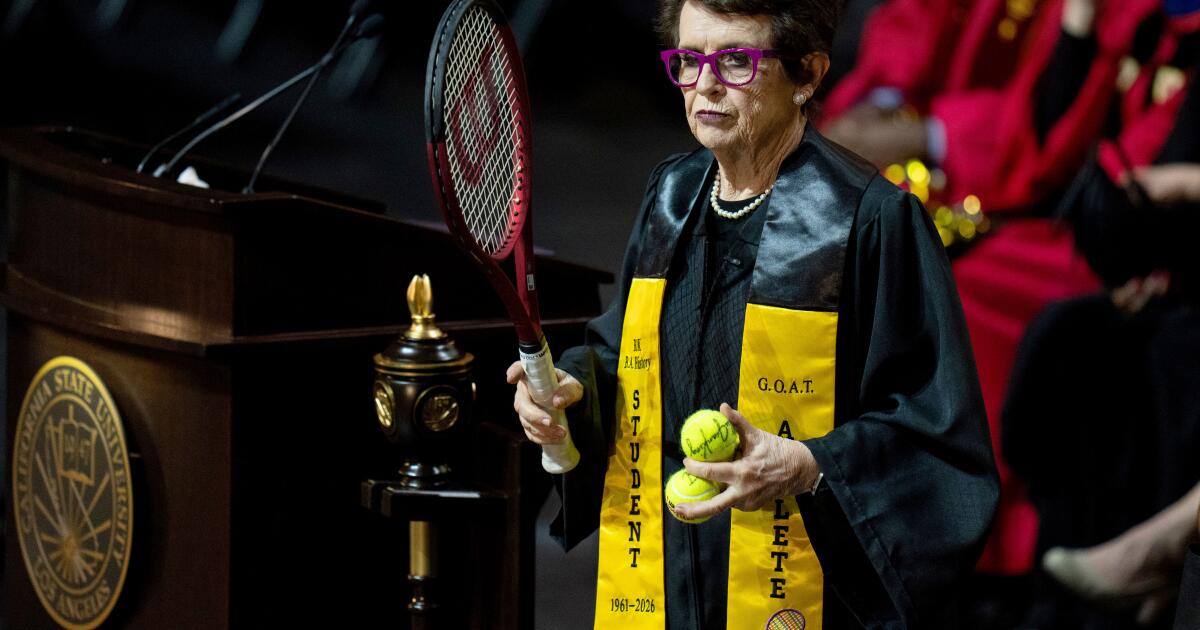 Sports4 minutes ago
Tennis great Billie Jean King graduates from Cal State L.A. 65 years after enrolling
-

 World16 minutes ago
Video. Merkel warns Europe can no longer rely on old security certainties
-
 News46 minutes ago
Minnesota becomes first state to ban prediction markets
-

 New York2 hours ago
Video: Judge Grants Luigi Mangione’s Request to Supress Some Evidence
-

 Los Angeles, Ca2 hours ago
Cardi B in the lead as 2026 BET Awards nominations announced
-

 Detroit, MI3 hours ago
Southfield police chase ends in fiery crash in Detroit
-

 San Francisco, CA3 hours ago
San Francisco ninth graders will now be measured by a controversial ‘Wheel of Power’ — so how would the city’s leaders fare? We put them to the test. – The Voice of San Francisco
-
Dallas, TX3 hours ago
Mailbag: Could Valdes-Scantling battle for WR3?


