A fitness influencer, who shed 23 kilos during weight loss, shared the 5 exercises that helped tone her arms. All you need is dumbbells to do the workouts.
Fitness influencer Ridhi Sharma, who shares her PCOS journey and tips on losing 23 kg weight on Instagram, recently revealed how she toned her arms during her fat loss journey. Ridhi posted 5 exercises that helped her achieve sculpted arms. All you need is just two dumbbells (use weights that you are comfortable lifting) to do these workouts. Let’s check them out.
Check out the 5 exercises you need to do to target the fat in your arms.
Also Read | How to boost immunity and reduce cancer risk? Doctor suggests 6-letter hack ‘MEDSRX’ you need to learn today
Advertisement
5 exercises to tone your arms
The five exercises that you need to do to tone your arms are:
1. Hammer Curls
2. Lateral Raises
3. Bicep Curls
4. Shoulder Press
Advertisement
5. Tricep Extensions
How to aid fat loss in your arms?
While doing these exercises is important to target the fat and build strength in your arms, you should also keep a few things in mind that will aid your progress. Here are all the things that Ridhi did to tone her arms, along with the 5 workouts:
1. The fitness influencer shared that she did these exercises at least 2-3 times a week with light dumbbells. She did each exercise for 1 minute for at least 4-5 weeks to see any changes.
2. The fitness influencer also added a disclaimer in her post that ‘spot reduction is not possible’. “Just doing these exercises won’t help you get toned arms so focus on full-body workouts and losing overall body fat too,” she advised.
3. While doing these exercises, gradually increase the intensity by doing 2-3 sets and increasing the weights.
Advertisement
4. Be consistent. This is the most important thing if you want to lose fat from your body. The influencer revealed that it took her a long time to finally get where she is today, and you, too, won’t see results quickly. However, if you stay consistent, you will get there.
Apart from following four tips, you should also add walking 8-10k steps daily, eating 20-25 gms protein in each meal, cutting down on sugar and processed foods (Ridhi had the items 1-2 times a month), having dinner before 7 pm, and sleeping 7-8 hours every night in her weight loss routine.
Note to readers: This article is for informational purposes only and not a substitute for professional medical advice. Always seek the advice of your doctor with any questions about a medical condition.
Recommended Topics
Catch every big hit, every wicket with Crick-it, a one stop destination for Live Scores, Match Stats, Quizzes, Polls & much more. Explore now!.
Catch your daily dose of Fashion, Taylor Swift, Health, Festivals, Travel, Relationship, Recipe and all the other Latest Lifestyle News on Hindustan Times Website and APPs.
Advertisement
See More
Catch every big hit, every wicket with Crick-it, a one stop destination for Live Scores, Match Stats, Quizzes, Polls & much more. Explore now!.
Catch your daily dose of Fashion, Taylor Swift, Health, Festivals, Travel, Relationship, Recipe and all the other Latest Lifestyle News on Hindustan Times Website and APPs.
News / Lifestyle / Health / Want toned arms? Woman who lost 23 kilos shares the 5 exercises she did to achieve a sculpted look
It’s common knowledge in fitness circles, but a lot of people don’t know that the classic sit-up exercise — that staple of gym classes and boot-camp style training — is actually terrible for your back, and most personal trainers and fitness apps are quietly leaving it in the past.
Military organizations, including the US Army Rangers and British Army, are also dropping it from their fitness tests. The age of the sit-up is over — so everyone who was tortured with it at school can breathe a sigh of relief.
The reason? According to a report from Harvard University, sit ups “push your curved spine against the floor and work your hip flexors, the muscles that run from the thighs to the lumbar vertebrae in the lower back”.
Article continues below
“When the hip flexors are too strong or too tight, they tug on the lower spine, which can create lower back discomfort.”
Not only do they recruit muscle in your hips instead of your abs, but having your spine curling and pressing against the floor repetitively can lead to strain and contribute to injury. So, what to replace them with?
The Harvard report above recommends the plank as a spine-safe alternative, as planks “recruit a better balance of muscles on the front, sides, and back of the body” — however, we can make the plank even more effective.
Adding a little movement to your new corework staple can supercharge the muscles recruited, which is great for your summer six-pack plans.
Introducing the body saw…
Advertisement
What is the body saw?
The body saw is effectively a plank, during which you rock backwards and forwards. Because your body is in a straight plank position, it’s literally a ‘sawing’ motion using your body, hence the name.
Sign up for breaking news, reviews, opinion, top tech deals, and more.
Researchers from the University of Waterloo in Canada studied the body saw alongside other advanced ab-focused moves, such as hanging leg raises and walkouts into push-ups, focusing on “which particular muscles were challenged and the magnitude of the resulting spine load” in 14 young men.
The researchers said that although all the exercises produced “substantial abdominal challenge”, the body saw did so “in the most spine conserving way”.
It’s a plank variation made harder with the stability issues involved in adding movement to the hold, recruiting more muscles as you perform the movement while still trying to keep your core tight like a standard plank. If you want to try this advanced move, watch the video, and check out our how-to guide, below.
Advertisement
How to do the body saw
Assume a plank position, with your forearms and toes on the ground. Your palms should be flat.
Shift your body forward so that your shoulders are over your forearms, then back to the start again.
Repeat 10 times for 3-5 sets, or set a timer to do this exercise continuously for a set period of time.
We’ve got loads more fitness content here at TechRadar — if you liked this, you should check out our series of workout-orientated listicles, The Fit List.
Follow TechRadar on Google News andadd us as a preferred source to get our expert news, reviews, and opinion in your feeds. Make sure to click the Follow button!
And of course you can also follow TechRadar on TikTok for news, reviews, unboxings in video form, and get regular updates from us on WhatsApp too.
Campbelltown residents could soon be members of one of the fittest local government areas in the Sydney metropolitan area.
A new suite of outdoor fitness equipment is being delivered across Campbelltown to support active, healthy lifestyles.
Once complete our residents will have more reasons to head outside and get moving.
Construction is now under way at four locations as part of the council’s outdoor fitness facilities program.
The program aim is to create free, accessible spaces that make it easier for people of all ages and abilities to stay active in their local neighbourhoods.
Advertisement
“The new equipment across the four locations is all about making it easier for our community to get out and make the most of our local parks,” says the Mayor of Campbelltown, Darcy Lound.
“This project ensures residents have access to free fitness equipment, supporting overall health and wellbeing for everyone in Campbelltown,” said Cr Lound.
The outdoor fitness facilities program is funded by the NSW Government through the Western Sydney infrastructure grants program.
“There’s not too many better partnerships than the State Government and Council working together to deliver great projects, and this is another example of that.
‘This is something that Campbelltown not only needs but deserves, and our children will get much benefit out of it as well as other members of the community,’’ Mayor Lound said.
Advertisement
“It’s particularly enlightening to see investment going into supporting our local community getting out and exercising for free in a public place,” said Greg Warren, the State Member for Campbelltown.
The four locations are in Eagle Farm Reserve, Eagle Vale, Ophelia Reserve, Rosemeadow, Clematis Reserve, Macquarie Fields and Marsden Park in the centre of Campbelltown, pictured above.
Marsden Park last received an update on its outdoor exercise equipment 10 years ago.
For more information about this project, visit: https://www.campbelltown.nsw.gov.au/City-Improvements/WILGA-250-Outdoor-Fitness-Facilities-Program
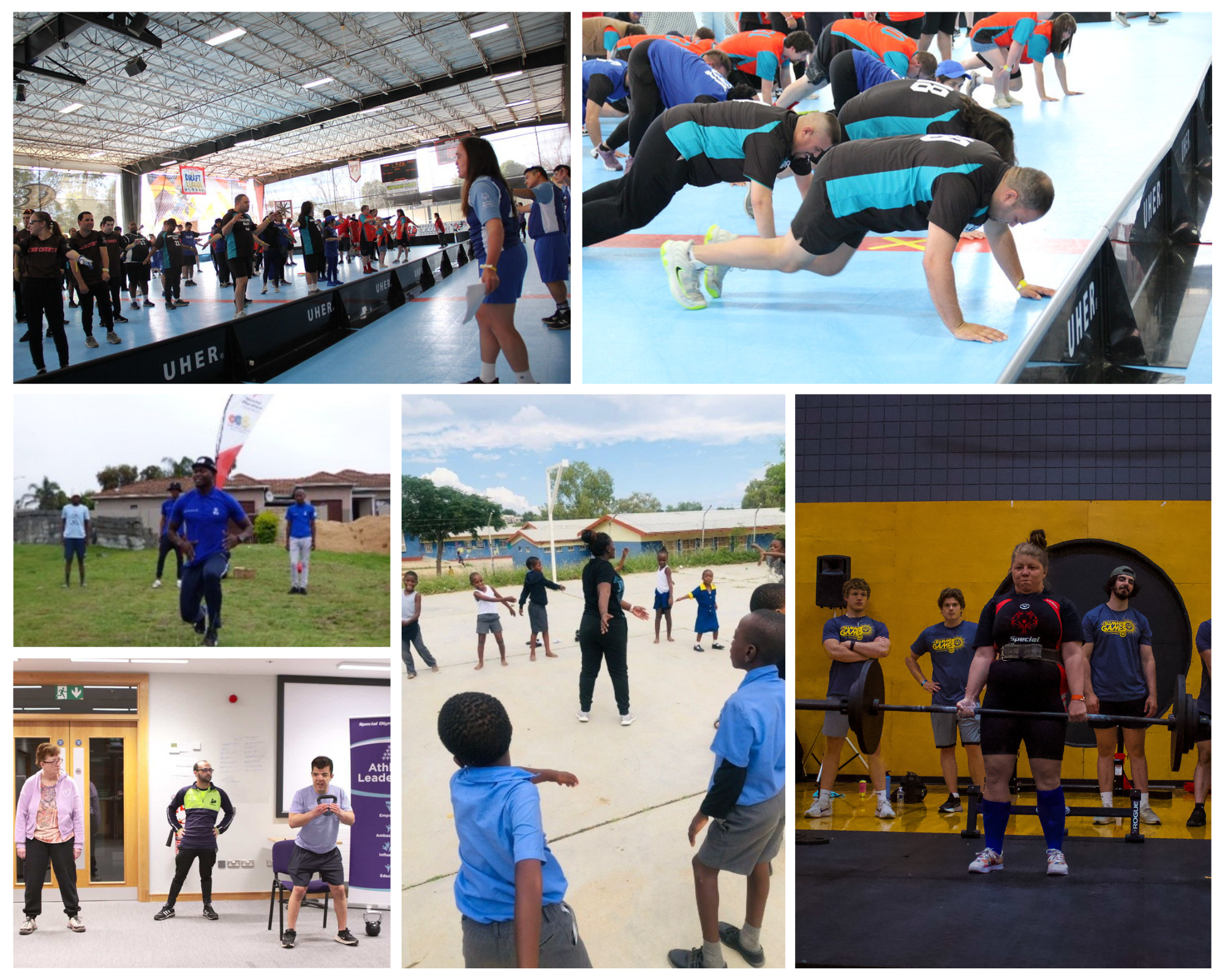
Special Olympics athletes from around the world lead fitness activities.
Fitness is a key aspect of Special Olympics’ mission. Special Olympics Fitness comprises three components that focus on healthy lifestyle behaviors: physical activity, nutrition, and hydration. When Special Olympics athletes practice regular physical activity, eat healthy, and stay hydrated, they improve their health, confidence, and quality of life.
According to Special Olympics Fitness 2024 Annual Report, 74% of athletes report improved confidence in doing physical activity after participating in Special Olympics fitness programming. This focus on fitness extends beyond individual athletes and into entire communities. Across the globe, Special Olympics Athlete Leaders and coaches are inspiring others to be more active daily. They are dedicated to making fitness more inclusive, leading education and fitness activities, and empowering their fellow athletes, family members, and other supporters of the Special Olympics movement to live healthy lifestyles.
This emphasis on movement is celebrated globally on World Day for Physical Activity, observed annually on 6 April, which promotes physical activity and encourages people of all abilities to move more every day. This World Day for Physical Activity, we’re highlighting Athlete Leaders and a coach who have taken on a variety of leadership roles to empower athletes to stay active year-round. Get to know them below!
Advertisement
Ayoub Deboub – Special Olympics Ireland
Ayoub Deboub (right) demonstrates a fitness exercise at an Athlete Leadership Fitness Workshop.
Ayoub Deboub is an athlete, football and Special Olympics Young Athletes coach, Certified Personal Trainer, Special Olympics International Fitness Advisory Committee member, and advocate for people with intellectual and developmental disabilities (IDD). He is passionate about making fitness inclusive for everyone.
Having grown up with a disability and gone through multiple surgeries, Ayoub understands first-hand the challenges and barriers people with IDD face when it comes to physical activity. These experiences have shaped his belief that sport isn’t just about winning; it’s about building skills, confidence, and empowering every athlete to reach their full potential.
Reflecting on these experiences, Ayoub said, “Throughout the years, I’ve worked in schools and centres to create opportunities for people of all abilities. I hosted a fitness workshop for the Eastern Region in Special Olympics Ireland, focusing on breaking barriers for physical activity by introducing simple, adapted, and enjoyable exercises. There were team-building exercises and stations with different workouts for the athletes. The energy and engagement throughout the session were incredible, with many stepping outside their comfort zones.
Advertisement
By the end, participants felt more empowered and motivated to stay active in their daily lives. I believe the workshop made a real impact by showing that disability should never be a limitation to leading an active and healthy lifestyle.”
To Ayoub, fitness means empowerment, inclusion, and personal growth.
Krystal Johnson – Special Olympics Southern California
Advertisement
Krystal (right) leads a warmup activity.
Krystal Johnson has been an athlete with Special Olympics Southern California for 25 years. She is a multi-sport athlete competing in tennis, floorball, bowling, and athletics. As a Fitness Captain, Krystal supports her teammates in maintaining their health on and off the field. Fitness Captains are athletes on a sports team who lead the team in activities related to fitness and a healthy lifestyle. Krystal uses her leadership and communication skills to empower athletes to be healthy and fit.
When asked about why she wanted to become a Fitness Captain, Krystal shared, “I enjoy being a Fitness Captain leading warmups and cooldowns with my fellow teammates. I want to help us all get ready for a good day at practice. I want to help promote fitness to my teammates by being an example. They see me working with the coaches and this is something that they can learn to become part of.”
Banele Makhonco – Special Olympics South Africa
Advertisement
Banele Makhonco (middle) motivates his community to stay active.
Banele Makhonco is a Special Olympics South Africa athlete, coach, and Athlete Input Council member based in the Eastern Cape Province. He has become a true champion in health and fitness.
For Banele, fitness goes beyond staying healthy; it’s become a way for him to connect with others in his community. In addition to leading boot camp fitness activities in his community, Banele also runs inclusive training sessions for people of all abilities, helping each person reach their true potential.
Banele explained, “I help others with routines, training strategies, and training plans. I also assist other colleagues and the local gym. Most importantly, I support my former school with fitness sessions and assist selected athletes when they go to Provincial or National Games.”
Banele is also passionate about teaching others about the importance of nutrition, and that to be a great athlete, you must be a healthy athlete. His hope this World Day for Physical Activity is that everyone can “understand that health and fitness is a way of life. It is important to keep fit and live healthy because you can live a longer life without suffering from petty illnesses.”
Advertisement
Susan David – Special Olympics Namibia (Coach)
Susan David (middle) leads stretching exercises during a fitness session.
Susan David has been a Special Olympics Namibia coach for 27 years. Her journey into fitness and health was shaped not only by her passion, but by the athletes she coached.
When Susan first started fitness training, she shared that she “was simply a coach who gave instructions to athletes. I guided them on what to do, but I was not fully practicing what I was teaching. Over time, the athletes began to influence me in a powerful way. Their dedication and energy rubbed off on me, and I became more interested in fitness myself.”
Susan found herself inspired by the dedication and energy of the athletes, which led her to follow what she loved.
Advertisement
“I started doing what I preached,” Susan shared. “One athlete who lives close to my house, a [Special Olympics] Health Messenger, played a big role in my journey. He would remind me about my running schedule and encourage me to stay consistent.Today, I love running and continuously work towards improving my fitness.”
Today, Susan continues to lead fitness sessions with the support of Fitness Captains and Health Messengers in schools and communities.
Kayla Cornell – Special Olympics Michigan
Advertisement
Kayla (middle) competes in a powerlifting competition.
Kayla Cornell is a Health Messenger, athlete, and serves on the Special Olympics Fitness Team’s Athlete App Advisory Committee. One way Kayla motivates her fellow athletes and herself to stay active is by using the Special Olympics Fitness App.
The Special Olympics Fitness App is a free, inclusive fitness tool designed to help athletes with IDD stay active, build healthy habits, and feel empowered in their wellness journey. The app features fun challenges and helps you track your workouts, nutrition, sleep, and mental wellness.
When asked about her favorite features of the app, Kayla mentioned: “What really sets the experience apart for me is the resource section. I use a ton of the resources available there to stay informed and keep my routine fresh. Whether it’s looking up new exercise techniques or following health tips, having all that information in one place makes staying healthy feel much more manageable.”
The app also provides healthy tips to stay motivated and lets users share their progress with friends. “We talk a lot about how the app makes fitness fun and less stressful, and by working together from different places, we can show others that you don’t have to be in the same room to stay active,” Kayla added.
These stories remind us of the importance of being active year-round, and how this can promote well-being among athletes, families, and community members.
Advertisement
Interested in learning more? Download the free Special Olympics Fitness App on the Apple or Google Play stores. The app features health behavior tracking, goal setting, fitness challenges, and resources, including being able to do Fit 5 exercise videos right from your phone!