Fitness
Optimizing health through exercise – Mayo Clinic Press


We all know our bodies ages — but what if we could potentially halt or reverse that process through exercise? For some people, execise can preserve function, independence, and health span. So what kind of benefits can we expect? And what kind of exercise is best for optimizing health?
On this episode of Aging Forward, we talk with professor of physical medicine and rehabilitation Dr. Edward Laskowski about the role of exercise in healthy aging, exploring physical activity options for older adults and how to incorporate exercise into our day-to-day routines.
Powered by RedCircle
Listen to Optimizing health through exercise
Read the transcript:
Dr. Christina Chen: Welcome to “Aging Forward,” a podcast brought to you by the Department of Community Internal Medicine, Geriatrics and Palliative Care at Mayo Clinic on topics related to science of healthy aging and geriatric medicine. We are so honored to have with us Dr. Edward Laskowski, who is a professor of physical medicine and rehabilitation at Mayo. I just have to pause to brag about you a little bit because you are a legend on so many levels and I hope you know that I’ve been listening to your lectures since training and just marveled at your teachings and it’s just really nice to be able to sit with you today to chat about this topic in person on this podcast.
Dr. Edward Laskowski: Well, you are too kind. I’m honored to be here.
Dr. Christina Chen: Dr. Laskowski was the director of Mayo Clinic Sports Medicine. He has authored hundreds of publications. He has been awarded numerous awards for his academic achievements, and he’s also served on the President’s Council for Physical Medicine for two Presidents, Bush and Obama. As well as the physician for the 2002 Winter Olympics. Is there anything you can’t do?
Dr. Edward Laskowski: I’m really blessed to have those opportunities. It’s a privilege to take a message forward that we’ll talk about today, a very basic message, but a very important message.
Dr. Christina Chen: Absolutely. You are truly an expert in this domain and we’re excited to talk about how the science of physical activity can really empower all of us to take advantage of something that brings so many health benefits. Just starting with some basics here, some introduction into the benefits of exercise. We know that there’s a lot of literature out there, there’s ample evidence to support the benefits of exercise. Years and decades of research. Would you mind just summarizing that, if you can, under this time, but also what are the things that we don’t know that’s out there about the benefits of exercise?
Dr. Edward Laskowski: Great question. As you know, at Mayo, we do some pretty remarkable research and always, always looking to find things to improve patient care and patient health. What if I told you that there was a pill that reduced the death rate of breast cancer and the recurrence risk by fifty percent, lowered the risk of colon cancer by two thirds, that reduced the risk of Alzheimer’s by almost a half, that reduced heart disease and high blood pressure by almost a half, that lowered the risk of stroke by one third, that lowered the risk of type 2 diabetes by almost two thirds, and that treated depression as effectively as we can. Prozac or Cognitive and Behavioral Therapy.
Dr. Christina Chen: I would want that pill.
Dr. Edward Laskowski: I would too.
Dr. Christina Chen: How much does it cost?
Dr. Edward Laskowski: Exactly. I’d pay whatever and line up on whatever line I could to get that pill. Well, those are all evidence-based and voluminous evidence-based effects of physical activity. Very basic, but that it’s the magic pill that is free and that does so many wonders for our body, both physically and mentally.
We’re finding now in studies for depression risk the effect of exercise and improving that for anxiety, for the risk of Alzheimer’s, as I said, there’s some very nice research here at Mayo by Ron Peterson showing that mild cognitive impairment is reduced in populations who do physical activity on a regular basis.
Parkinson’s. You mentioned sports medicine. When I was there, we were the first line treatment for early onset Parkinson’s patients. Exercise. It’s that much evidence-based. And so and again, voluminous evidence is a lot of things in medicine. Now we’re trying with orthobiologics, regenerative medicine, a very exciting field, but where is it affected? There is voluminous amounts of evidence that physical activity has all these effects.
Dr. Christina Chen: Why do you think it’s so hard to take advantage of that? It seems like almost a common sense thing, and I struggle with this every day. Why is exercise so hard for the majority, but others find it therapeutic and easier to do? Is it all mindset? Is it building that habit into our day-to-day lives? Why is it so different for each person?
Dr. Edward Laskowski: It’s a great question. The physical activity guidelines for Americans are 150 minutes of moderate activity per week or 75 of vigorous activity. So that’s about 30 minutes, five days a week of moderate activity. But sometimes when people, if they’re not doing anything and they hear those numbers, they try and do it and they may get that 150, but they’re sore and they said this hurts and I’m done and I’m not doing it anymore. The good news is that all activity is cumulative.
We even had in our first physical activity guidelines a ten minute mark that you really should be doing ten minutes continuously to get the benefit. Now that’s out the window as well. It’s all beneficial. Movement is medicine. Any kind of movement is good. And I like to use the term physical activity instead of exercise, as exercise may imply putting on spandex, going into a health club and going somewhere, showering and coming back. And really it’s just any activity, anything that burns calories; taking a walk, swimming, playing tag with your kids.
All those movement-based activities are effective and they add up over time. If we can weave that into our day and not make it as onerous, the old park the car further away, take the stairs, all those seconds and minutes add up.
Families are very important too, doing things together. We live in a very busy society. People go on everywhere, but one strategy, if you’re eating dinner and you finished dinner, instead of sitting around the table, you go for a walk around the neighborhood. You bike together, you swim together, you hike together. All those things are very helpful. And I know we did that with our kids and we didn’t force them to do anything, but we just did stuff. And so now they do stuff. It’s just part of them. And if they don’t, they kind of feel bad that they didn’t get their activity in.
Getting that to be, like you say, a habit. And seeing the barriers everybody may have different barriers to exercise. I’m giving these lectures in large cities and I’ve had some people say, “I’m scared of my kids to go outside and play.” And that’s a real concern.
Finding strategies where that can be mitigated and indoor opportunities, things like that. And maybe there’s an education opportunity because maybe people think they have to run a marathon to be fit and get a health benefit and you don’t have to if you don’t want to, that’s a goal.
But again, any movement matters. Finding out what those barriers are, you can start very slow. I had a patient once, in his mid-fifties and he had early onset heart disease. He had high blood pressure, type two diabetes, was very obese, and had to use a walker to get around.
I said, “You know, we’ve got to change this.” He goes, “No, I’m too late, you can’t do this.” I said, “Yes, you can.” “No, you can’t.” We went back and forth, back and forth. Finally, we got him connected with one of our physical therapists, very nurturing physically for 60 to 90 seconds at first with his walker. But the next week he walked about 120 seconds and the next week, four minutes. And he came back about a year and three quarters later to show me he actually brought his old pants because he had lost 250 pounds.
Dr. Christina Chen: That’s amazing.
Dr. Edward Laskowski: He said, “Doc, take a picture of me because I didn’t do anything fancy. I didn’t join a fancy health club, I didn’t do a fad diet, I just tried to do what she said. I just tried to move and eat better.” Again it’s not that easy, but it’s an example of what we can really make. This guy changed his life. He’s now working in high mountain altitude rescue in Europe.
Dr. Christina Chen: Wow. All those little things that add up over time. That’s a really great pearl. You mentioned barriers and a lot of my patients tell me that age is my barrier and our bodies obviously change with time. I remember the day after my 40th birthday, and I’m not exaggerating, the day after, I got up from bed and just sitting up hurt my back.
I threw my back sitting up from bed. I’m like, “Oh my gosh, this is what they’re talking about. But with age, there’s a lot of physiologic changes that may impact our exercise capacity and our muscle function. Can you talk a little bit about that science and how that changes?
Dr. Edward Laskowski: Great point. There are changes that naturally occur in all of us as we get older. Our basal metabolic rate declines, our amount of lean muscle mass decreases. We have increased risk of some things like arthritis and certainly after age 65, the fall risk increases. Again, the good news is that again, many studies show that exercise can mitigate virtually every one of these effects.
And until we breathe our last breath, it is never too late. There are amazing studies out there. There was one study where they took 86 to 96-year-old individuals in a long term care facility and they gave them a strength training program. The average strength gain was 174 percent. Some gain almost 300 percent in their strength and that translates into functional difference.
People started getting up from chairs they couldn’t get up from before. They started being able to cross the street before the light turned red. It made a difference in their life. The good news is that God has made our body so that whenever we do good things, it’ll benefit from strength training.
When we lose lean muscle, if we strength train, we can maintain that. And then we don’t get as much fat accumulation as we do. If we did not, I really encourage my patients, like that individual we just talked about, and it’s never too late to start. And starting slow is not a bad thing. You don’t have to do incredibly intense, dramatic things.
Dr. Christina Chen: You just answered my next question: can reconditioning reverse or halt this process? And like they say, if you don’t use it, you lose it. If you work at it, you can gain it back. And so it’s encouraging to hear that even for older adults who feel like there’s no turning back. There’s always an opportunity to reverse that process.
Dr. Edward Laskowski: Absolutely. And just like when we stop smoking, our lungs start to regenerate and get healthy again. When we start to do these good things for our body, aerobic activity, strength training, and the stability training, we start to get healthy in those areas and our muscles respond, they get stronger. Always encourage people that we can always make a difference.
Dr. Christina Chen: One of the biggest challenges is people just don’t know where to start. What does an exercise prescription look like for each person because it’s so different based on their functional abilities and what they’re able to start with. In your experience, what does it look like? What does an exercise prescription look like that can be effective and can promote consistency over time?
Dr. Edward Laskowski: That’s a great question. For heart health and for cardiovascular there’s no ideal piece of exercise equipment. I always tell people it’s really nice to do something you like to do. If you like to walk, that’s great. You don’t even have to run. You can get all the same benefits. If you like to swim, great. If you like to bike, great. If you like to use machines, great. Some people get energized and charged up by going to a health club and that type of environment. Some people like to do stuff on their own.
Finding where that niche lies and in each person. And again, just starting slow means that you don’t have to do these real dramatic things, intense workouts that all add up over time. Again an education area that we can enhance in some people. Things like that.
Dr. Christina Chen: Kind of getting creative with what’s within their environment, what’s feasible and what they can get started with even in their own homes.
Dr. Edward Laskowski: Exactly. The components we want to add, you want some kind of heart health. Whether it’s walking, biking, whatever, some movement that makes our heart stronger. Strength training is also very important. And again it doesn’t mean professional bodybuilders or professional weight lifters. It just means mitigating some of those effects that happen with age.
We lose lean muscle mass. Let’s replace it. And when we start strength training, we do increase our lean muscle mass. That burns more calories. That gives us more powerful muscles to protect joints. Muscles unload the joints. Even people with arthritis and all the strength training, are very important. Now, if you have a condition like arthritis, there may be some special considerations. You want to maybe do some low impact aerobic conditioning.
If you have some knee arthritis or some hip arthritis, walking is low impact. Biking is as well. Swimming also, or if you don’t like to swim, even walking in the water. If you get in the shallow end, get the water about chest level, the buoyancy of the water takes the load off your joints, but it gives you resistance to go again. It gives you a workout. Incorporating some of that strength training as well.
Flexibility. We term it the range of motion about a joint. You really want the optimal range of motion about the joint to get the muscle to function well. And what we’re finding is that everybody’s different. Not everybody can be a ballerina or a gymnast, but equalness side to side is very important. Symmetry. If we’ve had a hamstring strain, there might be some tightness on that side as compared to the other.
We want to get that back. We want to get that equal because over time that tightness and that imbalance may lead to some overload and to some tissue problems. The last thing too is stability training because falls are just a huge issue, a 6 billion dollar problem in our healthcare economy, the sequelae of falls. You can fall and break a hip, you can get a subdural hematoma. We really want to work on that. And the system we want to work on is the stability system. And we think of the big three as being the cardiovascular, the flexibility and the strength. I actually added a fourth: the stability system. Because it’s different.
You can be very aerobically fit and not stable. You can be very strong and not stable, very flexible and not stable. You have to train stability separately, but simple stuff will do. When you’re brushing your teeth, stand on one leg and you can hold on to the counter initially if that’s difficult, but the more we challenge that system of stability the better we’ll get. And studies have shown even Tai Chi, which is a very gentle movement-based therapy, practitioners of Tai Chi have a lower risk of hip fractures and falls than those who don’t.
Dr. Christina Chen: It sounds complex for a patient. I think these four pillars that you mentioned are critical components of not just cardiovascular health, but balance and stability and muscle integrity. And when they hear about all these different areas, they have to work on, the first thing just sounds way too much. And can someone help me do this? Can someone guide me through this or a fitness coach? And again, that requires another resource, right? And like you mentioned, all of this is so important to fall prevention. How do you approach that mindset of, “That’s just way too much for me to do.”
Dr. Edward Laskowski: That’s a great question. I’m a great barrier for many people. Weaving things into your life so that any movement is up to you. The simple stuff works. If you’re at a desk job a lot, it’s good to get up and move every half an hour, set a timer, even just two to three minutes. We’ve got studies that show that sedentary lifestyle, even if you get those minutes, you’re at risk if you sit for eight hours a day, nine hours a day at a computer and in our culture now, that’s a big issue.
Just weaving those things into your day, those movement areas, the strength training. The good news is we don’t have to spend a lot of time doing it. And you may have heard of the principle of sets of exercise and some people saying, “Oh, I’ll do three, I’ll do six sets.” You can get a very good benefit from a single set of exercise performed to muscle fatigue. That reduces the time it takes to do this considerably. And again, you don’t have to, and in fact, you shouldn’t do strength training with the same muscle group every day.
You should wait at least a day in between. Even a two-day a week strength program is going to reap a tremendous amount of benefit. And again, that can be simple. You can start out with soup cans, simple weights that you can do at home, or you can go to a health club if you like that better.
But simple things really help. Flexibility. Again, stretching in five minutes. You can stretch major muscle groups. And we have, for people interested on mayo clinic.org, if you search the strength training videos, if you just put strength, you’ll get 35 videos of how to do strength training with just your body weight with resistance tubing, with free weights and with machines.
And we really focus on doing it right because that’s what a lot of the things and technique is so important with strength training. And unfortunately in my practice, I see people who hurt themselves doing exercise. We really want people to do it right, but we have those strength training videos. We also have a stretching slideshow to show you how to do basic stretches.
Dr. Christina Chen: The resources are out there.
Dr. Edward Laskowski: The resources are out there. And again, it doesn’t have to take that much time. For those people who are thinking, “Oh, I don’t, I can’t,” really kind of finding ways to weave this into what you do and realizing, again, those minimal minutes we spent with the strength and stability, you’re brushing your teeth, you stand on one leg, you’re brushing your teeth anyway, you can combine it, just standing on one leg with some stability training.
Dr. Christina Chen: I love these ideas. I feel like the creativity of weaving into your day-to-day, is so much better than traveling to a fitness center three times a week. And eventually that becomes hard to do, but brushing your teeth and standing one leg, maybe doing some squats while you’re waiting for the water to boil, works easier.
Or for me, before I go up the stairs, if I’m in the basement working, I have to do 10 stair pushups. And before I couldn’t do a single push up, and about two years later, I can do more like with good form now. Yeah, those are great examples. It doesn’t have to take a lot of time. As far as the big picture of preventive health, how do you counsel people both young and old overall? It’s not just disease prevention, but what are some other overarching preventive health goals of exercise?
Dr. Edward Laskowski: That’s a great question. And that 150 minutes was, again, to give the maximal health benefit. The risk of cardiovascular disease, which is still our number one killer, the voluminous evidence to show that that amount of activity will prevent cardiovascular disease and cancer mitigation. Thirteen separate cancers are mitigated by physical activity, so virtually all aspects of our life.
We talked about the mental health aspect as well. Physical activity can mitigate the bad things that can happen to us in life, and we have, again, tons of research to document this. The problem now is we have, and you mentioned my two administrations and the president’s council I served on, our main message was getting the word out there that we have an epidemic of obesity and sedentary lifestyle in the United States, but also in the world.
And we’ve given lectures in Malta and China now. Over 25 percent of industrialized cities have obesity problems. It’s ubiquitous. And in America about 70 percent of Americans are overweight, obese, and have a sedentary lifestyle. And the ramifications of that, when you talk about prevention, when you’re obese you have higher risk of arthritis, you have higher risk of type 2 diabetes, you have higher risk of cardiovascular disease.
And again we have a lot of shiny things right now in regenerative medicine, but if your BMI is very high, we can squirt something in your knee and maybe that’ll help. Maybe it won’t, but the real issue is the BMI being high because that puts some tremendous amount of load on your joints.
One pound in the midsection translates almost to four pounds in the lower extremities, the hip and knees. Again, a little can go a long way and it doesn’t have to, you don’t have to lose tremendous amounts, but even 10 percent of your body weight can be very beneficial in helping joint health and preventing some of the mitigating arthritic risks and eliminating type two diabetes risk, high blood pressure risk, all these types of things.
It’s really, truly an epidemic. And when we have that amount of people, it’s scary too, and there was a great New England Journal of Medicine study where they found that if your BMI was over 30, you had a 200-400 percent greater mortality risk, not morbidity, but mortality. If it was 25-29, it was about a 20-40 percent higher mortality risk.
Those are scary numbers. If we had any pathogen that caused those numbers, we’d be running in the streets right now, but it’s that certain ethnic groups and races are affected certainly more. These are huge issues, and it doesn’t seem we’re going in the right direction still, despite all this education and information.
As you mentioned, I served under Presidents Bush and then Obama, and the data now is even worse than when I served under those administrations as far as the percent of Americans overweight, obese, and sedentary lifestyles. We have a lot of things. We have technology. COVID certainly didn’t help. Getting back to foundations, we need to get back to these basic things too, to turn our health around to prevent some of these things that can happen if we don’t do that.
Dr. Christina Chen: Excellent points. For my older adults in the community setting, my patients who have troubles exercising and staying physically active, one thing that really identifies with them is the notion of being able to stay independent and being functional because all these things that you’re mentioning is leading to a life of debility.
Which may translate to disability, it just takes one fall to break a major bone and then there goes your walking abilities. And so it’s all these things we’re trying to prevent in order to keep people as independent as possible in their homes.
Dr. Edward Laskowski: You’re exactly right. And the frailty index now is being talked about a lot, frailty, right? Again, voluminous studies show that if you have that combination of healthy diet, healthy activity, and optimal BMI, that that frailty index is going to be the lowest it can be and you’re going to be at the best risk profile for not having frailty. It’s these basic foundational things. There’s not a magic pill out there that you take and make it better.
It’s the basics. Again, we have a lot of shiny options in our culture, which is great, and we need to do the research and find out how to use these appropriately and find out the efficacy of these interventions. But there’s nothing that supplants the basics. And I tell my athletes that all the time. They’re looking for this magic pill.
They did the foundational things, the basics, really well. Michael Jordan, Kobe Bryant, the greats in baseball, the greats in football. There wasn’t anything magic they did. They just did all the right basic things.
Dr. Christina Chen: I love the tone of this conversation because I feel it’s very positive because when we talk about topics in aging, it’s always like, “Oh, it’s the bad stuff,” right? And how do we prevent this and how do we deal with it when it’s happening? But I love this topic because there’s so much we can do beforehand that can translate to positive outcomes and it’s just understanding the science and empowering ourselves as well as our patients and in families and caregivers as well. And so that’s the whole goal of this podcast is aging forward. We’re trying to help people live their best lives by understanding the science. The basic science behind that.
Dr. Edward Laskowski: And it’s never too late. People may have conditions like arthritis and we used to think that what are the conditions that exercise would be contraindicated in? There were not that many, but still people even thought, well, maybe inflammatory myopathies. Now we’re finding even in inflammatory myopathies that the right amount of exercise is beneficial concussion. And we all remember when concussions first got studied, “Oh, you go to bed for two weeks, don’t do anything.
Now we’ve found that wasn’t good. The brain needs blood flow to heal. Again, done in the right way. If you have a condition like arthritis and all, it’s great to talk to your health care professional and we can probably design an exercise program to mitigate the effects of your condition, whatever it may be.
I deal with physically disabled athletes and you wouldn’t believe who we have in the U.S. Olympic and Paralympic teams. The Paralympic team, we have skiers that ski on one leg, 83 miles an hour. We have paraplegic individuals who use a sit ski to ski. These are elite athletes. And again, Because of their condition, we can design programs for them to really mitigate the effects of their condition to the point that they get the fitness benefit.
Dr. Christina Chen: That’s amazing. You mentioned your patient earlier who was successfully able to lose over 200 pounds. Do you have any other success stories from your practice?
Dr. Edward Laskowski: One of my secretaries actually lost 140 pounds because she saw my slides and I was giving these lectures all the time and she started just doing the basic stuff. And the interesting thing is she’s in a cubicle with a bunch of other people and everybody around her now is “Oh, what are you eating today?” Or, “Oh, can I go for a walk with you?”
She’s a role model that influences those around her. I had many colleagues too, who thought it was too late, and I had a lunchtime talk with one of our administrators and I said, “No, it’s not. You can still make a difference here.” And she’s like, ”Really?” And it changed her life. She got her back into the activity. She loved horseback riding.
These little things, they really work. It’s not magic that works the next day, but if you do these things regularly, you’re going to reap magical benefits. It’s very satisfying to see how these individuals’ lives have really been changed by it.
Dr. Christina Chen: On that note, I want to show you something. I want to show you something that I’ve been hanging on to for a while. This is a picture of our Northwest Clinic office. Okay. I saw your lecture a while ago. I printed out that slide of that pill one. It’s sitting right there and it’s hanging next to a clock that every hour chimes a random animal sound.
And what it encourages us to do is our wellness challenge. Every hour they get up and we have to do one of these five things, either 10 sit ups, 10 crunches, 10 push ups, or running-in-place for 10 seconds.
And so that’s been our inspiration for the past couple of years. And it’s been inspired by you. And I wanted to share that with you because once this happens every hour you just see the entire room get up and we’re all just doing different things that are so cool. I just want to let you know you’ve been touching a lot of people from not just across the world, but within your own institution.
Dr. Edward Laskowski: I greatly appreciate that. But it’s you putting it into action. It’s just some of those little steps and what a creative, unique thing. And there’s a sense of community, like you say, where everybody’s doing it together at the same time.
Dr. Christina Chen: It’s fun.
Dr. Edward Laskowski: That’s just wonderful.
Dr. Christina Chen: When we don’t hear the animal, we’re like, “Oh, the clock’s probably broken.”
Dr. Edward Laskowski: Now I’m going to use you as an example. Any words of encouragement for people who are struggling to exercise? What are some ways we can help? Empower them. Again, it doesn’t have to be all at once. It can start slow. And it can include the things that we like to do.
We don’t need to force people to do something or, again, they have these visions of when they hear of an athlete and, even in sports medicine we used to say everybody, we want to improve your fitness no matter what, you don’t have to be a professional athlete to see us.
We want to make you better and make you perform better. The little steps go a long way, you don’t have to do those intense things. Again, I like the term physical activity rather than exercise because any movement matters. Movement is medicine. Motion is lotion. Anything is possible. Things will be helpful. And again, weaving ‘em into the day that you will see these benefits happen over time.
It’s nice to have somebody, like an accountability partner. Whether it’s a family member, your spouse, friends, whatever. ‘Cause we all get sick, we have busy schedules and that’s okay. Sometimes we don’t have that legalistic view of, “Oh, I have to do everything every day. It’s okay to miss a day. It’s okay to be sick and rest a while. That’s okay. And even in our athletes, we find that a period of even three weeks can maintain your fitness very well.
Three weeks of maybe not doing the things that they were doing before. It’s okay to have little lapses. The important thing is to get back on it and maintain it. Weave it into your life. It’s to the point you’re not even thinking about it. That’s where we want to get to the point where if we’re not doing it we say, “Hmm, I don’t feel as good. I didn’t get my walk today.” And that’s us. That’s our bodies prodding us, “Hey, you know, I need this.” It has become a natural habit.
Dr. Christina Chen: I love that. Great pearls. Well, last few minutes, we just want to get to know you, get to know the expert behind all this. What do you personally do to stay active? What’s your exercise go to?
Dr. Edward Laskowski: Again, a lot of the basics. I love to walk and I live in a hilly area, so I like to kind of walk up and down hills and it’s a great lower body glute exercise when you do that. And I’m from Chicago.
Walter Payton, one of the greatest halfbacks ever in the NFL, his main conditioning was he had a hill behind his home. He used to run up and down that hill. I kind of do that. I have free weights that I do at home.
Like you, Dr. Chen, we have very busy schedules. We have early morning meetings. We stay late at night. For me, it doesn’t work as well to go to a health club because then that would take up time.
If I can weave it into home, if I can go home and do my weight training, spend 20 minutes and do my free weights, do my body weight exercises, things like that, that works well for me. And again, the basic stuff, walking, I like to bike a lot, like to hike and do some climbing. Just those basic types of things.
Dr. Christina Chen: Weren’t you also a professional skier too, from what I recall?
Dr. Edward Laskowski: Well, it was many moons ago, but yeah, I was on the U.S. ski team when I was younger. I love to ski and do winter stuff too, and that’s a good point as well. And some of us who live in Northern climates, winter can be very demotivating and we may do great in the summer and all of a sudden winter comes and bam, “Oh boy, it really suffers.” I’d encourage those individuals who live in those areas to find something you like to do outside.
You have to get outside, even on some of those days when it’s 10 degrees, but the sun is out and the snow is glistening and all that. Just again, simple snow shoeing is fantastic exercise. And all you need is a good pair of nice warm boots and snow shoes.
Very inexpensive. You can rent them at a lot of facilities. But anything that gets you outside, is a good thing. Being in nature and just seeing the change of seasons, the different things we see in the winter, the different birds, all that is is very soul-soothing as well. Just having something you can do year round is important as well.
Dr. Christina Chen: The key point here is it doesn’t really matter what you do. Just do something. And just for my own curiosity, what was it like taking care of George W. Bush?
Dr. Edward Laskowski: George W. Bush had a little bit of arthritis in the knees, so he switched to mountain biking and biking. He scored in the top one half of 1 percent of his age group in the Cooper fitness test. He’s a very fit individual. In fact, after one of these meetings there’s always an opportunity tomorrow.
At one time that opportunity we went, it was a little secret service caravan to a secret service base in Virginia. And President Bush himself had hand cut a trail, a mountain bike trail. I rode a bike a lot, but I didn’t mountain bike that much. I was just having trouble hanging out. He was amazing. We’re going through the woods of Virginia on a single track thing. Like when I come home, I get branches hanging off of me.
I’m all dirty. What? Where were you? Wouldn’t believe it. And he was a great model of that. You may remember him. Uh, HW, his father skydived at around 85 or 90-years-old. He did a skydiving thing, a very fit individual as well. They were great role models for that. And really great proponents of activity.
President Obama as well. He loved basketball. Basketball is his thing, and he had a lot of success. Interventions in his life to improve his health, to stop some things that were bad habits. They were really motivated—again, this should be apolitical. It’s not whatever party you’re belonging to. This is just improving the health of a nation. Charlie and Will had it right. Making efforts as we can, even on a national level, to make an impact is going to be very important.
Dr. Christina Chen: Absolutely. Thank you for that endnote there. We just appreciate all you’ve done, all your work, sharing your story, sharing all the research that you’ve done to summarize in this podcast that I hope will touch a lot of lives out there and give them a different perspective on how we can, again, empower ourselves.
Dr. Edward Laskowski: My pleasure, Dr. Chen.
Dr. Christina Chen: That’s the goal of this podcast—to inspire all of us. Our patients, loved ones, and ourselves live our best lives by understanding the science and ways to empower our health. Thank you again for listening to “Aging Forward.” I hope you have all been enjoying the topics so far.
If you have any requests or topics you would like to hear about, please let us know. Like and follow us at the links below on Instagram and Twitter. Dr. Laskowski also has a social media account following, also linked below. We will see you for the next episode. Have a wonderful week.
Relevant reading
Men’s Health Bundle
Man Overboard! is a fun-to-read handbook on men’s health is written by Craig L. Bowron, M.D. who uses his years of education and professional experience to help you get through this pilgrimage, this magical journey of aging-while-male, not unscathed but with a sense of control and dignity. You can get…



- Scientists are using CRISPR-Cas9 technology to permanently turn off two iver genes, PCSK9 and angiopoietin-like protein 3. Both are common drug targets for lowering LDL cholesterol levels.
- Small clinical trials show promising results with creating a ‘one and done’ treatment. Turning off the PCSK9 gene lowered cholesterol levels by 62 percent. Turning off angiopoietin-like protein 3 lowered cholesterol by nearly 50 percent.
- Heart doctors find “incredible potential” in gene therapy and a future where people may not need daily cholesterol-lowering pills.
GETTING A DIAGNOSIS of high cholesterol is not fun. It requires a revamp of lifestyle basics like how you eat and making sure you’re taking medications on time. Not to mention the never-ending worry of what would happen if cholesterol levels don’t improve. Because no one wants a future filled with potential stroke and heart attacks.
Cue this radical, ingenious method that sounds like something out of The Twilight Zone. Scientists have found a way to permanently stop cholesterol from ever building up in your body. All it requires is a little snip of your genes.
Here’s what you need to know.
Turning off Two Cholesterol Genes
BEFORE YOU WRITE this off as mad science, know there is some legitimacy to a gene-editing approach. Scientists have been using a gene editing technology called CRISPR-Cas 9 for years. The tool acts as a molecular scissor where it “cuts” a certain sequence of DNA bases. It then takes advantages of the DNA repair system to replace the existing segment with a customized DNA sequence that could fix the mutation or even turn the gene off. In other words, CRISPR lets you rewrite the genetic code. CRISPR is already in use for treatments of genetic disorders such as sickle cell anemia.
Two separate studies found gene-editing a promising approach to tackling high cholesterol.
In May 2026, The New England Journal of Medicine published the results of a small phase 1b study of a drug called VERVE-102. VERVE-102 works by editing the proprotein convertase subtilisin/kexin type 9 (PCSK9) gene. People with overactive versions of the enzyme liver gene, PCSK9, tend to have a harder time clearing out LDL (“bad”) cholesterol in the blood. Meanwhile, people with defective versions of PCSK9 tend to have lower LDL levels, making PCSK9 a favorable target for high cholesterol.
The new drug works by making a small rewrite in the PCSK9 genetic code. The new instructions stops the gene from ever producing the PCSK9 enzyme.
Thirty-five people at risk for early heart disease or genetically have high cholesterol were given different doses of the drug to test if it was safe. There were no major side effects (the most common was a temporary increase in a separate liver enzyme, suggesting minor liver injury). Though the study was small, it did show that a single infusion of the highest dose lowered cholesterol levels by 62 percent.
In November 2025, a separate group of scientists edited a separate gene called angiopoietin-like protein 3. This gene increases cholesterol levels by inhibiting enzymes used to break down fat. Their phase 1 clinical also published in the The New England Journal of Medicine used an experimental CRISPR-Cas9 tool called CTX310 to create a mutation to make the angiopoietin-like protein 3 lose function, thereby reducing LDL cholesterol, along with triglycerides (a type of fat in the body).
Within 2 weeks, people’s LDL cholesterol and triglyceride levels dropped and stayed low for at least 60 days. While the researchers originally planned to consider a 30 to 40 percent drop a success, CTX310 reduced LDL cholesterol and triglycerides by nearly 50 percent or more on average at the highest dose.
“This is a permanent change,” says Steven Nissen, MD, study co-author and chairman of the department of cardiovascular medicine at the Cleveland Clinic. “It’s a one and done treatment. That’s why it’s so exciting. It allows us to permanently fix a gene.”
Heart Doctors Find “Incredible Potential” With Gene-Editing
THE GENE-EDITING approach is already getting a lot of buzz in the medical community. “There is incredible potential with this,” says Yu-Ming Ni, MD, cardiologist and lipidologist at MemorialCare Heart and Vascular Institute at Orange Coast Medical Center in Fountain Valley, CA. “It’s really quite amazing that you can permanently remove this as a risk factor for heart disease in one treatment.”
Cardiologist and Men’s Health advisory board member Christopher Kelly, MD, says this treatment is “approaching magic” for people with high cholesterol. “It’s definitely where the future of medicine is headed.” He adds that gene therapy is helpful in shifting away from taking daily pills.
Both gene editing therapies will move on to a phase 2 clinical trial. That will be larger and involve more participants to better study the effectiveness of the treatment. Kelly is hopeful of promising results once the technique is reviewed and approved for use. “Once the technique is perfected, the side effects will probably be minimal, since specific genes are targeted in very precise ways.”
Still, even if everything continues to go well, don’t expect your doctor to recommend custom gene therapy yet. Because CRISPR-Cas9 changes your DNA, the US Food and Drug Administration recommends long-term safety monitoring. That’s usually 15 years for CRISPR-based treatments. In other words, there’s still a long way before you can simply roll up to your doctor’s office with high cholesterol and leave with altered genes and a lower cholesterol status.
“This won’t be a treatment for everybody but, for people who are difficult to treat, the concept of a one and done treatment is attractive,” Nissen says. Ni agrees. “This could be a major game-changer,” he says.

Korin Miller is a freelance writer specializing in general wellness, sexual health and relationships, and lifestyle trends, with work appearing in Men’s Health, Women’s Health, Self, Glamour, and more. She has a master’s degree from American University, lives by the beach, and hopes to own a teacup pig and taco truck one day.
Jocelyn Solis-Moreira, MS is the associate health & fitness for Men’s Health and has previously written for CNN, Scientific American, Popular Science, and National Geographic before joining the brand. When she’s not working, she’s doing circus arts or working towards the perfect pull-up.
Fitness
Lisa Hogan, 54, stays in peak fitness with this ‘accidental’ workout: ‘I’ve given up the gym’

Clarkson’s Farm star Lisa Hogan is in peak physical shape, but you won’t find her spending hours in the gym. Instead, she credits her fitness to the completely accidental physical labour required to run Diddly Squat Farm.
In an official promotional interview for Amazon Prime series Clarkson’s Farm, she explained how harvesting goods for the farm shop she owns with husband Jeremy Clarkson has transformed her routine. ‘We spent a day picking elderflower from the hedgerows, we’re always foraging: I’ve given up the gym now, being on the farm keeps me fit,’ she said.
Besides foraging, her daily farm workout consists of various functional movements like lifting heavy crates, walking miles across uneven farmland terrain, and chasing livestock (an occurrence in pretty much every episode, if you haven’t seen it). In various other press interviews, she’s also mentioned using muscles she didn’t know she had, plus covering tens of thousands of steps across the farmland.
Her active lifestyle is built on the concept of NEAT (Non-Exercise Activity Thermogenesis). According to a study published in the American Journal of Physiology, NEAT represents the energy we burn doing everything that isn’t sleeping, eating, or intentional exercise (e.g. dedicated gym workouts).
The study goes on to specifically reference manual agricultural tasks, adding that a transition from a sedentary desk job to farm work like Lisa’s could naturally boost a person’s metabolic output by up to 1,200 calories per day, heavily contributing to long-term cardiovascular health, weight management and muscular endurance. This continuous, low-impact movement prevents the metabolic slowdown associated with prolonged sitting, effectively keeping Lisa fit without her even meaning to.


Of course, not everyone has access to a farm, and there are plenty of other forms of NEAT that could help increase your energy output and improve several health markers – even alongside a desk job. Some examples include:
- Washing the car
- Fidgeting
- Walking upstairs
- Walking the dog
- Carry grocery shopping
- Gardening
- Playing with children or pets
- Using a standing desk
- Walking to the gym, shops, office instead of taking public or private transport
The biggest takeaway from Lisa’s routine? That fitness might not be found in a gym, but right outside your back door.
As Women’s Health UK’s fitness director and a qualified Pilates and yoga instructor, Bridie Wilkins has been passionately reporting on exercise, health and nutrition since the start of her decade-long career in journalism.
After earning a first-class degree in journalism and NCTJ accreditation, she secured her first role at Look Magazine, where she launched the magazine’s health and fitness column, Look Fit, before going on to become Health and Fitness writer at HELLO!
Since, she has written for Stylist, Glamour, Cosmopolitan, Marie Claire, Elle, The Metro, Runner’s World and Red. Today, she oversees all fitness content across Women’s Health online and in print, spearheading leading cross-platform franchises, such as ‘Fit At Any Age’, which showcases the women proving that age is no barrier to exercise.
She has also represented the brand on BBC Radio London, plus various podcasts and Substacks – all with the aim to encourage more women to exercise and show them how. Outside of work, find her trying the latest Pilates studio, testing her VO2 max for fun (TY, Oura), or posting workouts on Instagram.

Exercise has long been associated with heart health. Walk, run, swim, bike or lift on a regular basis and your risk of heart disease and stroke decreases dramatically. The rewards are almost instantaneous with a drop in blood pressure notable when you swap out time on the couch for time in the gym. That’s good news for anyone with high blood pressure, which increases the chances of adverse cardiac events.
The Heart and Stroke Foundation of Canada says about one in four Canadians have been diagnosed with hypertension. That number increases in an older demographic to 51 per cent in Canadians 60-79 years of age.
In most cases, exercise is considered safe for anyone who is effectively managing their blood pressure through medication or changes to their lifestyle. But it’s common for health-care professionals, including many organizations like the European Society of Hypertension, American College of Cardiology and the International Society of Hypertension, to advise keeping intensity in the moderate range to avoid the added cardiac stress associated with high intensity aerobic exercise. But the science related to the risk of hypertension and physical activity was largely informed by self-reported data that, when it comes to exercise, is unreliable. Not only do people routinely fudge how often they exercise, when it comes to intensity of effort there is little uniformity in determining whether a workout is light, moderate or vigorous.
With the growing number of studies using wearable devices to accurately track activity over the course of a full day, an increasing number of exercise recommendations are being scrutinized based on more reliable data. To find out more about the relationship between exercise intensity and hypertension, a team of Australian researchers analyzed a large cohort of adults with high blood pressure who wore an accelerometer to track their daily activity.
“Using wearables-based data, our study is among the first to investigate the potential role of cardiovascular stress-related physical activity properties (intensity and bout length) on major adverse cardiovascular events in adults with diagnosed hypertension,” the researchers said.
The researchers arranged 38,960 U.K. residents with hypertension into groups based on exercise intensity and duration. Short bouts of exercise were defined as up to three minutes at a moderate intensity and no longer than one minute at high intensity. Long bouts were any workout over five minutes of moderate intensity and over two minutes of high-intensity exercise. Hospitalization records of the cohort were then cross referenced over an eight-year period highlighting any documentation of a stroke, heart attack or heart failure.
The results offer new insight into how different types of exercise affect the heart health of people with high blood pressure.
The good news is short bouts (up to 60 seconds) of high-intensity exercise proved not only safe, but also offer a protective effect, with fewer cardiac events found in study participants who exercised using multiple short bouts of high-intensity exercise. But the same can’t be said for high-intensity exercise lasting more than 10 minutes.
“Such prolonged bouts could induce adverse vascular stress and adrenal gland dysfunction, which subsequently contribute to dysregulated cardiovascular function and induce increased arterial pressure,” the researchers said. “This can damage arterial walls, leading to increased stroke incidence.”
That doesn’t mean everyone with hypertension needs to avoid longer workouts done at a higher intensity. But if it’s a struggle keeping your blood pressure in a safe range and you want to start training for a speedy 5K, you may want to consult with your physician and/or cardiologist.
“The cardioprotective effects of physical activity in hypertension depend not only intensity, but also on the duration of the physical activity bouts,” the researchers said.
On the flip side, if you love doing multiple short bouts of high-intensity intervals in the pool, gym or on your bike, your heart is not only likely up to the challenge, but will also benefit from being put through its paces.
How do you know whether your workout is high or moderate intensity? Take the cue from the research team and start relying on wearables to track your exercise stats. Exercise intensity is based on heart rate response during exercise while factoring in your maximum heart rate, which is based on age, both of which can be tracked on most smart watches.
And since smart watches keep all the historical data from your workouts you can share your heart rate’s response to exercise with your medical team and discuss the most prudent form of exercise. Cardiac events while exercising are rare, but the accumulation of stress on the heart can lead to complications down the road. The best option is to find an exercise format that improves heart health in the long and short term as well as meeting the rest of your health and fitness goals.
“Our findings, alongside recent device-based studies focused on short bouts of high intensity activities, provide valuable insights for potentially re-evaluating treatment options for patients with hypertension,” the researchers said.
Editor’s Picks
-
 News5 minutes ago
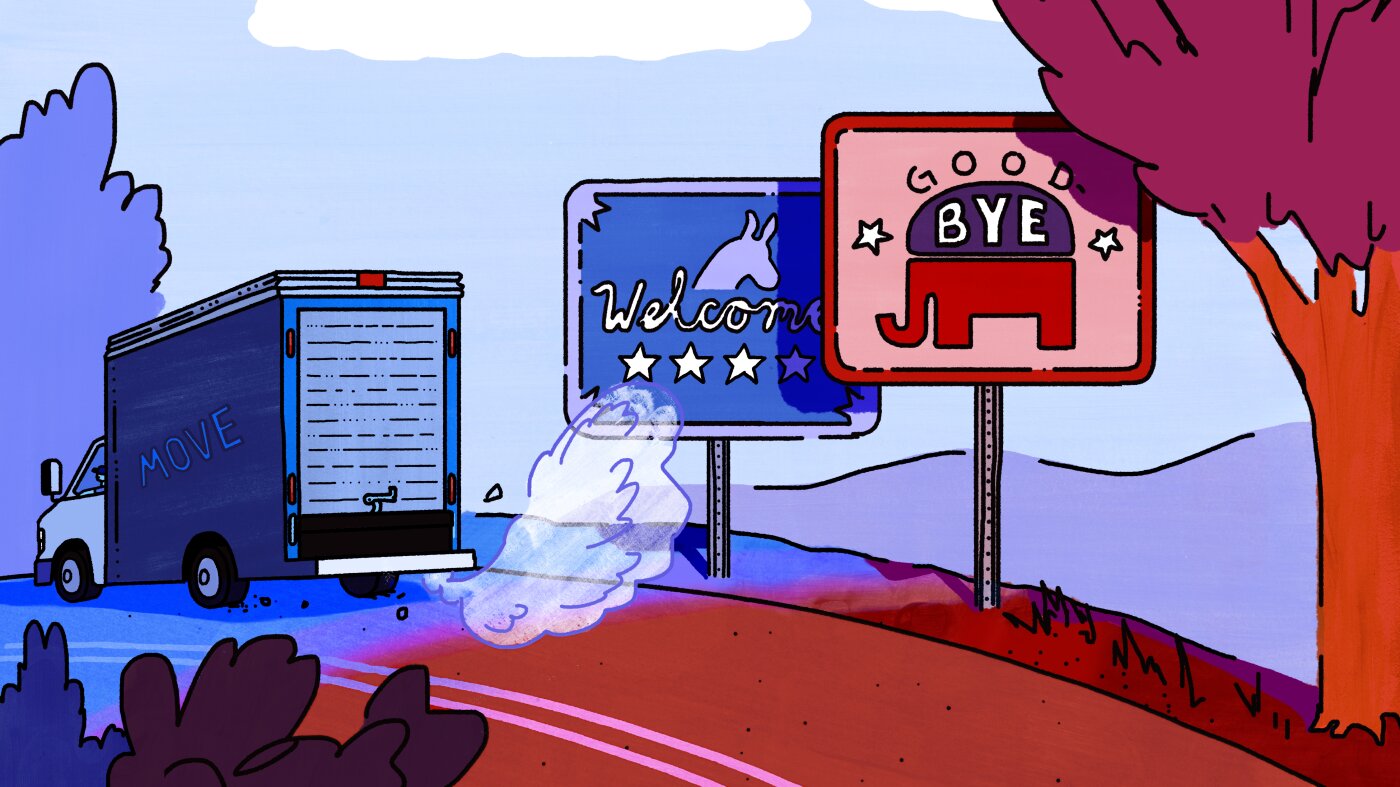
The red state, blue state divide is real. But it’s driven by more than just politics
-

 New York1 hour ago
How a Family of 4 (and One Kid in College) Live on $85,000 a Year in the Bronx
-

 Los Angeles, Ca1 hour ago
Los Angeles church fire forces firefighters into defensive mode
-

 Detroit, MI2 hours ago
Detroit’s Inbolt Launches Vision-enabled Robot Programming
-

 San Francisco, CA2 hours ago
These are California’s treasured views: Stunning scenic spots to visit
-

 Dallas, TX2 hours ago
One World One Game: A Cultural Preview for FIFA 2026 – Dallas Weekly
-

 Miami, FL2 hours ago
WPLG Local 10 Becomes the Home of the Miami HEAT
-

 Boston, MA2 hours ago
World Cup 2026 travel guide: Boston

