Source: geekingout.ca
Fitness
My Exercise Bike Cuts Me No Slack: Peloton Cross Training Bike+ Review


We may earn a commission for purchases using our links. Learn more.
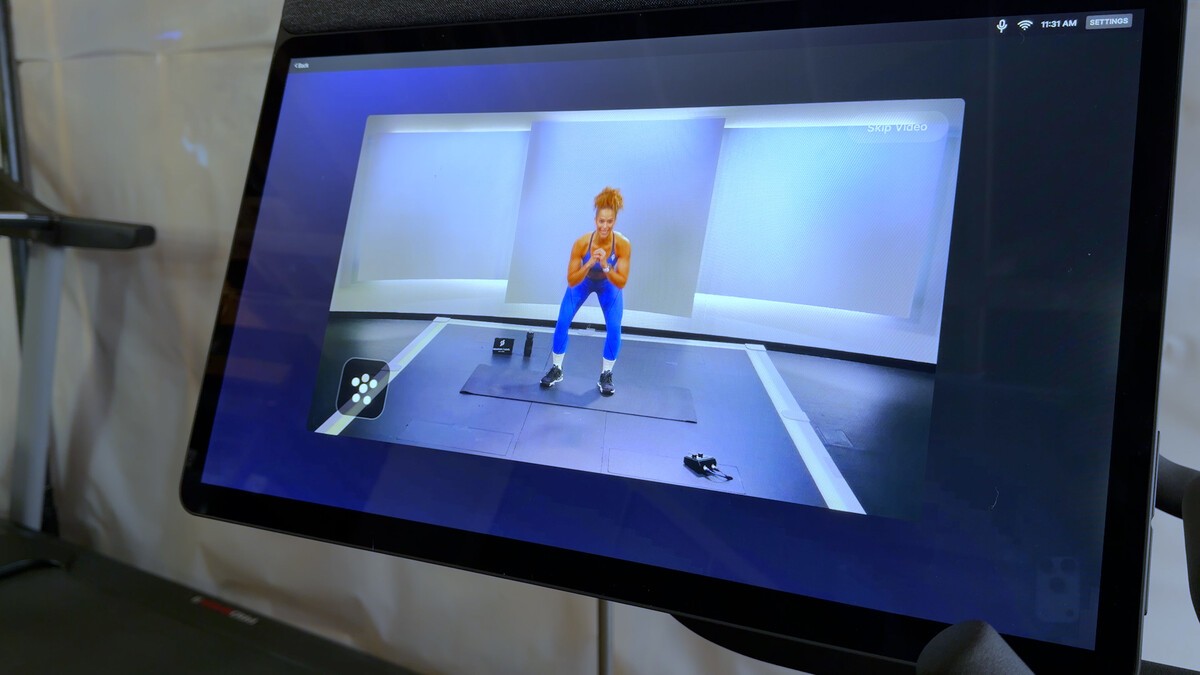
If you told me a few years ago that my exercise bike would be judging my squat form, I would have laughed. But here we are!
Admittedly I could go deeper on those goblet squats so the judgement it warranted.
The home fitness world is crowded. And what works for one person may not fit the lifestyle of another. Any company trying to make a device that supports people new on their fitness journey while also supporting fitness fanatics are faced with some pretty tough challenges to apepel to both crowds.
Source: geekingout.ca
Peloton is using AI and fusing their experience across devices to create what might be the ultimate home fitness studio experience with the brand new Peloton Cross Training Bike+.
I’ve been testing the new Peloton Bike+ with Peloton IQ for a few weeks now, and if you’re wondering if AI can actually make you fitter (or just make you feel guilty about your form), you’re in the right place.
Peloton Cross Training Bike+ One Paragraph Review

Source: geekingout.ca
This is an excellent fitness solution for anyone who is truly serious about making a transformational change in their lives. It IS expensive. Not just for the hardware, but for your monthly/annual memberhsip as well. But the quality of coaching and variety of classes paired with excellent hardware design and a geuninely useful AI integration on this new bike, truly make this a premiere piece of fitness equipment.
Pros
- High-quality build
- Excellent coaching and class variety
- Geuninely useful (and private) AI
Cons
- Expensive hardware
- Expensive subscription
- One colour option
Fitness Tech

Peloton Cross Training Bike+
Geeking Out Shop
Peloton’s latest fitness bike is truly their greatest. The instant feedback on your form during workouts and sturdiness of the hardware, all in a relatively small footprint, make this a solid pick for anyone who likes to stay fit in the comfort of their own home.
What is Peloton IQ?
The biggest feature differentiating this bike from the older bike is the AI-powered smarts. Peloton IQ is essentially the brain inside the new Bike+. It uses the new built-in camera and some clever AI to track what you are doing—not just on the bike, but for any workout you do using the sprawling swivel screen.

Source: geekingout.ca
Peloton IQ is a prime example of AI that doesn’t suck
If you’ve ever done a home workout and wondered, “Am I doing this lunge right?” or “Did I actually do 10 reps or did I zone out and stop at 6?”, this is for you.
- Form Feedback: During strength classes, the camera watches your movement and gives you real-time corrections. It’s not nagging; it’s helpful. Especially if you’re losing steam by the end of a long workout and your form/posture is strting to get sloppy. It reminds you (and helps you) finish strong.
- Rep Tracking: No more counting! The system automatically tallies your reps so you can focus on breathing and not dying. Occasionally it misses a rep (like in a strength workout maybe twice), but it’s surprisingly consistent. And if you beat your reps in a strenth workout, it will suggest you increase the weight.
- Personalized Plans: The IQ system looks at your history and goals to suggest what you should do next. It takes the “what workout should I do today?” paralysis out of the equation. This is super important because some days getting the will power to exercise is tough, so it’s one less thing you have to think about.

Source: geekingout.ca
Particularly in the last year, I’ve gotten pretty deep into learning about AI, large language models, agentic AI, cloud computing and more. From my knowledge and experience, I think Peloton is doing AI “right” for a lot of reasons. But the main one is all the AI stuff is happening on the bike, and not in the cloud.
Don’t be freaked out by the camera. The benefits of Peloton IQ are worth it.

Source: geekingout.ca
If you have a camera pointing at you during a workout, that’s a vulnerable place to be. So you can have some extra peace of mind knowing that video is staying in your home, and not streaming, even for a few seconds, to a cloud server to quickly analyze your form, and then send you suggestions back.
On device AI is fast and private, which is exactly what you want for your workout. But if you just don’t want the Peloton IQ support on a certain day, you can always retract the camera back into the screen.

Source: geekingout.ca
2025 Peloton Bike+ Hardware Explained
The physical design of the hardware was dialed in with the previous generation, so the smarts are the biggest change, not the design when looking at the new edition of the Bike+. But there are a few nuanced changes.

Source: geekingout.ca
The Swivel Screen
The 23.8-inch HD touchscreen now rotates 360 degrees. This sounds simple, but it changes everything. You can hop off the bike, spin the screen around, and roll out your yoga mat. It turns the bike from just a cycling machine into a full home gym hub.
Sound by Sonos
Peloton partnered with Sonos for the audio system, and you can tell. The front-facing speakers and rear-facing woofers make the music and instructor’s voice crystal clear. When you’re in a heavy climb and the beat drops, that immersive sound actually helps push you through.
Auto-Resistance
This is a feature that was on the previous Bike+ that carried through to the new one. But if you’re coming from a non “plus” Peloton, it’s a game changer. On the base bike, you had to manually twist the red knob every time the instructor called out a change. With “Auto-Follow,” the Bike+ automatically adjusts the resistance to match the instructor’s callouts.
You can still adjust it manually if you need a break. Which, I’ll be honest, on some of those climbs, I do. At least if I notice my heart rate zone is passing from beneficial, to unnecessary stress.

Source: geekingout.ca
The Riding Experience
Riding the Bike+ feels premium. It’s nearly silent (great for early morning rides while the family sleeps), stable, and smooth.

Source: geekingout.ca
When you combine the hardware with the software and your existing tech the experience is even better. The integration of Apple Watch (via GymKit) means your heart rate connects instantly. The new “Cardio Performance Estimates” give you a heads-up on how hard a class is going to be for you specifically, based on your past performance. Overall the metrics on this bike are deeper than what you’d get on the “old” model.
It feels less like you are following a video and more like you are in a private training session.
Is the new Peloton Bike+ Worth It?
This is not a cheap piece of equipment. Between the hardware cost and the monthly All-Access Membership, it’s a commitment.
I feel very strongly that you need to do what works for you and makes sense for you. There’s so many different motivations for wanting to get fit. And there’s so many unique and “smart” (in the tech sense) ways to do it.
Fitness Tech
Peloton Cross Training Bike+
Geeking Out Shop
The newest Peloton bikes are incredibly smart which is going to make all the difference in hitting your fitness goals. For cycling workouts, it can automatically adjust the difficulty during classes based on coaches recommendations. But the real magic happens in strength workouts (done on the swivelling built-in display). The new screens are powered by Peloton IQ which can analyze and offer suggestions to correct your form during exercise.
My personal opinion is that the quality of classes in Peloton is the very pinnacle of what’s available and, for me, they work very well.

Source: geekingout.ca
I’m coming at this though, from the benefit of having had some quality personal training sessions over the years with excellent in-person instructors who taught me some more advanced techniques. And the “good stuff” I remember from those IRL classes where you’re exhausted but feel stronger is present for me at the end of every Peloton workout.
But this is so personal. Apple Fitness+ has GREAT instructors and I think is a little easier entry point (and is much cheaper especially if you bundle with Apple One). I feel like Fitbit Premium has some good ideas and integrates beautifully with their Fitbit/Pixel hardware, but their interface is just way too chaotic and busy, so that can be a barrier when you’re trying to figure out a daily class or a larger-scale program. Vitruvian is awesome, but that’s just for strength and the hardware and membership are also super expensive.

Source: geekingout.ca
I mention all these other options becuase those are some of the other brands I think you should research before making a committment to smart fitness hardware. Because even though we don’t know each other, if you’re at this point in the article, you must have a serious level of interest in your personal fitness, and I want to see you succeed.
I’d suggest the Peloton Bike + for anyone who:
- Has tried other fitness programs and wants to take things to “the next level”
- Would be motivated by the fact that “I spent thousands of dollars on this thing so I’m gonna use it.”
- Wants the VERY BEST fitness and coaching classes and programs (where a program is a long-term collection of classes designed around specific goals)
- Recognizes that strength training is an essential part of the overall fitness mix (not just cardio)
- Would benefit from an AI note to improve your form, add weight, or track your metrics and progress over time

Source: geekingout.ca
If you just want to spin your legs and sweat, the original Peloton Bike is great. If you’re wishy washy about your fitness comttiment and don’t see yourself making exercise part of your daily routine, it’s likely not worth the investmnet.
But if you want a personal trainer that lives in your spare room (and doesn’t judge you for sweating in your pajamas), the Bike+ is a fantastic upgrade. It may be one of the best investments you make in your entire life.

Continue Reading

The universal quest for immortality continues, and new research has hinted at a small lifestyle change that could reduce overall death rates in countries if we start taking our movement more seriously.
Conducted by a global research team, the study named ‘Deaths potentially averted by small changes in physical activity and sedentary time: an individual participant data meta-analysis of prospective cohort studies’ was published in The Lancet and suggested that adding five more minutes of physical exercise a day to your life could reduce death rates by 6 per cent.
Conducted on cohorts wearing on-person devices from Norway, Sweden and the USA, scientists analysed activity and sedentary levels to deduce what was causing higher death rates and found that a little change could go a long way.
With the help of the study’s author and additional experts from the field, we delved into the details and uncovered exactly what we need to do to make sure we are maximising our health before it’s too late.
A little change makes all the difference
We already know that we should all be getting out and exercising to ensure everything in our bodies is running smoothly, but just how important is that daily movement and could it be contributing to national mortality rates?
Professor Ulf Ekelund works in the Physical Activity and Health department at the Norwegian School of Sport Sciences and was one of the authors of the study. He broke down the data for HELLO!.
The professor explained: “We estimated the number of deaths potentially prevented by five and ten-minute increases in moderate intensity physical activity if all individuals in the population adhered to this increase.
“We analysed the data using two different approaches:
- ‘High-risk approach’ comprising the least active 20 per cent of the population
- ‘Population approach’ comprising 80 per cent of the population (excluding the most active 20 per cent).
He continued: “We found that six per cent and ten per cent of all deaths might be prevented in the two different scenarios, respectively, if all individuals made these changes.
“If an individual is completely inactive, every little move counts. For example, the least active 20 per cent in our study sample were only active for an average of about two minutes per day of moderate intensity. If all these individuals increased their activity by five minutes per day, it might reduce the number of deaths by six per cent annually.”
Dr Darren Player, a professor in Musculoskeletal Bioengineering at University College London, who was not involved in the study, shared his interpretation of the data with us and added: “The key finding was that an increase in Moderate-to-Vigorous Physical Activity (MVPA) by only five minutes per day for the least active individuals prevented 6 per cent of all deaths. This effect could extend to as much as 10 per cent in all individuals, except for those who are already very active.”
Exercise versus moderate intensity
In terms of how to achieve the correct level of activity and movement, we have to understand the difference between physical activity and moderately intense movement. They are different and will yield different results.
Professor Ulf explained: “There is a clear distinction between moderate intensity activity and exercise. Brisk walking is an excellent type of moderate intensity, whereas exercise is defined as something people do with the purpose to enhance fitness and/or health. It is structured and repetitive. Exercise is only a small proportion of all the physical activity people do.
“Physical activity [PA] is any bodily movement that increases energy expenditure above resting levels. It can be conducted with different intensities from very low to very strenuous. Exercise is a subset of PA which is planned, structured and done with a specific purpose.”
 © Getty Images
Could any of this add years onto our lives?
While this study was specifically about reducing death rates through exercise and movement, it made us wonder how it would affect the number of years we could all expect to live. Would incorporating an extra five minutes of movement add any time to the general life expectancy?
Dr Darren referred to data from the UK Biobank to share his estimations. He said: “This is quite a difficult question to answer, but there is some evidence. The following paper suggests that there could be an increase in life expectancy of 0.9 years for inactive women and up to 1.4 years for inactive men.
“The increases are dependent on the nature of physical activity, with higher intensity and greater volume (total amount of exercise) being the key factors. This is a large UK Biobank study, which does have some strengths for the analyses.”
He continued: “However, the factors that contribute to life expectancy and mortality are complex and varied, with further studies required to understand the picture fully. Particularly, the effect of resistance training combined with other forms of physical activity is likely to have a greater effect than one type of activity alone. Further research is required in this area to provide suitable evidence.”
What type of exercises can I do during my five extra minutes a day?
According to the NHS, there are a variety of movements that you can incorporate into your routine to make sure you are hitting the target of five extra minutes of exercise per day to increase your longevity.
These range from simple activities like making a cup of tea to pushing a lawnmower and dancing around your living room for fitness, depending on the intensity you are able for. While the study suggested five minutes of moderate intensity exercise, the health service broke down its recommendations into sections based on vigour:
Light activity:
- Getting up to make a cup of tea
- Moving around your home
- Walking at a slow pace
- Cleaning and dusting
- Vacuuming
Moderate activity:
- Walking for health
- Water aerobics
- Riding a bike
- Dance for fitness
- Pushing a lawnmower
- Hiking
Intense activity:
- Running
- Swimming
- Football
- Hiking uphill
- Martial arts
It also suggested some easy-to-do strength exercises that involve using a kitchen chair or filled bottles of water as props:
- Sit-to-stand
- Mini squats
- Calf raises
- Standing sideways leg lift
- Standing leg extension
- Wall press-up
- Bicep curls

About The Study: In this comparative effectiveness study, reducing music volume in group fitness classes did not lead to meaningful reductions in perceived exertion and may reduce the risk of noise-induced hearing loss. These findings support implementing safer sound practices in fitness environments and underscore the need for increased awareness and education on hearing protection.
/Public Release. This material from the originating organization/author(s) might be of the point-in-time nature, and edited for clarity, style and length. Mirage.News does not take institutional positions or sides, and all views, positions, and conclusions expressed herein are solely those of the author(s).View in full here.
Fitness
Reward yourself by exercising regularly at One to One Fitness | CWRU Newsroom | Case Western Reserve University

Now is the time to recommit to your health in time to feel your best for all your summer activities! One to One Fitness Center offers several ways to save in March.
Members of the Case Western Reserve University community can take advantage of sign-up specials designed to reward themselves for creating healthy habits.
Individuals can get 50% off the initiation fee (regularly $50 plus tax) and earn back what they do pay by exercising eight or more days in both April and May. Learn more online about this deal on initiation fees.
Students also can get additional savings:
- Graduate students who are enrolled for the spring semester receive summer membership free.
- With Spartan Shape Up memberships, affiliate students pay just $40 per month for membership from now through May, and no initiation fee or security deposit is required.
- Students also can pay $44 plus tax per month with a month-to-month, ongoing plan. No initiation fee or security deposit required.
One to One Fitness Center, owned and operated by CWRU, is known for offering personal, professional, friendly and clean services. Memberships include full access to the 28,000-square-foot fitness center, group exercise classes, validated parking in Lot 53, towel and locker service, and member discounts on programs and services.
Members also can add their spouse or partner to their account for $30 plus tax per month. The center also offers personal training, Pilates Reformer, massage therapy and sound bath therapy, swim lessons, and more.
Visit the One to One Fitness Center website, email onetoone@case.edu or call 216.368.1121 for more information.

Oklahoma2 minutes ago
5-seed Oklahoma knocks off Florida 82-64 to advance to the SEC Women’s Basketball Tournament quarterfinals
Oregon8 minutes ago
Oregon Lottery Pick 4 results for March 5

Pennsylvania14 minutes ago
Pennsylvania man arrested for allegedly feeding pet parakeet marijuana and beer
Rhode Island20 minutes ago
RI Lottery Numbers Midday, Numbers Evening winning numbers for March 5, 2026

South-Carolina26 minutes ago
South Carolina Lottery Pick 3, Pick 4 results for March 5, 2026

Florida1 year ago
Florida High School Football Rankings: Top 25 teams – Oct. 21

Connecticut2 years ago
Cleary's 21 help Le Moyne down Central Connecticut State 69-64 in OT

Oregon2 years ago
How old is Bo Nix? What to know about Oregon quarterback ahead of 2024 NFL Draft

Virginia2 years ago
99th annual Pony Swim held in Virginia

Indiana1 year ago
Indiana Members Credit Union announced as new anchor tenant at Bottleworks District

Politics3 hours ago
DOJ continues Biden autopen probe despite former president unlikely to face charges
World4 hours ago
Fact check: Did French border guards mock influencers returning from Dubai amid Iran war?

News5 hours ago
Iran’s fight for survival / The widening war / Trump’s nebulous goals : Sources & Methods

News14 hours ago
Map: 4.9-Magnitude Earthquake Shakes Louisiana

Politics15 hours ago
Paxton vows he’s ‘staying in this race’ even if Trump backs Cornyn in Texas GOP clash
-

 World1 week ago
Exclusive: DeepSeek withholds latest AI model from US chipmakers including Nvidia, sources say
-

 Wisconsin4 days ago
Setting sail on iceboats across a frozen lake in Wisconsin
-

 Massachusetts1 week ago
Mother and daughter injured in Taunton house explosion
-

 Massachusetts3 days ago
Massachusetts man awaits word from family in Iran after attacks
-

 Maryland5 days ago
AM showers Sunday in Maryland
-

 Florida5 days ago
Florida man rescued after being stuck in shoulder-deep mud for days
-

 Denver, CO1 week ago
10 acres charred, 5 injured in Thornton grass fire, evacuation orders lifted
-

 Oregon7 days ago
2026 OSAA Oregon Wrestling State Championship Results And Brackets – FloWrestling