Connect with us

Fitness

Exercise ‘snacks’ can have a life-changing impact — and you only need 20 seconds

Published

on

Exercise ‘snacks’ can have a life-changing impact — and you only need 20 seconds

Everyone loves a snack, but this one could come with some health benefits.

It turns out daily so-called “exercise snacks” — about a minute or two of physical activity — can make a difference in your health.

Adding exercise into your regular routine can be difficult, especially when it’s not already part of your day that’s filled with work, family, friends and other obligations.

But integrating 20-second exercise bursts into your daily schedule is an easy place to start or a simple add-on to your current routine — so you can stop feeling guilty if you happen to miss a day at the gym.

“Consistency is key. When we are doing any form of exercise, it doesn’t necessarily become beneficial if we’re doing it inconsistently,” Katie Lawton, an exercise physiologist with the Cleveland Clinic, said in a news release.

Advertisement

“When we do things consistently over a period of a year, that’s when we tend to see more benefits.”

Examples of exercise snacking include climbing stairs, jumping jacks, air squats, lunges, push-ups, jogging in place, vigorously walking down the hallway, holding a wall sit or holding a plank.

Lawton explained that adding short bursts of high-intensity physical activity into your daily routine can be beneficial to everyone — whether you’re already in shape or unfortunately out of shape.

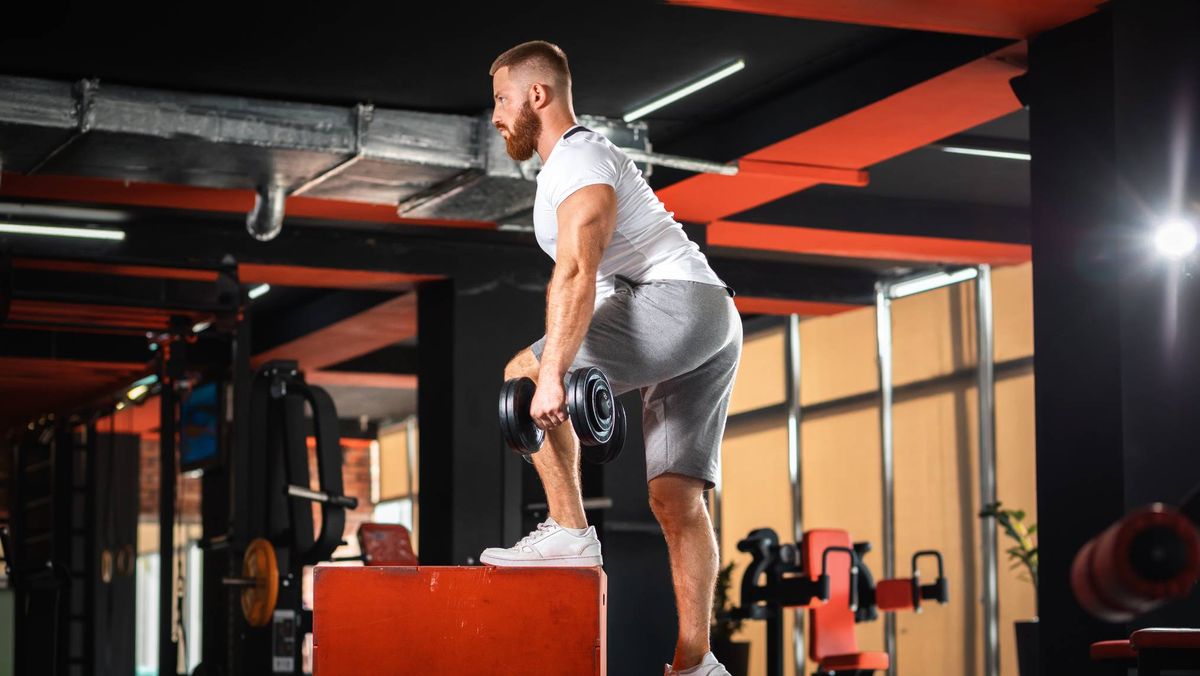
Adding exercise into your regular routine can be difficult, especially when it’s not already part of your day. Dirima – stock.adobe.com

Exercise snacks can be done at any time, anywhere, and don’t require a gym membership or any equipment, making it easy for people who work from home or have a hybrid schedule to get some physical activity in.

Where a person starts and how they decide to move for a “snack” is dependent on the individual and their current fitness baseline.

Advertisement

“Movement is good for us, even if it’s not a dedicated exercise session,” Meghan Wieser, a doctor of physical therapy at Maryland-based Recharge Health & Fitness, told Fortune Well. “Movement snacks can be a low-barrier way to get your body moving throughout the day, and it correlates with better health markers.”

Lawton explained that adding short bursts of high-intensity physical activity into your daily routine can be beneficial to everyone — whether you’re already in shape or if you’re out of shape. Halfpoint – stock.adobe.com

While exercise snacking shouldn’t completely replace a regular workout routine, it can still improve your health and is a reasonable and accessible first step.

Lawton advised planning a time to be active — no matter if it’s just a snack or a full workout — and emphasized that you’re most likely to see an impact if done regularly.

“It’s hard for some people to just stop what they’re doing to go exercise,” she said. “You should try making exercise part of your schedule.”

Exercise snacks can be done at any time, anywhere, and don’t require a gym membership or any equipment. Prostock-studio – stock.adobe.com

Wieser suggested implementing exercise snacks through “habit stacking,” adding that the idea is to be intentional about physical movement.

Advertisement

“In a given day, you already have habits built in, like a midmorning coffee break,” she explained. “So while you’re waiting for the coffee to brew, fit in some movement.”

Lawton added that, as always, it’s important to warm up before doing vigorous physical activity of any kind.

The Cleveland Clinic wrote that more research is needed to determine the overall health benefits of exercise snacks — but it’s still an easy way to remember to get up and move throughout the day.

These recommendations don’t come without backup from research, of course.

A 2019 study published in the journal Applied Physiology, Nutrition and Metabolism found that 20-second bursts of vigorous stair climbing three times per day, three days per week, improved cardiorespiratory fitness by about 5%.

Advertisement

“The changes are modest, but not insignificant,” study co-author Martin Gibala, a professor of kinesiology, said. “By studying epidemiological data, we’ve learned that small changes can go a long way.

Fitness

Exercise improves fitness for kids, adults with FA, study finds

Published

on

Exercise improves fitness for kids, adults with FA, study finds

A combination of exercise and an energy-boosting supplement may improve physical fitness in children and adults with Friedreich’s ataxia (FA), although the added benefit of the supplement over exercise alone remains unclear, according to results from a clinical trial.

Those who participated in a 12-week program combining aerobic and strength training with nicotinamide riboside supplementation saw a significant increase in cardiopulmonary fitness, the body’s ability to supply oxygen to muscles during physical activity, compared with trial participants who did not exercise and received a placebo.

However, researchers found no significant difference between the combination group and participants who followed the same exercise program without supplementation, indicating the study did not show a clear added benefit of the supplement beyond exercise alone.

“The combination of nicotinamide riboside plus exercise for 12 weeks was safe and increased cardiopulmonary fitness in children and adults with Friedreich’s ataxia,” the researchers wrote. “Longer studies are needed to establish whether adding nicotinamide riboside to exercise could be considered as part of a long-term, comprehensive treatment approach.”

The study, “Safety and efficacy of individualised exercise and NAD+ precursor supplementation in patients with Friedreich’s ataxia in the USA: a single-centre, 2 × 2 factorial, randomised controlled trial,” was published in The Lancet Neurology.

Advertisement
Recommended Reading

Fatigue, safety worries limit participation

FA is caused by mutations that reduce the production of frataxin, a protein needed for cells to generate energy. When frataxin levels are too low, cells in energy-demanding tissues, such as the nervous system, heart, and muscles, gradually deteriorate, leading to FA symptoms including impaired coordination, fatigue, muscle weakness, and difficulty walking. People with FA also have markedly reduced cardiopulmonary fitness.

Although current guidelines recommend exercise to help manage symptoms, clinical evidence in people with FA is limited, and participation is often low due to barriers such as fatigue and safety concerns, the researchers noted.

Studies in other conditions have shown that supplementation with NAD+ precursors — compounds that raise levels of NAD+, a molecule involved in cellular energy production — can improve muscle function. These findings have raised the possibility that increasing NAD+ might complement or enhance the benefits of exercise alone. However, there’s limited research on whether these therapies might improve FA patients’ ability to exercise.

Advertisement

The team of researchers in the U.S. conducted a 12-week clinical trial (NCT04192136) involving 66 people with FA enrolled at a single center in Philadelphia from September 2020 to April 2025.

Half of the participants were children, ages 10 to 17, and half were adults, ages 18 and older. Most (56%) were male. The overall mean age was 20.3. At the start of the study, participants generally had lower-than-average muscle mass and slightly higher body fat compared with reference values for the general population.

Participants were randomly assigned to one of four groups: 17 received a placebo and served as controls, 17 received only the NAD+ precursor nicotinamide riboside, 16 followed a structured exercise program and were given a placebo, and 16 followed the exercise program in addition to supplementation with nicotinamide riboside. All participants completed the study.

The exercise program consisted of three aerobic and two resistance training sessions per week, performed at home under remote supervision. Participants took nicotinamide riboside or placebo orally each day using weight-based dosing: one capsule (300 mg) for patients weighing 24-48 kg (about 53-110 lbs) and three capsules (900 mg) for patients weighing more than 72 kg (about 159 lbs). The study’s main goal was to assess changes in peak oxygen uptake (VO₂), a key measure of cardiopulmonary fitness.

At the end of the 12-week program, participants who received both exercise and nicotinamide riboside showed the greatest improvements in cardiopulmonary fitness. Peak VO₂ increased by 13.2% in the combination group, compared with a 3.9% decline in the control group.

Advertisement

VO₂ rose by 9.5% with exercise alone and 5% with nicotinamide riboside alone, but those changes were not statistically significant compared with controls.

The combination was not significantly more effective than exercise alone, indicating no clear added benefit from the supplement.

Some secondary measures improved. Compared with controls, the combination group reached higher maximum workloads during exercise, and oxygen pulse — a measure of how efficiently the body uses oxygen — improved in both the combination and exercise-only groups. Participants in the combination group also reported spending more time in physical activity and leisure exercise.

The interventions were generally safe and well-tolerated. No serious adverse events were reported, and all side effects were mild or moderate. The most common ones were skin problems (53%), gastrointestinal symptoms (45%), upper respiratory infections (35%), and falls (20%).

Falls, a known barrier to exercise in FA, occurred at similar rates across all groups, and no increase in heart-related or other adverse events was seen in participants assigned to exercise.

Advertisement

In an accompanying commentary, “Targeting exercise, energy, or both in Friedreich’s ataxia,” published in The Lancet Neurology, two researchers in Germany highlighted the study’s implications.

The trial’s findings extend existing clinical evidence on the benefits of exercise in FA by using an objective measure of fitness, such as peak VO₂, and by demonstrating that a home-based intervention is feasible, they wrote. Further studies “are needed to determine durability and clinical significance of fitness gains and to clarify any incremental contribution of nicotinamide riboside beyond structured exercise,” they said.

Continue Reading

Fitness

Diane Sawyer uncovers ‘The Mystery of Richard Simmons,’ the famed fitness guru, in latest special

Published

on

Diane Sawyer uncovers ‘The Mystery of Richard Simmons,’ the famed fitness guru, in latest special

Known for his energetic and positive persona, fitness instructor and TV personality Richard Simmons led a captivating life, until his puzzling disappearance in 2014 and sudden death a decade later.

Emmy Award-winning journalist Diane Sawyer digs into it all in “The Mystery of Richard Simmons: A Diane Sawyer Special.”

Phillip Palmer spoke with Sawyer about the special – and her personal involvement in the story.

Simmons rose to fame in the late ’70s and early ’80s. After developing a love for fitness, he opened his own exercise studio where he led a series of motivational and aerobics classes. Eventually, he landed a recurring role on “General Hospital,” portraying himself, and then his own show “The Richard Simmons Show.” Simmons also led some of the most popular exercise videos of the ’80s, including “Sweatin’ to the Oldies.”

Sawyer explains, “He came with a great purpose, which was to reach out to everybody of all sizes. And somebody said, ‘love them back to health.’ And that was his mission, and it fueled him night and day.”

Advertisement

Uncover the magic and mystery of Richard Simmons in the new Diane Sawyer special “The Mystery of Richard Simmons,” airing tonight at 9/8c on ABC and streaming next day on Disney+ and Hulu.

“You couldn’t go anywhere without seeing Richard Simmons,” Palmer adds.

“Yes, and he was hilarious and surprising. And he kind of lit up the room every time he arrived – surprised everybody,” says Sawyer.

And surprise everybody he did.

10 years after his sudden seclusion, which began in 2014, Sawyer received a message from Simmons.

Advertisement

“I get a phone call, and he sends me an incredible number of flowers. Each had the same card on it, ‘I trust you.’ And we talked on the phone, and he said he was ready to come tell his story,” Sawyer tells Palmer. “It was the old Richard. And then, as we know, not long after, he died.”

Shortly after his death, Simmons’ brother reached out to Sawyer to finish telling his story, along with those closest to the star.

Sawyer compared the experience to “a mosaic. (It) gave me tiles and pieces of the mosaic to put together who he was before he decided to go into hiding, who they think he was during it, and what might have happened if he had come back.”

“The Mystery of Richard Simmons: A Diane Sawyer Special” premieres tonight, May 12, at 9/8c on ABC and streams the next day on Disney+ and Hulu.

The Walt Disney Company is the parent company of ABC, Disney+, Hulu and this ABC station.

Advertisement

Copyright © 2026 OnTheRedCarpet.com. All Rights Reserved.

Continue Reading

Fitness

This low-impact exercise works your entire body in minutes – how to do the ‘caterpillar walk’ properly

Published

on

This low-impact exercise works your entire body in minutes – how to do the ‘caterpillar walk’ properly

When it comes to improving mobility and core stability, few exercises beat the caterpillar walk. Despite its playful name, it’s a serious full-body move that challenges the shoulders, core, hamstrings and hip flexors simultaneously, while building functional strength by taking the body through a large range of motion under load.

Whether you’re an athlete looking to improve movement quality or a beginner building a foundation of body control, the caterpillar walk delivers serious benefits.

Here, Peloton instructor Ben Alldis explains how to do it, the key muscles it works, and how to progress the exercise once you’ve mastered it.

What is the caterpillar walk?

The caterpillar walk is a dynamic bodyweight exercise that mimics the rolling-out movement of a caterpillar.

‘It is an exercise used most often in warm-ups and for functional training because it moves the body from a standing position to a plank and back again,’ says Alldis.

Advertisement

How to do the caterpillar walk

  • Start in a standing position, feet hip-width apart and arms at your side.
  • Hinge by folding forward at your hips, keeping your legs as straight as possible, and reach your hands down toward the floor.
  • Walk out by placing your palms on the floor and walking them forward one at a time until you reach a high plank position: shoulders over wrists, with a straight line from head to heels.
  • Hold this position for a second or two, ensuring your core and glutes are engaged to maintain stability.
  • Keep your arms straight, walk your hands back to your feet to return to a standing position.

Muscles worked

  • Core (rectus abdominal and oblique muscles): these help to stabilise the spine during the walk out.
  • Shoulders (deltoids) and chest (pectorals): these muscles help support your weight as you move through the exercise and allow you to hold a strong plank at the bottom of the movement.
  • Triceps: these are being used as you extend your arms in the walk out and keep you strong in your plank.
  • Posterior chain: hamstrings and calves are stretched and worked during the hinge and walk in portion of the exercise.

Benefits of the caterpillar walk

1. Improves mobility and posterior-chain flexibility

The caterpillar walk stretches the entire back of the body – from the spine and glutes to the hamstrings and calves – while also mobilising the shoulders and arms in one fluid movement. It can also help improve coordination and balance, as you stay controlled through both the upper and lower body.

2. Builds core stability

The exercise trains anti-extension core strength, helping you keep your torso stable and prevent excess pressure going into the lower back as you move into the plank position.

3. Supports shoulder health

It’s an effective exercise for building strength and stability through the shoulder girdle, particularly around the muscles that support the shoulders during movement.

4. Activates the central nervous system

The caterpillar walk works well as a warm-up because it requires the brain and body to coordinate upper- and lower-body movement at the same time. It also helps improve proprioception — your body’s awareness of its position in space.

Common errors

  • Bending your knees too much as you walk out into the plank. Excessive knee bend reduces the hamstring stretch and mobility benefits of the exercise.
  • Arching the lower back in the plank position, rather than keeping the core engaged and torso stable.
  • Rushing through the movement. The goal is to keep the torso stable, legs as straight as possible, and minimise movement through the hips while holding the plank. When performed too quickly, the hips often start rocking side to side.

Progressions of the caterpillar walk

1. Caterpillar walk + push-up

Once you reach the high plank position, perform one full push-up before walking your hands back in. This variation increases the challenge for the chest, shoulders and triceps.

2. Caterpillar walk + renegade row

When you reach the high plank position, perform a renegade row before returning to standing. This variation increases the demand on the core and upper back.

3. Explosive caterpillar

Walk out into a plank as usual, but instead of slowly walking your feet back in, hop both feet forwards towards your hands in one explosive movement – similar to the bottom phase of a burpee.

Advertisement

Once you reach the high plank position, perform one full push-up before walking back in. This variation increases the demand on the chest and triceps.


Having a strong core is about far more than sporting a six-pack. Build functional mid-section strength – while also improving your power, posture, coordination and balance – with WH COLLECTIVE coach Izy George’s 4-week core challenge. Download the Women’s Health UK app to access the full training plan today.

Get the app

izy george 4 week core challenge

Headshot of Kate Cheng

Continue Reading
Advertisement

Trending