Technology
Would you ride in Waymo’s new Ojai robotaxi?


Empty Waymo vehicles swarm Atlanta neighborhood
Atlanta residents captured alarming video of dozens of Waymo driverless cars continually circling their quiet neighborhood for hours. Tech expert Kurt Knutsson warns this ‘AI takeover’ raises significant safety concerns, especially for children, highlighting a critical lack of human intervention and company accountability from Waymo regarding these autonomous vehicles and potential glitches.
NEWYou can now listen to Fox News articles!
Getting into a car with no one behind the wheel can be a little weird the first time. You know the car is supposed to drive itself, but part of you no doubt may still feel uneasy.
Waymo is trying to make that moment feel less anxious with its new Ojai robotaxi. It has more room to stretch out, bigger screens to control the ride and a cabin built for passengers from the very start.
That could make a real difference. If driverless rides are going to become something you actually use, they need to feel safe, simple and comfortable once the doors close.
Join CyberGuy Live: Lock Down Your Phone in 30 Minutes (Saturday, June 13, 10 am ET)
- Your phone holds your email, passwords, photos, banking apps and personal data. In this free, live online class, Kurt the CyberGuy will walk you step by step through simple phone security fixes you can do in real time. You’ll learn how to improve your privacy settings, spot the latest phone scams, use trusted security tools and walk away with a simple checklist to stay protected. Register here: CyberGuyLive.com.
CHINA’S FIRST MASS-PRODUCED FLYING CAR DEBUTS
Waymo’s new Ojai robotaxi is designed around passengers, with more legroom, bigger screens and accessibility features. (Allen J. Schaben / Los Angeles Times via Getty Images)
Waymo Ojai robotaxi rides will start with select riders
Waymo says the first public Ojai rides will begin in the coming weeks. Select riders in San Francisco, Los Angeles and Phoenix will get the first chance to try it. The rides will be free for a limited time while Waymo gathers feedback and refines the experience. Access will then expand gradually to more riders and more cities.
Waymo also says Denver, Las Vegas and San Diego are on its expansion list before the company opens the doors wider later this year. For now, interested riders can use the Waymo app and sign up as a Trusted Tester.
Waymo’s new driverless vehicle puts riders first
The Ojai looks like Waymo’s attempt to rethink what a robotaxi should feel like from the inside. Instead of feeling like a regular car with self-driving tech added in, the Ojai was built around the rider experience. Waymo describes it as a more expansive cabin with extra legroom, a flat floor and a low step-in height. That could help when you are carrying groceries, traveling with luggage or getting in and out with less mobility.
WAYMO TEAMS UP WITH WAZE TO SPOT POTHOLES FASTER
Inside the Waymo Ojai robotaxi cabin
The Ojai cabin gives riders three large adaptive screens. You can use them to adjust parts of the ride, including the temperature and music.
Waymo also added charging ports and cupholders. Those may sound like small touches, but they are the things you notice once you are actually sitting in the back seat.
Waymo says the Ojai cabin includes a flat floor, low step-in height, Braille, grab bars and screen-reader compatibility. (Allen J. Schaben / Los Angeles Times via Getty Images)
Waymo Ojai accessibility features could help more riders
Waymo also says the Ojai was designed with accessibility in mind from the start. The vehicle has a flat floor, a low step-in height, Braille, grab bars and screen-reader compatibility.
Those details can make a ride easier for someone who needs a little more support getting in or out. They can also help older riders, passengers with disabilities or anyone juggling bags, groceries or a tired kid after a long day.
UBER UNVEILS A NEW ROBOTAXI WITH NO DRIVER BEHIND THE WHEEL
Waymo’s 6th-generation Driver debuts in the Ojai
The Ojai will be the first vehicle to use Waymo’s sixth-generation Waymo Driver. That is the company’s autonomous driving technology.
Waymo says this new generation will help it operate in snowier cities and bring fully autonomous rides to more communities. Snow, slush and messy weather can challenge autonomous vehicles in ways sunny streets cannot. If Waymo can handle those conditions safely, it could expand far beyond the warmer markets where robotaxis have had an easier start.
Waymo’s Arizona factory could help robotaxis expand
Waymo says its Mesa, Arizona, factory is getting ready to build tens of thousands of vehicles each year. The Ojai will come first, followed by the Hyundai IONIQ 5. That matters because robotaxi services need vehicles. Lots of them.
The Ojai also includes practical changes that could help Waymo keep a larger fleet on the road. Waymo points to easier-to-clean interiors, faster charging, increased battery capacity and a more modular design for maintenance and repairs.
Those details may not sound exciting, but they matter if robotaxis are going to move beyond a handful of cities. The easier these vehicles are to charge, clean and repair, the easier it may be for Waymo to bring them to more riders.
WAYMO VEHICLES ‘PUTTING AMERICAN LIVES AT RISK,’ SOURCE WARNS AMID AUTONOMOUS VEHICLE COMPANY’S MASSIVE RECALL
The Waymo Ojai debuts the company’s sixth-generation autonomous driving system as it looks to expand robotaxi service. (Jason Henry/Bloomberg via Getty Images)
What this means to you
If you already ride with Waymo, the Ojai could make your next trip feel more comfortable. The bigger difference may be how normal the ride feels once you are inside. If you have never taken a driverless ride, the Ojai may become your first real temptation. The extra space and rider-friendly features could make the idea easier to try.
But there is still a comfort gap for many riders. You are stepping into a vehicle with no human driver. That makes comfort important, but safety still drives the whole decision. That question feels especially timely. Waymo recently paused freeway rides in several U.S. cities while it works on software updates tied to construction zones and flooded roads. Surface-street service has continued, but the pause is a reminder that even advanced robotaxis still face many challenges out there on the road.
Waymo says riders have taken more than 20 million fully autonomous trips across 11-plus cities. The Ojai now gives the company another chance to prove that driverless rides can feel safe, useful and normal for more of us.
Kurt’s key takeaways
Waymo’s new Ojai robotaxi shows where driverless rides are heading next. The car still has to get you from point A to point B safely, but now Waymo is also trying to make the ride feel easier, roomier and more comfortable once you get inside. I like that Waymo is thinking about the rider experience, not only the driving technology. The extra space, accessibility features and rider controls could help those who have been curious but hesitant. Still, trust is a huge hurdle. A nicer cabin may make the ride more comfortable, but Waymo still has to prove that a car with no driver can handle the messy, unpredictable roads we all deal with every day.
CLICK HERE TO DOWNLOAD THE FOX NEWS APP
Would you climb into Waymo’s new Ojai robotaxi for a free ride, or do driverless cars still have more to prove before you would trust one? Let us know by writing to us at CyberGuy.com.
Sign up for my FREE CyberGuy Report
- Get my best tech tips, urgent security alerts and exclusive deals delivered straight to your inbox.
- For simple, real-world ways to spot scams early and stay protected, visit CyberGuy.com – trusted by millions who watch CyberGuy on TV daily.
- Plus, you’ll get instant access to my Ultimate Scam Survival Guide free when you join.
Copyright 2026 CyberGuy.com. All rights reserved.



Lorde was performing at the Real Cool Festival in Madrid on Thursday and took some time during her set to speak out against AI glasses. While she didn’t specify any brands in particular, it’s likely she was taking a shot at festival sponsor Ray-Ban, which has collaborated with Meta on a pair of AI smartglasses.
The comments were captured in videos shared to social media. After thanking the crowd for being there and taking part in “something real,” she said that it was increasingly hard to know is and isn’t real, before saying “You don’t know if someone is wearing sunglasses or if they’re wearing those fucked up fucking… Can I just say, for the record, fuck the glasses. Don’t get the glasses. Not sexy.”
The comments come as Meta faces renewed scrutiny over its smart glasses. And, even in the face of that backlash, it is still reportedly planning to launch a pair of “super sensing” glasses that are continuously recording.
According to Stereogum, Lorde was followed on stage by Blackpink’s Jennie, who is a Ray-Ban Meta AI ambassador and has been featured in advertising campaigns on Instagram and in a video screened between sets at Real Cool.

Google general counsel explains AI-powered phishing rise
Halimah Delaine Prado, Google General Counsel, reveals the rise of AI-powered phishing scams originating from China’s ‘outsider enterprise.’ She explains how these criminals use artificial intelligence to create highly convincing fake websites, impersonating trusted brands like T-Mobile to defraud hundreds of thousands of Americans, causing millions in losses. Prado highlights Google’s strategy to combat these evolving threats.
NEWYou can now listen to Fox News articles!
There are few emails that make your stomach drop faster than one about “new privacy settings.” That usually means a company has moved another data switch, renamed a control or tucked a new choice inside an account menu you rarely visit. Google is now rolling out one of those changes for Search services. The setting is called Search Services History. It controls whether Google saves your activity from Search services when you are signed into your Google Account.
That may sound routine at first. Most of us already know Google can save search history. However, this update goes beyond the old idea of typed searches in a box. Google says Search Services History can include images you upload, files you ask about, voice searches, Search Live recordings, Translate speaking practice audio and other interactions with Search services.
The part that should make you pause is the Save Media setting. When it is turned on, Google can save media from your Search services interactions. That saved media may be used to improve Google’s AI models and technologies. In other words, the random photo you searched with Google Lens or the voice recording you used in a Search feature may help improve Google’s AI.
GOOGLE TURNS OLD PHONES INTO CLOUD SERVERS
Google’s new Search services pop-up tells you media from your searches may now be saved in your history. (Harun Ozalp/Anadolu via Getty Images)
Free live CyberGuy class: Sick of Spam? Join us July 22
Join us Wednesday, July 22, at 1 PM ET for a free CyberGuy Live class that will help you cut down on robocalls, spam texts, junk email and other unwanted messages. Kurt “CyberGuy” Knutsson will walk you step by step through simple ways to filter spam, clean up your inbox and recognize the messages that could put your personal information at risk. No technical experience is needed. You’ll also receive our spam-stopping checklist, and every registrant will get a link to the class recording afterward.
Reserve your free spot today at CyberGuyLive.com.
APPLE AI SECURITY UPDATE PROVES HACKERS MOVE FAST
What Google’s Search Services History can save
Google says Search Services History may include your searches, results you view, AI Mode responses, voice search recordings, Search Live transcripts, Google Lens images, uploaded files and some information tied to your activity.
Maybe you used Google Lens to identify a plant. Perhaps you uploaded an image to search for a product. You might have used Translate to practice before a trip. Or maybe you asked a question by voice because your hands were full. All of that can feel harmless in the moment. Still, the bigger issue is where that data can go after it is saved.
Google says saved media may help you revisit past visual searches or continue a Search Live conversation. That can be useful. However, Google also says saved media may help develop and improve AI models and technologies. That is the trade-off. You may get more personalized features. Google may get more personal inputs from the tools you already use.
CHRIS HANSEN URGES PARENTS TO TEACH CHILDREN ABOUT ONLINE PREDATORS BEFORE ALLOWING INTERNET ACCESS
Why this Google AI setting deserves your attention
This is the kind of privacy change that can slide right past you. The language sounds helpful. The setting lives inside account controls. The rollout happens gradually, so you may not see it right away. That is exactly why you should check.
Google says the new settings are based on your prior choices for Web & App Activity and Search Personalization. If those were on, the new Search Services History setting may also be on. If your prior settings were off, the new one should be off too. That sounds fair enough, but it still puts the work on you.
Also, turning off Save Media does not automatically wipe everything that was already saved. Google says previously saved media may continue to be used to improve its technologies unless you delete it from your account. If saved media has already been selected to train AI models, Google says it is no longer connected to your account and may be kept for up to four years.
That is the part I would not ignore. Once your media moves into that AI-training pipeline, deleting the original activity may not pull it back.
The Search Services History setting appears inside Google’s My Activity page, where you can review what Google saves. (AP Photo/Seth Wenig, File)
How to opt out of Google’s Search AI data training setting
You can check this from a phone or computer, but I recommend using a computer if you can. The account settings are easier to read.
- Open a browser and go to myactivity.google.com.
- Make sure you are signed into the account you use for Search, Gmail, YouTube or Android. If you have more than one Google Account, repeat these steps for each one.
- Look for the Search Services History section. If you do not see it yet, Google says the new settings are still rolling out. In that case, your Search history may still be controlled by Web & App Activity.
- If Search Services History is turned on, you should see a Save Media subsetting.
- Uncheck the box next to Save Media if you do not want Google saving media from your Search services interactions.
- If you want to go further, turn Search Services History off. Google says you can choose Turn off or Turn off and delete activity.
- To remove older items, go back to Search Services History and select View and delete saved history. Review what appears there, then delete activity you do not want saved.
- If Search Services History has not reached your account yet, go to My Activity and review Web & App Activity. That may still control some Search services history until the rollout reaches you.
- Google also has a Personalized Recommendations setting for Search services. This can affect how Search services personalize results, feeds and AI responses based on your activity. You can review it in your Google Account under Data & privacy, then Personalization settings.
What happens after you turn Save Media off
Turning off Save Media stops Google from saving media from future Search services interactions as part of Search Services History. However, it does not shut down every kind of Search history. Text-based activity, transcripts and some AI responses may still be saved if Search Services History remains on.
Also, Google says media from your future interactions can still be used to respond to you and help keep services safe. The key difference is that future media should not be used to train Google’s generative AI models unless you provide feedback. That is a meaningful distinction, but it isn’t the same as using Google with no data collection at all.
You should also know that Save Media does not control everything across Google. It does not cover separate activity settings for Gemini Apps, YouTube, NotebookLM or Google Voice. Those services have their own controls.
Kurt’s key takeaways
Google’s new Search Services History setting is worth checking now, especially if you use Lens, voice search, Translate or AI Mode. The Save Media box is the one I would look for first. If you do not want your images, files, audio or video saved for future AI improvement, turn it off. Then go one step further and review old activity. Turning off a setting usually protects future data, but past items may still sit in your account unless you delete them. Finally, repeat the process for every Google Account you use. Many of us have a personal account, a work account or an old account still signed in somewhere.
The Save Media checkbox is the key setting to turn off if you do not want images, files, audio and video saved for AI training. (Kurt “CyberGuy” Knutsson)
Would you keep using Google Lens the same way if you knew your image searches could help train AI for years? Let us know by writing to us at Cyberguy.com
CLICK HERE TO DOWNLOAD THE FOX NEWS APP
Sign up for my FREE CyberGuy Report
- Get my best tech tips, urgent security alerts and exclusive deals delivered straight to your inbox.
- For simple, real-world ways to spot scams early and stay protected, visit CyberGuy.com – trusted by millions who watch CyberGuy on TV daily.
- Plus, you’ll get instant access to my Ultimate Scam Survival Guide free when you join.
Copyright 2026 CyberGuy.com. All rights reserved.

Apple’s self-driving car program never really got off the ground, but it may have been what made the company’s chips the powerful AI performers they are. Early in the development of the self-driving platform, Apple realized that it would need powerful on-device AI processing. While the car processor was never finished, as Mark Gurman details in his latest Power On newsletter, it did lead to the development of the Neural Engine, the backbone of Apple’s on-device AI processing.
The Neural Engine made its debut with the iPhone X and the A11 Bionic. In those early days, it was primarily used for computer vision, powering FaceID, Animoji, and augmented reality features. But by laying the groundwork for on-device AI processing, Apple established itself as an early leader by bringing the Neural Engine to desktops with the M-series chips. While Apple’s AI software efforts have lagged behind the rest of the industry, its hardware has been impressive. It’s also what has allowed Apple to tout its privacy features, since less data is sent to the cloud.
Apple is making its AI hardware a cornerstone of its strategy going forward. According to Gurman, the company is skipping the Pro, Max, and Ultra versions of its upcoming M6 chip. Instead, it’s accelerating development of the M7, which should arrive in the first half of 2027 with significant Neural Engine upgrades. The M7 Ultra is expected to be the basis for a new server product from Apple as well, with support for up to 1.5TB of RAM.
-

 New York57 minutes ago
How a Family of 5 Lives on $46,000 a Year in Wakefield
-

 Los Angeles, Ca1 hour ago
Southern California braces for 110-degree heat, thunderstorms this week
-
 Detroit, MI1 hour ago
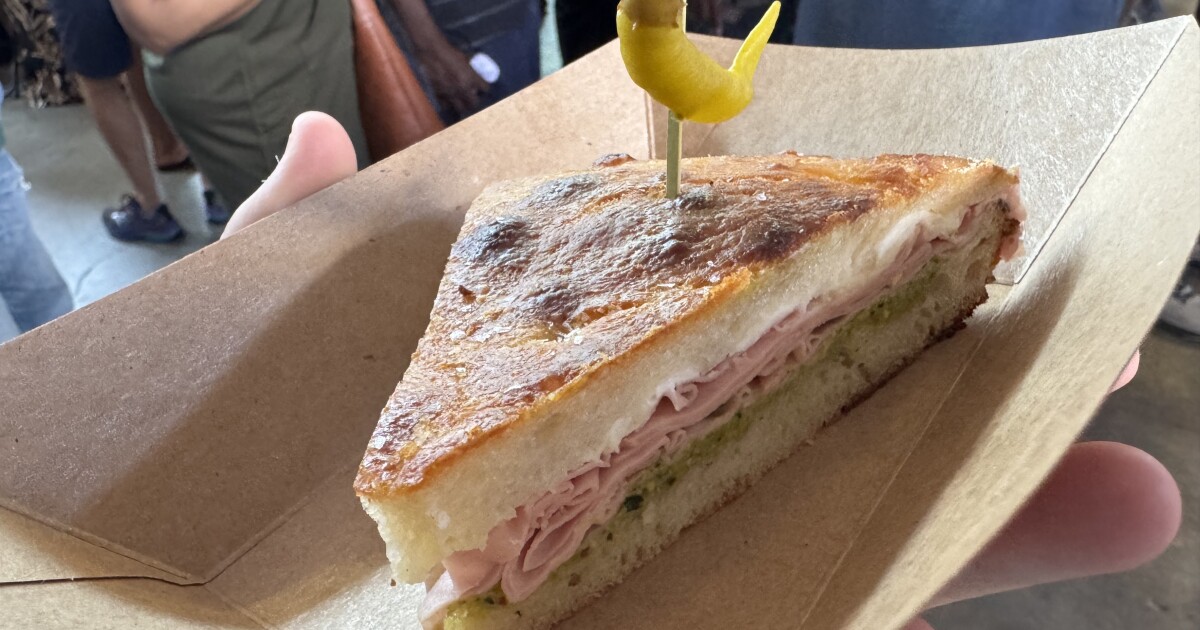
Detroit Sandwich Party returns to Eastern Market on Sept. 6
-

 San Francisco, CA2 hours ago
A Leak of San Francisco Police Drone Footage Exposes the New Reality of Urban Surveillance
-

 Dallas, TX2 hours ago
Viral East Dallas coffee shop fears major sales drop amid six-week road closure
-

 Miami, FL2 hours ago
3 hurt in fire on Lincoln Road that started underground
-

 Boston, MA2 hours ago
Rideshare driver charged in Logan airport passenger assault to appear in court
-

 Denver, CO2 hours ago
Denver area events for July 13

