Fitness
5 Exercise Habits That Are Aging Your Body Faster


Regular exercise is essential for keeping your body strong and in excellent shape, but certain common mistakes can completely derail your dedicated efforts. In fact, they can speed up the aging process, increase wear and tear on your joints and muscles, and promote fatigue. To ensure you continue progressing toward your goals, we spoke with a fitness pro who reveals five exercise habits that age your body faster.
Below, Michael Baah, celebrity trainer and BlazePod ambassador, shares how to recognize and address these common errors and maximize your training routine to maintain a youthful, fit body.
Table of Contents
Training Without Rest Days

One super common yet detrimental mistake is training without carving out time for rest and recovery days. “Overtraining leads to chronic inflammation, elevated cortisol levels, and increased injury risk, which can age the body prematurely,” Baah stresses.
The Fix: Ensure you have ample time to rest and implement active recovery days into your routine. This will reduce excess strain on your body while keeping it engaged. “Try simple activities like light yoga, stretching, or reaction games with a tennis ball to keep active on recovery days,” Baah suggests.
Skipping Resistance Training
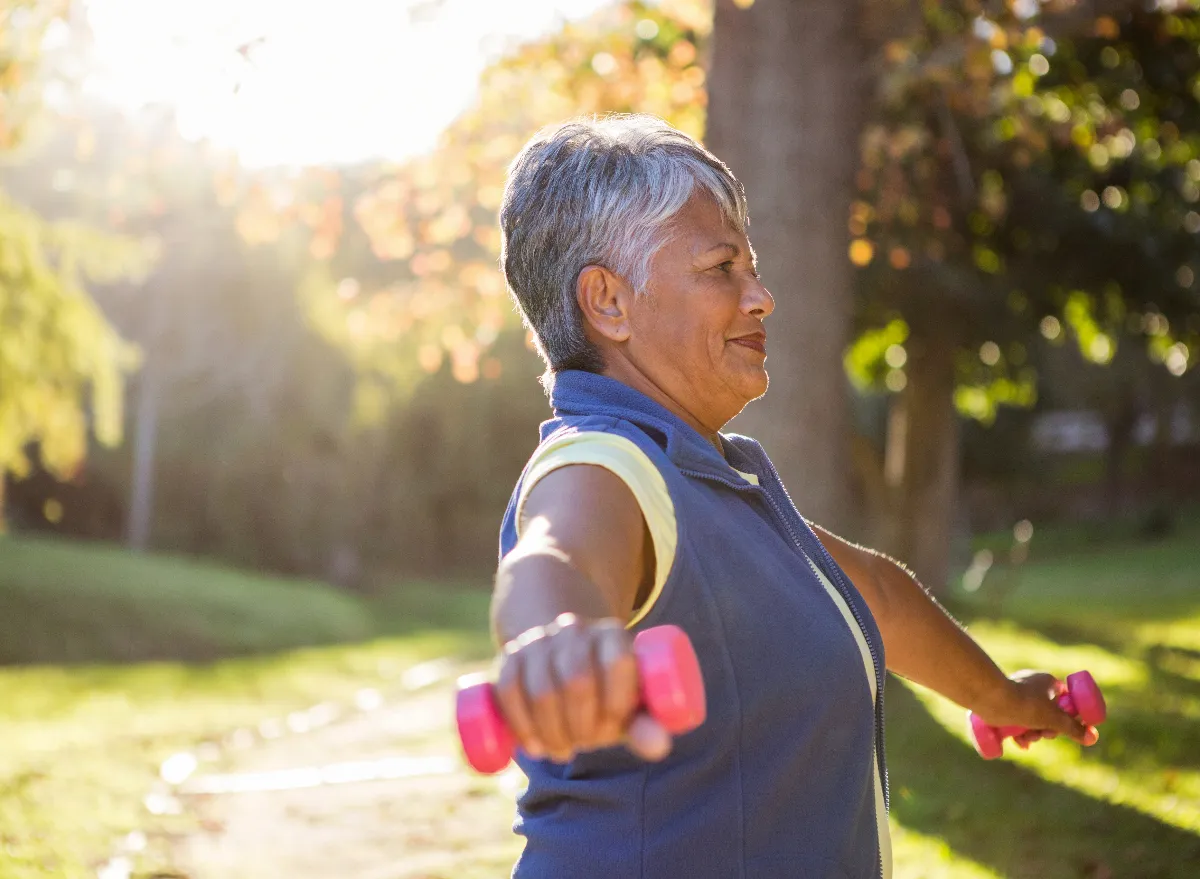
Strength training is essential to improving muscle and bone strength—especially as you age. “Avoiding resistance training accelerates muscle and bone loss (sarcopenia and osteoporosis), making the body weaker and more prone to injuries as we age,” Baah tells us.
The Fix: Baah recommends including two to three weekly strength sessions into your routine, highlighting functional movements such as deadlifts, squats, and pushups. “Resistance bands or household items like water bottles can be used as weights if you don’t have access to a gym,” Baah explains.
Emphasizing Only High-Impact Exercise
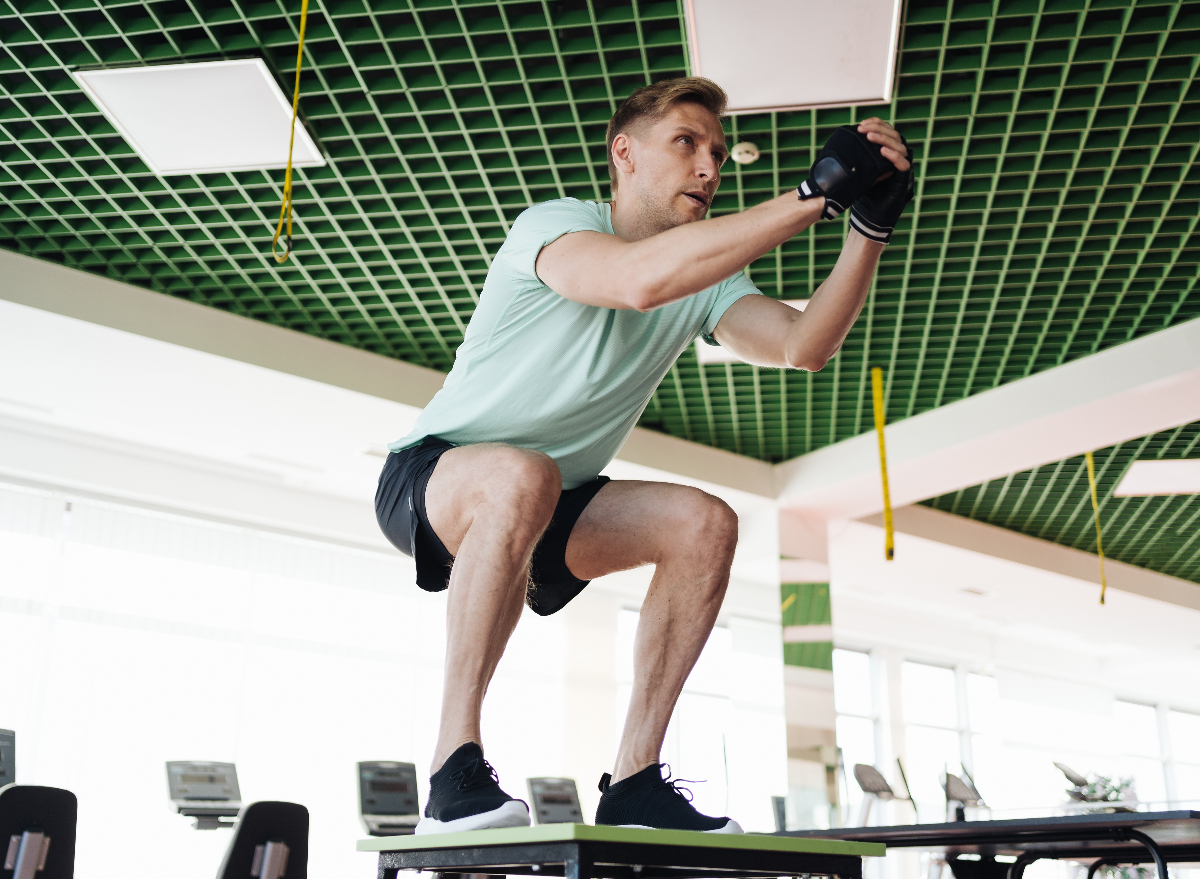
Consistently performing high-impact exercises, such as jumping or running, can promote wear and tear on your joints as time passes. This increases your risk of developing arthritis or injuries.
The Fix: “Mix high-impact exercises with low-impact alternatives such as cycling, swimming, or walking,” Baah recommends. “These activities are easier on joints while improving cardiovascular health. Additionally, try joint-friendly strength exercises like step-ups or glute bridges for a well-rounded routine.”
Skipping Warm-Ups and Cool-Downs

You’ve likely heard that warming up and cooling down are crucial portions of your workout routine—so don’t skip them! “Skipping warm-ups increases the likelihood of injuries while neglecting cool-downs leads to muscle stiffness and slower recovery,” Baah tells us.
The Fix: Begin each fitness session with warm-up exercises like arm circles and leg swings to get your muscles ready. After your main workout, perform static stretching to engage major muscle groups. If you have access to them, massage balls and foam rollers can help alleviate tightness and boost circulation.
Neglecting Mobility Training
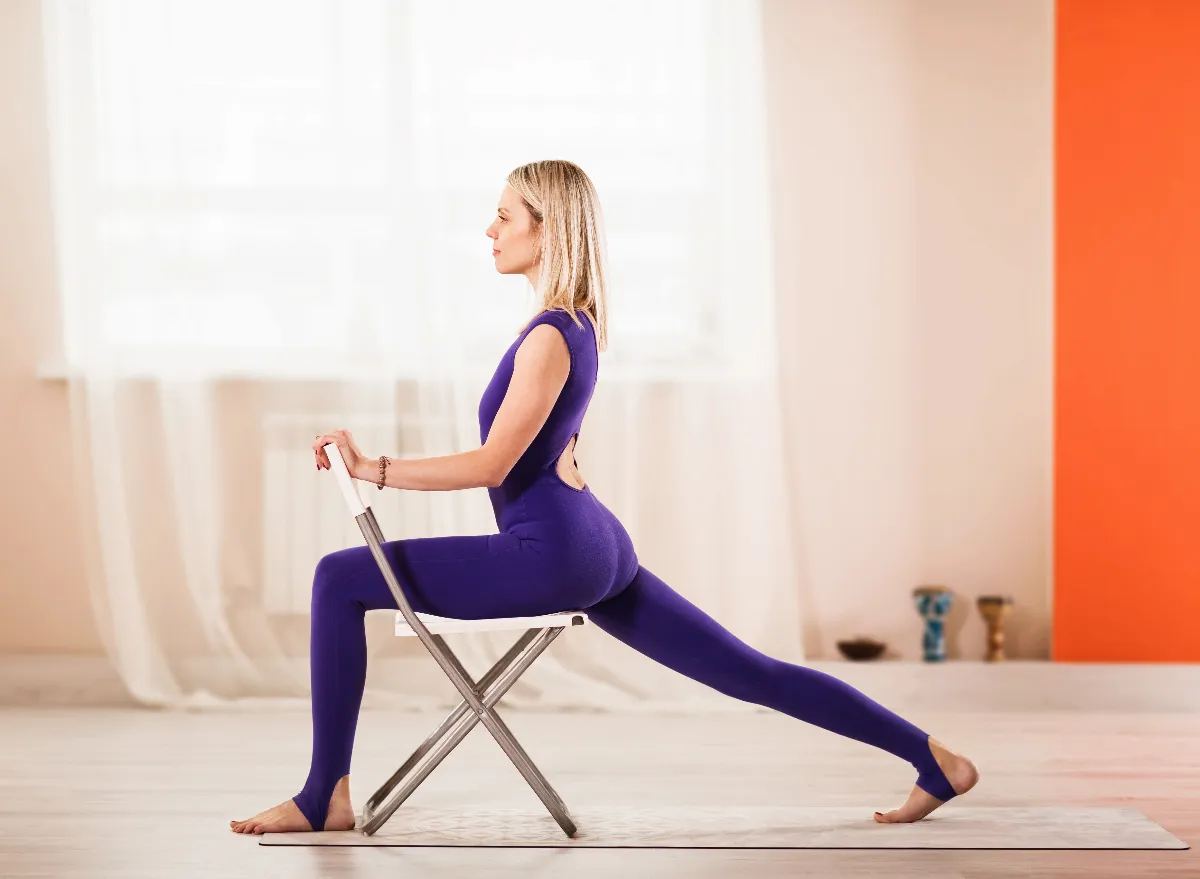
Another key part of a successful workout regimen you shouldn’t neglect? Mobility training!
“Ignoring flexibility and mobility limits range of motion, leading to poor posture and movement inefficiencies, which worsen with age,” Baah explains.
The Fix: Carve out time for mobility flows, yoga, or Pilates to decrease stiffness and improve movement. “If you’re short on time, incorporate stretches like hip openers or cat-cow during TV breaks or after your workouts,” Baah suggests.

Sign up for our newsletter!
Alexa Mellardo



The latest NHS exercise guidance reinforces what we’ve been preaching for years: hitting that 150-minute weekly movement target isn’t necessarily a get-out-of-jail-free card. It states that prolonged sedentary time is independently harmful, even for those of us who diligently carve out time for the gym. Verbatim, it says ‘prolonged sitting is harmful, even in people who achieve the recommended levels of moderate to vigorous physical activity’.
Chief Medical Officer Professor Sir Chris Whitty has been especially vocal about how detrimental it could be, highlighting hybrid working as a potential health hazard. ‘Without wanting to exaggerate, I think it’s important people think through, for example, hybrid working means quite a lot of people could very easily do very little other than leave their homes, where previously people would be routinely going to work, and that often meant at least some physical [activity],’ he said at a briefing.
I understand his logic, but it’s pretty reductive. Working from home isn’t the villain here – working from one chair is.
When we label remote work as “bad for your health”, we risk throwing the baby out with the bath water. In reality, for many – certainly the whole of the Women’s Health office, but also my less-fitness-conscious sister and stepdad, plus my entire friendship group – working from home often means being more active. It means more time to fit in a lunchtime run, to get some steps in before work, or to run some errands on a quick break.
On the other hand, plenty of office workers are more sedentary than they are at home. They sit at a desk for nine hours straight before driving home, whether to be seen to work tirelessly in front of their manager, or simply because they’re pulled from pillar to post in an office setting. For those who do have an office commute, eliminating that often stressful period of the day allows for better sleep, and more time for the movement breaks we need to break up the dreaded sedentary time. Not to mention that many commutes are almost entirely sedentary on a train/tube/bus.
The potential problem, the advice suggests, is the lack of incidental movement – the walk to the train, the stroll to a meeting room, or heading out for lunch – that’s naturally baked into your day when you’re in the “official” office. Without a commute or a day in the office, the onus is on you to manufacture movement in.

Regular stretching counts as a movement break
Without sounding evangelical, I’ve made this a non-negotiable part of my day. On WFH days, I work out or walk every single morning before I log on, and walk again every evening, even if just a lap around the block. During the day, I have a personal rule: if I’m downstairs, I use the upstairs toilet (and vice versa). Sounds excessive, but it forces me to activate my muscles and add to my step count every few hours.
Beyond that, the options are endless if you’re intentional. Use a standing desk or put your laptop on a kitchen worktop during calls. Take every phone meeting on foot, pacing your hallway if necessary. Set a timer to stand up every 30 mins to stretch, grab a glass of water, or do a quick load of laundry.
We don’t need to return to the office to be healthy; we need to bring movement back into our homes. The goal: to stop being professional sitters.
As Women’s Health UK’s fitness director and a qualified Pilates and yoga instructor, Bridie Wilkins has been passionately reporting on exercise, health and nutrition since the start of her decade-long career in journalism.
After earning a first-class degree in journalism and NCTJ accreditation, she secured her first role at Look Magazine, where she launched the magazine’s health and fitness column, Look Fit, before going on to become Health and Fitness writer at HELLO!
Since, she has written for Stylist, Glamour, Cosmopolitan, Marie Claire, Elle, The Metro, Runner’s World and Red. Today, she oversees all fitness content across Women’s Health online and in print, spearheading leading cross-platform franchises, such as ‘Fit At Any Age’, which showcases the women proving that age is no barrier to exercise.
She has also represented the brand on BBC Radio London, plus various podcasts and Substacks – all with the aim to encourage more women to exercise and show them how. Outside of work, find her trying the latest Pilates studio, testing her VO2 max for fun (TY, Oura), or posting workouts on Instagram.

If you ask anyone on the gym floor how to grow a bigger set of shoulders, you’ll probably find that no two answers are the same. In between front raises, upright rows, machine presses and cable raises, shoulder day can quickly become a long list of exercises.
However, fitness creator and coach Eric Evans, also known on social media as Average to Jacked, thinks most lifters are overcomplicating things. He says that if he had to start from scratch after over a decade of training, he’d strip his shoulder workouts back to just two simple moves.
‘If I had to start over today, I’d build my shoulders with just two movements: a lateral raise and also a rear delt fly,’ he explains.
According to Evans, the reason for this isn’t because those exact exercises are magic, but because they work the correct movement pattern for the muscle.
‘Your body doesn’t know the name of the exercise you’re doing,’ he argues. ‘It really only knows the fundamental movement pattern you’re asking it to perform and also the amount of tension you’re placing on the muscle.’
So, you don’t have to perform cable lateral raises if your gym only has dumbbells, or use a reverse pec deck if you’d rather do bent-over rear delt flyes. As long as you’re training the same movement pattern and progressing the move with intensity or volume, you’ll achieve a similar result.
According to the coach, lateral raises deserve a place in your programme because they primarily target the side delts, helping create broader-looking shoulders and a more pronounced ‘V-taper’. Rear delt flyes train the back of the shoulders to create a rounder, more 3D physique.
‘I’m not including anything for the front delts, and that’s intentional,’ he says. ‘Your front delts are already heavily involved every time you do pressing exercises for your chest.’
For most lifters already bench pressing, incline pressing or overhead pressing regularly, he argues the side and rear delts are more likely to be the limiting factor.
‘I don’t think the front delts are what’s holding their shoulders back. I think it’s the side and rear delts,’ he adds.
He recommends focusing on controlling every rep, and avoiding using momentum to swing the weight. He also suggests working in the 8-15 rep range, adding reps until you reach the top of the range before increasing the load and repeating the process – also known as progressive overload.
‘You definitely don’t need to hit your shoulders from 10 different angles,’ he says. ‘You just need to consistently train these two movement patterns, push them hard and then gradually get stronger over time.’
The Bottom Line
Research suggests muscle growth is driven more by sufficient training volume, progressive overload and proximity to failure than by constantly changing exercises and programme hopping. In fact, that could hinder it. So if your shoulder workouts have become jam-packed with unnecessary variations, simplifying your approach may be exactly what helps you make more consistent progress in the long term.
If there’s one thing Kori Sampson knows, it’s how to optimise your body composition for performance. To tap into his knowledge as an elite athlete and coach, we asked him to create a 4-week plan to help you move faster, recover quicker and keep pushing when the fatigue sets in – all while improving your muscle-to-fat ratio.
Ready to build muscle, burn fat and come out the other side looking, feeling and performing better? Click here to get 14 days of free access to the plan via the Men’s Health app.

Fitness
80-year-old fitness icon Joan MacDonald reveals her simple exercise for a stronger, more stable core

Joan MacDonald didn’t enter a gym until she was 70. Really. Since then, the 80-year-old has transformed her health by losing three stone and building significant muscle, and now coaches other women through her training platform, Train With Joan, which she launched to help others boost their fitness at any age.
The premise of her app is simple: minimal-equipment workouts built around no-fuss, effective exercises that can be done anywhere. One ‘powerful core and stability exercise’ she swears by is alternating bodyweight clock taps. ‘This movement helps strengthen the muscles that keep you stable, balanced and moving well as you age,’ Joan explains.
Bodyweight clock taps benefits
Think they look too simple? That’s the point. Joan is adamant that ‘You don’t need complicated workouts to start getting stronger. Sometimes the most effective movements are the simple ones you do consistently.’
According to Joan, regularly performing bodyweight clock taps help:
- ‘Strengthen your core which supports your spine and reduces strain on your lower back.
- ‘Improve balance and coordination, helping you stay steady on your feet.
- ‘Increase hip stability, which supports your knees and joints.
- ‘Build functional strength for everyday movements like stepping, turning and reaching.
- ‘Help reduce fall risk by improving control and body awareness’
How to do bodyweight clock taps
Find a demo from Joan above, along with instructions for how to do them with proper form below.
- Stand on one leg with a slight bend in your supporting knee and brace your core.
- Keeping your hips level, reach your free foot forward to lightly tap the floor in front of you (12 o’clock), then return to the centre.
- Continue tapping to different “clock” positions—such as 3, 6 and 9 o’clock—maintaining your balance and control throughout.
- Complete all reps on one leg before switching sides.
Form tip: Move slowly and focus on staying stable. The goal is controlled movement, not how far you can reach.
How many reps and sets to do
Joan shares her advice, according to your fitness level.
- Beginners: ‘3 taps per leg x 8-10 reps’
- Intermediate: ‘3 taps per leg x 10-12 reps’
- Advanced: ‘3 taps per leg x 12-15 reps’

One of our most frequently asked questions here at Women’s Health? How to build muscle and burn fat at the same time. So, we asked superstar trainer Oyinda Okunowo exactly how to do it. In this 4-week plan – created exclusively for Women’s Health COLLECTIVE members – you’ll get the workouts and nutrition guidance needed to help you on your way to better body composition. Tap the link below to unlock 14 days of free access to Oyinda’s plan and start training today.
Get the plan
As Women’s Health UK’s fitness director and a qualified Pilates and yoga instructor, Bridie Wilkins has been passionately reporting on exercise, health and nutrition since the start of her decade-long career in journalism.
After earning a first-class degree in journalism and NCTJ accreditation, she secured her first role at Look Magazine, where she launched the magazine’s health and fitness column, Look Fit, before going on to become Health and Fitness writer at HELLO!
Since, she has written for Stylist, Glamour, Cosmopolitan, Marie Claire, Elle, The Metro, Runner’s World and Red. Today, she oversees all fitness content across Women’s Health online and in print, spearheading leading cross-platform franchises, such as ‘Fit At Any Age’, which showcases the women proving that age is no barrier to exercise.
She has also represented the brand on BBC Radio London, plus various podcasts and Substacks – all with the aim to encourage more women to exercise and show them how. Outside of work, find her trying the latest Pilates studio, testing her VO2 max for fun (TY, Oura), or posting workouts on Instagram.
-

 World9 minutes ago
Moldova president nominates pro-European businessman Tofan for PM
-

 News36 minutes ago
US congressman says he was detained by armed Israeli settlers in occupied West Bank
-

 Los Angeles, Ca2 hours ago
New details emerge in fatal stabbing of boy in El Monte
-

 Detroit, MI2 hours ago
1 dead, 1 injured after two-vehicle crash at Collingwood and Belleterre in Detroit
-

 San Francisco, CA2 hours ago
4 arrested, 3 cited after brawl following Giants vs. Rockies game at Oracle Park
-

 Dallas, TX3 hours ago
Mark Cuban takes legal action against Dallas Mavericks ownership over potential new arena deal
-

 Miami, FL3 hours ago
South Florida Dirt: A timeline of the Vacchi vs. Stern legal battle
-

 Boston, MA3 hours ago
Tall Ships begin historic Boston parade of sails

