Finance
Webinar – Climate finance: supporting decarbonization


Guilherme is a Partner at ERM, based in Sao Paulo’s office in Brazil. He leads a dedicated team of 20+ professionals serving Brazil’s leading banks, insurers, and investors in alternative assets (PE, VC, Infra, Real Estate) on their ESG and Impact journeys. He is a leading expert on climate risks for the Latin American financial sector, having spearheaded the integration of recommendations from the Task Force on Climate-related Financial Disclosures (TCFD) into Brazil’s banking sector through Febraban.
He also has extensive experience evaluating E&S management practices for the top 8 Brazilian banks and 50+ credit institutions across Latin America. Guilherme advised Brazil’s largest PE and Infrastructure impact funds and has developed green finance products and strategies in other financial segments, including the IDB’s Energy Efficiency Insurance and the EU’s first blended finance operation with a Brazilian bank.



Finance
Blackstone backs Neysa in up to $1.2B financing as India pushes to build domestic AI infrastructure | TechCrunch

Neysa, an Indian AI infrastructure startup, has secured backing from U.S. private equity firm Blackstone as it scales domestic compute capacity amid India’s push to build homegrown AI capabilities.
Blackstone and co-investors, including Teachers’ Venture Growth, TVS Capital, 360 ONE Assets, and Nexus Venture Partners, have agreed to invest up to $600 million of primary equity in Neysa, giving Blackstone a majority stake, Blackstone and Neysa told TechCrunch. The Mumbai-headquartered startup also plans to raise an additional $600 million in debt financing as it expands GPU capacity, a sharp increase from the $50 million it had raised previously.
The deal comes as demand for AI computing surges globally, creating supply constraints for specialized chips and data center capacity needed to train and run large models. Newer AI-focused infrastructure providers — often referred to as “neo-clouds” — have emerged to bridge that gap by offering dedicated GPU capacity and faster deployment than traditional hyperscalers, particularly for enterprises and AI labs with specific regulatory, latency, or customisation requirements.
Neysa operates in this emerging segment, positioning itself as a provider of customized, GPU-first infrastructure for enterprises, government agencies, and AI developers in India, where demand for local compute is still at an early but rapidly expanding stage.
“A lot of customers want hand-holding, and a lot of them want round-the-clock support with a 15-minute response and a couple of our resolutions. And so those are the kinds of things that we provide that some of the hyperscalers don’t,” said Neysa co-founder and CEO Sharad Sanghi.
Ganesh Mani, a senior managing director at Blackstone Private Equity, said his firm estimates that India currently has fewer than 60,000 GPUs deployed — and it expects the figure to scale up nearly 30 times to more than two million in the coming years.
That expansion is being driven by a combination of government demand, enterprises in regulated sectors such as financial services and healthcare that need to keep data local, and AI developers building models within India, Mani told TechCrunch. Global AI labs, many of which count India among their largest user bases, are also increasingly looking to deploy computing capacity closer to users to reduce latency and meet data requirements.
Techcrunch event
Boston, MA
|
June 23, 2026
The investment also builds on Blackstone’s broader push into data center and AI infrastructure globally. The firm has previously backed large-scale data centre platforms such as QTS and AirTrunk, as well as specialized AI infrastructure providers including CoreWeave in the U.S. and Firmus in Australia.
Neysa develops and operates GPU-based AI infrastructure that enables enterprises, researchers, and public sector clients to train, fine-tune, and deploy AI models locally. The startup currently has about 1,200 GPUs live and plans to sharply scale that capacity, targeting deployments of more than 20,000 GPUs over time as customer demand accelerates.
“We are seeing a demand that we are going to more than triple our capacity next year,” Sanghi said. “Some of the conversations we are having are at a fairly advanced stage; if they go through, then we could see it sooner rather than later. We could see in the next nine months.”
Sanghi told TechCrunch that the bulk of the new capital will be used to deploy large-scale GPU clusters, including compute, networking and storage, while a smaller portion will go toward research and development and building out Neysa’s software platforms for orchestration, observability, and security.
Neysa aims to more than triple its revenue next year as demand for AI workloads accelerates, with ambitions to expand beyond India over time, Sanghi said. Founded in 2023, the startup employs 110 people across offices in Mumbai, Bengaluru, and Chennai.

WBNS 10TV

California High-Speed Rail CEO arrested on suspicion of domestic battery; DA declines charges
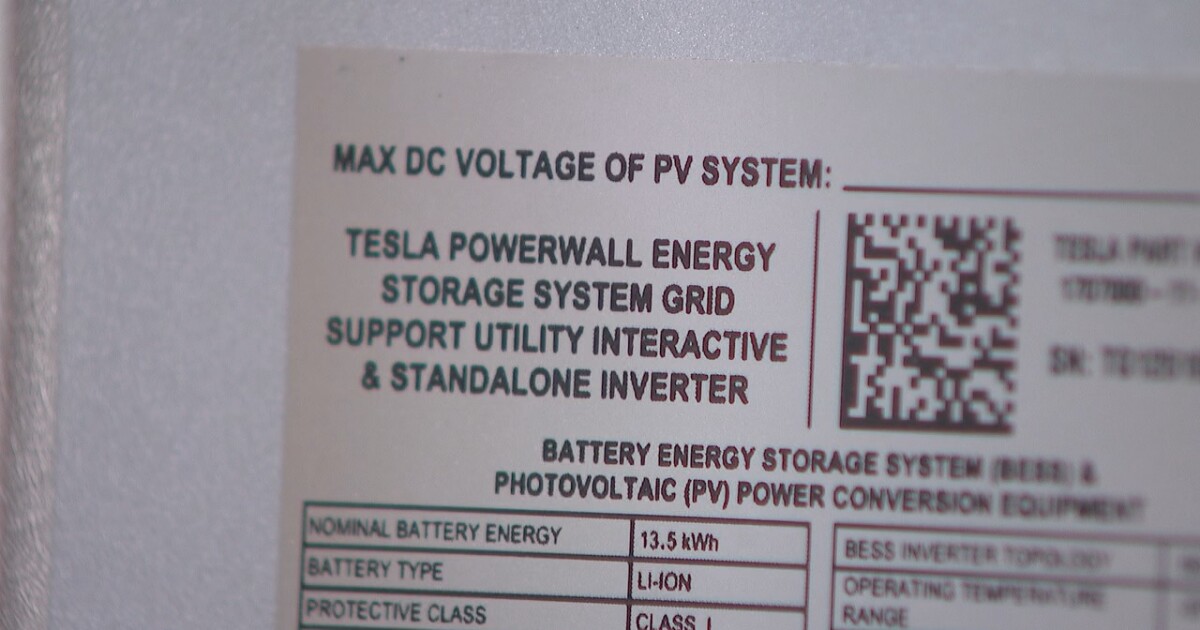
More homeowners investing in backup power supplies as outage risks rise from high fire danger

Massachusetts, Rhode Island, and Connecticut could have patchy slippery road conditions in the coming days

Delaware Memorial Bridge is set to cashless

Florida High School Football Rankings: Top 25 teams – Oct. 21

Cleary's 21 help Le Moyne down Central Connecticut State 69-64 in OT

How old is Bo Nix? What to know about Oregon quarterback ahead of 2024 NFL Draft

99th annual Pony Swim held in Virginia

Indiana Members Credit Union announced as new anchor tenant at Bottleworks District

Video: At Least 2 Killed During High School Hockey Game in Rhode Island

Tom Emmer blasts Democrats’ double standard on SAVE Act: ‘They require photo IDs’ at their own DNC
Delaying digital euro harms Europe, German vice-chancellor says

The U.S. women’s hockey team is dominating the Olympics. Now they will play for gold

Video: We Tracked All the Lawsuits Against the Second Trump Administration
-

 Alabama1 week ago
Geneva’s Kiera Howell, 16, auditions for ‘American Idol’ season 24
-

 Illinois1 week ago
2026 IHSA Illinois Wrestling State Finals Schedule And Brackets – FloWrestling
-

 Technology1 week ago
Apple might let you use ChatGPT from CarPlay
-

 Culture1 week ago
Try This Quiz on Passionate Lines From Popular Literature
-
 News1 week ago
Hate them or not, Patriots fans want the glory back in Super Bowl LX
-

 Politics1 week ago
Virginia Dems take tax hikes into overtime, target fantasy football leagues
-
 Science1 week ago
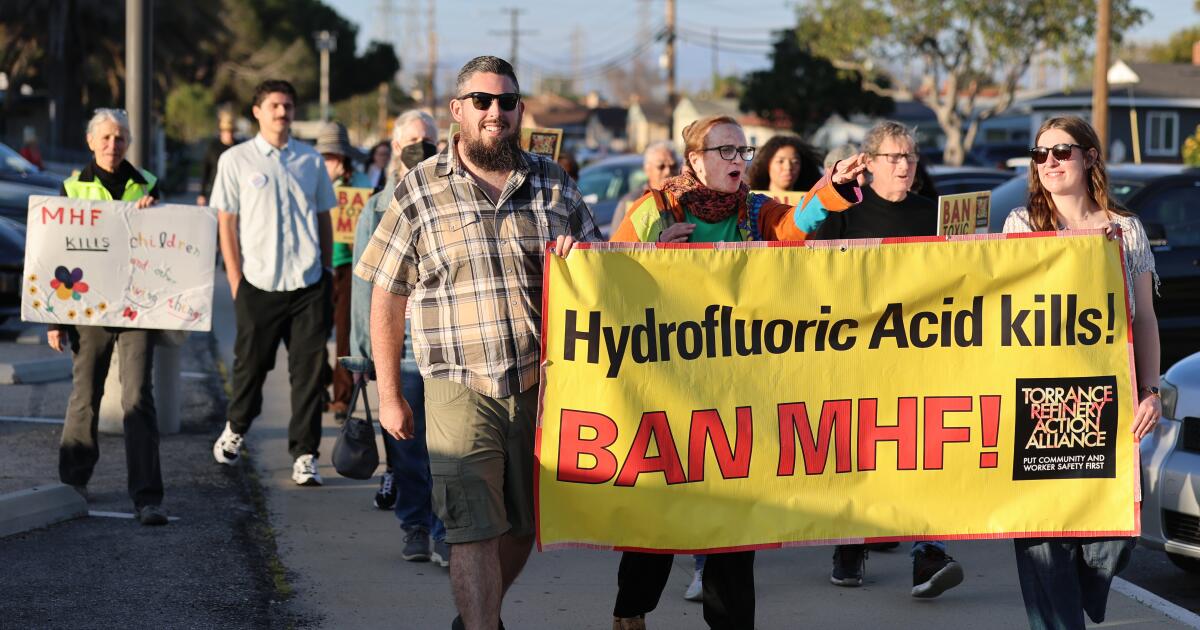
Torrance residents call for the ban of ‘flesh-eating’ chemical used at refinery
-

 Politics1 week ago
West Virginia worked with ICE — 650 arrests later, officials say Minnesota-style ‘chaos’ is a choice