Finance
COP29: Carbon Finance Summit – Session 2

Greening and scaling up public finance is critical, but it is not enough. Significantly scaling up private sector finance, including through greening value chains, green financial products (e.g. funds and loans) and carbon finance is needed to channel more resources toward activities with a positive impact on the environment and society.



Macroeconomic reforms and escalating climate shocks are placing climate finance at the center of Ethiopia’s development trajectory. The country contributes 0.4% of global emissions but faces high climate risks, particularly due to its reliance on rain-fed agriculture and hydropower. At the same time, high inflation, foreign-exchange shortages, rising debt service obligations, and a recent sovereign default have constrained fiscal space and raised the cost of capital. Ethiopia must therefore rapidly scale up climate investment in line with its Nationally Determined Contribution (NDC 3.0), while navigating macroeconomic constraints and the declining predictability of international concessional and donor finance.
Ethiopia’s climate policy framework is increasingly investment-oriented, moving from ambition to action. Building on the Climate Resilient Green Economy (CRGE) Strategy (2011) and earlier NDCs, the country’s NDC 3.0 (2025–2035) shifts from high-level ambition toward defined sectoral pathways and financing needs. Parallel reforms signaling growing institutional readiness include greening the financial sector under the National Bank of Ethiopia, developing a national green taxonomy, capital market reforms linked to the Ethiopian Securities Exchange, and emerging carbon market frameworks. However, coordination challenges, fragmented mandates, and limited project preparation capacity continue to constrain delivery.
Tracking how climate finance is mobilized and deployed is critical to inform policy decisions, guiding development partner strategies, and identify opportunities to crowd in domestic and private capital. This second iteration of the Landscape of Climate Finance in Ethiopia provides an updated baseline of project-level climate finance commitments for 2019 to 2023, with a focus on the biennial average for 2022 and 2023. It tracks flows across mitigation, adaptation, and dual-benefit activities, mapping finance from domestic and international sources, through public and private actors, to instruments and end-use sectors.
This assessment draws on publicly available and proprietary datasets compiled on a best-effort basis. Data gaps remain material, especially for domestic public spending, given the absence of systematized climate budget tagging, and for certain private sector investments that are not consistently disclosed. As a result, some flows, particularly domestic public spending and difficult-to-track private investments, are likely underestimated.

Key findings
- Ethiopia’s climate finance has gradually increased but must rise by at least fourfold to meet identified needs. Tracked flows averaged USD 2.3 billion annually in 2022/23, equivalent to approximately 1.7% of GDP. This is an 11% increase from the annual average of USD 2.1 billion in 2020/21 but still well below the estimated USD 10.6 billion annual requirement under the NDC 3.0 (2025–2035).
- Ethiopia’s heavy reliance on international public sources exposes its climate agenda to the constraints of external concessional finance. In 2022/23, 93% of tracked flows originated from international public sources. Public actors committed approximately USD 2.2 billion annually, primarily through grants (80%) and concessional debt (14%). Multilateral development finance institutions and donor governments were the largest providers. This concentration underscores the urgency of mobilizing broader and more sustainable domestic and private funding sources.
- Ethiopia’s shallow capital markets and regulatory uncertainty have limited private climate finance. Private actors contributed USD 113 million annually in 2022/23, representing less than 5% of total flows. This is insufficient to signal a functioning market or provide any buffer against public finance volatility. Private flows were concentrated in agriculture, forestry, and other land use (AFOLU) and small-scale energy activities. Investments were influenced by guarantee-backed transactions and philanthropic grants. Macroeconomic risk, currency constraints, shallow capital markets, and regulatory uncertainty continue to deter private participation at scale.
- Adaptation finance accounts for the majority of Ethiopia’s climate flows, reflecting the country’s high vulnerability to drought, hydrological variability, and disaster risk. Adaptation represented 59% of tracked climate finance in 2022/23 (USD 1.4 billion annually), a slight rise from 56% in 2019/20. This finance was overwhelmingly grant-based (92%) and internationally sourced. While they exceed mitigation in volume, adaptation flows remain far below the estimated USD 4 billion annual need.
- Mitigation finance remains insufficient relative to emissions structure and targets and costed needs. These flows averaged approximately USD 500 million annually, compared to the estimated USD 6.6 billion requirement under NDC 3.0. Finance was concentrated in the energy sector and largely concessional in nature. Mitigation flows declined relative to 2020/21 due to project cycle effects. The AFOLU sector, a large source of emissions, received a small share of mitigation finance, highlighting a structural imbalance between emissions sources and investment patterns.
- Cross-sectoral and resilience-oriented programs feature prominently across both mitigation and adaptation. In 2022/23, adaptation investment averaged USD 644 million, mitigation investment USD 77 million, and dual-benefit projects received USD 306 million. These flows targeted initiatives such as disaster-risk management, food security, institutional capacity building, and policy support. This reflects Ethiopia’s integrated CRGE vision and climate–development nexus and requires strong coordination, monitoring, and financial management systems.
- Institutional reform momentum is building, but delivery constraints persist. Ethiopia has implemented several climate-related reforms, including fuel subsidy reform, electric mobility incentives, financial sector greening initiatives, carbon market readiness efforts, and capital market development. These reforms can help to mobilize domestic and private capital. Yet fragmented governance structures, limited project preparation capacity, incomplete climate finance tracking systems, and constrained fiscal space continue to limit the scale and predictability of flows.
Recommendations
Strengthening governance, institutional capacity, and monitoring systems can help align climate finance mandates, build investable pipelines, and improve investor confidence. Strategic use of concessional finance, supportive regulation, and appropriate financial instruments can help mobilize private capital over time. This report highlights six priority actions for scaling Ethiopia’s climate finance:
- Strengthen climate finance governance to accelerate implementation. Enhance the role of the Climate Resilient Green Economy (CRGE) strategy as an inter-ministerial coordination mechanism with clear mandates and decision rights. This should link NDC planning to budget allocation, including climate budget tagging, and be aligned with public financial management processes. TCRGE efforts can serve as a central platform for screening and prioritizing NDC-aligned projects, coordinating technical assistance, and structuring blended finance/PPP transactions.
- Build capacity for project preparation as well as institutional and subnational delivery to convert policy ambition into implementable pipelines. Improve technical capacity for feasibility studies, financial structuring, safeguards, risk allocation, and results-based planning across line ministries and subnational institutions, and establish standardized project preparation tools and targeted support for high-priority sectors, particularly AFOLU.
- Strengthen climate finance tracking, transparency, and data credibility. Climate budget tagging could be extended to regional and local levels, as well as to climate-aligned sectors such as energy, AFOLU, transport, water and wastewater, buildings and infrastructure and industry. Embedding tagging in budget execution and reporting can reconcile climate-relevant expenditures with actual spending and outputs.
- Optimize scarce public resources through catalytic de-risking and innovative fiscal instruments. Ethiopia must meet its NDC3.0 USD 2.4 billion annual domestic public finance target amid fiscal constraints, including rising debt servicing (13% of revenue), declining tax-to-GDP ratio (7.5%), and volatile donor finance. The country can strategically use its CRGE Facility and national funds to provide guarantees or first-loss capital to crowd in private flows. Aggregation mechanisms (SPVs, Platform-based structures, financial intermediary aggregation) can also help accelerate a shift from small, planning-oriented grants to scalable investments. Debt-for-climate swaps may be another viable source.
- Unlock international and institutional capital through stronger enabling frameworks and domestic markets. High country risk, regulatory gaps, and weak monitoring limit private investment. Momentum is building through initiatives such as Ethiopia’s National Carbon Market Strategy, the establishment of the Ethiopian Securities Exchange, and the NBE’s Greening Financial Systems program. Next steps could include frameworks and regulations for carbon markets, green bonds, and other climate-aligned instruments to reduce uncertainty, enable transactions, and scale local-currency finance. Carbon markets offer a near-term opportunity to mobilize private capital, given the country’s land restoration and reforestation programs.
- Scale finance for sectors that are hard to abate or prioritized under the NDC 3.0. The limited climate finance flowing to industry represents a missed opportunity, given the sector’s importance in shaping Ethiopia’s long-term emissions trajectory and development ambition. Costed pipelines for carbon-intensive sectors, blended finance, and technical assistance for project preparation, standards, and technology deployment can help direct more capital to NDC 3.0 mitigation priorities, including industrial energy efficiency, fuel switching, and low-carbon technologies.

Sezzle found in a March consumer survey that engagement with its financial literacy tool MoneyIQ correlates with improved consumer habits.

Tokenization, the representation of real-life assets on a blockchain, could reshape both crypto markets and traditional finance, while introducing new risks that regulators are not yet equipped to manage, according to the International Monetary Fund (IMF).
In a new report, the IMF described tokenization as more than a technical upgrade to markets. By moving assets like money, bonds and funds onto shared blockchains, transactions can settle instantly, cutting out intermediaries and reducing delays that define today’s markets.
The IMF says the “atomic settlement” that tokenization brings to the financial world could lower counterparty risk and force firms to manage liquidity in real time.
“Stress events are likely to unfold faster, leaving less time for discretionary intervention,” the report reads. “Therefore, ensuring stability requires that tokenized asset management remains anchored in safe settlement assets, legally recognized finality, and robust governance arrangements.”
The report points to stablecoins — tokens whose value is pegged to a fiat currency — as a key bridge between crypto and traditional finance. These could become widely used settlement assets across tokenized platforms, the report said.
Still, their reliability depends on reserves and redemption systems, leaving them exposed to runs under stress.
The IMF also warned that faster, automated markets could amplify volatility, while smart contracts that trigger margin calls or liquidations may accelerate selloffs during downturns. Such rapid declines have been seen in crypto markets,
Tokenized assets also can move instantly across jurisdictions, complicating oversight and raising concerns about capital flight and currency substitution in emerging markets, the IMF wrote.
The organization called for clearer legal frameworks and stronger global coordination, arguing that without them, tokenized finance could deepen fragmentation rather than improve efficiency.
Tokenization has been a growing theme in the crypto sector. Real-world assets added to blockchain rails have already topped $23.2 billion according to DeFiLlama data. Excluding stablecoins, the majority of that figure is in the form of tokenized gold or money market funds.
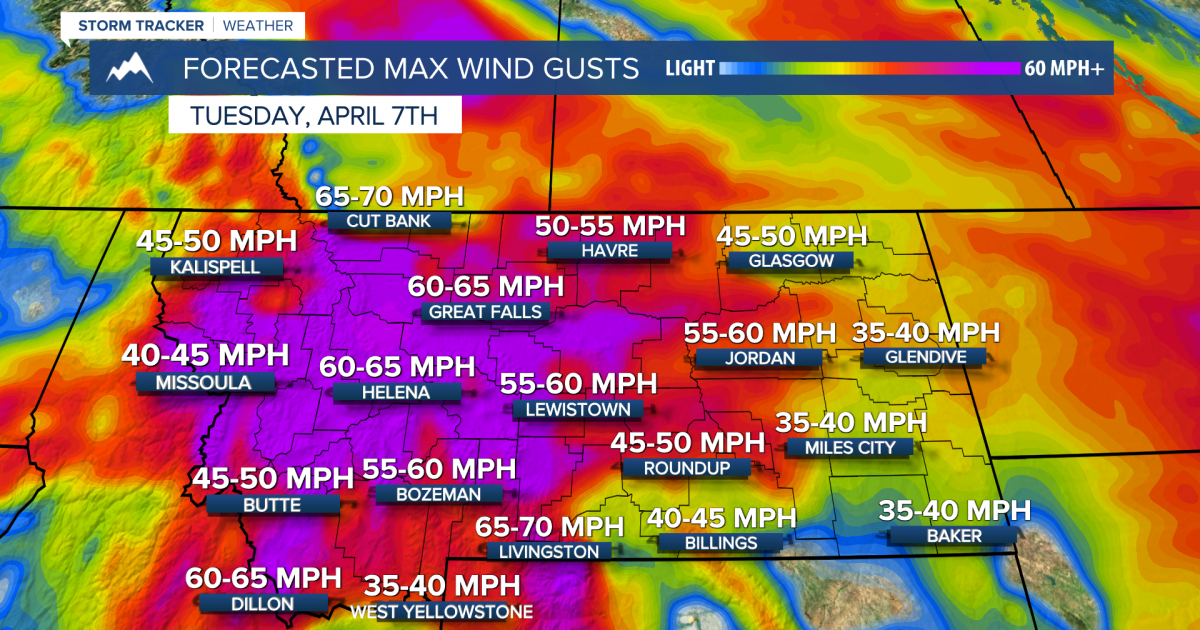
Gusty winds expected as storm system blasts through Montana

Drought-resilient crop options for Nebraska corn-soybean growers

NSU flag football team’s undefeated inaugural season ends prematurely

Separate fatal shootings in New Hampshire investigated – Valley News

Recently Completed 135-Unit Development in Newark Listed for Sale | Jersey Digs

Florida High School Football Rankings: Top 25 teams – Oct. 21

How old is Bo Nix? What to know about Oregon quarterback ahead of 2024 NFL Draft

Cleary's 21 help Le Moyne down Central Connecticut State 69-64 in OT

99th annual Pony Swim held in Virginia

Indiana Members Credit Union announced as new anchor tenant at Bottleworks District

Ilhan Omar calls Trump an ‘unhinged lunatic,’ urges booting him out of office
Between Budapest and Brussels: Péter Magyar’s political tightrope

Michigan muscles its way to program’s 2nd NCAA basketball title, beating UConn

Map: Minor Earthquake Strikes Near San Diego

Trump claims he’d win as the president of Venezuela — just needs to ‘quickly’ learn Spanish
-

 Atlanta, GA2 days ago
1 teenage girl killed, another injured in shooting at Piedmont Park, police say
-

 South-Carolina1 week ago
South Carolina vs TCU predictions for Elite Eight game in March Madness
-

 Movie Reviews5 days ago
Vaazha 2 first half review: Hashir anchors a lively, chaos-filled teen tale
-

 Vermont1 week ago
Skier dies after fall at Sugarbush Resort
-

 Politics1 week ago
Trump’s Ballroom Design Has Barely Been Scrutinized
-

 Politics1 week ago
JD Vance says he was ‘obsessed’ with UFOs, believes aliens are actually ‘demons’
-

 Politics1 week ago
Jeffries declines to break with indicted Democrat after ethics panel’s guilty verdict
-
 Entertainment5 days ago
Inside Ye’s first comeback show at SoFi Stadium