Minnesota
Minnesota moose population is holding steady


DULUTH — Minnesota’s moose population has remained stable for another year, though it remains about half the size as two decades ago.
The Minnesota Department of Natural Resources said its annual aerial survey, conducted with the Fond du Lac Band of Lake Superior Chippewa and the 1854 Treaty Authority,
estimated
that approximately 4,470 moose remain in St. Louis, Lake and Cook counties, the animal’s typical range in the state.
That’s up about 400 from last year’s estimate.“Despite recent estimates suggesting relative stability in the population and reproductive success, Minnesota DNR researchers point out that Minnesota moose remain at risk,” the DNR said in a news release. “Climate change, parasites, habitat loss and predator impacts on calf survival all play a part in the long-term survival of the moose population.”
Jimmy Lovrien / Duluth Media Group
Northeastern Minnesota’s moose numbers crashed rapidly nearly two decades ago, from a modern high of 8,840 moose estimated in 2006 to just 2,700 by 2013. Their numbers have remained low but fairly stable since.
That rapid decline spurred an effort to reestablish moose habitat in the region. Now in its 15th year, there are promising signs that it is working.
Bringing moose habitat back
Moose thrive in young forests where they can reach and eat deciduous trees and brush while also having access to a few larger trees to shade under.
But most of Northeastern Minnesota is covered in mature forest that hasn’t been touched by processes that can produce such environments in a long time, namely, wildfires and logging.
“Across Minnesota over the past few decades, the forest is getting older, and so seeing this older forest and these lower moose numbers kind of get you thinking more critically about what needs to happen with habitat,” said Alyssa Roberts, forest wildlife specialist at the Ruffed Grouse Society and American Woodcock Society.
So, over the last 15 years, a collaborative of government agencies, Indigenous tribes and conservation groups has been allocated nearly $9 million from Minnesota’s Outdoor Heritage Fund through the Lessard-Sams Outdoor Heritage Council to restore some 24,000 acres of moose habitat. Another 3,000 acres or so will be restored through an America the Beautiful grant over the next two years.
The Ruffed Grouse Society and American Woodcock Society has served as sponsor of the collaborative since 2021.
“Historically, routine medium- or variable-intensity fires would have maintained this deciduous browse available on the landscape,” said Scott Johnson, the group’s forest conservation coordinator for Minnesota. “But with that lacking, mechanical treatments need to come in.”
When fire suppression snuffed out the naturally occurring fires, commercial logging operations could still leave landscapes in ways that benefit moose.
But with the decline in the region’s wood products industry over the last 15 to 20 years, there are fewer places that need timber from Northeastern Minnesota.
Still, the collaborative can “piggyback” off wildfires and timber harvests that do occur, and begin to maintain those areas as moose habitat going forward, Johnson said.
“In a sustainable fashion for this to persist over a long period, ultimately, what we’re looking at is following up disturbances, or creating disturbances on purpose — prescribed fire, timber harvest, mechanical site preparation, brush sawing — to maintain and produce on these disturbed sites a mosaic of new conifers growing in, through planting or seeding, with a mix of accessible, high-quality browse,” Johnson said.
It seems to be working, said Chris Dunhum, associate director of resilience forestry at the Nature Conservancy, which is also part of the collaborative.
Moose are showing up and eating their way through the areas, as are juvenile moose, some of which were collared this winter and could offer researchers more insight into how the sites are used, he added.
In a long list of factors negatively affecting moose, Dunham said it is nice to have something that helps.
“If we think about climate change impacts, that’s really concerning and we can kind of feel sort of helpless at times … but then when we’re talking about moose habitat, we’ve seen that we can go out there and we can manipulate the habitat, and we know how to do that,” Dunham said. “And we’ve seen from the early monitoring that moose are actually using those sites.”
Climate change and parasites
Mike Schrage, the wildlife program manager for the Fond du Lac Band, said he’s of the camp that most of the moose decline is due to habitat loss now that there’s less logging and wildfires are suppressed.
But, he said, climate change represents “a long-term threat to our moose population” in a number of ways.
For one, moose are designed for cold climates and deep snow, making them ill-adapted for warmer climates and likely to face more heat stress, he said.

Contributed / Michigan Technological University
Additionally, climate change can boost parasites.
Thousands of winter ticks can latch onto a moose, causing it to scratch off its protective coat of hair in an attempt to rid itself of the ticks. “Certainly longer, warmer falls and earlier springs make for better conditions for winter tick survival and transmission to a moose host,” Schrage said. “So that’s not helpful.”
And then there’s brainworm, called P. tenuis, which is spread through white-tailed deer and snails, and, while harmless to deer, is usually fatal to moose. Moose in areas of higher deer densities are more likely to pick up the disease. It’s considered one of the major factors in Minnesota’s severe moose population decline over the past 20 years.
And milder winters can lead to more deer, Schrage said, boosting chances of brainworm transmission. Milder winters also mean more wolves, which, along with parasites, are known to kill moose calves needed to rebuild the population, Schrage said.
Research by the DNR, 1854 Treaty Authority, Grand Portage Band of Lake Superior Chippewa and the National Parks of Lake Superior kicked off this winter to further understand survival rates of juvenile moose and determine causes of mortality.
But among all the factors stressing moose, reestablishing habitat might be the most tangible solution so far.
“There are a lot of things that affected that precipitous decline in our moose population back in the early 2000s … habitat is the thing we knew that we could start affecting positively immediately,” Johnson said.



Minneapolis police are investigating a shooting that seriously injured a man on the city’s north side Wednesday afternoon.
The shooting happened just before 2 p.m. on the 1200 block of 36th Avenue North, according to the Minneapolis Police Department.
Upon arrival, officers found a man inside the living room of a residence suffering from a life-threatening gunshot wound. Police provided medical aid to the victim before he was transported by ambulance to an area hospital.
Officers are working to determine what led up the shooting, including if it was accidental, according to officials.
No arrest have been made so far.

The National Weather Service (NWS) has confirmed that the tornado that struck the Detroit Lakes area of northwestern Minnesota on July 6 was rated EF2, with estimated peak winds of 185 km/h (115 mph).
The tornado touched down at 19:47 local time (LT), approximately 3 km (2 miles) south-southwest of Westbury, according to the NWS.
It remained on the ground for about 10 minutes. The tornado had a path length of 10.93 km (6.79 miles) and reached a maximum width of more than 730 m (2 400 feet). It dissipated approximately 6 km (4 miles) northeast of Detroit Lakes at 19:57 LT.
The Becker County Sheriff’s Office (BCSO) said deputies and other emergency responders began monitoring the severe weather around 19:30 LT after receiving reports of a possible funnel cloud north of Lake Park.
At approximately 20:14 LT, the Sheriff’s Office received a report of a tornado near the Oakland Beach area, where it caused extensive damage to homes, buildings, and trees.
The NWS confirmed two injuries associated with the event, one of which was directly caused by the tornado.
“1 injury can be directly attributed to the tornado, as a homeowner was injured in their home when their roof was removed by the tornado. The second injury was after the tornado during the cleanup stage and could be due to shock or trauma, according to the county emergency manager,” the NWS reported.
“Responders went from home to home looking for residents and checking for the injured. Two individuals were transported to Essentia St. Mary’s Hospital with non-life-threatening injuries. One other patient went to the hospital by private vehicle,” the BCSO said.
-

Tornado damage in Detroit Lakes, Minnesota on July 6, 2026. Credit: Becker County Sheriff’s Office
-
Tornado damage in Detroit Lakes, Minnesota on July 6, 2026. Credit: Becker County Sheriff’s Office
-
Tornado damage in Detroit Lakes, Minnesota on July 6, 2026. Credit: Becker County Sheriff’s Office
-
Tornado damage in Detroit Lakes, Minnesota on July 6, 2026. Credit: Becker County Sheriff’s Office
-
Tornado damage in Detroit Lakes, Minnesota on July 6, 2026. Credit: Becker County Sheriff’s Office
-
Tornado damage in Detroit Lakes, Minnesota on July 6, 2026. Credit: Becker County Sheriff’s Office
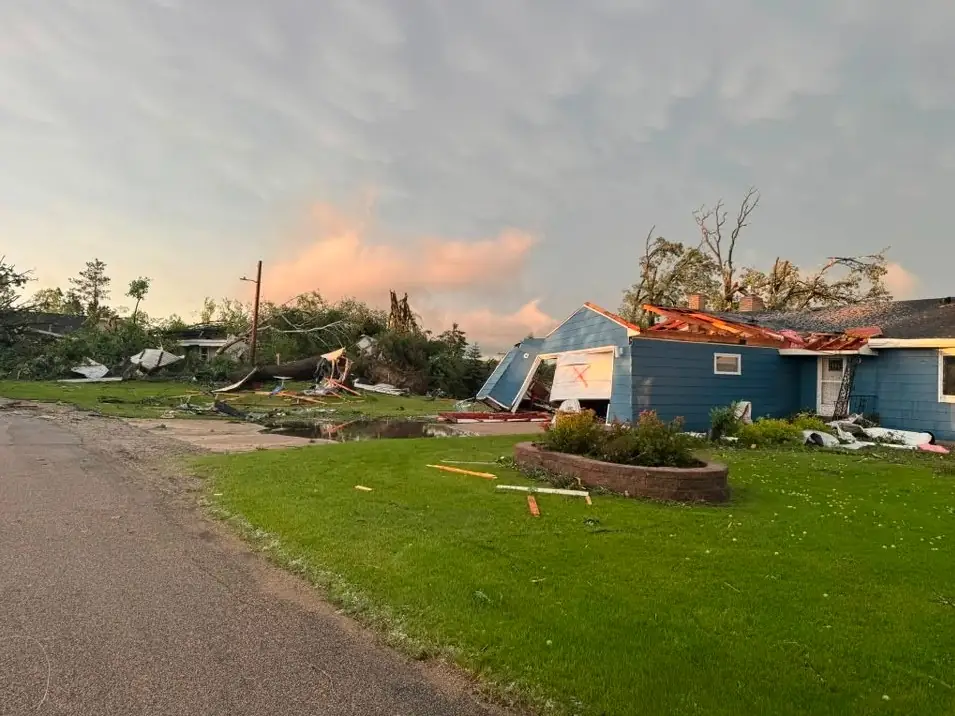
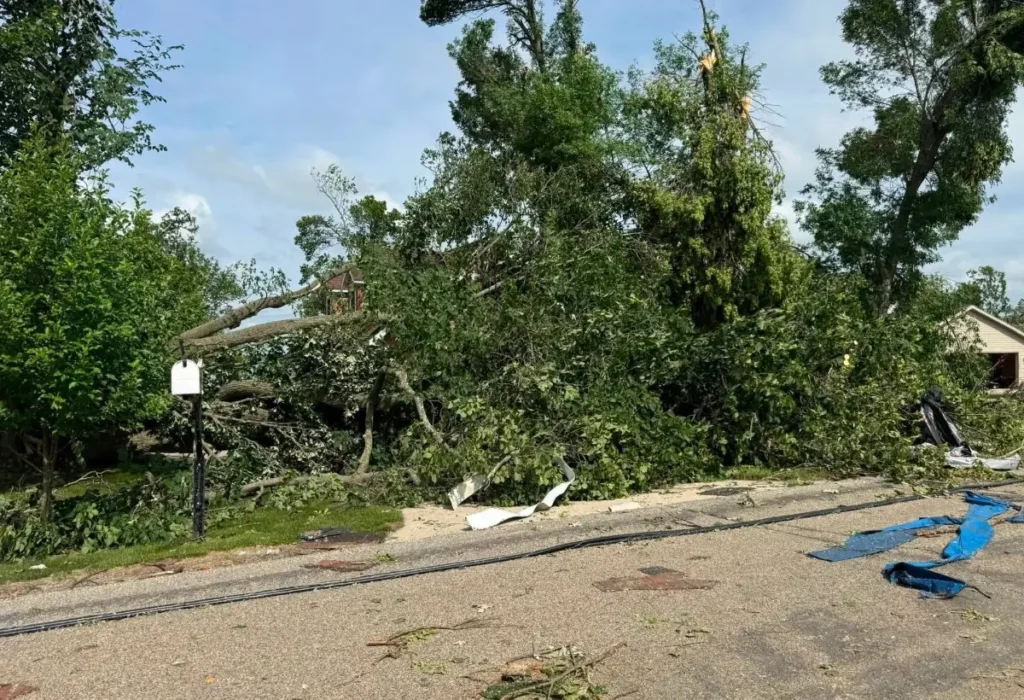
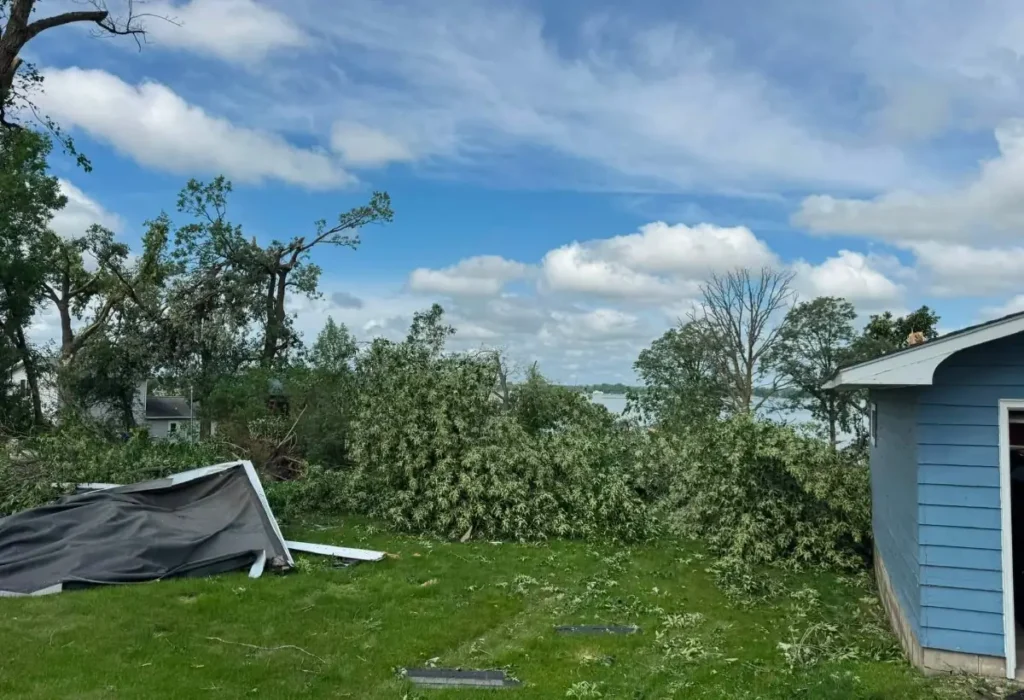
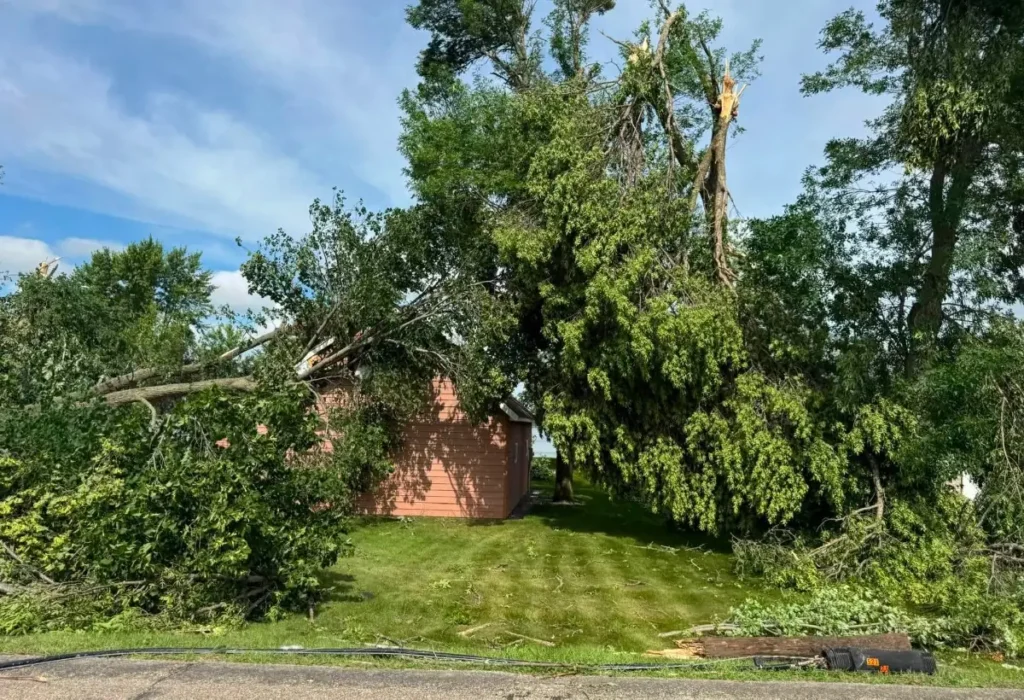
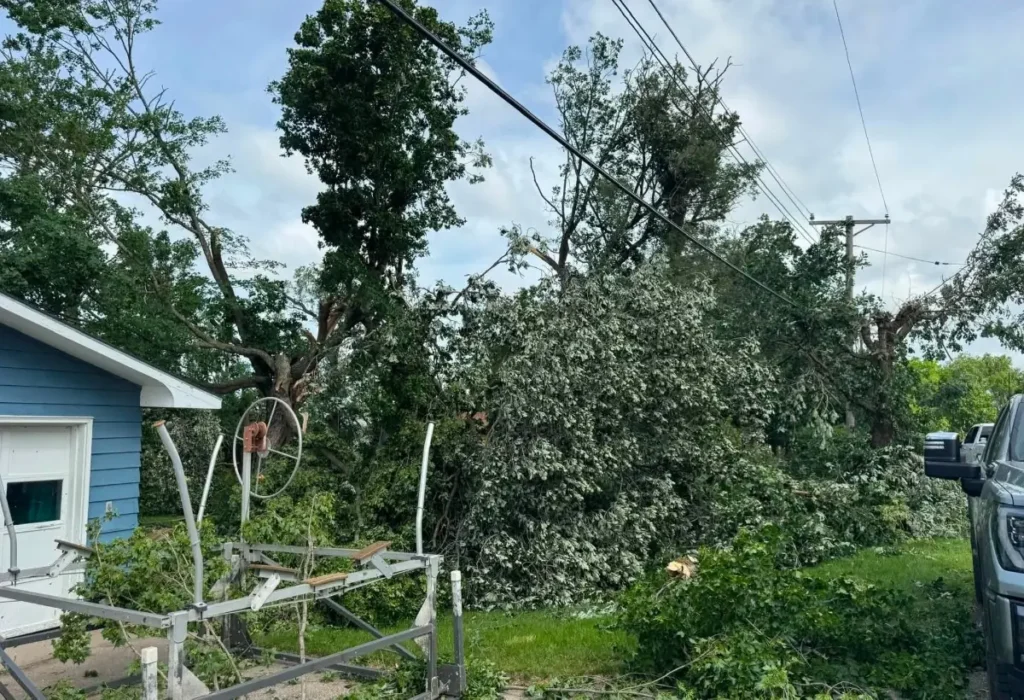
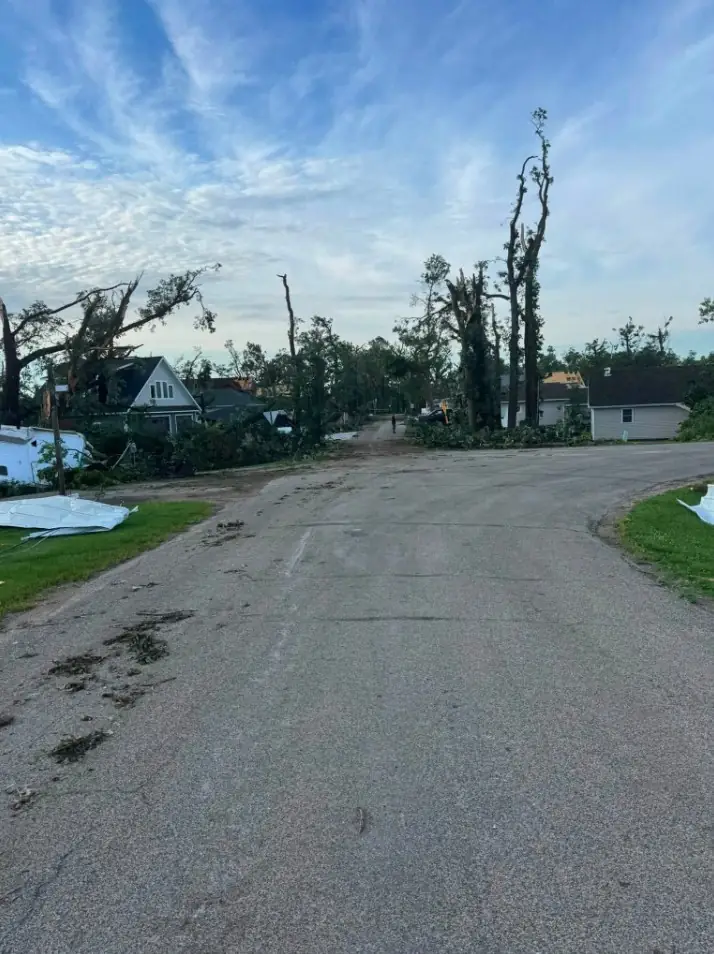
The tornado began about 2 km (1 mile) northwest of Wheeler Lake before crossing the lake, where it damaged the roofs of several homes and snapped the trunks of large oak and poplar trees.
It reached its maximum width near the western shore of Big Floyd Lake, with the Oakland Beach neighborhood sustaining the most severe damage.
Multiple garages and lighter outbuildings were swept away, while widespread roof and tree damage was reported. A 2 x 4 m (6 x 12-foot) horse trailer was lofted and carried about 200 m (656 feet) before the tornado crossed Big Floyd Lake and continued east. The last visible damage was identified near the intersection of County Highway 25 and Anchor Road.
More than 500 customers lost power as a result of the storms, according to Detroit Lakes Public Utility.
As the storm tracked east-southeast, strong winds, hail, and heavy rain affected areas north of Audubon before a tornado warning was issued for the Callaway and Rochert areas. Reports of downed trees, power lines, and debris soon followed from Detroit Township between U.S. Highway 59 and County Highway 21.
References:
1 Public Information Statement – NWS – July 7, 2026

Giordano’s, the famous pizzeria known for their deep-dish style Chicago pizza, is opening a second location in Minnesota at the Mall of America.
The pizza chain also has a location in Richfield, and previously had a location some years ago in Minneapolis in Uptown.
The grand opening of the Mall of America location will be on Thursday, July 16. The restaurant there will be unique, with the restaurant’s first self-service kiosk ordering. It will also have a grab-and-go area and a normal seated restaurant experience.
The Chicago deep-dish chain has been around since 1974, with the vast majority of locations in the Chicagoland area. They have 60 restaurants in nine states and are currently expanding nationwide.
-

 West Virginia4 minutes ago
West Virginia retailers told to allow people to purchase soda with SNAP benefits
-
 Wyoming11 minutes ago
Wyoming women escape black bear attack on their tents in the Big Horn Mountains
-

 Crypto14 minutes ago
Binance maintains commitment to EU, seeking more licences in Asia
-

 Finance19 minutes ago
How Banreservas mobilised diaspora capital
-

 Fitness26 minutes ago
I’d Fallen Into an Exercise Rut—Until Trail Running Reminded Me How Joyful Movement Could Be
-

 Movie Reviews34 minutes ago
Movie review: Supergirl is a blast
-

 World39 minutes ago
Trump Says He Thinks He Will Remove Syria From US Terrorism Sponsor List
-
 Lifestyle1 hour ago
Appeals court denies Trump’s request to halt removal of his name from the Kennedy Center

