Entertainment
Tiffany Haddish just can't quit. Even when she knows she should


“Come with me,” Tiffany Haddish says, walking out her front door.
I’ve barely had the chance to say hello before she’s heading down the sidewalk. I trail behind, fumbling around in my bag for a recording device as she explains that there’s an open house she wants to check out before we sit in her Crenshaw home and discuss her new book of autobiographical essays — or anything else.
Haddish doesn’t sleep on local real estate opportunities. She’s deeply invested in South L.A., spiritually and financially. She already owns about a dozen properties in the area, many of which she rents out to organizations that house foster youth.

Who are the people shaping our culture? In her column, Amy Kaufman examines the lives of icons, underdogs and rising stars to find out — “For Real.”
She has two houses on this boulevard alone — one she sleeps in, one she works in — but neither needed the kind of work that is obviously required to make livable the for-sale property she walks into on this Sunday afternoon.
There are dark stains permeating the carpets, missing ceiling tiles, an enormous window above the toilet that opens to the hallway for no discernible reason.
“How many developers came through here today?” Haddish asks the real estate agent, who confirms that about 90% of the visitors have been investors. Most have estimated the house needs around $300,000 worth of renovations. But the sellers want a regular buyer.
“I’m a regular buyer!” she says. “I got my first house here for around $600,000, but that was in 2015. And now this is what, $1 million?”
The agent shakes his head.
“More?” she asks, incredulous. The 1,548-square-foot abode is in fact listed for $1.1 million, he says. She is aghast but continues surveying the space. There are kumquats and lemons growing in the backyard, which she likes. She’s big into eating healthy, and is in the midst of attempting to open a grocery store nearby that will give the community access to nutritious food choices.
“I’d need to do another movie,” she says, mulling it over.
By the end of the week, she has a tentative plan: Get a few of her friends to help her buy the place, then put the property in a trust, fix it up and rent it out for a reasonable price.
“I mean, if you want to get in on this, you are more than welcome to join,” she tells me over the phone from San Antonio, where she is, appropriately, giving a paid keynote for the Texas Apartment Assn.
And the thing is, she’s totally serious. Because that is who Tiffany Haddish is. Someone who divulges the details of her real estate portfolio in lieu of exchanging pleasantries. One of maybe three celebrities on Earth who will answer any question, no matter how intimate. A comedian who has bared her open wounds — homelessness, domestic violence, rape, miscarriage — and used them as material.

Her latest book, “I Curse You With Joy,” out May 7, is even more raw than her first: She goes from describing how she located her G spot to revealing that when she was 7, her mother got “Satan’s fire” in her eyes and hissed: “You wouldn’t even be here if [your dad] didn’t rape me.”
So when she says she’s been working with a therapist to learn how to set better boundaries — be more mindful of her own limitations — I believe her. It’s a decision she came to after her inability to draw lines started to threaten not just her career but her sanity. Since her star-making turn in “Girls Trip” seven years ago, headlines about Haddish have shifted from anointing her as Hollywood’s next big thing to predicting her downfall after a series of scandals.

Comedy “Girls Trip,” starring Regina Hall, left, Tiffany Haddish, Jada Pinkett Smith and Queen Latifah, was a breakout hit for Haddish.
(Michele K. Short / Universal Pictures)
It started with a 2019 alcohol-fueled disaster, when Haddish was so inebriated at a New Year’s Eve show in Miami that she forgot her jokes and fans walked out in protest. Then, in 2022, she was arrested in Georgia on suspicion of driving under the influence after police received a call about a driver who was allegedly asleep at the wheel. She was similarly detained this past November, when Beverly Hills cops found her asleep in her badly parked car and charged her with her second DUI.
She’s never had a problem with alcohol, she insists. The issue was pushing herself past her limits.
Just before her 2023 arrest, she’d spent the day cooking and then serving food to 2,000 people at the Laugh Factory. Afterward, she went to her family’s house to share some leftovers when she got a call that more food was needed elsewhere. She could have — should have, she says she knows now — sent it in an Uber.
Instead, she drove herself, even though she’d been up since 5 a.m. and was exhausted. (Her blood alcohol level that night was 0.03% and the DUI charge was later dismissed; she ultimately pleaded no contest to a misdemeanor reckless driving violation.)

Tiffany Haddish performs at Laugh Factory Hollywood’s 43rd Thanksgiving Feast and Show on Nov. 23, 2023. She was arrested early the next morning for DUI but said she was just exhausted.
(Olivia Wong / Getty Images)
For those who know Haddish, this tracks. Shermona Clark, a friend since ninth grade, says, “It was like nothing for us” when their friends heard Haddish fell asleep in her car.
“It was like, that’s what she do. She’ll pull over and go to sleep in the car,” Clark says. “We’d ask her why she was driving, tell her it wasn’t safe. She’s always done that. Go, go, go.
“She always wants to prove that she’s not a quitter,” Clark adds. “That she’s gonna make it, that she’s smart and talented. We all know that already. But there’s something in her where she just can’t see it like we do.”
But at 44, Haddish says she’s legitimately trying to slow down. Not take every job she’s offered, stop doing so many favors, sleep more.
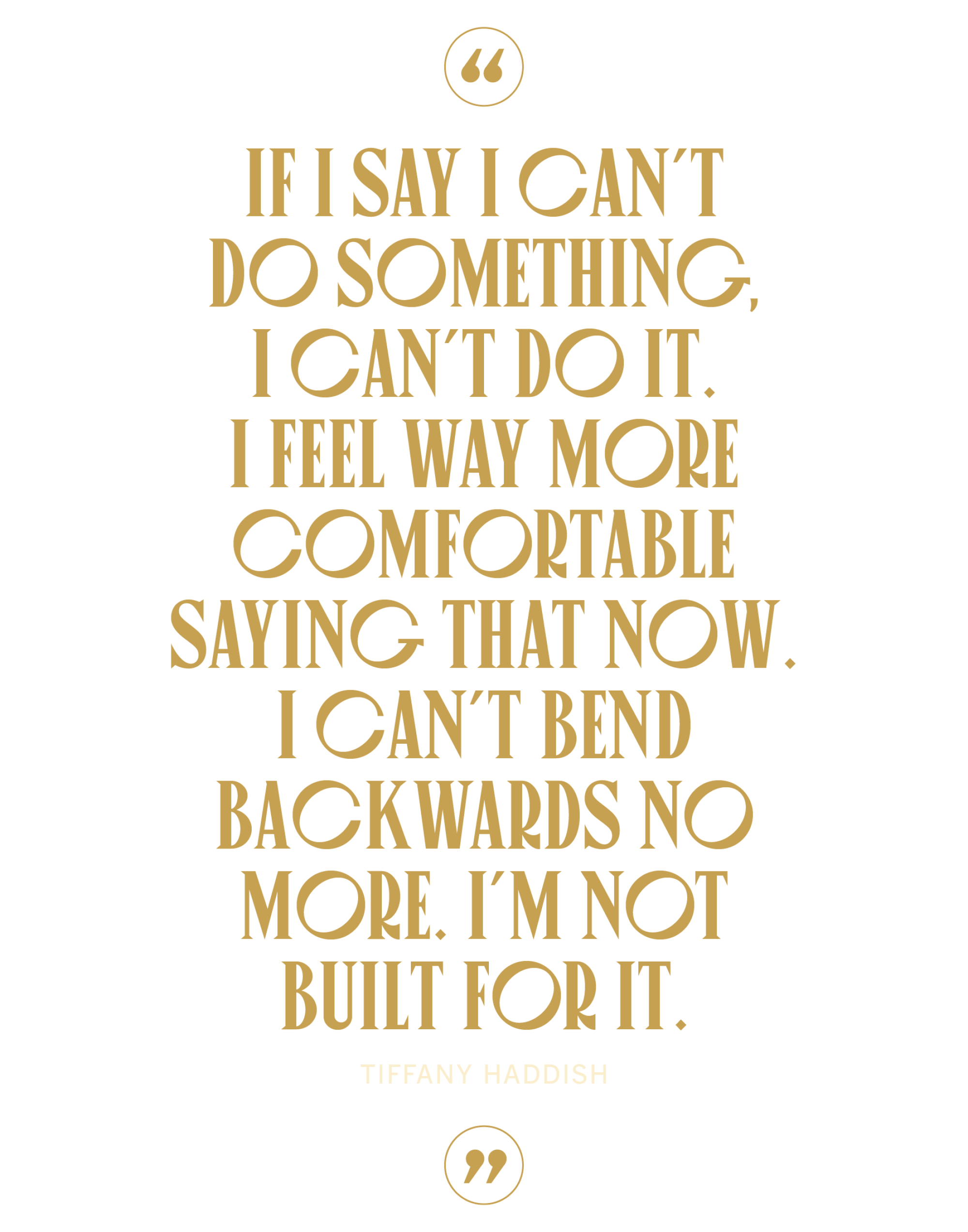
“If I say I can’t do something, I can’t do it. I feel way more comfortable saying that now,” she says. “I can’t bend backwards no more. I’m not built for it.”
Not everyone is convinced.
“She ain’t slowing down,” says Clark, laughing. “What does ‘chill’ mean? ‘OK, I’m not gonna take on 11 projects, just 10?’”
If you’ve been training yourself to keep pushing and tough things out for four decades, it becomes endemic to your personality. When Haddish got hugely, suddenly famous in 2017, so too did the story of her challenging upbringing.
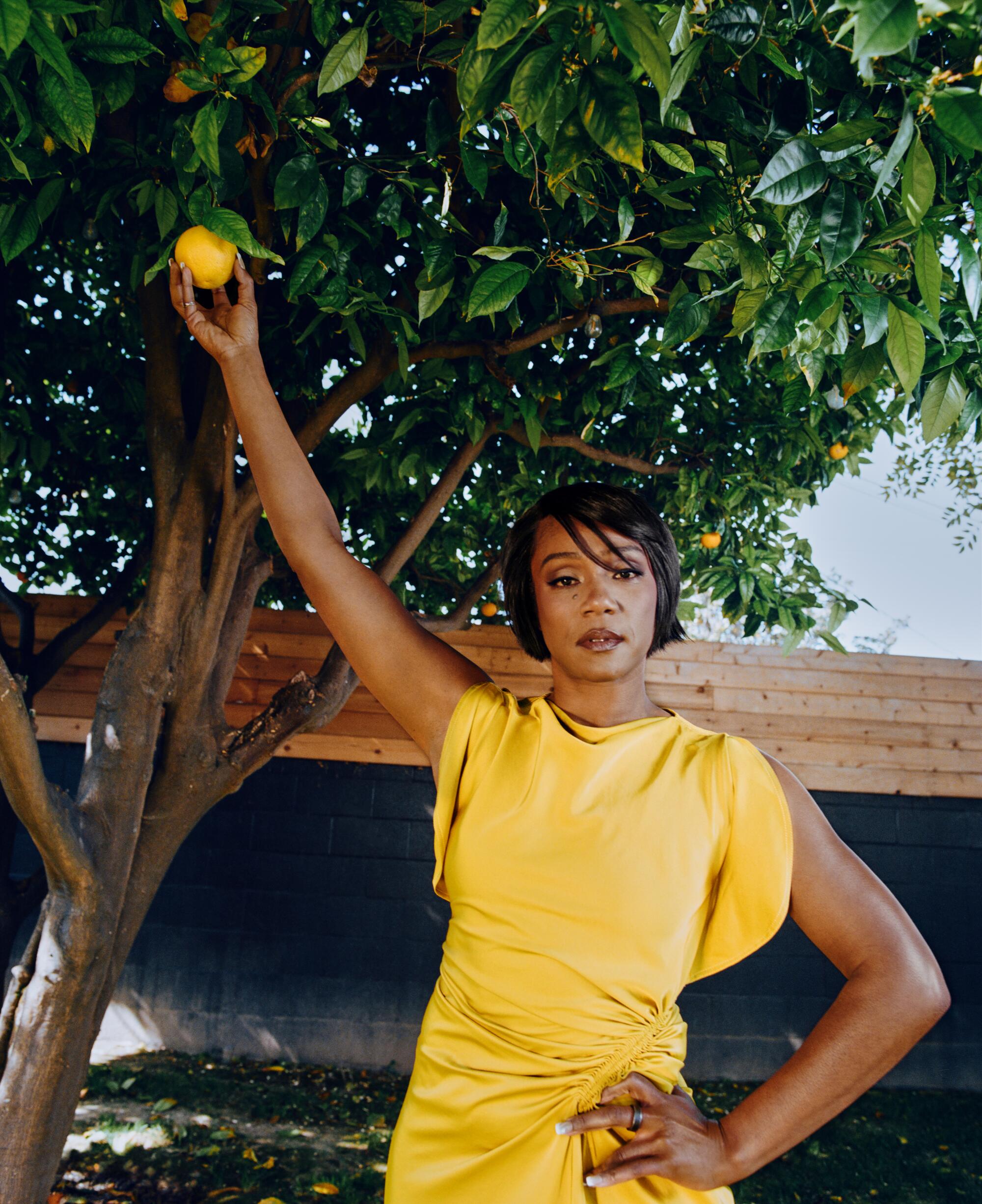
Growing up in South L.A., her home life was unstable. Haddish’s father had left the family when she was 3; five years later, her mother was in a car accident and suffered such serious brain damage that she started physically and verbally abusing her children. Haddish and her four younger half-siblings ended up in foster care.
When Haddish was 15 and living in a group home, she landed a spot in a free comedy camp at the Laugh Factory, where she was mentored by Richard Pryor. Still, she struggled for years to make ends meet. She was homeless and living out of her 1995 Geo Metro before she started getting roles in TV series like “Real Husbands of Hollywood” and “The Carmichael Show” beginning in 2013.
When “Girls Trip” came out, she was 37, and the media turned her into a sort of rags-to-riches, never-give-up poster child. She hosted “Saturday Night Live” and won an Emmy for it, landed the cover of Time’s 100 issue, took home a Grammy for narrating her New York Times bestselling memoir. She headlined a movie with Kevin Hart, voiced characters in all the big animated kids films, hosted MTV award shows.

Haddish on the set of NBC sitcom “The Carmichael Show,” on the Fox Studios lot, in 2016.
(Jay L. Clendenin / Los Angeles Times)

Haddish’s success in “Girls Trip” led to a leading role opposite Kevin Hart in the comedy “Night School.”
(Eli Joshua Ade / Universal Pictures)
“And then, all of a sudden, it almost felt like, ‘OK, now you too famous,’” says Lil Rel Howery, who has been close with Haddish since they met while competing on “Who’s Got Jokes?” in 2006. “People love underdogs until you become, I guess, a top dog.”
There has definitely been a palpable vibe shift surrounding Haddish. It’s not that she doesn’t still get work — in the last year she’s appeared in Disney’s “Haunted Mansion,” the last season of “The Afterparty” on Apple TV+ and filmed a role in the forthcoming “Bad Boys” sequel. But she’s no longer one of those beloved stars everyone seems to root for.
Some of that is due to a disturbing lawsuit that was filed and then dismissed within the span of three weeks in 2022.
In a legal complaint filed in L.A. Superior Court, an anonymous young woman claimed that Haddish and fellow comedian Aries Spears had “groomed” her and her younger brother to engage in sexually suggestive comedic sketches when they were minors.
Haddish and Spears denied this and less than a month later, the Jane Doe asked a judge to dismiss the case and released a statement recanting the accusation. “My family and I have known Tiffany Haddish for many years,” it read, “and we now know that she would never harm me or my brother.”
But the damage to Haddish’s reputation had been done. The deal she made for “I Curse You With Joy” in 2020 “went sour,” as did a second one; the publishing houses “got scared,” she says. “Scared of me, scared it wouldn’t do well. ‘Oh, she’s a problem. She’s too controversial.’”
Haddish says she was preparing to self-release the project, but it eventually found a home at Diversion Books. It will arrive on shelves a couple of months after her latest controversy — a February trip to Israel, which she announced via Instagram video from a first-class airline seat.
After reconnecting with her father as an adult, Haddish learned that she had Jewish roots in Eritrea. She dove into the religion, joining the Stephen Wise Temple and being bat mitzvah’d at age 40.
In the video, she said she was embarking to Israel for the first time on a self-funded trip to “learn and see with my own eyes.” But fans did not respond well to news that she was heading to the country in the midst of the war with Hamas. “Insecure” star Amanda Seales said on Patreon that she was so “disturbed” by the trip that she would end her friendship with Haddish, declaring the comedian didn’t “have the backbone to stand on what is right.”
To her closest friends, the prolonged backlash has been troublesome — and baffling.
“Because everybody was kissing her a—” after “Girls Trip,” says Howery, the “Get Out” star. “Then the jealousy started with other actors and stuff. They’re like, ‘How is she winning?’ Everybody was cheering her on for being herself, and then that’s the same thing that people got mad about. ‘She’s doing too much!’ But she’s been doing too much.”

The foster kids Haddish works with through her nonprofit She Ready Foundation get especially upset about hate they see directed toward her online.
“They cry to me, like, ‘Stop being famous! I want you to quit!” she says. “They said it hurts their feelings to see what people say about me.”
After the open house, Haddish and I have returned to the home she uses as an office. She bought it last year for $1.6 million — a totally redone three-bedroom with subway tile backsplash, soaking tub and solar panels. It’s modern and sparse, lacking personal details save for a random, small canvas on the wall that she made in a Sip ’n’ Paint class she bought off Groupon a few years back.
Haddish grabs an apple off the kitchen island, eats it and then clutches the core in her hand for half an hour, rather than throw it out and disrupt her thoughts about getting trolled.
Comments about her online have gotten so negative that last year, she began blocking certain phrases on Instagram, including “setback,” “pedo” and “not funny.” She hired a digital forensics analyst to research where her death threats were coming from — 75% were created by robots in Malaysia and Iran, which made her feel better.
She also created a fake Instagram account where an alter ego named Sarah will go in and “destroy” anyone hating on her by deploying details from their personal lives.
“I’ve learned how to find people’s information — like I pull up the credit report, police records. You can do that for $1.99,” Haddish says. “Sometimes, I get so mad that I’ll get they phone number and I’ll just call them.”
She registers the disbelief on my face.
“Oh, I have called people, honey,” she says. “They be shocked that I called. They’ll be like, ‘I can’t believe you even saw that.’ You did a whole video, b—! You made a full, five-minute video! On the internet, people think they can just say whatever and you not gonna say anything. I try my best not to, but I’m a human being.”

Many of the comments pertain to the lawsuit, she says. Haddish doesn’t feel it’s affected her career — plenty of folks still approach her to fan out in the airport, she says — but she has noticed an attitude adjustment from some people in the industry.
Recently, she says, someone “of status” approached her and asked: “Is your mental health OK? Your name is always in the headlines. You said this, you said that. All I see is people attacking you. It’s like, ‘Oh, don’t get too close to Tiffany. I’m going to get attacked too.’”
Her mental health is perfectly fine, she says. Not that there haven’t been moments she’s questioned it. Usually when she’s on her period, suffering from such bad menstrual cramps that she often passed out. For years, doctors shrugged off her pain, suggesting that she take birth control pills or eat less acidic foods. Haddish recounts the words of one relative — “We used to be out in the fields having babies and working right after.” A woman who complained about her period, Haddish was told, was lying, weak, just trying to get sympathy.
So she started to think maybe she was mentally ill. Then, last year, a doctor finally diagnosed endometriosis. The chronic disease also explained why she’d suffered eight miscarriages — something a prior OB-GYN had misattributed to the shape of her uterus. Until last year, she kept the losses from almost everyone.
“I’d call her and say, ‘How’s your day?’ and she might start talking about work,” recalls Selena Martin, who has been Haddish’s best friend since seventh grade. “And I’m like, ‘OK, that’s nice. But how are you doing?’ In track, our coach used to call us odd names if we were running slow, like ‘hamburger.’ So I’ll ask, ‘No, how’s old hamburger doing?’”
Even as she was miscarrying, Haddish kept quiet, showed up to work, went onstage. She saw the way people talked about pregnancy loss — how they treated women who went through it like pariahs. “I remember Gabrielle Union talked about having a bunch of miscarriages, and it was like, ‘Gabrielle Union can’t hold a baby,’” she says.
She didn’t want to hear that. Tried to be remain positive. This was just God’s birth control, she told herself, God’s way of telling her she was with the wrong man.
“Shame on you, Tiffany,” she admonishes herself now. “I didn’t want to be a quitter. Because my body was quitting. People have no idea what it feels like to have your soul falling out of your body. Because that’s what it feels like. My soul is like, ‘Oh, man. We was gonna grow that.’ You ever plant anything and then it f— dies and you really want it to live? You try to play cool, like it ain’t that bad. But it is.”
There are procedures Haddish could have to help her endometriosis — laparoscopic surgery to remove scar tissue. But she refuses. Years ago, she says, she had an abortion under anesthesia and she liked the feeling of the drugs so much that she’s scared that if she had access to them again, she’d develop an addiction.
She reasons with herself that menopause is probably only five years away and she finds ways to cope with the pain — marijuana helps a lot, though she’s been sober since Thanksgiving, when the judge in her ongoing Georgia DUI case instituted regular drug and alcohol testing following the Beverly Hills arrest. She says she plans to abstain from drinking even after the case is wrapped up, especially because she’s noticed a discernible difference in her pain over the last few months.
And she’s decided that she doesn’t want to have kids.
“I would hate to give birth to someone who looks like me, knowing they’re going to be hunted or killed,” she writes in “I Curse You With Joy.” “I don’t want the stress of worrying every time my Black baby goes to school or goes to hang out with their friends that they they could end up dead.”
Growing up three miles away near 54th and Western, she was in gang territory. The park she hung out at was infamous for drive-by shootings and filled with police. When she was 13, she says, she watched a boy in her friend group get beat to death by the cops.
“You see s— like that? That don’t go away,” she says, her voice turning quiet and heavy. “You develop this underlying narrative of: ‘Are we being hunted?’ And people always tried to take advantage of me, even when I didn’t have nothing. I see these helicopter parents worried about they child, and I get it, because there are a lot of predators out here.”
She starts to cry, apologizes. This is a topic she particularly hates talking about — at 17, she explains, she was raped by a police cadet on the night of her homecoming dance. She was going to delve into it in her second book, but when she went to record the audio version, she found the experience too painful and cut the pages.
The incident dramatically affected how Haddish viewed men. In the years following it, she attempted to take her sexuality into her own hands. She slept with men freely, spoke unabashedly about her exploits. “I Curse You With Joy” is filled with graphic details of her sex life, including an oral sex tutorial and her preference for a “smedium” penis — something she says she established after intercourse with an extremely well-endowed man sent her to the hospital with a tilted uterus.
She thought sex of her own volition would empower her. If she was the pursuer, she’d be taking something from the man.


“But I was hurting myself the whole damn time,” she says now. “You’re really just kind of raping yourself. You’re giving up a piece of your spirit. I feel different, a little less, every time.”
In her comedy, and in her life, Haddish talks a lot about how closed off she is to relationships. Her last serious one was with rapper-actor Common; that ended after two years in 2021. Since then, she says she’s adopted a new policy: Nine months and then she’s out. She’ll go on Bumble, but never Raya. No more celebrities.
“All the famous guys I used to think, ‘Oh, I would love to do it to him,’ I know them now and I’m like, ‘No,’” she says. “I used to really want Henry Cavill. I think he’s so hot. But I met him and he was so awkward. It was like, ‘This would be weird. I should be talking to him about Dungeons & Dragons. Maybe he’d be more comfortable.’
“Or,” she adds, “maybe he’s just never had a Black woman be like, ‘What’s up? What’s your credit score? Do you like spaghetti? I’ll cook for you. Are you afraid of South Central or not?’ But he’s still beautiful.”
Clark, who met Haddish when they were bused to El Camino Real Charter High School in Woodland Hills, isn’t buying this supposed stance on monogamy.
“Oh, she wants to be in a relationship,” says Clark. “I think it would be really, really good for her to be in a healthy — key word — relationship. She keeps that young, 20-year-old girl in her mind when she’s talking about it onstage, but really, deep down she’s such a relationship girl.”

Haddish says she has other things to work on first, like fixing her sleep routine. She used to get between two and three hours a night. Her fatigue got so bad that sometimes she even fell asleep during sex. And not always in the missionary position. She jumps up and gets on her hands and knees to imitate how it’s possible to be on top and still drift off with your head resting on someone’s chest.
So there’s the sleep thing — she’s getting between five and eight hours a night now. No more drinking. Exercising more frequently, cooking with the vegetables in her garden. Continuing to invest in her neighborhood. Coming to terms with her family.
Haddish’s mother lives with one of her half-sisters in Inglewood now after being institutionalized. Haddish takes their relationship “day by day,” she writes in her book. “I love her, but whew, it is still hard.”
If I met her mother, Haddish says, I wouldn’t notice anything off at first. But after a few hours, she’d start talking to herself, or turn swiftly argumentative. Haddish clings to the “glimmers of her — of my mommy” — the woman she knew before the accident. “And I miss her. But it’s not the same.”
Still, her mother’s admiration is the carrot that’s always dangling. “Am I doing all this, working myself to the bone, just for my mom’s approval?” she writes in “I Curse You With Joy.” “You know what? Kinda.”
There was a moment, recently, when Haddish brought her mom over to see a large home she’d just invested in. She watched as her mother took in the property, impressed.
“She goes, ‘I’m proud of you,’ and that was awesome. That was the best feeling in the world to hear that,” Haddish says. “At the end of the day, all you want is your mommy and daddy to be proud of you. Well, my daddy dead now. And I think she is proud.”




Movie Reviews
Lake Of Nightmares: Jennifer Van Gesell’s ‘WATER HORSE’ (2024) – Movie Review – PopHorror

I have mentioned before that I am a big fan of found footage films. Jennifer Van Gesell’s Water Horse took me to another realm. A realm where found footage meets a dark back story. The style has been tried many times, but these movies are hit or miss. The style never really worked until recently.
Anyway, let’s get to the review.
Synopsis
A paranormal investigator links a bizarre string of seemingly unrelated events to the disappearance of her mother.
Lake of No Return
I have seen several movies with this premise, I mean, The Blair Witch Project astounded viewers before others tried to outdo it. However, none of them were good. Water Horse isn’t just a film; it’s an entire experience. Water Horse takes you on a ride of basic confusion. If you don’t understand the genre, there is not much I can say about this story combo. The film left me completely speechless over how well they nailed this story.
Nailing the trick
Water Horse uses a combo of an interrogation and folks being followed by a video camera, trying to get the next best story. We have seen this done in films like 21 Days that pulled this idea into my favour, complete me, it worked perfectly for a very long time. In the 90’s and early 2000’s saw a brief glance at something I will always consider a terrible film. Films such as Quarantine may have been one of the early found footage genre, and I am glad there isn’t really too much. It took a while with strong dedication to really pull this film off, and it’s clear that Water Horse broke down all those walls and not only flashed to detectives. However, Water Horse was able to switch easily from documentary film to found footage.

The ending really caught me off guard. It was a scene I wasn’t expecting at all. Everything has a completely different ending scene. Water Horse had me between finding knowledge and studying the story, and sitting at the edge of reality. Could this story have actually happened? Probably not, but the film crew made you believe it could. We have all heard local folklore growing up, or moving to a new state, and listening to local legends, especially from senior citizens. We have also seen that done a million times over, and it is very hit or miss. The climax at the end is what I love the most. It is where the monster comes alive, and you don’t know whether to turn the movie off or let it play and infest your brain so you sleep with the light on. Water Horse also captured one of the best climax scenes in my life as a horror movie fan.

In The End
In the end, Water Horse thrilled me, and chilled me. The movie left those uncomfortable negative thoughts, maybe you will even lose sleep. These are the movies most old-school fans hunt down in the current time. I will also admit here and now that all of these blockbuster movies suck, while films like Water Horse go completely under the RADAR. I didn’t want to see anyone have sex with a scarecrow. It is all getting a little weird. The only things left for me are splatter movies, which I also love. Water Horse sits high in my fandom, and it will stay there for a long time.
Water Horse is coming to most cable and streaming services on March 17th, 2026
Entertainment
Billionaires Spielberg, Zuckerberg eyeing East Coast, stirring concerns about California’s wealth-tax proposal
California may be losing two of the state’s most famed residents and generous political donors.
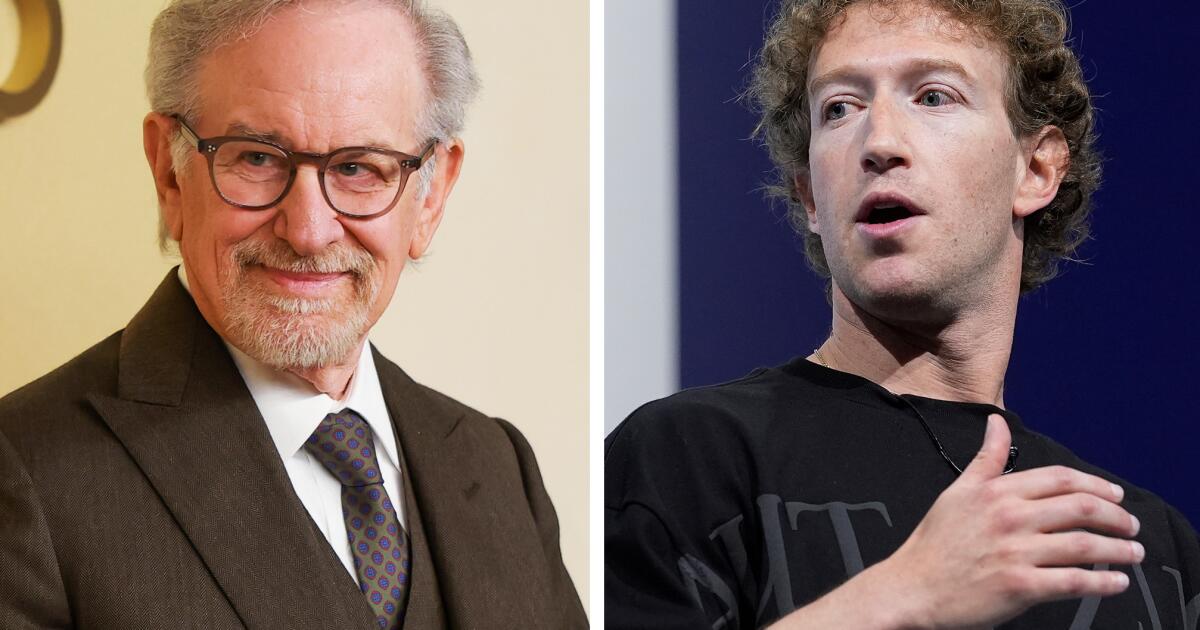
Filmmaker Steven Spielberg recently moved to New York and Facebook co-founder Mark Zuckerberg is eyeing purchasing a new property in Florida, stirring speculation about whether their decisions are tied to a proposed new tax on California billionaires to fund healthcare for the state’s most vulnerable residents.
Although a handful of prominent conservatives who bolted out of California noisily blamed their departure on the controversial wealth tax measure, as well as the state’s liberal ways and what they describe as cumbersome business regulations, neither Zuckerberg nor Spielberg has given any indication that the tax proposal is the reason for their moves.
A spokesperson for Spielberg, who has owned homes on both the East and West coasts since at least the mid-1990s, said the sole motivation for Spielberg and his wife, actor Kate Capshaw, decamping to Manhattan was to be near family.
“Steven’s move to the East Coast is both long-planned and driven purely by his and Kate Capshaw’s desire to be closer to their New York based children and grandchildren,” said Terry Press, a spokesperson for the prodigious filmmaker. She declined to answer questions about his position on the proposed ballot measure.
Director Steven Spielberg presents president Bill Clinton with the Ambassadors Humanity award at the 5th Annual Ambassadors for Humanity Dinner Honoring former President Bill Clinton to support the Survivors of the Shoah Visual History Foundation held at the Amblin theatre Universal Studios on February 17, 2005 in Los Angeles, California.
(Frazer Harrison / Getty Images)
On Jan. 1, Spielberg and Capshaw officially became residents of New York City, settling in the historic San Remo co-op in Central Park West. The storied building is among the most exclusive in Manhattan, having been home to Bono, Mick Jagger, Warren Beatty, Tiger Woods and many other celebrities. On the same day, Spielberg’s Amblin Entertainment opened an office in New York City.
Zuckerberg and his wife, pediatrician Priscilla Chan, are considering buying a $200-million waterfront mansion in South Florida, the Wall Street Journal first reported this month. The property is located in Miami’s Indian Creek, a gated barrier island that is an alcove of the wealthy and the influential, including Amazon founder Jeff Bezos and Trump’s daughter Ivanka and her husband, Jared Kushner.
Representatives for Zuckerberg declined to comment.
The billionaires’ moves raised eyebrows because they take place as supporters of the proposed 5% one-time tax on the assets of California billionaires and trusts are gathering signatures to qualify the initiative for the November ballot. Led by the Service Employees International Union-United Healthcare Workers West, they must gather the signatures of nearly 875,000 registered voters and submit them to county elections officials by June 24.
If approved, the tax would raise roughly $100 billion that would largely pay for healthcare services, as well as some education programs. Critics say it would drive the wealthy and their companies out of the state. On Dec. 31, venture capitalist David Sacks announced that he was opening an office in Austin, Texas, the same day PayPal co-founder Peter Thiel publicized that his firm had opened a new office in Miami.
The proposed ballot measure, if it qualifies for the ballot and is approved by voters, would apply to Californians who are residents of the state as of 2026. But residency requirements are murky. Among the factors considered by the state’s Franchise Tax Board are where someone is registered to vote, the location of their principle residence, how much time they spend in California, where their driver’s license was issued and their cars registered, where their spouse and children live, the location of their doctors, dentists, accountants and attorneys, and their “social ties,” such as the site of their house of worship or county club.
It’s unclear whether the proposal will qualify for the November ballot, and if it does, whether voters will approve it. However, a mass exodus of a number of the state’s billionaires — more than 200 people — would have a notable effect on state revenue, regardless. The state’s budget volatility is caused by its heavy reliance on taxes paid by the state’s wealthiest residents, including from levies on capital gains and stock-based compensation.
“The highest-income Californians pay the largest share of the state’s personal income tax,” according to Gov. Gavin Newsom’s 2026-27 budget summary that was published in January. “The significant share of personal income taxes — by far the state’s largest General Fund revenue source — paid by a small percentage of taxpayers increases the difficulty of forecasting personal income tax revenue.”
This reliance on wealthy Californians is among the reasons the proposed billionaires tax has created a schism among Democrats and is a source of discord in the 2026 governor’s race to replace Newsom, who cannot seek another term and is weighing a presidential bid. He opposes the proposal; Sen. Bernie Sanders (I-VT.) campaigned for it Wednesday evening at the Wiltern in Los Angeles.
“I am not only supportive of what they’re trying to do in California, but we’re going to introduce a wealth tax for the whole country. We have got to deal with the greed, the extraordinary greed, of the billionaire class,” Sanders told reporters Feb. 11.
Zuckerberg and Spielberg are both prolific political donors, though it is difficult to fully account for their contributions to candidates, campaigns and other entities because of how they or their affiliates donate to them as well as the intricacies of campaign finance reporting.
Spielberg, 79, a Hollywood legend, is worth more than $7 billion, according to Forbes. He and his wife have donated almost universally to Democratic candidates and causes, according to Open Secrets, a nonprofit, nonpartisan tracker of federal campaign contributions, and the California secretary of state’s office.
The prolific filmmaker, who won acclaim for movies such as “Schindler’s List,” “Jaws,” “Jurassic Park” and the “Indiana Jones” trilogy, was born in Ohio and lived with his family in several states before moving to California. He attended Cal State Long Beach but dropped out after Universal Studios gave him a contract to direct television shows.
Zuckerberg, 41, launched Facebook while in college and is worth more than $219 billion, making him among the world’s richest people, according to Forbes.
His largest personal federal political donation appears to be $1 million to FWD.us, a group focused on criminal justice and immigration reform nationwide, according to Open Secrets.
Zuckerberg, who is currently a registered Democrat in Santa Clara County, has donated to politicians across the partisan spectrum, including Democrats such as former House Speaker Nancy Pelosi and current Senate Minority Leader Chuck Schumer to Republicans such as President Trump’s Secretary of State Marco Rubio when he ran for the White House and Chris Christie during his New Jersey gubernatorial campaign.
Both men’s personal donations don’t include their other effects on campaign finances — Spielberg has helped countless Democratic politicians raise money in Hollywood; Zuckerberg’s company has made other contributions. Meta — the parent company of Facebook, Instagram and WhatsApp — donated $1 million to Trump’s inauguration committee in December 2024. Zuckerberg later attended the president’s swearing in at the U.S. Capitol Rotunda.
Zuckerberg, born in White Plains, N.Y., created an early prototype of Facebook while at Harvard University and dropped out to move to Silicon Valley to complete the social media platform, as depicted in the award-winning film “The Social Network.”
He still owns multiple properties in California and elsewhere, including a controversial, massive compound on Kauai that includes two mansions, dozens of bedrooms, multiple other buildings and recreational spaces — and an underground bunker that features a metal door filled with concrete, according to a 2023 investigation by Wired. The cost of land acquisition and construction reportedly has topped $300 million.
Meta is based in Menlo Park, Calif., though it has been incorporated in Delaware since Facebook’s founding in 2004.
Times staff writer Queenie Wong contributed to this report.
Movie Reviews
Movie Review: In ‘Midwinter Break,’ a quiet marriage story with Lesley Manville and Ciarán Hinds

Stella and Gerry might not have a bad marriage, but they don’t have especially healthy one either. In the new film “Midwinter Break,” out Friday, these two Irish empty nesters beautifully portrayed by Lesley Manville and Ciarán Hinds have become the embodiment of the words “alone together” in their late 60s and early 70s. She goes to church. He reads, and drinks, and passes out on the recliner. Repeat. But one Christmas Eve, Stella decides to break the monotony: She books a trip for two to Amsterdam, departing as soon as possible. Gerry beams that it’s a fantastic idea and off they go to try to get out of their routine and maybe remember why they made this lifelong commitment in the first place.
An adaptation of a Bernard MacLaverty novel of the same name, “Midwinter Break” is a delicate film that stays in a minor key, but whose impact is profound if you can get on its level. Directed by theater veteran Polly Findlay making her feature debut, the film parachutes the audience into the current state of this relationship, in all its quietly contradictory beauty.
These are two people who have walked through most of their adult lives together, raising a child, living a self-imposed exile in Glasgow and now sort of watching the clock tick down on their lives. The film teases that something violent and traumatic happened many years ago in Belfast, but that they don’t talk about that, or the Troubles, at all.
We gather that nothing quite so dramatic has happened since, but you can see the distress in Stella’s face as she sits down for the nth time to remove the plastic wrap to eat some sandwiches she prepared while Gerry sleeps. It seems both then and now, they’ve opted for a change of location instead of a serious chat about things. But there’s nothing like a new location to bring all that buried discontent to the surface.
One of the loveliest things about “Midwinter Break” is how it lets Stella and Gerry be all things at once. In some moments, they’re loving and intimate, sharing a sweet before their flight takes off, laughing in the red-light district and resting their tired feet in their nice hotel room. Other times, they seem like strangers. Stella has only grown more devout as they’ve gotten older, while Gerry can’t be bothered to even accompany her to church. Later in the film, they’ll both explain why, though not to each other.
Amsterdam in winter is expectedly picturesque, and the film makes sure to have Stella and Gerry out in the fresh air as much as possible visiting real sites around town (though the interiors of the Anne Frank House were a recreation). It’s tempting to draw comparisons to the “Before” series, but Jesse and Celine are a little chattier than these two.
This is a relationship that’s all about the small moments and what’s left unsaid, which is tricky to compellingly execute on film. There aren’t big fights or particularly mean words said: And yet when Stella, nearly shaking with nerves, quietly proposes a possible change to their lives, it feels earth shattering. You’re relieved later when she wants to go out and have some fun; Gerry is too.
This image released by Focus Features shows Ciarán Hinds, right, and Lesley Manville in a scene from “Midwinter Break.” Credit: AP/Mark de Blok
These may just be the ordinary, dull rhythms of a relatively stable relationship, and yet these actors make the mundane so much more. It was a brilliant stroke to let “Midwinter Break,” which could have been deadly in the transition from the page to the screen, rest on these two actors in particular, sharing the big screen for the first time. Our investment in Stella and Gerry raises real questions about long-term commitment, assumptions of stability and the possibility of change. It might also have you planning your own Amsterdam getaway in your head, hopefully with fewer weighted silences on the schedule.
“Midwinter Break,” a Focus Features release in theaters Friday, is rated PG-13 by the Motion Picture Association for “some strong language, bloody images, alcoholism, suggestive material and thematic material.” Running time: 90 minutes. Three stars out of four.

UMMC confirms cyberattack, closing clinics and canceling surgeries

Issue resolved roads back open after police activity forced closure of several roads around downtown

Some of the coldest air in the country is right here in Montana

Kearney Area Animal Shelter announces 2026 Gala featuring ‘The Voice’ finalist Bryan Olesen

State offices on two hour delay due to weather conditions

Florida High School Football Rankings: Top 25 teams – Oct. 21

Cleary's 21 help Le Moyne down Central Connecticut State 69-64 in OT

How old is Bo Nix? What to know about Oregon quarterback ahead of 2024 NFL Draft

99th annual Pony Swim held in Virginia

Indiana Members Credit Union announced as new anchor tenant at Bottleworks District

DC Mayor Bowser declares emergency over Potomac sewage spill, asks for federal help

Israel installed security at Epstein’s Manhattan apartment for ex-PM Barak

Iran and the US lean into gunboat diplomacy as nuclear talks hang in balance

Democrats risk FEMA disaster funding collapse as DHS shutdown hits Day 5

Fact check: Will Spain’s regularised migrants be allowed to vote?
-

 Culture1 week ago
Try This Quiz on Passionate Lines From Popular Literature
-

 Oklahoma2 days ago
Wildfires rage in Oklahoma as thousands urged to evacuate a small city
-

 Health1 week ago
James Van Der Beek shared colorectal cancer warning sign months before his death
-
![“Redux Redux”: A Mind-Blowing Multiverse Movie That Will Make You Believe in Cinema Again [Review]](https://i1.wp.com/www.thathashtagshow.com/wp-content/uploads/2026/02/Redux-Redux-Review.png?w=400&resize=400,240&ssl=1 "“Redux Redux”: A Mind-Blowing Multiverse Movie That Will Make You Believe in Cinema Again [Review]")
![“Redux Redux”: A Mind-Blowing Multiverse Movie That Will Make You Believe in Cinema Again [Review]](https://i1.wp.com/www.thathashtagshow.com/wp-content/uploads/2026/02/Redux-Redux-Review.png?w=80&resize=80,80&ssl=1 "“Redux Redux”: A Mind-Blowing Multiverse Movie That Will Make You Believe in Cinema Again [Review]") Movie Reviews1 week ago
Movie Reviews1 week ago“Redux Redux”: A Mind-Blowing Multiverse Movie That Will Make You Believe in Cinema Again [Review]
-

 Technology1 week ago
HP ZBook Ultra G1a review: a business-class workstation that’s got game
-
 Science1 week ago
A SoCal beetle that poses as an ant may have answered a key question about evolution
-
 Politics7 days ago
Culver City, a crime haven? Bondi’s jab falls flat with locals
-

 Politics7 days ago
Tim Walz demands federal government ‘pay for what they broke’ after Homan announces Minnesota drawdown