Entertainment
This country banned TikTok. What became of its influencers?

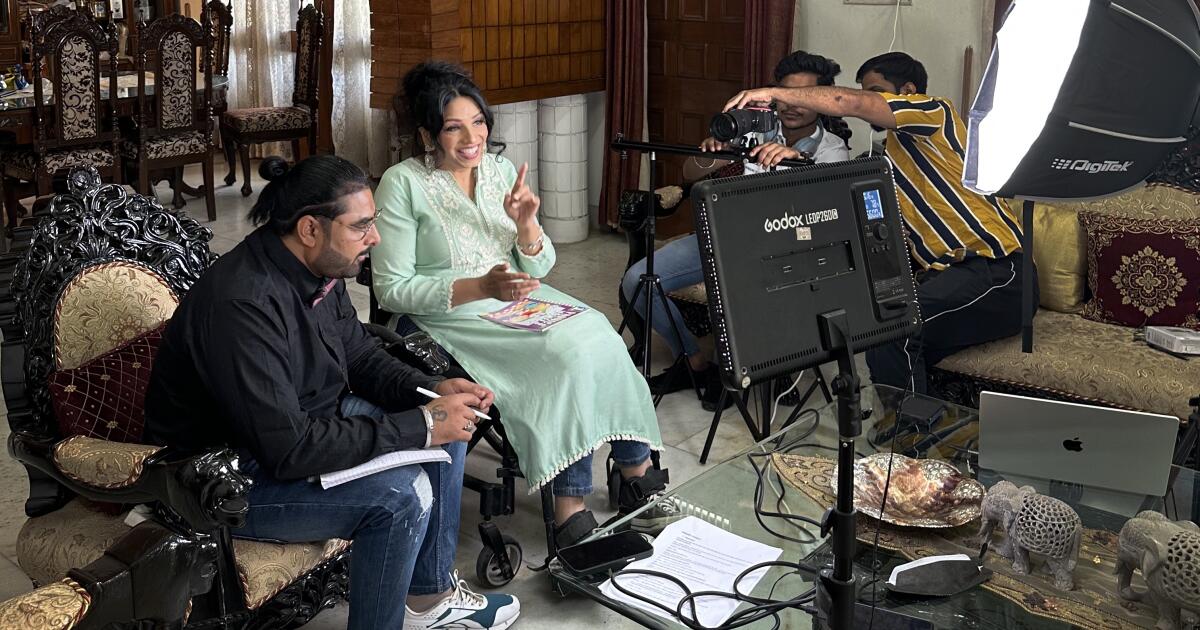
Is there life after TikTok?
The question is front of mind for U.S. influencers and many small businesses as lawmakers threaten to ban the Chinese-owned social media app that’s become a cornerstone of internet culture and e-commerce.
For an answer, they might turn to India, which has been surviving without TikTok since June 2020.
That month, after 20 of its soldiers were killed in a border clash with China, the Indian government gave TikTok users a day to post tearful goodbyes and steer followers to other social media accounts. Then the app went dark.
People light candles in Hyderabad on June 17, 2020, in tribute to the 20 soldiers killed during a border clash between Indian and Chinese forces in the Ladakh region.
(Mahesh Kumar A / Associated Press)
“When it got banned, I had nothing,” recalled Gaurav Jain, who was one of the country’s more than 200 million TikTok users.
He was 25 and had just notched his millionth follower making self-help videos about mental health, men’s style and relationships.
Four years later, Jain runs his own social media marketing agency in Delhi, managing Indian content creators who pivoted to other platforms or joined the influencer world more recently. He had tried to make the transition himself but found starting from scratch demoralizing.
“The counter became zero for everyone,” he said. “That gave rise to a lot of new creators.”
The results for former TikTok stars have been mixed.
Gautan Madhavan, founder of Mad Influence, a marketing agency that managed more than 300 content creators before the TikTok ban, said that about a third of them were able to recapture their reach on Instagram Reels or YouTube Shorts within three months and that many are still playing catch-up.
Those short-video platforms launched shortly after the TikTok ban. Users who found success got in early and posted as often as 10 times a day, according to Saptarshi Ray, a consultant for influencers trying to grow their followings.
“Most of them were just trying everything,” Ray said. “Those were the creators that really flourished.”
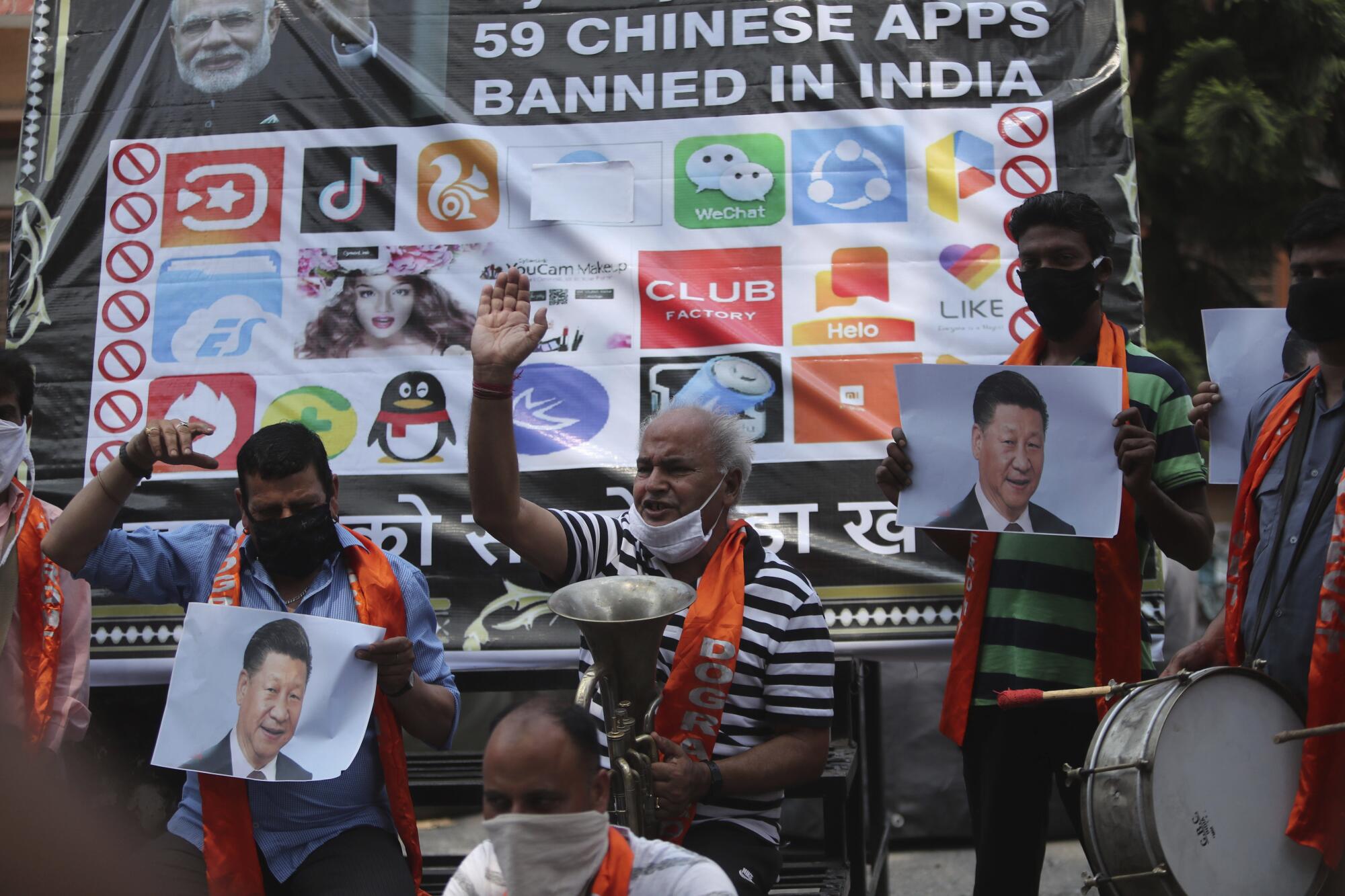
Activists shout slogans against Chinese President Xi Jinping next to a banner showing the logos of TikTok and other Chinese apps banned in India during a protest in Jammu, India, on July 1, 2020.
(Channi Anand / Associated Press)
India was TikTok’s fastest growing user base before the ban, which cut off a vital source of income for creators there.
The stakes are even higher in the United States, where the app has more than 170 million users, including 7 million businesses that TikTok says generated $14.7 billion in revenue last year from marketing on the platform. The Pew Research Center found that a third of Americans used TikTok last year, up from a fifth in 2021.
In April, President Biden signed a bill to ban the app by January 2025, unless Chinese parent company ByteDance Ltd. agrees to sells the app to somebody from a country that is not considered a foreign adversary.
The threat comes as suspicion between the U.S. and China has escalated, reviving concerns that TikTok could share sensitive data with the Chinese government.
The proposed ban still faces high hurdles. Both TikTok and a group of U.S. content creators separately filed lawsuits, arguing that blocking the app would be an unconstitutional assault on free speech. The Trump administration had also tried to ban TikTok but gave up after being challenged by federal courts.
TikTok has sought to assure the U.S. government that user data is protected on U.S. servers. And though its parent company is based in Beijing, TikTok moved operations to Singapore under a Singaporean chief executive.
The U.S. — along with Britain and Australia — has already prohibited the use of TikTok on government devices. But digital marketing experts said many U.S. users are still not seriously considering the possibility of a ban.
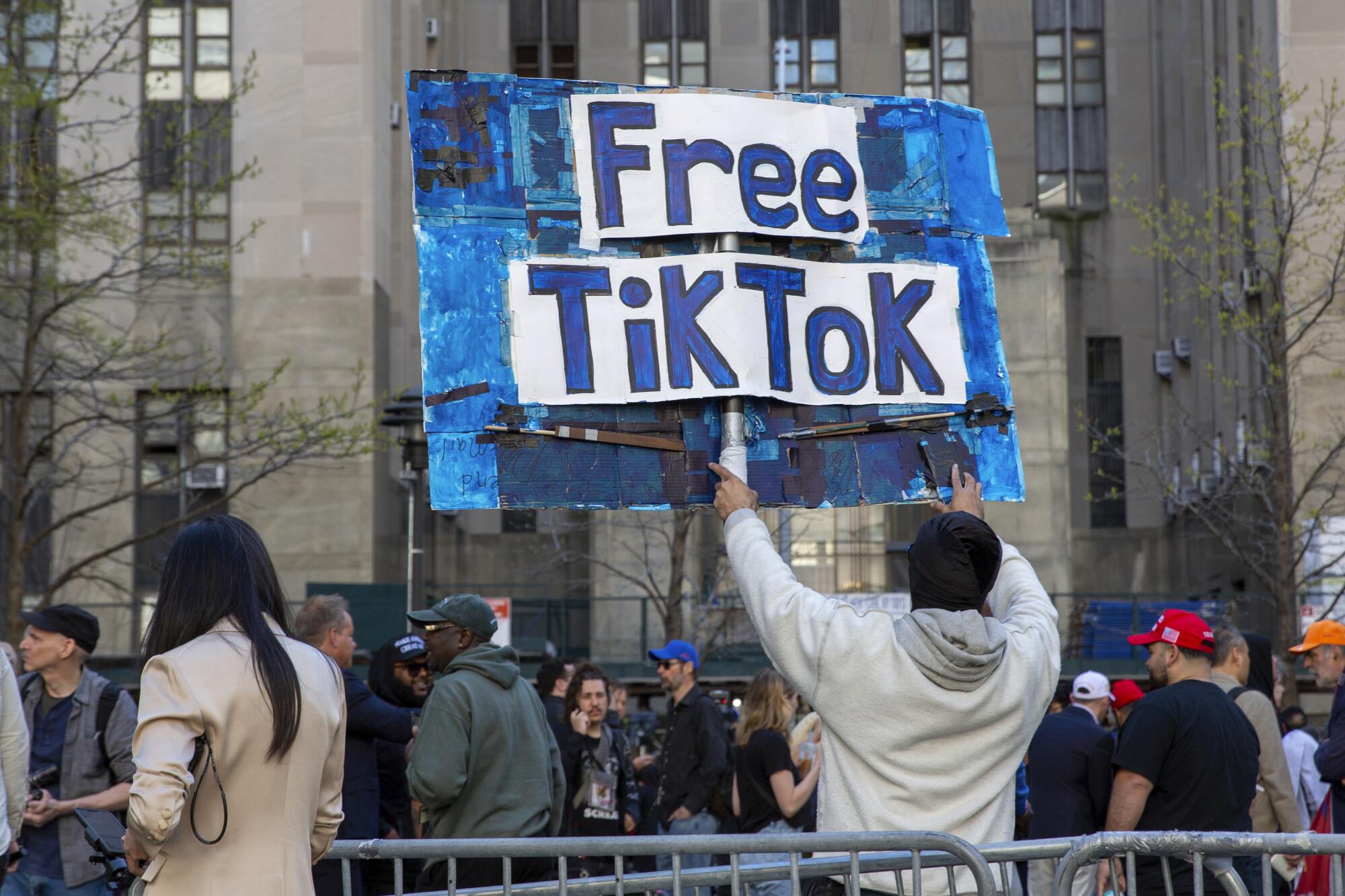
A man demonstrates outside the courthouse in New York where the hush money trial of Donald Trump got underway on April 15, 2024.
(Ted Shaffrey / Associated Press)
“I don’t think the average TikTok user has synthesized in their brain that this is going away,” said Lawrence Vincent, associate professor of the practice of marketing at USC’s Marshall School of Business. “They’ve heard about it, but it isn’t real until it’s real.”
There has been little anticipatory migration to other platforms. But former TikTokers in India advised their American counterparts to prepare for the worst.
“We used to hear rumors about this happening, but we never really believed it,” said Ashi Khanna, a 26-year-old influencer from Delhi.
She launched her TikTok career by posting lip-synching videos in 2017 — when the app was known as Music.ly — and eventually built a following of 1.7 million. She managed to post a farewell directing them to Instagram and YouTube, where she already had smaller followings. But fewer than 20,000 did so.
Since then, Khanna has concentrated on Instagram and managed to match her old following.
In contrast to TikTok, which never placed a premium on production quality, Instragram required a more polished aesthetic that could mean spending hours on a single reel.
“There’s a huge difference,” Khanna said. “You need to understand what your audience likes, and your audience is not the same on every platform.”
Ankita Chhetri, 22, who lives in Mumbai, said experimentation was the key to life beyond TikTok.
She became TikTok famous in 2019 after posting a video of herself lip-synching to a popular Bollywood song. With 8.2 million followers, she earned promotional deals with music labels and scrapped her plans to be a nurse in hopes of making it as an influencer and actor.
After the ban, she started a YouTube channel and branched out from lip-synching into carefully planned reels of beauty, travel, fashion and inspirational quotes. As she gradually increased her following to 1.6 million, she used her improved engagement statistics to pitch brands on potential partnerships.
Still, Chhetri said there are times she misses the old days.
“TikTok just had some crazy amount of loyalty among audiences,” she said. “On Instagram, even if people are watching and liking your content, they’re still hesitant to press that follow button.”
Indian entrepreneurs created their own versions of TikTok, but failed to get much of an audience.
“It still felt like I was invisible, nobody was really there,” said Shreyas Mendiratta, a 23-year-old hospital worker who posted his comedy videos on Indian startup apps for a few months before giving up. “On TikTok, I felt seen, I felt heard.”

Geet Jain records herself for social media.
(Courtesy of Geet Jain)
His videos don’t do as well on Instagram and YouTube either, which he suggested lack TikTok’s broad international appeal.
“It reduces the chances of them going global,” he said. “This is what I face on Instagram daily. I am very restricted to the region that I am geographically located in.”
Geet Jain, an inspirational speaker and English teacher, was visiting the U.S. when India banned TikTok. She could still use the app, but none of her 7 million followers in India could see her posts offering relationship advice, comedy bits and English lessons.
“It was like this whirlwind of confusion of what do I do next,” said Jain, who declined to provide her age.
She turned to Instagram, growing 68,000 followers into 1.3 million. But she never achieved the same kind of exponential growth. Some of her TikTok fans had a difficult time finding her.
Back in the U.S. this year for an extended stay with her sister in Seattle, she has started posting on TikTok once more.
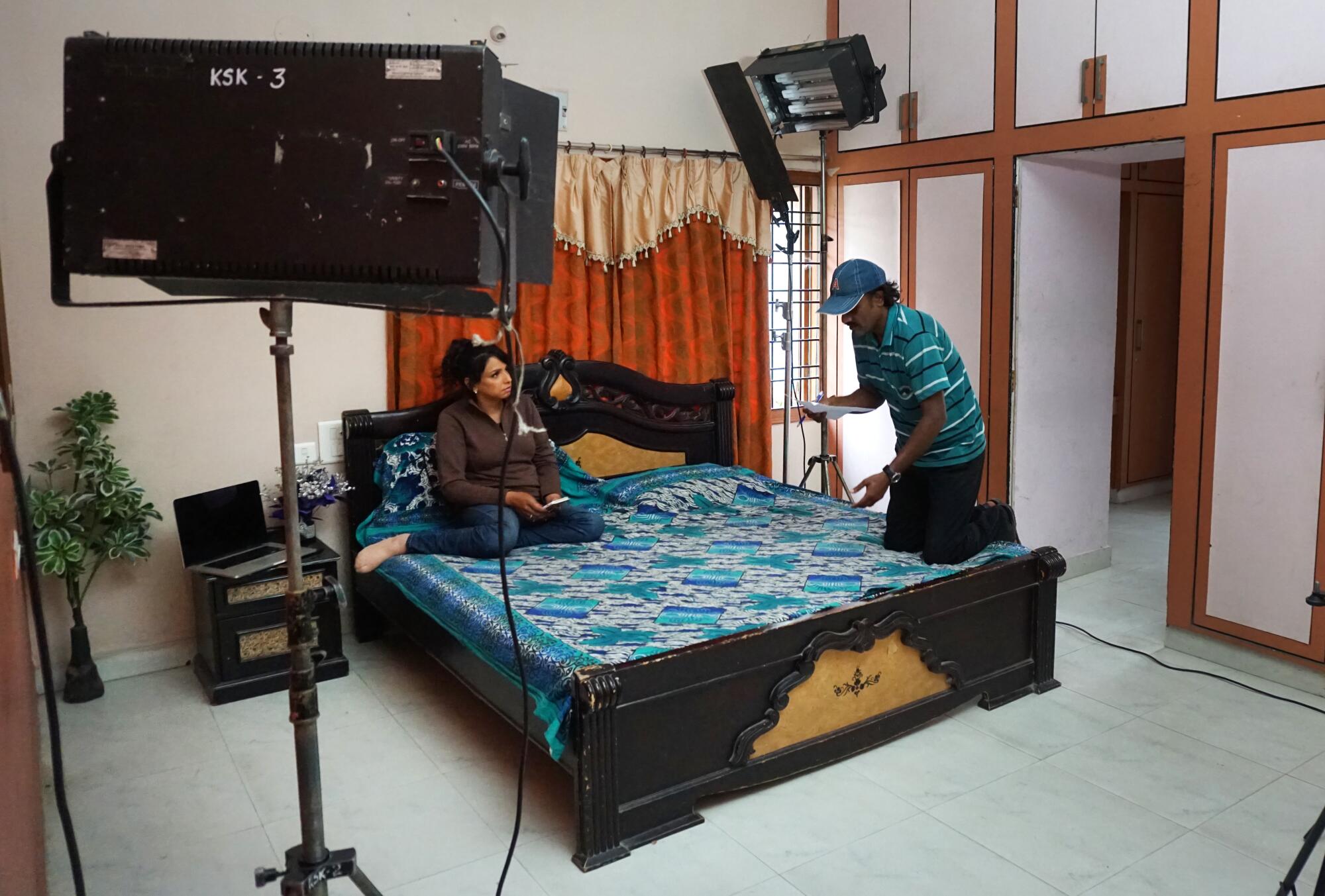
Geet Jain, an inspirational speaker and English teacher in India, was in the U.S. when India banned TikTok in June 2020.
Back in the U.S. this year for an extended stay in Seattle, she has started posting on TikTok once more.
(Courtesy of Geet Jain)
But she no longer knows what viewers want. Clips have gotten longer, with more casually narrated stories and less dancing and lip-synching than she remembers. There is more competition when it comes to her style of educational content.
While some of her English-language videos have gotten traction, she’s reluctant to invest too heavily in TikTok again.
“If it gets banned in America, it will be even more devastating for me,” she said. “Then my accounts are actually gone.”


Last year’s “Superman” ended with Iggy Pop singing “Because I’m a punk rocker, yes I am” — an ironic coda for a superlatively square hero. But it rings straightforwardly true for Superman’s cousin.
Milly Alcock’s Kara Zor-El, or Supergirl, sports not a spandex suit but a Blondie T-shirt. When we meet her in Craig Gillespie’s “Supergirl,” she’s been on an interstellar bender for days. She’s more Courtney Love than Clark Kent.
Nonchalant and sarcastic, Kara is also a little Han Solo-ish, you might say, given that she moves capriciously through the galaxy in her junky spaceship while getting in fights in extraterrestrial bars. She’s a welcome, jagged riff on more buttoned-up superheroes, and Alcock is terrific in the role. If only “Supergirl” was as good as she is.
While the latest DC release, and second under James Gunn’s stewardship, has its moments, “Supergirl” struggles to match Kara’s punk-rock energy with an equally spirited supporting cast and story.
Skepticism seems to have gathered for “Supergirl” ahead of its release. Many fans have argued it wasn’t the right next step for DC Universe. But I’m not so sure. Alcock’s breezy cameo in “Superman” was one of that movie’s highlights. Handing the follow-up to her, and her faithful floating dog Krypto, strikes me as an extremely natural next step. When in doubt, follow the dog.
And much of “Supergirl” is winning. It resides almost entirely in space, touching down only momentarily on Earth. In its consistently creative production design, clever needle drops and underdog story arc, “Supergirl” resides a little closer to Gunn’s “Guardians of the Galaxy” movies than other DC entries. Its outer space is filled with cosmic detritus, mean characters and cute critters. Seth Rogen as the voice of a tiny alien co-piloting a space bus is an inspired concoction, as is a shabbier sci-fi realm with rest stops along the intergalactic highway.
Entertainment
Justin Baldoni and wife break silence after ‘It Ends With Us’ legal battle with Blake Lively

Justin Baldoni has broken his silence after reaching a settlement in a lengthy and highly publicized legal dispute with Blake Lively.
Baldoni and his wife, Emily Baldoni, presented a united front in an Instagram video the couple shared Wednesday that began, “So we have not spoken publicly for the better part of the last two years, and it’s not because we haven’t had anything to say, because Lord knows we have.”
The “It Ends With Us” actor and director said that although they’d wanted to address the debacle that involved dueling lawsuits with Lively, nearly two years of tit-for-tat fodder and culminated in a confidential settlement, “something was telling us not to.”
The couple said they prayed about when to make a public statement. “This feels like the moment,” Emily said.
“What does feel important,” she continued, “is that we can genuinely say that we are sitting here today feeling immense gratitude for so many things and so many people and so many things that have happened to us.”
“Gratitude has saved us,” Justin added.
“I also feel that it’s important as we say that — in that gratitude — it doesn’t negate the injustice and the pain that we have also felt in the last few years, and we’ve had to wrestle with so many things and try to understand so many things,” Emily said. “How could something like this even happen? Let alone disguised as a fight for women. So much to unpack. And the truth is, reality is, is that there’s been a lot of trauma for us to move through as a family, which also makes it hard to speak.”
“We don’t even know this is the right thing to say, but we just know we need to share something,” Justin said. “What I will say is that there have been so many painful things that have been spoken into existence — “
“Untruthful,” Emily broke in.
“We didn’t want to add to the noise, so we just wanted to let the justice system run its course,” he said.
“And the truth and the facts have spoken for themselves,” Emily said.
The couple’s statement comes a year and a half after Lively filed a bombshell lawsuit against Baldoni alleging sexual harassment, retaliation and several other charges on the heels of a messy “It Ends With Us” summer release and press tour that fueled rumors of on-set turmoil.
Less than a month after the allegations against Baldoni rallied Hollywood against him, he countersued Lively, her publicist Leslie Sloane and her husband, Ryan Reynolds, for $400 million in damages, claiming they’d smeared his name in the press and wrestled away his control of the film. His suit was later dismissed.
In May, two weeks ahead of the trial, Lively and Baldoni reached an agreement to resolve their legal dispute, bringing an abrupt end to the contentious battle.
“The parties in the Blake Lively and Wayfarer Studios litigation have reached an agreement to resolve the matters,” lawyers for both sides said in a joint statement.
“The end product — the movie ‘It Ends With Us’ — is a source of pride to all of us who worked to bring it to life. Raising awareness, and making a meaningful impact in the lives of domestic violence survivors — and all survivors — is a goal that we stand behind. We acknowledge the process presented challenges and recognize concerns raised by Ms. Lively deserved to be heard. We remain firmly committed to workplaces free of improprieties and unproductive environments. It is our sincere hope that this brings closure and allows all involved to move forward constructively and in peace, including a respectful environment online.”
In June, a federal judge ordered Baldoni and his production company to pay Lively’s attorney fees related to his unsuccessful defamation lawsuit against her, but rejected her bid for additional damages.
“So, how are we doing?” the filmmaker said in the Instagram video. “We are healing, and if you’ve ever been through something traumatic, you know that healing isn’t linear. It lives different every day, and we have had to rethink for ourselves what is real. What matters, and it’s this. It’s our family. It’s our friends. It’s our community. It’s our faith.”
Times staff writer Josh Rottenberg contributed to this report.
Movie Reviews
‘The Guest’ Review: Trine Dyrholm Gives a Scorcher of a Performance in a Gutsy Danish Party-Gone-Wrong Drama

A family and friends gather for a naming-day ceremony at a Danish seaside hotel, but an unexpected appearance by one uninvited attendee (Trine Dyrholm) ruptures the veil of bland, happy-clappy familial unity in director Mads Mengel’s gutsy, well-wrought debut feature, The Guest.
The most audacious move here may be Mengel and co-screenwriter Christian Bengtson’s choice to write something that will inevitably invite comparisons with Festen (The Celebration), arguably the most notorious Danish-language film of the last 30 years, which similarly revolved around a bougie gathering disrupted by angry revelations. But there’s a savvy 2026 vibe about the way the film refuses to create florid melodrama out of quotidian crisis, and instead observes with generosity as the characters grope awkwardly toward emotional détente and mutual forgiveness.
The Guest
The Bottom Line When wetting the baby’s head goes too far.
Venue: Karlovy Vary Film Festival
Cast: Simon Bennebjerg, Trine Dyrholm, Josephine Park, Peter Gantzler, Petrine Agger, Mette Klakstein Wiberg, Kristine Kujath Thorp, Buster Lund Luscher
Director: Mads Mengel
Screenwriter: Christian Bengtson, Mads Mengel
1 hour 40 minutes
Festen-alumnus Dyrholm, having a bit of a career moment with outstanding performances both here and in the recent The Girl With the Needle among others, leads a uniformly excellent cast in a work that deserves celebration on the festival circuit and beyond.
Dyrholm’s Vibeke is technically the first person we meet, although she’s seen only in shadow at first as she smokes and drives while her unattached seatbelt, caught outside by a closed door, clatters on the road. This is the kind of unsafe driving her son Karl (Simon Bennebjerg) so deplores, a point of contention later on in the story when he will steal her car keys in interest of her own safety and that of others.
But well before we get to that flashpoint, the film introduces Karl, effectively the film’s protagonist, as he arrives at the swanky resort with his wife Emilie (Mette Klakstein Wiberg) and their infant son Elliot (Buster Lund Luscher). The young family, who’ve chosen this new, secular tradition instead of a christening to welcome their child to the world, are there a day before the ceremony to meet up with core family members.
As this advance party settles down for dinner, a table that includes Karl’s sister Rikke (Josephine Park) and Emilie’s parents Frank (Peter Gantzler) and Kirsten (Petrine Agger), there’s a surprise: Vibeke is coming, courtesy of Rikke’s invitation. Karl is quietly furious and seems determined to turn her away, even when she shows up minutes later. Poor Frank and Kirsten look on confused, determinedly polite in their insistence that all family members should be welcome.
Bengtson and Mengel’s economical script carefully dripfeeds backstory as the film unfolds to explain that Karl hasn’t spoken to his mother in years, that Rikke has taken over all the daily mom management and that she’s very worn out by it. Even so, she insists Vibeke is regularly taking her medication and isn’t a problem these days, although to Karl every weird anecdote and moment of emotional intensity is an augur of impending chaos. Rikke counters that their mother is just “big, that’s her personality not her condition.”
Interestingly, that specific condition is never named throughout, although armchair diagnosticians might spot many of the signs of bipolar disorder. But the film’s emotional focus on the person and her actions rather than the label is also very contemporary, reflecting a more holistic, inclusive mindset and approach to dealing with mental health issues.
Which is all fine and dandy, until Vibeke duly does skip a dosage and starts getting manic. One of the first signs of chemical imbalance arrives during the ceremony on the beach, when Vibeke carries little Elliot much further away from the shore than anyone wants, creating a panic. From there it just gets worse as Vibeke picks up on the censorious feeling emerging from the other party guests, who had found her so charming the night before when she’d led everyone to the casino to play roulette and diverted a bunch of partying teenagers from the room next to Karl and Emilie so they could get some sleep. When the toasts at the formal dinner begin, Vibeke’s mood darkens much further, and if we’ve all learned one thing from Festen, it’s be very afraid when a Dane gets up to make a toast.
Cinematographer David Bauer’s nimble-footed lensing and use of natural light does indeed hark back considerably to the look of those Dogme 95 movies back in the day, as does the naturalistic editing style deployed by Louis Emil Ramm Seeberg. But there are plenty of sins against the rules of cinematic chastity that marked that movement, such as the ample space made for Lasse Aagaard’s affecting, low-key score that amps up the anxiety as Vibeke starts to spiral.
That said, Mengel keeps things simple in sonic terms when it really counts, letting the musicality of Dyrholm’s deep, sonorous voice ring out on its own in the big monologue scenes. She is, as ever, utterly mesmerizing but the performance is made even more powerful by the muted, expressive reactions of the rest of the cast as they look on, frozen like deer in the headlights of the car crash of pseudo-christening. Moments of levity puncture the gloom, but the final feeling is one of numbed sorrow and pity for all these kind, fallible people, just trying to do their best.
-

 Maine4 minutes ago
Live updates: U.S. and Iran escalate attacks; jockeying starts in Maine after Graham Platner drops Senate bid
-

 Maryland6 minutes ago
How the Baltimore-style hot dog tells a uniquely Maryland story
-

 Michigan11 minutes ago
Michigan immigration advocates react after Supreme Court ruling on Temporary Protected Status
-

 Massachusetts19 minutes ago
Is new construction right for you? There are benefits to buying a brand-new home in Massachusetts.
-

 Minnesota22 minutes ago
Where to watch Cleveland Guardians vs Minnesota Twins: TV channel, start time, streaming for July 9
-

 Mississippi26 minutes ago
Where Ace Reese, Mississippi State signees appear in latest MLB mock drafts
-

 Missouri34 minutes ago
Missouri Farm Bureau to host agritourism conference in Hermann | Fulton Sun
-
Montana36 minutes ago
Montana Lottery Powerball, Lotto America results for July 8, 2026

