Connect with us

Movie Reviews

'Society of the Snow' Movie Review: Should You Watch on Netflix?

Published

on

'Society of the Snow' Movie Review: Should You Watch on Netflix?
Society Of The Snow Netflix Movie Review Should You Watch

Picture: Netflix

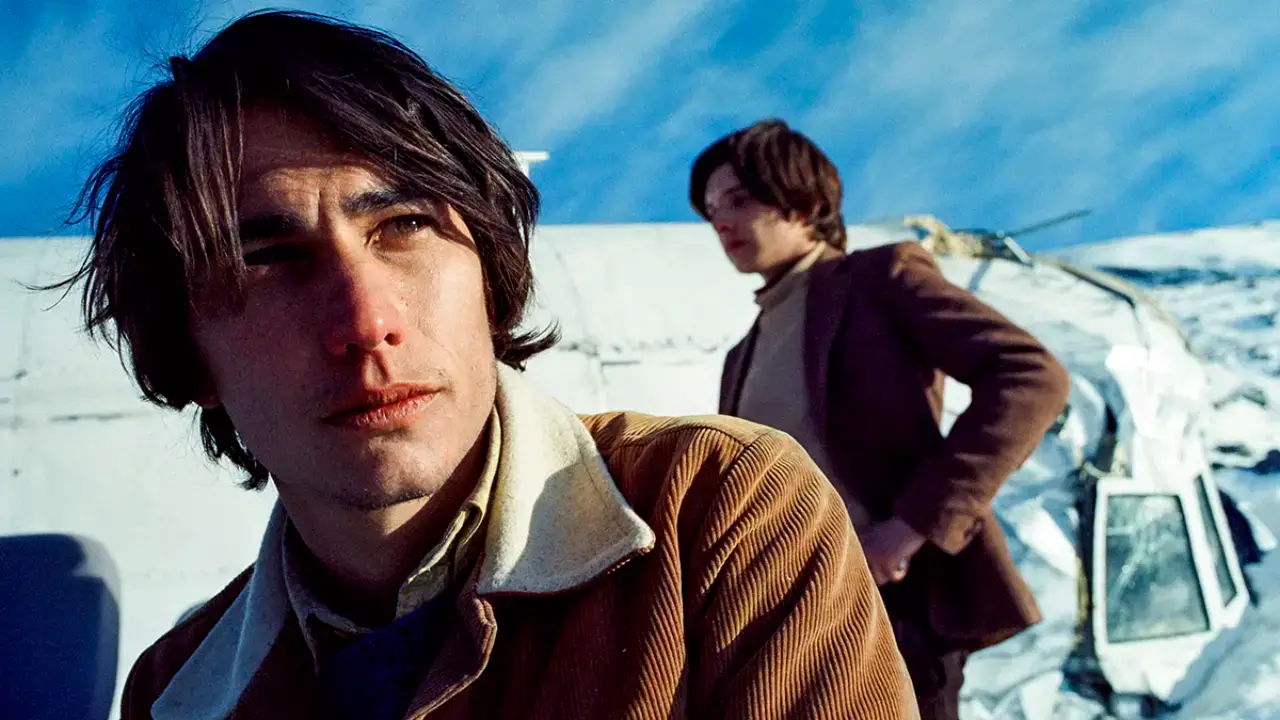
Premiering at the prestigious Venice Film Festival, Society of the Snow is Director J.A. Bayona’s take on the story of the infamous 1972 Uruguayan Air Force flight that crashed on a glacier in the heart of the Andes Mountains. Chartering a rugby team to Chile, only 29 of the 45 passengers survived the crash. Finding themselves in one of the world’s toughest environments, they are forced to resort to extreme measures to stay alive.

Based on the book “La Sociedad de la Nieve” by Pablo Vierci, the film utilizes Vierci’s strong ties to the remaining survivors of the crash, many of whom he knew from childhood. The filmmakers recorded more than 100 hours of interviews with all of the living survivors and the actors had access to them & their families as well.

With a reported budget of around 60-70 million, Bayona spared no expense to bring the highest level of authenticity to the project. He used the actual crash site as one of the locations on the film and only used actors from Uruguay & Argentina, most of them newcomers.

As the subject has been well covered previously in many forms of media, most notably in the U.S. with the 1993 Frank Marshall film Alive starring Ethan Hawke, Bayona’s best chance at standing out would be in the craftsmanship of his recreations, as well as, his ability to create tension, fear, & emotional resonance with its many set pieces.

Advertisement

With his previous disaster film experience on his first English speaking feature, 2012’s Thailand Tsunami story The Impossible starring Ewan McGregor, Bayona builds upon his already impressive abilities to punctuate large scale devastation with athletic cinematography, realistic detail, & unflinching terror. The plane crash & the avalanche scenes in particular draw upon his veteran vision & blocking to create visceral nightmares that stick with you long after the film’s conclusion.

While the cinematography & special effects may, quite rightly, get a lot of the attention for this film, its quieter moments of despair & compassion can almost be just as impressive. Bayona’s script – written alongside Bernat Vilaplana, Jaime Marques-Olarreaga, & Nicolas Casariego – & direction fills the aftermath of the crash with religious contemplations, impossible moral quandaries, undeterred emotional and physical support, & survivor’s guilt in the face of unspeakable tragedy.

With many films of this genre that fly from one extreme to another, the musical score can become a key element to elevate the experience. Oscar winner Michael Giacchino (Up, The Batman, “Lost”) delivers another exceptional arrangement as he guides us through the emotional rollercoaster of a 70+ day endurance test. His score has already been nominated for a Critics Choice Award in this category.

Overall, Society of the Snow improves on a familiar story with its impressive level of detail, humanity, & disaster film theatrics. With standout cinematography, score, & special effects, Bayona creates his most effective & emotionally evocative film to date. With nominations already stacking up in the early awards season, we can expect to keep singing the film’s praises for months to come.

Advertisement
Society Of The Snow In The Snow TintinSociety Of The Snow In The Snow Tintin

LA SOCIEDAD DE LA NIEVE (L to R) AGUSTIN DELLA CORTE as TINTIN in LA SOCIEDAD DE LA NIEVE. Cr. QUIM VIVES/NETFLIX © 2022


Watch Society of the Snow If You Liked

  • Alive (1993)
  • The Impossible
  • The Revenant
  • 127 Hours
  • Survive! (1976)
  • Stranded
  • I Am Alive: Surviving the Andes Plane Crash

MVP of Society of the Snow

The Strauch Cousins

Did you think we would write a whole review on this movie without having one conversation about cannibalism?!
Beyond all the spectacle & craftsmanship, there is one major decision in the film that no one wants to take on in real life: are you eating people if it means your survival?
When no one wants to answer that question or they only want to debate the morality or criminality, somebody had to step up and do what was necessary. The Strauch Cousins do exactly that with a knowing grace & intelligence that moves the group along in their quest to survive.

“Till now, the Strauch cousins have been able to make the meat just meat. Meat without a name. Without a face.” I salute them for doing what many of us at home could never do.

J.A. Bayona’s script & direction, combined with incredible crafts & score, bring new life to a well-documented tragedy.

Advertisement
Continue Reading
Click to comment

Leave a Reply

Your email address will not be published. Required fields are marked *

This site uses Akismet to reduce spam. Learn how your comment data is processed.

Movie Reviews

‘Black Rabbit, White Rabbit’ Review: Disqualified for the Oscars, Tajikistan Drama Is an Inviting, Meandering Meta-Narrative

Published

on

‘Black Rabbit, White Rabbit’ Review: Disqualified for the Oscars, Tajikistan Drama Is an Inviting, Meandering Meta-Narrative

Selected by Tajikistan but ultimately not accepted by the Academy to compete in the Oscar international feature category, “Black Rabbit, White Rabbit” begins ambitiously, with a famous quote from playwright Anton Chekhov about setups and payoffs — about how if a gun is established in a story, it must go off. Moments later, an inviting long take involving a young man selling an antique rifle ends in farcical tragedy, signaling an equally farcical series of events that grow stranger and stranger. The film, by Iranian director Shahram Mokri, folds in on itself in intriguing (albeit protracted) ways, warping its meta-fictional boundaries until they supersede its characters, or any underlying meaning.

Still, it’s a not-altogether-uninteresting exercise in exploring the contours of storytelling, told through numerous thematically interconnected vignettes. The opening Chekhov quote, though it might draw one’s attention to minor details that end up insignificant, ensures a heightened awareness of the movie’s artifice, until the film eventually pulls back and becomes a tale of its own making. But en route to this semi-successful postmodern flourish, its character drama is enticing enough on its own, with hints of magical realism. It begins with the tale of a badly injured upper-class woman, Sara (Hasti Mohammai), discovering that her car accident has left her with the ability to communicate with household objects.

Sara’s bandages need changing, and the stench of her ointment becomes a quick window into her relationships. Her distant husband rejects her; her boisterous stepdaughter is more frank, but ultimately accepting; her gardener and handyman stays as diplomatic as he can. However, the film soon turns the gunfire payoff in its prologue into a broader setup of its own, as a delivery man shows up at Sara’s gate, insisting that she accept delivery for an object “the deceased man” has paid for.

Mokri eventually returns to this story (through a slightly tilt-shifted lens), but not before swerving headfirst into a seemingly unrelated saga of extras on a film set and a superstitious prop master, Babak (Babak Karimi), working on a shot-for-shot remake of an Iranian classic. A mix of rapid-fire Tajik, Persian and Russian dialogue creates dilemma upon dilemma when Babak’s ID goes missing, preventing him from being able to thoroughly check the prop ammunition for an assassination scene.

Danger begins to loom — a recent Alec Baldwin case even warrants a mention on-screen — as the notion of faulty firearms yanks Chekhov’s wisdom front and center once more, transforming it from a writing tip into a phantasmagorical inevitability. In keeping with the previous story, the props even communicate with each other (through subtitles) and begin gossiping about what might come to pass.

Advertisement

After establishing these narrative parameters through unbroken, fluid shots filmed at a sardonic distance, Mokri soon begins playing mischievous temporal games. He finds worthwhile excuses to revisit scenes from either different angles or with a slightly altered aesthetic approach — with more proximity and intimacy — in order to highlight new elements of his mise-en-scène. What’s “real” and “fictional,” even within the movie’s visual parlance, begins to blur in surreal ways, largely pivoting around Babak simply trying to do his job. However, the more this tale engorges through melodic, snaking takes, the more it circles around a central point, rather than approaching it.

The film’s own expanse becomes philosophically limiting, even though it remains an object of curiosity. When it’s all said and done, the playfulness on display in “Black Rabbit, White Rabbit” is quite remarkable, even if the story’s contorting framework seldom amounts to much, beyond drawing attention to itself. It’s cinema about cinema in a manner that, on one hand, lives on the surface, but on the other hand, invites you to explore its texture in ways few other movies do.

Continue Reading

Movie Reviews

‘Christmas Karma’ movie review: A Bollywood Carol with little cheer

Published

on

‘Christmas Karma’ movie review: A Bollywood Carol with little cheer

Kunal Nayyar in ‘Christmas Karma’
| Photo Credit: True Bit Entertainment/YouTube

Christmas jumpers are all I can remember of this film. As this reimagining of Charles Dickens’ A Christmas Carol dragged on with sickly-sweet sentimentality and song, my eyes constantly tried to work out whether those snowflakes and reindeer were printed on the jerseys or, if knitted, how complicated the patterns would have been.

Christmas Karma (English)

Director: Gurinder Chadha

Starring: Kunal Nayyar, Leo Suter, Charithra Chandran, Pixie Lott, Danny Dyer, Boy George, Hugh Bonneville, Billy Porter, Eva Longoria, Mia Lomer

Storyline: A miserly businessman learns the true meaning of Christmas when visited by ghosts of Christmas past, present and future

Advertisement

Runtime: 114 minutes

Gurinder Chadha, who gave us the gorgeous Bend it Like Beckham (who wants to make aloo gobi when you can bend the ball like Beckham indeed) has served up an unappetising Bollywood song-and-dance version of Dickens’ famous Christmas story.

A still from the film

A still from the film
| Photo Credit:
True Bit Entertainment/YouTube

A curmudgeonly Indian businessman, Ishaan Sood (Kunal Nayyar), fires his entire staff on Christmas Eve—except his accountant, Bob (Leo Suter)—after catching them partying at the office. Sood’s nephew, Raj (Shubham Saraf) invites him for a Christmas party which he refuses to attend.

He returns home after yelling at some carol singers for making a noise, the shopkeeper (Nitin Ganatra) at the corner for his business decisions and a cabbie (Danny Dyer) for being too cheerful.

His cook-housekeeper, Mrs. Joshi (Shobu Kapoor) tells him to enjoy his dinner in the dark as he has not paid for heat or electricity. He is visited by the spirit of his dead business partner, Marley (Hugh Bonneville), who is in chains with the spirits of all the people he wronged. Marley’s spirit tells Sood that he will be visited by three spirits who will reveal important life lessons.

Advertisement
A still from the film

A still from the film
| Photo Credit:
True Bit Entertainment/YouTube

The Ghost of Christmas Past (Eva Longoria), with Day of the Dead makeup and three mariachis providing musical accompaniment, shows Sood his early, happy days in Uganda as a child and the trauma of being expelled from the country by Idi Amin.

Sood comes to Britain where his father dies of heartbreak and decides the only way out is to earn a lot of money. He meets and falls in love with Bea (Charithra Chandran) but loses her when he chooses paisa over pyaar even though he tries to tell her he is being ruthless only to earn enough to keep her in luxury.

The Ghost of Christmas Present (Billy Porter) shows Bob’s twee house full of Christmas cheer, despite the roast chicken past its sell-by date, and his young son, Tim, bravely smiling despite his illness.

The Ghost of Christmas Future (Boy George, Karma is sure a chameleon!) shows Sood dying alone except for Bob and Mrs. Joshi. He sees the error of his ways and throws much money around as he makes everything alright. He even ends up meeting up with his childhood friend in Uganda.

Apart from the mixed messages (money makes everything alright, let us pray for the NHS but go to Switzerland to get well) and schmaltzy songs, Christmas Karma suffers from weak writing and wooden acting.

Advertisement

Priyanka Chopra’s Hindi rendition of George Michael’s ‘Last Christmas’ runs over the end credits featuring Chadha and the crew, bringing back fond memories of Bina Mistry’s ‘Hot Hot Hot’ from Bend it Like Beckham. Even a sitar version by Anoushka Shankar is to no avail as watching this version of A Christmas Carol ensures bad karma in spades.

Christmas Karma is currently running in theatres

Advertisement
Continue Reading

Movie Reviews

Dust Bunny

Published

on

Dust Bunny

An orphaned girl hires her hitman next-door neighbor to kill the monster under her bed. This R-rated action/horror movie mashup has lots of violence but surprisingly little gore. However, there are still many gruesome moments, even if they’re just offscreen. And some language and a strange portrayal of Christian worship come up, too.

Continue Reading

Trending