Movie Reviews
Movie Review: A Home Invasion turns into a “Relentless” Grudge Match


I’d call the title “Relentless” truth in advertising, althought “Pitiless,” “Endless” and “Senseless” work just as well.
This new thriller from the sarcastically surnamed writer-director Tom Botchii (real name Tom Botchii Skowronski of “Artik” fame) begins in uninteresting mystery, strains to become a revenge thriller “about something” and never gets out of its own way.
So bloody that everything else — logic, reason, rationale and “Who do we root for?” quandary is throughly botched — its 93 minutes pass by like bleeding out from screwdriver puncture wounds — excruciatingly.
But hey, they shot it in Lewiston, Idaho, so good on them for not filming overfilmed Greater LA, even if the locations are as generically North American as one could imagine.

Career bit player and Lewiston native Jeffrey Decker stars as a homeless man we meet in his car, bearded, shivering and listening over and over again to a voice mail from his significant other.
He has no enthusiasm for the sign-spinning work he does to feed himself and gas up his ’80s Chevy. But if woman, man or child among us ever relishes anything as much as this character loves his cigarettes — long, theatrical, stair-at-the-stars drags of ecstacy — we can count ourselves blessed.
There’s this Asian techie (Shuhei Kinoshita) pounding away at his laptop, doing something we assume is sketchy just by the “ACCESS DENIED” screens he keeps bumping into and the frantic calls he takes suggesting urgency of some sort or other.
That man-bunned stranger, seen in smoky silhoutte through the opaque window on his door, ringing the bell of his designer McMansion makes him wary. And not just because the guy’s smoking and seems to be making up his “How we can help cut your energy bill” pitch on the fly.
Next thing our techie knows, shotgun blasts are knocking out the lock (Not the, uh GLASS) and a crazed, dirty beardo homeless guy has stormed in, firing away at him as he flees and cries “STOP! Why are you doing this?”
Jun, as the credits name him, fights for his PC and his life. He wins one and loses the other. But tracking his laptop and homeless thug “Teddy” with his phone turns out to be a mistake.
He’s caught, beaten and bloodied some more. And that’s how Jun learns the beef this crazed, wronged man has with him — identity theft, financial fraud, etc.
Threats and torture over access to that laptop ensue, along with one man listing the wrongs he’s been done as he puts his hostage through all this.
Wait’ll you get a load of what the writer-director thinks is the card our hostage would play.
The dialogue isn’t much, and the logic — fleeing a fight you’ve just won with a killer rather than finishing him off or calling the cops, etc. — doesn’t stand up to any scrutiny.
The set-piece fights, which involve Kinoshita screaming and charging his tormentor and the tormentor played by Decker stalking him with wounded, bloody-minded resolve are visceral enough to come off. Decker and Kinoshita are better than the screenplay.
A throw-down at a gas-station climaxes with a brutal brawl on the hood of a bystander’s car going through an automatic car wash. Amusingly, the car-wash owners feel the need to do an Idaho do-si-do video (“Roggers (sic) Car Wash”) that plays in front of the car being washed and behind all the mayhem the antagonists and the bystander/car owner go through. Not bad.
The rest? Not good.
Perhaps the good folks at Rogers Motors and Car Wash read the script and opted to get their name misspelled. Smart move.

Rating: R, graphic violence, smoking, profanity
Cast: Jeffrey Decker, Shuhei Kinoshita
Credits:Scripted and directed by Tom Botchii.. A Saban Entertainment release.
Running time: 1:34
Related



How do you follow up a movie that begins with a woman being impregnated by a Cadillac and then travels so far from that point that by the end it could reasonably be described as tender? For Julia Ducournau—the sick, twisted, and, yes, French mind behind instant body-horror classics Raw (2016) and Titane (2021)—you retreat inward instead of expanding outward: more personal, more small-scale, and much, much more baffling.
Her third feature film, Alpha, could be described as an AIDS allegory, a sci-fi fable about familial trauma, or maybe an unsentimental addiction drama if you really want to get understated about it. In no world, however, is this the same brand of horror film on which Ducournau built her reputation. The title character is a 13-year-old girl who in the opening scene is given a stick-and-poke tattoo with a dirty needle while high at a party. The tattoo is a jagged “A” for “Alpha,” on her bicep, and while she’s anxious about the visible infection and accompanying oozing, her mother is much more concerned about an incurable autoimmune disease that has been spreading via bodily fluids since the mid 80s. If this unnamed virus sounds eerily familiar, then you already know the symptoms: Patients begin coughing up red dust, then their skin turns to craggly stone, and over time their entire body solidifies into polished marble. As Alpha waits for her test results, her classmates begin to viciously excommunicate her as a possible disease vector, and, to complicate things further, her mom’s heroin-addicted brother moves into Alpha’s bedroom for the indefinite future to detox for good.
As we hopscotch back and forth in time, eventually building to a climax that takes place in both the past and the present at once, things get unwieldy. Narrative coherence starts to slip away, and the bonk-you-over-the-head literary references begin to bonk with ever-greater force. This is a movie in which a young woman is literally branded with a scarlet letter “A” that turns her community against her, and that’s before the mysterious figure in red from Edgar Allan Poe’s “The Masque of the Red Death” makes a blink-and-you’ll-miss-it cameo. You may find it all a bit pretentious.
But subtlety is passé, and even if the pieces that make up Alpha never quite fit together, it’s still extraordinary on a scene-by-scene basis. I scoffed at the AIDS-but-they-turn-into-rocks virus, but when Alpha makes eye contact with her teacher at a clinic, arm-in-arm with his dying boyfriend, there’s a sense of gutting reality that cuts through any genre trappings. Ducournau is making an AIDS film, a COVID film, a grief film, and a film about her Berber identity, and she’s doing it all in a way no other director would ever think to do it.
More than anything, it’s thrilling to be blindsided by a film that dares to take big swings in 2026, when only the most risk-averse filmmakers survive and everyone else gets chewed up and spat out by one of the five remaining studios. When given the choice between an interesting mess and a safe success, I know my answer. R, 128 min.
Limited release in theaters
Our critics review the best on the big and small screens and in the media.
The Serpent’s Skin is a beautiful film, one that fits perfectly into Alice Maio Mackay’s ever-growing oeuvre.
In Kristoffer Borgli’s The Drama, the questions raised are more interesting than the attempts to answer them.
Romanian filmmaker Radu Jude’s Kontinental ’25 is the movie of the moment.
Meredith Alloway’s Forbidden Fruits is a horror-comedy cult classic in the making.
In Miroirs No. 3, Christian Petzold expertly explores character, grief, and fate.
Project Hail Mary is an immersive and occasionally unoriginal science-fiction spectacle.
Reader Recommends: FILM & TV


Movie Reviews
Film Review: Faces of Death – Santa Monica News, Events & Local Politics | Santa Monica Mirror

By Dolores Quintana
Faces of Death is a film that is both terrifying and exhilarating. It is intelligent, perceptive, and gory filmmaking that shows you both sides of the coin, the victim and the serial killer, the consumer of online “content” and the rapacious creator through the lens of today’s world, when everyone is whipping out and living through their phone camera. When everyone is trying to score the attention they crave on the internet.
Faces of Death is impressive in its immediacy and its insistence on the damage that our “attention economy” is doing to humanity, because “business is booming”, is incalculable and being enabled without thought to where it might lead us. You can acquire tickets here.
Creating a new film around the original Faces of Death is quite difficult because it is a revered curio of the horror genre’s past, with a fearsome reputation, and you are updating it in a world where you can watch real people die on social media. It is not a remake. What Isa Mazzei and Daniel Goldhaber have done is miraculous; they have updated the mondo movie in an intense way that drags the viewer into the action, even though it does not claim to be real life.
You can watch the trailer here, and the film comes with my highest recommendation:
It merges the narrative film with the immediacy of found footage and the viral video. It has an incredible brevity as a film, in that the central premise is quickly but accurately sketched, and then the story hits with one crucial incident after another, with requisite moments of ironic levity, and the actors take on the characterization on through their performances. There are only brief explications of character backstory, so it doesn’t get in the way of the high-speed rail locomotion of the tale.
Barbie Ferreira and Dacre Montgomery’s performances are excellent. No one in this movie is a cartoon monster, and even the people you don’t like are shown to be human beings who feel, choke on their own fear, and bleed just like we do. Josie Totah, Aaron Holliday, Kurt Yue, Ash Maeda, and Jermaine Fowler give lived-in performances. When they fight for their lives and breathe their last breath, you can feel it.
Every time you see a video in which someone is injured or dies, that is a real person. The filmmakers don’t want you to have the dissociative protective layer that grows on your soul the longer you scroll, and the film pushes your face towards the horror and compels you to look. You can’t look away.
You can be the person who cares about others or the person who considers other human beings as a means to an end.
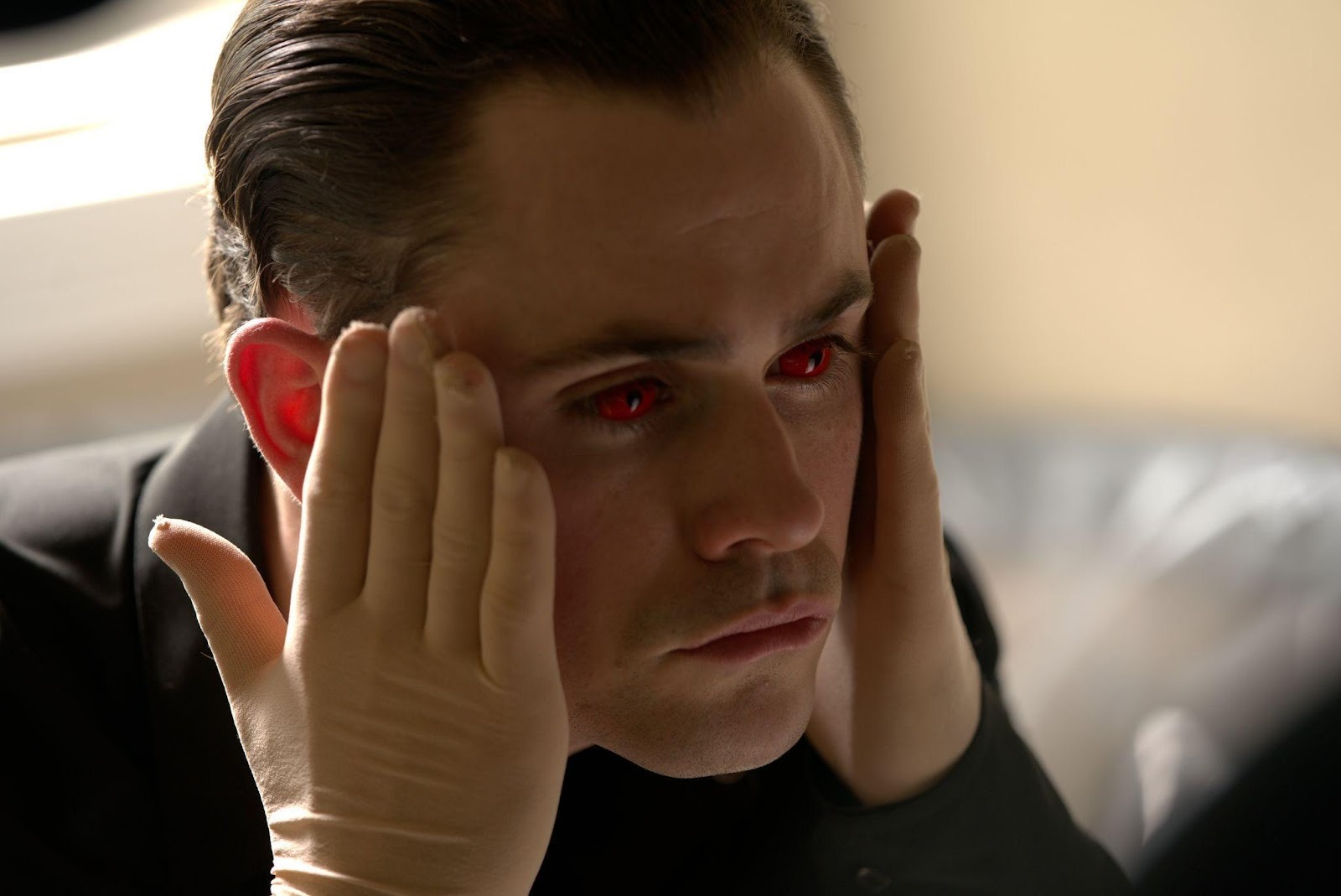
I have seen someone die on camera. During the Iranian Green Revolt, Twitter was refreshing so fast that the servers almost couldn’t keep up. I had seen hints about a woman named Neda, and the video crashed into my feed. In the video, you see the joy of freedom in her face until you hear the crack of a rifle, and her face goes slack as the life starts to bleed out of her body, and the light dies in her eyes.
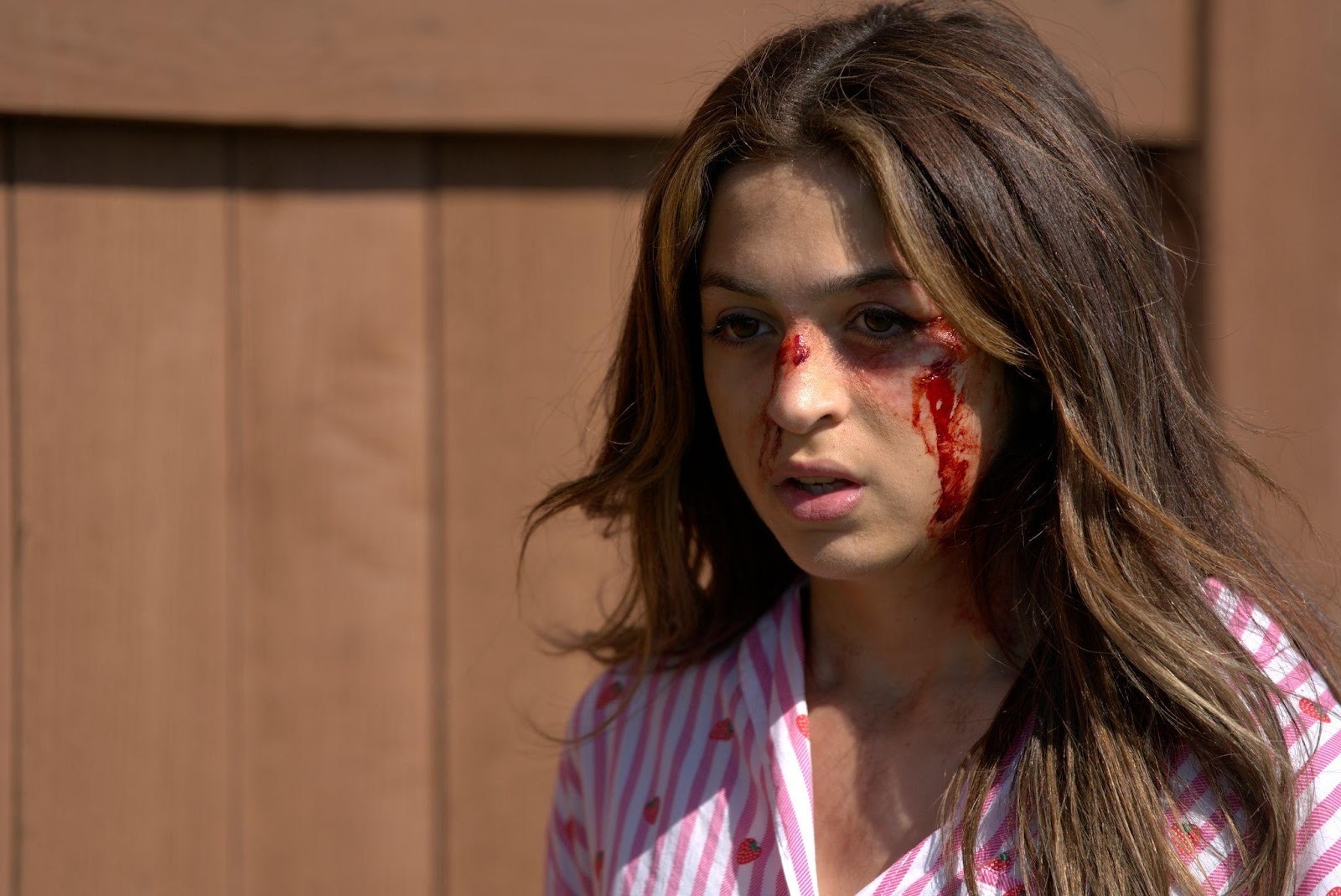
Neda Agha Soltan. I will never forget her, and when you are privileged or damned enough to see the moment someone leaves their body, you shouldn’t reduce it to a moment of entertainment. We are all endlessly and morbidly curious about death, which is where the original inspiration and popularity of the original Faces of Death from 1978 came from, but it is the one thing we can’t escape.
Dacre Montgomery is really frightening during his bouts of rage and his moment of sheep-like duplicity. His gaze, when you can see the wheels and levers turning in his head, is disturbing on a different level. So, he is scary pretty much all of the time. The worst thing is that I knew someone a lot like him. Montgomery has a fearsome level of dedication to this role.
Arthur is an empty house: forlorn rooms, echoing hallways, and windows covered in dust filled only with free-floating rage. Arthur is a pitiless yet pitiable person who doesn’t seem to engage with life unless it is on screen or filming another gruesome murder. He’s locked into a loneliness that is eternal.
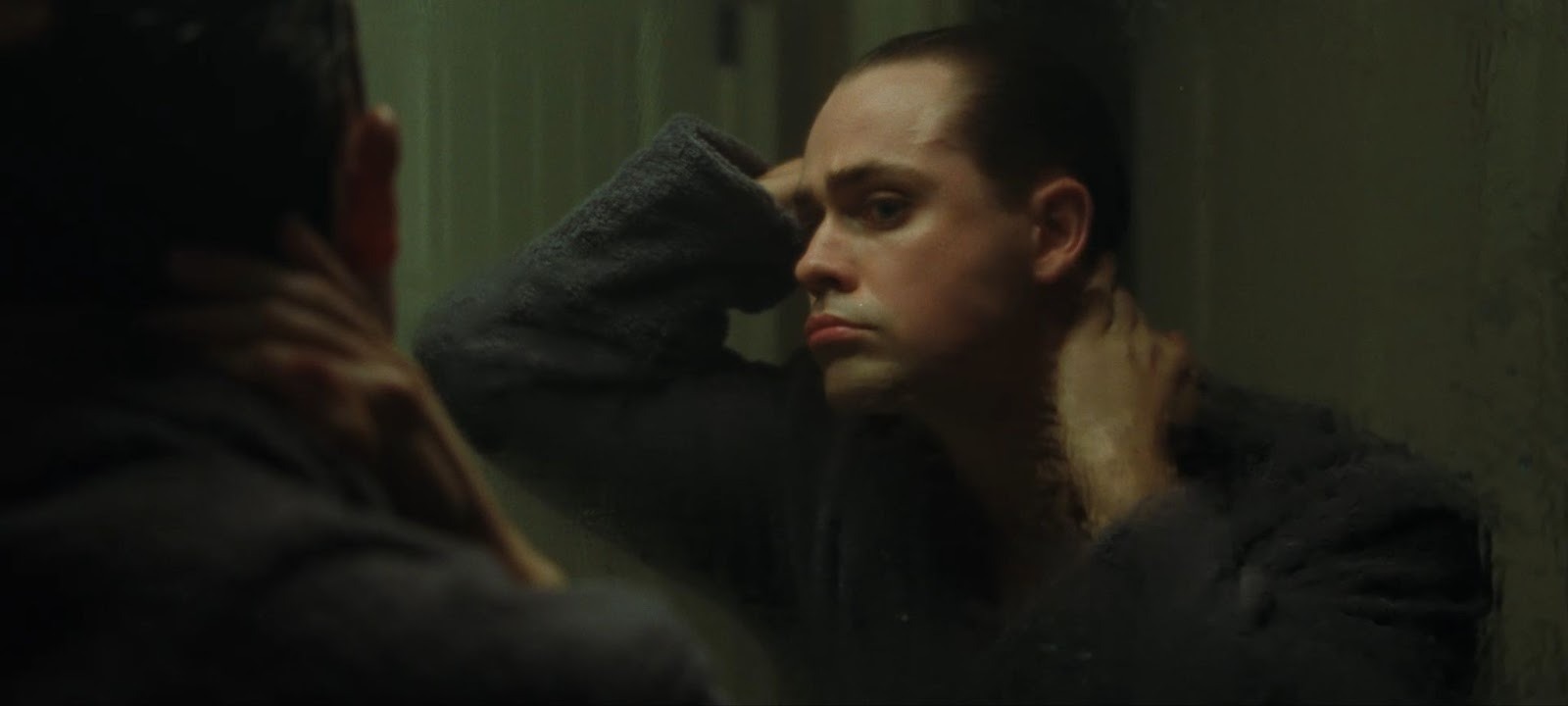
You can see who Arthur and Margot are and the impulses and needs that drive them to do what they do. The exceptionally talented cast does a wonderful job of making sure you can see them think the second before the killer strikes.
Barbie Ferreira’s Margot Romero (love that last name) is a final “girl” for the digital age. After her initial actions that set the plot in motion, she thrums with lightning and uses her brain to stay alive, but even then, what she has done and survived brings her out of her online infamy and shame back into the real world. Ferreira has not only a firm grasp on the role but a deep well of empathy for others that is crucial to Margot.
She goes from a guilt-ridden person who plays the scene of her mistake in her mind over and over to someone who knows that something is wrong and won’t stop until she has convinced the authorities, and failing that, takes the disturbing matters into her own hands. All of that hyperawareness and ability to problem-solve that came out of her tragedy becomes an asset rather than a liability.
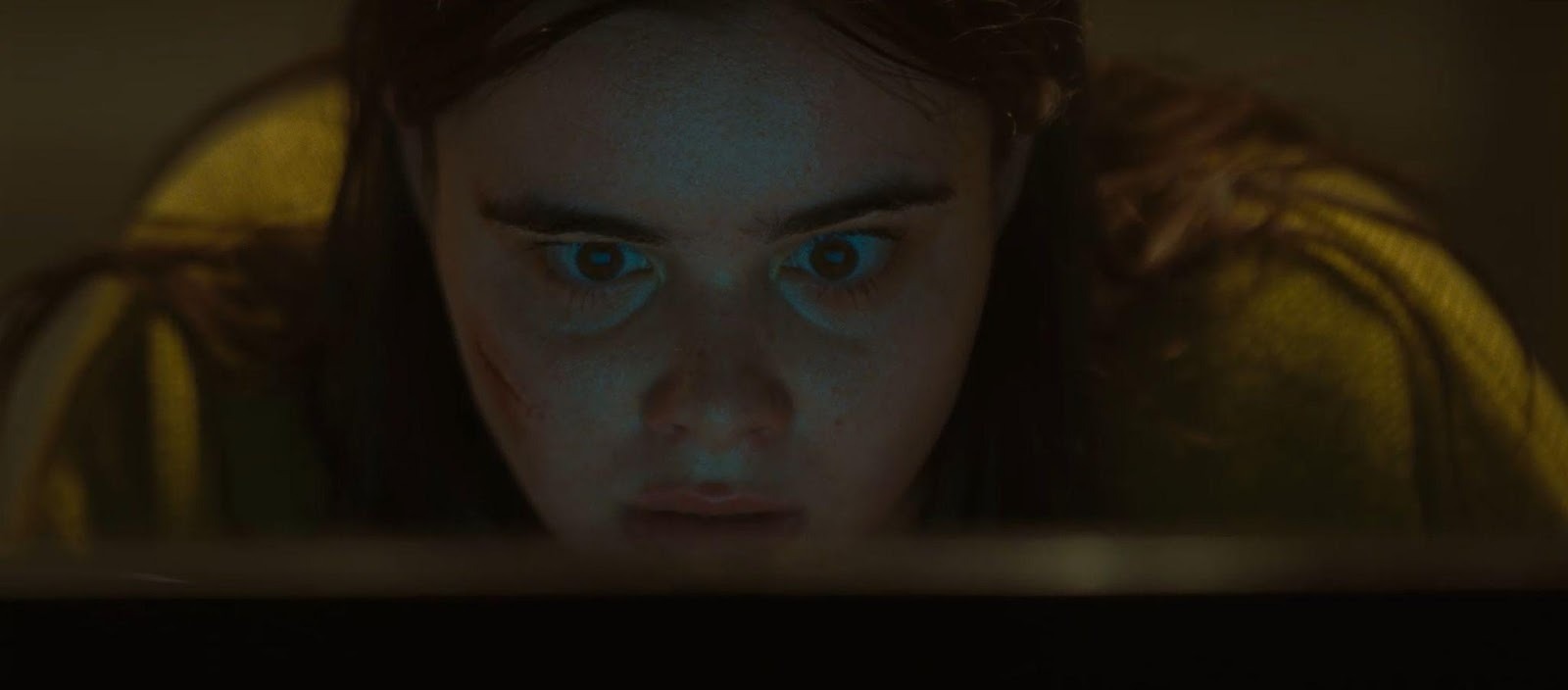
Goldhaber and Mazzei use their film to hold up the mirror of our society’s growing online narcissism up to our own faces and give us a glimpse of the skull beneath the skin, which syncs with the original FACES OF DEATH’s aims.
Curious about death? Here you go. Everything we watch changes us, and we can either change into bored thrill seekers, apathetic drones, or people who know what’s up and won’t stand for it anymore.
Faces of Death is a rage-fueled leap into a blood-drenched hell of being “too online,” a grotesquerie of human destruction that runs on likes and comments that does not judge you, but simply stares into you, knowing that one day, your time will be up.
Movie Reviews
Movie Review: Ian McKellen and Michaela Coel are razor-sharp in art comedy ‘The Christophers’

“The Christophers” looks like an art heist movie at first. A couple of wannabe heirs (James Corden and Jessica Gunning) hire a restoration specialist (Michaela Coel) to finish a series of paintings by their famous father (Ian McKellen), who wants nothing to do with them or the uncompleted works that would surely command an astronomical price tag.
The offspring, whom McKellen’s Julian Sklar vividly describes as wrecks — one a train wreck, one a shipwreck — feel they deserve an inheritance they’re smart enough to know they won’t receive through any will — or talent of their own. The specialist and sometimes forger Lori (Coel) has other motives. There’s the promise of paying rent, yes, but there’s also an element of revenge. Lori and Julian have a kind of history that the movie will reveal in time. She’s also been publicly critical of his later works.
But “The Christophers” is not an “Ocean’s” movie or a “Logan Lucky,” which is to say it’s not really a heist. There’s the tease of one, right up until the end, and the promise of the con. This latest film by the great and astonishingly prolific Steven Soderbergh is not out to give the audience what they think they want from him. Instead, it’s a meditation on art, legacy, creativity and the oh-so-touchy subject of who has the right to critique. It might sound a bit dreary, but Ed Solomon’s razor-sharp script and the brilliant pairing of McKellen and Coel make this lean two-hander breeze by.
You can read however much you want into how much Soderbergh (or Solomon) may or may not relate to Julian, who is determined to burn, bury and shred the unfinished “Christophers,” a series of paintings of a former boyfriend that became his most famous. It’s a fun and prickly exercise for any creative person to reconcile with the peaks and lulls of a long career in the arts — and Julian is luckier than most. He actually got famous and relatively wealthy from his paintings.
Julian huffs that “to judge art one must possess the skills to make said art.” It’s the kind of statement that, if given in an interview, might launch a thousand think pieces. Julian is both old and a devout rebel, with a lifetime’s worth of wisdom, wit and burned bridges in his arsenal. It’s a potent combination ripe for internet virality, but at the moment his online presence is mostly relegated to something akin to Cameo messages for 149 pounds a pop (249 if he mimes a signature).
When Lori arrives, he suddenly has an audience for his theatrical, nonstop musings: fun for McKellen, his character and the audience, but not so much for Lori, who absorbs the monologuing with steely indifference until she decides to take more control of the situation. There’s a bit of the generational disconnect that happens, but it’s somehow never cliche or predictable. The story zigs and zags with its characters as they work through the situation at hand and the larger issues both seem to be plagued by. The script throws a lot of ideas out there and, refreshingly, none of them is to be taken as dogma, especially not Julian’s comment about who has the right to judge art. Like many things he says, it’s probably just the most withering thing he could think of at the moment.
It is a funny thing, though, to critique a movie that does have so much to say about criticism, about what the person behind the keyboard might actually have the guts to say out loud to the person courageous enough to make something and put it out in the world. Perhaps it’s not actually that hard when the movie is as solid as “The Christophers,” or when the filmmaker in question is on a roll like Soderbergh with both “Presence” and “Black Bag.” His movies may have gotten smaller, but the verve remains.
This image released by Neon shows Ian McKellen in a scene from “The Christophers.” Credit: AP/Claudette Barius
“The Christophers,” a Neon release in New York and LA on Friday and nationwide on April 17, is rated R by the Motion Picture Association for “language.” Running time: 100 minutes. Three stars out of four.

Women are getting most of the new jobs. What’s going on with men?

Mamdani’s First 100 Days as NYC Mayor: A Timeline

WNBA formally approves Detroit franchise. Where will they play, and when?

My thoughts on the San Francisco dance party scene

Welcome to Y’all Street: bullish Dallas aims to steal New York’s financial crown

Florida High School Football Rankings: Top 25 teams – Oct. 21

How old is Bo Nix? What to know about Oregon quarterback ahead of 2024 NFL Draft

Cleary's 21 help Le Moyne down Central Connecticut State 69-64 in OT

99th annual Pony Swim held in Virginia

Indiana Members Credit Union announced as new anchor tenant at Bottleworks District
Women are getting most of the new jobs. What’s going on with men?

Video: How Trump’s Advisers Felt About Going to War With Iran

Unearthed clip exposes shocking claim by Newsom’s wife about inmates at violent California prison

Gaza journalists mourn Al Jazeera’s Wishah, killed by Israel

Exclusive: Trump weighs pulling some US troops from Europe amid NATO strains, official says
-

 Atlanta, GA5 days ago
1 teenage girl killed, another injured in shooting at Piedmont Park, police say
-

 Education1 week ago
Video: We Put Dyson’s $600 Vacuum to the Test
-

 Movie Reviews1 week ago
Vaazha 2 first half review: Hashir anchors a lively, chaos-filled teen tale
-

 Georgia3 days ago
Georgia House Special Runoff Election 2026 Live Results
-

 Pennsylvania3 days ago
Parents charged after toddler injured by wolf at Pennsylvania zoo
-

 Education1 week ago
Video: YouTube’s C.E.O. on the Rise of Video and the Decline of Reading
-
 Milwaukee, WI4 days ago
Potawatomi Casino Hotel evacuated after fire breaks out in rooftop HVAC system
-

 Education1 week ago
Video: Toy Testing with a Discerning Bodega Cat