Movie Reviews
'Monkey Man': Welcome to the Action-Movie Pantheon, Dev Patel


Revenge, we’re constantly told, is a dish best served cold — unless you’re a modern genre-flick fanatic, in which case you need payback to be served piping hot and preferably moving at 120 mph. Monkey Man is, on the surface, a fairly simple tale of vengeance: Man has vendetta. Man infiltrates villain’s world with intent on procuring a pound (or two, or 50) of flesh. See Man punch. And kick. And stab, slice, gouge, grapple, and disembowel. It also a labor of love for its writer-director-producer-star Dev Patel, and one that remains self-aware enough to realize that it’s entering an environment in which some explosions, a shootout and a few haymakers here and there will no longer cut it. Everything must be a melee. Nothing less than nonstop beast mode will suffice.
Luckily, Patel doesn’t have a problem with this way of thinking. In fact, his goal with his directorial debut is not to beat action moviemakers and A-list asskickers at their own game but to work his way into their ranks. A gleefully anarchic addition to the post-Raid: Redemption, post-John Wick world of mix-and-match fighting styles and adrenalized weapon-play, Patel’s pet project is as much a mash note to a way of presenting bloody-knuckled spectacle as it is a standard thriller. During his long introduction to the film’s premiere at SXSW last night, the hyphenate talked about his childhood love of Bruce Lee and namechecked both Indonesian and Korean action cinema in addition to a certain Keanu Reeves franchise. And while this entry into international mayhemsploitation territory often feels very much like a rough, earnest fan film dialing those influences up to 11, it also suggests that if Patel’s technique behind the camera catches up to his passion for the genre, he’ll be a force to be reckoned with.
His character, known only as “Kid,” is a regular figure in the underground fight-club circuit in Mumbai; he’s essentially a human punching bag, paid by the promoter (Sharlto Copley) to take a beating from whomever he’s up against. He’s known for a wearing a monkey mask in the ring, which doubles as a tribute to Hanuman, the Hindu deity who once led an army of simians against the ancient forced of evil. The mythological character was like a superhero to him when he was a boy, living in a remote village in the countryside. His mother would regale him with stories about Hanuman’s great deeds. That was, until the police came and slaughtered his friends, neighbors and the woman who loved him more than anything else in the universe.
Now, the Kid’s a grown man, living in the big city. He’s scammed his way into a job with Queenie (Ashwini Kalsekar), who runs a club catering to rich sex tourists and Mumbai’s toxic elite. After befriending Alphonso, the in-house gofer-slash-comic-relief (the mono-monikered Pitobash), Kid gets a promotion and is now serving champagne in the V.I.P. room. This is where Rama Singh (Sikander Kher) hangs out. Rama is the chief of police. He’s also the one responsible for the massacre that happened in our hero’s home town and left him permanently traumatized. Now the chance to settle a major score is within Kid’s reach. He just has to find the right moment to strike….
That turns out to be in a men’s restroom after Kid has sabotaged Singh’s dose of party drugs, at which point we get the first real taste of Patel as both an auteur dedicated to staging close-quarters combat and a purveyor of fists-of-fury chaos. You can tell that he, cinematographer and lover of color-filtered lighting Sharone Meir, French fight choreographer Brahim Chab, as well as his stunt coordinator Udeh Nans (and likely Patel’s stunt double) have mapped out a long sequence that starts with the simple pulling of a gun — and soon involves a bullet-riden fish tank, broken porcelain, busted jaws, a tuk-tuk chase scene and more Dutch angles and shaki-cam shots than you thought were legal. The style of shooting fight sequences that make viewers feel as if they themselves are in the middle of the fray has become cliché to the max. Yet Patel & co. throw themselves into this string of set pieces with the exuberance of enthusiastic amateurs rather than seasoned (read: jaded) pros. The familiarity somehow does not dim the rush, probably because of the infectiousness happening behind the lens and the sheer go-for-broke physicality happening in front of it. Besides, Patel is just getting warmed up.
Monkey Man isn’t above hitting the well-worn action film beats — again, this is a fan’s valentine to decades of Thrills Spills Chills Inc., from someone who knows these narratives backwards, forwards and sideways. And after Kid escapes his captors and is nursed back to health by a transgender community who have also dealt with persecution and violence first-hand, it’s simply a matter of screen time and training montages before the masked incarnation of Hanuman returns for one final boss battle. There are swipes at the way society’s underdogs and outcasts are treated by those who rule, how religious and cultural differences get politicized and then weaponized in the name of power and profit, and how a caste system continues to warp the humanity of all involved. Patel has said that he wanted to bring “soul” to a genre he loves so dearly, as well as a cultural specificity that goes beyond easy exoticization. You can tell he’s trying to thread in his own sense of identity as a performer and a person — to give you a sense not just that you’re watching an action movie shot mostly in India, but by someone in touch with their history and heritage includes being of Indian descent.
That said, Monkey Man is Patel’s way of leaving his mark on 21st century cinéma du kapow by courting the same feeling he gets as a consumer of screen carnage via creating it himself. This is not a message movie. It is a mayhem movie. One with personality and verve and food for thought served as a side dish, but a mayhem movie nonetheless. So when Patel throws that first lightning-fast right hook and aims an elbow at the face of thugs guarding the door, thus effectively kicking off a last act that can hold its own against almost any big climactic martial-arts-meets-gun-fu-meets-stabby-stab sequence of the past 10 years or so — this is the stuff his dreams are made off. Even when his debut stumbles occasionally as a storytelling vehicle, it still brims with the blood, sweat, tears, joy and more blood of person determined to make it a reality. The gentleman has clearly done his homework and put in hard training. An eventual entry into the Pantheon of hyperkinetic pulp creators doesn’t feel like a reach at all.
(Full disclosure: In 2021, Rolling Stone’s parent company, P-MRC, acquired a 50 percent stake in the SXSW festival.)



When I spend time around fellow writers, regardless of their achievements, conversation is much the same as in any other context. When I watch groups of fictional writers in films, they are continually striving to outdo one another, to show off their brilliant intellects. It’s a constant process of trying too hard, and it’s exhausting. To his credit, Dustin Hoffman, who plays established literary genius David in this torrid tale of family conflict, doesn’t come across this way, rising above the clumsy script thanks to his patient approach. The same cannot be said of the other actors, all of whom have proved their talent elsewhere yet seem seduced by the notion that this is how intelligent people behave.
The plot here is fairly simple, and not without potential. David’s son Jacob (Tom Sturridge) is a copywriter and successful creator of jingles, but after his wife Elise (Alison Brie) wins a major award, he starts getting insecure, wanting to prove that he can make it as a proper literary type. The obvious way to do this seems to be to write a biography of David, but David has no interest in engaging with this. He provides a number of reasonable justifications for this. Underlying them is the fact that we all tend to frame ourselves in different ways for different people. What one might be willing to say to the great anonymous public is not necessarily something one might feel able to say to one’s son.

This stalemate is broken by the arrival of John (André Holland, fresh from the similarly awkward – but smarter – The Dutchman), an old friend of Jacob whom David remembers fondly. At Elise’s instigation, a secret deal is made: John will look after the increasing fragile older man during the day and, in the process, extract his stories from him, giving them to Jacob for his book. John agrees to this because he needs the money Jacob offers him, and it seems like a sweet deal. It immediately sets up a power imbalance, however.
Complicating matters further are John’s past as a literary protégé who failed to fulfil his promise; the fact that he was once in a relationship with Elise, whose dissolution she regrets; and the pressure that she’s under to match her great success, from an agent who subscribes to the popular but rather tedious belief that inspiration is most easily found in bad behaviour.
Another way writers in films differ from those in the real world is that for them, critical success comes with money, so they don’t have to write very much. A good deal of this film is spent listening to them whine about how hard it is, as if under the misapprehension that it’s not really a form of work. Sturridge is particularly unfortunate; between this and Jacob’s whining about issues with his parents, he doesn’t get much else to do. Brie has a little more to work with as the film flirts with the idea that we’re caught up in Elise’s imaginary scenarios, but this doesn’t really convince. Holland manages to salvage something, but it’s only Hoffman who is really able to interject some energy into proceedings – ironic given that he spends a lot of his scenes in a haze of cannabis smoke.
It’s not terrible. Writer/director Alex Vlack frames scenes nicely enough and all the technical work is carried out to a good standard. There’s just little reason for viewers to invest. Like its characters, it’s intent on trying to communicate cleverly, but has very little to say.
Reviewed on: 04 Jul 2026
Movie Reviews
1986 Movie Reviews – About Last Night, Big Trouble in Little China, The Great Mouse Detective, Howling II, Psycho III, Under the Cherry Moon | The Nerdy

Welcome to an exciting year-long project here at The Nerdy. 1986 was an exciting year for films giving us a lot of films that would go on to be beloved favorites and cult classics. It was also the start to a major shift in cultural and societal norms, and some of those still reverberate to this day.
We’re going to pick and choose which movies we hit, but right now the list stands at nearly four dozen.
Yes, we’re insane, but 1986 was that great of a year for film.
The articles will come out – in most cases – on the same day the films hit theaters in 1986 so that it is their true 40th anniversary. All films are also watched again for the purposes of these reviews and are not being done from memory. In some cases, it truly will be the first time we’ve seen them.
This time around, it’s July 4, 1986, and we’re off to seeAbout Last Night, Big Trouble in Little China, The Great Mouse Detective, Howling II, Psycho III, and Under the Cherry Moon.
About Last Night
St. Elmo’s Fire was awful. This feels like a make-good for two of the actors.
Danny Martin (Rob Lowe) meets Debbie Sullivan (Demi Moore) and their chemistry is electric and immediate. They waste no time becoming serious, and moving in together, despite neither of them having ever had a serious relationship. They quickly discover it’s not quite as easy as just sharing an apartment like you do with a roommate.
I didn’t love the movie (mainly due to Jim Belushi’s Bernie character), but I did enjoy it far more than I anticipated.Moore and Lowe’s on-screen chemistry really clicked far more than most on-screen couples.
It’s a good character study, and keeps you engaged. Is it essential viewing? That’s up to you.
Where to watch: Available to stream.
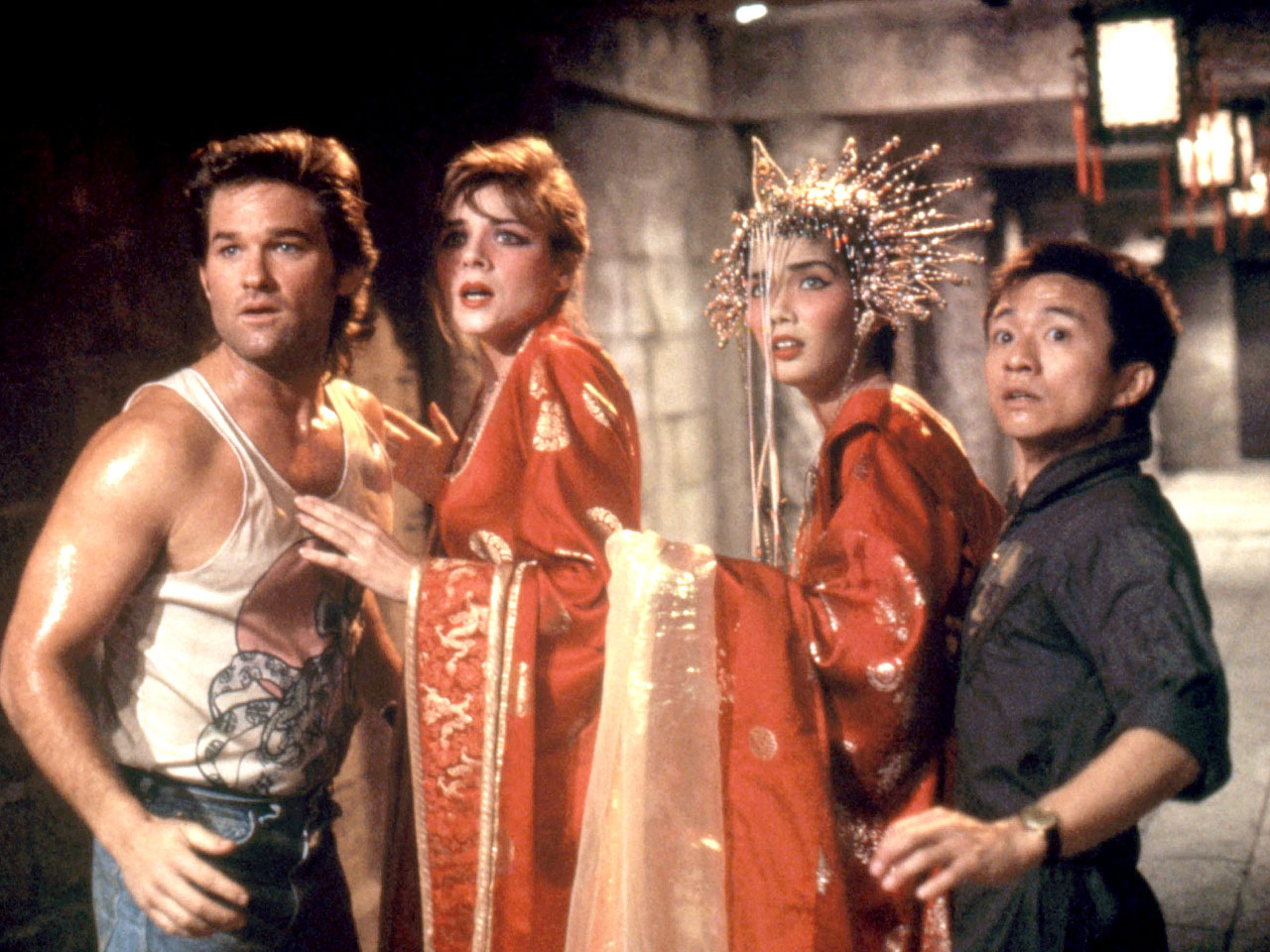
Big Trouble in Little China
If there was ever a poster child for a movie that found a second life in rentals and on cable, this is it.
Jack Burton (Kurt Russell) is a over-the-road trucker with a lot of thoughts on life and how important reflexes are. While making a delivery in Chinatown, he gets sucked into a situation with an ancient Chinese evil trying to regain its humanity, and all Jack really wants is to get his truck back.
John Carpenter wasn’t quite a household name, but with films such as Halloween, The Thing and Escape From New York to his name, people were taking notice. Teaming with Russell for another outing seemed like it would be another win, but this one proved just a little too odd for mainstream audiences. Once it got into our homes, however, everyone fell in love with it.
As Jack Burton always says, it’s a must-see for any 80s journey.
Where to watch: Available to stream.

The Great Mouse Detective
I had never seen it, and as Disney films go, I would have been fine keeping it that way.
Set in Longon in 1897, a young mouse named Olivia Flaversham witnesses her toymaker father get kidnapped. She seeks out Basil of Baket Street, also known as the Great Mouse Detective. Along with David Q. Dawson, recently returned from serving in the military in Afghanistan, the three of them try to stop Professor Ratigan from replacing the Queen.
It’s just a Sherlock Holmes story, but with mice. I didn’t find anything that compelling about it. It was pretty enough to look at, but the story just left me fairly empty.
Where to watch: Available to stream.

Howling II
I… have a lot of thoughts.
Following up on the end of the The Howling, Ben White (Reb Brown) buries his sister Karen White, and quickly learns she was a werewolf. He teams up with werewolf hunter Stedan Crosscoe (Christopher Lee) to take down Stirba (Sybil Danning), the queen of the werewolves who is about to celebrate her 1,000th birthday, and stop the spread of the werewolf curse.
On paper it sounds fine, in execution it is just… horrible. Poorly lit, horrible acting, low-grade effects, and costuming that leaves you more confused than anything else.
Avoid at all costs.
Where to watch: Available to stream.

Psycho III
I have to admit, so far these sequels haven’t been horrible.
Following up shortly after the vents of Psycho II, Norman (Anthony Perkins) is still hiding the body of Emma Spool, and having issues again with seeing “Mother.” He hires drifter Duane Duke (Jeff Fahey) to run the motel. He also meets Maureen (Diana Scarwid), a nun on the run after she accidentally kills one of her sisters. With a new woman in his life, Mother has some thoughts on what Norman should be doing.
In general I actually enjoyed this new outing in the franchise, although it feels it missed some opportunities at the end of the story of Norman and Maureen working together. What if Maureen had actually been the one manipulating Norman this time? There was another movie lurking in the background that sadly never gets broached.
What we did end up with, however, was entertaining.
Where to watch: Available to stream.

Under the Cherry Moon
This film was unfairly maligned.
Christopher Tracy (Prince) and Tricky (Jerome Benton) as wooing women in France in hopes of getting enough money to head back to Miami one day. When Christopher hears about Mary Sharon (Kristin Scott Thomas) inherting a trust fund of $50 million for her 21st birthday, she becomes his next mark, but little does he know how it will end for him.
Following Purple Rain, Prince could do no wrong in Hollywood and was given a blank check for his next film. Audiences and critics did not warm to this film as it wasn’t Purple Rain 2 and it lived with a bad reputation for years.
I hadn’t seen it in 35 years or more when I watched it for this report, and… I really enjoyed it. It’s over-the-top, but in the right way. Prince was clearly paying homage to the silent movie romance films, and it works for what it is. Is he a great actor? No. Does it work for this film? Yes.
Honestly, this may be one of the most enjoyable films I’ve had in this project in several weeks. It’s worth a reassessment.
Where to watch: Available to stream.
1986 Movie Reviews will continue on July 11, 2026, with Club Paradise.
Movie Reviews
Movie Review: ‘Minions & Monsters’ is a very yellow mash note to Hollywood – Sentinel Colorado

-

This image released by Universal Pictures shows a scene from Illumination’s “Minions & Monsters.” (Universal Pictures via AP) -

This image released by Universal Pictures shows minions with the alien character Goomi, voiced by Trey Parker, right, in a scene from Illumination’s “Minions & Monsters.” (Universal Pictures via AP) -

This image released by Universal Pictures shows minion Henry, voiced by Pierre Coffin, left, and Goomi, voiced by Trey Parker, in a scene from Illumination’s “Minions & Monsters.” (Universal Pictures via AP) -

This image released by Universal Pictures shows a scene from Illumination’s “Minions & Monsters.” (Universal Pictures via AP)
Every once in a while, Hollywood gets high on its own supply and makes a love letter to moviemaking. It happened recently with Steven Spielberg’s “The Fabelmans” and George Clooney’s “Jay Kelly.” Now it’s time for the unlikeliest of love-letter writers: canary-yellow, gibberish-speaking, overall-wearing mini-monsters.
“Minions & Monsters” — the third chapter in the ongoing standalone adventures of the “Despicable Me” pint-sized enablers — is about the sheer greatness of moviemaking, and it’s a navel-gazing misfire. Few industries — maybe journalism, sure — is as enamored at making its profession seem heroic.
The Minions this time find themselves at the dawn of both the movie business in Hollywood and the last push by suffragists to get the vote. It’s a weird confluence that writers Brian Lynch and Pierre Coffin fumble.
The movie has playful references to old screen gods — Harold Lloyd dangling from the hands of a clock and Charlie Chaplin swallowed by the gears of a mechanical system — along Hollywood nods to “Casablanca” and the punny title “The Good, the Bad and the Stupid” — but the kids in the audience won’t get them and their parents are just too tired. Harold Lloyd jokes don’t hit as hard in 2026.
Two of the legion of faceless Minions step forward this time — best friends James and Henry, creative misfits amid a smear of yellow drones — to unite and make a movie. (Who knew there was a Minion counterculture?)
Things go very well at first — turns out adding a Minion or two to a cowboy or a heist movie makes them instant kings of the box office — and they soon move into a Beverly Hills mansion and become insufferable. James dreams of winning an Oscar, which in this case is a statuette of a gold banana, a Minion obsession.
But they hit a wall when silent movies turn to talkies. And since they spout nothing but nonsense — “Fantastico” “miso soup” and “vamos” — can’t make the transition. They’re dumped out of the studio system.
That’s when James and Henry finally get the plot going: Make their own killer monster movie by conjuring up real monsters. The first one they try turns out a little weird: The gigantic, fearsome octopus-dragon they request turns out to be a cute green Funko Pop-like critter called Goomi, voiced by Trey Parker. Goomi promises to find them some real monsters. But should we trust him?
Coffin, making his first solo directing effort after co-helming all three “Despicable Me” films and the first “Minions,” voices all the Minions — he must be fun to have at parties — and is an assured hand. The violence levels are a little high for PG, including a beheading and various impalings, plus the usual senseless mayhem.
The screenwriters have included a romantic subplot involving a suffragette voiced by Zoey Deutch who falls for a robot-alien (standout work by Jesse Eisenberg) in a storyline that makes less and less sense. And the framing device — a museum tour guide explaining how Minions shaped Hollywood — sags awkwardly.
Adults can keep awake looking for the Easter eggs Coffin has left for serious cinephiles: “20,000 Leagues Under the Sea,” “Steamboat Bill, Jr.,” “A Trip to the Moon,” “Metropolis,” “Citizen Kane” and “The Blob.” Maybe the best moment in the movie is almost a throwaway: Director George Lucas, appearing as himself.
“Hooray for Hollywood” is on the soundtrack and that might have been the subtitle for the movie itself. There are some people whose eyes get moist thinking about picking up a film camera and following their muse, having their work play in a dark theater to cheers. And then there are others who just want to get on with it already. “Vamos!”
“Minions & Monsters,” a Universal Pictures release that opens in theaters July 1, is rated PG by the Motion Picture Association for “violence/action, language, and rude/macabre humor.” Running time: 90 minutes. One and a half stars out of four.
Related
-

 Health4 minutes ago
July 4 heat delays America 250 celebration as State Fair guests share love of USA
-

 Sports7 minutes ago
Toronto Maple Leafs top pick Gavin McKenna reveals that he’s changing his jersey number
-

 Technology12 minutes ago
China’s robot-run hotel opens to public in 2027
-
 Business19 minutes ago
China-backed AI tool behind fake Brad Pitt fight making Hollywood inroads
-
 Entertainment22 minutes ago
Don Was produced the Rolling Stones, Bob Dylan and Ozzy. At 73, he found his voice in Detroit — and the Dead
-
 Politics34 minutes ago
Commentary: Happy Birthday, America! You’ve weathered another rough year
-
 Sports42 minutes ago
Dodgers’ Eliezer Alfonzo praying his sister and stepmother will be found in Venezuela
-

 World52 minutes ago
Reform UK’s Farage failed to disclose funds from convicted criminal: Report

