Movie Reviews
Film Review: The Moon Thieves (2024) by Steve Yuen


“Lies are best based on truth”
The caper or heist film is one of the sub-genres of action that has a lot to offer thematically and stylistically if done correctly. If we think back to “To Catch a Thief” or even the “Oceans”-series, the world these stories show are a reflection of a society based on materialism and property, with the thieves sharing the same obsession as the owners of the object they want to steal. On the other hand, given its potential to be an ensemble piece, the caper/heist feature also offers actors the chance to shine. Steve Yuen’s “The Moon Thieves”, the director’s third feature, tries to combine the two aspects of the genre, but fails to offer some depth to its otherwise intriguing premise.
The Moon Thieves is released exclusively in UK cinemas by Central City Media
Uncle (Keung To) is a major player in the Hong Kong underworld and he is also a successful dealer in fake and real watches. Upon hearing three prestigious watches owned by painter Pablo Picasso will be auctioned in Tokyo, he recruits a crew to steal them and exchange them with counterfeits. Chief (Louis Cheng), a loyal follower to Uncle’s father, is the leader of the crew which also consists of Mario (Michael Ning), an explosive expert, Vincent (Edan Lui), a master counterfeiter, and finally Yoh (Anson Lo), a safe-cracker. Chief and Mario are somewhat skeptical of the two younger members of the team, especially Vincent who has issues with the whole undertaking and prefers to not be part of the heist itself.
However, he changes his mind upon seeing the contents of the safe where the watches are kept. Among the Picasso watches, there is also the infamous Moonwatch, which was supposedly worn by Buzz Aldrin upon walking on the moon for the first time in 1969. During a fireworks festival, the heist takes place and despite a few hiccups, everything goes largely as planned. But when one of the thieves also takes the precious Moonwatch, this sets in motion a series of events, as a Japanese businessman and crime lord is unwilling to give up on his property this easily.
While the premise of having a crew of thieves stealing three watches does not sound thrilling at first glance, Yuen’s film manages to make this idea attractive from the very first minute on. As we are introduced to the character of Vincent, we also delve deep into the world of watches, the art of making a “frankenwatch” using vintage parts from other watches and ultimately selling it to some rather shady looking individuals. The fast-paced editing and overall glossy aesthetics emphasize the image of a world of prestige and property, but also one easy to fool by a shiny surface, which is essentially the core of “The Moon Thieves”. Consequently, the characters go through various episodes in which they con their targets, deceive them and come up with such elaborate schemes that more than once seem a little pointless. Thanks to the performances of the cast, this is done in a way which is quite entertaining and even has some humorous interactions.
At the same time, this elaborate magic-show, which is another way to describe “The Moon Thieves”, becomes stale after a while. In the second part of the feature, the action elements take up much more space, making it look and feel more like every other blockbuster. It is still solid, especially the shooting and the stunts, but then again you cannot help but wonder whether there could have been more depth to some elements of “The Moon Thieves”. The characters, while some of them seem to have an interesting backstory, are more or less the conventional band of lowlifes and con-artists we have come to expect from the genre. Additionally, you cannot help but wonder about some of the casting decisions, especially Keung To as Uncle, who tries to give his best shot at being an intimidating mobster, but lacks credibility due to his young age and delivery.
“The Moon Thieves” is a solid caper/heist movie with some interesting ideas, which fail to fully materialize resulting in an ultimately conventional finale. Undoubtedly, there is a lot of fun to be had with Steve Yuen’s film, but it will also likely be forgotten soon after watching.



The idea of a young, aspiring filmmaker running around their backyard with a low-quality camera and a gaggle of friends roped into performing in their latest project is nothing new. In fact, it has been a staple of popular culture for decades. That is what makes Kane Parsons’ debut online short, The Backrooms (Found Footage), especially notable. When it was released in 2022, it felt uniquely connected to that long-standing piece of American cinematic mythology.
The short opens with a group of kids on set, preparing to shoot another take for what is clearly a makeshift, shoestring-budget horror project. Then, the camera operator unexpectedly slips into another reality of sorts: a liminal space hidden beneath the ground where the crew was filming. As the story transitions from the real world into the “backrooms,” Parsons’ approach also evolves, moving beyond traditional filmmaking into something digitally generated rather than physically captured by a camera.
In hindsight, it plays as an incredibly loaded opening statement from the young filmmaker. The king is dead, long live the king. The era of kids running around their backyards trying to imitate the aesthetics of professional filmmaking has given way to a new generation embracing the possibilities and limitations of entirely different tools, such as Blender. Now, Parsons has partnered with A24 to bring that vision of horror’s future to the big screen with his debut feature film, Backrooms.
The result, while occasionally uneven, feels like something genuinely significant. It is a film that suggests the beginning of a new chapter for the horror genre, one shaped by creators who grew up with digital tools, internet culture, and a completely different understanding of what filmmaking can be.
TOP FIVE THINGS ABOUT “BACKROOMS”
5. Assured Direction
Kane Parsons is a young man, but he’s someone who has been telling stories within this exact narrative and tonal space for years now. That level of clarity and concentration is demonstrated in his debut film in spades. Working with cinematographer Jeremy Cox and editor Greg Ng (both of whom worked on Osgood Perkins’ films Longlegs and The Monkey), Parsons creates a visual language that often feels immersive and claustrophobic in equal measure.
The use of wide-angle lenses throughout is a great choice that serves to both accentuate the off-kilter nature of this world and showcase even more of production designer Danny Vermette’s remarkable work. Altogether, it does not feel like a film made by a novice, but rather one made by someone who is confident and in control of their cinematic craft. That is a testament to Parsons’ talents as a director.
4. A Very Good Script
The script for Backrooms, written by Will Soodik and based on the stories originated by Parsons and his YouTube body of work, is articulate, thoughtful, and incredibly well-constructed. As audiences have seen time and again with earlier attempts like Slender Man and Five Nights at Freddy’s, it is not exactly easy to translate what makes a lo-fi analog horror concept work in the digital world to the big screen without losing what makes it special.
But Soodik’s writing manages to let Backrooms have its cake and eat it too, maintaining many of the aesthetic and tonal choices that made those short films work so well while also delivering a much more traditional and compelling character-driven drama that ties everything together. For the first act and a half of the film, I was genuinely shocked by how well it managed to maintain this precarious balance. However, it was not quite meant to last…
3. Strong First Half, Lackluster Back Half
If I have one real critique of Backrooms, it is that the stellar first hour-plus of the film is severely bogged down by its final stretch. Without spoiling things, there’s a moment in the film where the baton is passed from one perspective to another, and while this initially seems to hold a great deal of potential, it ultimately leaves things feeling underdeveloped and uneven during the final stretch.
It also falls into the trap of attempting to explain a bit too much about the otherworldly horrors of the Backrooms in a way that only serves to deflate the terror-inducing awe of the concept while also raising even more questions. There are also some character choices that feel jarring and underbaked, making the whole thing ring just a little hollow by the end.
2. That Mid-film Setpiece
Just before that aforementioned perspective switch, audiences are treated to what has to be considered the centerpiece of the entire film: an extended set piece shot entirely in a found-footage style as a trio of characters enters the Backrooms. Everything about this sequence works, from the way the film builds toward it to the performances and the eloquent, highly effective blocking. All of these elements come together to create what is easily the strongest section of the film.
This is Parsons truly operating in his element, and it absolutely shows. The film is worth seeing on the biggest screen possible for this tour-de-force sequence alone.
1. Blending Formats
As the latest in a growing line of online content creators making the leap to the big screen with aplomb, Parsons’ Backrooms is unique in that it feels actively engaged in conversation with both present-day audiences and decades of horror influences. The film is modern in its conventions and the way it communicates with viewers, yet it is set in the ’90s and draws inspiration from projects such as The Texas Chain Saw Massacre, Eraserhead, The Blair Witch Project, and even the more recent Skinamarink.
The result is a film that feels as though it is building upon both the foundations of the horror genre as a whole and the foundations of Parsons’ online work. Because of that, Backrooms is able to reach some genuinely impressive heights.
GRADE
(B-)
Kane Parsons’ Backrooms is an incredibly taut, suspenseful, and dread-inducing debut feature that promises great things from the young filmmaker for years to come. If the film had managed to maintain the remarkable balancing act it nearly perfects during its opening hour or so, it would have been a solid A in my book. As it stands, the final half-hour bogs things down and gums up the works a bit, but it is nowhere near enough to counteract all of the greatness the first half achieves.
Backrooms is occasionally great and consistently solid, more than deserving of every bit of the success and attention it is receiving.

Discover more from RGM
Subscribe to get the latest posts sent to your email.

Often when the word of mouth begins to spread and hype the newest “best movie ever”, the viewer has to take these opinions with a mound of salt. But as the week two financial gate for Obsession jumped over twice as high as its debut, people started paying attention. With a Youtuber at the helm and the critics lauding this romantic horror film as the second coming, it was time for this particular reviewer to see what the hype was all about.
Obsession is written and directed by Curry Barker (Milk & Serial 2024). It stars Inde Navarrette (Superman & Lois TV Series 2021) as Nikki and Michael Johnston (9-1-1 TV Series 2026) as Bear. Bear is in love with Nikki, but he lacks the gumption to ask her out. On a whim, the bashful Bear buys a “One Wish Willow”, a magical totem that, when broken, allows the bearer one granted wish. Bear wishes for Nikki to love him, but this love comes at the ultimate cost.
The acting is the first thing that the audience will become obsessed with in Obsession. Navarrette is poised for a breakout year and would fit very well as a new-age “final girl” in the horror genre. Johnston is no slouch either, as he brings a lot of layers to Bear, but Navarrette is the one that’ll haunt your dreams for weeks. The actors told the stories on their faces, and Navarrette’s sudden screams make for the most natural jump-scares in ages.
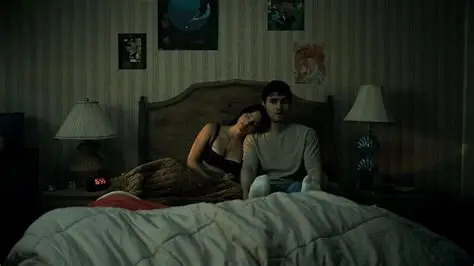
Obsession also thrives in its technical prowess. The quiet sound design and still characters make the movie a genuinely unsettling experience. The usage of rewinding shots gives Nikki a chilling economy of movement, while speeding up shots creates sudden peril and makes scenes instantly uncomfortable. The viewer never gets a chance to truly catch their breath, but the stakes continue to grow with every scene.
It’s very easy to see why Obsession has audiences buzzing. It’s the kind of movie that’s going to hold a spot at the top of lists at year’s end, but if the chance arises to see it in a large theater, the experience will be even more rewarding.

Starring: Marshall Williams, Richard Harmon and Alex Essoe
Directed by: James Kondelik
Rated: NR
Running Time: 108 minutes
Our Score: 1.5 out of 5 Stars
Survival horror is the ultimate guilty pleasure because you can amplify any life-or-death situation into the paranormal, horrific, thrilling, or cruelly dramatic extremes it finds itself in. So why doesn’t “Pitfall” come close to tickling “The Ritual,” “The Blair Witch Project,” or “Wolf Creek” vibes?
Woods and grief feel like a ritualistic trope at this point as “Pitfall” opens on Scott (Marshall Williams) and Ashley (Alex Essoe) mourning the death of their parents. For reasons that may or may not be revealed later, they join three friends on an ominous trip that quickly introduces the titular pitfall, a massive trap designed to kill prey.
The movie constantly battles convention with unpredictability. The problem is that at more than 100 minutes long, there’s plenty of time to sit around and wonder where the story is heading. If “Pitfall” moved with the frantic pace of a Tuesday afternoon soap opera on meth, maybe I’d be swept up in the chaos. Instead, I found myself waiting for reveals that felt more eye-rolling than shocking.
I really wanted to like “Pitfall” because of how invested it is in physical violence, emotional trauma, and psychological brutality. Unfortunately, the movie never convinced me it knew what to do with those ideas. By the time it arrives at its revelations and ultimate purpose, “Pitfall” feels less like a title and more like a review.
-

 Connecticut3 minutes ago
Danbury OKs expanded building plans for west side cancer center
-

 Delaware6 minutes ago
New study finds PFAS contamination widespread throughout Delaware River Basin
-

 Florida11 minutes ago
Florida baseball takes down Miami as Gators reach Gainesville Regional final
-

 Georgia18 minutes ago
A Georgia Wildlife Haven Forged by Fire and Peat Nears UNESCO Recognition – Inside Climate News
-

 Hawaii21 minutes ago
Hawaii’s 11 Best Retirement Towns Ranked
-

 Idaho26 minutes ago
Woman sentenced to prison for role in Idaho Falls hotel prostitution business – East Idaho News
-

 Illinois33 minutes ago
With Stojakovic secured, Illinois can stake its claim as a title contender
-

 Indiana36 minutes ago
Caitlin Clark’s stats Saturday in Indiana Fever vs Portland game

