Entertainment
Meet the Netflix executive responsible for your recommendations


LOS GATOS, Calif. — There’s no red carpet for people who make sure Netflix provides an appealing user experience; no Emmy or Oscar for an app that gives you the right recommendations for what to watch next.
But those functions, when working correctly, are an advantage for Netflix in the streaming wars. Chief Product Officer Eunice Kim is the executive in charge of overseeing much of what makes Netflix tick — such as incorporating new features into the streaming service including live events, ads and mobile games.
Her team analyzes consumer behavior on Netflix to determine which shows and movies could excite viewers next on the streaming service and makes sure that the viewing experience is smooth. As such, she’s among the most important Netflix executives you’ve probably never heard of. That comes with the territory of being the person making sure Netflix is a seamless product, one of the most underappreciated aspects of the streaming wars.
“We make it look easy, but it’s not actually that easy under the hood,” said Kim. “If we’re doing our jobs, we shouldn’t be talking about the product all that much, but it should be working for people.”
Kim, who was promoted to the role in October, joined Netflix in early 2021. She previously served in product management roles at Google Play and YouTube. She grew up in Fremont, Calif., where her dad launched a startup out of their garage and she soldered motherboards. When she’s not looking at screens, she enjoys gardening.
She spoke with The Times in an interview at Netflix’s Los Gatos headquarters. This conversation has been edited for length and clarity.
How do you see the Netflix product experience evolving as the company adds different types of content, like games or live events?
These new content types require us to really evolve the experience that lives today. We like to joke that our current homepage experience on TV is about 10 years old. That doesn’t mean we haven’t done tremendous amounts of work to improve it over time. But at its core, it’s remained the same and it really was built and designed for a streaming video-on-demand service. Every facet of how we’ve arranged everything anticipates an on-demand video experience.
LOS GATOS, CA – JAN 11: Eunice Kim, Netflix’s Chief Product Officer, is photographed at the Netflix offices in Los Gatos, CA on January 11, 2024.
(Benjamin Heath / For The Times)
Live TV is like, “Hey, everyone gather on the couch now and watch it now,” right? So the signals we send to people [to tell users] now’s the time to gather are super important. In games as well, the content engagement and pattern is very different. You can play the same game for a few years, if you’re really into it.
You’ve said Netflix users on average watch six genres. How do you anticipate what people are feeling like watching?
We want to pay attention a little bit more closely in real time to the way that you’re browsing the service, so that we can interpret that a little bit faster. For example, you dwelled a little bit on this trailer — that’s maybe of interest. We’re really just trying to make sure that timeliness is built a little bit more deeply into the way that we understand your needs.
To some extent, familiarity breeds interest. Like the first time you see something, you may or may not be paying attention, then you hear about it through word-of-mouth, maybe there’s an L.A. Times critic’s review that you saw, you see a TikTok video on that title, there’s the billboard that’s on Sunset Boulevard. So it may be all of those things lead up to some degree of interest for a title.
Let’s use an example to explain how the recommendations work. Like, say, the sci-fi movie “Rebel Moon.”
The very simple signals for us are that you are watching more content and that you’re showing us that you enjoy it, meaning that you finish the whole movie or you give it a thumbs up at the end. When we think about the categories that help us decide what we like, there are a couple of things we look for, including your past viewing behavior. Is “Rebel Moon” similar to other kinds of content that you watch on the service? Or you watched the trailer twice, or you added it to your list or you opened the email about “Rebel Moon.”
And then there’s what tells us how we know that “Rebel Moon” is a sci-fi movie. It sounds very basic, but when you have thousands of titles on the service, how do we classify that? Sci-fi is a broad category. “Dune” is a very different flavor from “Rebel Moon.” So the precision of our understanding of the content at what we call the metadata level also helps us understand the content similarities.
How does user behavior and data affect what trailers or promotion we see for Netflix content?
The way we present each title can be slightly different for each person. We might be playing up the angle about the race car drivers being part of a live event like “The Netflix Cup,” or the golf players being part of it because we think you’re going to recognize the face because we know that you watched “Formula 1: Drive to Survive.” Of course, not everyone who watches Netflix will be interested in a given event. We want to make sure we reach the right people. If we’ve never seen any indication that you have any interest in sports, it’s unlikely that we would put that in front of you.
How many different trailers are there for each show or movie?
For our bigger titles, we might have up to six on average.
There was a technical issue with the reality dating show “Love Is Blind’s” live reunion in April, which was one of Netflix’s early efforts in live programming. How has Netflix improved its livestreaming capabilities since then?
That was definitely a humbling moment for us. We definitely took stock and asked ourselves, what can we do better? We’ve really mainly just been focused on improving our technical capabilities and our operations behind this and are super excited about the way that we were able to pull off “The Netflix Cup” and more recent live events that we’ve had on the service. So we’re feeling pretty good, that we’ve learned from that and evolved from it.
In any complex technical system, there can be any number of things that go wrong, right? There’s never a world in products and tech where there are no mistakes. That’s just not possible. So really the name of the game is how quickly did you catch your mistakes and fix them? That’s half the battle in our world.
How is Netflix working to improve the experience for gamers? For example, on the mobile app, gamers still need to download the games via the Apple and Google app stores first, rather than have it be instantly playable on the Netflix app.
Downloading from the app stores is something we do because those are the policies that we abide by in partnership with Google and Apple. We try to make that discovery as simple and seamless as possible. I think about one feature we’re particularly proud of that made this easier for our members. If you’re on your iPhone and you find a game, we have what we call a “bottom sheet experience.” [It] just kind of slides up, and you can just press “install,” and that installs without landing you in the app store. That had a really nice bump in impact in terms of making that experience easier for our members.
Netflix has expanded the number of games it offers. Are games driving engagement?
We’re at almost 90 games right now. We’ve been very pleased with the progress we’ve made and met the goals that we had for 2023 around engagement.
How did you get interested in this type of work?
My dad did a classic hardware startup out of his garage. So from a young age, I learned how to solder motherboards and inventory microchips and would write marketing materials for COMDEX, which was the big computer trade show back then.
Discussions about technology and reading sci-fi were part of my family upbringing. It was ironic that I ran away to the East Coast for college to be a writer because I was just so tired of the tech-speak, but it drew me back because there’s something really profound about the way that technology can enable our lives and bring us joy. It can also bring us misery if we’re not careful. I think finding that right balance is super important.


Matt Brown, who starred with his family in the Discovery reality television show “Alaskan Bush People,” was found dead in the Okanogan River in Washington state, law enforcement officials said Sunday.
Brown’s body was discovered Saturday by a group of private citizens who were conducting a search, the Okanogan County Sheriff’s Office said in a statement.
Brown’s brother, Bear Brown, said in a video posted Saturday on social media that fellow brother Noah had been with the search team, helped pull the body out of the river and identified him.
The official cause and manner of death is still to be determined by the coroner, the sheriff’s office said. But the Brown family believes Matt Brown died by suicide, Bear Brown said in the video.
Witnesses said they saw Matt Brown in or near the river and that he “took his own life,” Bear Brown said on social media.
“I would have never suspected he would hurt himself, honestly,” Bear Brown said in the emotional video. “He struggled for a long time.”
Bear Brown said his brother had battled with alcohol and drugs and that Matt Brown told him in their last conversation that he had “fallen off the wagon.”
The Brown family and their life in the Alaskan wilderness were the subject of the reality TV show “Alaskan Bush People,” which ran on the Discovery Channel from 2014 to 2022.
Suicide prevention and crisis counseling resources
If you or someone you know is struggling with suicidal thoughts, seek help from a professional or call 988. The nationwide three-digit mental health crisis hotline will connect callers with trained mental health counselors. Or text “HOME” to 741741 in the U.S. and Canada to reach the Crisis Text Line.

- PRESSURE
- Starring: Brendan Fraser, Andrew Scott and Kerry Condon
- Directed by: Anthony Maras
- Rated: R
- Running time: 1 hr 40 mins
- Focus Features
Our score: 3.5 out of 5
On the most recent episode of our “Back in the Day” podcast the crew and I took a look at some of the greatest war movies ever made. In doing my research I learned that there have been more then 5,000 feature films dealing with World War II alone. 5,000!! Some of them are regarded as some of the best films ever made (The Best Years of Our Lives, Patton, Schindler’s List, Saving Private Ryan) while others I’d never seen. As Memorial Day rolls along this year we are treated to another one: Pressure.
The film opens on the aftermath of what can only be called a horrible tragedy. Overlooking the carnage, General Dwight D. Eisenhower (Fraser) can only curse.

Jump ahead six months where we meet British meteorologist James Stagg (Scott). Awaiting the birth of his child, he is summoned to meet with Eisenhower and his staff to forecast the weather conditions that will be taking place during an operation they are calling “D-Day.” Stagg continually butts heads with Colonel Krick (Chris Messina), whose method of predicting future weather from past events is not a practice Stagg embraces. The two continually clash, much to the chagrin of an increasingly agitated Eisenhower. Doing her best to keep the peace is Lieutenant Kay Summersby (Condon), Eisenhower’s aide and buffer. It’s not an easy job.
Well presented with an outstanding attention to detail, Pressure could be looked at as the prequel to Saving Private Ryan, which opens with the invasion of Normandy, while this film looks at the events leading up to that day. The cast is strong, with Fraser at his best when going head to head with British General Bernard Montgomery (Damian Lewis), whose “gung – ho” attitude robs Ike the wrong way. It doesn’t help that “Monty” keeps referencing that, unlike others, he has battlefield experience. He also throws “Exercise Tiger,” easily Eisenhower’s worse military chapter, out when it suits him. (NOTE: For those unaware, Exercise Tiger was basically a practice run for D-Day, with young soldiers taking place in a military exercise. However, due to poor communications, live ammunition was used and nearly 1,000 soldiers and seamen were killed.)
The film has it’s dramatic moments but it’s also anti-climactic because, while they continually stress that the invasion will take place on June 5th, anyone with any knowledge of history knows D-Day was June 6th. So when Ike asks if everything is good for June 5th, you want to shake your head and tell him “no, sir.”
That doesn’t mean I didn’t enjoy the film. I did. When I was born, Eisenhower was president – JFK would be elected two months later. And it was a genuine treat to be sitting in the theatre with some of Eisenhower’s great grandchildren. It lent a nice historical aspect to the screening.
On a scale of zero fo five, Pressure receives ★★★ ½
Entertainment
Olivia Rodrigo’s babydoll dress is for the punks, not the freaks who ‘normalize pedophilia’

Some are calling the controversy over Olivia Rodrigo’s recent outfit choices babydoll-dress-gate, Olivia Rodrigo calls it “weird.”
The dress debacle kicked up in early May when Rodrigo released the music video for “Drop Dead,” in which she runs through the Palace of Versailles wearing a pink-and-blue ruffled babydoll set while singing about the intensity of a crush. Then on May 8, she wore a cottage-core pink-and-white floral babydoll dress with knee-high Dr. Martens during a live performance in Barcelona.
Rodrigo was drawing from subversive feminist and punk fashion of yore, but internet critics were quick to slam the “deja vu” singer, saying the ensemble was sexualizing child-like imagery. In an hour-and-a-half interview with the New York Times Popcast that dropped on Thursday, Rodrigo staunchly defended the dress and called the criticism disturbing.
“I have worn outfits that are maybe revealing on stage, like I’ve been on stage in a sparkly bra and little shorts — which is my right — that’s fun,” she said. “I felt cool and comfortable in that, and that wasn’t inappropriate, but me fully covered up in a dress that people deemed to be, like, childlike was inappropriate, and I think it shows how we really normalize pedophilia in our culture.”
Rodrigo further decried the criticism as rhetoric that girls are fed from a young age, “which is ‘don’t wear that, because then a man is going to sexualize your body, and it’s your fault’ — it’s so weird.”
Rodrigo said she didn’t think she looked “sexy” in the babydoll dress; she was going for a cool look à la Kathleen Hannah or like Courtney Love, musicians whom the pop star said are her heroes. Love appeared to defend Rodrigo on social media by resharing posts defending the singer-songwriter in since-expired Instagram stories.
“I just think if we start dressing in a way that’s like, ‘Oh, I don’t want some f— freak to think that I am sexy like a baby’ or some crazy thing like that, I think it’s losing the plot a little bit,” she said. “I’m very protective of younger women and girls, and I don’t ever want them to be fed that rhetoric. You shouldn’t be responsible for some guy sexualizing you in a way that was never your intention.”
Rodrigo’s third studio album, “You Seem Pretty Sad for a Girl So in Love,” which features hit singles “Drop Dead” and “The Cure,” will be released June 12.
-

 Health12 seconds ago
Quitting smoking could offer a major benefit beyond heart and lung health, study finds
-

 Sports3 minutes ago
Roman Reigns domesticates Jacob Fatu to retain World Heavyweight Championship at WWE Clash in Italy
-

 Technology8 minutes ago
QR code email scam targets employee reviews
-
 Business15 minutes ago
Move over, Grogu. Internet culture soars as ‘Backrooms’ and ‘Obsession’ top the box office
-
Entertainment18 minutes ago
Reality star Matt Brown of ‘Alaskan Bush People’ is found dead, family confirms
-
 Politics33 minutes ago
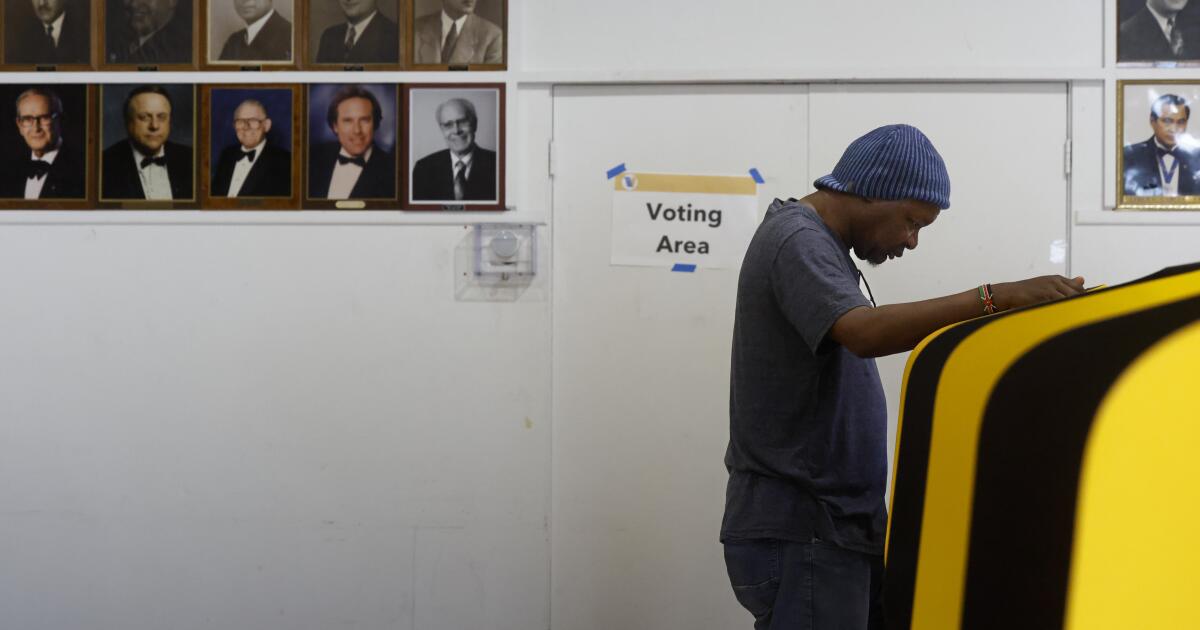
Despite Trump’s recent insistence, in-person voting does exist in Los Angeles
-
 Sports45 minutes ago
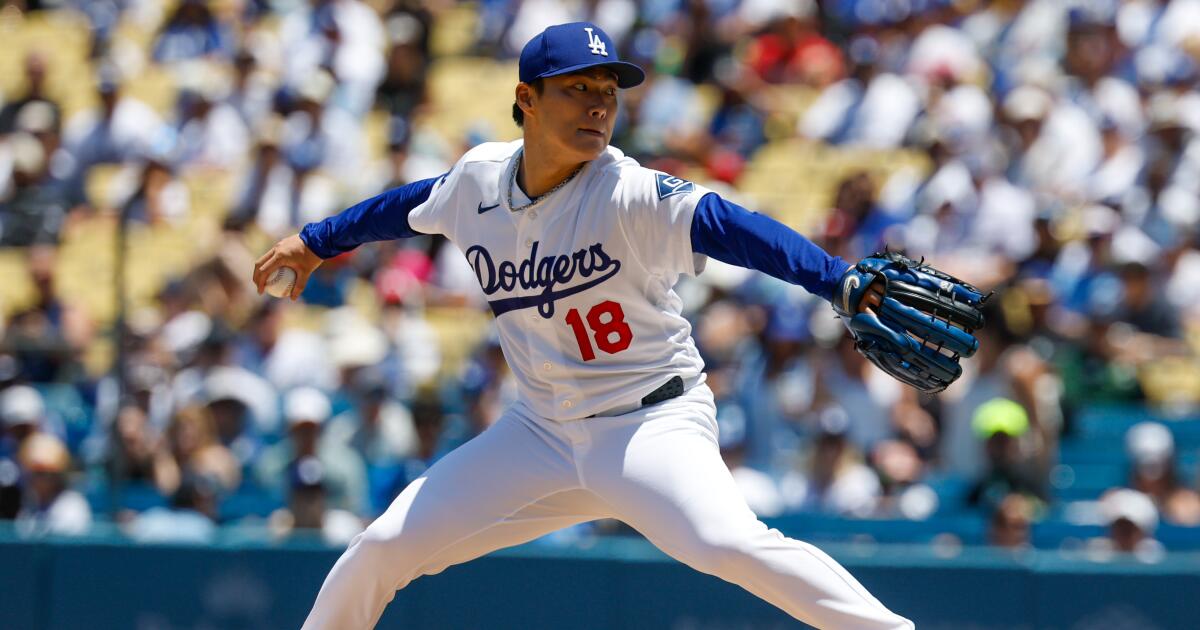
Yoshinobu Yamamoto helps Dodgers deliver a birthday win for Dave Roberts
-

 World53 minutes ago
“Crime hotspots”: Why violence at German stations

