Entertainment
Jacques Audiard’s strong prix game


Jacques Audiard’s Spanish-language, French-made musical “Emilia Pérez” leads all other movies in the 2025 Oscar nominations, adding to the scores of other laurels Audiard’s thematically gritty, visually innovative works have collected over the years.
13
The “Emilia” nominations haul is the biggest ever for a non-English-language movie, and the most for a French film since …
*10
“The Artist” in 2012.
4
Audiard himself is vying for four Oscars for “Emilia”: directing, adapted screenplay, best picture and co-writing “El Mal,” one of its two nominated songs. He could tie …
1953
Walt Disney’s long-standing record for most (four) wins in a single year.
3
Directing, screenplay and best picture winner Bong Joon Ho (“Parasite”) appeared to tie Disney’s record in 2020, but the international feature Oscar he accepted technically belongs to South Korea. It is the same reason …
1
… the Oscar nomination for Audiard’s 2009 gangster drama “A Prophet” is credited to France, not Audiard and his fellow producers.
3 dozen+
The César Awards, Lumière Awards and Cannes Film Festival have showered Audiard’s films with nominations and prizes over the years. He has won …
10
Césars, including twice taking directing, script and picture honors in a single year — for “The Beat That My Heart Skipped” in 2006 and “A Prophet” in 2010.
3
Audiard’s third directing César was for his criminally underseen (in the U.S.) 2018 English-language action comedy western “The Sisters Brothers.” Audiard also is appreciated …
6
in England, where he has received six BAFTA nominations (including two for “Emilia”) and won two foreign-language awards (“The Beat That My Heart Skipped,” “A Prophet”) that do count producers as recipients.
2012
Audiard — or fellow nominee Coralie Fargeat (“The Substance”) — could become the first French person to win a directing Oscar since “Artist” filmmaker Michel Hazanavicius*.
* Weinstein-assisted



The Housemaid, 2025.
Directed by Paul Feig.
Starring Sydney Sweeney, Amanda Seyfried, Brandon Sklenar, Michele Morrone, Ellen Tamaki, Megan Ferguson, Brian D. Cohen, Indiana Elle, Amanda Joy Erickson, Don DiPetta, Alexandra Seal, Sophia Bunnell, Lamar Baucom-Slaughter and Arabella Olivia Clark.
SYNOPSIS:
A struggling woman is happy to start over as a housemaid for an affluent, elite couple.

Whether or not one has read the recently published book by Freida McFadden, there is no question where director Paul Feig’s The Housemaid (adapted from Rebecca Sonnenshine’s screenplay) is headed. He is, first and foremost, a feminist filmmaker (absolutely not a bad thing), and there are certain predictable but vital modern-day storytelling trends. That’s not a fault here, but it is damn near maddening how long the film wears a mask before arriving at that turning point. Even while acknowledging quite a few clever bits of foreshadowing with a dash of welcome class commentary and themes surrounding gossip and how much of it should be taken credibly, the first half of this narrative doesn’t need to go on for roughly an hour with failed attempts at misdirection.
That the second half of The Housemaid, which lays out the details behind the obvious and fully embraces its trashiness with a sprinkling of truly sinister behavior, is as intense as it is, only makes the shortcomings more frustrating. When the specific “whys” of what is happening here are given to the audience, all that’s left is white-knuckle suspense that could go in multiple directions, with either an optimistic or tragic climax. For whatever reason, the journey to that turn is sometimes a slog – generally only salvaged by its trio of outstanding performances leaning into the campiness – that seemingly assumes its audience has never read a trashy paperback airport novel or seen a thriller.

Despite the predictability of some elements, one still doesn’t want to dive too deeply into the synopsis. Nevertheless, it involves Sydney Sweeney’s Millie, a woman on parole for an undisclosed crime desperately seeking employment to stay on the outside, even if it means telling white lies to hopefully get hired as a live-in housemaid. A meeting for such a position with Amanda Seyfried’s Nina goes as well as she could hope for. Still, in the back of her mind, she believes the resume will be scanned for its dishonesty, costing her the job opportunity.
It goes without saying that Millie gets the job and begins working for Nina, given an attic for a bedroom (which suspiciously has a deadbolt on the door and a window that no longer opens), and basic housework duties such as cleaning, cooking, and looking after the rude young daughter Cecelia (Indiana Elle), who has clearly gotten a bit too comfortable with such a privileged life. Now, there have been some traumatizing hardships as more is gradually revealed about Nina’s past and some actions as a mother. Nina also shows signs of schizophrenia immediately after giving Millie the position, repeatedly and frequently scolding her for doing what was asked, while insisting that she never requested that.

Fortunately, Nina’s husband Andrew (Brandon Sklenar, taking a page out of the Glen Powell charming playbook, but with sides to the performance the latter would struggle to pull off) witnesses much of the crashouts and mistreatment toward Millie for no justifiable reason, offering some support, peace, and stability. Unsurprisingly, Millie still wants to find another job and get the hell out of there.
As mentioned, Millie is also played by Sydney Sweeney. Hence, it makes sense that Nina, who is already spiraling and paranoid, would warn her not to make any passes or advances towards Andrew. That’s also where the film starts to fall apart in terms of logic, as no one in their right mind would hire this particular woman to be a housemaid if that insecurity or fear for potential adultery were there, especially after the background check on the resume raises several red flags. Nina’s behavior is also so erratic, temperamental, and hostile that one wonders why someone like Andrew is typically calm, still around, and always so quick to forgive her and downplay the severity of it all.

A lot is happening here regarding the character dynamics that doesn’t make any sense, which is also part of the point since we know there are ulterior motives at play. To sit with such illogical behavior for roughly an hour, while also knowing where this is ultimately going, is downright annoying. The viewer is in a constant state of knowing what’s up while ticked off, waiting for the specifics to come into play and the genre to shift for far too long. Then, The Housemaid starts doing what it should have done a while ago, becoming a genuine thrill ride in the process. It’s a film that admittedly does fire on all cylinders once the puzzle pieces fall into place.
Flickering Myth Rating – Film: ★ ★ ★ / Movie: ★ ★ ★
Robert Kojder
https://www.youtube.com/watch?v=embed/playlist

We might rarely get to see snowfall in Los Angeles, but logging onto social media in December means the arrival of a different kind of flurry. The one where our friends, both close and parasocial, excitedly share the year-end music-listening data dumps of their Spotify Wrapped.
Spotify Wrapped only represents the culmination of our listening habits on a single music platform, but every shared Wrapped post seems to come with some self-evident clarity about our personal identity. Spotify Wrapped bares our souls and provides us the opportunity to see ourselves deconstructed via our musical inclinations. By most accounts, it’s an irresistible delight. Oh, Spotify, you rascal, you’ve got us pegged.
For anyone in Los Angeles, 2025 has been one hell of a year to get the Wrapped treatment. We’re still processing the aftermath of the devastating Eaton and Palisades fires — and haunted by ICE raids and the federal administration’s ceaseless attacks on California. Not to mention Jimmy Kimmel getting silenced.
Maybe it’s not such a bad idea to take that temperature check.
But listening to music can be a passive experience — one enjoyed in tandem with folding laundry, or driving a car. To really learn about ourselves and how our year has been, we might want to turn elsewhere, to a habit with more intention. I’m talking, of course, about reading.
While there’s apps for tracking our reading habits, like StoryGraph or Goodreads, I’m devoted to a wholly analogue tracking method that’s helped me churn through books faster and with more intent than ever before: the book stack.
Starting every January, whenever I finish a book, I place it sidelong atop a shelf in the corner of my living room. With each new book I conquer, the stack gets taller, eventually becoming a full tower by December. A book stack, low on analytics, can’t tell me the total number of pages I’ve read, or how many minutes I spent reading, but it’s a tangible monument to my year’s reading progress. Its mere presence prods me into reading more. It calls me a chump when the stack is low and cheers for me when it reaches toward the ceiling.
My first book stack started in 2020, a wry joke to demonstrate the extra time we could all devote to reading books during a pandemic. The joke barely worked. I ended up reading just 19 books that year, only a few more than I had the previous year (though it could’ve been more if one of those books wasn’t “Crime and Punishment”).
Still, the book stack model gamified my reading habits and now I give books time I didn’t feel I had before. I bring books to bars, movie theaters and the DMV. If ever I have to wait around somewhere, you better believe I’ll come armed with a book.
The pandemic may have waned, but my book stack count continued to climb, peaking in 2023 after reading 52 books, averaging one per week.
But, hey, it’s about quality, not quantity, right? If there’s a quality to be gleaned from my 2025 book stack, you’d see that I’ve been looking for hot tips on how to survive times of extreme authoritarian rule. Some were more insightful than others.
In the stack was Carl Bernstein and Bob Woodward’s “All the President’s Men,” a landmark true story about two intrepid reporters who brought down the president of the United States by repeatedly bothering people at their homes for information. Fascinating as it is, it also feels like a relic from a time when doing something like that could still work. Philip Roth’s “The Plot Against America” tells the story of a Jewish New Jersey family in an alternate timeline where an “America First” Charles Lindbergh beats Franklin Roosevelt in the 1940 presidential election, ignoring the threat of Hitler in Europe and giving way to a rise in antisemitism at home. Roth paints a dreary portrait of how that scenario could have played out, but the horrors are resolved by something of a deus ex machina rather than by any one character’s bold, heroic actions. Then there’s Anthony Doerr’s Pulitzer Prize-winning “All the Light We Cannot See,” about the converging stories of a German boy enlisted in Hitler’s army and a blind French girl during World War II. Sadly, this novel reads less like a book about living under fascist rule than a thirsty solicitation to become source material for Steven Spielberg’s next movie.
Each of these titles have merit, but this year’s book stack had two gems for anyone who wants to know how best to resist tyranny. Pointedly, there was Timothy Snyder’s tidy pocket-sized handbook “On Tyranny” filled with 20 short but fortifying chapters of practical wisdom like “Do not obey in advance,” “Defend institutions” and “Believe in truth.” Each is applicable to our current moment, informed by historical precedent set by communist and fascist regimes of the past century. This book — well over a million copies sold — came out at the start of Trump’s first term in 2017, so I came a little late to this party. The fact that Snyder himself moved to Canada this year should give us all pause.
Practical advice can also be found in great fiction, and on that front I found comfort and instruction in Hans Fallada’s “Alone in Berlin” (a.k.a. “Every Man Dies Alone”), based on the true story of a married couple living in Berlin during World War II who wrote postcards urging resistance against the Nazi regime and secretly planted them in public places for random people to discover. Under their extreme political conditions, this small act of civil disobedience means risking death. Not only is the story riveting, there’s also great pleasure in seeing the mayhem each postcard causes and how effective they are at exposing the subordinate class of fascists for what they truly are: nitwits.
Also notable in “Alone in Berlin” is the point of view of both the author and his fictional heroes. Neither a target of persecution, nor a military adversary, Fallada nevertheless endured the amplified hardships of living under Nazi rule during World War II. His trauma was still fresh while writing this book and it’s evident in his prose. He survived just long enough to write and publish “Alone in Berlin” before dying in 1947 at the age of 53.
If I’ve learned anything from these books, it’s that it’s in our best interest to not be afraid. Tyrants feed on fear and expect it. A citizenry without fear is much harder to control. That’s why we need to raise our voices against provocations of our rights, always push back, declare wrong things to be wrong, get in the way, annoy the opposition, and allow yourself to devote time to do things for your own enjoyment.
And in that spirit, my book stack also includes a fair amount of palate cleansers in the mix: Jena Friedman’s “Not Funny,” short stories by Nikolai Gogol, Jhumpa Lahiri’s “The Namesake” (whose main character is named after Gogol), and a pair of Kurt Vonnegut novels. Though it’s hard to read Vonnegut without stumbling upon some apropos nuggets of wisdom, like this one from his novel “Slapstick:” “Fascists are inferior people who believe it when somebody tells them they’re superior.”
Zachary Bernstein is a writer, editor and songwriter. He’s working on his debut novel about a poorly managed remote island society.

Eden, 2025.
Directed by Ron Howard.
Starring Sydney Sweeney, Jude Law, Daniel Brühl, Vanessa Kirby, Ana de Armas, Felix Kammerer, Toby Wallace, Jonathan Tittel, Ignacio Gasparini, Richard Roxburgh, Paul Gleeson, Thiago Moraes, Nicholas Denton, Tim Ross, Antonio Alvarez and Benjamín Gorroño.
SYNOPSIS:
Based on a factual account of a group of outsiders who settle on a remote island only to discover their greatest threat isn’t the brutal climate or deadly wildlife, but each other.

Based on true events, esteemed director Ron Howard (fallen on hard times, especially given both the quality of his last film and what it led to…) seems unsure of what tone to take with Eden, a look at a power struggle on Floreana, a Galapagos Island, circa World War I.
Divided into three groups, they have all escaped civilization for one reason or another, with Dr. Friedrich Ritter (Jude Law) dedicating time to a manifesto for a new, supposedly more sensible and humane brand of social norms. He is also a quack convincing his wife, Dora Strauch (Vanessa Kirby), that this self-imposed exile will also give him the peace and time necessary to focus on curing her multiple sclerosis. His rules for a more respectable society contain everything from vegetarianism to the usual clichéd rambling about pain functioning as a necessary ingredient to growth and happiness.

That quiet isolation is impeded upon, first with the arrival of the Wittmer family, looking to escape the war, poverty, and live freely, growing their garden. Sydney Sweeney slides right into the more traditionally conservative wife role of Margaret, currently pregnant and somewhat docile toward her husband, Heinz (Daniel Bruhl), a man she married not out of love but for a severe lack of experience, and that she was asked to take his hand. That does not mean that this is a boring role for Sydney Sweeney; even if she isn’t entirely convincing regarding looks (there are times that, even in the period piece clothing, she resembles a contemporary woman) and accent, the back half allows her character ample opportunity to show that, while often quiet and passive, her character bears much intelligence and is capable of making risky choices under pressure.
Soon after Dr. Ritter intentionally settles them into a plot of land he deems will make gardening impossible and them want to leave within a few weeks, a spoiled and flirty baroness (Ana de Armas) unexpectedly shows up with a couple of young and handsome sycophants (Jonathan Tittel and All Quiet on the Western Front’s Felix Kammerer) to do everything from make her feel important, cook her canned food, steal some more canned food (somehow, she stupidly assumes what she brought would be enough to last a lifetime, and is too entitled to eat anything homegrown on the island), fornicate, and last but not least, manipulate her way into control over the island as she is looking to build a ritzy hotel solely for the rich.

Dr. Ritter couldn’t give a damn about any of these people, quick to place them into unfortunate circumstances, pitting them against one another. The joke is on him, though, as these people are either more suited for this lifestyle or competent than he or his wife, causing him to start breaking the rules going into his manifesto. Each of them (more so the baroness) knows what buttons to push to bring out his anger and insecurities.
A solid idea for a psychological triple threat match, Ron Howard’s (co-writing alongside Noah Pink) approach to this is a clunky blending of tones that never gels. Anything involving the baroness is played over the top and campy, at odds with the more serious attempts at character study. Ana de Armas isn’t bad here, but she is in another movie entirely, and one that might have worked if that tone was consistent across the board. Giving confidence to this belief is that, once her character exits the story for reasons that won’t be spoiled, the dramatic rift between the other two groups suddenly becomes compelling, with a layer of deadly intrigue and darker impulses. At a little over 2 hours, Eden is also a film that benefits from such a running time, allowing for lengthy sequences dedicated to each group and letting their characters breathe outside the larger picture.

Eden has one last piece of frustration in store once the ending credits start, noting that there are two different perspectives to these factual accounts. How Ron Howard and Noah Pink arrived at the story they have told here is anyone’s guess (presumably trying to find the truth in the middle), but that piece of information suggests a much more narratively creative and ambitious approach to the story. That’s not to guarantee it would have been better, but, aside from the intriguing curiosity of essentially every Hollywood IT actress in one movie playing mental mind games for superiority over an island, this veers between dry and overly wacky, never finding a working middle ground until it’s too late.
Flickering Myth Rating – Film: ★ ★ / Movie: ★ ★ ★
Robert Kojder
https://www.youtube.com/watch?v=embed/playlist

“Buying, not returning” Idaho Falls shoppers support small business day after Christmas – LocalNews8.com

$50,000 Illinois Powerball tickets sold in Chicago suburbs: Here’s where

$1M winning Powerball ticket sold in White County. What to know

Alex Manske, Iowa State football backup QB, to enter transfer portal

Fire damages 2-story carriage house in Kansas City

Florida High School Football Rankings: Top 25 teams – Oct. 21

Cleary's 21 help Le Moyne down Central Connecticut State 69-64 in OT

How old is Bo Nix? What to know about Oregon quarterback ahead of 2024 NFL Draft

99th annual Pony Swim held in Virginia

Video: ‘It Didn’t Have to Happen This Way:’ U.Va. Faculty Call for Review of Police Response to Protests

Pro-police group asks DOJ to probe Soros-backed Virginia prosecutor using Biden-era law once aimed at cops

Israel becomes first country to recognise Somaliland

A murder, a manhunt and the grandmother who wouldn’t stop the search for her daughter’s killer

Nonprofit uses underwater technology to search for missing service members

Best of 2025: Top five defining moments in the European Parliament
-

 Massachusetts1 week ago
MIT professor Nuno F.G. Loureiro, a 47-year-old physicist and fusion scientist, shot and killed in his home in Brookline, Mass. | Fortune
-

 New Mexico1 week ago
Family clarifies why they believe missing New Mexico man is dead
-

 Connecticut24 hours ago
Snow Accumulation Estimates Increase For CT: Here Are The County-By-County Projections
-

 Culture1 week ago
Try This Quiz and See How Much You Know About Jane Austen
-

 World7 days ago
Putin says Russia won’t launch new attacks on other countries ‘if you treat us with respect’
-
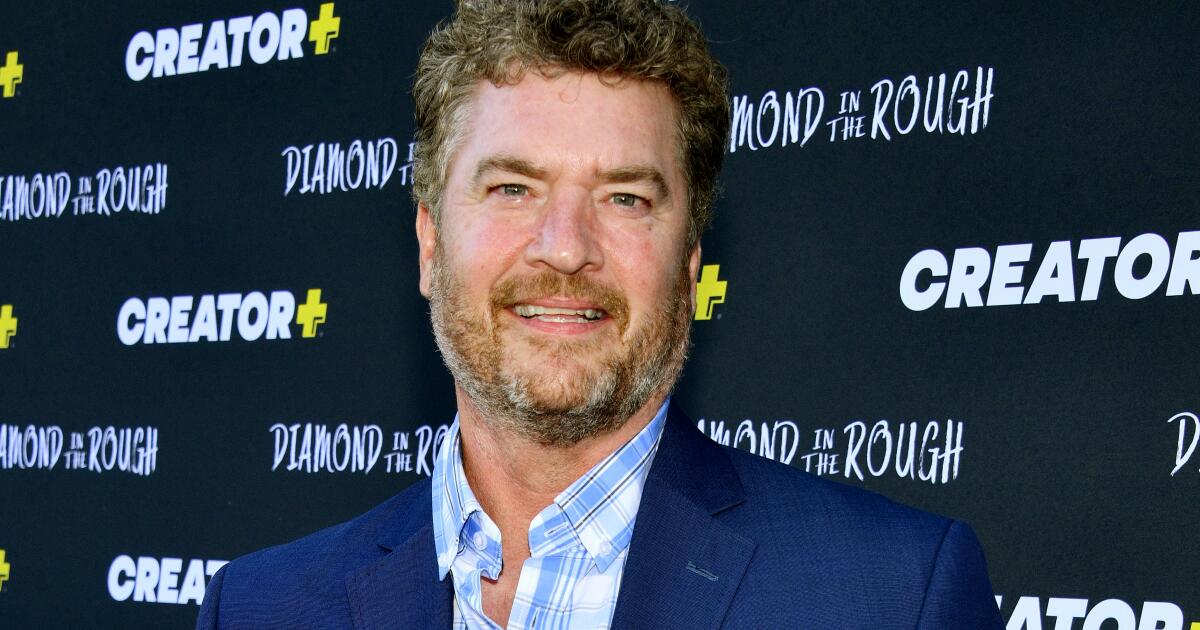 Entertainment2 days ago
Pat Finn, comedy actor known for roles in ‘The Middle’ and ‘Seinfeld,’ dies at 60
-

 Maine1 week ago
Family in Maine host food pantry for deer | Hand Off
-

 Politics1 week ago
Border Patrol chief, progressive mayor caught on camera in tense street showdown: ‘Excellent day in Evanston’