Entertainment
How 'Bluey' special 'The Sign' was created: 'It’s one of the most beautiful episodes we've made'


This article contains spoilers about “The Sign” episode of “Bluey.”
Everyone’s favorite Australian dog family is going supersized.
“The Sign,” a highly anticipated 28-minute special episode of “Bluey,” is now streaming on Disney+. While a typical episode of “Bluey” is around seven minutes long, “The Sign” is the equivalent of a two-hour movie in the “Bluey” universe.
“We always said wouldn’t it be incredible if we could do three seasons and a movie,” executive producer Daley Pearson says. “We would love to do beyond that but wouldn’t that be an Everest to climb. I think this is a version of delivering on that promise. It was such a great creative challenge that we had to do it.”
“Bluey” which is produced in Brisbane, Australia, by Ludo Studio (which Pearson co-founded) typically has four different animation teams who work on individual episodes. For “The Sign,” the four teams collaborated. “This is the first episode made by the whole studio,” Pearson says. “That was a big production challenge in itself.”
1
2
1. An artist at Ludo Studio. (Anthony Pham) 2. A rendering from “Bluey.” (Ludo Studio)
Since the show’s inception, Pearson says, it has taken risks. He cites episodes like Season 2’s “Sleepytime,” which takes Bluey’s younger sister Bingo on a dreamy nighttime journey, and “Flat Pack,” which is about assembling furniture but also about evolution. “There were always these traditional ‘Bluey’ episodes but then there were always these avant-garde episodes,” he says.
“The Sign” is the pinnacle of that.
“It’s an episode about these very important things that these characters are going through,” Pearson says. “It’s probably the biggest possible changes these characters have ever gone through. There’s a bit of experimental feel to it. Will it work? Will the audience stick with it? And I think it’s one of the most beautiful episodes we’ve made.”
The episode, which was written by series creator Joe Brumm, finds Bluey, Bingo and their parents Chilli (Melanie Zanetti) and Bandit (Dave McCormack) preparing for the wedding of Bandit’s brother Rad (Patrick Brammall) and Bluey’s godmother Frisky (Claudia O’Doherty), two characters who first met in Season 2’s “Double Babysitter.” The title of the episode refers to the “For Sale” sign in front of the Heeler home. Because of Bandit’s new job, they are selling their house and moving, something Bluey, in particular, is not happy about. And while Chilli is trying to be supportive, it’s clear she doesn’t want to move either.
“These parents are having to deal with these big life decisions, but they are also putting on a brave face for their kids,” Zanetti says. “And the moment we see the vulnerability between mum and dad, it’s those moments as a kid when you start to realize that your parents are just people or dogs and fallible and very human/canine.”
Chilli and Bluey in a scene from “The Sign.”
(Ludo Studio)
Throughout the series’ three seasons, adult topics like why there is friction between Chilli and her sister Brandy (Rose Byrne, whose cameo in “The Sign” will make viewers so happy) have been seamlessly woven into the plots. But “The Sign,” which also finds Chilli trying to save the wedding when Frisky runs off, gives the adult characters even more time in the spotlight. “When you are used to the format of seven minutes, there’s only so much you can play with and attack at once,” Zanettti says. “With this, there’s so much more scope for going deeper and nuanced.”
McCormack says the episode lifts the veil on what the parents are dealing with while still trying to be there for their kids. “It’s all going on for people and you don’t realize and people keep it hidden,” he says. “They’re going through hard times as well and they are trying to keep a lid on it, but it’s all gone out of control.”
“The Sign” also tackles some bigger themes like the unpredictability of life. “We are always trying to make the right choice. Like everyone is trying to do the right thing. The difference between what we should see as the right thing and what in our gut and heart we feel is the right thing. I think there’s a beautiful looking into that and grappling with that in this episode,” Zanetti says.
McCormack adds, “Everyone is trying to make the best decision at that time and you’re going to make mistakes. I think that’s for me the underlying feeling of this episode is you’ve just got to try and do your best. You’re going to get it wrong sometimes. But you’ve just got to do what you think is right at the time with the info you’ve got, which is a pretty big concept for a kid’s show.”
“The Sign” tackles some bigger themes like the unpredictability of life.
(Ludo Studio)
Does Pearson feel like “The Sign” has a larger message?
“I feel like ‘Bluey’ episodes are turning into a bit of a Rorschach test,” Pearson says. “It’s hard to say what we meant. It’s hard to put our own meaning into it. It’s always lovely to get these letters and emails and meet people on the street that episodes or characters meant something to them that we may not ever thought of or dreamed of. It’s always lovely to hear the audience completing the circle rather than we complete it for them.”
Since the show’s premiere on Disney Junior in 2019, the series has defied any possible predictions of success and become a global phenomenon. It is consistently one of the top streaming shows. A stage version of the series titled “Bluey’s Big Play,” debuted in America in 2022 and continues to tour. Zanetti and McCormack have been guests on “The Tonight Show” and they even made an appearance at the Twin Cities Comic Con last year. But that’s not necessarily how they measure the show’s success.
“My favorite part is that the show has brought so much, not just joy into people’s life, but also healing,” Zanetti says. “What I didn’t expect was people in their early twenties saying, ‘I have had a really difficult childhood and this show is reparenting me.’ Or, ‘I didn’t think I’d be able to have kids because I didn’t know how to treat them correctly from my upbringing but now I feel like I could be a mother.’ Things like that are just profound and that was not expected.”
McCormack and Zanettti, who record the show separately, got the episode in two parts, and while recording the first half of the episode, had no idea how it was going to end. “We didn’t have to act like we didn’t know what was really going on because we didn’t know what was going on,” McCormack says.
“That has never happened before,” Zanetti says. “That was exciting and a little bit scary.”
Sketches of the characters from “Bluey.”
(Ludo Studio)
Therefore, like viewers, Zanetti and McCormack didn’t know if the Heelers would go through with the move until the very last moment. “It was like in ‘Toy Story 3’ when they’re about to go into the incinerator and they hold hands and make peace with what’s happening,” Zanetti says. “I had one of those moments. I had to surrender and then at the end I was crying.”
True to his laid-back canine alter ego, McCormack had quite the different reaction. “I was feeling a little excited about a new house,” he says. “Part of me was almost like, ‘Ooooh, I wonder what this is going to be.’”
Pearson, who says hints have been dropped throughout the third season that a possible move was the direction the show was heading, says they never seriously considered relocating the family. “I think it would have been a tough decision to move them. The whole point of these characters, and this family is it’s aspirational, they’re the best of everyone. To move them, it just felt like it would have been a bit of a betrayal of the audience. I think keeping them there, it was always going to be that.”
Now that the show has climbed its own personal Everest, what’s next?
“It was sort of no secret that it was a bit of a test to see does an audience like ‘Bluey’ as a longer format? Would a feature film work for ‘Bluey?’ We don’t know yet,” Pearson says. “We’ll wait until Sunday. We hope people like it and if they do we would love to think about where it could go next.”

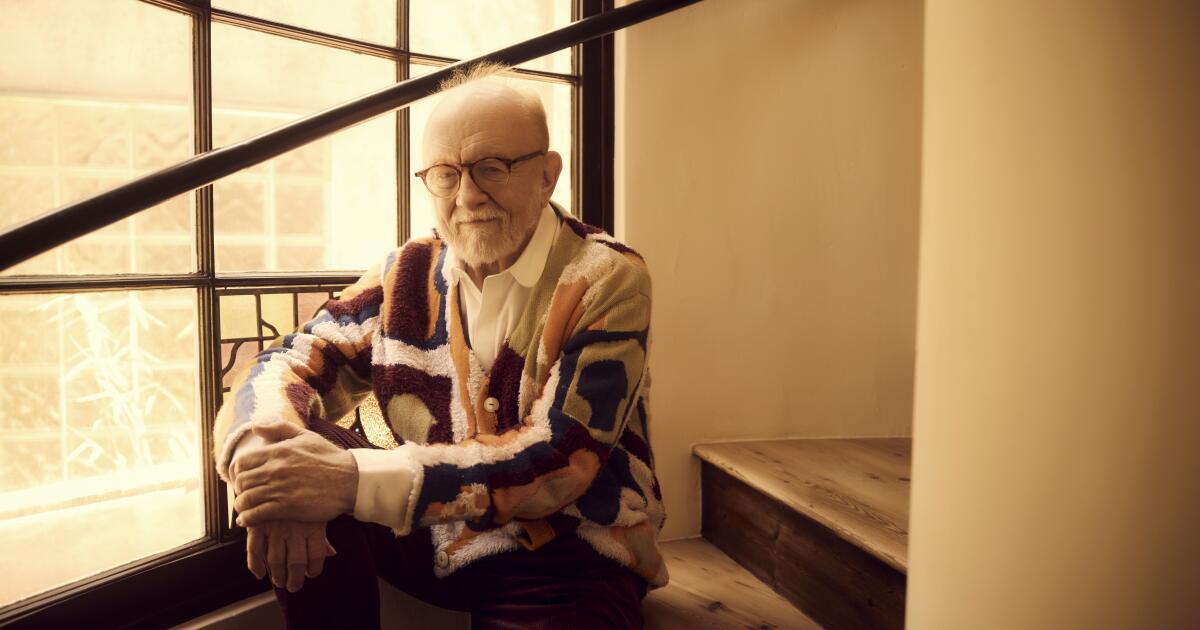
When David Jacks published a biography of Peter Asher in 2022, the veteran record producer and manager expressed surprise that anyone would have deemed his life worthy of the treatment. Four years later, he’s no less baffled to have become the subject of a new documentary, “Peter Asher: Everywhere Man,” directed by the filmmakers Dan Geller and Dayna Goldfine.
“It just seemed to me,” he says, “that I wouldn’t be that fascinating.”
The movie, in theaters now, argues otherwise: A child actor alongside his two younger sisters, the bespectacled Asher became an unlikely pop star during the British invasion as half of the duo Peter & Gordon, whose debut single, “A World Without Love” — written by Paul McCartney — hit No. 1 on Billboard’s Hot 100 in 1964. (McCartney offered the song to Asher while the Beatle was dating Asher’s sister Jane.) In 1968, the Beatles made Asher head of A&R at Apple Records, where he signed James Taylor; the two soon moved to Los Angeles and turned Taylor into music’s biggest heartthrob folkie.
Asher went on to shepherd Linda Ronstadt to stardom and to produce records by Diana Ross, Cher, Bonnie Raitt, Randy Newman, Neil Diamond and 10,000 Maniacs, among many others. And at 82 he’s still at it: Last year he produced Barbra Streisand’s latest duets album — they’re due to start work on a new Streisand solo LP, he says — and he’ll perform a show of his own July 19 at the Grammy Museum. Asher, who broke his leg in a recent fall, spoke about it all the other morning at his home in Malibu, where he walked into the kitchen using a cane before sitting down at a table set with pastries and several of the day’s newspapers.
What unites the jobs of musician, producer, executive, manager? What’s the through line?
Love of music and admiration for the people who do it. They’re very different jobs, and I came at them from very different perspectives. Record production was something I set out to do once I understood what a record producer did. Hire musicians much better than yourself and tell them what to do? That’s a cool job — how do I get in on that racket? Whereas I never had any ambitions to be a manager. It’s just that when James and I decided to go out on our own and try to put a career together, we didn’t know who we trusted to do it, so I kind of went, I’ll do it.
What’d you discover about the job of management?
The ingredients are common sense, not being a crook and having a great client.
Which is the hardest of those three?
The last one. I got to induct the first managers inducted into the Rock & Roll Hall of Fame: Brian Epstein and Andrew Loog Oldham — the Beatles and the Stones. That’s the hard part. The only thing that would tempt me back into management would be lightning striking for a third time — to see James, to see Linda, then to see somebody comparably brilliant, which I occasionally do. But usually they have a manager already.
What’s the last new act that knocked you out?
Ed Sheeran.
Was that just because he looks like he could be your grandson?
That certainly crossed my mind.
As a producer, your records helped define the sound of rock in the ’70s.
The so-called California sound.
Then the zeitgeist shifted.
One became aware of that. Pop music got very electronic, which I loved.
Was there a place for you in that style?
I didn’t consciously try to make records in that style because I don’t think I could have — not as well as they were being made anyway.
What’s a record from the early ’80s that made you think that?
“Sweet Dreams (Are Made of This).” I couldn’t do that.
Back to the ’70s: The doc is filled with pictures of James looking —
Like a movie star. With the cover of “JT,” I finally went all the way and said, “We’re doing the the glamour shot.” Then we did “Flag,” which everyone hated.
With the maritime flag. A truly perverse album cover.
I loved it. James loved it. Everyone thought we were crazy.
How crucial do you think James’ good looks were to his whole proposition?
I don’t know.
Oh, come on.
I really don’t. I mean, how would you gauge that? There’s probably girls who fell in love with him without listening to the record.
I think you just gauged it.
If he was ugly, would he be as big a star? Probably not.

(Evan Mulling / For The Times)
Same applies to Linda, right?
When I first saw Linda, it was stages of realization. Someone said to me, “You’ve got to go down and see this girl at the Bitter End.” I walk in and she’s singing so well — unspeakably good. Then she looks incredibly great — barefoot, short-shorts. Oh, my God, my heart. Then you meet her, and it turns out she’s a remarkably brilliant woman — extremely well read. You just kind of go, “All these things together — how can it be?” It’s the same thing talking about the Beatles: If you cast it like the Spice Girls, you still couldn’t have gotten four to fit together so perfectly.
Did you like the Spice Girls?
Terrific. “Tell me what you want / What you really, really want” — it’s a smash. And yet none of them are particularly good singers, which is kind of the point.
I went to an event not long ago where Paul McCartney played his new album for a small group of fans. It was fascinating to see the spell McCartney casts over people.
He’s had to get used to it — to admit to himself that he can’t meet people who aren’t amazed that they’re meeting him. Even as someone who’s known him off and on for a long time, you still get the wave of: Holy s—.
You’re still amazed to be around him?
Of course. I get it less — I’m ready for it. But you can’t pretend he’s not Paul McCartney. And he’s gotta live with that his whole life.
You grew up a member of the upper crust, I think it’s fair to say.
I don’t think we were that crusty. But upper, probably, yes.
I wondered how that situated you to live and work among artistic types.
If anything, the upper crust have more time to be artistic — less preoccupied with getting a job and making a living. But my parents worked incredibly hard — we weren’t upper crust in the sense of inherited wealth. My father was a doctor, my mother was a professor of music. But I never struggled, to be honest. I had a comfortable allowance, and then I went to school and worked hard. Everyone talks about sharing a flat with a million people, living on borrowed sandwiches — I skipped that phase.
Did that shape you in any meaningful way?
I don’t know. But I think when people do struggle, it becomes a meaningful part of their lives to get away from it. With someone like James, the struggle was a struggle with drugs. Now he says the worst thing about drugs is they’re a complete waste of time — you waste time doing nothing except looking for drugs. And I think that made him anxious to succeed and to be taken seriously.
I’m sure you saw the New York Times’ list of the 30 greatest living American songwriters.
You knew it was gonna be silly. Randy Newman, for God’s sake — you just cannot not include him.
No Neil Diamond either.
Insane.
And no Billy Joel.
[Shrugs].
How’s your health?
High blood pressure, high cholesterol, need to work out more — old man stuff. Other than that and a broken leg, great.
You’re OK with the cane?
It’s a considerable upgrade from the wheelchair. I like the cane — it’s kind of elegant.
What seems scarier: the body going or the mind going?
The mind going. And it is, slightly. I had a stroke, and bits of my brain aren’t quite working right. But compared to other people I know, I’m fine.
We’re at a moment when a lot of foundational rock ’n’ roll figures —
Are dying. It’s all the rage.
What’s it feel like to see your friends and colleagues go?
Better them than me.
Couple more for you: You managed Courtney Love for a spell.
I met her here in Malibu. I also managed Pamela Anderson for a while because she was a neighbor and asked me to help.
What, you put a shingle out?
“Manager for hire.” I’m trying to remember how I first met Courtney — I think Merck Mercuriadis was talking to her about publishing and Kurt stuff. I liked her. Very smart. I like smart women.
She’s easy to work with? Hard to work with?
Impossible to work with.
What’s James Taylor’s best album?
“JT,” maybe.
What’s Linda Ronstadt’s best album?
“Heart Like a Wheel.” With Linda, it’s unfair because they’re so radically different. How do you compare that to a mariachi record and then to Nelson Riddle?
Working with Riddle on those albums must have been a thrill.
He told us all these incredible stories about Frank Sinatra, who he didn’t like although he admired him enormously. It was John David Souther who originally suggested Nelson. Linda had tried doing the album a different way — did some versions with Jerry Wexler and it didn’t work out. So we had a meeting with Nelson: Would he consider doing a couple of arrangements for us? He went, “No.” We said, “What?” He said, “I’ll do an album, though.”
“A World Without Love” was one of eight songs to top the chart in 1964 with “love” in the title. What’s that say about pop music in the mid-’60s?
Same thing it says about pop music of all time: It’s either “I love you” or “She loves you” or “Why don’t you love me?” Weird Al pointed out to me that when you’re looking for a parody of a song, any song that has “love” in the title, substitute “lunch” and it’s funny. “A World Without Lunch” — I mean, who would want to live in such a place?
Movie Reviews
‘House of Criticism’ Review: A Pensive and Touching Portrait of Married Art Critics Jerry Saltz and Roberta Smith (It Is Only, at Moments, a True-Life Christopher Guest Movie)

If you wanted to be funny about it, you could say that Jerry Saltz and Roberta Smith, who occupy the center of the documentary “House of Criticism,” are like characters out of a Christopher Guest movie. Both are venerable New York art critics — but the thing is, they’re married New York art critics, whose lives revolve entirely around art and art criticism and talking about art and art criticism. They eat, breathe, sleep and dream it. In the Guest mockumentary of my imagination, the two would be played by Bob Balaban and Parker Posey, and they would be blissfully cracked egghead eccentrics who think that art is the most important thing in the world because it’s the most important thing in the world to them.
At moments, “House of Criticism” does throw off unintentional comic sparks of art-world insularity. But I’m kidding, ultimately, since underneath that it’s a pensive and touching documentary, and it happens to be about two writers I greatly admire. Roberta Smith, the co-chief art critic of the New York Times, and Jerry Saltz, the art critic of New York magazine, are writers of sway, elegance, legend. They’re two of the last powerful legacy critics in America, and both are fantastic writers. For them, the love of art is a mission, at once sophisticated and childlike. Roberta calls art “the most advanced operating system that our species has devised to explore consciousness, the seen and the unseeable.” The way art connects (and saves) these two on a daily basis is its own rarefied story, and it speaks to a certain vanishing culture of passionate New York literary brainiacs that used to be thought of as almost the essence of the city.
Early on, Jerry stands before Picasso’s epochal Les Demoiselles d’Avignon at the Museum of Modern Art and does a head-spinning riff on it, describing how 500 years of art history collapsed in the late 19th century (through Manet, the Impressionists, Van Gogh, Cezanne), leaving the blank slate for Picasso to fill. He compares the way the painting remade the world to the cataclysm of 9/11 (“When we believed in one course of history, and obviously there was another course of history, and they shattered”). Now that’s criticism.
As “House of Criticism” shows us, Jerry Saltz and Roberta Smith are luminaries and survivors who enjoy an idealized life together. Roberta is something of a contradiction, both the haughtier and more vulnerable of the two. She can be imperious in that Timesian way, but there’s a tremulous insecurity about her. Beneath a certain Midwestern patrician rigor, she’s full of self-doubt about her writing and is in constant need of encouragement, which Jerry is more than happy to provide. He’s blustery and big picture-oriented, while her insights are more delicate and intimate, blooming out of her holy communion with the work.
Jerry is a contradiction as well, a man who writes like a demon and looks like a dentist. But don’t let his fubsy aura fool you — he’s the social butterfly and loose cannon, plugged into social media (which he plays like a violin), and the audacious thoughts pour out of him. The most telling aspect of their relationship is that as writers they should be competitors, but instead they’re spiritual collaborators; they turn what could be a competition into a romance. They help each other on word choices, and even when they’re reviewing the same show, they’re really competing with themselves, with their own cultivated and highly different ideas of perfectionism.
Their relationship is built, to a large degree, around Jerry’s belief that Roberta is the superior critic — but this, for Jerry, is a form of chivalry, the flower of their love story. “Your writing is so condensed, right on the object, focused,” he says. He’s intensely supportive, but Jerry, who won the Pulitzer Prize for criticism in 2018, is arguably the greater writer (his poetic showmanship flies higher), and it’s my reading that deep down he knows it. It’s his perpetual self-deprecation and devotion that keeps the marriage balanced.
The two have no children and no apparent hobbies outside of their unrelenting obsession with art. They slip in and out of gallery openings, where they’re treated like royalty, and they attend 20 to 30 shows a week. By all rights, they should have a social calendar that rivals Andy Warhol’s in the ’70s. But here’s the joke: They adore their life together but are so devoted to their work, so monastic about it, that they never go out. Jerry calls them “happy losers” and describes their spacious apartment off Fifth Avenue in Greenwich Village as “the house that criticism built.”
In the morning, he pours deli coffee over ice into a 7-11 Big Gulp cup, and he’ll consume three of those a day. It’s fuel, as is the food he eats. When his friend Adam Platt, the New York magazine restaurant critic, asks Jerry what his favorite food is, Jerry replies: the grilled chicken at Gristede’s (a slightly downscale New York supermarket). “That’s the life of the mind!” says Platt. “You’re as happy with prison food.” He’s not kidding. I live in the same neighborhood and use Gristede’s as a convenience store, and I would never consider buying the grilled chicken there. But as Jerry explains, popping a bag of spinach into the microwave, he and Roberta are so consumed with work that they subsist on this drone food. The two barely go to restaurants (though we see them having breakfast at their favorite diner). Do they drink? If I was them, I’d need a cocktail by the end of the day, but the movie never says.
“House of Criticism,” directed by Alison Chernick, has a sketchy but rather controlled vantage. There’s a lot you don’t learn (I would have liked to see more about the politics of the New York art world), and plenty you do — like the fact that Lena Dunham is their goddaughter. Late in the movie, she comes over to visit them and provokes a penetrating exchange on the subject of why they never had kids.
People don’t often think of critics in humanistic terms, but these two invest criticism with soul, and there’s something disarming about how they were both damaged people who came together by seeing, in each other, a mirror image. She was born in New York and raised in Kansas, moving back to Manhattan in her early twenties to be part of the art scene (her mentor was the artist and critic Donald Judd). She found her way to criticism as a role in life, yet there was something metaphysically lonely about her.
It’s Jerry who comes from trauma. His mother, who committed suicide when he was 10, was erased out of his life (she was never spoken of again). He tells a haunting story about how she dropped him off for a solo visit to the Art Institute of Chicago just two weeks before her death, and it was there, on that visit, that the art lightbulb went off: He realized that every painting is a story. He wanted to be a painter, and tried (he had some talent), but thought that he lacked the proper schooling. What he really lacked was confidence. In photographs from the time, Jerry looks like he could be Richard Dreyfuss’s sad-sack brother. He wound up becoming a long-distance trucker, driving 10-wheelers full of paintings (he did this for 10 years), and he confesses that at moments he would go back into the truck and stomp on paintings and damage them. That is seriously sick behavior (his self-hatred was off the charts), and it’s amazing that he became the menschy person he did.
These two have thrived as critics by evolving. Jerry says of critics, “We have to adapt to the times, or we’re bullies and geezers.” He’s right. The film culminates in Roberta’s ultimate evolution — her decision to retire from the New York Times. The time feels right, but the question hovers: Without that job, what will her identity be? In a moving moment, she tells Jerry, “You’re my infrastructure.” “You’re mine,” he says. (That’s the critic version of “You complete me.”) And seeing each other through the prism of art is both of their infrastructure. These two are standard-bearers for the glory of a culture that once was. It’s a culture where criticism is about judging things, but more than that it’s about exploring things — experiencing things, bringing you closer to life.

In the last decade or so, Angelina Jolie has been on screen less frequently. So when she is — and not in forgettable tentpoles like “Eternals” — it’s worth paying attention. There seems to be a thoughtful intentionality to the roles she now chooses, almost as if this astoundingly famous woman wants to tell us something vital about herself, offering clues into her understandably guarded personal life.
Take 2015’s “By the Sea,” which she wrote and directed. Coincidentally or not, that pained study of marital dissolution, co-starring Jolie’s then-husband Brad Pitt, intersected with the couple’s real-life breakup — not to mention Jolie’s grief over the death of her mother, Marcheline Bertrand. Two years ago, Jolie portrayed a version of the elusive, emotionally closed-off opera singer Maria Callas in “Maria.” The conception of the role, marked by a dim view of stardom’s suffocating alienation, was something Jolie clearly understood. Moviegoers should be careful not to read too much autobiography into an actor’s creative choices, but Jolie makes such speculation tantalizing, adding additional layers of drama to her films.
The intermittently affecting “Couture” feels similarly close to her heart, depicting a filmmaker whose life is interrupted by a cancer diagnosis — a reality Jolie knows all too well. In 2013, she underwent a preventive double mastectomy over concerns of her likelihood to develop breast or ovarian cancer. (Bertrand died of cancer in 2007.) Knowledge of Jolie’s circumstance will inform a viewer’s reaction to her wounded, resilient performance, but our inherent sympathies can only take French writer-director Alice Winocour’s ensemble piece so far.
Jolie plays Maxine, an American indie director hired to create a flashy opening film for Paris Fashion Week. Newly arrived in the City of Light, she has only a few days to put together the short, assisted by her trusted cinematographer Anton (Louis Garrel). As we deduce from the phone calls Maxine makes back home, she’s also going through an acrimonious divorce and has trouble connecting with her blasé teenage daughter. At least this Paris paycheck gig will bolster her finances — and get her ready for the feature film she’s been wanting to make for years.
Just then, though, Maxine’s future gets a rewrite. A French doctor (Vincent London) tells her she has breast cancer and needs a double mastectomy immediately. Maybe she can finish the Fashion Week film, but her passion project must wait. An artist and mother who has spent her adulthood in constant motion will have to learn what it means to stop everything and be still.
The film’s title would appear to be a reference to the story’s setting, but in French, “coutures” can also mean “stitches,” and indeed Winocour sews together three thematically linked story strands. As Maxine wrestles with her cancer diagnosis, an inexperienced South Sudanese model named Ada (Anyier Anei) works Fashion Week so she can send money home to her family. (Ada has no interest in modeling, hoping instead to become a pharmacist.) Meanwhile a makeup artist, Angèle (Ella Rumpf), longs to be an author, although she cannot get anyone interested in her writing. Each one becomes a part of the fabric of Fashion Week, but their disparate problems are a far cry from the glitzy event’s self-importance.
Winocour has often made films about women balancing their public-facing life with their private selves In 2019’s “Proxima,” Eva Green played an astronaut missing her young daughter. In 2022’s “Paris Memories,” Virginie Efira starred as an interpreter recovering from the shock of surviving a terrorist attack. Winocour shows us the intimate, vulnerable spaces within her characters that those on the outside don’t have access to.
“Couture’s” three principals rarely interact with one another, but those meaningful exchanges argue that, amid the mad clatter of the everyday, a brief, unguarded moment with a stranger can be supremely restorative. Unfortunately, the juggling of storylines ends up being more schematic than insightful. Angèle’s narrative never catches fire and while Anei is striking as Ada, that section of the film feels slightly patronizing, reducing this immigrant tale to yet another strained salute to perseverance.
This leaves Jolie as the movie’s magnetic center, with Maxine drifting through despair as she ponders what to do. Her doctor insists that the surgery cannot wait, but putting her ambitions on hold means losing a part of herself — a different kind of death sentence than the one she’s now facing.
The character is underwritten but Jolie picks up much of the slack through her silently shattered expression. As she’s gotten older, the Oscar winner has become more comfortable doing less in her performances, allowing for a fragile serenity that is belied by the anguish and anxiety roiling underneath. It’s not just our recognition of the real-life parallels that make Jolie so touching in “Couture” — it’s that ineffable star power she’s possessed for so long. In a story about a potential tragedy, what’s saddest is that Winocour’s film cannot match its lead’s effortless command.
‘Couture’
In French and English, with subtitles
Rated: R, for language, some sexuality, nudity and brief bloody violence
Running time: 1 hour, 46 minutes
Playing: Opens Friday, June 26 in limited release
-
 Lifestyle27 minutes ago
This mindset shift can help you get better at using up your leftovers
-

 Technology37 minutes ago
TMD’s keyless bike lock is a $280 solution to a $60 problem
-

 World42 minutes ago
American rescue teams pull infant alive from rubble in Venezuela days after devastating twin earthquakes
-

 Politics49 minutes ago
Trump scores another endorsement win with Louisiana Senate runoff victory
-

 Health52 minutes ago
New blood test detects 90% of aggressive prostate cancer cases, beating current screenings
-

 Sports57 minutes ago
2026 World Cup Round of 16 Odds: Which Teams Will Make It?
-

 Technology1 hour ago
Apple raises prices as AI chip costs surge
-
 Business1 hour ago
Wildfire rebuilding boosts L.A. County job growth in May

