Entertainment
Exclusive: Michael Mann unveils his in-depth, behind-the-scenes Archives project

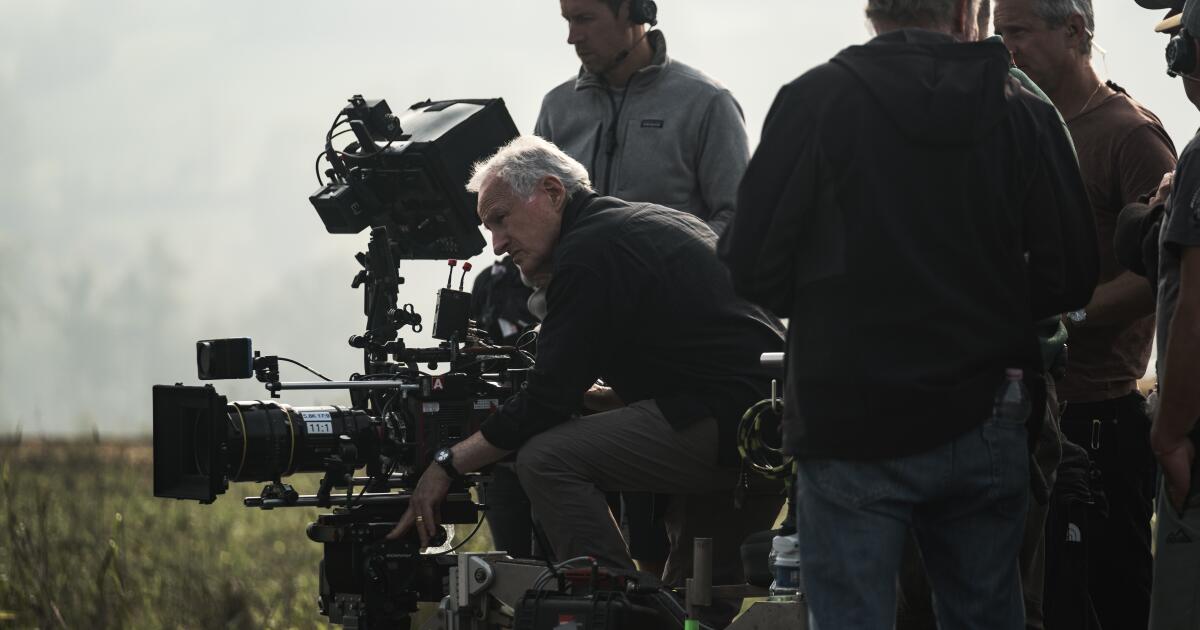
Filmmaker Michael Mann is known for his exacting research and exhaustive preparation, work that goes into such moody, existential portraits as “Heat,” “The Insider,” “Ali,” “Miami Vice,” “Blackhat” and the recent “Ferrari.”
Mann is now giving audiences an unprecedented glimpse into his artistic process via the website michaelmannarchives.com. Launching today at noon Pacific time, the website kicks off with a deep dive into the making of “Ferrari,” including 20 video pieces specifically created for the site, previously unseen photographs, annotated script pages and production paperwork including Mann’s working notes, many in his own handwriting.
Access to the “Ferrari” site will cost $65. Following the initial launch, there are plans to eventually continue working through Mann’s filmography, with future pages focused on other films. (Users will need to purchase access to each film’s archive individually.) Fervent online fandom for titles such as “Heat” or “Miami Vice” presumably would generate great interest for this kind of behind-the-scenes exploration.
On a recent afternoon at his longtime offices in West Los Angeles, Mann met with The Times, sitting with the youngest of his four daughters, Becca Mann, who worked closely with her father in organizing the archives.
Mann’s notoriously hard-charging demeanor seems softened by the presence of his daughter; he appears energized by their work together. In conversation, Mann recalls — with startling detail — decades-old pieces of research or specific moments from the production of his older films.
The existence of Mann’s extensive personal archive was the initial impulse behind the online project, the simple fact that all this material was there for the posting. From there, though, it began to take on a larger purpose.
“It is a spectacular, rewarding, creative act to direct a motion picture,” says Mann, 81. “It’s a very large endeavor. The movie is two hours — making it is a year and a half. So much goes into deciding, thinking through what you are going to do.”
Continuing, Mann speaks to something deeper. “Directors have no idea how any other director makes a movie,” he says. “And so we each evolve our own particular process. This is an opportunity to pass that on, convey something I’m just very enthusiastic about. I think it is the best work that any man or woman can do, period. And I’ve thought that since I was 20 years old. And my enthusiasm for it is absolutely unwavering and unremitting.”
Clip from a behind-the-scenes website by the filmmaker Michael Mann. (Michael Mann Archives)
“Ferrari,” set in Italy in 1957, tells the story of a turbulent period in the life of Enzo Ferrari, the Italian automaker who created the famed brand. Played by Adam Driver, Ferrari is seen scrambling to keep his business afloat and put together a winning auto racing team all while juggling a personal life that finds him caught between his estranged wife, Laura (Penélope Cruz), still grieving the untimely death of their son Dino, and another woman, Lina Lardi (Shailene Woodley), with whom he secretly has a young son, Piero.
The new website is structured around six scenes in “Ferrari,” including two that Mann describes as the “most pivotal” in the movie, a sequence in which the characters attend an opera performance and a volcanic argument between Enzo and Laura Ferrari at home.
Other sections of the site deal with the re-creation of the Mille Miglia auto race and the horrific, fatal 1957 crash at Guidizzolo, exploring everything from the re-creation of vintage racing cars to the special camera rigs used to capture the stunts.
Some of the most remarkable documents on the site are Mann’s personal handwritten notes, in which he can be seen working through layer upon layer of meaning and intention. “The most critical person for me to direct is myself,” he says.
Those free-flowing comments are then filtered into more formal documents for distribution to other people in the production, as ideas are refined and honed. The continuity of the process is all the more noteworthy in that the date from one page to the next can sometimes jump a number of years. (Mann’s interest in “Ferrari” dates back to the 1990s.)
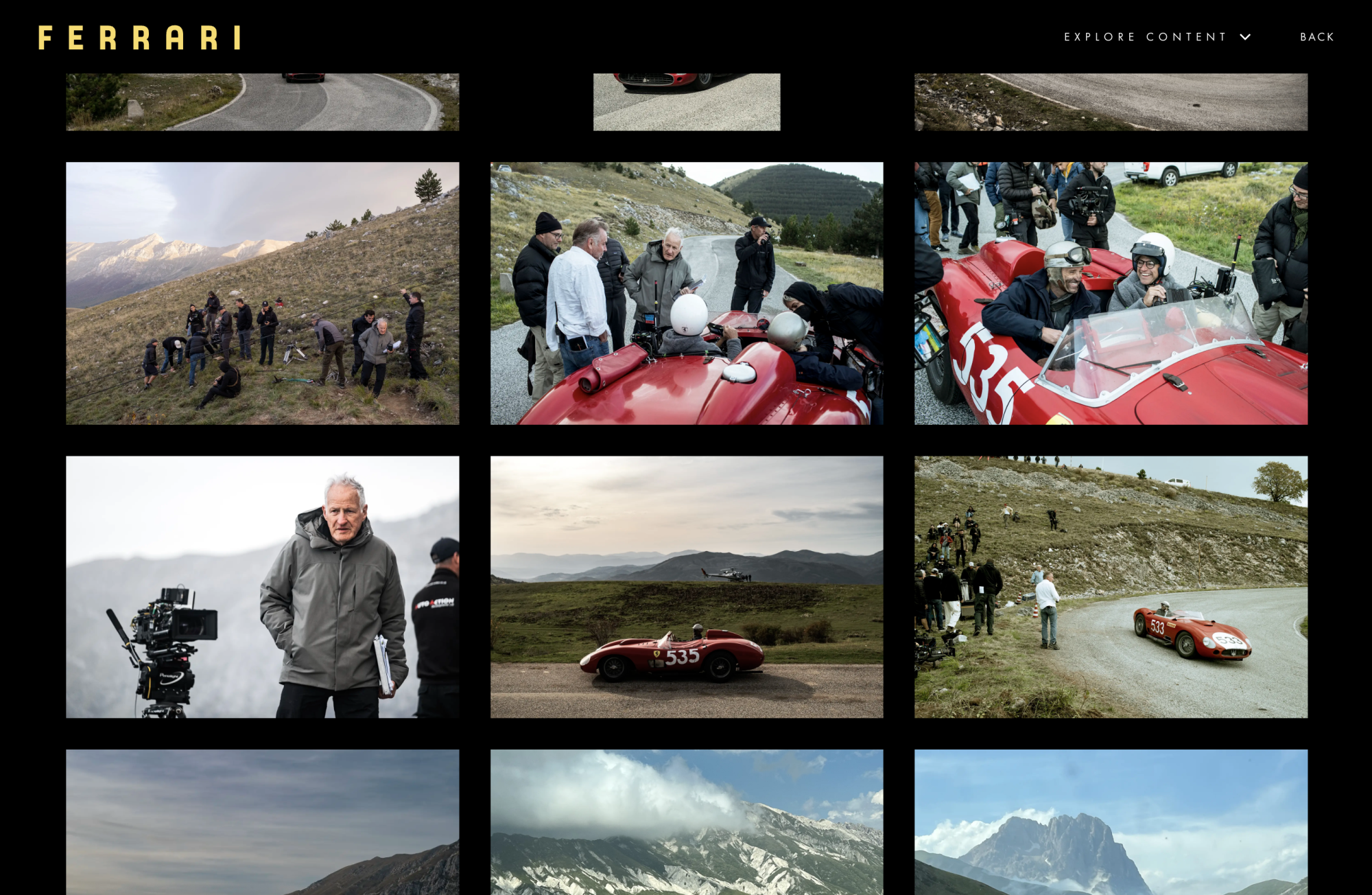
A gallery of behind-the-scenes “Ferrari” photos as seen on the website Michael Mann Archives.
(Michael Mann Archives)
The site’s video pieces are more extensive and in-depth than those that typically accompany a movie’s promotion. They may toggle between rehearsal footage of Driver and Woodley and the final filmed version of the same scene. Audio sources come from Mann’s rough preproduction recordings, such as when he and Cruz discuss Laura and Enzo’s relationship long before the film’s shoot. (Mann’s preproduction photographs of Cruz in the Ferrari family’s actual apartment may be among the most striking imagery on the entire site.)
Mann‘s archival material has, up to now, been stored in multiple locations, divided among paperwork, film elements and physical objects. Becca Mann began working as an archivist for her father around 10 years ago, at first just to check that the materials were being stored properly, and then saw her involvement grow over time.
“This is what happens if you hang around with him,” Becca Mann, 43, says with an affectionate smile. “I go visit storage to see if it’s dusty and then —”
“In 25 words or less, it turned into this,” adds her father with a laugh.
Becca Mann recalls making discoveries of items that she was personally fascinated by, and knew that other people would appreciate the opportunity to see them too.
“We’d run across some kind of crazy, beautiful document that’s covered in coffee stains and it’s got the whole crux of ‘Heat’ on one page,” she says. “That’s where wheels started turning about how to share it — what’s the best and most appropriate and also most direct thing to do with the stuff.”
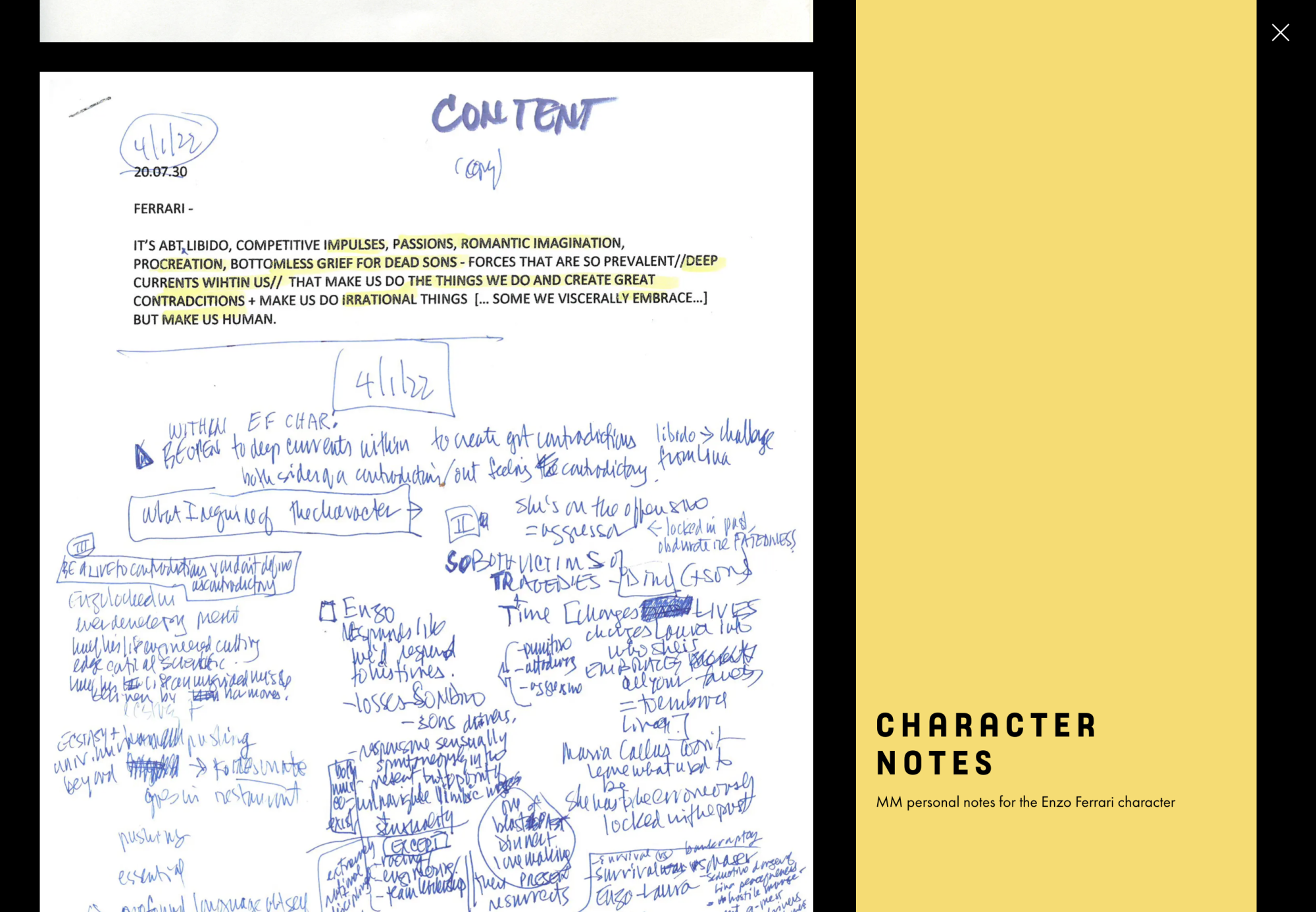
An image of Michael Mann’s annotated notes from “Ferrari” as seen on the website Michael Mann Archives.
(Michael Mann Archives)
Becca Mann notes that, as one goes further back in time, there tends to be less material on each film, which may be challenging for further iterations of the archive website. Mann himself frequently uses his archive for research on projects. For “Ferrari,” Mann’s working process was the same as it has been on previous movies, with the exception that there was even more attention paid to documenting the work along the way.
In explaining his interest in the archives project, he reflected on how other filmmakers have inspired his evolving practice over the years. He cites the deep and ongoing influence of Russian director Sergei Eisenstein, as well as what he learned about storytelling from his friend, filmmaker Sydney Pollack, who collaborated on early versions of the “Ferrari” project.
While working as an assistant to George Cukor in London in the late 1960s on a film that was never made, Mann saw the director of “The Philadelphia Story,” “A Star Is Born” and “My Fair Lady” give an adjustment to an actor during a rehearsal.
“I don’t know what he said, but it lasted about 10 or 15 seconds and he walked away and the performance went from A to Z,” Mann said. “And that instilled in me that if you want to direct, you have to be able to do that. You have to know what to say to get inside a very determined, hardworking actor.”

Multiple entry points on each interface page take a user to other destinations on the site.
(Michael Mann Archives)
“Ferrari” was seen as a box office failure, making just over $42 million worldwide on a reported budget of $95 million and earning no major awards recognition. Yet that hasn’t diminished Mann’s feelings toward the decades of work that went into creating it.
“I’m confident in the film’s long-term relevance,” Mann says. “I believe it’s a good film. I think Adam’s work is great. Penélope’s work is great. Shailene. The writing by Troy [Kennedy Martin] is quite terrific. No doubt about that.”
Many of Mann’s films have had a long tail, finding passionate and supportive audiences over time. Just look at recent screenings of “Miami Vice” in New York and Los Angeles or the enthusiasm around a recent 4K disc release of “Blackhat.”
“That’s not a mystery to me,” Mann says of why some of his films take longer to catch on with audiences than others, citing the complex “contrapuntal” ending of “Heat.”
“It’s emotionally conclusive, but it doesn’t leave you with: OK, that’s over, where are we gonna get a pizza?’ It’s not fast food. There are a lot of layers to these things.”
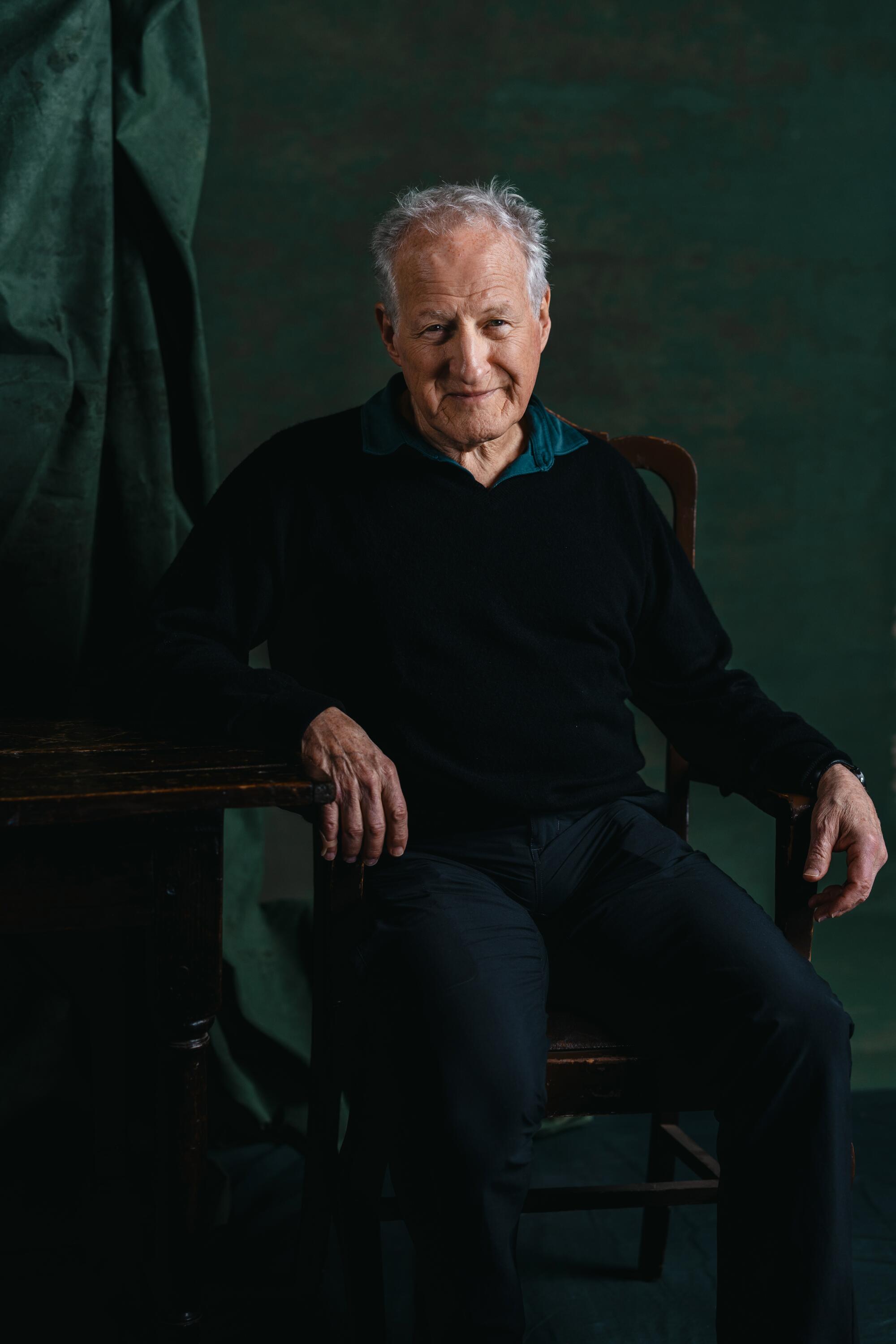
Michael Mann, photographed as part of The Times Envelope Directors Roundtable in 2023.
(Jason Armond / Los Angeles Times)
Which Mann classic will the archive explore next? “We don’t know what we want to do next,” Becca Mann says. “We’ll learn a lot about what people respond to. This project has an enormous amount of material in it. The objective is to do something activating and alive with the archive.”
Meanwhile, Mann notes he is deep into writing the screenplay adaptation of his novel “Heat 2,” with a desire to begin shooting at the end of this year or beginning of 2025. On those casting rumors involving the likes of Driver and Austin Butler to step into roles originally played by Robert De Niro and Val Kilmer, Mann says simply, “I can’t talk about that.”
The Michael Mann Archives project provides unique insights into the distinctive working methods of a director who has been at the forefront of Hollywood for more than four decades. Allowing audiences under the hood, as it were, only deepens one’s appreciation for the intensity of work that goes into making one of his films.
“I wouldn’t want to make a movie any other way,” Mann said. “If somebody said, ‘Here’s $20 million, show up three weeks before we start shooting,’ that would not be for me. ‘Make it up as you go’ is not for me.”



Movie Reviews
‘Rock Springs’ Review: Kelly Marie Tran and Benedict Wong in a Fresh, Vivid Spin on Grief Horror

After the death of her husband, Emily (Kelly Marie Tran) doesn’t know what to do. Her daughter Gracie (Aria Kim) hasn’t spoken in the six months since her father’s passing, and seems to be withdrawing more and more every day. Her mother-in-law, Nai Nai (Fiona Fu), copes with her son’s death through traditional Chinese spirituality, which she shares with her granddaughter. But Emily is Vietnamese and doesn’t speak the language. It’s just now that her husband is gone that Emily is forced to confront the cultural gap between her and those closest to her. Only showing her grief privately, Emily emotionally isolates herself, hoping that pushing forward will heal all the pain. But starting over in Rock Springs, Wyoming, proves to be more difficult than she could have ever anticipated.
Nai Nai warned against moving during “Ghost Week”, a time when the barrier between the spirit world and our world comes down. In Chinese culture, the mourning families must pray for their departed loved ones, guiding their souls to peace in the afterlife. Mourning is communal, and as families share their grief, they’re supposed to find healing together. But Nai Nai also warns Gracie about “Hungry Ghosts”, those who die scared and alone with no family members to guide them home.
Rock Springs
The Bottom Line A big swing that pays off.
Venue: Sundance Film Festival (Midnight)
Cast: Kelly Marie Tran, Benedict Wong, Jimmy O. Yang, Aria Kim, Fiona Fu, Ricky He, Cardi Wong
Director/Writer: Vera Miao
1 hour 37 minutes
When Gracie steals an old doll from a garage sale, it puts her in contact with a spirit she hopes is her father. But writer and director Vera Miao has other plans, using Gracie and her family to tell a multi-generational story of racism, grief and trauma. When Gracie disappears into the woods, past and present collide as she comes face to face with the spirits of dead miners. And what began as a small tale expands to become a confrontation with generational sadness and spiritual unrest.
In 1885, on the same land where Emily chose to restart her life with her family, a tragedy occurred. A village of Chinese migrant men was massacred and their homes destroyed. At least 28 Chinese miners were killed that day, with other sources indicating a death toll of 40 or 50 people. Only 15 survived with injuries at the hands of angry white settlers who resented that the local mining company had employed them in the first place. These settlers were never prosecuted for what is now known as the worst mass shooting in Wyoming history. To many viewers, this film will be an introduction to this historic tragedy.
Miao takes us back to that day, showing us a tight-knit group of miners with Ah Tseng (Benedict Wong) and He Yew (Jimmy O. Yang) at the center. Before the attacks begin, they discuss their homeland and new identity as Americans. Though Ah Tseng has been in the country longer — having worked on the railroads — he seems to doubt the idea that the United States could really be called home. The murderous white settlers only solidify his doubt before his untimely death. The fallen men are piled into a mass grave in the woods right outside Emily’s new house.
Cinematographer Heyjin Jun cuts through the sadness with breathtaking images of forest and landscape, showcasing the beautiful land spoiled by blood and hate. Tran gives a compelling performance as a young widow adjusting to single parenthood and suddenly being the head of her household. Since her breakout performance in Star Wars: The Last Jedi, Tran has struggled to find meaningful roles that allow her to show her range. But she excels here as a woman haunted by her husband’s death and afraid to embrace the traditions that give her daughter comfort. She has great chemistry with newcomer Kim, a gifted young actress who manages to be expressive while rarely uttering a single word.
Rock Springs is a big swing from Miao that pays off in the end, blending drama, horror and ugly American history to create a truly heartbreaking and hopefully healing experience.

In speech after speech, this year’s Grammy-winning artists returned to one message—ICE is a menace that must be stopped.
After dramatic, violent escalations in federal raids on immigrant communities and their supporters in Minneapolis and across the country, Americans have been shocked into despair and action. Many artists up for top Grammys have been vocal about their opposition to these raids, but at Sunday’s Grammys, the topic was front and center for many winners in their speeches.
“I want to dedicate this to all the people who had to leave their home, their country, to follow their dreams,” Bad Bunny said in his mostly-Spanish acceptance speech for the Grammys top prize, Album of the Year.
Earlier in the night, he joked with host Trevor Noah about Puerto Rico not being a great place for Noah should flee to, the island still being an American territory and all. But Bad Bunny made his point clearly even before taking home his biggest prize yet. “Ice out,” he said. “If we fight, we have to do it with love.”
With a Super Bowl halftime show coming next week, he’ll take the stage as the most important musician on earth right now, an urgent message brought to the heart of the most aggressively American live event.
As musicians around the country and the globe use their platforms to organize and speak out against the ICE raids, many acts wore pins on the red carpet Sunday—from Joni Mitchell and Carole King to Olivia Rodrigo, Brandi Carlile and Justin and Hailey Bieber.
Yet it was striking just how many artists used the acceptance speeches to decry the agency’s actions under President Trump.
Billie Eilish, an upset winner with brother Finneas for song for “Wildflower,” was even more direct. “No one is illegal on stolen land,” she said. “It’s hard to know what to say and what to do, but we need to keep fighting and speaking up and protesting. Our voices really do matter.” Then came a long, bleeped moment on the CBS broadcast—presumably something urgently profane directed at a similar target.
That sentiment spanned genres and cultures. New artist winner, the U.K. R&B singer Olivia Dean, acknowledged the gifts of being “the granddaughter of an immigrant. I’m a product of bravery and I think these people deserve to be celebrated.”
“Immigrants built this country, literally,” said country star Shaboozey, a descendant of Nigerian immigrant parents, winning for country duo/group performance. “This is also for those who came to this country in search of better opportunity to be part of a nation that promised freedom for all and equal opportunity to everyone willing to work for it. Thank you for bringing your culture your music, your stories and your traditions here.”
Kehlani, a winner for R&B song and performance, said that “Together, we’re stronger in numbers to speak out against all the injustice going on in the world right now. I hope everyone is inspired to come together as a community of artists ad speak out against what’s going on.”
” F— Ice,” Kehlani added, walking off the stage.
Recording Academy chief Harvey Mason Jr. also used his speech to underscore the “uncertainty and real trauma,” of the environment in America now. “It can be easy to feel overwhelmed, even helpless in challenging times. But music never stands still,” he said. “When we’re exhausted, music restores us. When were grieving, music sits with us.”
Alongside the night’s words of warning and rage, singer SZA offered what amounted to reassurance in her speech after winning record for “Luther,” her Hot 100-dominating collaboration with Kendrick Lamar.
“Please don’t fall into despair,” she said. “I know algorithms tell us it’s so scary and all is lost. But we can go on, we need each other. We’re not governed by the government, we’re governed by God.”

“Melania: Twenty Days to History” won over fans of the first lady at the box office this weekend, surpassing the initial opening weekend expectations to generate $7 million.
The Amazon MGM Studios film, which rolled out in over 1,500 theaters in North America, was estimated to make $5 million, which would have made it a relatively solid opening by documentary standards. But after beating expectations, it’s now the strongest start for a nonmusic documentary in over a decade, according to box office analysts.
It took the No. 3 overall spot for the weekend, following YouTuber Markiplier’s self-financed film “Iron Lung” and Sam Raimi’s “Send Help.”
While Kevin Wilson, Amazon MGM Studios’ head of domestic theatrical distribution, lauded the documentary’s “strong start,” it is still too early to call it a big win for Amazon.
The studio paid a whopping $40 million to acquire the project, which was helmed by filmmaker Brett Ratner. The studio also spent roughly $35 million on the marketing campaign, an eye-popping sum for a political documentary. Promotion for the film included projecting its trailer on the Las Vegas Sphere and designing a commemorative popcorn bucket.
The larger-than-expected haul comes despite reviewers on Letterboxd trashing the film (before seeing it), and others online sharing screenshots of theaters full of unsold tickets in cities. Critics have also largely panned the film, with outlets like The Hollywood Reporter calling it an “expensive propaganda doc” offering an “up-close and not-so-personal portrait” of the first lady.
Still, moviegoers gave the film, which was backed by the White House, a generous A when polled by CinemaScore and a 99% audience score on Rotten Tomatoes.
The top-performing markets for “Melania” included Dallas, Orlando, Tampa, Phoenix, Houston, Atlanta and West Palm Beach, according to box office analysts who shared audience metrics with NBC News. Donald Trump won Texas, Arizona and Florida in the 2024 presidential election. The documentary also mostly attracted female moviegoers, who made up about 70% of audiences.
An estimated 600,000 moviegoers saw the film over the weekend, according to EntTelligence data provided to CNBC.
In January of last year, when Amazon licensed the film, the studio said it picked up the documentary as well as a subsequent docuseries for the streaming service, “for one reason and one reason only — because we think customers are going to love it.” The deal occurred shortly after Amazon founder Jeff Bezos dined with Donald Trump at Mar-a-Lago.
“This momentum is an important first step in what we see as a long-tail lifecycle for both the film and the forthcoming docu-series, extending well beyond the theatrical window and into what we believe will be a significant run for both on our service,” Wilson said in a statement Sunday.
Last weekend, the White House held a private early screening of the film for guests before Amazon rolled out the black carpet for the documentary’s Washington, D.C., premiere at the Kennedy Center on Thursday.
When asked by NBC News about who the film was for, the first lady said, “Everybody will connect on a certain level. Teenagers can go to see, young women can go to see and be inspired that they could have a family and business, as well.”
The premiere was attended by friends of the Trump family, members of the Trump administration and those involved with the film, including Ratner and Marc Beckman, a senior adviser to the first lady and the husband of Melania Trump’s friend Alice Roi.
Ratner was accused of sexual misconduct by multiple women in 2017 but has denied the allegations and was never charged. The director has become a fixture in Trump’s circle and spent a significant amount of time living at Mar-a-Lago while shooting the film, according to a source close to the first lady.
In November, Semafor reported that a push from the president led Paramount Skydance to agree to distribute Ratner’s “Rush Hour 4.” The president’s involvement was not confirmed by NBC News.
In his Instagram stories over the weekend, Ratner reshared a post from the X account End Wokeness that read, “This is why nobody trusts ‘the critics.’” A screenshot of the Rotten Tomatoes scores was attached.

‘Rock Springs’ Review: Kelly Marie Tran and Benedict Wong in a Fresh, Vivid Spin on Grief Horror

Trump orders DHS to stay away from protests in Democratic-led cities unless federal help is sought

Video: How Trump’s Tariffs Affected the Economy After One Year

Video: How the Supreme Court Made Itself More Secretive
After being hit by a car, she was saved by a lavender bunny

Florida High School Football Rankings: Top 25 teams – Oct. 21

Cleary's 21 help Le Moyne down Central Connecticut State 69-64 in OT

How old is Bo Nix? What to know about Oregon quarterback ahead of 2024 NFL Draft

99th annual Pony Swim held in Virginia

Indiana Members Credit Union announced as new anchor tenant at Bottleworks District
Video: How Trump’s Tariffs Affected the Economy After One Year

Portland mayor demands ICE leave city after federal agents use tear gas on protesters ‘Sickening decisions’

Cuba denies security threat accusations as US raises pressure

Kennedy Center will close for 2 years for renovations in July, Trump says, after performers backlash

Government shutdowns may be fewer, but they’re increasingly disruptive
-

 Massachusetts1 day ago
TV star fisherman, crew all presumed dead after boat sinks off Massachusetts coast
-

 Tennessee2 days ago
UPDATE: Ohio woman charged in shooting death of West TN deputy
-

 Pennsylvania7 days ago
Rare ‘avalanche’ blocks Pennsylvania road during major snowstorm
-

 Movie Reviews6 days ago
Vikram Prabhu’s Sirai Telugu Dubbed OTT Movie Review and Rating
-
 Science1 week ago
LAUSD says Pali High is safe for students to return to after fire. Some parents and experts have concerns
-
 Politics1 week ago
Trump’s playbook falters in crisis response to Minneapolis shooting
-
Austin, TX3 days ago
TEA is on board with almost all of Austin ISD’s turnaround plans
-

 Indiana8 hours ago
13-year-old rider dies following incident at northwest Indiana BMX park

