Entertainment
Did the outcome of World War II depend on the weather? Separating fact from fiction in ‘Pressure’


The success of D-day, a pivotal moment in World War II, partially hinged on the weather forecast. The Allied invasion of Normandy, France, on June 6, 1944, was planned for months as the American and British forces held practice operations in England.
Enormous efforts were made to mislead the Germans about what was coming. The operation was originally scheduled for June 5 but the day before, James Stagg, a meteorologist and group captain in the Royal Air Force, advised the American commander, Dwight D. Eisenhower, to wait for better conditions.
This lesser-known decision is the premise of “Pressure,” a new movie from filmmaker Anthony Maras. It’s an adaptation of David Haig’s play of the same name, in which the playwright himself portrayed Stagg. Haig, who co-wrote the “Pressure” screenplay with Maras, compares it to “The Imitation Game.”
“Some of these heroes who affect history from the sidelines just stay in the sidelines until somebody does research, discovers them lurking and finds they are so quietly heroic that it’s irresistible as a story,” Haig says, speaking via Zoom from London.
Haig began writing a version of the script shortly after the play debuted at the Royal Lyceum Theatre in Edinburgh in May 2014. It moved to the West End in 2018, and opened in North America at Toronto’s Royal Alexandra Theatre in 2023. Maras came onboard after making his 2018 film “Hotel Mumbai,” also based on a true story.
“When I first read the play and the script, I was bowled over by how, with this one decision, so many lives were changed,” Maras says, on a video call from Los Angeles. “Not just the lives of the men on the beach but throughout the Allied world. When you think of a war story, you think of men and now women on the field, but there is so much more to it behind the scenes.”
The film expands Haig’s play and includes additional characters and sequences, including the actual D-day invasion. It stars Andrew Scott as Stagg, Brendan Fraser as Eisenhower, Kerry Condon as Eisenhower’s secretary Kay Summersby, Chris Messina as U.S. Air Force meteorologist Irving P. Krick and Damian Lewis as senior British army officer Bernard Montgomery.
Both Haig and Maras strove to be as historically accurate as possible, even including archival footage from the war. “It is inevitably heightened, as any stage play or film is,” Haig says. “But it is very true.”
“It is absolutely as true as we could get it within the confines of a two-hour runtime,” Maras adds. “We took great lengths to try and be as accurate to the history but also to the deeper story as possible.”
Here’s what is true and what is dramatized in “Pressure.”
The importance of the weather
Brendan Fraser, left, and Andrew Scott in the movie “Pressure.”
(Alex Bailey / Focus Features / StudioCanal)
D-day, secretly known as Operation Overlord, was timed based on several factors, including the weather, the tides and the moonlight. Because the assault was multipronged, with Allied forces coming by sea, land and air, they required good visibility at night and a high tide to ensure less distances between the boats and the defending Germans.
“There were hundreds of meters between low tide and high tide,” Maras says. “So depending on where the boats landed, you either had 50 meters until you made it to the dunes and then the bunkers, or you had to make it 300 meters if it was low tide.”
A clear forecast with low winds and no rain was essential.
“The landing craft were antiquated and flat-bottomed,” Haig says, “and if they had gone on May 5 with the storms that Stagg anticipated coming in with the jet stream, those landing craft would have capsized. The war wouldn’t have been lost, although we do posit that it might have been in the film. In reality, failure would have elongated [the war] and caused countless extra deaths.”
To shoot “Pressure,” the filmmakers used real charts and meteorological instruments. The production design team re-created the famous D-day map from the Allied headquarters in Southwark House. The real one was made in two pieces by separate manufacturers to ensure secrecy.
“When you see that map, it’s a little bit mismatched and our team re-created that,” Maras says. “We got the paper they used to draw the maps from the same mill they used for those maps 80 years ago. A lot of effort was put into the minutiae that adds to the accuracy.”
Exercise Tiger
The film opens with a depiction of an Allied training operation called Exercise Tiger, which took place over several months on England’s Slapton Sands. Because many of the soldiers were young and untested, the Allied leaders wanted to prepare them for the sights and sounds of battle.
“They did a whole series of exercises to try and get together a full-scale dress rehearsal of what D-day would be,” Maras says.
These rehearsals, still widely unknown and spanning from late 1943 through April 1944, involved dangerous friendly fire and suffered from serious coordination errors, resulting in the real-life deaths of at least 700 American and British soldiers.
“That was an absolute disaster and yet we remember D-day as one of the great military triumphs in history,” Haig says.
Maras wanted the film to begin with this moment to emphasize the headspace of the Allied leaders.
“How do you establish what the true consequences of failure are for a story like this?” Maras says. “When we’re in the war room with all of those commanders and officers, they know what the implications of their words mean because they’ve seen it. They’ve lived it. The image of the blood in the water and the young men in that water was to tattoo in the audience’s brain that if these commanders mess up, this could happen again.”
Eisenhower, in particular, felt the magnitude of D-day. “He wrote two letters on the eve of D-day: what happens in success and what happens in failure,” Maras says. “He was sleeping two hours a night. He was a nervous wreck.”
Stagg vs. Krick
In the film, Scott’s Stagg arrives at Southwark House from Dunstable four days before D-day is planned. He is confronted by the American meteorologist Krick, who disagrees with him about the potentially disastrous forecast. Krick believes sun and calm seas are on the horizon thanks to historical analogue charts, but Stagg, using more comprehensive prediction methods, thinks a major storm is coming.
“In actuality, Stagg came onboard in about November 1943 and got to Southwark House a few months earlier,” Maras says. “His transfer came a few months earlier, not a few days earlier. The contours of the relationships between Stagg and Krick and the others are accurate, but they took place in a more compressed timeline.”
Both Stagg and Krick have recounted their version of events in various books, both claiming they were right about the weather. Although Haig and Maras imagine their dialogue and how these conflicts may have played out, the conflicts were real.
“They both adhered to their own meteorological vision,” Haig says, explaining the differences in prediction models from continent to continent. “In the United States, Krick’s system of weather forecasting was viable. If you come to the U.K., you can’t rely on the weather for more than five minutes, so that method doesn’t apply.”
Adds Maras, “They thought, ‘The weather is going to be good. We should hold our nerve and go.’ There was a rhetorically violent disagreement between him and the others.”
In the film, Krick claims that he has never inaccurately predicted the weather ahead of a battle, using his successes in North Africa as evidence. This was technically true.
“He was very good at his job within the context of certain geographical landscapes,” Haig says. “He didn’t make a mistake in North Africa. When Eisenhower challenges Stagg, he says, ‘This man never got it wrong.’ And he didn’t. In the whole of the North African campaign, Krick was spot on.”
After Stagg convinces the leaders to postpone D-day, he is vindicated by a deluge of rain that arrives while everyone is attending church at Southwark House on June 5. There was a church on site, although this moment in the film was dramatized.
“Whether it began raining precisely at that moment I have my doubts,” Haig says. “But it has the framework of truth.”
Ike and Kay

Andrew Scott and Kerry Condon in the movie “Pressure.”
(Alex Bailey / Focus Features / StudioCanal)
Kay Summersby had been an ambulance driver during the Blitz. The film hints at a less-than-professional relationship between Eisenhower and his personal secretary. She was certainly with Eisenhower at Southwark House, although there is less evidence that she had any kind of association with Stagg.
“The biggest fictional thing I did with both the play and the film was to join the third point of the triangle so you’ve got Stagg, Eisenhower and Kay,” Haig says. “The link between Stagg and Kay historically would be tenuous.”
There are differing opinions about Eisenhower and Kay’s relationship. “We know that they were extremely close and they shared a trustful bond,” Maras says. “There are many photos of them together. She was definitely a big force in Ike’s life at that time, and we wanted to pay respect to that.”
“Whatever one’s interpretation of the relationships that she inhabits within the story, her influence was substantial,” Haig adds.
After seeing Peter Jackson’s 2018 World War I documentary “They Shall Not Grow Old,” Maras had the idea to use colorized archival footage in “Pressure.”
“In the D-day sequence at the end, there are various real-life shots of the soldiers landing on the beaches,” Maras says. “We were able to cut between the archival [material] and our footage to increase the scope. And it wasn’t just to get the scale. Yes, we have shots of massive flotillas and ships and trucks, but sometimes it was just for a glance of a soldier where you can see death in his eyes.”
The team ultimately acquired more than 50 hours of archival footage. They hired research editors to go through it and, after a few days, Maras asked if any of the editors could recommend additional crew to help.
Then a man named James Stagg showed up to work. “Stagg’s grandson, 80 years later, walked into our offices and helped edit the archival movie footage that we put in his grandfather’s film,” Maras says.
Stagg’s wife

Andrew Scott in the movie “Pressure.”
(Alex Bailey / Focus Features / StudioCanal)
The play doesn’t include scenes with Stagg’s wife, Elizabeth, but Haig purposefully bookends the film with the couple together. “When he arrives at Southwark House as a terse, brusque, tricky man, you’ve already experienced his level of affection with his wife and that’s really important contextually,” Haig says. “You’re waiting for the end when he goes back to see her and the baby.”
At the time when Stagg went to Southwark House, his wife was pregnant. Stagg was not allowed to make phone calls to her because of the secrecy surrounding D-day. In reality, the hospital where she gave birth was not bombed, as it is in the movie.
“The bombing of the hospital was more reflective of the times that Stagg and his wife had gone through in the lead up to D-day,” Maras says. “That element is to encapsulate that Stagg was fearing for his wife. As he walks down this corridor, he is faced with: Is she alive? Is she dead?”
Truth to power
Ultimately, Stagg tells a room full of military leaders that they have to pause on D-day because of the weather — a truthful inclusion. It was important to Maras to emphasize how he stood up to power.
“Here’s a protagonist who’s not afraid to speak his mind and has the courage to get up in front of a room full of the most powerful military on Earth at that point and tell them something they don’t want to hear,” Maras says.
“When Eisenhower was passing on the baton of leadership at the inauguration for JFK, JFK asked, ‘What gave you the edge on D-day?’ Eisenhower said, ‘We had better meteorologists than the Germans.’ He had the wisdom to trust in the experts. It’s worth heeding that lesson from history.”


The idea of a young, aspiring filmmaker running around their backyard with a low-quality camera and a gaggle of friends roped into performing in their latest project is nothing new. In fact, it has been a staple of popular culture for decades. That is what makes Kane Parsons’ debut online short, The Backrooms (Found Footage), especially notable. When it was released in 2022, it felt uniquely connected to that long-standing piece of American cinematic mythology.
The short opens with a group of kids on set, preparing to shoot another take for what is clearly a makeshift, shoestring-budget horror project. Then, the camera operator unexpectedly slips into another reality of sorts: a liminal space hidden beneath the ground where the crew was filming. As the story transitions from the real world into the “backrooms,” Parsons’ approach also evolves, moving beyond traditional filmmaking into something digitally generated rather than physically captured by a camera.
In hindsight, it plays as an incredibly loaded opening statement from the young filmmaker. The king is dead, long live the king. The era of kids running around their backyards trying to imitate the aesthetics of professional filmmaking has given way to a new generation embracing the possibilities and limitations of entirely different tools, such as Blender. Now, Parsons has partnered with A24 to bring that vision of horror’s future to the big screen with his debut feature film, Backrooms.
The result, while occasionally uneven, feels like something genuinely significant. It is a film that suggests the beginning of a new chapter for the horror genre, one shaped by creators who grew up with digital tools, internet culture, and a completely different understanding of what filmmaking can be.
TOP FIVE THINGS ABOUT “BACKROOMS”
5. Assured Direction
Kane Parsons is a young man, but he’s someone who has been telling stories within this exact narrative and tonal space for years now. That level of clarity and concentration is demonstrated in his debut film in spades. Working with cinematographer Jeremy Cox and editor Greg Ng (both of whom worked on Osgood Perkins’ films Longlegs and The Monkey), Parsons creates a visual language that often feels immersive and claustrophobic in equal measure.
The use of wide-angle lenses throughout is a great choice that serves to both accentuate the off-kilter nature of this world and showcase even more of production designer Danny Vermette’s remarkable work. Altogether, it does not feel like a film made by a novice, but rather one made by someone who is confident and in control of their cinematic craft. That is a testament to Parsons’ talents as a director.
4. A Very Good Script
The script for Backrooms, written by Will Soodik and based on the stories originated by Parsons and his YouTube body of work, is articulate, thoughtful, and incredibly well-constructed. As audiences have seen time and again with earlier attempts like Slender Man and Five Nights at Freddy’s, it is not exactly easy to translate what makes a lo-fi analog horror concept work in the digital world to the big screen without losing what makes it special.
But Soodik’s writing manages to let Backrooms have its cake and eat it too, maintaining many of the aesthetic and tonal choices that made those short films work so well while also delivering a much more traditional and compelling character-driven drama that ties everything together. For the first act and a half of the film, I was genuinely shocked by how well it managed to maintain this precarious balance. However, it was not quite meant to last…
3. Strong First Half, Lackluster Back Half
If I have one real critique of Backrooms, it is that the stellar first hour-plus of the film is severely bogged down by its final stretch. Without spoiling things, there’s a moment in the film where the baton is passed from one perspective to another, and while this initially seems to hold a great deal of potential, it ultimately leaves things feeling underdeveloped and uneven during the final stretch.
It also falls into the trap of attempting to explain a bit too much about the otherworldly horrors of the Backrooms in a way that only serves to deflate the terror-inducing awe of the concept while also raising even more questions. There are also some character choices that feel jarring and underbaked, making the whole thing ring just a little hollow by the end.
2. That Mid-film Setpiece
Just before that aforementioned perspective switch, audiences are treated to what has to be considered the centerpiece of the entire film: an extended set piece shot entirely in a found-footage style as a trio of characters enters the Backrooms. Everything about this sequence works, from the way the film builds toward it to the performances and the eloquent, highly effective blocking. All of these elements come together to create what is easily the strongest section of the film.
This is Parsons truly operating in his element, and it absolutely shows. The film is worth seeing on the biggest screen possible for this tour-de-force sequence alone.
1. Blending Formats
As the latest in a growing line of online content creators making the leap to the big screen with aplomb, Parsons’ Backrooms is unique in that it feels actively engaged in conversation with both present-day audiences and decades of horror influences. The film is modern in its conventions and the way it communicates with viewers, yet it is set in the ’90s and draws inspiration from projects such as The Texas Chain Saw Massacre, Eraserhead, The Blair Witch Project, and even the more recent Skinamarink.
The result is a film that feels as though it is building upon both the foundations of the horror genre as a whole and the foundations of Parsons’ online work. Because of that, Backrooms is able to reach some genuinely impressive heights.
GRADE
(B-)
Kane Parsons’ Backrooms is an incredibly taut, suspenseful, and dread-inducing debut feature that promises great things from the young filmmaker for years to come. If the film had managed to maintain the remarkable balancing act it nearly perfects during its opening hour or so, it would have been a solid A in my book. As it stands, the final half-hour bogs things down and gums up the works a bit, but it is nowhere near enough to counteract all of the greatness the first half achieves.
Backrooms is occasionally great and consistently solid, more than deserving of every bit of the success and attention it is receiving.

Discover more from RGM
Subscribe to get the latest posts sent to your email.

Often when the word of mouth begins to spread and hype the newest “best movie ever”, the viewer has to take these opinions with a mound of salt. But as the week two financial gate for Obsession jumped over twice as high as its debut, people started paying attention. With a Youtuber at the helm and the critics lauding this romantic horror film as the second coming, it was time for this particular reviewer to see what the hype was all about.
Obsession is written and directed by Curry Barker (Milk & Serial 2024). It stars Inde Navarrette (Superman & Lois TV Series 2021) as Nikki and Michael Johnston (9-1-1 TV Series 2026) as Bear. Bear is in love with Nikki, but he lacks the gumption to ask her out. On a whim, the bashful Bear buys a “One Wish Willow”, a magical totem that, when broken, allows the bearer one granted wish. Bear wishes for Nikki to love him, but this love comes at the ultimate cost.
The acting is the first thing that the audience will become obsessed with in Obsession. Navarrette is poised for a breakout year and would fit very well as a new-age “final girl” in the horror genre. Johnston is no slouch either, as he brings a lot of layers to Bear, but Navarrette is the one that’ll haunt your dreams for weeks. The actors told the stories on their faces, and Navarrette’s sudden screams make for the most natural jump-scares in ages.
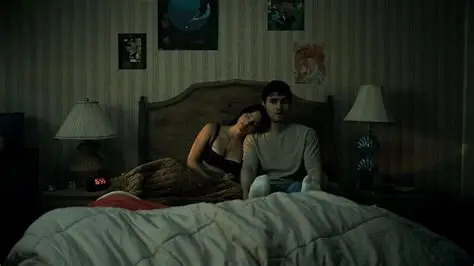
Obsession also thrives in its technical prowess. The quiet sound design and still characters make the movie a genuinely unsettling experience. The usage of rewinding shots gives Nikki a chilling economy of movement, while speeding up shots creates sudden peril and makes scenes instantly uncomfortable. The viewer never gets a chance to truly catch their breath, but the stakes continue to grow with every scene.
It’s very easy to see why Obsession has audiences buzzing. It’s the kind of movie that’s going to hold a spot at the top of lists at year’s end, but if the chance arises to see it in a large theater, the experience will be even more rewarding.
Entertainment
Review: Alicia Keys’ glorious music fuels blazing ‘Hell’s Kitchen’ at the Hollywood Pantages

“Hell’s Kitchen,” the Alicia Keys musical that has landed at the Hollywood Pantages Theatre in a blaze of rousing sound, deploys the R&B star’s glorious treasure trove of work in the service of a semi-autobiographical version of her coming-of-age story in the Manhattan neighborhood that gives the show its title.
The Hell’s Kitchen of Alicia Keys’ story, set in the 1990s, isn’t the gang-ridden Hell’s Kitchen of West Side Story, set in the 1950s. Keys grew up in Manhattan Plaza, a federally subsidized residential complex that provides affordable housing for artists. But for a teenager in rebellion from her watchful mother, the vibrant, music-filled street life comes with its share of dangers.
Kennedy Caughell as Jersey and Maya Drake as Ali in the North American Tour of Alicia Keys’ “Hell’s Kitchen” at the Hollywood Pantages Theatre.
(Marc J. Franklin)
Ali (Maya Drake, who’s making her professional debut in this North American tour production) is a 17-year-old ready to break out of the cage her mother, Jersey (Kennedy Caughell), has placed her in. Jersey, a single mom, isn’t a tyrant. She just doesn’t want to see her daughter make the same mistakes that she did, namely get pregnant at a young age before she’s had a chance to realize her own dreams.
The book by playwright Kristoffer Diaz (“The Elaborate Entrance of Chad Deity”) is structured around a loving but combustible mother-daughter relationship amid the creative ferment of New York. This artistic neverland is crystallized in the apartment building that has music pouring out of every floor when Ali rides the elevator.

Maya Drake as Ali and the company of the North American Tour of Alicia Keys’ “Hell’s Kitchen” at the Hollywood Pantages Theatre.
(Marc J. Franklin)
The story isn’t the strong suit of “Hell’s Kitchen,” which is powered by Alicia Keys’ versatile catalog, which has been supplemented with original material. The hits — “You Don’t Know My Name,” “Girl on Fire,” “Fallin’,” “If I Ain’t Got You,” “Like You’ll Never See Me Again,” “No One” and “Empire State of Mind,” among them — reverberate inside the Pantages with a thrilling exuberance.
What’s most impressive, however, is the way these tracks have been arranged both musically and dramatically. Jukebox musicals are notorious for shoe-horning in beloved songs without regard for storytelling integrity. “Mamma Mia!,” which crammed in as many ABBA hits as possible, hardly even bothered to find pretext for their inclusion. The lucrative example paved the way for more than two decades of musical theater shamelessness.

The company of the North American Tour of Alicia Keys’ “Hell’s Kitchen” at the Hollywood Pantages Theatre.
(Marc J. Franklin)
“Hell’s Kitchen,” directed by Michael Greif, takes a more dignified approach, raiding Keys’ greatest hits in a way that doesn’t cause dramatic offense and better yet, adds a layer of surprise to music that is so well known.
The songs are allocated in unexpected ways. Numbers that you might think belong to Ali are divided among the company. Jersey is first in line, and Caughell makes the most of her opportunities. But sharing in the bounty are Davis (Desmond Sean Ellington), Ali’s mostly absent and chronically unreliable father; Knuck (Jonavery Worrell), Ali’s forbidden love interest; or Miss Liza Jane (Roz White), a pianist who lives in the building and becomes Ali’s formidable mentor.
There are other characters who offer luminous assistance, but these are the principals in a musical tale built around Ali’s central relationships. Keys’ origin story is more dynamic on an atmospheric than dramatic level. A mother having difficulty with her boy-crazy teenage daughter isn’t exactly breaking any ground, and Diaz avoids venturing into more turbulent territory. Ali’s divided identity, stemming in part from an all-too-present white mother and all-too-missing Black father, sets up issues that are touched on but never deeply engaged.

Desmond Sean Ellington as Davis and Kennedy Caughell as Jersey and the company of the North American Tour of Alicia Keys’ “Hell’s Kitchen” at the Hollywood Pantages Theatre.
(Marc J. Franklin)
Miss Liza Jane spots Ali’s musical gift right away and fills her with a sense of pride and responsibility in her Black heritage. But her character’s role is somewhat earnestly compartmentalized. Knuck recognizes that Ali’s fascination with him stems in part from the way she sees him, much as her mother does, as a “thug.” But their tentative affair is secondary to the complex bond between Ali and Jersey, whose troubled connection with Davis helps Ali understand why her mother is so paranoid about her romantic choices.
But these concerns fall away when the performers start singing. Drake has a beautiful voice, but her Ali is slighter than that of Maleah Joi Moon, who won a Tony for her Broadway debut performance. I didn’t mind that Davis sings “Fallin’,” as Ellington has a voice of luscious thunder. Worrell’s Knuck more than holds his own with his duets with Ali. (In fact, I was more taken by his velvety interpretation of “Like You’ll Never See Me Again” than Ali’s more straightforwardly pretty version.) White’s Miss Liza Jane takes the Pantages audience to church in her numbers. And when Caughell magnificently directs “No One” to Ali, I can’t imagine there’s a dry eye in the house.

Desmond Sean Ellington as Davis and Maya Drake as Ali in the North American Tour of Alicia Keys’ “Hell’s Kitchen” at the Hollywood Pantages Theatre.
(Marc J. Franklin)
This tour production isn’t crisp in all areas. The dancing isn’t always smooth, the costumes struck me as a road show idea of New York cool, and the acting didn’t do much to compensate for some of the book’s less subtle moments.
But the energy of the production is infectious. “Hell’s Kitchen,” a New York story of a wunderkind discovering her gift, helped me get over my allergy to the jukebox genre. The soaring quality of the orchestra and the delectable company of voices pay exhilarating homage to a singular artist, who seems right at home at the Pantages.
‘Hell’s Kitchen’
Where: Hollywood Pantages Theatre, 6233 Hollywood Blvd., Los Angeles
When: 7:30 p.m. Tuesdays-Thursdays, 8 p.m. Fridays, 2 and 8 p.m. Saturdays, 1 and 6:30 p.m. Sundays. (Check for exceptions.) Ends June 21
Tickets: Start at $57
Contact: BroadwayInHollywood.com or Ticketmaster.com
Running time: 2 hours, 35 minutes
-

 South-Carolina56 seconds ago
South Carolina Lottery Powerball, Pick 3 results for May 30, 2026
-
South Dakota8 minutes ago
SD Lottery Powerball, Lotto America winning numbers for May 30, 2026
-

 Tennessee11 minutes ago
Emerging data centers: New TN law to protect ratepayers goes into effect in July
-

 Texas16 minutes ago
The Moment That Completely Changed Texas A&M’s Regional Blowout Win Over Texas State
-

 Utah23 minutes ago
From small-town Utah to NYC: Accomplished hairstylist reflects on journey to upscale SoHo salon
-
Vermont26 minutes ago
VT Lottery Powerball, Pick 3 results for May 30, 2026
-

 Washington36 minutes ago
Eleven Confirmed Dead in Washington State Chemical Accident, All Bodies Recovered
-
Virginia38 minutes ago
Virginia Lottery Powerball, Pick 3 Night results for May 30, 2026

