Connect with us

Entertainment

Abraham Quintanilla, father of late Tejano singer Selena, dies at 86

Published

on

Abraham Quintanilla, father of late Tejano singer Selena, dies at 86

Abraham Quintanilla, father and manager of the late Tejano pop icon Selena Quintanilla, has died. He was 86.

“It’s with a heavy heart to let you guys know that my Dad passed away today,” Quintanilla’s son, A.B. Quintanilla III, wrote on his Instagram account on Saturday. The cause of death has not been disclosed to the public.

As patriarch of the famous Mexican American music family, Quintanilla played a critical role in the development of his daughter Selena’s career. After her tragic death in 1995, he dedicated his life to safeguarding her legacy and overseeing primary control over her estate. This included managing the rights to her image, name and likeness — at times, to controversial ends.

Born in Corpus Christi, Texas, in 1939, Quintanilla began his music career as a member of the singing group the Dinos in 1956, a Chicano rock group that was met with racial discrimination. In one instance, a club owner paid the group not to perform after realizing they were Mexican American youth; but the group was also sidelined by its Mexican counterparts for not making Spanish-language music.

Quintanilla’s exasperation informed a real quote that was later made famous by actor Edward James Olmos, who played Quintanilla in the 1997 “Selena” biopic: “We have to be more Mexican than the Mexicans and more American than the Americans, both at the same time. It’s exhausting!”

Advertisement

Quintanilla would eventually step away from the group in the 1960s to start a family with Marcella Samora, whom he met in Tacoma, Wash., while serving in the U.S. Air Force. The family quickly grew following the births of A.B., Suzette and Selena. In them, he saw the potential to fulfill his own dreams of musical stardom.

With A.B. on bass, Suzette on drums and Selena as the tender vocalist, the trio would often perform at the family restaurant, PapaGayo’s, which later closed following the 1981 recession. The family was forced to sell their home in Lake Jackson, Texas, and move to Corpus Christi. In order to make ends meet, Selena y Los Dinos would perform on street corners, family parties and other social functions. Under the guidance of their father, who assumed the position of band manager, Los Dinos eventually signed with Freddie Records in 1984.

Selena was met with much skepticism from an early age as a young girl in a male-dominated genre, including by their first label head, Freddie Martinez. Still, Los Dinos persevered in the Tejano music scene, hopping from label to label before the group finally released eight albums under Manny Guerra’s independent labels, GP Productions and Record Producer Productions. With multiple albums under her belt, Selena was then able to dominate the Tejano Music Awards; she won the title of Female Vocalist of the Year in 1987.

Selena eventually caught the attention of Jose Behar, the former head of Sony Music Latin, who saw her crossover appeal — despite Selena’s primary language being English — and signed her to EMI Latin (Capitol Records) in 1989. This led to the release of her most career-defining hits across five albums, such as “Como la Flor,” “Amor Prohibido,” “Bidi Bidi Bom Bom” and the posthumously released ballad, “Dreaming of You.”

Following Selena’s murder in 1995 — by Yolanda Saldivar, the former president of her fan club — Quintanilla became a fierce protector of her image, which was often sensationalized by the public.

Advertisement

Because of the grisly and highly publicized nature of Selena’s death, Quintanilla felt that the film needed to be made sooner than later, in order to do justice to his daughter’s legacy, said “Selena” director Gregory Nava in a 2025 interview with De Los.

“For me, as a filmmaker, I wanted to really tell a true story,” said Nava. “I had conflict, not really with the family, but with Abraham. Her father was very protective of her.”

Tensions flared most when Nava began to shape the story of the singer’s elopement with guitarist Chris Perez, whom she married in 1992.

“You can’t put on the screen that it’s right for a young girl to disobey her father,” Nava recalled Quintanilla saying.

“Isn’t it a more important point to make that she is doing what she knows is right? And [that] she’s doing the right thing because she knows she loves Chris and Chris loves her?” Nava responded.

Advertisement

Eventually, Quintanilla relented. “I guess if I have to look bad to make Selena look good, I’ll do it,” Nava recalled him saying. “He has a soft heart. He finally saw that was the right thing to do, but it took hours of heated discussion.”

Although Suzette has said that the 1997 biopic came too soon in her eyes — and prompted criticism of her father, who some viewed as money-hungry and opportunistic — she ultimately stood by his decision, stating that there was a pressure within the family to control the narrative at the time.

Nava agreed.

“Abraham was very wise in pushing it through quickly,” he said. “Selena brought us all together, and it cemented her legacy in a positive way. All the negativity was dispelled by that movie. You see that in the film and you feel it.”

Advertisement

Movie Reviews

‘Black Rabbit, White Rabbit’ Review: Disqualified for the Oscars, Tajikistan Drama Is an Inviting, Meandering Meta-Narrative

Published

on

‘Black Rabbit, White Rabbit’ Review: Disqualified for the Oscars, Tajikistan Drama Is an Inviting, Meandering Meta-Narrative

Selected by Tajikistan but ultimately not accepted by the Academy to compete in the Oscar international feature category, “Black Rabbit, White Rabbit” begins ambitiously, with a famous quote from playwright Anton Chekhov about setups and payoffs — about how if a gun is established in a story, it must go off. Moments later, an inviting long take involving a young man selling an antique rifle ends in farcical tragedy, signaling an equally farcical series of events that grow stranger and stranger. The film, by Iranian director Shahram Mokri, folds in on itself in intriguing (albeit protracted) ways, warping its meta-fictional boundaries until they supersede its characters, or any underlying meaning.

Still, it’s a not-altogether-uninteresting exercise in exploring the contours of storytelling, told through numerous thematically interconnected vignettes. The opening Chekhov quote, though it might draw one’s attention to minor details that end up insignificant, ensures a heightened awareness of the movie’s artifice, until the film eventually pulls back and becomes a tale of its own making. But en route to this semi-successful postmodern flourish, its character drama is enticing enough on its own, with hints of magical realism. It begins with the tale of a badly injured upper-class woman, Sara (Hasti Mohammai), discovering that her car accident has left her with the ability to communicate with household objects.

Sara’s bandages need changing, and the stench of her ointment becomes a quick window into her relationships. Her distant husband rejects her; her boisterous stepdaughter is more frank, but ultimately accepting; her gardener and handyman stays as diplomatic as he can. However, the film soon turns the gunfire payoff in its prologue into a broader setup of its own, as a delivery man shows up at Sara’s gate, insisting that she accept delivery for an object “the deceased man” has paid for.

Mokri eventually returns to this story (through a slightly tilt-shifted lens), but not before swerving headfirst into a seemingly unrelated saga of extras on a film set and a superstitious prop master, Babak (Babak Karimi), working on a shot-for-shot remake of an Iranian classic. A mix of rapid-fire Tajik, Persian and Russian dialogue creates dilemma upon dilemma when Babak’s ID goes missing, preventing him from being able to thoroughly check the prop ammunition for an assassination scene.

Danger begins to loom — a recent Alec Baldwin case even warrants a mention on-screen — as the notion of faulty firearms yanks Chekhov’s wisdom front and center once more, transforming it from a writing tip into a phantasmagorical inevitability. In keeping with the previous story, the props even communicate with each other (through subtitles) and begin gossiping about what might come to pass.

Advertisement

After establishing these narrative parameters through unbroken, fluid shots filmed at a sardonic distance, Mokri soon begins playing mischievous temporal games. He finds worthwhile excuses to revisit scenes from either different angles or with a slightly altered aesthetic approach — with more proximity and intimacy — in order to highlight new elements of his mise-en-scène. What’s “real” and “fictional,” even within the movie’s visual parlance, begins to blur in surreal ways, largely pivoting around Babak simply trying to do his job. However, the more this tale engorges through melodic, snaking takes, the more it circles around a central point, rather than approaching it.

The film’s own expanse becomes philosophically limiting, even though it remains an object of curiosity. When it’s all said and done, the playfulness on display in “Black Rabbit, White Rabbit” is quite remarkable, even if the story’s contorting framework seldom amounts to much, beyond drawing attention to itself. It’s cinema about cinema in a manner that, on one hand, lives on the surface, but on the other hand, invites you to explore its texture in ways few other movies do.

Continue Reading

Movie Reviews

‘Christmas Karma’ movie review: A Bollywood Carol with little cheer

Published

on

‘Christmas Karma’ movie review: A Bollywood Carol with little cheer

Kunal Nayyar in ‘Christmas Karma’
| Photo Credit: True Bit Entertainment/YouTube

Christmas jumpers are all I can remember of this film. As this reimagining of Charles Dickens’ A Christmas Carol dragged on with sickly-sweet sentimentality and song, my eyes constantly tried to work out whether those snowflakes and reindeer were printed on the jerseys or, if knitted, how complicated the patterns would have been.

Christmas Karma (English)

Director: Gurinder Chadha

Starring: Kunal Nayyar, Leo Suter, Charithra Chandran, Pixie Lott, Danny Dyer, Boy George, Hugh Bonneville, Billy Porter, Eva Longoria, Mia Lomer

Storyline: A miserly businessman learns the true meaning of Christmas when visited by ghosts of Christmas past, present and future

Advertisement

Runtime: 114 minutes

Gurinder Chadha, who gave us the gorgeous Bend it Like Beckham (who wants to make aloo gobi when you can bend the ball like Beckham indeed) has served up an unappetising Bollywood song-and-dance version of Dickens’ famous Christmas story.

A still from the film

A still from the film
| Photo Credit:
True Bit Entertainment/YouTube

A curmudgeonly Indian businessman, Ishaan Sood (Kunal Nayyar), fires his entire staff on Christmas Eve—except his accountant, Bob (Leo Suter)—after catching them partying at the office. Sood’s nephew, Raj (Shubham Saraf) invites him for a Christmas party which he refuses to attend.

He returns home after yelling at some carol singers for making a noise, the shopkeeper (Nitin Ganatra) at the corner for his business decisions and a cabbie (Danny Dyer) for being too cheerful.

His cook-housekeeper, Mrs. Joshi (Shobu Kapoor) tells him to enjoy his dinner in the dark as he has not paid for heat or electricity. He is visited by the spirit of his dead business partner, Marley (Hugh Bonneville), who is in chains with the spirits of all the people he wronged. Marley’s spirit tells Sood that he will be visited by three spirits who will reveal important life lessons.

Advertisement
A still from the film

A still from the film
| Photo Credit:
True Bit Entertainment/YouTube

The Ghost of Christmas Past (Eva Longoria), with Day of the Dead makeup and three mariachis providing musical accompaniment, shows Sood his early, happy days in Uganda as a child and the trauma of being expelled from the country by Idi Amin.

Sood comes to Britain where his father dies of heartbreak and decides the only way out is to earn a lot of money. He meets and falls in love with Bea (Charithra Chandran) but loses her when he chooses paisa over pyaar even though he tries to tell her he is being ruthless only to earn enough to keep her in luxury.

The Ghost of Christmas Present (Billy Porter) shows Bob’s twee house full of Christmas cheer, despite the roast chicken past its sell-by date, and his young son, Tim, bravely smiling despite his illness.

The Ghost of Christmas Future (Boy George, Karma is sure a chameleon!) shows Sood dying alone except for Bob and Mrs. Joshi. He sees the error of his ways and throws much money around as he makes everything alright. He even ends up meeting up with his childhood friend in Uganda.

Apart from the mixed messages (money makes everything alright, let us pray for the NHS but go to Switzerland to get well) and schmaltzy songs, Christmas Karma suffers from weak writing and wooden acting.

Advertisement

Priyanka Chopra’s Hindi rendition of George Michael’s ‘Last Christmas’ runs over the end credits featuring Chadha and the crew, bringing back fond memories of Bina Mistry’s ‘Hot Hot Hot’ from Bend it Like Beckham. Even a sitar version by Anoushka Shankar is to no avail as watching this version of A Christmas Carol ensures bad karma in spades.

Christmas Karma is currently running in theatres
Advertisement
Continue Reading

Entertainment

What happens to CNN is President Trump gets his way?

Published

on

What happens to CNN is President Trump gets his way?

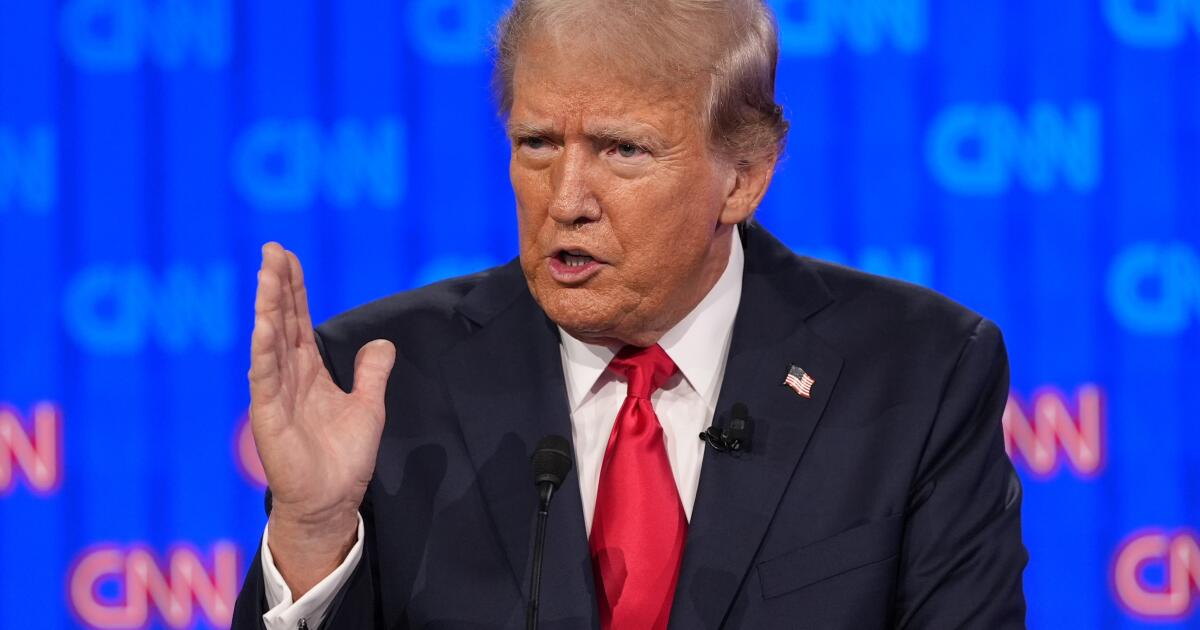
President Trump wants a very different kind of CNN if the cable news channel’s parent Warner Bros. Discovery changes hands.

As details emerge on the battle between Netflix and Paramount over control of the historic movie studio and its streaming and TV assets, Trump acknowledged he’s made it clear he wants new ownership and leadership at the network that has been the prime target in his attacks on the mainstream media over the last decade.

“I think the people that have run CNN for the last long period of time are a disgrace,” Trump told reporters Wednesday. “I don’t think they should be entrusted with running CNN any longer. So I think any deal should — it should be guaranteed and certain that CNN is part of it or sold separately.”

White House Press Secretary Karoline Leavitt echoed Trump’s sentiment Thursday from her lectern after a testy exchange with CNN anchor Kaitlan Collins. “Their ratings have declined, and I think the president rightfully believes that network would benefit from new ownership with respect to this deal,” Leavitt said.

Trump has said he will be “involved” in the government‘s regulatory review of a WBD deal. Injecting the president’s animus toward CNN — which goes back to his presidential campaign in 2016 — into the process has insiders at the network worried that journalistic independence will be sacrificed for the sake of a Warner Bros. Discovery deal.

Advertisement

CNN declined to comment.

A Wall Street Journal report said Paramount Chief Executive David Ellison has signaled to Trump administration officials he would make “sweeping changes” to CNN if his company took control. (A representative for Ellison declined comment.)

Ellison has said he would combine CNN’s newsgathering operations with Paramount’s CBS News, where conservative-friendly Bari Weiss has been installed as editor in chief. Such a move would follow the $16-million settlement Paramount reached with Trump earlier this year resolving a dispute over a “60 Minutes” interview featuring then-Vice President Kamala Harris.

But Trump said he wants to see a new CNN owner even if Netflix prevails. Netflix’s $72 billion offer does not include CNN or WBD’s other basic cable properties. Paramount has countered with a $78 billion offer.

What Trump desires is more favorable news coverage. But pandering to the White House could have a dubious outcome from a business standpoint for the next CNN owner.

Advertisement

The cable news landscape has evolved over the last decade as the country’s politics have become more polarized and tribal.

The trend helped the conservative-leaning Fox News and progressive MS NOW (formerly MSNBC), both of which have seen their audiences grow over that time even as the number of pay-TV homes has declined dramatically.

CNN has tried to stake out the middle ground, although its aggressive coverage of Trump’s first term created a perception it had moved left, especially as more commentary was added to its prime time programs.

CNN already saw the impact of attempting to bring more right-leaning voices to its program under Chris Licht, the executive brought in to run the network in 2022. He was under a mandate from Warner Bros. Discovery Chief Executive David Zaslav, who publicly said the network needed to appeal more to conservative audiences.

The network experienced an immediate exodus of viewers, putting it in third place behind MS NOW. CNN was generating $1.2 billion in profit earlier in the decade. This year, the figure is expected to be in the range of $675 million.

Advertisement

Jon Klein, a digital entrepreneur and former CNN president, said it would be folly for his former network to blatantly court conservatives again.

“You’re not going to convince all those Fox News viewers that suddenly CNN is friendly to them and their way of life,” he said. “These are much older viewers who don’t change their habits so easily. There has been mistrust that has been fostered over many years.”

Klein noted that even upstart right-wing networks that provide unwavering support of Trump — Newsmax and OAN — haven’t made a dent in Fox News’ dominance. MS NOW would be the beneficiary of any rightward shift by CNN, he added.

“It would accelerate the ratings slide and they become completely irrelevant,” said another former CNN executive who did not want to comment publicly.

Fox News does more than provide largely sympathetic coverage and commentary for Trump. Rupert Murdoch’s network has worked at forging a deep connection with viewers, which has made it the ratings leader since 2002.

Advertisement

The lineup of highly paid Fox News personalities is reliably in sync with the audience’s values and the hot-button issues that keep them tuned in. Viewer loyalty has helped the network attract hundreds of new advertisers in recent years, with some integrating patriotic messages into their marketing efforts.

“Fox is an incredibly well-oiled machine,” Klein said.

Klein said CNN and other legacy news organizations are better off focusing on developing an effective digital strategy to insure their future as traditional TV viewing declines, instead of chasing ideological balance.

Attempting to satisfy Trump’s desire for more positive coverage is a slippery slope. While Paramount appointed an ombudsman to CBS News and brought in Weiss — moves aimed at clearing the regulatory path for its merger with Skydance Media — Trump is still lashing out at coverage he doesn’t like.

After a “60 Minutes” interview with Rep. Marjorie Taylor Greene (R-Ga.) aired Dec. 7, in which she was highly critical of Trump, the president said the program is “worse” under new ownership.

Advertisement

The only significant move to attract conservative viewers under Weiss is her prime time interview with the widow of slain right-wing activist Charlie Kirk that airs Saturday.

“I think the prevailing wisdom over there is this notion that at least if they stay out of the clutches of Paramount, some rich philanthropist will buy them and they’ll be fine,” said the former CNN executive.

But if Netflix gets WBD without CNN, there is no guarantee it would not end up with a Trump-friendly owner if the network were spun off separately. The rank and file may wish for Laurene Powell Jobs, chair of the Atlantic, but could end up with a deep-pocketed right winger.

CNN Chairman Mark Thompson’s message to the troops is keep calm and carry on. “I know this strategic review has been a period of inevitable uncertainty across CNN and indeed the whole of WBD,” Thompson told staff in a recent memo. “Of course, I can’t promise you that the media attention and noise around the sale of our parent will die down overnight. But I do think the path to the successful transformation of this great news enterprise remains open.”

Trump’s anger toward CNN has become more personal as time has gone on. He has insulted reporters during press briefings and reportedly has told people he wants to see the firing of anchors Erin Burnett and Brianna Keilar.

Advertisement

Oddly enough, it was Burnett’s journalism that provided Trump with video for his most effective commercial of his 2024 campaign.

Burnett conducted the 2020 interview with Kamala Harris where the former vice president expressed her support for providing medical care to prisoners undergoing gender-affirming care. A clip of the segment was used in the commercial that said “Kamala’s for they/them, President Trump is for you.”

Continue Reading

Trending