Education
Florida Is Scouring College Textbooks for Antisemitism


The test questions from a class at Florida International University enraged Randy Fine, a state lawmaker endorsed by President Trump.
One of the questions, uploaded onto social media by a student, said that Palestine was a country before Israel was created. Another seemed to suggest that Zionists invented terrorism. To Mr. Fine, they were proof that college textbooks and the test materials that accompany them were awash in antisemitism.
Mr. Fine said it made him wonder, “How many other Muslim terror textbooks are being used in our university system?”
The sprawling State University System of Florida, which educates more than 430,000 students, has been trying to find out.
Ray Rodrigues, the system’s chancellor, removed the textbook, “Terrorism and Homeland Security,” from use in the system, pending a review. Then in August, he announced a remarkable effort that has worried some professors and advocates of academic freedom: All 12 universities he oversees were to set up faculty panels to vet course materials, including textbooks, for antisemitism and anti-Israel bias.
To Mr. Rodrigues, the test questions Mr. Fine objected to were not only biased or antisemitic, they were also illegal under a 2024 Florida statute that defines some criticism of Israel as antisemitic.
The subject of the class that sparked the statewide effort might seem unexpected. It was not in one of the disciplines, like sociology, that right-leaning lawmakers have targeted in recent years, arguing that they were bastions of left-leaning ideology.
Rather, the course was on terrorism and homeland security, taught by an instructor who had served in the Marines. And the primary author of the textbook is a longtime security researcher who oversaw local antiterrorism training efforts in a Republican administration.
“This is such a random, inappropriate choice,” said Martha Schoolman, an English professor who has spoken out against the textbook screening effort. “But it also doesn’t matter. Because once you’ve decided it’s your job to vet everything for antisemitism, nothing’s going to pass.”
She added, “This is a policy being made based on screenshot.”
The statewide vetting effort is unfolding at a time when academia is still reeling from the Oct. 7, 2023, attack by Hamas and the military response from Israel. Campuses that were roiled last spring by demonstrations protesting Israel’s bombing of Gaza have quieted. But under pressure from lawmakers, many colleges and universities have tightened their rules governing protests, expelled students for conduct violations and scrutinized classes.
The Florida effort stands out. At the K-12 level, conservatives have long pushed school districts to ban books and publishers to examine curriculum for inappropriate material. In higher education, though, such scrutiny had been relatively rare. The vetting of course materials has been squarely in the domain of professors and their departments.
Mr. Fine, who is Jewish and calls himself “the Hebrew Hammer,” is a rising star in the Republican Party. Mr. Trump endorsed him in November for the seat in Congress that Mike Waltz resigned to become Mr. Trump’s national security adviser.
To Mr. Fine, the test questions posted on social media in June were examples of anti-Israel bias. One question read: “In which country did the Zionists purchase land to create their new homeland?” The answer was Palestine. But Palestine was Ottoman territory before the First World War and administered by Britain after that; it was not a country.
Another test question appeared to imply that extremist Zionist organizations invented terrorism. But terrorism existed long before the Middle East conflict.
Mr. Fine began searching for accountability. At first he looked to the course instructor, Mario Reyes, an adjunct professor. Mr. Fine wrote on social media that Mr. Reyes “shouldn’t buy green bananas for his office,” suggesting that his days in the job were limited. But after learning that Mr. Reyes, a Marine veteran who works for the Department of Defense, did not write the test questions, he turned his attention instead to the textbook and its authors.
The primary author of the book, Jonathan R. White, has credentials hardly seem associated with a pro-Palestinian bias. He served in the George W. Bush administration after the Sept. 11 terrorist attacks, and taught about terrorism and homeland security for decades at Grand Valley State University in Michigan. He conducted counterterrorism training for police and military forces, according to his biography.
Dr. White, who recently retired and became a pastor, did not respond to requests for comment.
In an interview, Mr. Fine acknowledged that he had not read the textbook that he described as “pro-Muslim terror.” But he said he was assured by university officials that the book was problematic.
Mr. Rodrigues, who said in an interview that he had reviewed the book, was more tempered. He said the book contained “anti-Israel bias,” though he did not cite specific examples.
A review of the textbook by The New York Times found that it was more nuanced than the three test questions. The textbook does not say or imply that Palestine has been an independent country in modern times, nor that Zionists invented terrorism.
In a book passage that appears to be the basis of one of the test questions under scrutiny, the author provided an Israeli perspective that terrorism in the region was associated with the Palestine Liberation Organization. It also included a Palestinian perspective that Israelis had used terrorist tactics until they developed a conventional military force.
But it appears that the textbook author was not behind the test questions, either.
Cengage Group, the book’s publisher, said in a statement that it had used a third-party vendor to write questions intended to quiz students on the material contained in the book. The company said that the questions “did not live up to our standards” and that it had halted digital and print sales of the book while it conducts a “full academic review” to ensure the content is free of bias.
Brian Connolly, a history professor at the University of South Florida, said the questions were poorly constructed, but flowed from the textbook’s more nuanced writing.
“If we’re going to focus on poorly written multiple-choice questions,” Dr. Connolly said, “then it’s going to take the state university system the rest of their lives to address that.”
The book remains under review by the state university system.
In August, Mr. Rodrigues gave marching orders to the college presidents to look for other examples of textbooks and teaching materials that contained antisemitism or anti-Israel bias.
He said that the materials to be reviewed would be identified by keyword searches of course descriptions and syllabuses. The search words included “Israel,” “Israeli,” “Palestinian,” “Middle East,” “Zionism,” “Judaism” and “Jews.”
Mr. Rodrigues said that antisemitism would be identified using a definition put forward by the International Holocaust Remembrance Alliance. Under that definition, calling the creation of Israel a “racist endeavor” or holding Israel to a “double standard” would qualify as antisemitic. The definition has been criticized on college campuses by some who argue that it protects Israel from legitimate criticism.
Academic freedom groups like the American Association of University Professors have blasted the state textbook-vetting effort, calling it “thought policing” that “deepens Florida’s increasingly authoritarian approach to higher education.”
Faculty members have said that it may violate their collective-bargaining agreement, which grants professors the right to “determine pedagogy.”
And the Association of Jewish Studies said the effort disproportionately singles out for scrutiny instructors who teach Jewish Studies and related fields.
Laura Leibman, the president of the group, said the effort represented good intentions gone awry. She said she worried about having people without subject-matter expertise vetting course materials based on murky criteria.
“That struck at the heart of academic freedom,” she said.
Professor Schoolman, who is Jewish, said the entire exercise might seem like a farce. “The whole system has to be turned upside down to find antisemitic needles in a haystack,” she said. But she also worried that it may signal more political battles to come over what professors can say and teach.
In the interview, Mr. Rodrigues said that faculty members would conduct the reviews and send their findings to the university system’s Board of Governors before the board meets this week. If bias is identified, he said, experts would be brought in to examine the materials further.
“We need to identify whether this was an anomaly,” Mr. Rodrigues said about the homeland security test questions, “or whether it’s part of a broader problem.”



In our national memory, George Washington is a mythic figure, cast in metal, carved in stone. His leadership, first as general, then as president, is so intertwined with the roots of this country that it is sometimes hard to separate the man from the idea of America. How does one imagine the living presence of such an icon, much less embody him?
There is a small fraternity of men bold enough to try. At historical parks and commemorations from Virginia to Seattle, these interpreters (their preferred term) transform themselves into Washington. Each has his own approach, but what all their representations seek to capture is a legacy that has endured from his time to ours. If America, at least in part, is an idea, then our national project becomes, like theirs, an act of interpretation, an imperfect attempt to translate some idealized vision into the messy reality of our own time.
— Ezekiel Kweku
“By some strange quirk
of genetics, I have
Washington’s exact
dimensions. Where my
sleeves fall on my wrist,
the size of my chest, the
size of my thighs, where
the breeches fall to my
knees, are all identical.”
John Koopman, 67, often performs
while riding his horse, Bear. He
has portrayed Washington for 20 years.
James Fryer, 70, wears a replica of a general’s uniform that Washington designed himself. He recently completed training to portray Washington for the nonprofit Historic Philadelphia.
“Some people portray George as a marble statue. I don’t do a marble George. I am interested in talking to everyone, even those who yell at me because George was a slave owner. I want to respect them, try to educate them, or maybe even inspire them.”
Vern Frykholm, 77, was moved to bring his interpretation of Washington to Washington State, where he lives, after seeing a 2011 performance in Pennsylvania.
Dean Malissa, 73, signs his personal
correspondence, including emails,
as Washington did: “Your Most Humble
and Obedient Servant.” He became
the Official George Washington
at Mount Vernon in 2004, and held
that role for nearly 20 years.
“I describe him sometimes as just a dude. I look at him and think, I could see myself in the same world, making similar bad decisions or similar good decisions.”
Daniel Cross, 39, portrayed a young Washington at Virginia’s Colonial Williamsburg until last year. He now works with organizations around the country.
Curt Radabaugh, 62, has 13,000 history books in his personal library, including several hundred about Washington. He is a veteran of the U.S. Marines and a retired police officer.
“He’s a mentor, a father
figure, and not only in the
sense that he’s a patriarch
of the country. Because
I grew up without a
father, he kind of became
my surrogate father.”
Brian Hilton, 58, says he researches
Washington’s era every morning before
his children get up and at night after
they go to bed. He is a high school history
teacher near Richmond, Va.
Daniel Shippey, 57, partners on interpretations with his wife, Kelly, who portrays Martha Washington. Kelly researched 18th-century hair techniques to create her husband’s costume hairstyle. They live in Virginia.
“You’re playing the myth of George Washington as well as the historical figure. I make his voice a little firmer and deeper than it probably was in real life. I play him a little funnier than he probably was. In reality, if you came to see him, he probably wouldn’t talk to you as much as I do.”
Doug Thomas, 53, is Washington’s second cousin nine times removed.
John Godzieba, 67, has reenacted
the crossing of the Delaware as
Washington every Christmas for the
past 16 years at Pennsylvania’s
Washington Crossing Historic Park.
“In many ways I don’t look like him. My eye color is wrong. My nose is wrong. My hair color is wrong. I wouldn’t have cast myself in this role.”
Ron Carnegie, 64, has portrayed Washington at Colonial Williamsburg for 20 years.
Ryan Williams, 37, is a veteran who specializes in playing a young Washington during the French and Indian War. He lives in Virginia.
“Some people portray
Washington almost
like a superhero.
I like to bring out that
he has faults. He’s a
person like you or me.”
Michael Grillo, 64, is a historical
tailor who hand-sews his own clothes
for reenactments. He also makes
period props, including two American
battle flags and pewter mugs
engraved with Washington’s crest.
Martin Schoeller is a photographer and director known for his close-up portraits of everyone from world leaders and celebrities to female bodybuilders. For this project, he used a large format camera to photograph 13 historical interpreters of George Washington — many of whom arrived in full uniform — over three days in Virginia and New York City.
Additional reporting by Tenzin D. Tsagong. Interviews have been edited and condensed for length and clarity. Top quotes from Brian Hilton, Daniel Shippey and Daniel Cross.
Produced by Sara Barrett, Danny DeBelius and Sam Whitney. Additional production by Olivia James.
One task the robots can take from us? Cleaning. Especially hard-to-access windows. So when writers Caroline Mullen and Evan Dent found this little guy — whose government name is “EcoVacs Winbot Mini” — they were intrigued. Could he clean the uncleanable? Caroline and Evan put their robot friend to the test at both the Wirecutter office and a high-rise apartment. Is a robo-window cleaner more effective than scrubbing yourself?

new video loaded: School Year Cut Short and Aid Delivery Slowed Amid Fuel Crisis in Cuba

By McKinnon de Kuyper
June 22, 2026
-

 Arkansas4 minutes ago
Army names intelligence facility for Arkansas Tech graduate
-

 California11 minutes ago
How California Effectively Legalized an Open-Air Sex Market
-

 Colorado14 minutes ago
Julian Lewis Says Deion Sanders’ Colorado ‘Wasn’t Really Looking at Defenses Much’ Last Season
-
 Idaho19 minutes ago
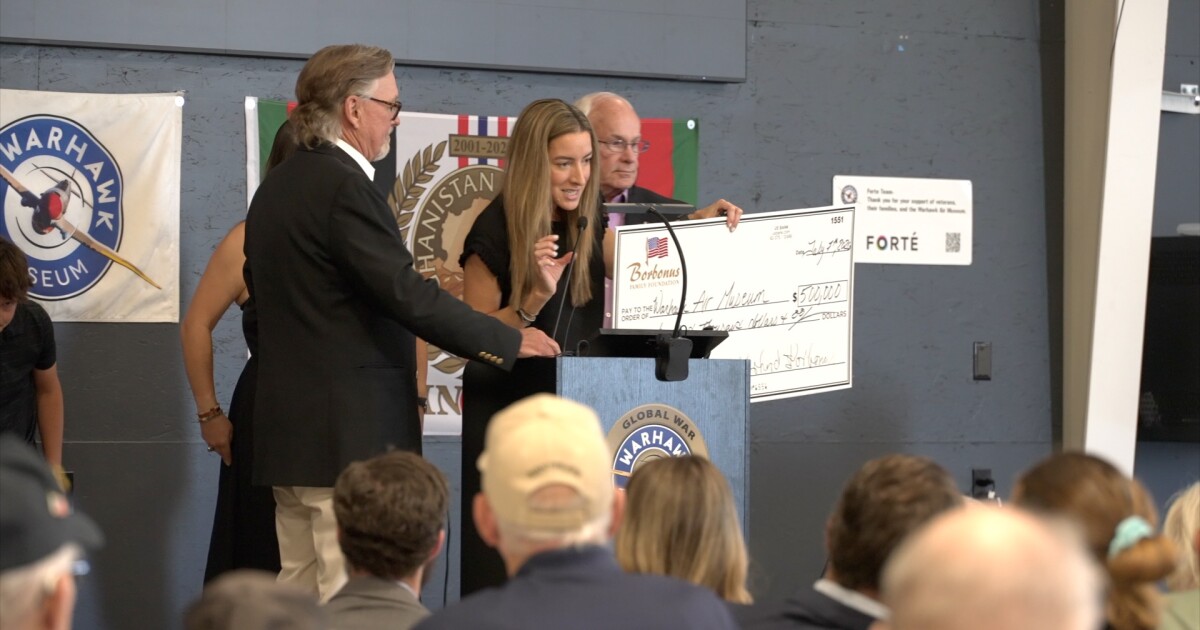
Warhawk Air Museum receives $500K grant honoring fallen Idaho soldier
-

 Connecticut19 minutes ago
Several beaches closed to swimming due to potential bacteria in the water
-

 Delaware26 minutes ago
Delaware Libraries Introduce Digital Literacy Specialists Program – State of Delaware News
-

 Florida29 minutes ago
Video shows man attack Florida deputies in snake-and-gator-infested canal, sheriff says
-

 Georgia34 minutes ago
Georgia Supreme Court upholds convictions of men in deadly shooting during gas station carjacking

