Culture
Rosenthal: Mr. Angel? Mike Trout's chance of ever escaping the franchise now seems even less likely


No player is untradeable, not even an aging, broken-down, signed-through-2030 Mike Trout. But with Trout’s latest injury, the horrifying thought of him spending the rest of his career with the Los Angeles Angels is moving closer to becoming reality.
Trout, who turns 33 on Aug. 7, is expected to be out at least 8 to 12 weeks while recovering from surgery to repair a meniscus tear in his left knee. He is guaranteed $35.45 million this season and in each of the next six. Even if he returned by say, Aug. 1, and finished on a roll, what team would trust him enough this offseason to take on most or all of his remaining $212.7 million? From 2021 to 2023, Trout missed more games than he played. And given that he is historically a slow healer, he isn’t exactly on track to reverse that trend in 2024.
“We’ll get through it” 😢 @EricaLWeston @Angels l #RepTheHalo pic.twitter.com/2pxLf8JJfn
— Bally Sports West (@BallySportWest) May 1, 2024
A trade of Trout, of course, was a long way from ever happening. To the dismay of many opposing fans, the three-time MVP and 11-time All-Star has steadfastly refused to ask out of Anaheim, maintaining he wants to spend his entire career with one team, like his boyhood idol, Derek Jeter, and win with the Angels.
At the start of spring training, Trout said he was “pushing, pushing, pushing” upper management to add free agents, an indication, perhaps, of his growing impatience. Well, his fuse needed to be shorter. He waited too long.
For a trade scenario to become realistic, the following was necessary:
• The Angels to stink again, which was all but a given.
• Trout to A) return to near-MVP form, which at least stood a chance of happening before he hurt his knee; and B) request a trade, which even Angels fans would have understood considering he has never won a postseason game and not even appeared in the playoffs since 2014.
• Angels owner Arte Moreno to demonstrate a willingness not only to grant Trout’s wish but also to include significant cash in a trade, which … was never happening.
Moreno, remember, repeatedly declined to authorize a trade of Shohei Ohtani, even though it would have brought a monster return that could have kick-started his sorry franchise. He then declined to match the Los Angeles Dodgers’ $700 million offer to Ohtani with $680 million deferred, a deal that could very well pay for itself. Ohtani might not have taken the Angels’ money, mind you. But all the Angels will get back for him now is — yikes — the 74th pick in the 2024 draft.
At a reduced annual salary — $15 million? $20 million? — some club still might want Trout. Trades involving major paydowns have been become increasingly common over the past quarter-century. Moreno has made some, sending the New York Yankees more than $28 million to dump Vernon Wells in March 2013 and $63 million to the Texas Rangers to get rid of Josh Hamilton in April 2015. Wells no longer was a productive player. Hamilton angered Moreno by relapsing into substance abuse. Trout, in contrast, is a model citizen and elite player when healthy, a Moreno favorite.
For Wells and Hamilton, the Angels received virtually nothing. For Trout, Moreno probably would want, oh, six top-100 prospects, particularly if he was parting with tens of millions to facilitate the deal. Trout’s actual trade value, even at a reduced financial commitment, would be much less. So, good luck talking Moreno into this. He wouldn’t trade Ohtani when, more than once, he had the chance to make the same type of deal the Washington Nationals made for Juan Soto.
And now where are the Angels? Stuck with two players, Trout and Anthony Rendon, who combined are earning nearly $75 million annually through the completion of Rendon’s contract in 2026 yet cannot stay on the field. Which is where Trout’s tolerance for Moreno’s erratic stewardship becomes less understandable. The team is a mess, has been a mess, is going to be a mess for at least the next few years.
The Athletic’s Keith Law ranked the Angels’ farm system 29th out of 30, ahead of only the Oakland A’s. Even if the Angels somehow turn it around by the end of Trout’s contract, how functional a player will he be in his late 30s? His early 30s sure have not gone well.
In spring training, Trout told me he heard the noise about how he is content with the Angels, doesn’t want to win, won’t demand a trade. In an interview I conducted with him for Fox Sports, he said, “It fuels me more.” He was convinced he was about to return to form, saying he was getting chills just thinking about the possibility. And the way he was playing, a 50-homer, 30-stolen base season — proof he was still the GOAT, or at least, one of the top current players — seemed within his reach.
His earnestness remains one of his most endearing qualities. The suggestion that he does not want to play in a more demanding market always seemed off to those who know him best, who see how hard he works, who witness his competitive fire. But Trout’s desire to succeed with the Angels instead of somewhere else seemed, to most on the outside, a fanciful notion.
Armed with full no-trade protection, he could have leveraged his way to the Philadelphia Phillies, the team closest to his hometown of Millville, N.J. He could have blended in with a clubhouse full of hungry stars — Bryce Harper, Trea Turner and Kyle Schwarber, Zack Wheeler and Aaron Nola. And he could have been celebrated for escaping a bad situation rather than criticized for staying put.
It didn’t have to be the Phillies. It could have been virtually any contender with payroll flexibility. And it didn’t need to get to the point of a trade. Trout twice signed extensions with the Angels when he could have become a free agent entering his ages 26 and 29 seasons. His loyalty was commendable. But at the moment, he’s looking like a modern equivalent of Ernie Banks, who holds the major-league record for most games played in a career without making the playoffs (2,528).
Banks, playing in an era before free agency, never had the opportunity to choose another team. For most of his career, only the league champions made the playoffs, meeting in the World Series. He was a beloved figure, known as Mr. Cub. He made the Hall of Fame. But to many, there was always something missing, a what-might-have been aspect to his legacy.
Trout, in the wake of his latest injury, is moving into similar territory. More than ever, he seems destined to remain Mr. Angel. As good as his intentions might have been, that’s a very sad thing to say.
(Photo: Paul Rutherford / Getty Images)



A strong sense of place can deeply influence a story, and in some cases, the setting can even feel like a character itself. This week’s literary geography quiz highlights real-world locations in novels where mystery and magic drive the plot. To play, just make your selection in the multiple-choice list and the correct answer will be revealed. At the end of the quiz, you’ll find links to the books if you’d like to do further reading.

Welcome to Great Adaptations, the Book Review’s regular multiple-choice quiz about printed works that have gone on to find new life as movies, television shows, theatrical productions and more. This week’s challenge highlights thrillers first published as novels (or graphic novels) that were adapted into popular films. Just tap or click your answers to the five questions below. And scroll down after you finish the last question for links to the books and their screen versions.

Welcome to Lit Trivia, the Book Review’s regular quiz about books, authors and literary culture. In honor of Gen. George Washington’s birthday on Feb. 22, this week’s super-size challenge is focused on the literature and history related to the American Revolution. In the 10 multiple-choice questions below, tap or click on the answer you think is correct. After the last question, you’ll find links to exhibits, books and other materials related to this intense chapter in the country’s story, including an award-winning biography of the general and first U.S. president.

Video: President Fires Noem as Homeland Security Secretary

GLP-1 Drugs Linked to Osteoporosis and Gout: Here’s How To Stay Safe
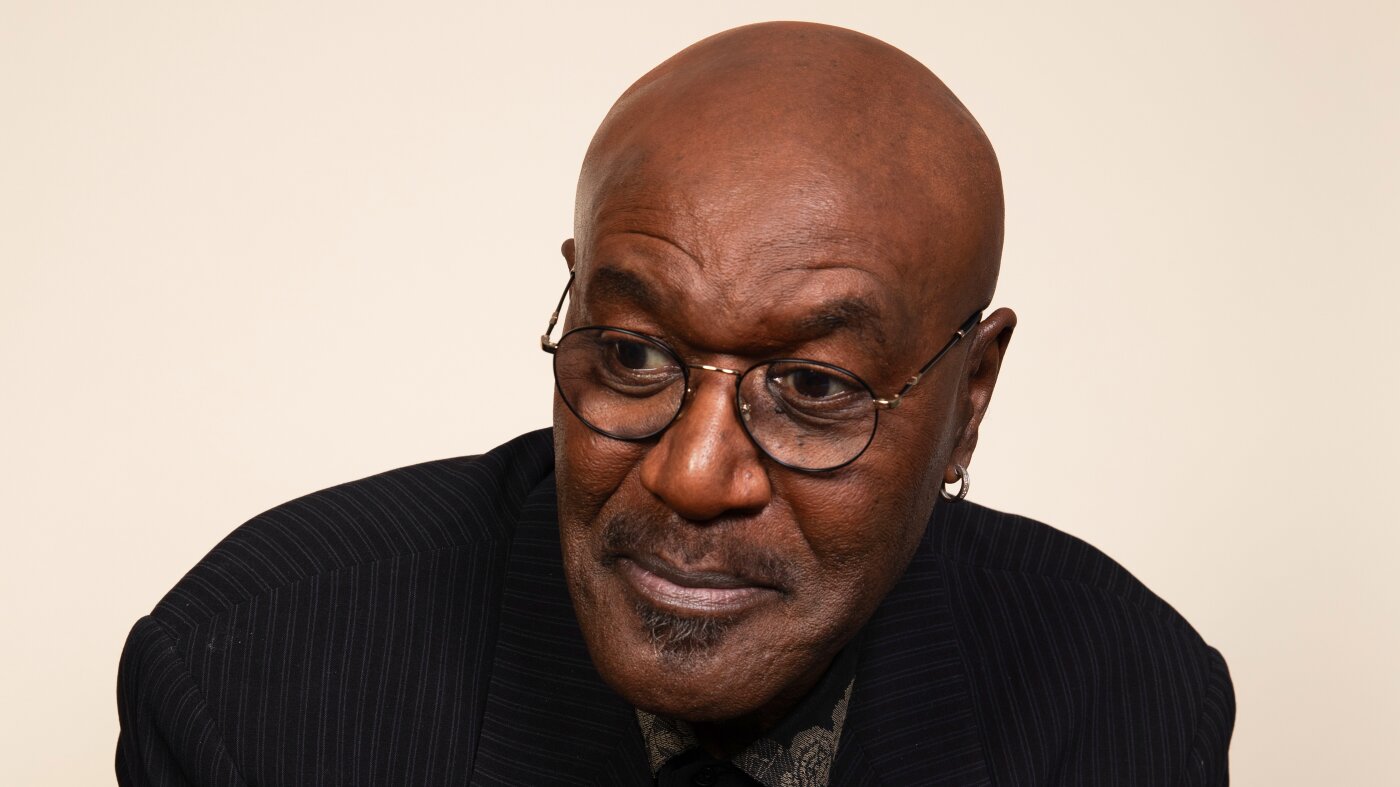
No matter what happens at the Oscars, Delroy Lindo embraces ‘the joy of this moment’

Amazon.com says things are fixed after some issues with logging in and checking out

Private flights account for 30% of departures from Oman airport as wealthy evacuate Middle East

Florida High School Football Rankings: Top 25 teams – Oct. 21

Cleary's 21 help Le Moyne down Central Connecticut State 69-64 in OT

How old is Bo Nix? What to know about Oregon quarterback ahead of 2024 NFL Draft

99th annual Pony Swim held in Virginia

Indiana Members Credit Union announced as new anchor tenant at Bottleworks District

DOJ continues Biden autopen probe despite former president unlikely to face charges
Fact check: Did French border guards mock influencers returning from Dubai amid Iran war?

Iran’s fight for survival / The widening war / Trump’s nebulous goals : Sources & Methods

Map: 4.9-Magnitude Earthquake Shakes Louisiana

Paxton vows he’s ‘staying in this race’ even if Trump backs Cornyn in Texas GOP clash
-

 World1 week ago
Exclusive: DeepSeek withholds latest AI model from US chipmakers including Nvidia, sources say
-

 Wisconsin4 days ago
Setting sail on iceboats across a frozen lake in Wisconsin
-

 Massachusetts1 week ago
Mother and daughter injured in Taunton house explosion
-

 Maryland5 days ago
AM showers Sunday in Maryland
-

 Massachusetts3 days ago
Massachusetts man awaits word from family in Iran after attacks
-

 Florida5 days ago
Florida man rescued after being stuck in shoulder-deep mud for days
-

 Denver, CO1 week ago
10 acres charred, 5 injured in Thornton grass fire, evacuation orders lifted
-

 Oregon6 days ago
2026 OSAA Oregon Wrestling State Championship Results And Brackets – FloWrestling