Culture
PGA Championship 2024 live updates


LOUISVILLE, Ky. — Three hours after being arrested by Louisville police after an incident driving into Valhalla Golf Club and charged with second-degree assault of a police officer Friday, world No. 1 Scottie Scheffler was released and arrived at the course at 9:12 a.m., less than an hour before his 10:08 a.m. tee for the second round of the PGA Championship.
Traffic at the course was snarled because of a crash that killed a pedestrian. ESPN’s Jeff Darlington, who witnessed Scheffler’s arrest, reported Scheffler attempted to drive around the halted traffic when an officer told him to stop.
ESPN reported Scheffler attempted to continue driving another 10-20 yards. When he did stop, a police officer asked Scheffler to exit his vehicle. Darlington reported the police officer opened the car door and placed the 27-year-old in handcuffs and in the back of a police car. Video shows Scheffler in handcuffs being escorted by two officers.
Scheffler was booked at 7:28 a.m. and charged with second-degree assault of a police officer, third-degree criminal mischief, reckless driving and disregarding traffic signals from an officer directing traffic.
Scheffler’s original tee time was 8:48 a.m. Because of the death Friday morning, all tee times were delayed one hour and 20 minutes, pushing Scheffler’s tee time to 10:08 a.m. ESPN then reported at 8:38 a.m. that Scheffler was released and heading to the course.
Scheffler, the defending Masters champ and and winner of four of his last five starts, shot an opening-round 67 to enter Friday tied for 12th place.







From cinnamon rolls to stern brunch daddies, here are 101 terms you
should know to understand the popular literary genre.

Apron tugger. Shadow daddy. Wallflower. Fae. Sometimes it can feel as if romance novels come with their own special language — one you must learn in order to achieve maximum swoon. If you’re a dedicated reader, this terminology can help you pinpoint exactly which books will be your speed; if you’re new to the game, they can overwhelm you like so much overdressed word salad.
Whether you’re a superfan or a casual reader, if you’re genre-curious or you just want to understand why people keep talking about “spice” at the bookstore, here are 101 terms you should know. If you see something that strikes your fancy, we’ve got recommendations for books that show off these terms at their best. With any luck, you’ll find something to fall in love with — which, after all, is the whole point.
A
B
C
D
E
F
G
H
I
J
K
L
M
N
O
P
Q
R
S
T
U
V
W
X
Y
Z

Welcome to Literary Quotable Quotes, a quiz that tests your recognition of memorable lines. This week’s installment is all about love, highlighting lines about attraction and relationships from popular novels and short stories published in the late 20th century. In the five multiple-choice questions below, tap or click on the answer you think is correct. After the last question, you’ll find links to the books if you want to experience the entire work in context.

new video loaded: Farewell, Pocket Books

By Elizabeth A. Harris, Léo Hamelin and Laura Salaberry
February 6, 2026

Second US aircraft carrier is being sent to the Middle East, AP source says, as Iran tensions high

Beloved sandcastle artist booted from California beach by luxury hotel after nearly 20 years

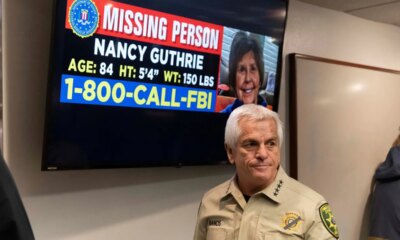
Early missteps, delayed search plane response emerge in Savannah Guthrie’s mother disappearance

Rep. Steve Cohen tells Pam Bondi that ‘worst of the worst’ are native-born Americans, not immigrants

AI raises the stakes for national security. Here’s how to get it right

Florida High School Football Rankings: Top 25 teams – Oct. 21

Cleary's 21 help Le Moyne down Central Connecticut State 69-64 in OT

How old is Bo Nix? What to know about Oregon quarterback ahead of 2024 NFL Draft

99th annual Pony Swim held in Virginia

Indiana Members Credit Union announced as new anchor tenant at Bottleworks District
Second US aircraft carrier is being sent to the Middle East, AP source says, as Iran tensions high

Tim Walz demands federal government ‘pay for what they broke’ after Homan announces Minnesota drawdown

Leaders embrace two-speed Europe as Macron sets June deadline

What the data tells us about kidnapped people — and how Nancy Guthrie is an outlier

House Republican Greg Steube introduces bill to nix controversial H-1B visa program
-

 Politics1 week ago
White House says murder rate plummeted to lowest level since 1900 under Trump administration
-

 Alabama6 days ago
Geneva’s Kiera Howell, 16, auditions for ‘American Idol’ season 24
-

 Politics1 week ago
Trump unveils new rendering of sprawling White House ballroom project
-

 San Francisco, CA1 week ago
Exclusive | Super Bowl 2026: Guide to the hottest events, concerts and parties happening in San Francisco
-

 Ohio1 week ago
Ohio town launching treasure hunt for $10K worth of gold, jewelry
-

 Culture1 week ago
Annotating the Judge’s Decision in the Case of Liam Conejo Ramos, a 5-Year-Old Detained by ICE
-

 Culture1 week ago
Is Emily Brontë’s ‘Wuthering Heights’ Actually the Greatest Love Story of All Time?
-

 News1 week ago
The Long Goodbye: A California Couple Self-Deports to Mexico