Crypto
Venezuela's Petro Cryptocurrency to Cease Operations on Jan 15


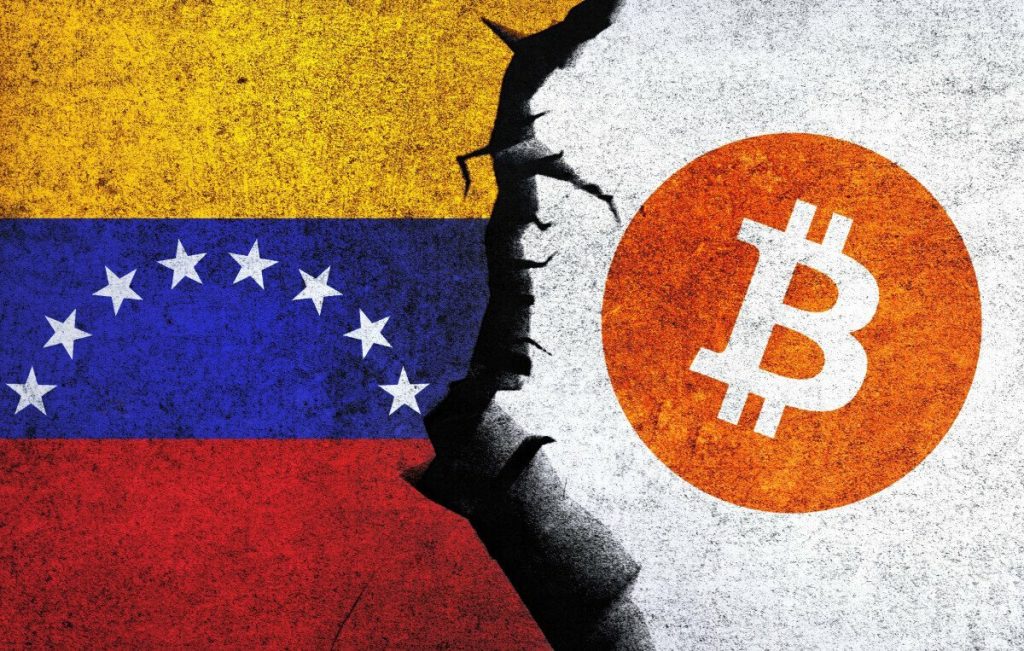
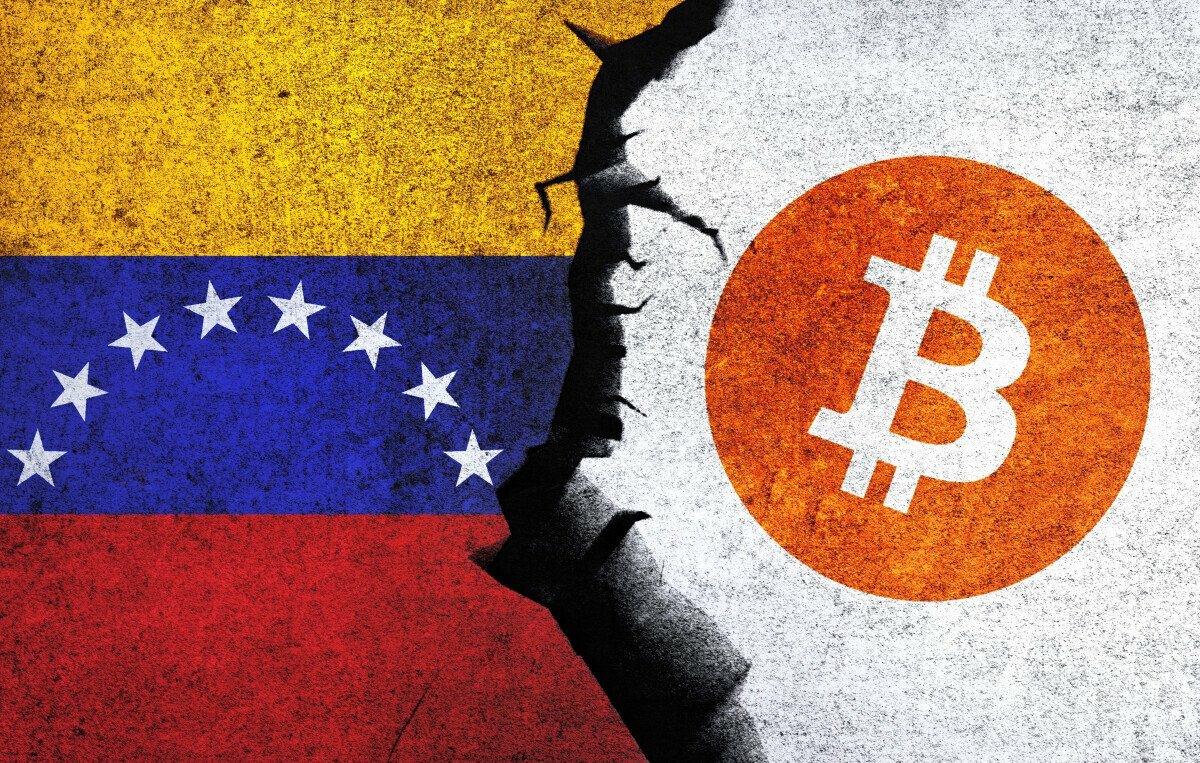
Venezuela’s national cryptocurrency, the Petro (PTR), is set to cease operations on January 15.
The Petro, introduced in 2018 with the goal of helping the country evade United States sanctions, failed to gain widespread adoption throughout its existence.
The official announcement regarding Petro’s shutdown was reportedly made on a government-run website dedicated to the cryptocurrency, though the website is not accessible at the time of writing.
The administrative section of the Venezuelan Patria website, which was supposedly the sole platform for Petro trading, is now only accessible through a password.
The Petro was initially launched as an oil-backed cryptocurrency after Venezuela’s fiat currency, the bolivar, faced significant devaluation due to the pressure of United States sanctions.
The move came after Bitcoin had already established a strong presence in the country.
The Petro Failed to Gather Traction in Venezuela
The issuance of the Petro was mandated by Venezuelan President Nicolas Maduro, but it faced opposition from the parliament.
Despite achieving full functionality in 2020, the Petro failed to gain traction internationally.
The Maduro government made efforts to promote it to the ten member states of the Bolivarian Alliance for the Peoples of Our America, but these attempts did not lead to widespread adoption.
Domestically, the Petro was never declared legal tender, meaning that its acceptance was not mandatory.
Notably, even the country’s largest bank, Banco de Venezuela, would not accept Petro without a presidential order compelling it to do so.
In June 2020, the situation took a more dramatic turn when the U.S. Immigration and Customs Enforcement offered a $5 million bounty for the capture of Joselit Ramirez Camacho, the head of the National Superintendency of Crypto Assets responsible for overseeing the Petro.
He was accused of having ties to international narcotics trading.
Ramirez Camacho was eventually arrested in Venezuela in March 2023 on charges related to financial improprieties within the national oil industry.
Consequently, the agency under his leadership was closed for reorganization, and its closure was later extended until March 2024.
This crackdown also led to the closure of various crypto exchanges and mining operations in the country.
It’s essential to note that the Petro was not a central bank digital currency (CBDC), despite the Central Bank of Venezuela’s announcement of plans to create one in 2021.
Unfortunately, those plans never materialized, leaving the Petro as a failed attempt at navigating the economic challenges facing Venezuela.
In March last year, the state regulators ordered a halt on mining cryptocurrencies after an investigation into a corruption scheme in which crypto wallets redirected payments owed to the state-run oil company Petróleos de Venezuela.


North Carolina lawmakers on Tuesday advanced a bill to protect consumers from cryptocurrency kiosk fraud.
House Bill 920, which passed the House with a 115-to-0 vote, aims to regulate an industry that its author claims is unregulated in the state.
“It’s the wild, wild West,” Rep. Neal Jackson, R-Moore, said during a committee discussion on Tuesday. “There is no regulation whatsoever in North Carolina. That’s what we’re trying to do here.”
Lawmakers cited a growing amount of fraud as the reason for the bill. About $389 million in losses were reported last year through cryptocurrency ATMs, a 58% increase from 2024, according to the FBI. The majority of those impacted are 60-plus.
The bill now goes to the Senate for consideration. It seeks to:
- Require licenses for all kiosk operators under the Money Transmissions Act.
- Place operators under the supervision of the Commissioner of Banks.
- Require fraud warnings and transaction receipts for every transaction.
- Require compliance and consumer protection officers that are always available.
It also seeks to place limitations on transactions in an effort to reduce fraud, requiring a $2,000 daily limit for the first 30 days for new customers and a $5,000 daily limit for existing customers, who would qualify after 30 days.
While other states have service fees between 20% and 30%, Jackson suggests putting a cap at 14%.
State Rep. Tim Longest, D-Wake, expressed concern about having the kiosks at all in the state. He said the bill’s protections could be stronger.
“These machines can be the subject of fraud, basically facilitating fraud on seniors and other vulnerable individuals and in those cases,” Longest said. “… In crafting regulations, I think it’s important that we ensure consumers are adequately protected by those regulations and I do not believe that, under the language of the bill currently before you, those regulations are sufficient to protect consumers.”
Jackson pointed to this bill as an effort to regulate, not shut down, cryptocurrency kiosks in the state and said there are even more consumer protections in place.
David N. Tente, the executive director of the ATM Industry Association, said the bill — and others like it — is problematic because it requires operators to provide refunds to fraud victims in certain instances.
“In most cases, the cash in the ATM/kiosk does not belong to the operator, which means that returning any of it would be, technically, theft,” Tente said. “If you give someone cash for something, and you change your mind after they leave, you probably won’t get it back.”
He added: “We certainly feel sorry for those being scammed, but there are very simple things you can do to avoid it.”
Tente said these kinds of scams have existed for centuries, adding: “They are still here — just using different means of payment.”

Key Takeaways
- Zcash surged 11.3% to $478, reclaiming its top privacy coin status over monero after an 80% rally.
- The ZEC spike wiped out $11.5 million in short positions within 24 hours as bitcoin dropped below $63,000.
- Analysts like Matthew Brienen watch Zcash next to see how the market prices in the 2022 Orchard pool bug.
The Orchard Vulnerability
Privacy coin Zcash (ZEC) surged on Tuesday, jumping 11.3% to $478 as it maintained a steady recovery that began shortly after it plunged to just under $265. At the time of writing (5:32 a.m. EST), the privacy coin’s latest climb pushed its gains since June 5 to approximately 80% and saw ZEC’s market capitalization reclaim the $8 billion threshold.
The coin, alongside rival monero, was one of a handful of altcoins that logged gains exceeding 5% even as bitcoin dipped below the $63,000 threshold. ZEC’s surge above $470 on June 9 resulted in $11.5 million in short positions on the coin being wiped out in 24 hours, compared with $2.43 million in liquidated long bets.
While Zcash has since wrestled back its top-dog status from chief rival Monero, the asset is still trading at a steep discount compared to its pre-June 5 peak of just over $600. Before the correction, ZEC was riding a powerful wave of momentum, fueled by a resurgence in the crypto-privacy narrative and high-profile endorsements from industry heavyweights like Arthur Hayes. However, that bullish trajectory ground to a sudden halt. The catalyst for the reversal was the unsettling discovery of a critical vulnerability within Zcash’s Orchard shielded pool—a zero-knowledge security flaw that had quietly lay dormant since 2022.
Despite this, supporters of the privacy coin believe the uncovering of the bug has not damaged ZEC’s long-term appeal. Posting on X, Eunice Wong insisted there is an extremely low likelihood an exploit was executed and said traders who offloaded their holdings had overreacted.
“Long-term thesis hasn’t changed. In an AI-driven world where every transaction is tracked, financial privacy will become the scarcest asset, and ZEC is still one of the strongest privacy plays in crypto. Catching this falling knife is going to look like a genius move,” Wong wrote.
Matthew Brienen, managing partner at Cryptocharged, said while he recently reduced his ZEC holdings, it was purely a risk-management decision rather than a change in conviction. Nevertheless, he offered an explanation for why caution is warranted even if there is no proof that ZEC was counterfeited.
“The Orchard bug isn’t a confirmed inflation event. It’s a confirmed inability to prove supply integrity. Those are not the same thing. The most important fundamental fact to remember is that turnstile accounting is not the same as proving Orchard balances are legitimate. You can track what entered. You can track what exited. That doesn’t prove every claim inside the pool was valid,” Brienen explained.
He added, however, that if counterfeit Orchard notes do exist, they could remain hidden until redemption is ultimately forced. According to Brienen, the recent price action suggests that is exactly what the market is trying to price in.

Key Takeaways
- Top 100 institutional bitcoin holders now control nearly 1.26 million BTC, although Strategy alone accounts for more than two-thirds of that total.
- Mining firms, technology companies, private enterprises, and treasury vehicles are using bitcoin to diversify reserves, hedge inflation risk, and signal long-term conviction.
- The data shows broad institutional participation, but holdings remain highly concentrated among crypto-native firms and one dominant corporate buyer.
Bitcoin Treasuries Are Turning Scarcity Into Strategy
Institutional bitcoin accumulation has grown dramatically, with the top 100 holders now controlling 1,258,090 BTC as of June 8, 2026, according to a chart published on X by HODL15Capital. This group includes public companies, private firms, mining operators, and treasury-focused entities, reflecting specialized corporate allocations alongside one dominant buyer.
At the top of the list, Strategy holds exactly 845,256 BTC, far surpassing every other entity. Twentyone Capital follows with 43,514 BTC, and Japan’s Metaplanet holds 40,177 BTC, showing that institutional BTC accumulation is global and spans multiple industries. Marathon Digital contributes 35,303 BTC.
The size of Strategy’s lead reveals how uneven the race has become. One company controls more bitcoin than the rest of the top 100 combined, turning corporate treasury policy into a marketwide talking point. For investors, that concentration makes Strategy one of the clearest equity-market proxies for BTC exposure.
Other major names on the chart include Coinbase, Riot Platforms, Tesla, Spacex, Cleanspark, Block, Galaxy Digital, American Bitcoin Corp., and Hut 8. That lineup makes the trend easy to understand: bitcoin is no longer only a crypto-sector balance sheet bet. It now reaches miners, exchanges, technology firms, private companies, and treasury vehicles.
The BTC Concentration Across Sectors and Borders
The global spread of BTC holders is as notable as the headline total. Metaplanet’s top ranking shows adoption is no longer U.S.-centric, with participants from Japan, Canada, Europe, and Asia signaling worldwide corporate and institutional demand for bitcoin.
The supply angle is what makes the chart matter beyond crypto circles. The top 100 holders control more than 6% of bitcoin’s maximum 21 million supply, giving a singular corporate buyer a highly visible role in market liquidity. For shareholders, that creates both upside potential and sharper exposure to crypto-driven swings.
Overall, the chart illustrates a highly centralized institutional concentration of bitcoin reserves. The focus is no longer just who holds the most, but how BTC has become a balance sheet battleground, with companies using treasury positions to signal conviction, attract investors, and position themselves in a more bitcoin-integrated financial landscape.
-

 New York1 hour ago
This Parking Spot Is Free. Should It Be?
-

 Los Angeles, Ca1 hour ago
O.C. Uber customer says driver asleep in Tesla on 405 Freeway
-

 Detroit, MI2 hours ago
One person dead, another in custody following shooting in Detroit, police say
-

 San Francisco, CA2 hours ago
Bay Area artists celebrate Wong Kim Ark’s legacy in San Francisco’s Chinatown
-

 Dallas, TX2 hours ago
Plano’s new tax increment reinvestment zone could allocate $700M for Dallas Stars arena
-

 Miami, FL2 hours ago
Home intruder shot and killed in Miami Gardens
-

 Boston, MA2 hours ago
Rays hold on to beat Tolle, Red Sox 4-3
-

 Denver, CO2 hours ago
The steep price the Denver Nuggets must pay to get off Zeke Nnaji’s contract

