Crypto
'Disturbing surge in cryptocurrency fraud' led by young, tech-savvy Nigerian men

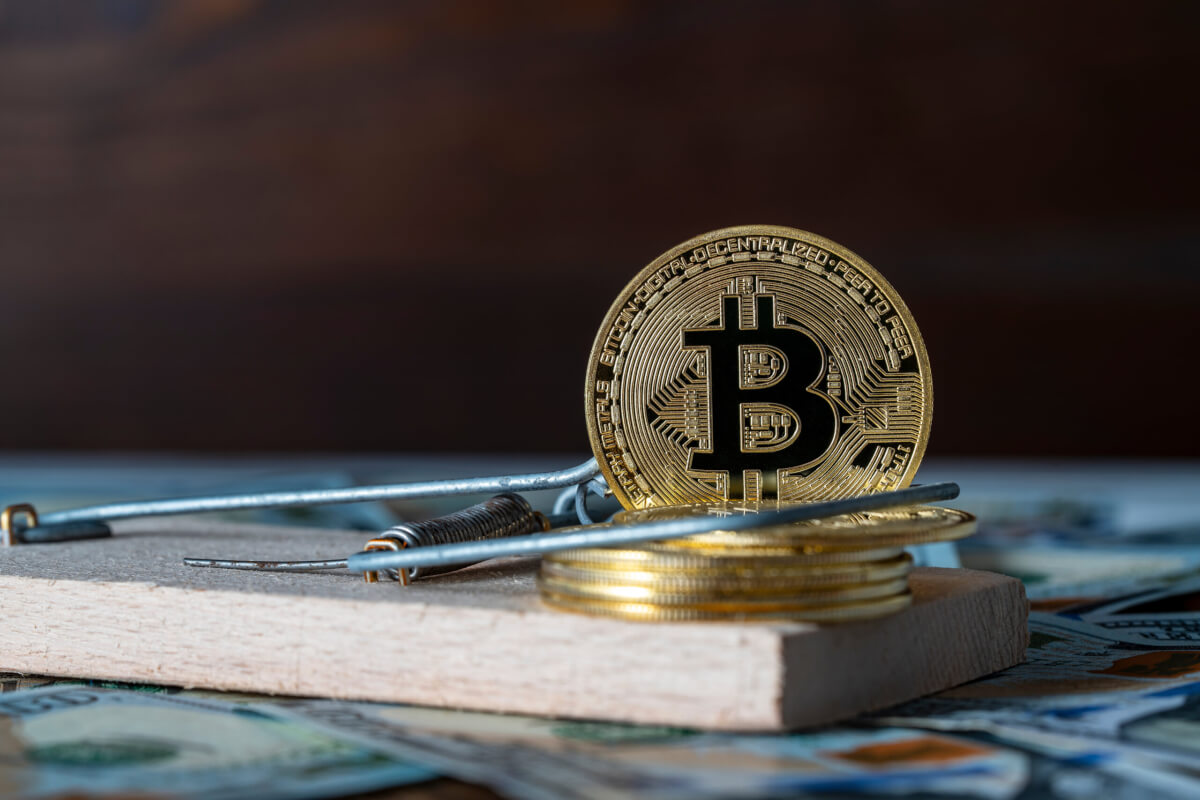

(© OlegD – stock.adobe.com)
New research shows 55% of cases involve American victims
SURREY, England — In an eye-opening study that sheds new light on the evolving landscape of digital financial crime, researchers have uncovered a striking pattern in Nigerian cryptocurrency fraud: all convicted perpetrators are male, and nearly two-thirds are under 30 years old. This revelation comes from recent research conducted through an unprecedented collaboration between academic institutions and Nigeria’s Economic and Financial Crimes Commission (EFCC).
The study arrives at a critical moment in global digital finance. Nigeria has emerged as the third-largest player in Bitcoin transactions globally, trailing only Russia and the United States, with cryptocurrency transactions reaching approximately $400 million. This surge in digital currency adoption reflects both opportunity and risk in Africa’s most populous nation, where only 36.8% of adults have access to traditional banking services.
“Our research reveals a disturbing surge in cryptocurrency fraud,” says study lead author Dr. Suleman Lazarus, a cybercrime expert at the University of Surrey, in a statement. “We’re observing a rising generation of young, tech-savvy male offenders who adeptly exploit digital platforms and cryptocurrencies to perpetrate high-stakes fraud.”
The research, published in Current Issues in Criminal Justice, reveals a clear geographical targeting pattern, with 55% of cases involving American victims. This international reach demonstrates how digital currencies have transformed the scope and scale of financial crimes, enabling fraudsters to operate across borders with unprecedented ease.
What makes these findings particularly intriguing is the fraudsters’ educational background. Despite the technical nature of cryptocurrency transactions, only a quarter of convicted fraudsters held university degrees, challenging assumptions about the expertise required for such crimes.
The digital toolbox of these fraudsters primarily consists of mainstream social media platforms. Facebook emerged as the preferred platform, used in 27% of cases, followed by Gmail at 22% and Instagram at 14%. These familiar platforms serve as hunting grounds where fraudsters establish trust before executing their schemes.
The financial scale of these operations is staggering. While some cases involved modest sums around $1,000, others reached heights of $475,000 in cash, with one case involving 1,200 Bitcoin – approximately $81.96 million. These figures underscore the lucrative nature of cryptocurrency fraud and its potential for devastating financial impact.
Bitcoin dominates as the preferred cryptocurrency for fraudulent activities, featuring in 46% of cases. This preference likely stems from Bitcoin’s decentralized nature and the relative anonymity it provides, presenting significant challenges for law enforcement in tracking and recovering stolen funds.
“As cryptocurrencies continue to gain popularity, our research serves as a wake-up call for law enforcement agencies, policymakers, and the general public to remain vigilant against the evolving threats in the digital financial landscape,” warns Dr. Lazarus.
The study illustrates how Nigerian cybercrime has evolved from traditional advance-fee scams to sophisticated cryptocurrency operations, reflecting broader changes in global financial systems and highlighting criminal enterprises’ adaptability. In a digital age where cryptocurrency promises financial inclusion and opportunity, this research serves as a crucial reminder of the shadow economy emerging alongside legitimate digital finance.
Paper Summary
Methodology
The study employed a structured approach, examining court records and case files of convicted cryptocurrency fraudsters from two major EFCC commands in Nigeria. Researchers analyzed 22 cases, documenting the fraudsters’ methods, preferred platforms, victim locations, and financial gains. This approach provided verifiable data from official sources, though it necessarily focused only on cases that resulted in convictions.
Results
The findings paint a clear picture: all convicted fraudsters were male, predominantly under 30, with relatively low formal education levels. They primarily used social media platforms, with Facebook being the most common tool. Most targeted American victims, using Bitcoin as their preferred cryptocurrency. Financial gains varied significantly, demonstrating the range of schemes employed.
Limitations
The research faced several constraints. The sample size of 22 cases, while providing valuable insights, represents only convicted cases, potentially missing more sophisticated operators who evade detection. Additionally, the focus on two EFCC commands might not represent the entire country’s cryptocurrency fraud landscape.
Discussion and Takeaways
The research reveals an urgent need for international collaboration in combating cryptocurrency fraud. The predominance of young male offenders and their focus on American targets suggests a need for targeted intervention strategies and enhanced cross-border cooperation in law enforcement.
Funding and Disclosures
The study, conducted in collaboration with Nigeria’s EFCC, underwent ethical clearance from both the University of Portsmouth (clearance number 1110) and the EFCC. The research team reports no conflicts of interest, with one author’s EFCC employment providing valuable access to case files while maintaining ethical research standards.



The US Treasury designated Nobitex alongside Wallex, Bitpin and Ramzinex and sanctioned senior figures connected to Nobitex, including chairman, co-founder and former chief executive Amir Hossein Rad.
According to the Treasury, Nobitex processed more than half of all Iranian digital asset inflows in 2025. Washington also accused it of facilitating transactions linked to the Islamic Revolutionary Guard Corps (IRGC), sanctions evasion, ransomware activity and the Central Bank of Iran’s access to hundreds of millions of dollars in stablecoins.
The sanctions therefore struck at part of the infrastructure that has allowed Iranian individuals, companies and state-linked actors to access international digital asset markets despite years of financial restrictions.
Crypto vs sanctions
Iran’s interest in cryptocurrency is not difficult to explain. Sanctions have sharply limited access to international banking networks, dollar transactions, trade finance and oil revenues. Digital assets do not eliminate these constraints but can provide alternative channels for moving value across borders.
Cryptocurrencies and stablecoins can help facilitate transactions, preserve value and maintain access to foreign markets. Stablecoins are particularly attractive because they reduce exposure to price volatility while still operating outside traditional correspondent banking networks.
Crypto mining has also become part of Iran’s sanctions-evasion toolkit. By using subsidized electricity to mine Bitcoin, Iran can effectively convert domestic energy resources into a globally transferable digital asset.
The strategy comes with costs. Mining places additional strain on Iran’s electricity grid and has been linked to power shortages and public frustration. Yet for a sanctioned economy, the logic remains compelling: when access to conventional finance is restricted, any mechanism capable of transforming local resources into internationally usable value becomes strategically important.
Hormuz and crypto
Cryptocurrency has also emerged in discussions surrounding the Strait of Hormuz, one of the world’s most important energy chokepoints.
Chainalysis reported recently that Iran intended to demand cryptocurrency payments from oil tankers seeking safe passage through the strait during periods of heightened tension. Whether such plans were fully implemented is less important than what they reveal about the potential role of digital assets in future geopolitical confrontations.
For Tehran, cryptocurrency offers several advantages in such scenarios. Payments can move rapidly across borders, avoid some traditional banking restrictions and reduce exposure to frozen accounts or conventional financial controls.
The prospect of crypto-based payments linked to maritime security demonstrates how digital assets could potentially be used not only to move money quietly but also to generate revenue during periods of geopolitical crisis.
The US Treasury has warned of sanctions risks associated with Iranian demands for transit-related payments through the Strait of Hormuz, including payments made through digital assets, fiat currency, offsets, swaps or other arrangements.
Blockchain evasion limits
Despite its advantages, cryptocurrency is not a magic shield against sanctions.
Blockchain transactions often leave traces that can be analyzed by firms such as Chainalysis and Elliptic or by government financial-intelligence agencies.
Once the United States designates a platform such as Nobitex, international exchanges, liquidity providers and counterparties face increased risks if they continue interacting with Iranian-linked wallets. This pushes activity toward smaller, less liquid and often riskier channels.
The sanctions also highlight another vulnerability. Treasury officials noted that Nobitex suffered a major hack in June 2025, underscoring the risks associated with relying on digital financial infrastructure.
Another area of interest is the role of the IRGC, which under Iran’s previous budget law was tasked with exporting roughly 700,000 barrels of crude oil per day—about half of the country’s exports at the time. The organization is also one of Iran’s largest infrastructure contractors.
While available data do not reveal where imported services originated or who ultimately benefited from them, the overlap illustrates the growing importance of non-traditional financial channels within Iran’s sanctioned economy.
Iran is likely to adapt. Activity may shift toward peer-to-peer trading, decentralized platforms, foreign intermediaries, stablecoin networks or new domestic exchanges. Yet each alternative carries costs, whether through reduced liquidity, greater compliance risks or increased exposure to future sanctions.
For Washington, the challenge is sustained enforcement. Sanctioning Nobitex will matter most if it is accompanied by international cooperation, improved blockchain intelligence, pressure on foreign exchanges and clear guidance for shipping firms, insurers and commodity traders.
The United States does not need to stop every Iranian crypto transaction to have an effect. It only needs to make the system more expensive, more traceable, riskier and less attractive for counterparties.
The Nobitex case illustrates how financial warfare has moved from banks to blockchains. Digital assets have given Tehran greater flexibility under sanctions, but they have also created new vulnerabilities.
The more Iran relies on crypto infrastructure, the more that infrastructure becomes part of the sanctions battlefield.

Key Takeaways
- Btcparser.com discovered three bitcoin wallets from 2014 and 2017 that moved 599.76 BTC worth $37.04M in 2026.
- Bitcoin’s 16,693.44% gain highlights long-term value creation from dormant holdings.
- BTC funds remain in new addresses; analysts await clues on owners’ next moves.
Ancient Bitcoin 2014 Wallet Stirs
A dormant bitcoin ( BTC) address, first seen on Nov. 12, 2014, and untouched ever since, transferred 165.50 BTC this week at block height 952452. After remaining inactive for more than a decade, the Pay-to-Public-Key-Hash (P2PKH) address reemerged onchain, moving its holdings in a single transaction. The owner decided to move this cache amid bitcoin’s latest price downturn as BTC tapped the lowest value of 2026 on Friday.
At the time, the address‘s entire stash of 165.50 BTC was valued at just $60,738. Even after bitcoin’s recent pullback, those same holdings are now worth approximately $10.2 million, illustrating the dramatic 16,693.44% appreciation accumulated during more than a decade of dormancy.
The funds migrated from the original P2PKH wallet through a series of newly created Pay-to-Witness-Public-Key-Hash (P2WPKH) addresses before ultimately settling in a P2WPKH address that now holds 204.67 BTC, valued at approximately $12.6 million.
Two 2017 Addresses Shift 434.26 BTC
Following the 2014-era transfer, two wallets dating back to 2017 moved a combined 434.26 BTC. The first transaction took place at block height 952454, transferring 115 BTC valued at approximately $7.1 million from a P2PKH address created on May 9, 2017. The second wallet shifted 319.26 BTC, worth roughly $19.7 million, in a separate transfer. That address too, was first seen on May 9, 2017.

On that day, 9 years and 26 days ago in 2017, BTC was trading at $1,709 per coin, placing the value of the holdings at a fraction of their current worth. The latest movements add to a growing list of dormant-era wallets that have resurfaced in 2026, often drawing attention from onchain analysts and market observers.
Onchain Trail Reveals Movement, Not Motive
While the transfers coincided with bitcoin’s recent price weakness, the transactions themselves offer no indication that the coins were sold, as the funds remain visible in newly assigned addresses. However, they may have been offloaded to an over-the-counter (OTC) desk or temporary address from a custodian.
Of course, the identities behind the wallets and the motivations for awakening holdings that sat idle for nearly a decade remain unknown.

CARSON CITY, Nev. (FOX5) — Nevada Attorney General Aaron Ford is warning residents about a growing scam involving cryptocurrency kiosks found in gas stations and convenience stores.
The machines, commonly called Bitcoin or crypto ATMs, convert cash into digital currency that can be sent to unknown third parties. The transactions cannot be reversed and are nearly untraceable, making it extremely difficult to recover stolen money.
Scammers typically begin with an unsolicited phone call, text, email or pop-up message that creates a sense of fear and urgency, Ford’s office said. The criminals often impersonate someone the victim would trust, such as a relative or representative of a legitimate organization. They claim an emergency exists that can only be resolved by depositing funds into a cryptocurrency kiosk.
MORE ON FOX5: Scam alert: Fake jail calls, bank spoofing on the rise across Nye County
The scammer then provides instructions about how to complete the transaction, which sometimes include a QR code associated with the scammer’s digital wallet.
According to FBI data cited by AARP, cryptocurrency kiosk scams disproportionately impact older adults. In 2025, cryptocurrency kiosks were used in scams that led to more than $389 million in reported losses.
“One of the most important ways to protect yourself from scams is to stay informed — scammers are consistently changing their tactics to fool you in new ways,” Ford said. “If a person asks you to use a cryptocurrency kiosk to transfer money, stop and consider if the interaction feels above board. When in doubt, follow your gut.”
Nevadans who believe they may have been victims of a scam, including one involving cryptocurrency kiosks, can file a complaint with the Office of the Attorney General.
Copyright 2026 KVVU. All rights reserved.
-

 South-Carolina2 minutes ago
Fatal collision in Florence Co.
-
 South Dakota7 minutes ago
2026 SDHSAA State Softball Saturday Scores
-
 Tennessee14 minutes ago
Portion of Clarksville Pike dedicated in honor of trailblazing Sen. Thelma Harper in North Nashville
-

 Texas17 minutes ago
Texas cruise passengers complete hantavirus monitoring with no infections, state says
-

 Utah22 minutes ago
Appreciating the beauty and terror of Coyote Gulch
-
 Vermont29 minutes ago
Vermont to build Green Mountain Youth Center – Valley News
-

 Virginia32 minutes ago
Virginia trooper rescues kitten from I-395 in Alexandria
-

 Washington37 minutes ago
DC police swarm Washington Highlands neighborhood after shooting

