Crypto
Better Meme Coin to Buy: Dogecoin vs. Official Trump | The Motley Fool


Both Dogecoin (DOGE -2.00%) and the Official Trump meme coin, with the ticker TRUMP, are among the most well-known meme plays out there at the moment. But, contrary to what you may have heard, not all meme coins are the same in terms of their balance of risk to reward.
And, in this particular matchup, there’s a lot to discuss. So let’s dive in.
This dog coin has already proven its staying power
Dogecoin is the meme coin that started its entire asset class within cryptocurrency, and many years later it’s still alive and kicking, with an impressively large market cap of around $47 billion.
In terms of the investment thesis for buying Dogecoin, this chart does a better job of explaining it than words alone:
Dogecoin Price data by YCharts.
As you can see, on average Dogecoin shares a high degree of correlation with the action of Bitcoin. That implies if Bitcoin retains its habit of surging and ebbing in four-year cycles, in keeping with the rough timing of the halving of its mining reward, there’s always going to be extra liquidity to flow from Bitcoin to Dogecoin.
Put more simply, if Bitcoin continues to make investors richer in specific periods of time, some of the additional money they make ends up getting spent on Dogecoin on average. That makes sense because investors can probably find a higher return during a speculative boom in Dogecoin than in Bitcoin, as it tends to be more volatile.
Then there’s the other element of the Dogecoin thesis. As a meme, Dogecoin has continued to garner a significant amount of attention every few years for more than a decade now. Investors keep coming back in anticipation of the next run-up, and the meme itself is broadly recognizable and easy to riff on.
Furthermore, the coin may one day be included in exchange-traded funds (ETFs) that give it more exposure to liquidity from the traditional financial markets. But those ETFs aren’t approved yet.
Does that mean you should buy it? No, at least not until you’ve diversified your portfolio with safer investments, and not unless you’re willing to lose all of your money.
The president’s new meme coin is a gamble, but there are worse ones
Hot off its launch on Jan. 17, Trump’s meme coin has a market cap of roughly $5 billion today, making it one of the largest meme coins that exists.
Though it doesn’t have the same vintage as Dogecoin, it does have one very obviously powerful factor driving its price: It bears the name and endorsement of the president of the U.S., and it’s the only cryptocurrency with that distinction. During what’s expected to be a pro-cryptocurrency administration, having the explicit support of the president means that it is unlikely for Trump’s coin to go to zero. It could also potentially catch a major tailwind if the president’s actions cause people to want to buy his coin. And that dynamic could easily last for the entire four-year term.
Furthermore, much like Dogecoin, there are TRUMP ETFs that are currently under consideration for approval by regulators. Should they get approved, it’ll be easier for investors with traditional financial accounts to pile in without needing to mess with any cryptocurrency software or applications.
But none of these drivers can make this coin into a good investment, only one that’s less bad than other meme coins. Still, in comparison to Dogecoin, the official Trump coin actually has a serious impediment: It’s inherently political.
Regardless of their political opinions, the mere whiff of an enduring threat from politics will keep away at least some potential investors, even if it’ll attract others. Thus there is likely a lower ceiling on the coin’s total accessible value within the cryptocurrency sector. Then there’s the inescapable risk that some of the president’s actions could detrimentally influence the price of the coin, which can’t be ruled out if one admits that other actions could be beneficial, which is a core part of the investment thesis for the coin.
So, between Dogecoin and Trump’s official coin, Dogecoin is the better option. It has an established pattern of price action, and it isn’t as vulnerable to political risks despite being exposed to political catalysts in the form of potential future ETF approvals. But, as mentioned previously, you shouldn’t be spending your hard-earned dollars on speculating on these memes if there are safer investments out there that you haven’t touched yet.



What is the Tennessee Valley Authority (TVA)?
The Tennessee Valley Authority, based in Knoxville, is the nation’s largest public power provider, but also fills other big roles.
The resolution of a Freedom of Information Act lawsuit shows the Tennessee Valley Authority promised $18 million in electricity incentives over five years to Bitdeer, a cryptocurrency miner operating in Knoxville as Carpenter Creek.
The total amount paid out by TVA was closer to $21 million, according to records from the Knoxville Utility Board, due to the crypto miner’s actual consumption. From 2020 to 2025, Carpenter Creek paid nearly $113 million to KUB in utility charges, with nearly 20% of that offset by TVA incentive credits. The crypto mine also received a $125,000 grant from TVA.
The lawsuit to obtain the information was filed in 2024 after TVA refused to disclose its agreements with the crypto company to mine Bitcoin. Carpenter Creek used 86 megawatts of energy in the last quarter of 2025, enough to power tens of thousands of homes.
While TVA initially withheld the contracts under various exemptions, the documents were released in November after the contract obligations were complete. As part of the settlement, TVA agreed to pay $9,440.88 in attorney’s fees and costs. The plaintiff, reporter Melanie Faizer, was represented by attorney Paul McAdoo of the Reporters Committee for Freedom of the Press.
TVA says data center growth to double by 2030
Though TVA says it no longer seeks out data centers or crypto miners as customers, it did provide an unknown number of incentive contracts to those companies from about 2018 through 2023 that helped draw them to the region.
Now those data centers and cryptocurrency mines are putting pressure on the energy consumption landscape.
As of 2025, they accounted for 18% of TVA’s industrial power use, up from just 1% in 2019. TVA projects data center growth could double by 2030, and recently announced plans to add 150 megawatts of power to xAI’s Memphis data center.
Those incentives “were bad policy,” said Stephen Smith, executive director of the advocacy group Southern Alliance for Clean Energy. Those types of operations typically don’t employ many people, which is one of the reasons TVA, under former CEO Jeff Lyash, discontinued the incentives. TVA has long kept its economic incentive contracts secret.
“There’s no independent entity that looks over TVA’s shoulder on this,” Smith said. “There’s nobody external to the agency that is reviewing their policy, whereas for somebody like Southern Company or Duke Energy … the regulators can have visibility on these incentive packages.”
Lawmakers push for transparency
Federal lawmakers are seeking more transparency from TVA. U.S. Reps. Steve Cohen and Tim Burchett recently reintroduced the TVA Increase Rate of Participation Act, which aims to end what they describe as “obscure and opaque” decision-making by the federal utility.
Cohen said the current planning process relies on “hand-picked” organizations rather than broad stakeholder input, a practice he said must change to meet the region’s growing energy needs.
Energy planning also affects the cost to residential consumers, according to the Southern Alliance for Clean Energy, which argues TVA has “prioritized industrial customers over the public.” The nonpartisan group Think Tennessee found Tennessee ranked 45th nationally in savings from energy-efficiency programs, resulting in higher bills for residents. That same report showed a decline in energy reliability.
TVA said it’s investing $11 billion over the next three years to build power generation and expand the grid. In a February webcast, TVA also said it’s now considering a separate rate category for larger electricity consumers like the data centers.
“Our focus is to protect consumers from subsidizing energy for other customers,” TVA spokesperson Scott Fiedler said.
In a follow-up request to obtain TVA’s other incentive contracts to crypto mines, the utility said its records don’t specify companies as “cryptocurrency companies” and so it was “unable to identify or locate further records.” A second request to obtain some of those contracts is pending.
Risks to utilities
The crypto miners’ presence could pose a credit risk for utilities like KUB that have come to rely on the income from an unstable and risky industry. Carpenter Creek’s monthly payments to the KUB averaged $1.8 million per month in 2024 as KUB’s largest industrial customer.
KUB, in an emailed statement, said that “while the majority of a customer’s electric bill goes toward the cost of purchasing power from TVA, loss of a large customer from KUB’s service area results in decreased revenue for KUB to operate and maintain the electric system.”
The KUB said that Carpenter Creek paid up front for the electrical infrastructure upgrades required to support its operations on KUB’s system.
Melanie Fazier is a journalist and professor of practice at the University of Tennessee at Knoxville. Email: mfaizer@utk.edu.

Arsenal’s First Title Push in 22 Years Plays Out as Clubs Face Revenue Cliff and Potential Blank Shirts Next Season
In 2023, Premier League clubs entered a voluntary agreement to remove gambling front-of-shirt sponsors by 2026/27 – and the cliff edge is coming. Going beyond this change, the UK government announced on February 23 that it would launch a consultation this spring aimed at banning unlicensed gambling operators from sponsoring British sports organizations entirely, potentially closing a loophole that currently allows offshore betting firms to maintain shirt deals.
This proposal goes further than the voluntary ban and covers sleeves, training kits, stadium branding, and every other promotional avenue. Culture Secretary Lisa Nandy said it was “not right that unlicensed gambling operators can sponsor some of our biggest football clubs, raising their profile and potentially drawing fans towards sites that don’t meet our regulatory standards.”
Multiple Premier League clubs still carry unlicensed gambling firms as front-of-shirt sponsors heading into the tail end of the season. Under the voluntary ban, licensed gambling brands would still be permitted on shirt sleeves, training kits, stadium signage, and pitchside LED boards from next season. However, the government’s proposed crackdown on unlicensed operators would go further, potentially barring them from all sponsorship arrangements with British sports clubs, not just front-of-shirt placement.
Historically, gambling firms have paid up to double what alternative sectors offer for such a marketing opportunity. An audit published by The ESK found that gambling brands account for £95 million, or 23.3% of the total £408 million front-of-shirt market. For several of the affected teams, gambling sponsorships make up between 28% and 38% of total commercial revenue.
ESK’s analysis recorded 27,440 gambling-related messages during the opening weekend of the current season alone across TV, radio, and social media – fewer than 10% of which came from shirt sponsors. FX, crypto, fintech, and payroll brands are emerging as the primary competitors for the vacant front-of-shirt inventory.
The ban’s final weeks coincide with one of the most dramatic title races in recent Premier League history. Arsenal, who do not carry a gambling shirt sponsor, lead Manchester City nine points at the time of writing, with the Pep Guardiola-led side having a game in hand and a defining fixture between the two set to take place at the Etihad on April 19. Statistical models give the Gunners a 97% chance of winning their first league title since 2004.
None of the traditional “Sky Six” clubs are directly affected by the sponsorship ban: Arsenal wear Emirates, Manchester City wear Etihad, Manchester United wear Qualcomm, Liverpool wear Standard Chartered, and Tottenham wear AIA. Chelsea started the season without a front-of-shirt sponsor after failing to close a reported £65 million replacement deal. The 11 clubs carrying gambling brands on their shirts this season are concentrated in the league’s middle and lower tiers, where the financial impact will be sharpest, especially among the key relegation candidates.
Reports have emerged that some clubs are struggling to secure replacement sponsors in time for next season. According to BritBrief, the prospect of teams starting the 2026/27 campaign with blank shirt fronts is being described within the industry as “not a great look” for the world’s most-watched football competition. West Ham – one of the teams flirting with relegation this season – are among the clubs understood to have approached premium automotive brands, but agreements remain elusive.
Previous record shirt sponsorship deals in the Premier League include Manchester United’s £235 million agreement with Qualcomm signed in 2024 and Chelsea’s reported £40 million-per-year deal with Infinite Athlete. Manchester City settled a legal dispute with the Premier League over sponsorship rules in September, clearing the path for a new Etihad Airways deal reportedly worth up to £1 billion over 10 years – potentially the largest commercial partnership in British sporting history.
FAQ 🔎
- When does the Premier League gambling shirt ban start? The voluntary ban on front-of-shirt gambling sponsorship takes effect from the start of the 2026/27 season, making 2025/26 the final campaign with betting logos on matchday shirts.
- How many Premier League clubs have gambling shirt sponsors? Eleven of the 20 Premier League clubs carry gambling brands on their front-of-shirt this season, including Aston Villa, Everton, West Ham, Nottingham Forest, and Wolves.
- Can gambling brands still sponsor Premier League clubs after the ban? Licensed gambling operators can still appear on shirt sleeves, training kits, stadium signage, and LED boards, but a separate UK government consultation could ban unlicensed operators from all sponsorship arrangements entirely.
- How much revenue will Premier League clubs lose from the gambling ban? The collective value of front-of-shirt gambling deals exceeds £140 million per season, with some affected clubs deriving between 28% and 38% of their total commercial revenue from betting sponsors.

Decentralized cryptocurrency exchange Drift has suffered an exploit that drained $285 million in digital assets.

Man shot at Atlanta convenience store overnight, police say

Minneapolis proposes honoring fallen officer Jamal Mitchell with street naming

HBCU All-Star Game celebrates sports and civil rights in Indianapolis

Ex-Steelers QB Fires Back at Adam Schefter Over Aaron Rodgers Rumor

Kathryn Lively Spears Obituary April 1, 2026 – Thomas Poteet & Son Funeral Directors

Florida High School Football Rankings: Top 25 teams – Oct. 21

How old is Bo Nix? What to know about Oregon quarterback ahead of 2024 NFL Draft

Cleary's 21 help Le Moyne down Central Connecticut State 69-64 in OT

99th annual Pony Swim held in Virginia

Indiana Members Credit Union announced as new anchor tenant at Bottleworks District

Video: Trump Struck Iran. Now Farmers Are Paying the Price.

What B-52 bombers bring to Iran fight — and what it means for the war now

Podcast: Hungary elects: what is at stake and who is likely to win?
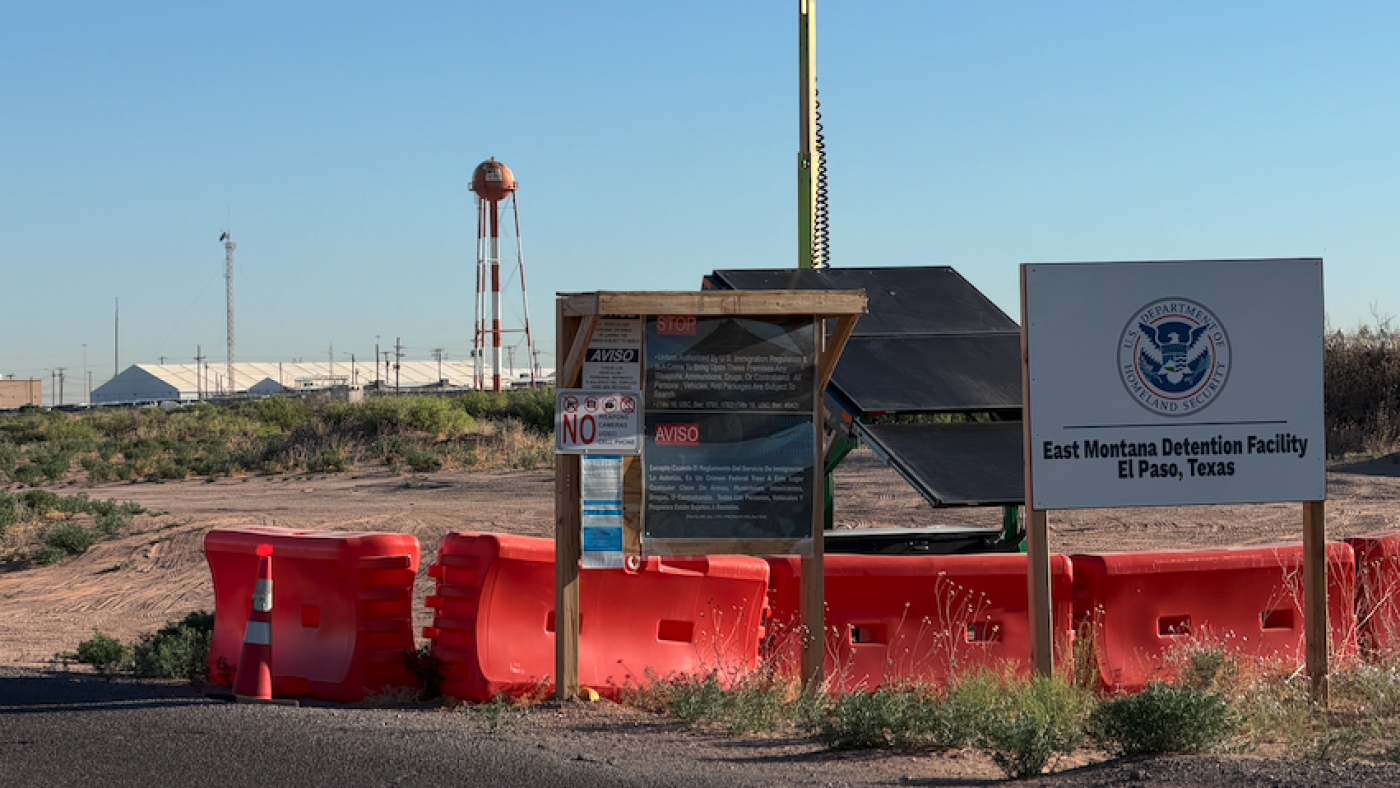
ICE detention deaths are on a record pace. One Texas facility bears the brunt

GOP rails against ‘s— sandwich’ deal as all eyes turn to House to end DHS shutdown
-

 Culture1 week ago
Wil Wheaton Discusses ‘Stand By Me’ and Narrating ‘The Body’ Audiobook
-

 South-Carolina5 days ago
South Carolina vs TCU predictions for Elite Eight game in March Madness
-

 Miami, FL1 week ago
Jannik Sinner’s Girlfriend Laila Hasanovic Stuns in Ab-Revealing Post Amid Miami Open
-

 Culture1 week ago
What Happens When We Die? This Wallace Stevens Poem Has Thoughts.
-

 Minneapolis, MN1 week ago
Boy who shielded classmate during school shooting receives Medal of Honor
-

 Vermont5 days ago
Skier dies after fall at Sugarbush Resort
-

 Education1 week ago
Video: Transgender Athletes Barred From Women’s Olympic Events
-

 Politics5 days ago
Trump’s Ballroom Design Has Barely Been Scrutinized