Business
‘You’re a liar.’ Why the world’s biggest building boom has run into a wall in California


Bryan Marsh was booed by the crowd as he approached the podium in Monterey Park’s City Hall. Things weren’t going as planned.
In front of a wall of people holding “No Data Center” placards, he outlined how his company, Australia’s HMC StratCap, invested tens of millions of dollars and became the city’s largest landowner after years of negotiations, clearances and hearings.
City officials had previously welcomed its plans to build a sprawling, new data center and the jobs and tax revenue that would follow, he said, but then things suddenly changed.
“There was no widespread opposition,” until late last year, he said as people in the room yelled, “You’re a liar!” “Now, for the last few months, the city has faced intense public pressure.”
California’s notorious NIMBYs have a new cause. They are worried that the data centers that power artificial intelligence will lead to pollution, higher power bills and worse. It is a nationwide movement gaining momentum and particularly poignant in California, arguably the birthplace of the AI boom.
City officials had previously welcomed plans to build a sprawling, new data center and the jobs and tax revenue that would follow.
(Gina Ferazzi / Los Angeles Times)
It’s also one of the reasons most blue-collar jobs tied to the unprecedented buildout of data centers are going to other states.
Medhi Paryavi advises governments and companies on data center projects across the country. When he recently suggested California to a European executive looking to invest hundreds of millions of dollars, he was quickly dismissed.
“Absolutely not!” the executive snapped back, said Paryavi, the chairman of the Washington D.C.-based think tank International Data Center Authority.
The aversion to California is pretty standard in the industry. Land is expensive, electricity rates are high and there are too many regulations. Meanwhile, new roadblocks pop up regularly as the state’s outspoken citizens change the rules and protest.
Investors with a choice often choose elsewhere.

Signs of protest pepper frontyards in a neighborhood in Monterey Park on Wednesday.
(Robert Gauthier / Los Angeles Times)
“They’re looking for cost, time and availability of power,” said Paryavi. “California is not on the map.”
The artificial intelligence revolution might be led by companies from California, but most of the facilities housing the chips — and the jobs that come with building and maintaining them — are in other states.
Tech companies led by Microsoft, Google, Amazon and Meta are projected to spend $710 billion on data center buildouts this year alone, according to JLL, a real estate investment firm.
Despite huge plans, seemingly insatiable demand and low vacancy rates, the total capacity of data centers under construction declined last year for the first time in five years, according to CBRE. While construction boomed in some places such as Chicago and the Dallas area, those gains were offset by declines around Silicon Valley, northern Virginia and elsewhere, CBRE data showed.

A technician works at an Amazon Web Services AI data center in New Carlisle, Ind., on Oct. 2.
(Noah Berger / Associated Press)
Legacy markets such as California and Oregon are expected to lose more than half of their relative market share, with Texas set to become the country’s leading data center market within the next three years, according to a report by Bloom Energy, an energy company.
An estimated $98 billion in projects were blocked or delayed in the second half of 2025, more than all cancellations since 2023, said Data Center Watch, an organization tracking opposition to data centers across the U.S.
In California, some areas such as Vernon have welcomed data center investment, but there is a growing list of locals trying to stop data centers in Imperial County and elsewhere.
Progressive lawmakers Bernie Sanders and Alexandria Ocasio-Cortez recently introduced a bill to pause all new data center construction until federal guardrails and safeguards are instituted for workers, communities and the environment.
The proposed data center in Monterey Park — the size of four football fields — is close to homes. It is expected to consume three times the energy used by the entire city, which residents say will raise their electricity bills and also increase noise and air pollution.

The empty property on Saturn Avenue had plans to be converted to a data center in Monterey Park, Calif.
(Robert Gauthier / Los Angeles Times)
The crowd of more than 200 people who gathered at its City Hall was overwhelmingly opposed to the data center. Supporters of the project were only a tiny minority. For hours, person after person stepped to the microphone to announce their anxiety. The center will hurt property values, AI takes jobs, big AI is a threat to democracy, it’s a “class injustice.”
“The tech bros are absolutely the Epstein class,” said one. “They are not the working class.”
“Let’s make this town a place where people want to come live, where people want to do real things, where they are not relying on a robot or a program or an app to run their lives,” said another.”
Supporting the data center, and trying to avoid a vote on its existence, were only a few people from HMC StratCap and some union representatives in orange worker vests.
They pointed out that the big investment had already been agreed to, would create jobs and that it was hypocritical for the city’s citizens to want the fruits of technology while, at the same time, being unwilling to accept its infrastructure.
“Everybody loves the juice, but they don’t like how it’s squeezed,” said a member of the sheet metal workers union from the area. “I am going to fight for my members to have a job to work at.”
To be sure, it is much more than just NIMBYism that makes it tough to build in California. Regulations aimed at protecting consumers and the environment make it harder to access the power that data centers need. The regulations also contribute to the high rents and building costs.
“There’s a lot of legislation, and a lot of red tape in the state of California you have to go through in order to get data centers approved,” said JLL real estate broker Darren Eades.

NTT, Vantage Data Center and downtown San José on Tuesday, July 30, 2024 in Santa Clara, Calif. Dozens of data centers being built for artificial intelligence are eating up Calfifornia’s electricity.
(Paul Kuroda / For The Times)
One example he pointed to is the small power plant exemption, which stipulates that construction over 50 megawatts requires additional paperwork and a longer lead time for approvals. Larger data centers these days need 20 times that amount of power.
All of this makes it more likely that investors will avoid California. As hundreds of billions of dollars are being spent building data centers, it will lead to jobs in other states and countries.
“While it is the cradle of innovation, Silicon Valley is not the cradle of delivering AI outputs and delivering economic results,” Paryavi said.
Following the seven-hour hearing, council members greenlit a June ballot measure allowing residents to vote on a ban.
It was a victory for a new activist group called No Data Center Monterey Park, which spearheaded the rapid grassroots mobilization and worked with San Gabriel Valley Progressive Action to sign petitions and raise awareness. To pack the City Hall meetings, activists set up a mahjong parlor and a traditional Chinese lion dance performance to engage the largely Chinese community.
For HMC StratCap the council’s decision marked a significant blow. The Australian firm invested $40 million to acquire a 200,000-square-foot property intended for data centers, along with a larger adjacent parcel of land for an undisclosed development.
Things turned sour despite reassurances that the data center would generate $5 million in annual revenue to support park maintenance, libraries and repairs without raising residential taxes.
HMC StratCap has to win the vote in June or give up on the project. If it has to do that, it will be forced to sue the city.
“Our preferred path is not to litigate,” HMC’s Marsh said at the hearing. “We must, however, protect our legal rights.”
Now it looks like HMC StratCap may be giving up on the project.
A letter from its parent company in Australia, dated March 31 and posted on Monterey Park’s official website, said the company has withdrawn its application to build the data center.
The letter pointed to new restrictions on data center development in the city and the June vote on a ban.
“These regulations are not conducive for data center development,” it said.

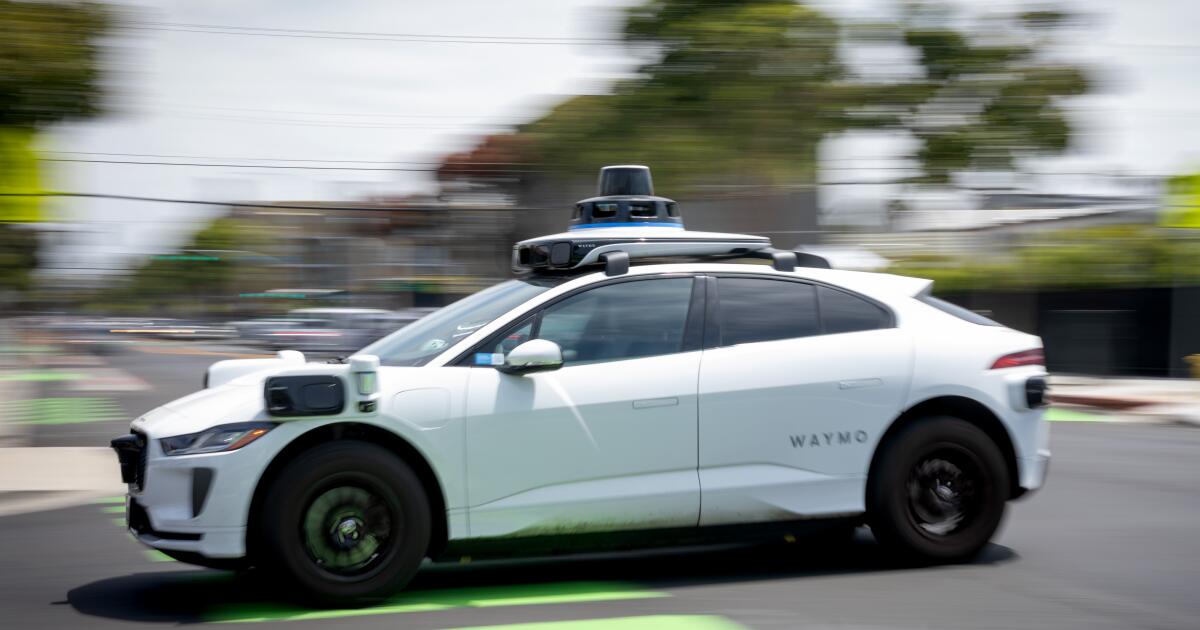
Waymo said that it’s pausing its robotaxi services on freeways in the U.S. as it updates its software to improve performance around construction zones and flooded roads.
Before the suspension, freeway operations were available in San Francisco, Los Angeles, Phoenix and Miami. The company said that street and other off-highway operations of Waymos will continue.
The company first confirmed the temporary pause to Reuters, and said that it was working to integrate recent technical learnings into software and expects to resume these routes soon.
“We are committed to being good neighbors for our riders and our communities. As part of that commitment, we make proactive decisions including temporarily pausing aspects of our service. We know riders count on us to get around, and we appreciate their patience as we work to get them where they’re going safely and reliably,” a Waymo spokesperson said in an email statement.
The company also paused operations in Atlanta, after a Waymo stopped in flood water. In early May, about 3,800 of Waymos autonomous taxis were recalled after a software defect caused some vehicles to drive into flooded roadways.
The suspension comes at a time when the Alphabet-backed company, which is based in Mountain View, Calif., has increased its pace of expansion into a number of new cities in the U.S. and across the globe, and getting them on freeways and local airports is important for expansion.
Competitors Tesla and Zoox have been playing catchup but don’t match the scale of Waymo yet.
The company said it has collected 170 million autonomous miles, with 13 times fewer injury-causing collisions compared with human drivers in the routes they operate in.
Waymo said it provides 500,000 trips every week, and aims to cross 1 million paid rides per week by 2026. While most Waymo models in use are Jaguar SUVs, it recently began testing a Chinese model Zeekr called Ojai in Los Angeles.
Waymo did not cite a specific instance that prompted the most recent recall, but the company has been forced to pause operations to improve software in several Southern states that have been hit by flash floods, including Texas, Tennessee and Georgia.
In 2025, Waymo recalled more than 1,200 vehicles due to a software defect resulting in minor crashes against obstacles in the road. Earlier this year, it faced renewed scrutiny after hitting a child outside a school in Santa Monica and running over a cat in San Francisco.

Since the war with Iran broke out, the average American household has spent an extra …
$190.47 on gasoline.
For many households, that is the equivalent of a month’s electricity bill.
Or a week’s worth of groceries for a couple.
The gasoline calculation is part of an analysis conducted by researchers at Brown University as they and others try to assess the economic costs of the prolonged fighting.
Calculating the cost of war — a skipped meal or a drive not made — is an imperfect science. But these estimates can offer a sense of how fighting far away can change behaviors large and small each day, disrupting American life.
Discomfort has not been spread evenly. As the price of gasoline has shot up, the national average is now …
$4.55 a gallon
In Illinois, it is more expensive …
$4.99 a gallon.
In California, it’s …
$6.13 a gallon.
Diesel, which is used to power factories and move most goods around the country, also quickly climbed.
Taken together, the amount of extra money Americans have collectively spent on gasoline and diesel since Feb. 28, when the United States and Israel attacked Iran, is staggering:
$0.0 billion
Hunting for cheaper gas, Americans are going to Costcos and Sam’s Clubs more often to fill up their tanks.
Drivers visited Sam’s Club gas stations 18 percent more in the last week of April than the same time last year.
They are filling their tanks with less gas.
One gallon fewer at a time.
They are riding more subways and commuter trains.
They are using bike shares more often.
People rode more buses in March than before the war:
45 million more rides.
People are spending less on essentials.
More than 40 percent of people in a recent poll said they were spending less on groceries and medical care.
They are putting less into savings.
Richer households are spending a relatively small share of their income on gas:
2.7%.
Poorer households are spending far more:
4.2%.
This is not the first time in recent years that the economy has been shocked by war.
After Russia invaded Ukraine in 2022, oil prices spiked, sending gasoline soaring. At its peak, the national average was …
$5.02 a gallon.
Where things go this time around is anyone’s guess. When the war does end, it will still take weeks or months for energy supplies to level off.
Nearly three out of four goods move across the country by truck.
Many of those trucks are powered by diesel, making them much costlier to drive, and what’s inside them costlier for consumers.
Last month, a tomato cost …
40% more
than it did the same time last year.
More expensive fuel isn’t the only culprit for rising costs. Extreme weather, tariffs and other factors have forced prices up for many industries. Gasoline also becomes more expensive as the summer approaches.
But inflation last month rose at its fastest pace in nearly three years, and gasoline was among the fastest rising categories.

The layoffs bludgeoning the tech industry continued this week as artificial intelligence reshapes the industry.
Mountain View-based Intuit, the maker of TurboTax, on Wednesday said it was laying off 17% of its workforce, or about 3,000 employees, as part of its restructuring to cut costs and invest in artificial intelligence.
The company said it had slowed down due to “too many organizational layers” and the cuts will simplify the organization to become a “faster, leaner, more focused company.” Intuit said it will close its offices in Reno and Woodland Hills and incur an estimated $300 million to $340 million in restructuring charges.
“We believe we can serve more customers and deliver breakthrough products that fuel our customers’ success by reducing complexity and simplifying our structure,” Sasan Goodarzi, chief executive of Intuit, said in a memo shared with employees.
Intuit announced the layoffs on the same day it reported its third-quarter results, in which revenue jumped 10% from a year earlier, to $8.56 billion.
Intuit adds to the count of more than 114,000 tech-sector employees laid off this year, according to Layoffs.fyi.
Meta laid off 8,000 workers on Wednesday, as the company cuts costs to ramp up investment in AI agents and infrastructure. The ever-expanding list of tech companies that have cut jobs includes Coinbase, Amazon, LinkedIn and more. Some have cited productivity gains enabling fewer workers to accomplish more with AI, while others pointed out restructuring and cost-cutting to prepare for the AI disruption.
In an earnings call, Intuit‘s chief financial officer, Sandeep Aujla, said the cuts were intended to make the organization leaner, and weren’t tied directly to Intuit’s AI use.
“AI is an important part of how we’re evolving as a company, but these decisions were not driven by AI replacing employees,” an Intuit spokesperson reiterated in an email .
Best known for its TurboTax platform, Intuit has branched into accounting with QuickBooks, credit scoring through Credit Karma and email automation via Mailchimp. Facing increased competition for AI-driven tax solutions, the company is integrating AI across its entire portfolio.
“Our AI agents are delivering value at scale, with our accounting AI agents powering recommendations across more than 50 million transactions each week, and business tax AI agents identifying millions of dollars in deductions,” Goodarzi said in the earnings call.
The restructuring will reduce overlapping roles in TurboTax and Credit Karma as the company integrates both into a single team.
A deep sense of anxiety has settled in the tech job market, propelled by consecutive layoffs and coding tasks being automated by AI.
Tech leaders have portrayed the role of human software engineers as a human in the loop, overseeing and verifying AI agents that do the work of coders.
By 2027, software developers are expected to see a 3% job contraction due to AI coding capabilities, according to Labor Automation Forecasting Hub by Metaculus, a popular website where forecasters predict how AI will reshape the workforce.
-
 News15 minutes ago
What will Trump do next with Iran?
-

 New York2 hours ago
How Stars From ‘The Morning Show’ and ‘The League’ Keep Their Love Alive
-

 Los Angeles, Ca2 hours ago
Los Angeles man charged in Southern California catalytic converter theft spree
-

 Detroit, MI2 hours ago
Rain-soaked Detroit job seekers show skills, grit at Comerica Park hiring event
-

 San Francisco, CA2 hours ago
Nine runs? NINE runs! White Sox down Giants with one huge inning
-

 Dallas, TX3 hours ago
11 Dallas neighbors declared best places to live and more top stories
-

 Miami, FL3 hours ago
Dolphins 90 in 90: Tight end Greg Dulcich looking to build in 2026
-

 Boston, MA3 hours ago
Red Sox’s Trade Market Desires Reported By Boston Insider

