Business
Warner nixes Paramount’s bid (again), citing proposed debt load

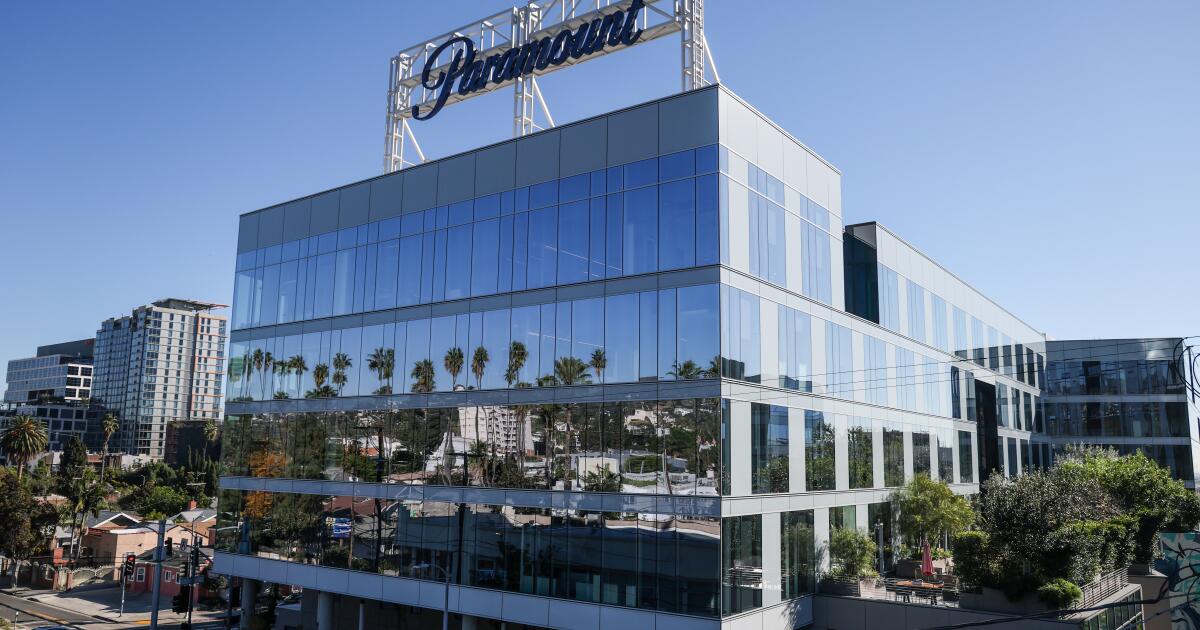
Paramount’s campaign to acquire Warner Bros. Discovery was dealt another blow Wednesday after Warner’s board rejected a revised bid from the company.
The board cited the enormous debt load that Paramount would need to finance its proposed $108-billion takeover.
Warner’s board this week unanimously voted against Paramount’s most recent hostile offer — despite tech billionaire Larry Ellison agreeing in late December to personally guarantee the equity portion of Paramount’s bid. Members were not swayed, concluding the bid backed by Ellison and Middle Eastern royal families was not in the best interest of the company or its shareholders.
Warner’s board pointed to its signed agreement with Netflix, saying the streaming giant’s offer to buy the Warner studios and HBO was solid.
The move marked the sixth time Warner’s board has said no to Paramount since Ellison’s son, Paramount Chief Executive David Ellison, first expressed interest in buying the larger entertainment company in September.
In a Wednesday letter to investors, Warner board members wrote that Paramount Skydance has a market value of $14 billion. However, the firm is “attempting an acquisition requiring $94.65 billion of [debt and equity] financing, nearly seven times its total market capitalization.”
The structure of Paramount’s proposal was akin to a leveraged buyout, Warner said, adding that if Paramount was to pull it off, the deal would rank as the largest leveraged buyout in U.S. history.
“The extraordinary amount of debt financing as well as other terms of the PSKY offer heighten the risk of failure to close, particularly when compared to the certainty of the Netflix merger,” the Warner board said, reiterating a stance that its shareholders should stick to its preferred alternative to sell much of the company to Netflix.
The move puts pressure on Paramount to shore up its financing or boost its cash offer above $30 a share.
However, raising its bid without increasing the equity component would only add to the amount of debt that Paramount would need to buy HBO, CNN, TBS, Animal Planet and the Burbank-based Warner Bros. movie and television studios.
Paramount representatives were not immediately available for comment.
“There is still a path for Paramount to outbid Netflix with a substantially higher bid, but it will require an overhaul of their current bid,” Lightshed Partners media analyst Rich Greenfield wrote in a Wednesday note to investors. Paramount would need “a dramatic increase in the cash invested from the Ellison family and/or their friends and financing partners.”
Warner Bros. Discovery’s shares held steady around $28.55. Paramount Skydance ticked down less than 1% to $12.44.
Netflix has fallen 17% to about $90 a share since early December, when it submitted its winning bid.
The jostling comes a month after Warner’s board unanimously agreed to sell much of the company to Netflix for $72 billion. The Warner board on Wednesday reaffirmed its support for the Netflix deal, which would hand a treasured Hollywood collection, including HBO, DC Comics and the Warner Bros. film studio, to the streaming giant. Netflix has offered $27.75 a share.
“By joining forces, we will offer audiences even more of the series and films they love — at home and in theaters — expand opportunities for creators, and help foster a dynamic, competitive, and thriving entertainment industry,” Netflix co-Chief Executives Ted Sarandos and Greg Peters said in a joint statement Wednesday.
After Warner struck the deal with Netflix on Dec. 4, Paramount turned hostile — making its appeal directly to Warner shareholders.
Paramount has asked Warner investors to sell their shares to Paramount, setting a Jan. 21 deadline for the tender offer.
Warner again recommended its shareholders disregard Paramount’s overtures.
Warner Bros.’ sale comes amid widespread retrenchment in the entertainment industry and could lead to further industry downsizing.
The Ellison family acquired Paramount’s controlling stake in August and quickly set out to place big bets, including striking a $7.7-billion deal for UFC fights. The company, which owns the CBS network, also cut more than 2,000 jobs.
Warner Bros. Discovery was formed in 2022 following phone giant AT&T’s sale of the company, then known as WarnerMedia, to the smaller cable programming company, Discovery.
To finance that $43-billion acquisition, Discovery took on considerable debt. Its leadership, including Chief Executive David Zaslav, spent nearly three years cutting staff and pulling the plug on projects to pay down debt.
Paramount would need to take on even more debt — more than $60 billion — to buy all of Warner Bros. Discovery, Warner said.
Warner has argued that it would incur nearly $5 billion in costs if it were to terminate its Netflix deal. The amount includes a $2.8-billion breakup fee that Warner would have to fork over to Netflix. Paramount hasn’t agreed to cover that amount.
Warner also has groused that other terms in Paramount’s proposal were problematic, making it difficult to refinance some of its debt while the transaction was pending.
Warner leaders say their shareholders should see greater value if the company is able to move forward with its planned spinoff of its cable channels, including CNN, into a separate company called Discovery Global later this year. That step is needed to set the stage for the Netflix transaction because the streaming giant has agreed to buy only the Warner Bros. film and television studios, HBO and the HBO Max streaming platform.
However, this month’s debut of Versant, comprising CNBC, MS NOW and other former Comcast channels, has clouded that forecast. During its first three days of trading, Versant stock has fallen more than 20%.
Warner’s board rebuffed three Paramount proposals before the board opened the bidding to other companies in late October.
Board members also rejected Paramount’s Dec. 4 all-cash offer of $30 a share. Two weeks later, it dismissed Paramount’s initial hostile proposal.
At the time, Warner registered its displeasure over the lack of clarity around Larry Ellison’s financial commitment to Paramount’s bid. Days later, Ellison agreed to personally guarantee $40.4 billion in equity financing that Paramount needs.
David Ellison has complained that Warner Bros. Discovery has not fairly considered his company’s bid, which he maintains is a more lucrative deal than Warner’s proposed sale to Netflix. Some investors may agree with Ellison’s assessment, in part, due to concerns that government regulators could thwart the Netflix deal out of concerns about the Los Gatos firm’s increasing dominance.
“Both potential mergers could severely harm the viewing public, creative industry workers, journalists, movie theaters that depend on studio content, and their surrounding main-street businesses, too,” Matt Wood, general counsel for consumer group Free Press Action, testified Wednesday during a congressional committee hearing.
“We fear either deal would reduce competition in streaming and adjacent markets, with fewer choices for consumers and fewer opportunities for writers, actors, directors, and production technicians,” Wood said. “Jobs will be lost. Stories will go untold.”



A.I. A.I.

A torrent of fake videos and images generated by artificial intelligence have overrun social networks during the first weeks of the war in Iran.
The videos — showing huge explosions that never happened, decimated city streets that were never attacked or troops protesting the war who do not exist — have added a chaotic and confusing layer to the conflict online.
The New York Times identified over 110 unique A.I.-generated images and videos from the past two weeks about the war in the Middle East. The fakes covered every aspect of the fighting: They falsely depicted screaming Israelis cowering as explosions ripped through Tel Aviv, Iranians mourning their dead and American military vessels bombarded with missiles and torpedoes.
Collectively, they were seen millions of times online through networks like X, TikTok and Facebook, and countless more times within private messaging apps popular in the region and around the world.
The Times identified the A.I. content by checking for both obvious signs — such as depictions of buildings that do not exist, garbled text and behaviors or movements that defy expectations — and for invisible watermarks embedded within the files. The posts were also checked with multiple A.I. detector tools and compared with reports from news organizations.
A sophisticated new wave of A.I. tools makes the fakes possible, enabling nearly anyone to create lifelike simulations of war that can deceive the naked eye for little to no cost. Similar content has spread in other conflicts, including the war between Ukraine and Russia. But this war has multiple fronts, and that has led to a proliferation of fake content since the United States and Israel first attacked Iran, according to experts.
“Even compared to when the Ukraine war broke out, things now are very different,” said Marc Owen Jones, an associate professor of media analytics at Northwestern University in Qatar. “We’re probably seeing far more A.I.-related content now than we ever have before.”
Overall, the A.I. fakes included …
A.I.
A.I. A.I.
A.I.
A.I.
A.I.
A.I.
A.I. A.I.
A.I.
A.I.
A.I.
A.I. A.I.
A.I.
A.I.
A.I.
A.I. A.I.
A.I.
A.I.
A.I.
A.I. A.I.
A.I.
A.I.
A.I.
A.I. A.I.
A.I.
A.I.
A.I.
A.I. A.I.
A.I. A.I.
A.I.
A.I.
A.I.
A.I. A.I.
A.I.
A.I.
A.I.
A.I. 37 fake images and videos falsely depicting active war
5 fake images and videos falsely depicting war preparation
8 fake images and videos falsely depicting destruction
5 fake images and videos falsely depicting crying soldiers
43 memes and overt uses of A.I.
13 other fake images and videos
The content has become a potent informational weapon for Tehran as it seeks to shake the public’s tolerance for war by depicting scenes of devastation and destruction across the region. The majority of A.I. videos about the war push pro-Iranian views, often to falsely demonstrate its military superiority and sophistication, according to a study of online activity by Cyabra, a social media intelligence company.
“The use of A.I. images of places in the Gulf — being burnt or damaged — becomes more important in Iran’s playbook,” Mr. Jones said, “because it allows them to give a sense that this war is more destructive and maybe more costly for America’s allies than it might actually be.”
In one of the most circulated fake videos found online, a shaky handheld scene seemingly shot from an apartment balcony in Tel Aviv shows the skyline pounded with missiles as an Israeli flag sits in the foreground. The video was viewed millions of times across platforms and was picked up by social media influencers and fringe news websites, according to a review of social media activity by The Times.
The Israeli flag in the foreground was one telltale sign that the video was A.I.-generated, experts said. To generate such videos, creators who use A.I. tools will typically write simple text instructions describing, for example, a shaky handheld video of a missile strike on Israel. The A.I. tools will then often include an Israeli flag or the Star of David to fulfill such a request. Several other A.I. videos included the flag.
There is ample genuine footage of the war being shared online, too, with cellphones and social platforms giving a real-time view of the conflict. Many of those images and videos are more subdued than the scenes made by A.I. tools.
Real footage of missile strikes was often shot from far away, typically at night, with missiles visible as little more than bright lights in the distance. Explosions in real videos are more often shown as plumes of smoke, not as fireballs, with bystanders rushing to film the scene only after the munitions meet their target.
Some A.I. videos and images, by contrast, have falsely depicted war like an over-the-top Hollywood action movie, with enormous explosions resulting in mushroom clouds, sonic booms that ripple across unnamed cities and supposed hypersonic missiles that leave glowing streaks in the sky. Real footage is sometimes enhanced by A.I. tools to make explosions appear larger and more devastating, further blurring the line between what is real and fake.
The A.I. footage has essentially created an alternate reality more suited to social media, experts said, where the exaggerated footage is more likely to find an audience.
In one instance, the A.I. fakes played an outsize role in the debate online and between governments over the fate of the U.S.S. Abraham Lincoln, an aircraft carrier deployed to the region. Iran’s Islamic Revolutionary Guards Navy initially suggested on March 1 that they had successfully attacked the ship, possibly sinking it. That led to a deluge of A.I.-generated fakes depicting the ship or those like it on fire. Iranian users celebrated the footage online as evidence that their country’s counteroffensive was rattling the U.S.-Israeli alliance.
The United States later said that the attack was unsuccessful and that the ship was unharmed.
A.I.
Dozens of other A.I. images and videos made no effort to hide that they were fake, acting instead as a new form of digital propaganda that brought to life the political arguments typically made by governments or their propaganda arms. Those included flattering depictions of world leaders as powerful men, or dehumanizing depictions of opposition leaders.
One collection of clearly fictional videos offered a view of the Shajarah Tayyebeh elementary school, which was destroyed by the United States in an apparent errant missile strike on Feb. 28, according to a preliminary inquiry. At least 175 people were killed, most of them children, according to Iranian officials.
The A.I.-generated videos unfolded like short films, showing school girls playing outside before an American fighter jet launches missiles.
Social media companies have done little to combat the scourge of A.I. videos that overwhelmed their platforms last year after OpenAI released Sora, a video-generating app that allowed anyone to create realistic fakes through a simple app. (The New York Times sued OpenAI and Microsoft in 2023, accusing them of copyright infringement of news content related to A.I. systems. The two companies have denied those claims.)
Though videos generated by many A.I. tools can include both visible and invisible watermarks labeling them as fake, those are easy to remove or obscure. Only a few of the videos identified by The Times contained such watermarks.
Elon Musk’s X, which has taken a broadly permissive approach to allowing misinformation on its platform, announced last week that it would suspend accounts from receiving revenue from the platform for 90 days if they posted A.I.-generated content of “armed conflict” without labeling it as such, in a bid to stop users from profiting off the falsehoods.
But many of the Iranian-linked accounts identified by Cyabra appeared far more focused on spreading its messages than making money.
“This is a natural front for Iran to try and exploit and it feels like this is one of the reasons it is so voluminous,” said Valerie Wirtschafter, a fellow at the Brookings Institution studying foreign policy and A.I. “It’s actually a tool of war.”

Victoria Gardens, an expansive outdoor shopping center in Rancho Cucamonga, has sold for $530 million as open-air malls continue to outdraw conventional indoor centers.
The center, built in 2004 on former agricultural land at a cost of $285 million, is one of the largest regional malls in Southern California, with more than 30 buildings on 12 blocks, interspersed with parks, gardens and fountains. It also has a public library and cultural center.
The new ownership is a venture led by Newport Beach real estate company Redwood West and Panattoni, in partnership with Prime Finance and Prism Places.
Victoria Gardens gets nearly 15 million visitors annually and generates more than $1,100 per square foot in retail sales, placing it among top-grossing open-air shopping centers in the nation, Redwood West said.
It has about 160 retailers including Apple, Lululemon, Chanel, Gorjana, Sephora, Nike, Zara, AMC Theatres, Shake Shack and Macy’s.
“We see tremendous opportunity with Victoria Gardens,” John Pomer, a managing partner at Redwood West, said in a statement. “It is a one-of-a-kind, highly productive asset with deep roots in the region.”
The new owners said they will spend another $50 million on improvements, such as landscaping, signage and common area upgrades.
When it was built, the mall was part of a trend among commercial builders to create mini downtowns for cities that lacked them.
Town Center Drive in Santa Clarita and Birch Street Promenade in Brea are smaller examples of the town center concept that dates to the early 1990s, after the success of Reston Town Center in Virginia.
The seller of the mall was Brookfield Properties, a Canadian real estate giant that has been selling commercial properties in Southern California in recent years, including office buildings in downtown Los Angeles and the Shoppes at Carlsbad mall in San Diego County.

Southern California’s El Pollo Loco, known for its flame-grilled chicken, is eyeing further national expansion after announcing surprisingly strong results for last year.
The Costa Mesa-based chain, which expanded to Washington and New Mexico last year, plans to open more locations in other states where customers have been lining up outside some of its new outlets for its citrus-grilled chicken dishes.
“Similar to last year, the vast majority of the 18 to 20 new openings in 2026 are expected to be outside of California,” the company’s chief executive, Liz Williams, said on an earnings call Thursday.
El Pollo Loco’s shares, which have been moving sideways for months, shot up nearly 17% Friday as its results were well above Wall Street’s expectations.
The expansion comes on the heels of a rebrand that company leadership has dubbed “Let’s Get Loco,” featuring a new store design and trials of new menu items like loaded quesadillas and horchata coffee drinks.
It also builds on the chain’s recent successes outside California.
Its first Washington store in Kent, which opened late last year, has had to cut back operating hours to manage long lines — an indicator of pent-up demand — while its New Mexico franchise partner, pleased with results, is searching for sites to open more stores, Williams said on the call.
“While California has been our home and holds a rich history for our brand, we know El Pollo Loco is destined for more,” Williams said on an earnings call last year when announcing new restaurants in Arizona, Colorado, New Mexico, Texas and Washington.
New locations are coming to El Paso, Albuquerque, Dallas and Denver, and the company is in talks with potential franchise partners in the Midwest and Northeast, spokesperson Brittney Shaffer told The Times in an email.
In California, more locations are planned in Sacramento, Redding, the Bay Area and Southern California.
Shaffer said the company decided it was the right time to enter new markets after spending the past two years strengthening its foundation with improved unit economics, enhanced hospitality, and a revitalized pipeline of culinary innovation.
El Pollo Loco traces its history to the 1970s in Guasave, Sinaloa, Mexico, where it was started by shoe salesman Pancho Ochoa using his family’s citrus-marinated chicken recipe.
The chain grew to more than 80 restaurants in Mexico and opened its first U.S. location in Westlake in 1980.
In 1983, Denny’s Inc. bought Ochoa’s American restaurants and expanded its network, though largely sticking to Southern California. The chain was later sold to a private equity group.
It has struggled during some economic downturns and weathered competition from fast-casual chains like Rubio’s, Chipotle and Panera Bread, The Times reported in 2011.
But the tides are turning. Fast-casual options like Sweetgreen and Chipotle have become “skippable splurges” for customers struggling with rising costs.
El Pollo Loco may be just the right combination of price and differentiation from fast-food burgers at a time when consumers are looking to save.
El Pollo Loco, which went public on Nasdaq in 2014, reported on Thursday that its fourth-quarter comparable restaurant sales rose more than 2% from a year earlier.
Wall Street was impressed by its ability to cut costs to boost its profits.
The company said one of its secrets was to open new outlets in spaces that were already set up to be restaurants.
It saved money while expanding by not having to build out spaces from scratch, said Williams, giving the example in Dallas where it took over a former Arby’s.
The chain’s street corn-and-double-chicken burrito bowls and queso crunch double-chicken burrito bowls, which were introduced in late September, were “instrumental” in driving fourth-quarter results, the company said.
“The popularity of these hearty, value-driven, high-quality offerings was so positive that we made the strategic decision to keep both bowls as permanent menu items,” Williams said on the Thursday earnings call.
Next on the menu to give new consumers an easy-to-grasp introduction to the company’s take on chicken: chicken tenders and a chicken sandwich are expected later this year.
El Pollo Loco had 503 locations — the majority in California — as of the end of last year.

Tigers top prospect Kevin McGonigle getting tested by big-league pitching

Dirt alley San Francisco couple unknowingly bought resells to artist

FC Dallas vs San Diego FC: Lineup notes 📝

Man turns himself in as the driver of a fatal Miami hit-and-run after a good samaritan reports to police

Boston Police Blotter: Plan for a new St. Patrick’s Day Parade route

Florida High School Football Rankings: Top 25 teams – Oct. 21

How old is Bo Nix? What to know about Oregon quarterback ahead of 2024 NFL Draft

Cleary's 21 help Le Moyne down Central Connecticut State 69-64 in OT

99th annual Pony Swim held in Virginia

Indiana Members Credit Union announced as new anchor tenant at Bottleworks District

Ex-Dem senator admits to affair with former bodyguard in explosive court filing: ‘Romantic and Intimate’

Israel bombs Basij checkpoints in Tehran as US, Iran trade fire and jabs

U.S. military bombs Kharg Island, Iran’s main oil export hub, Trump says

Video: Michigan Synagogue Attacker Killed Himself During Gunfight, Officials Say

Vance touts Trump economy gains during North Carolina tour, cites rising home purchases
-

 Detroit, MI1 week ago
U.S. Postal Service could run out of money within a year
-

 Pennsylvania1 week ago
Pa. man found guilty of raping teen girl who he took to Mexico
-

 Oklahoma6 days ago
OSSAA unveils Class 6A-2A basketball state tournament brackets, schedule
-

 Michigan5 days ago
Operation BBQ Relief helping with Southwest Michigan tornado recovery
-

 Southeast5 days ago
‘90 Day Fiancé’ alum’s boyfriend on trial for attempted murder over wild ‘Boca Bash’ accusations
-

 Health6 days ago
Ancient herb known as ‘nature’s Valium’ touted for improving sleep and anxiety
-

 Nebraska2 days ago
Wildfire forces immediate evacuation order for Farnam residents
-

 Tennessee1 week ago
Lady Vols fall to Alabama in SEC Tournament for seventh loss in row