Business
SpaceX will bring Boeing's Starliner astronauts home from the International Space Station

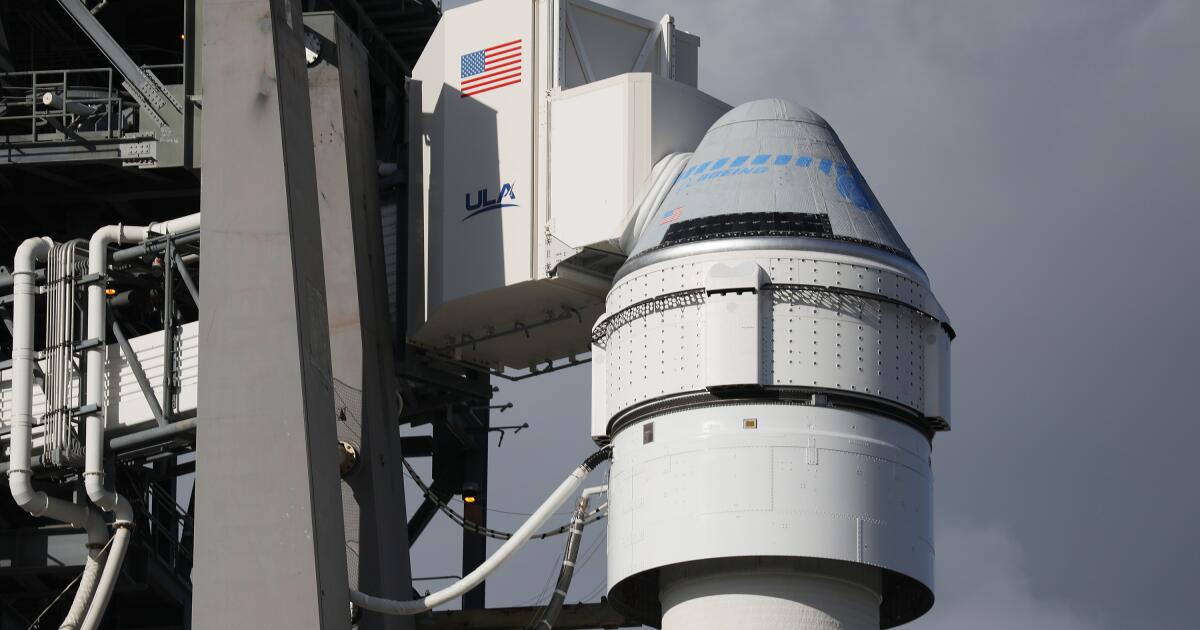
SpaceX will bring home the two astronauts stranded on the International Space Station for the past two months due to troubles with Boeing’s Starliner spacecraft, NASA announced Saturday.
NASA Administrator Bill Nelson said the decision, which followed a formal review conducted Saturday, was driven by the agency’s commitment to safety, especially following the loss of 14 astronauts in the 1986 Challenger explosion and the 2003 Columbia disaster on its return to earth.
“This whole discussion, remember, is put in the context of we have had mistakes done in the past,” Nelson said at a news conference at the Johnson Space Center in Houston. “Space flight is risky, even at its safest and even at its most routine. And a test flight by nature is neither safe nor routine.”
The decision by NASA to bring home astronauts Butch Wilmore and Suni Williams on SpaceX’s Crew Dragon capsule in February follows months of irregularities that have hobbled the third test flight of Boeing’s Starliner spacecraft — which began even before its June 5 launch.
The outcome is not only a blow to Boeing, whose Starliner program is years behind schedule, but to NASA, which awarded multibillion-dollar contracts to the company and rival SpaceX in 2014 to service the space agency with crews and cargo.
Since 2020, Elon Musk’s Hawthorne-based company has ferried more than half a dozen crews there aboard its Crew Dragon capsule — while Boeing has managed only two remote flights prior to this one, including one in May 2022 that docked with the orbiting lab.
NASA said Saturday that the Starliner will now return to earth remotely next month. The SpaceX mission that will bring Wilmore and Williams home is scheduled to blast off Sept. 24.
Gwynne Shotwell, SpaceX’s chief operating officer, responded to the announcement with a post on X, the social media platform formerly known as Twitter. “SpaceX stands ready to support @NASA however we can,” she said.
Steve Stich, manager of NASA’s Commercial Crew Program, said the decision resulted from inconclusive ground tests that were conducted on the thrusters after they malfunctioned when Starliner docked with the space station on June 6.
“As we got more and more data over the summer, and understood the uncertainty of that data, it became very clear to us that the best course of action was to return Starliner uncrewed,” he said. “If we had a model, if we had a way to accurately predict what the thrusters would do …. I think we would have taken a different course of action.”
The problems that have plagued Starliner have been an embarrassment for Boeing, which is still grappling with an investigation into a door plug that blew out during a 737 Max 9 flight this year to Ontario International Airport in San Bernardino County. That followed the two crashes of its 737 Max 8 jets several years ago that severely damaged its reputation for safety.
Just this month, Boeing wrote off $125 million in expenses related to the Starliner program after previously booking some $1.5 billion in cost overruns.
Nelson said Saturday he informed Boeing’s new chief executive, Kelly Ortberg, of the decision, and that the executive committed to working with the agency to resolve the problems with Starliner. Nelson said that will give the agency the “redundancy” it has wanted to service the station.
In a statement Saturday, Boeing said, “We continue to focus, first and foremost, on the safety of the crew and spacecraft. We are executing the mission as determined by NASA, and we are preparing the spacecraft for a safe and successful uncrewed return.”
For years, NASA had to rely solely on Russia’s Soyuz craft to send U.S. astronauts to the station after the Space Shuttle program ended in 2011. NASA plans to continue to partner with the Russian program, which along with the U.S. was the primary constructor of the orbiting lab that first launched in 1998.
The latest Starliner mission, which was expected to last about a week, was plagued with troubles.
The capsule was originally set to blast off May 6, but that flight was scuttled because of a malfunctioning valve on the Atlas V rocket that launches it into space. Additional launch dates were missed after a helium leak was found in the propulsion system that propels Starliner in space.
The helium pressurizes the system’s rocket fuel but NASA and Boeing officials decided the leak was not serious and developed software fixes to work around it. However, the leak grew larger as the spacecraft approached and docked with the space station the next day.
More concerning was that the propulsion system’s thruster engines malfunctioned during the docking procedure.
Ground testing on an identical thruster NASA conducted last month found that Teflon used to control the flow of rocket propellant eroded under high heat conditions, while different seals that control the helium gas showed bulging.
NASA officials have maintained Starliner has 10 times more helium than it needs to return to earth and the craft could be used if there were an emergency situation aboard the space station. This month Boeing issued a statement that cited all the testing that had been conducted and concluded, “Boeing remains confident in the Starliner spacecraft and its ability to return safely with crew.”
The aging space station is scheduled to be retired in 2030. In June, NASA awarded SpaceX an $843-million contract to build a craft that would nudge the station safely out of its orbit so it can burn up in the atmosphere, with any stray pieces landing in remote areas of the ocean.
The troubles afflicting Starliner mean that if it ever receives agency clearance to send working crews to the space station, it will provide that service for far fewer years. Boeing, however, has said it wants to use the craft to service the commercial space station being developed by Jeff Bezo’s Blue Origin rocket company.
Unlike the Space X’s Crew Dragon capsule, which lands in water, Starliner will touch down in the Arizona or New Mexico desert in a parachute ground landing pioneered by the Soviets decades ago. That makes it easier to ready the reusable craft for another launch.
However, the propulsion system is jettisoned in space, so NASA and Boeing engineers will not have a chance to take it apart and examine exactly what went wrong.

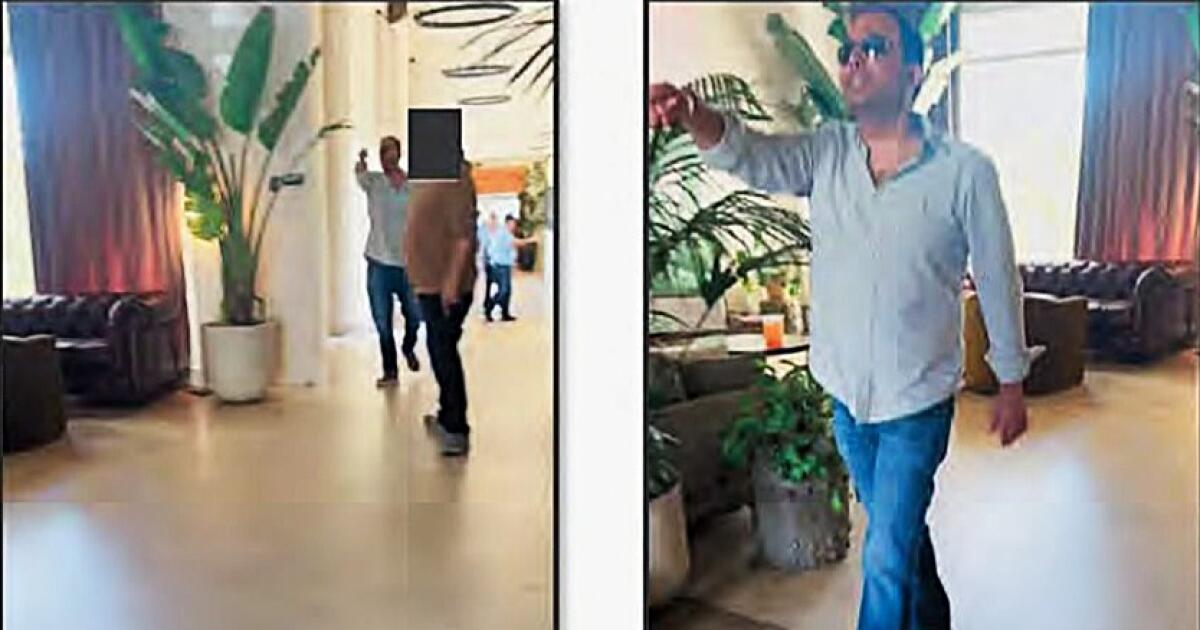
An Orange County real estate investor accused of criminally defrauding an Arizona bank of nearly $100 million pleaded not guilty Monday and remains in custody.
Mahender Makhijani, 44, of Corona del Mar — who also was ordered by an arbitrator to pay $1.34 billion in a separate civil fraud case — was arraigned in Santa Ana federal court on two charges.
He is accused of bank fraud and making a false statement to a bank in a June 8 case involving a $100 million real estate loan made by Phoenix-based Western Alliance Bank. He was taken into custody on June 10.
Makhijani is accused of providing bogus collateral for the October 2024 loan now in default. In a civil lawsuit, Western Alliance said the outstanding balance as nearly $99 million.
Prosecutors say he falsified title insurance policies that showed the bank would have a first lien on the underlying collateral if the loan went bad, when in fact it did not.
A trial was set for August 11 before U.S. District Judge David O. Carter in Santa Ana.
Michael Schachter, his criminal defense attorney, did not respond to messages seeking comment.
In the civil case, an arbitrator in May ordered Makhijani to pay Laguna Beach real estate mogul Mohammad Honarkar $1.34 billion after ruling he had fraudulently induced him into a 2021 joint venture — and then wrested control and lost to creditors more than two dozen properties Honarkar had owned.
Makhijani has not been criminally charged in that case, but prosecutors alleged in an affidavit in support of the bank fraud charges that he used “force and threats” in his dealings with Honarkar and others — including taking over the landmark Hotel Laguna in 2023 that Honarkar was renovating.
Prosecutors sought to hold Makhijani without bail after his arrest.
The affidavit noted he is a legal Indian immigrant with a home and bank accounts in that country, has access to private jets and threatened to “run away” if caught in a difficult situation.
The request was denied and he was granted $500,000 bail.
However, Makhijani remains in custody after a hearing sought by prosecutors last month before Magistrate Judge Autumn Spaeth.
The judge declined to accept a $450,000 cashier’s check submitted by a Makhijani associate for the bail, finding insufficient proof the source of the funds was legitimate, according to court records.
Makhijani is not prominent outside Orange County real estate circles, but he established a thriving distressed-assets business over the last decade that attracted prominent Southern California real estate investors.
Prosecutors said it paid for a lifestyle that included two multimillion-dollar homes in Corona del Mar, a luxury apartment in Newport Beach and various luxury vehicles.
As of last month, prosecutors had not fully traced his assets, which they believe are not held in his name and some of which may be in India.
The businessman employed an array of shell companies and strawmen to sign documents on his behalf, and to stand in for him as operators of his companies, according to the affidavit.
Makhijani told an associate he took extra precautions because wanted to insulate himself from litigation and that “they were sharks in the distressed world who took advantage of people,” the affidavit stated.
Business
Many indie festival films struggle to get distribution. Alamo Drafthouse is trying to change that

Dine-in movie theater chain Alamo Drafthouse Cinema is launching a new initiative to show unreleased independent films that had successful festival runs, a move that comes as specialty films have struggled to gain distribution.
The Alamo Exclusives program, announced Wednesday, will give limited theatrical runs to films that showed at festivals including Sundance, the Toronto International Film Festival, Tribeca Festival and South by Southwest festival, as well as Alamo’s own Fantastic Fest.
The idea is to help showcase films that received critical acclaim, but did not secure distribution or acquisition deals. The chain will not acquire these films, but instead will enter into agreements with filmmakers to exhibit their films on Alamo Drafthouse screens. By showing these films to audiences on the big screen, these films could get the momentum they need for further opportunities.
The program’s first film will be the documentary “Butthole Surfers: The Hole Truth and Nothing Butt,” which debuted last year at South by Southwest and chronicles the history of the punk rock band.
The film will be shown in Alamo Drafthouse theaters for a limited time later this summer.
The Austin-based chain, which is owned by Sony Pictures, has a long history of curating indie films for its audiences, giving Alamo Drafthouse confidence that its viewers want to see these kinds of movies, company chief executive Michael Kustermann said in a statement.
“Time and again, they’ve shown they’ll come out to support bold, original films when given the opportunity,” he said. The new Alamo Exclusives “gives us another way to champion filmmaker-driven films that deserve to be discovered and connect them with the wider Alamo Drafthouse audience.”
The initiative comes at a difficult time for indie films. Since the pandemic upended the movie business, traditional studios and distributors have had less appetite for risk, including betting on smaller indie films out of festivals.
And as the 2023 dual writers’ and actors’ strikes thinned out theatrical lineups, that aversion to uncertainty became a push for reliable and profitable hits.
“Too many incredible films premiere at festivals and then never receive the theatrical life they deserve,” Lisa Dreyer, director of Fantastic Fest and film innovation at Alamo, said in a statement. “We are actively searching for films across all genres, from horror to comedy, to everything in-between, to champion in this new, exciting way.”

The recall of a popular chip brand over salmonella concerns was recently upgraded to the U.S. Food and Drug Administration’s highest level, just ahead of the Fourth of July holiday and countless backyard barbecues.
On June 24, the FDA designated the recall of several varieties of Zapp’s and Dirty brand potato chips as Class I, meaning it’s “a situation in which there is a reasonable probability that the use of or exposure to a violative product will cause serious adverse health consequences or death.”
FDA has classified the following items as Class I:
Zapp’s
- 1.5-ounce Zapp’s Bayou Blackened Ranch Kettle Chips
- 2.5- and 8-ounce Zapp’s Bayou Blackened Ranch Potato Chips
- 1.5- and 8-ounce Zapp’s Big Cheezy Potato Chips
Dirty
- 1.5- and 2-ounce Dirty Brand Salt and Vinegar Potato Chips
- 2-ounce Dirty Maui Onion Chips
- 2-ounce Dirty Sour Cream and Onion Potato Chips
The chips are produced by Utz Quality Foods, LLC, which on April 28 issued a recall after learning “that a seasoning containing dry milk powder, sourced from California Dairies, Inc. and supplied by a third-party supplier, may contain the presence of Salmonella.”
Salmonella can lead to sometimes deadly infections in elderly people, young children and those with weakened immune systems, according to the FDA.
More than 680,000 bags are included in the recall.
Anyone who has these products should not eat them and should discard them immediately.
What to look for
Salmonella is a foodborne illness that can be fatal to young children, pregnant women, older adults and people with weakened immune systems, according to the National Institutes of Health.
Symptoms may develop 12 to 72 hours after infection, according to the FDA.
The FDA said that people with strong immune systems infected with salmonella may experience fever, diarrhea (which may be bloody), nausea, vomiting and abdominal pain. The illness can last four to seven days.
In rare cases, the infection may produce more severe illnesses such as arterial infections, endocarditis and arthritis, the agency added.
What to do if infected
If you contract salmonella, the Centers for Disease Control and Prevention recommends drinking plenty of fluids to prevent dehydration.
The CDC advises consulting a doctor before taking antidiarrheal medicine or antibiotics. If severe symptoms continue after two days, seek medical help, the agency says.
Because those with diarrhea can spread salmonella to others, it’s also recommended to avoid sharing food or preparing meals for others, sexual contact and swimming in public pools, and to stay home while sick.
Times staff writer Jasmine Mendez contributed to this report.
-

 Technology3 minutes ago
Starship delivery robots leave campuses for cities
-
Business8 minutes ago
Orange County real estate investor pleads not guilty in $100 million bank fraud case
-
 Entertainment15 minutes ago
Tom Sandoval’s ex Victoria Robinson accuses him of abuse; her restraining order is denied
-
 Politics23 minutes ago
Trump heads to NATO as tensions simmer with Europe
-
 Science30 minutes ago
New FireSat satellites promise faster wildfire detection over California and beyond
-
 Sports33 minutes ago
U.S. hopes of a historic World Cup run on home soil shattered in loss to Belgium
-

 World45 minutes ago
Cuba sees nationwide power blackout for third time in six months
-
 News1 hour ago
The U.S. men’s run at the World Cup ends with a 4-1 Round of 16 loss to Belgium

