Business
Musk-Tied Investor Clashes With One of World’s Biggest Asset Managers


A prominent Silicon Valley investor is in a bitter dispute with his former employer, one of the world’s largest asset managers, accusing it of fraud and attempted bribery.
In a lawsuit filed on Thursday in California, Josh Raffaelli, who until late last year was a fund manager at Brookfield Asset Management, said the company had mistreated investors in his funds as it sought to make up for losses in other parts of its business.
The 100-page complaint is notable in part because Mr. Raffaelli has close ties to Elon Musk, the world’s richest man. That relationship enabled Mr. Raffaelli’s funds to put money into Mr. Musk’s private companies, a coveted opportunity in Silicon Valley. But among Mr. Raffaelli’s allegations is that Brookfield improperly limited the amount that he could invest in a Musk company on behalf of Brookfield’s clients.
In December, shortly after Mr. Raffaelli filed a whistle-blower complaint with the Securities and Exchange Commission, Brookfield fired him, according to his lawsuit.
“Brookfield repeatedly betrayed the trust and best interests of its investors, and then fired the employee who challenged its behavior,” said Mark Mermelstein, Mr. Raffaelli’s lawyer.
Brookfield manages more than $1 trillion on behalf of pension plans, government investment funds and financial institutions. Until January, its chairman was Mark Carney, Canada’s new prime minister.
“This suit is absolutely without merit and these baseless claims run counter to how Brookfield manages its business,” said Kerrie McHugh, a spokeswoman for Brookfield. “We will vigorously defend against this meritless suit, which was brought by a disgruntled former employee.”
Mr. Raffaelli, 45, has had a long career in Silicon Valley. In 2004, he became an analyst at what was then called Draper Fisher Jurvetson, a leading venture capital firm. At the time, Mr. Musk was on the ascent in Silicon Valley. He had recently founded the rocket company SpaceX and made an early investment in Tesla, which would become the world’s most valuable car company.
By 2009, Mr. Raffaelli was a board observer at both SpaceX and Tesla, according to his LinkedIn profile. That entitled him to attend the companies’ confidential board meetings. The proximity to Mr. Musk also gave Mr. Raffaelli the opportunity to invest his clients’ money in the billionaire’s private ventures. In Silicon Valley, that access made Mr. Raffaelli a hot commodity in his own right.
In 2017 he joined Brookfield, working out of its San Francisco office. His job was to manage a handful of funds that would invest clients’ money in technology companies. His base salary was $500,000, but his bosses told him that if his funds performed well, his total compensation could ultimately be in the tens of millions of dollars, according to the lawsuit, filed on Thursday in Superior Court in San Mateo, Calif.
In part to attract outside investors, Brookfield agreed to put its own money in Mr. Raffaelli’s funds, meaning the company’s financial interests would be aligned with those of its clients. By 2024, his funds collectively managed more than $1.75 billion, which came from pension funds, other outside investors and Brookfield itself.
Tapping his contacts in Mr. Musk’s orbit, Mr. Raffaelli arranged for his funds to invest in several of Mr. Musk’s private businesses, including SpaceX, the artificial-intelligence company xAI and the tunnel-building venture known as the Boring Company, according to Mr. Raffaelli’s lawsuit and people familiar with the investments.
But Brookfield soon encountered financial problems, according to the lawsuit. The Covid-19 pandemic had hammered the commercial real estate industry, in which Brookfield and its affiliates were major investors. Brookfield Property Partners, the asset management firm’s sister company, lost about $2 billion in 2020.
That set the stage for Brookfield to begin engaging in fraud, Mr. Raffaelli said in the lawsuit.
Short on cash, Brookfield in 2024 backtracked on some of its pledges to put hundreds of millions of dollars into Mr. Raffaelli’s funds alongside outside investors, the lawsuit said.
Around the same time, Brookfield also vetoed a proposal from an unspecified “major foreign conglomerate” that wanted to invest up to $100 million in one of Mr. Raffaelli’s funds, the lawsuit said, describing that decision as “indefensible.”
The combined result was that there was less money than expected for Mr. Raffaelli to invest. That, in turn, limited the potential upside for Brookfield’s outside clients, the lawsuit said.
Already, Mr. Raffaelli said, he had been forced to sharply reduce — from $25 million to $5 million — the amount that one of his funds planned to invest in Mr. Musk’s xAI. (The lawsuit did not identify xAI by name, but people familiar with the investments confirmed it.)
“That is like walking away from the chance to buy Facebook or Apple stock” at a bargain price, the lawsuit said. “The markets expected this investment to go nowhere but up, and that is exactly what has happened.” The estimated value of xAI has more than tripled to $80 billion over the past year.
Last summer, Brookfield informed Mr. Raffaelli that the firm was thinking of merging his funds into a company called Pinegrove Capital Partners, according to his lawsuit.
Ms. McHugh, the Brookfield spokeswoman, said Mr. Raffaelli’s funds were not performing well. Mr. Raffaelli’s lawyer disputed that, saying the funds were among the best-performing at Brookfield.
Mr. Raffaelli started looking into Pinegrove, an asset manager that was mostly owned by Brookfield. He was alarmed by what he found. He said that Pinegrove had exaggerated its capital levels by more than $100 million, making it appear financially stronger than it really was. Hundreds of institutions — including nonprofit organizations and pension funds for police officers and firefighters — had been persuaded under false pretenses to entrust their money to Pinegrove, according to the lawsuit.
Last October, Mr. Raffaelli anonymously reported his findings to Brookfield through the company’s whistle-blower website. A few weeks later, he said, he submitted a complaint to the S.E.C.
Shortly after, Mr. Raffaelli’s boss, Anuj Ranjan, told him that Brookfield’s chief executive had signed off on the decision to fold his funds into Pinegrove. According to the lawsuit, Mr. Ranjan acknowledged to Mr. Raffaelli that the move was not good for his clients but was designed to prop up Pinegrove and save money for Brookfield. Mr. Raffaelli viewed this as a violation of federal securities laws.
Mr. Ranjan did not respond to a request for comment.
The investors in Mr. Raffaelli’s funds needed to approve the Pinegrove merger. Brookfield pushed Mr. Raffaelli to pitch them on it “because his credibility would resonate better with the investors that trusted him,” the lawsuit said.
In exchange for his help, Mr. Raffaelli said, Brookfield offered to pay him an amount “way beyond” what he was currently owed. He said the head of the company’s human resources department then sent him a spreadsheet showing he could eventually be due as much as $46 million under his existing compensation agreement.
Mr. Raffaelli said he viewed that as Brookfield offering him a bribe.
The following week, Mr. Raffaelli sent the general counsel at Brookfield Asset Management the complaint he had previously sent to the S.E.C.
“As uncomfortable as this is for me, I wanted to share with you that I felt I had an obligation to blow the whistle on certain illegal conduct,” he wrote, according to the lawsuit.
Nine days later, Mr. Raffaelli said, he was fired.



Business
Billionaire exodus? California drew 10 times more venture capital than any other state this year
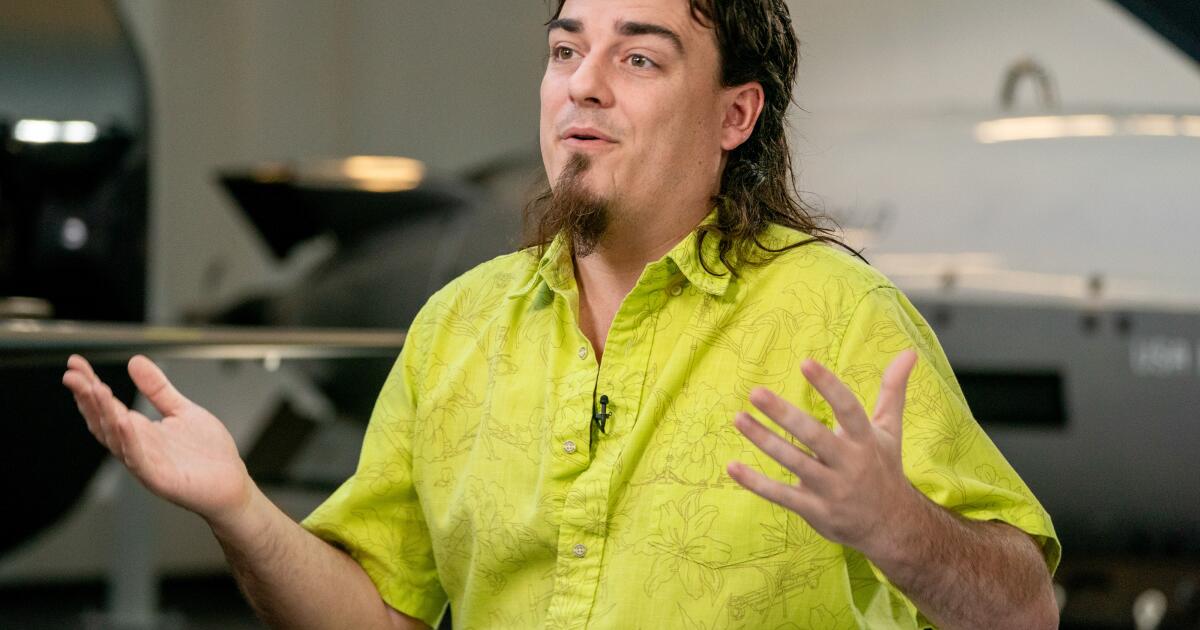
Despite concerns that California’s costs and regulations are bad for business, the state has attracted an unprecedented pile of capital this year, and no other state is even close.
The Golden State’s deep pool of talent, rich investors and other tech infrastructure have made it ground zero for the artificial intelligence explosion. That has helped it attract more than $335 billion in venture capital funding this year, according to PitchBook’s private market funding data released Thursday.
Its next biggest competitor, New York, raised less than a tenth of California’s total. Texas raised 1/40th of the amount.
“California has far and away the most [deals], obviously, a huge amount of that sits in the [San Francisco] Bay Area,” said Kyle Stanford, director of U.S. venture capital research at PitchBook. “Los Angeles, San Diego has a really strong tech market that I think benefits a lot from capital moving easily between San Francisco and L.A.”
Although a campaign for a new tax on billionaires has convinced some ultra-rich residents to shift to other states and businesses often complain that high property and energy costs and an anti-business regulatory regime make it too tough to make money in the state, the inability of the top talent, companies and investors in AI to set up elsewhere shows California’s enduring attraction.
The state’s economy grew 5% last year to a record $4.25 trillion, making it larger than every country other than the U.S., China and Germany. It is home to nearly 400 billion-dollar startups — more than any other state, according to CB Insights.
Southern California has emerged as a go-to address for fast-growing space and defense tech companies.
“California’s workers, entrepreneurs, and innovators continue to prove that investing in California delivers real results,” Gov. Gavin Newsom said in a statement last week in response to strong productivity numbers for the state. “As one of the largest economies in the world, the Golden State demonstrates that a strong workforce, economic growth, innovation, and performance go hand in hand.”
In the three months that ended in June, 1,087 California companies raised $108.8 billion in venture capital. Just three companies — Anthropic, Jeff Bezos’ Project Prometheus and Anduril Industries — absorbed 75% of that total. Anthropic alone raised $65 billion, which valued it at nearly $1 trillion.
Among metropolitan regions, Los Angeles ranked behind only Silicon Valley and New York, which attracted $98 billion and $11.5 billion in venture investment, respectively.
“Capital is flowing back into American innovation with real force,” said Bobby Franklin, president of the National Venture Capital Assn., an industry group that put out the report with PitchBook. “Investment activity is picking up, fundraising is improving, and there are early signs the IPO market is beginning to reopen.”
Investors poured in nearly $8 billion across 207 deals in the Los Angeles, Long Beach, and Santa Ana metro areas, up 28% from a year earlier, according to PitchBook.
The top deals in the region were led by aerospace and defense companies Anduril Industries, which raised $5 billion, and Impulse Space, which attracted $500 million.
Companies in industrial parts, software, consulting and life sciences were the other sectors in the Southland that attracted venture investments. El Segundo-based industrial supplies company Advanced Manufacturing Company of America and Huntington Beach-based aerospace company Mach Industries each raised $300 million.
To be sure, the surge in the size and number of monster deals could be overshadowing other money-raising efforts from smaller companies and investment by smaller funds, industry experts said.
Nearly 90% of invested dollars went to AI firms, up from last year, when around 65% of new funds were allocated to AI.
“If you’re a tech company and you’re not an AI company, you have a very, very difficult opportunity ahead of you to raise capital,” Stanford said.
This concentration of capital in AI leaves smaller, middle-of-the-road venture funds without large AI holdings struggling to return capital to their investors.
Only the largest funds, such as Andreessen Horowitz and Sequoia Capital — which possess the war chest to back OpenAI, Anthropic, and SpaceX — stand to gain from their initial public offerings of stock.
“It’s going to concentrate the fundraising over the next few years as well into these already very large names,” Stanford said.
Beyond the two potential blockbuster listings — Anthropic and OpenAI, each valued around $1 trillion — the IPO pipeline is thin.
“We don’t really have a strong IPO market,” Stanford said. “Obviously, SpaceX’s IPO is great. OpenAI and Anthropic, if they go out this year, will be very large drivers of distribution. But a vast majority of investors do not have exposure to them, and so that money will not make it back to them.”
Whether California’s venture-investing boom can continue at this record-breaking pace now hinges on how the IPOs of Anthropic and OpenAI perform.
“If Anthropic and OpenAI have really strong financials, that’s a big push of support for the rest of the market,” Stanford said.
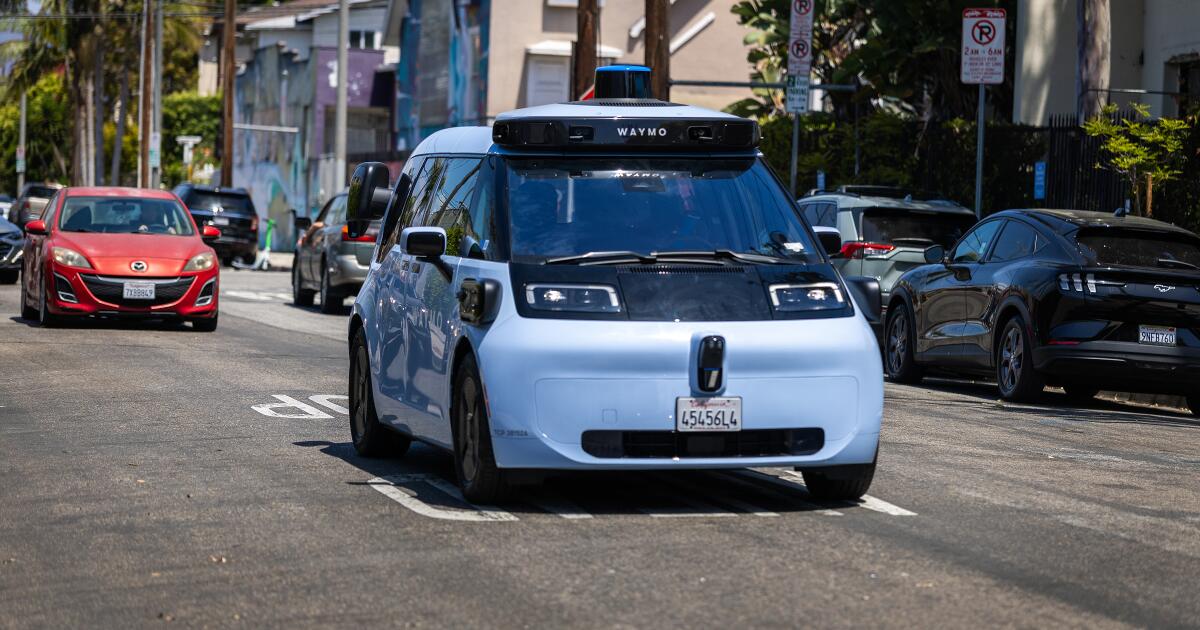
Waymo, the driverless taxi company that operates in more than 10 cities, will soon serve customers in San Diego.
The company has been testing its autonomous vehicles in San Diego with a safety driver behind the wheel since earlier this year. Rides without a human driver became available to employees Thursday and will open to members of the public later this year.
Waymo, which announced the expansion Wednesday, will also bring its taxis to Tampa, Las Vegas and Denver.
“If you’re in one of these four new cities, download the app to be notified when it’s time to ride,” the company said in a blog post.
Waymo has offered fully autonomous rides in San Francisco since 2022 and in Los Angeles since 2024.
It also serves customers in Nashville, Phoenix, Miami and other cities.
In May, Waymo launched a cheaper robotaxi dubbed the Ojai, which is better equipped for difficult driving conditions such as snowy roads.
The Ojai will supplement Waymo’s fleet of Jaguar I-Paces, the company said. In San Diego, services will be provided with the Ojai.
Waymo also announced Wednesday it’s beginning autonomous driving with a safety driver in its newest retrofitted vehicle, the Hyundai IONIQ 5.
“This phase allows us to validate our technology for fully autonomous operations as we work to bring riders even more ways to enjoy Waymo in the future,” the company said.
The company plans to eventually have tens of thousands of driverless taxis made per year, starting with the Ojai, then scaling using the IONIQ 5s.
The move into San Diego and three other cities widens the gap between Waymo and its competitors in the robotaxi race.
Elon Musk’s Tesla robotaxis and Amazon-owned Zoox are shuttling customers autonomously, but are nowhere near the scale at which Waymo operates.
Other companies are working on autonomous trucks and freight trains.
Waymo’s San Diego service area will include Pacific Beach, Normal Heights, La Playa and Southcrest, among other neighborhoods, the company said.
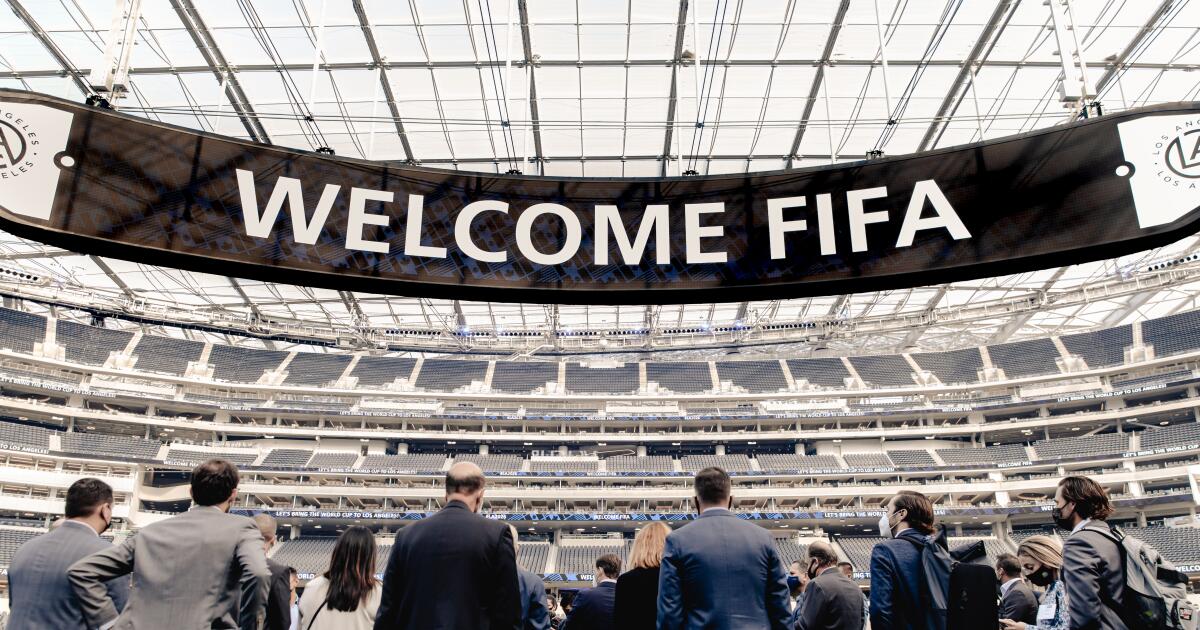
StubHub is getting a red card from some World Cup fans
Two World Cup customers are suing the New York-based ticket-selling company, alleging “false and misleading” advertising that left them without tickets or a refund for the World Cup games they paid to attend.
In federal court in New York last week, two Californians — Julia Reeker Moghal and Reuben Renteria — sued StubHub seeking monetary damages and a ban on the company selling World Cup tickets. The lawsuit aims to become a class action and comes after weeks of fierce criticism and complaints from customers regarding the company’s practices.
Throughout the World Cup, videos have emerged on Instagram and TikTok of StubHub customers describing their nightmare experiences with the ticket-selling platform.
Some said they had purchased tickets to World Cup games as early as November of last year, booked flights and hotels and arranged travel plans, then StubHub notified them days to weeks before the match of a refund for their tickets, which they never requested.
There were similar complaints about last-minute cancellations from people who bought Coachella tickets on StubHub.
In the lawsuit, Moghal said she had purchased three tickets for nearly $2,000 for the June 18 match between Switzerland and Bosnia-Herzegovina at SoFi Stadium in Inglewood, which were then canceled by StubHub. Moghal said she was contacted by StubHub and told her tickets would remain canceled, then was later told the tickets would be available one hour before the game.
When the match began, Moghal said she was at SoFi Stadium, but the tickets never came.
Renteria said he paid around $2,300 for the June 18 Mexico versus South Korea match in Guadalajara, Mexico, but they were canceled
“Devoted soccer fans have traveled from around the world to attend World Cup matches — and they reasonably relied on StubHub to provide the tickets they paid for as well as on StubHub’s warranty,” Blake Hunter Yagman, the attorney representing the two, said in a statement. “Instead of rewarding their business, StubHub sold them World Cup tickets that they either could not provide or on speculation, only to be stranded, in many cases, at the stadium gates without any recourse.”
According to StubHub’s website, its Fan Protect Guarantee states the platform will deliver valid tickets or refund in the event of a ticket issue, and that it will “go out of our way to find replacement tickets” of a comparable value. The lawsuit alleges the replacement tickets many fans were given by StubHub were worse than their original tickets.
FIFA, the World Cup organizer, states in its terms and conditions that the FIFA Marketplace, its own ticket-selling platform, is the only authorized platform for World Cup tickets, and that only tickets purchased through it are guaranteed by FIFA to be valid.
Despite the risk of purchasing through a third-party platform such as StubHub, many fans opted to do so to avoid the 30% FIFA resale tax, believing that the Fan Protect Guarantee would safeguard their order.
Since World Cup tickets began selling on FIFA Marketplace last September, fans have expressed disappointment in the expensive price tag. FIFA utilized a dynamic pricing system for the sale, and as sales phases progressed leading up to the games, the cost of tickets increased tremendously. In March, the extreme cost of tickets prompted 69 members of Congress to write a letter to FIFA urging them to lower their prices.
Tickets for the upcoming Friday match between Spain and Belgium in Los Angeles are selling on StubHub for over $1,300.
StubHub said in various statements to the news and in legal proceedings that ticket cancellations were a result of transfer problems and issues with FIFA’s ticketing infrastructure.
StubHub did not respond to requests for comment.
A FIFA spokesperson responded to this accusation in a statement, saying, “FIFA has no visibility over, or control of, secondary market ticket transactions carried out on third-party platforms. The transactions facilitated on these platforms occur entirely independently of FIFA’s official ticketing platform. With reference to the reliability of the services available to fans on FIFA’s official ticket platform, FIFA rejects any suggestion that the functional issues being experienced by users of third-party platforms with respect to FIFA World Cup 2026 tickets are the result of FIFA’s ticketing infrastructure.”
-

 Movie Reviews12 minutes ago
‘Gail Daughtry and the Celebrity Sex Pass’ Review: We’re Off to Hump the Wizard
-

 World20 minutes ago
Backlash on ethanol-blend fuel intensifies in India, puts carmakers in the dock
-
Politics30 minutes ago
Crews Drape Tarp Over White House in Latest Trump Restoration
-

 Health45 minutes ago
GLP-1 Users’ Guide to Protein Snacks: Here’s What a Dietitian Actually Recommends
-
 Lifestyle60 minutes ago
‘The Invite’ is a marriage comedy with sex and heart
-

 Technology1 hour ago
I spent a week using the Trump phone — it sucks
-

 World1 hour ago
With US unleashing attacks, Iranian official threatens that the Islamic Republic will deliver a ‘hard slap’
-

 Politics1 hour ago
WATCH: Trump’s Energy chief reveals what escalating Iran tensions could mean for gas prices

