Business
Job Market Gives Fed Cover to Extend Interest Rate Pause


Less than six months ago, Federal Reserve officials were wringing their hands about the state of the labor market. No major cracks had emerged, but monthly jobs growth had slowed and the unemployment rate was steadily ticking higher. In a bid to preserve the economy’s strength, the Fed took the unusual step of lowering interest rates by double the magnitude of its typical moves.
Those concerns have since evaporated. Officials now exude a rare confidence that the labor market is strong and set to stay that way, providing them latitude to hold rates steady for awhile.
The approach constitutes a strategic gamble, which economists by and large expect to work out. That suggests the central bank will take its time before lowering borrowing costs again and await clearer signs that price pressures are easing.
“The jobs data just aren’t calling for lower rates right now,” said Jon Faust of the Center for Financial Economics at Johns Hopkins University, who was a senior adviser to the Fed chair, Jerome H. Powell. “If the labor market seriously broke, that may warrant a policy reaction, but other than that, it takes some progress on inflation.”
Across a number of metrics, the labor market looks remarkably stable even as it has cooled. The latest employment report, released on Friday, reaffirmed that view. The pace of hiring in January slowed more than expected, to 140,000 new positions, but previous months’ totals were revised higher. In November and December, there were 100,000 more jobs created than initially estimated. The unemployment rate also ticked back down to 4 percent, a historically low level.
The number of Americans out of work and filing for weekly benefits remains low, too.
“People can get jobs and employers can find workers,” said Mary C. Daly, president of the San Francisco Fed, in an interview this week. “I don’t see any signs right now of weakening.”
Thomas Barkin, who heads the Richmond Fed, told reporters on Wednesday that the economy overall was “solid, but not overheating.”
These conditions — plus a rapidly changing mix of policies spearheaded by the Trump administration — have helped to support the Fed’s case for pausing rate cuts and turning more cautious on when to resume.
Neel Kashkari, president of the Federal Reserve Bank of Minneapolis, told CNBC on Friday that the central bank was in a good place to wait for additional information before making any policy decisions, though he predicted interest rates would be “modestly” lower by the end of the year.
The consensus is that the Fed will cut at least once more this year, although confidence in those estimates generally has whipsawed in recent weeks.
Some economists have scaled back their expectations on the basis that inflationary pressures will resurface as policies like tariffs come into effect. Others have moved in the opposite direction on fears that the labor market is not as sound as it appears.
“There’s a lot of complacency out there about what the economy really looks like,” said Neil Dutta, head of economics at Renaissance Macro Research. “Whenever the Fed says they have time, they never have so much.”
One measure that has generated attention is the hiring rate, which remains subdued. Since the beginning of the summer, the share of unemployed Americans who have been out of work for about six months or longer has also steadily risen.
Samuel Tombs, chief U.S. economist at Pantheon Macroeconomics, said he was bracing for a pickup in layoffs as well, estimating that there has been a 5 percent increase compared with December’s level based on datathat tracks written notices for large-scale layoffs at companies with 100 or more full-time employees.
Right now, those developments warrant no more than a note of caution, most economists said. Steven Kamin, who previously ran the division of international finance at the Fed and is now a senior fellow at the American Enterprise Institute, said the central bank would worry if monthly payrolls growth consistently hovered below 100,000 and the unemployment rate moved significantly higher. So long as inflation is in check, the Fed could restart rate cuts before the middle of the year, he added.
The biggest unknown for the labor market is immigration. Mr. Trump has begun to deport migrants, but not yet at the scale he pledged on the campaign trail. If net immigration falls to zero or turns negative, it could result in some combination of slower employment growth, higher wages in the most affected sectors and a lower unemployment rate, reflecting a shrinking labor force.
Julia Coronado, a former Fed economist who now runs MacroPolicy Perspectives, is among those primarily concerned about the hit to growth from these policies. Immigrants are “complements not substitutes” for domestic workers, she said, such that “if you lose construction workers, construction activity just goes slower.”
Coupled with the looming threat of tariffs, businesses are unsurprisingly on edge. If those nerves translate to a broader retrenchment, that could dent hiring more significantly.
“If I were a C.E.O. of any company right now, what would I be doing? For almost any investment I can think of, the best answer is to wait three months,” said Justin Wolfers, a professor of public policy and economics at the University of Michigan.



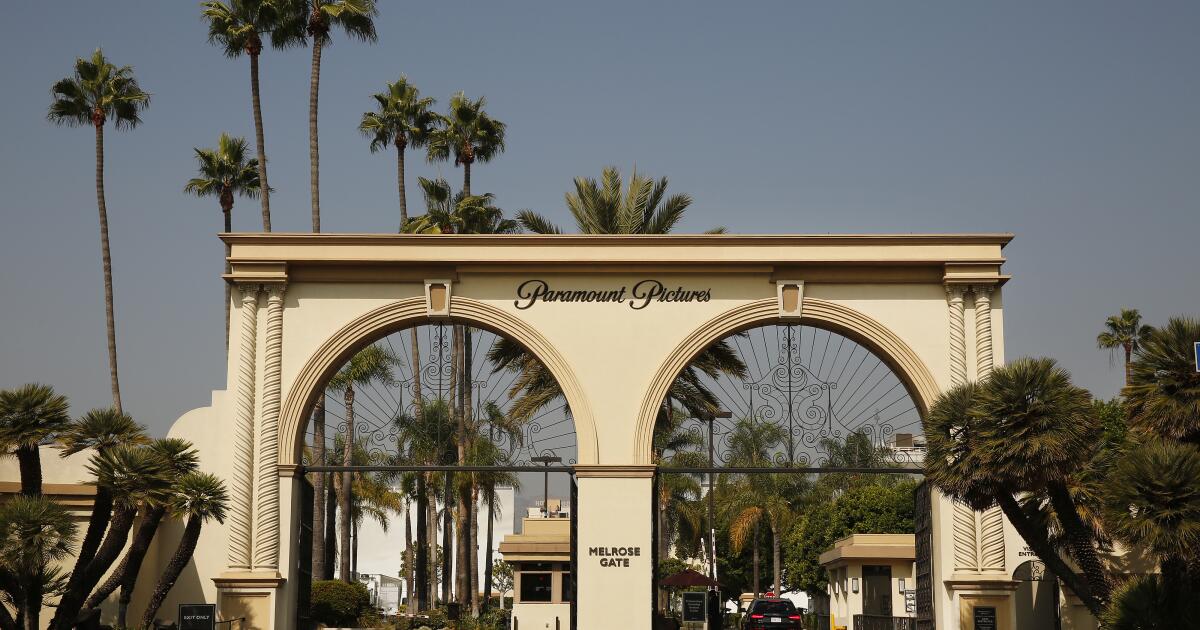
A constellation of stars are lining up against Paramount’s proposed takeover of Warner Bros. Discovery, expressing fears the blockbuster merger would devastate the industry and shrink production jobs.
The letter was signed by nearly 1,000 artists and movie creators, including such big names as Ben Stiller, Bryan Cranston, Noah Wyle, Joaquin Phoenix, Kristen Stewart and Jane Fonda, whose Committee for the First Amendment helped organize the campaign.
“This transaction would further consolidate an already concentrated media landscape, reducing competition at a moment when our industries — and the audiences we serve — can least afford it,” according to the letter. “The result will be fewer opportunities for creators, fewer jobs across the production ecosystem, higher costs, and less choice for audiences in the United States and around the world.”
Paramount, in a statement, pushed back against the artists’ concerns. Tech scion David Ellison and his team believes the blockbuster deal makes sense — particularly because of turmoil in the entertainment business, the company said.
“This is also a moment when the industry has been facing significant disruption—and the need for strong, creative-first and well-capitalized companies that can continue to invest in storytelling has never been greater,” Paramount said.
The Hollywood workforce has shrunk by more than 42,000 jobs between 2022 and 2024, according to a recent study. The economy has not bounced back following shutdowns due to the COVID-19 pandemic, followed by the twin labor strikes three years ago.
Thousands of film workers have been searching for work — but many of the big opportunities have moved abroad.
The strikes prompted studio executives to reset their output after previously spending big to build streaming services to compete with Netflix.
Two other consolidations led to widespread cutbacks: Walt Disney Co.’s acquisition of Fox entertainment assets in 2019, and Discovery’s takeover of AT&T’s WarnerMedia four years ago.
The resulting entity — Warner Bros. Discovery, led by David Zaslav — instituted deep cost cuts and thousands of layoffs to cut expenses because the firm was nearly drowning in deal debt — $43 billion — from the day Zaslav took the helm.
Paramount’s proposed takeover of Warner Bros. would result in a significantly higher debt load, $79 billion in debt, prompting concerns from the group and others about further downsizing.
Ellison, the 43-year-old son of billionaire Oracle co-founder Larry Ellison, is leading the effort to buy Warner Bros. Discovery to prop up Paramount, which the family acquired in August.
In late February, Ellison’s Paramount Skydance prevailed in a nearly six-month bidding war after Netflix unexpectedly bowed out when the elder Ellison agreed to financially back his son’s $111-billion deal.
“We have been clear in our commitments to do just that: increasing output to a minimum of 30 high-quality feature films annually with full theatrical releases, continuing to license content, and preserving iconic brands with independent creative leadership,” Paramount said, adding that such promises should ensure that “creators have more avenues for their work, not fewer.”
Warner shareholders will be asked to approve the merger April 23.
Ellison is pushing to wrap the deal up this summer.
“We are deeply concerned by indications of support for this merger that prioritize the interests of a small group of powerful stakeholders over the broader public good,” the letter said. “The integrity, independence, and diversity of our industry would be grievously compromised. Competition is essential for a healthy economy and a healthy democracy. So is thoughtful regulation and enforcement.”
The group urged California Atty. Gen. Rob Bonta and his fellow state attorneys general to sue to block the transaction.
Bonta has told The Times that his office is reviewing the transaction to see if it violates antitrust rules. Two historic movie studios, several streaming services and dozens of cable channels would be brought under one roof.
“Media consolidation has already weakened one of America’s most vital global industries,” the group said, “one that has long shaped culture and connected people around the world.”
Bonta’s office is leading the charge against another merger, TV station giant Nexstar Media Group’s $6.2-billion takeover of Virginia-based Tegna. Eight state attorneys general, including Bonta, have sued to block that deal. A judge is expected to rule on whether to issue a preliminary injunction later this week.
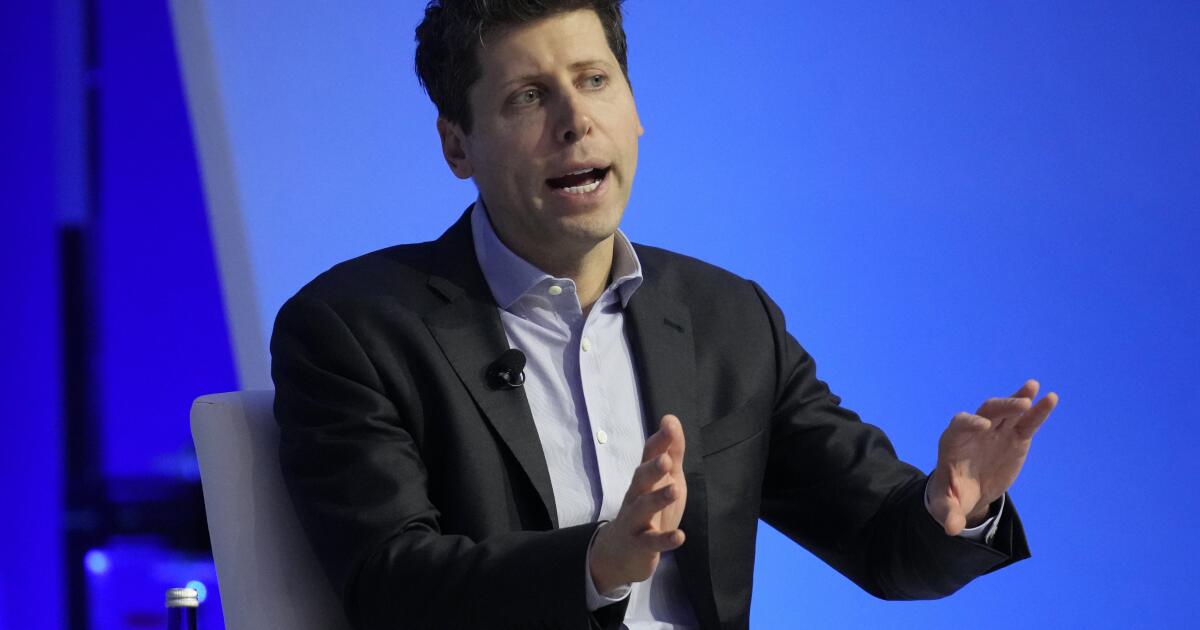
Hours after a Molotov cocktail was thrown at his San Francisco home, OpenAI Chief Executive Sam Altman addressed the criticism surrounding artificial intelligence that appears to have been the impetus for the attack.
In a lengthy blog post, Altman shared a family photo of his husband and child, stating he hopes it might convince people not to repeat the attack despite their opinions on him.
The San Francisco Police Department arrested a 20-year-old man in connection with the Friday morning attack but did not publicly comment on the motivation. Altman and his company, the maker of ChatGPT, have been at the center of a heated debate about whether AI will change the world for better or worse.
“While we have that debate, we should de-escalate the rhetoric and tactics and try to have fewer explosions in fewer homes, figuratively and literally,” Altman wrote.
The rise of AI chatbots that can generate text, images and code has raised concerns about whether there are enough guardrails around the development of the powerful technology.
From job displacement to the effects of AI on mental health and war, critics have been vocal about their fears. Families have also sued technology companies including OpenAI and Google, alleging in lawsuits that their chatbots contributed to the death of their loved ones. OpenAI has faced backlash after striking a deal with the Department of Defense shortly after its rival Anthropic raised AI safety concerns and lost its contract.
Politicians in California and other states have been passing new laws that target AI safety. And groups that aim to stop the development of AI have regularly protested outside OpenAI’s San Francisco headquarters.
In the blog post, Altman acknowledged the fear and anxiety surrounding AI was “justified” because “we are in the process of witnessing the largest change to society in a long time, and perhaps ever.” But he also said that people will do “incredible things” with AI and that “technological progress can make the future unbelievably good.”
Altman has become a controversial figure as companies race to advance AI. In 2023, OpenAI’s board of directors fired Altman, stating that he wasn’t “consistently candid” in his communications with the board and that board members had lost confidence in his ability to lead the company. OpenAI’s mission is to “ensure that artificial general intelligence benefits all humanity,” the board said at the time. Facing pressure from its employees and investors, OpenAI reinstated Altman as chief executive less than a week after he was pushed out. A new board was put in place and members who supported ousting Altman left.
Altman said in the blog post that he has made mistakes and done things he’s not proud of, describing himself as “conflict-averse.”
“I am not proud of handling myself badly in a conflict with our previous board that led to a huge mess for the company,” he wrote.
Since his return, OpenAI has expanded its presence in healthcare, retail, defense and other industries. But controversy has followed the company. OpenAI is currently in a legal battle with billionaire Elon Musk, who has accused the company of abandoning its nonprofit founding mission in a case that’s expected to head to trial. Musk, a co-founder and early investor in OpenAI, alleges he was manipulated into funding what he thought was a nonprofit but turned into a “moneymaking endeavor.” OpenAI alleges that Musk, who runs rival xAI, is suing to slow down a competitor.
Last week, the New Yorker published a lengthy story about Altman that posed the question about whether he could be trusted.
In his blog post, Altman referenced an “incendiary article” published about him but didn’t name the publication, adding that “words have power.” OpenAI didn’t immediately respond to a request for comment on Saturday. On the social media site X, Altman said he regretted using certain words in his blog after an editor from the AI newsletter Transformer pointed out that Altman implied that a critical piece of journalism was responsible for the attack.
Altman said the attack happened at 3:45 a.m. on Friday but the Molotov cocktail “bounced off the house and no one got hurt.”
The San Francisco Police Department and OpenAI previously confirmed the attack on Friday. The suspect allegedly made threats to OpenAI’s headquarters after the attack at Altman’s home.
Several news outlets, including the San Francisco Chronicle, identified the suspect as Daniel Alejandro Moreno-Gama.
Moreno-Gama was booked on Friday on suspicion of making criminal threats, arson, attempted murder, possession of a destructive device and other charges. The Chronicle also cited a Substack that appeared to be from the suspect that includes posts titled “AI Existential Risk.”
The Times asked the San Francisco Police Department on Saturday whether the account belonged to the suspect.
“At this time we have no further updates to provide,” the department said in an e-mail.

Survivors of the devastating Eaton fire called on state lawmakers on Wednesday to pass a bill requiring audits of spending by Southern California Edison and the state’s two other big for-profit electric companies on wildfire prevention.
The survivors pointed to an investigation by The Times that found that Edison had not spent hundreds of millions of dollars that it told regulators before the fire was needed to keep its transmission system safe. Edison had begun charging customers for the costs.
“Californians funded the wildfire prevention,” Joy Chen, executive director of Every Fire Survivor’s Network, told members of the Assembly Utilities and Energy Commission on Wednesday. ”And we survivors paid the price when that work was not done.”
While the government’s investigation into the fire has not yet been released, Edison has said it believes that a century-old transmission line, which had not carried power since 1971, may have briefly re-energized on the night of Jan. 7, 2025, to ignite the fire. The inferno killed 19 people and destroyed thousands of homes and other structures in Altadena.
Chen’s wildfire survivors group and Consumer Watchdog sponsored the bill, known as Assembly Bill 1744. It would require the wildfire safety spending by Edison, Pacific Gas & Electric and San Diego Gas & Electric to be audited by an independent accounting firm.
The state Public Utilities Commission would have to consider the audits’ findings before agreeing to raise customer rates to cover even more wildfire spending.
“Had Edison known it would be accountable for those funds, that wildfire may not have started,” Jamie Court of Consumer Watchdog told the committee, referring to the Eaton fire.
All three utilities said at the hearing they opposed the bill.
A lobbyist for San Diego Gas & Electric said he believed the audits were unnecessary because the commission was already reviewing the spending.
“We think it creates a duplicative process,” he said.
At the committee hearing, Edison’s lobbyist did not say why the company was opposed to the bill.
The company has previously said that safety is its top priority and that it does not believe maintenance on its transmission lines suffered before the Eaton fire.
Also voicing support for the bill at the hearing were survivors of other deadly wildfires in the state, including the 2018 Camp fire, which killed 85 people and destroyed much of the town of Paradise. Investigators found that the fire was ignited when equipment failed on a decades-old PG&E transmission line.
The bill’s author, Assemblywoman Tasha Boerner, an Encinitas Democrat, pointed to how independent audits of the three companies’ wildfire spending from 2019 to 2020 found that $2.5 billion could not be accounted for.
Those were the last independent audits of the three companies’ wildfire spending.
Despite the findings, the commission did not require the companies to return any of the questioned amounts to electric customers. Instead, the commission agreed the companies could spend billions of dollars more, Boerner said.
“This is frankly unacceptable,” she said.
Asked for a response to those audits, the lobbyist from San Diego Gas & Electric told the committee he wasn’t familiar with the findings.
California electric rates are the nation’s second highest after Hawaii.
In 2024, wildfire expenses amounted to 17% to 27% of the costs the three companies charge to consumers, according to a legislative analysis of Boerner’s bill. The average residential customer pays $250 to $490 a year for that spending.

Maryland Lottery Powerball, Pick 3 results for April 13, 2026

Former Eastern Michigan football player stands outside Lions facility, asks for chance on the field

20 years later: How Massachusetts health care reform changed access

What a University of Minnesota grad has done for space exploration

A potential opportunity to lower car tag costs across Mississippi

Florida High School Football Rankings: Top 25 teams – Oct. 21

How old is Bo Nix? What to know about Oregon quarterback ahead of 2024 NFL Draft

Cleary's 21 help Le Moyne down Central Connecticut State 69-64 in OT

99th annual Pony Swim held in Virginia

Indiana Members Credit Union announced as new anchor tenant at Bottleworks District

Embattled Rep Tony Gonzales announces plans to resign amid sexual misconduct allegations

UN experts slam attacks on Gaza shelters, forced displacement in West Bank

DOJ fires at least 4 prosecutors involved in FACE Act cases during Biden administration

Melania Trump’s Epstein remarks turn up the heat on DOJ, Acting AG Todd Blanche to do more
Newsletter: Cautious optimism in Brussels as Orbán ousted in landslide Hungarian opposition win
-

 Atlanta, GA1 week ago
1 teenage girl killed, another injured in shooting at Piedmont Park, police say
-

 Georgia7 days ago
Georgia House Special Runoff Election 2026 Live Results
-

 Arkansas3 days ago
Arkansas TV meteorologist Melinda Mayo retires after nearly four decades on air
-

 Pennsylvania1 week ago
Parents charged after toddler injured by wolf at Pennsylvania zoo
-
 Milwaukee, WI1 week ago
Potawatomi Casino Hotel evacuated after fire breaks out in rooftop HVAC system
-

 Technology1 week ago
Anthropic essentially bans OpenClaw from Claude by making subscribers pay extra
-

 Austin, TX6 days ago
ABC Kite Fest Returns to Austin for Annual Celebration – Austin Today
-

 World1 week ago
Zelenskyy warns US-Iran war could divert critical aid from Ukraine