Business
How Netflix survived the streaming wars to stay the subscription video king


Four years ago, Netflix was faced with a formidable challenge to its dominance. Competitors including Walt Disney Co. and Warner Bros. Discovery invested billions of dollars to chip away at Netflix’s market share by launching splashy shows on their own streaming services.
For a time, it seemed that Netflix was vulnerable. The company lost subscribers for two straight quarters in 2022 despite gargantuan spending, raising concerns that its growth had plateaued.
But lately the tide has turned. Netflix has managed to maintain its position as the leader in subscription streaming, with 260 million paying customers worldwide, far more than its direct competitors. Netflix added more than 13 million subscribers during the fourth quarter. The Los Gatos, Calif.-based company’s stock has surged roughly 90% during the last year.
As a result, many analysts have made a bold proclamation in recent months. The so-called streaming wars are over, they say. Netflix has won. As evidence, they point to rival studios that are now licensing more of their programs to Netflix, including HBO’s “Six Feet Under” and “Insecure,” after years of holding onto their big action movies and popular shows for their own platforms.
“Their competitors are so desperate to make money, they’re giving this content to Netflix,” said Jeffrey Wlodarczak, chief executive of Pivotal Research Group. “This is what winning is.”
Netflix executives, for their part, sound as confident as ever, even as the company continues to make changes, including a recent shakeup in its film business. There’s much more runway for Netflix to grow, Spencer Neumann, Netflix’s chief financial officer, said at a Morgan Stanley conference in San Francisco on Monday.
“We are just getting started,” Neumann said. “Now we’re small in every measure. Every way we look at it, we’re less than 10% of the view share in every country in which we operate, and that’s a pretty small slice of pie.”
How did Netflix defend its bulwark when there are still multiple streaming services fighting for eyeballs?
The streamer has cracked down on password sharing, offering a cheaper ad-supported plan for cost-conscious viewers. Added restrictions on viewers who were borrowing Netflix accounts got people to buy their own subscriptions, helping the company increase net income to $938 million in the fourth quarter, compared to $55 million a year ago, while revenue rose 12.5% to $8.8 billion.
Since then, Disney’s Hulu, Disney+ and ESPN+ and Warner Bros. Discovery’s Max also have signaled they will tighten their limits on password sharing.
Netflix also diversified its content beyond scripted programs, adding more reality TV shows, non-English-language originals, live TV, games and sports documentaries to its mix.
And Netflix expanded its sports-related content. In January, the streamer announced it would become the exclusive host to WWE’s weekly pro wrestling show “Raw” in 2025, which analysts say will help boost Netflix’s advertising business and increase WWE’s global reach outside the U.S. “Raw” is the top show on the USA Network, where it brings in 17.5 million unique viewers over the course of the year, WWE and Netflix said.
“Introducing it to a new set of fans as well as servicing the existing fans that are either already Netflix subscribers, or will come over, to me either way is a win,” Brandon Riegg, vice president of nonfiction series at Netflix, said at a press event in Hollywood in January. “The truth is we don’t know how much bigger it can get. I think we’re all really bullish on it.”
A significant factor in Netflix’s lead is that it had a major head start, entering the streaming arena in 2007, much earlier than many of its Hollywood competitors. It set up production hubs in different countries around the world, including South Korea, where Netflix has had success with a pipeline of K-dramas that can be dubbed into many different languages. The company also built a robust platform with recommendations based on a user’s past viewing habits, with trailers and titles promoted tailored to their tastes.
“They built scale quicker than anybody else, and that scale in turn leads to a shorter road for a new original to become a hit because they have such a wider audience available to sample,” said Brandon Katz, industry strategist for Parrot Analytics. “They have done a very good job of maintaining their market-leading position in the streaming industry, even as competition and macroeconomic industry factors have thrown a lot of challenges at them.”
Meanwhile, Wall Street started to turn on legacy media companies including Disney, Paramount and Warner Bros. Discovery, which had sacrificed traditional television and box office revenue to fuel their streaming ambitions. Stock market pressure encouraged those businesses to rein in their spending on direct-to-consumer operations.
Even Walt Disney Co. Chief Executive Bob Iger acknowledged Netflix’s technological prowess at a Morgan Stanley conference on Tuesday.
“We’re now in the process of creating and developing all of that technology, and obviously the gold standard there is Netflix,” Iger said.
“We need to be at their level in terms of technology capability.”
Disney+ has 111.3 million subscribers as of its first fiscal quarter (excluding Disney+ Hotstar). Warner Bros. Discovery counts 97.7 million subscribers in its direct-to-consumer category, which includes Max, HBO, Discovery+ and premium sports product in the fourth quarter.
Netflix also resolved some analyst concerns about its debt levels. In 2021, the streamer said it would no longer need to raise external financing for its day-to-day operations.
And while last year’s six months of Hollywood strikes hobbled film and TV production and thinned out studios’ TV and movie schedules, Netflix appeared to weather the disruption better than many rivals.
Striking writers and actors raised concerns about streaming services, blasting Netflix and others for not financially rewarding them enough when programs became hits. They demanded more data transparency and substantial increases in pay. Some people in the industry called last summer’s labor stoppages the “Netflix strike,” citing changes the company popularized in how the entertainment industry does business. Many productions, including work on the upcoming seasons for “Stranger Things” and “Cobra Kai,” were delayed due to the labor stoppages.
The Writers Guild of America and SAG-AFTRA were able to achieve many of their aims in their new contracts. Nonetheless, Netflix continued to increase its subscriber base during the strikes. One of the titles that gained traction on Netflix over the summer was the legal drama “Suits,” a USA Network series that ran from 2011 to 2019 but gained a new surge of cultural relevance last year when it appeared on the service.
Production overseas also helped, as it is usually less expensive than producing programs in the U.S., analysts said.
“You can see how the content budget would get more bang for its buck if they could actually produce a ‘Squid Game’ every year here in America,” Katz said. “The more they’re able to get some of that South Korean programming, Indian programming, Spanish-language programming, to really kind of pop on the charts here in America, the longer their dollar goes, the less they have to rely on more costly American-made series.”
Two years ago, the future of Netflix was murkier as it navigated a correction in the streaming industry. At the start of the pandemic, streamers including Netflix saw massive growth as people sheltered at home and looked for ways to entertain themselves. But eventually the subscriber growth slowed down, with Netflix reporting a decline in customers in the first half of 2022. The hiccup was startling to investors, considering the sums the company was spending on content, and the stock tumbled.
Netflix laid off hundreds of workers and began investing in new areas of business, including launching an ad-supported streaming plan, after years of being averse to commercials on its platform. It acquired game studios and increased its live event offerings on Netflix with mixed results, including hosting this year’s SAG Awards and, recently, a series in which chef David Chang cooks for celebrities. It’s also held live reality-show reunions and stunt sports events, including “The Netflix Slam” tennis match.
But as Netflix continues to expand its customer base, it will face ongoing competition for customer time and money. Some analysts remain skeptical about the return on investment from the company’s movie strategy, which was a 70-movie schedule in 2021 and included big-budget blockbuster-type action movies like “Red Notice.”
In January, Netflix announced its film chief, Scott Stuber, was leaving in mid-March to start his own media business. His role will be filled by Dan Lin, CEO of production company Rideback, starting in April.
But Netflix has downplayed the notion that the company’s approach to original film is changing. Neumann said having original films on its service is an important part of the entertainment that Netflix provides and the value it delivers to its customers.
“The film business has come a long way. It’s a nice success for us,” Neumann said at the Morgan Stanley conference on Monday. “With Dan, we’re excited to take it to the next level. Just like everything we do. We’re trying to continue to improve, so we’re gonna build from there.”


The Minions took over theaters this weekend as Universal Pictures and Illumination’s “Minions & Monsters” won the top spot at the box office, though with a lower-than-expected domestic haul.
The animated movie, which follows the Minions’ takeover of Hollywood, took in $61.4 million in the U.S. and Canada for the five-day Fourth of July holiday weekend, according to studio estimates. That haul was lower than analysts’ expectations for a domestic opening of about $68 million. The movie’s three-day total was $36.4 million.
But the Minions performed well internationally, bringing in about $85 million. In total, “Minions & Monsters” made $159.9 million worldwide on a production budget of about $85 million.
The film is the latest in the powerhouse franchise that began with “Despicable Me” in 2010. Across its previous six installments, the “Despicable Me” and “Minions” franchise has made more than $5.6 billion at the global box office. The last movie, 2022’s “Minions: The Rise of Gru,” made more than $940 million worldwide.
“Minions & Monsters” marks the lowest opening for the franchise. Part of the issue could be timing — the box office can be negatively affected when the Fourth of July lands on a Saturday, said Paul Dergarabedian, head of marketplace trends at Rentrak.
Walt Disney Co. and Pixar’s “Toy Story 5” came in second at the box office this weekend with a domestic three-day gross of $31 million. Angel Studios’ biopic “Young Washington” ($20.8 million), Warner Bros. and DC Studios’ “Supergirl” ($9.6 million) and Universal’s “Disclosure Day” ($6 million) rounded out the top five, according to Rentrak.
The haul for “Minions & Monsters,” coupled with the strong holdover performance of “Toy Story 5,” proved again that family films are making a dent in the summer box office.
“Toy Story 5” has now brought in a total of $764.3 million worldwide, and last month, Universal, Illumination and Nintendo’s “The Super Mario Galaxy Movie” crossed $1 billion at the global box office, becoming the first film of any kind to do so this year.
The rest of the summer theatrical lineup is also expected to bring in audiences and push domestic box office totals closer to pre-pandemic figures. Next week, Disney will release its live-action “Moana,” followed by Christopher Nolan’s “The Odyssey” and Sony Pictures’ “Spider-Man: Brand New Day.”
To date, the summer box office is now about $2.3 billion, a nearly 12% increase compared with the same period a year ago, according to Rentrak data. Compared with pre-pandemic 2019’s numbers, however, it is still down about 7%.
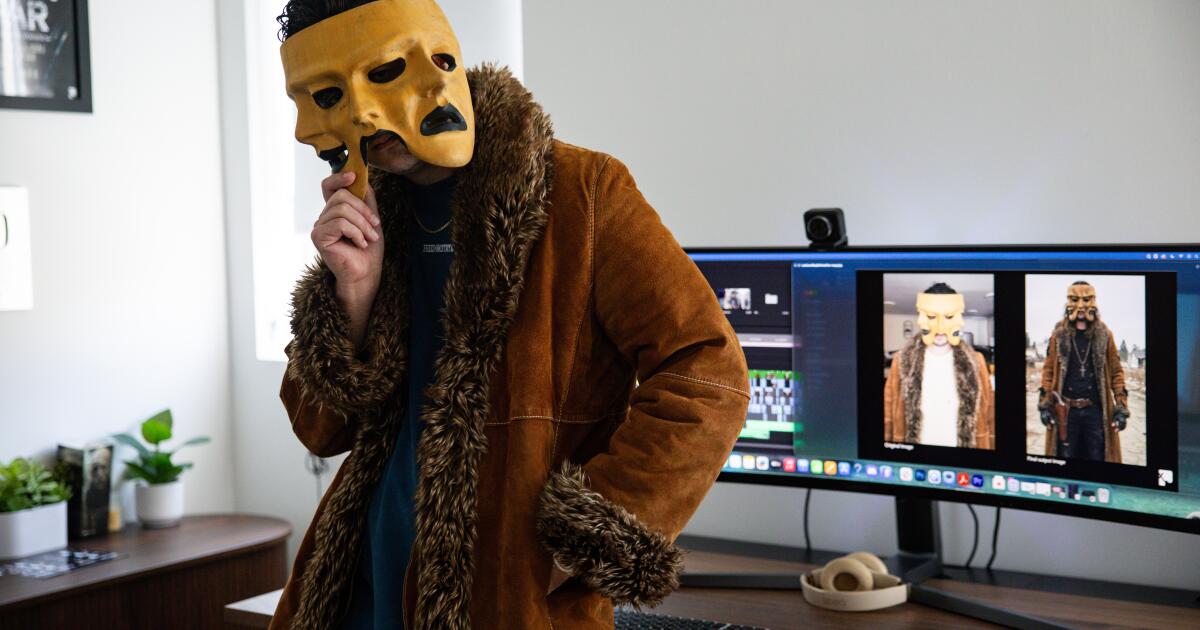
Earlier this year, a widely circulated 15-second AI-generated video of Brad Pitt fighting Tom Cruise on a rooftop sparked outrage across Hollywood. One screenwriter called the cinematic clip “terrifying.” The Motion Picture Assn. demanded the company behind the artificial intelligence tool — Chinese tech giant ByteDance — halt its “infringing activity.”
Despite the uproar, the former majority owner of TikTok has quietly continued to court filmmakers, independent artists and executives who are eager to adopt the AI video generation model called Seedance.
Seedance was launched in the U.S. this spring at a Santa Monica event hosted by a group linked to the Chinese government.
ByteDance began hiring for 100 open roles, signed multiple independent filmmakers and artists and held private conversations about financing AI films. The company threw a lavish caviar party at Cannes and in May hosted panels promoting its cinematic tool at Amazon’s AI on the Lot event in Culver City.
“Like any new technology, Hollywood ultimately has no choice but to react to market realities. And that reality is that the new crop of AI-empowered Hollywood creatives see Seedance as having the most powerful video generator in the market right now,” said Peter Csathy of Creative Media, an entertainment and AI business advisory firm.
Joel Kuwahara, the animation producer on early seasons of “The Simpsons,” echoed Hollywood’s quiet embrace.
“Within the industry, I know that a lot of studios haven’t approved Seedance, but yet with a wink and a nod, they’re allowing Seedance to be used. … It’s kind of like a ‘don’t ask, don’t tell’ kind of a thing,’” Kuwahara told The Times.
ByteDance declined to comment on its U.S. expansion.
The race to build the dominant AI video model has created a fierce rivalry, pitting U.S. companies against the fast-closing Chinese competitors. On the American side, there are Google Veo and startups such as Runway and Luma. OpenAI’s Sora has discontinued its video tool.
The Chinese challengers Seedance, Kling and Alibaba’s HappyHorse have rapidly closed the gap on cinematic realism and have upstaged their American rivals by undercutting them on cost.
According to Artificial Analysis, a company that tracks cost and performances of different AI models, China’s Seedance is currently the most cost-effective and high-quality option compared with U.S. competitors. Seedance costs $9 per minute for video with audio generation, significantly lower than the $24 per minute required by Google’s Veo model.
That makes it an attractive tool for independent filmmakers like Rupert Wainwright, who recently met with Seedance executives at AI on the Lot.
He wants to use the the tool to help make his feature-length film called “Sebastian,” about a Christian saint set in 3rd century Rome. The hybrid AI film will be shot partly on location in Europe and partly generated with artificial intelligence.
“It’s the equivalent to when streaming a movie over the internet onto your TV finally became possible,” Wainwright said.
Kavan Cardoza.
(Kayla Bartkowski/Los Angeles Times)

A scene from “The Chronicles of Bone.”
(Kayla Bartkowski/Los Angeles Times)
In May, Steven Schneider, the producer of “Paranormal Activity,” famous for its handheld grainy footage-style filmmaking, announced “Terrarium,” his first hybrid AI horror production. The film’s director, Jason Zada, said it will be entirely generated using Seedance’s model.
Zada’s filmmaking workflow involves writing, casting, prompting and editing all simultaneously, allowing him to rewrite scripts based on “dailies” generated by AI that day.
He estimates that generating 15 seconds of high-definition video costs only $5.
“We could go from a very detailed outline, very detailed characters and have it be a bit more fluid, because we could regen[erate] as much as we want,” Zada said.
Zada plans to shoot the movie first on a soundstage with real actors and will decide later which parts work better traditionally and what should be done synthetically. He’s a member of the Directors Guild of America and said he will be employing union actors for his hybrid AI film.
Seedance also has continued building ties by offering indie creators, AI-native studios and filmmakers free monthly credits and access to unreleased features. These “tastemakers” beta test its models, offer feedback on what works, and use it for their personal filmmaking projects — which creates corporate brand awareness.
Kavan Cardoza is one such breakout filmmaker. His AI fantasy series, “The Chronicle of Bones,” which uses Seedance, features half a dozen distinct storylines and an ensemble of characters. New episodes, each not more than 30 minutes, are released on YouTube once a month. The solo filmmaker averages 3 million views per episode and has cultivated a YouTube audience of 500,000.
Most filmmakers are tool agnostic, but lately Cardoza has become completely dependent on Seedance, he said, because it solves a persistent problem: maintaining character consistency between shots.

Kavan Cardoza unmasked.
(Kayla Bartkowski/Los Angeles Times)
To create one of his characters, “the last lost boy,” Cardoza took self-portraits wearing a three-faced mask and a tattered brown jacket. He used those reference images for the AI character and transforms them into a stylized person, with a personality, backstory and visual details. He fed those images back to Seedance to get consistent characters — repeating the process for each member of the cast.
“I can’t go get Brad Pitt because he costs like $5, 10, 20 million to be in my film,” Cardoza said. “I can probably get a synthetic actor that will act just as good as Brad Pitt in the future. That’s crazy to me.”
Cardoza has copyrighted his script and characters, and aims to eventually attract major studio interest to turn his intellectual property into a film which comes with a built-in fan base.
Such plans are likely to face resistance from the performers union SAG-AFTRA, which has decried the use of synthetic actors such as Tilly Norwood.
“The rise of Seedance comes down to [its] focus on pleasing filmmakers and making things that look filmic,” said Stephan Vladimir Bugaj, senior vice president of JioStar, a joint venture between Disney and India’s Reliance Industries.
ByteDance introduced timeline-based prompting so filmmakers can actually pick specific moments and tweak them, and improved the understanding of camera direction, physics, lighting and fluidity of action. All of this, Bugaj said, “unlocked a kind of spectacle filmmaking that the other models are not delivering quite as well.”
The company’s tool has been in such high demand, Zada said, that Seedance has been quoting some major Hollywood studios $2 million for unrestricted special access.
While acknowledging Seedance’s popularity and its U.S. expansion, Amit Jain, chief executive of Luma, said its ceiling in Hollywood is severely limited. Traditional studios might adopt Chinese models for some preproduction tasks such as concepting, but the geopolitical and intellectual property risks for commercial generations are too prohibitive.
“Can you imagine Disney using the ByteDance model for the next ‘Snow White’? No way,” Jain said. “This is not even a technical argument, really. That’s the reality.”
Luma has been making inroads into Hollywood selling its software but has separately funded a production service company to teach filmmakers to make hybrid AI films using its tools.
Despite conservative production budgets, AI spending by media companies is projected to grow from $2.6 billion to $12.5 billion from 2024 to 2029, according to a State of Generative AI Media report.

Kavan Cardoza flips through pages of his fine-art photography book.
(Kayla Bartkowski/Los Angeles Times)
Bugaj warned that the quality and competitive price of Chinese models should be a “wake-up call” for American players fighting for market share.
“We’re not loyal,” said Zada, the filmmaker. “Whatever is the best, we’re going to use it.”

Nearly a year after the expiration of a $7,500 federal tax incentive for new electric vehicles, California is stepping in to try to motivate buyers to go electric.
Gov. Gavin Newsom allocated $135 million in his new state budget to provide incentives for new and used EVs. Participating automakers will match the funds.
California leads the nation in EV adoption, though the market has taken a hit under the Trump administration.
The state budget — a more than $350-billion spending plan — went into effect Wednesday. The EV incentives will take effect in the coming weeks as the California Air Resources Board irons out agreements with dealerships.
Here’s what you need to know.
What are the incentives worth?
Senate Bill 168 tasked the California Air Resources Board with setting incentive amounts for new and used electric vehicles sold in California.
Eligible buyers will receive $3,500 off for new EVs and $1,750 off for used ones. Unlike the federal tax credits that expired in September, these incentives offer an instant discount and don’t require buyers to apply for credit later.
State funds will cover half of the incentive amount, and auto manufacturers will cover the other half.
The rebates will mean that most eligible buyers will effectively get between 4% and 7% of their money back.
For used EVs, “this incentive helps what’s already a good deal become an even better deal,” said auto analyst Brian Moody. “I think that’s the perfect use of these kinds of dollars.”
What are the rules and exceptions?
The new incentives can’t be used on all electric vehicles — they apply only to new EVs with a manufacturer’s suggested retail price of $50,000 or less, and used EVs with a sale price of $25,000 or less.
The $50,000 maximum rules out many options on the market, but legislation outlining the incentive program makes a special exception for California-based companies. Buyers purchasing a new or used EV from a company with headquarters in California can claim the discount regardless of the vehicle price.
That’s good news for Lucid, with headquarters in Newark, Calif., and for Irvine-based Rivian. Neither company currently offers new vehicles for less than $50,000. Rivian said it plans to launch a $44,990 SUV in 2027.
Who is eligible?
California’s new EV discounts are available only to first-time EV buyers, according to the legislation.
SB 168 says the buyer’s eligibility will be “confirmed by a buyer attestation” that they have not previously owned a zero-emission vehicle.
The new EV incentive is less than half of the federal incentive that expired nine months ago. Whereas the federal incentive may have been enough to spark interest in a range of buyers, Moody said the lesser amount will probably appeal mainly to people who already have their eye on an EV.
“I think you have to already be considering it, or in the market,” Moody said. “I think that the amount is just right for that.”
What are California’s clean car goals?
The incentives are intended to help California reach its electric vehicle and air quality goals as those targets have been under fire from President Trump.
Shortly after taking office, Trump signed an executive order that revoked California’s authority to set its own EV regulations, which included a goal of having 100% of new vehicle sales in the state be zero-emission by 2035.
California sued the administration in response. The state also has goals, including some that have been in place since 2012, that set declining limits on smog-causing pollutants and required automakers to sell increasing percentages of electric and hybrid vehicles through 2025.
In March, the administration filed a new lawsuit again trying to block California’s ability to set stricter-than-federal emissions standards for cars.
Early this year, California announced that more than 2.5 million zero-emission vehicles had been sold in the state since 2010, surpassing a target to put 1.5 million zero-emission vehicles on the road by 2025.
-

 World2 minutes ago
Photos: Khamenei funeral procession under way in Tehran
-
 News27 minutes ago
Thunderstorms, heat and wind will hamper efforts to contain Colorado wildfires
-

 New York2 hours ago
10-Minute Challenge: The Ceiling at Grand Central
-

 Los Angeles, Ca2 hours ago
1 killed, multiple people injured in Tarzana 4-car crash
-

 Detroit, MI2 hours ago
Power outage forces flaring at Marathon’s Detroit refinery; portion of Schaefer Road closed
-

 San Francisco, CA2 hours ago
San Francisco’s fireworks show ends in hours of gridlock involving Waymo cars
-

 Dallas, TX2 hours ago
FIFA Fan Fest in Dallas paused due to lighting in the area Sunday evening
-

 Miami, FL3 hours ago
Venezuelan Independence Day: Aid efforts continue after devastating earthquake

