Business
How athletes and entertainers like Shohei Ohtani get financially duped by those they trust

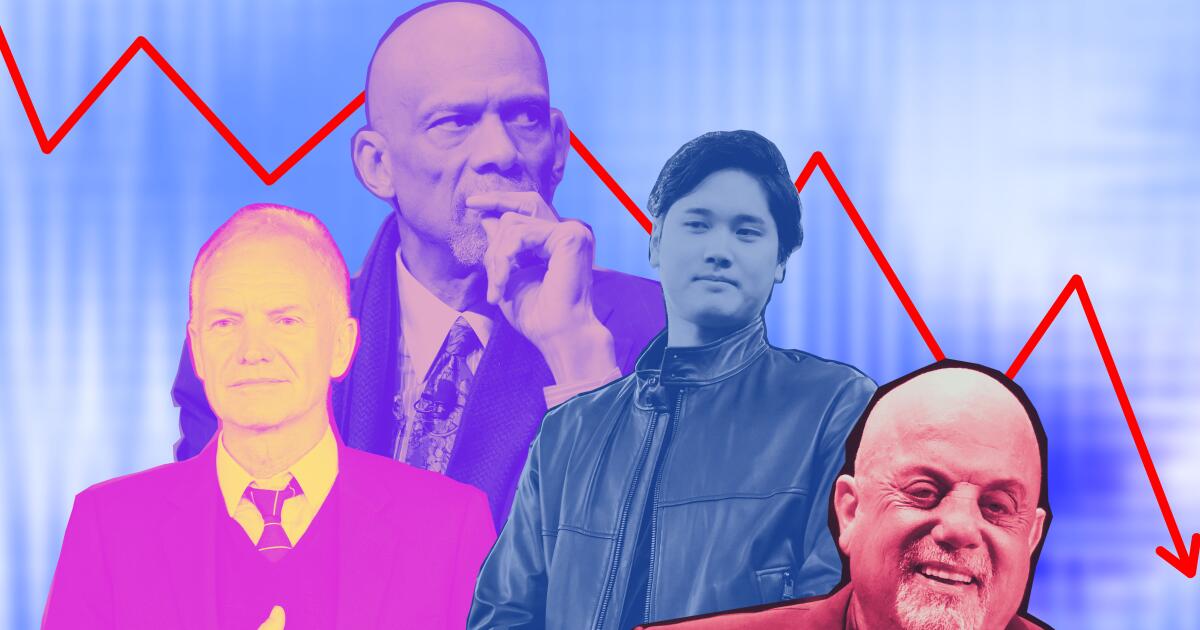
R. Allen Stanford is among the most brazen white-collar criminals — and he’s paying dearly for it. The former financier is in the 14th year of a 110-year prison sentence after being convicted in 2012 for selling $7 billion in fraudulent certificates of deposits in the Caribbean island of Antigua.
He also was required to pay a judgment of $5.9 billion, much of which was intended to go to victims of his crimes. Among those affected by his elaborate Ponzi scheme were seven Major League Baseball stars: Greg Maddux, Johnny Damon, Bernie Williams, J.D. Drew, Andruw Jones, Jay Bell and Carlos Peña.
The players invested in certificates of deposit offered by Stanford’s company, and it was that easy to have their bank accounts frozen in 2009 by the U.S. Securities and Exchange Commission while authorities investigated the case despite putting their trust in advisors with stellar reputations and a wealth of experience.
Damon complained during spring training that year that he couldn’t pay bills and told a personal trainer that he’d pay him when “all this stuff gets resolved.”
The questions lingered for months: How long would the accounts be frozen and would funds be confiscated?
“This certainly shakes up every athlete out there,” Robert Boland, professor of sports business at New York University, said at the time. “They’re all thinking: ‘Who’s guarding my money?’ ”
The Stanford episode might have prompted a reckoning inside MLB clubhouses, but the lesson didn’t stick with the entire next generation of players.
Shohei Ohtani has so far been cleared of wrongdoing in the recent illegal gambling probe that resulted in his interpreter, Ippei Mizuhara, being charged with bank fraud for stealing $16 million from Ohtani’s bank account to pay gambling debts. But the Dodgers and former Angels superstar was unaware of the theft until investigators uncovered wire transfers from his account to a bookie and Mizuhara admitted to Ohtani after a Dodgers team meeting March 20 in Seoul that he’d stole the money.
Ohtani was repeatedly described by authorities as a “victim,” but the extent to which the Japanese player was seemingly oblivious about his personal finances and blindly trusting Mizuhara is jarring at first glance. The federal complaint also says that Ohtani’s high-powered agent and financial advisors from Creative Artists Agency allowed Mizuhara to dissuade them from overseeing the account from which he stole.
“In this particular situation, it’s somebody who’s relying on someone to interpret an entire language to them, so they could be taking advantage of documents, wire transfers, all kinds of things that the other person doesn’t understand but is trusting that they have their best interests at heart,” said Kristin Lee, owner of the athletic and entertainment business management firm KLBM. “That’s rather predatory, and blatantly taking advantage of a very vulnerable person.”
Wealth management experts say athletes and entertainers who squander enormous sums fall into three interconnected buckets: They are naive about or inattentive to their finances; they make risky investments; they overspend on family, friends and expensive toys.
An eye-opening Sports Illustrated study in 2009 that included interviews with athletes, agents and financial advisors found that 78% of former NFL players had gone bankrupt or were under financial stress within two years of retirement and 60% of NBA players were broke within five years of retirement.
“Only those you trust completely can rip you off completely.”
— Diana B. Henriques, financial journalist
Wealthy athletes in nearly every sport as well as famous entertainment figures have experienced the same misfortune. NFL quarterback Mark Sanchez and MLB pitcher Jake Peavy were fleeced of millions of dollars by financial advisor Ash Narayan, who was sentenced in 2020 to 37 months in federal prison. Narayan gained the players’ trust because he was active in the Fellowship of Christian Athletes.
Former heavyweight champion Mike Tyson, once worth about $400 million, declared bankruptcy in 2003 when he was still boxing. Prominent entertainment figures have been fleeced by business managers (Judy Garland, Leonard Cohen, Alanis Morissette) or fallen prey to questionable investment opportunities (Robert De Niro, Ben Stiller, Jack Nicholson).
“It’s a heartbreaking tale that’s played out time and time and time again,” said Diana B. Henriques, financial journalist and author of “The Wizard of Lies: Bernie Madoff and the Death of Trust.” “Regardless of the industry, a person’s lucrative talent, lack of financial expertise and sudden access to wealth primes them as a candidate for a scam.
“Whether you’re an athlete, artist, surgeon or even a Silicon Valley entrepreneur, a con artist’s ideal victim is someone who knows very little about money but has a great deal of it,” she added. “You have a brilliant career that’s taken off and you’re making a ton of money from something you love to do, but you’ve never had to deal with this amount of wealth before.
“So it’s tempting when someone says, ‘Let me make it simple for you. Let me handle this messy, complex, confusing stuff so you can focus all your creative energy on being great and getting greater.’ ”
This strategic positioning of finances as a distraction to a star’s performance in their chosen field makes them particularly susceptible. Ohtani acknowledged as much in his only public comments since Mizuhara was charged with bank fraud: “I’m very grateful for the Department of Justice’s investigation,” he said. “For me personally, this marks a break from this, and I’d like to focus on baseball.”
Dodgers designated hitter Shohei Ohtani walks to the dugout after being stranded at second base in the eighth inning against the Washington Nationals on Wednesday.
(Robert Gauthier / Los Angeles Times)
In fact, it isn’t uncommon for the rich and famous to be blissfully unaware of their money’s movements. Take the musician Sting, who was notified by an anonymous tip that his former accountant, Keith Moore, had stolen more than $9 million from the British rock star over four years in order to invest in global schemes and stave off personal bankruptcy.
“He’d created something like 70 different bank accounts in different countries,” Sting said in a 2002 interview with the Independent. “And the money was coming in different denominations — Deutschemarks, Japanese yen — from different sources … touring, recording, publishing, merchandising, TV appearances. So for that kind of money to be siphoned away is not that surprising. And since it took forensic accountants about two years to sort through the complexities, how could a bass player figure it out?”
In cases like Sting’s, “It’s a fractional deceit that happens over the years, where somebody skims off a little bit here and there from a bunch of different types of accounts with different assets in them, and it adds up to a lot of stolen money,” Lee said.
Such complex financial structures often are entrusted to a family member or close friend. Comedian and actor Dane Cook had millions stolen by his half-brother Darryl McCauley, who was convicted of larceny, embezzlement and forgery. Singer-songwriter Jewel said last year on “The Verywell Mind” podcast that her mother and former manager, Nedra Carroll, stole $100 million from her.
“Only those you trust completely can rip you off completely,” Henriques said.
Billy Joel sued his ex-brother-in-law and former manager Frank Weber for unauthorized loans to Weber’s companies, secret investments in speculative ventures and mortgages on the copyrights for his songs — losses that initially went unnoticed and totaled $30 million.
“It was much more of an emotional betrayal for me than financial, because this was somebody I trusted so much,” Joel said in a 2013 interview with the New York Times Magazine. “I always had this sense that OK, I’m an artist and I shouldn’t have to be concerned about something as banal as money, which is baloney. It’s my job. It’s what I do. I didn’t pay any attention to it, and I trusted other people, and I got screwed.”

Billy Joel performs at the 66th Grammy Awards at Crypto.com Arena on Feb. 4.
(Robert Gauthier / Los Angeles Times)
Athletes started signing contracts worth millions in the 1980s. It’s no coincidence that financial predators began to gravitate toward them around that time. One of the earliest instances involved Lakers great Kareem Abdul-Jabbar and several other NBA stars, including Ralph Sampson and Alex English.
Dubious investments initiated by the players’ former business manager, Thomas M. Collins, included Arabian horses and oil wells in addition to hotel and restaurant ventures.
The prize acquisition was the venerable Balboa Inn in Newport Beach, where Errol Flynn, Humphrey Bogart, Gary Cooper and other Hollywood stars once gathered. But the partnership that owned that hotel and others went bankrupt.
Abdul-Jabbar sued Collins, his sole representative for six years, and others for $59 million, charging negligence, fraud and breach of trust, triggering a flurry of legal action.
Collins countersued, claiming that Abdul-Jabbar owed him $382,050 in unpaid commissions and fees. English sued Abdul-Jabbar, and had him served with papers in the Lakers’ locker room. Abdul-Jabbar added English to his suit against Collins and had those papers served while English sat on the bench during a game.
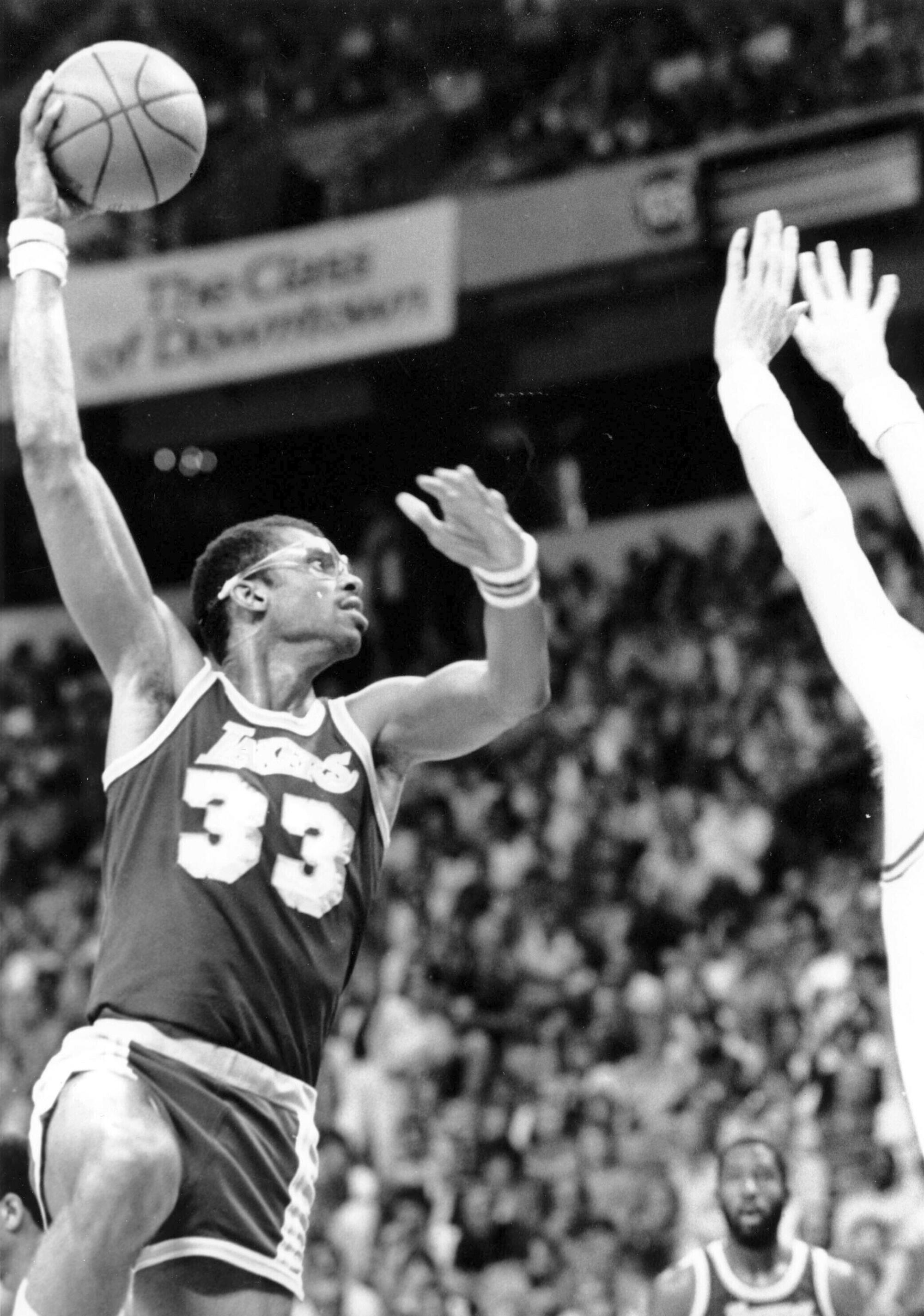
Lakers center Kareem Abdul-Jabbar shoots a sky hook in a game against the Utah Jazz in Las Vegas on April 5, 1984.
(Lennox McLendon / Associated Press)
The players had given Collins power of attorney in administering their financial affairs even though his only background in finance was an entry-level position at an investment information service. Ed Butowsky, managing partner of wealth management advisory firm Chapwood Investments, said giving power of attorney to anybody is usually foolish.
“The responsibility lies with these athletes, they should not parcel out that responsibility,” he said. “They should know where their money is, how much they have, where the account statements go and so on. If they don’t, it’s their own fault.”
NBA stars Antoine Walker, Latrell Sprewell, Vin Baker and Shawn Kemp each spent close to $100 million not long after retiring in the 2000s, much of it from excessive partying and showering family and friends with cash. And let’s not forget Allen Iverson, who went broke despite earning nearly $200 million in salary and endorsements and is hanging on to reach his 55th birthday seven years from now when he will receive $32 million from Reebok, thanks to a lifetime contract he signed with the shoe company in 2001.
Those cautionary tales have made an impact, Butowsky said. Fewer athletes and entertainment figures are spending ungodly amounts on jewelry, cars and handouts to friends.
“You have some one-off situations, but because of the publicity, people have become a lot more careful about wild expenditures,” Butkowsky said. “But they are still trusting the wrong people to make financial decisions.”
Financial planners often suggest that wealthy clients create a diverse portfolio. Athletes and entertainers often make the mistake of putting too much money into one venture. Butowsky calls it the “front row” mistake.
“A lot of them see some entrepreneur sitting in the front row at a basketball game and want to know what they did to make it,” he said. “But the idea that they are going to replicate that? It’s not going to happen. The very same thing that got a few people rich gets 20 to 30 times that many people broke.”
Though technological advancements have made it arguably harder for scammers to get away with thefts — “People probably used to be able to shuffle papers around, white things out and make photocopies, but now, everything is maintained in some sort of online system with a solid trail around it,” Lee said — athletes and entertainers still need to stay vigilant to prevent themselves from becoming the next headline-making victim.
“These dubious schemes are absolutely not going away,” Henriques said. “Part of it is that we devote so little attention to basic financial literacy in this country. We don’t train young people to have even the most basic knowledge about how finance works. … No one wants to hear that with great wealth comes great responsibility, but it’s true.”
Sometimes investors are fortunate. The seven MLB players who unwittingly invested $10 million in Stanford’s phony certificates of deposit in 2008 sold their shares before the Ponzi scheme collapsed, according to Kevin Sadler, lead counsel for the receivership appointed by the court to recover as much of Stanford’s ill-gotten gains as possible.
Maddux, a Hall of Fame pitcher who earned $153.8 million during a 23-year career, made the largest profit: $169,000 in 10 months on an investment of $3.5 million. Damon made the least, $70 in two months on an investment of $400,000.
However, the players were among hundreds of investors who had bank accounts frozen until they agreed to return their profits to the receivership. All seven players gave back their profits in December 2009, Sadler said, a small amount of the $2.7 billion that will have been recovered by this summer. About 45% of the principal investments stolen by Stanford will have been returned to the approximately 18,000 fraud victims.
“Starting at zero, to be able to return this much, I really do think it is remarkable,” Sadler said. “It’s taken 15 years, so I don’t think saying the recovery is monumental is overkill or hype.”
In most cases involving fraudulent investments, little if anything is recovered, he said. And when it comes to athletes and entertainers with immense earnings, the money lost is often well into the millions.
“How does a person blow that much money?” Sadler said. “You can do it. It’s possible. You don’t even have to try that hard. You can actually blow it quite easily.”



Ethics experts sounded the alarm Wednesday after new financial disclosure reports revealed that President Trump’s income ballooned to $2.2 billion in 2025, with $1.4 billion coming from various new cryptocurrency-related businesses.
“It’s bribery. It’s graft. It’s exploitation of public power for private financial gain,” said Kathleen Clark, a law professor at Washington University and an expert in government ethics. “Trump has — with the acquiescence of a somnolent, GOP-controlled Congress and the active assistance of John Roberts’ Supreme Court — transformed the presidency into a massive corruption racket.”
Trump reported income of over $600 million in 2024. But after he entered the White House in 2025, he reported that his income had soared to more than $2.2 billion.
The 2025 annual disclosure report filed with the Office of Government Ethics shows that Trump ramped up his real estate business in countries across the globe, particularly in the Middle East, at a time when his government was negotiating over vital issues of military aid and economic tariffs. The president also expanded his dealings in the relatively new realm of cryptocurrency.
According to the 927-page report, Trump made $635 million in royalties from Celebration Coins and more than $500 million from his World Liberty Financial crypto firm. He drew in millions from a raft of Trump-branded merchandise including God Bless the USA Bibles and sneakers depicting him with his hand raised in a fist. He also brought in $10.4 million from a property in the United Arab Emirates and $9 million from a property in Saudi Arabia.
Noah Bookbinder, an ethics expert and former president of Citizens for Responsibility and Ethics, a nonprofit watchdog group in Washington, described Trump’s business dealings while in the White House as “entirely unprecedented, certainly in modern history, but I think by most ways of measuring, in all of American history.”
“This is corruption,” Bookbinder said. “You have a president who has been quite transparently using the presidency in ways that benefit his business interests and intertwining the presidency and business interests.”
But the president and the White House brushed aside ethics concerns about the money Trump is making.
Trump told reporters Wednesday that he made a lot of money before he came to the White House, he had “big institutions” run his money, and that he had benefited, like every other American, as the stock market went up.
“We’re all profiting,” he said. “I’m profiting because I have a lot of money and a lot of cash.”
In a statement, White House spokesperson Anna Kelly said: “Neither the President nor his family has ever engaged — or will ever engage — in conflicts of interest. … All actions by President Trump and his administration are taken in the best interest of the American people.”
Although the report does not show exactly how much Trump is earning — it provides details of revenue, rather than profit — the scale of the president’s cryptocurrency dealings elevated ethics watchdogs’ long-standing concerns.
Jordan Libowitz, a vice president at Citizens for Responsibility and Ethics, said the most concerning detail of the new report is the hundreds of millions of dollars coming in from various crypto ventures partnered with companies that the American public knows little about.
“At a time when his own administration itself is setting regulation for these types of companies,” Libowitz said, “there’s just this massive opportunity for corruption when foreign governments and foreign nationals can pour tens of millions of dollars into the president’s pocket.”
As a real estate mogul, Trump has long invested in hotels, condominiums and golf courses. But cryptocurrency, Libowitz said, offers vastly more potential for corruption.
“There’s only so many hotel rooms you can book, so many rounds of golf, but there’s no limit with crypto,” Libowitz said. “You can just buy his meme coin and he gets a cut, so you kind of take out the middleman, but also the cap or the amount of money you can funnel to the president.”
Libowitz said it was also problematic for Trump to expand his real estate empire in foreign countries, particularly in the Middle East.
“Now it seems that almost all his new developments are in foreign countries, and that opens up, if you’re building this giant resort, you’re going to need help from the local government, whether it’s tax breaks or utility issues, or building a road, or speeding up permits,” Libowitz said. “These are ways that foreign governments can do favors for the American president.”
In the half a century before Trump was elected, ethics experts say, presidents from Nixon to Obama publicly released their tax returns, sold properties or put the proceeds in a blind trust managed by someone they did not know.
“They weren’t doing it because they legally had to, but because they thought it was the right thing to do,” Libowitz said.
Ever since Trump was first elected in 2016 and opted to not sell his businesses or put them in blind trusts, ethics experts have urged Congress to impose more aggressive financial oversight over money in politics.
“Congress needs to update the law, and basically, mandate blind trusts and sale of assets and disclosure of tax returns,” Libowitz said.
Noting that the Constitution’s Emoluments Clause explicitly states that the president cannot accept things of value from foreign or domestic governments, ethics experts say Trump is flouting the law and Congress has chosen to not enforce it.
Richard Painter, a law professor at the University of Minnesota and former White House ethics lawyer under President George W. Bush, said Congress needed to close loopholes that exempt presidents from federal conflict of interest laws as well as enforce the Foreign Emoluments Clause.
“Nobody holding a position of trust with the United States government can accept emoluments, profits and benefits from foreign governments, and that is flatly prohibited under the United States Constitution,” Painter said. “Now, if the United Arab Emirates put money into Liberty Financial, as I understand they did … and then Trump makes money off Liberty Financial, that’s a Foreign Emoluments Clause problem.”
Congress, he said, should empower an independent prosecutor to investigate such conflicts.
“The problem with the Foreign Emoluments Clause is how do we enforce it?” Painter said. “The founders and head of the Congress enforced it by impeaching anybody who took a bunch of foreign government money, but I guess that system’s not working. That’s a serious problem.”

The race to bring air travel to the sky is heating up as Santa Cruz-based Joby Aviation and Toyota launch a joint venture to commercially produce air taxis.
The companies said in a news release Tuesday that they will work together on productivity, quality and costs and move toward mass production of Joby’s electric vertical takeoff aircraft. Joby and Toyota were first linked when Toyota made a nearly $400-million investment in the company in 2020. It has since increased its backing of the company to $900 million.
“It’s really meaningful for us to take on this challenge together with Joby, a partner that shares the same vision,” Toyota Chair Akio Toyoda said. “We believe this strengthened relationship is an important step forward in realizing the future mobility society.”
Joby‘s all-electric vertical takeoff vehicles are designed to hold four passengers and a pilot and can travel at up to 200 mph. The vehicle uses six tilting propellers to achieve vertical takeoff before switching to forward flight.
In February, Joby announced a partnership with Uber to start service in the United Arab Emirates this year, bringing on-demand air taxi rides to the country. It plans to expand to the U.S. after the completion of its final stage of Federal Aviation Administration testing.
Prior to its full FAA certification, Joby is hoping to launch early flight operations later this year as part of a White House program that will bring flights to several states, including New York, Texas and Arizona. Flights in California will not begin until after obtaining FAA certification.
Joby has been in a fierce battle to be the first with taxis in the sky with its Northern California competitor Archer Aviation. The two companies are involved in overlapping lawsuits, with Joby alleging corporate espionage against Archer, and Archer filing a suit alleging dubious ties to China that sparked an investigation into Joby by the U.S. International Trade Commission.
“Toyota has been by Joby’s side for nearly a decade, providing invaluable guidance and support as we built the foundation for manufacturing our aircraft,” JoeBen Bevirt, Joby’s chief executive and founder, said in the news release. “Together, we share a vision of making aerial mobility an everyday reality, and we look forward to delivering on that promise together.”
Joby Aviation’s shares, which have fallen more than 30% this year, climbed 3% on Tuesday to $8.92.

Disneyland Resort in Anaheim will offer $59 tickets for select evening admission to either theme park as part of a new promotion.
The one-day, one-park evening ticket offer will allow attendees to enter Disney California Adventure at 5 p.m. or Disneyland at 7 p.m. Park reservations are still required, as has been the case since the COVID-19 pandemic.
The offer only applies for admission from July 12 through Aug. 5 on Sundays to Wednesdays.
Disneyland Resort is commemorating its 70th anniversary through Aug. 9, and has introduced new shows and additions to rides as part of the occasion.
Walt Disney Co.’s theme parks and experiences business are a crucial boost to its finances, making up about 56% of the company’s operating income last fiscal year.
During the Burbank-based company’s most recent earnings call in May, Disney executives said attendance at its U.S.-based parks was down 1% compared with the prior year, a shift they attributed to “continued softness” in international visitations. However, the company said at the time that it was starting to move past those issues.
Disney’s experiences division reported $9.5 billion in revenue in that fiscal second quarter, up 7% compared with the same period a year ago, something executives said was due to higher guest spending domestically and more capacity on its cruise line.
-

 Fitness3 minutes ago
6 Best Exercise Bikes (2026): Trainer Approved | Fortune
-

 Movie Reviews11 minutes ago
Sender
-
World21 minutes ago
Bereaved South Koreans try AI-generated videos of deceased loved ones
-

 News26 minutes ago
How a Nation of Immigrants Traces Its Roots
-

 Health48 minutes ago
What Is Retatrutide? Dr. Dubrow Calls It the Most Powerful Weight-Loss Drug
-
 Lifestyle1 hour ago
How World Cup fans reflect America back at us : It’s Been a Minute
-

 Technology1 hour ago
Apple’s entry-level MacBook Pro could be up for a redesign
-

 World1 hour ago
Khamenei body in cold storage as feared Basij mobilizes ahead of historic Iran funeral

