Business
DeepSeek Prompts a Reckoning Across Wall Street and Silicon Valley


Good morning on this action-packed Monday. Mark this week on your “History of Artificial Intelligence Timeline”: The creation of DeepSeek, the Chinese A.I. sensation that we told you about last week, is shaking the technology industry to its core.
The super-efficient, open-source software is raising questions about the valuations of tech giants, including the chip maker Nvidia, with their stocks getting crushed today. Has the entire industry been wildly overspending? It’s also raising profound questions about how China may have undercut America’s most critical economic advantage on A.I. by making its technology free. We have more on all of this below.
Plus: Wall Street should pay attention to comments President Trump made late Friday that have flown under the radar.
The DeepSeek effect
Markets are on edge on Monday, as global tech investors face a $1 trillion wipeout. The cause: anxiety that the emergence of powerful — and cheap — Chinese artificial intelligence software could upend the economics of A.I.
Nasdaq futures have plummeted nearly 4 percent. And shares in Nvidia, the chipmaker whose processors help train and run A.I. software, are down 11 percent in premarket trading. Those in Constellation Energy, a utility betting heavily on powering A.I. data centers, are down nearly 13 percent.
Meanwhile, tech executives and policymakers have been left to wonder how strong America’s lead in A.I. is.
DeepSeek is forcing a reckoning in Silicon Valley. The company’s models appear to rival those from OpenAI, Google and Meta, despite the U.S. government’s efforts to limit China’s access to leading-edge A.I. technology. And DeepSeek says it did all this with a fraction of the resources that American competitors use.
Over the weekend, DeepSeek shot to the top of Apple’s App Store charts, rivaling ChatGPT. And DeepSeek is drastically undercutting OpenAI on price.
That raises a number of questions:
-
Do leading A.I. companies like Google, Meta and the privately held OpenAI and Anthropic deserve their astronomical valuations?
-
Do companies need to spend hundreds of billions on vast data centers powered by hugely expensive chips from Nvidia and others? Consider that OpenAI and its partners have promised to spend at least $100 billion on their Stargate project, or that Microsoft said it will spend $80 billion, or Meta $65 billion.
-
Does America need the huge uptick in electricity generation that has fueled a run-up in utility stocks?
American tech companies are scrambling to respond. The Information reports that Meta has tasked several teams of engineers with closely examining DeepSeek to see how they can improve their company’s own Llama A.I. software.
Already, American A.I. providers are rushing to dissuade customers from switching to cheaper DeepSeek offerings. (One potential stumbling block for some is that DeepSeek, as a Chinese company, won’t answer questions on sensitive topics such as those involving China’s leader, Xi Jinping, though developers say that it’s easy to modify the software.)
Satya Nadella, Microsoft’s C.E.O., has a more positive take: More efficient and accessible A.I. might lead to a “Jevon’s paradox” moment: “As AI gets more efficient and accessible, we will see its use skyrocket, turning it into a commodity we just can’t get enough of,” he wrote on X.
What will policymakers do? President Trump and other Western leaders have been anxious to unveil steps to bolster their homegrown A.I. industries, both by helping them grow and imposing constraints on Chinese rivals. But DeepSeek suggests there are limits to that approach.
Expect tough questions from analysts this week, especially as four of the so-called Magnificent Seven tech giants, including Meta and Microsoft, report earnings this week.
HERE’S WHAT’S HAPPENING
Hearings for Trump cabinet picks and the Fed loom large this week. Senators are expected on Monday to approve Scott Bessent as Treasury secretary. On Wednesday, they will hold confirmation hearings for Howard Lutnick, President Trump’s choice for commerce secretary, and Robert F. Kennedy Jr., the candidate for health secretary. Also on Wednesday, it’s decision day for the Fed: Many on Wall Street expect the central bank, wary of inflation, will keep interest rates steady.
Bitcoin falls below $100,000 as the industry deals with a flood of memecoins. The sell-off coincides with the broad slump in tech stocks, and comes despite an executive order by Trump to bolster the sector. (Tokens tied to the president and the first lady, Melania Trump, have slumped sharply again, amid a wave of criticism.) Meanwhile, Brian Armstrong, the C.E.O. of Coinbase, who criticized regulations by the Biden administration, suggested that regulators should create a “block list” for new digital tokens as his company struggles to deal with the million new ones being created each week.
Trump says he’s making progress on a TikTok sale. The president said he was in talks with several potential buyers to take control of the video app as part of an arrangement with ByteDance, the platform’s Chinese owner, with a potential decision in the next 30 days.
Trump continues his attack on banks
President Trump’s jab at Brian Moynihan, Bank of America’s C.E.O., grabbed headlines at the World Economic Forum in Davos, Switzerland, when he accused the executive of “debanking” his conservative supporters.
What many haven’t noticed that Trump has kept up his attack since then.
When the president visited Los Angeles on Friday for a round table on the California wildfires, he doubled down on his criticism of Bank of America. “They’re not nice. Sounds very nice, ‘The Bank of America.’ They are not nice,” he told someone in attendance. But he didn’t stop there, adding, “We’re doing numbers on banks.”
Trump’s issues have expanded beyond debanking. The conversation in Los Angeles was about the profit margin that banks often capture by charging a significantly higher interest rate on loans to consumers than the banks pay to borrow from the Fed.
Might he try to force banks to lower interest rates? Or could he make good on a campaign promise of capping credit card interest rates? (It’s not clear if he has the authority to do so via executive order.)
Trump’s relationship with banks is complicated. Few on Wall Street and finance are in Trump’s inner circle, especially compared with tech moguls (some of whom are trying to disrupt banking). Howard Lutnick, Trump’s pick for commerce secretary, comes from the rough-and-tumble brokerage business than the polished worlds of investment banking and commercial lending.
By contrast, Jamie Dimon of JPMorgan Chase has a more nuanced relationship with the president. Though he privately supported Kamala Harris in the 2024 election, the JPMorgan chief has said that Trump wasn’t wrong on issues including taxes and immigration at last year’s Davos, and this year said he’d be on board with tariffs if they’re good for national security.
Also worth noting: One of Bank of America’s largest shareholders is Warren Buffett, who has clashed with Trump in the past. That said, Buffett didn’t weigh in on the election and has been selling down his Bank of America stake since before November.
Trump is taking shots at banks just as they were expecting a friendlier administration., The industry, whose members had been prevented from merging for years, was expecting a wave of consolidation under Trump.
But there have already been signs that banking won’t get what it wants. Trump’s pick for Treasury secretary, Scott Bessent, said in his confirmation hearing this month that the five largest banks had too much market share.
What to read into Trump’s Colombia showdown
President Trump’s standoff with Colombia over immigration lasted just a few hours and played out mostly on social media.
But the fallout will likely reverberate among global leaders.
The latest: President Gustavo Petro of Colombia backed down from his refusal to accept American military planes carrying deportees into the South American country. His decision came after Trump threatened sanctions and tariffs — starting at 25 percent, and then climbing — on the country’s exports, including crude oil, coffee and cut flowers.
Petro’s U-turn gives the White House a victory on multiple fronts. Trump can show he’s living up to his campaign promise to crack down on illegal immigration.
And he can put other foreign capitals on notice that he will use tariffs to extract conditions that go beyond trade. “Today’s events make clear to the world that America is respected again,” the White House declared in a statement.
Allies won’t be spared. Colombia has long had close diplomatic ties to the United States — as do other targets of potential tariffs, Canada and Mexico. Some Trump aides want to proceed with tariffs on the latter on Feb. 1, talks or no talks, The Wall Street Journal reports.
Last week, the S&P 500 rallied in part on hopes that Trump’s recent tariff comments, especially about China, signaled a softer policy approach. Was that all a mirage?
And then there’s Greenland. Trump has coveted the autonomous Danish island for its strategic location in Arctic shipping and defense and for its mineral wealth, and has suggested he’d be willing to use military force or economic coercion to annex it.
On Air Force One this weekend, Trump told reporters that he could wrest control of Greenland from Denmark. “I think we’re going to have it. I think the people want to be with us,” he said, referring to Greenlanders.
Trump’s comments add to heightened tensions between Washington and NATO allies. “The Danes are saying, ‘Keep it down,’ but they’re scared,” Zaki Laïdi, an adviser to the former E.U. foreign policy chief Josep Borrell Fontelles, told The Times.
Douglas Emhoff’s next gig
The latest guessing game on the Washington-to-New York Acela is where former Vice President Kamala Harris and her husband, Douglas Emhoff, might go next. We know the answer to half of that question.
Emhoff will become a partner at the corporate law firm Willkie Farr & Gallagher, splitting his time between Los Angeles and Manhattan. He starts on Monday, advising companies on crises including litigation and corporate investigations, DealBook’s Lauren Hirsch is first to report.
Emhoff spent decades as a corporate lawyer before moving to Washington. He co-founded a boutique law firm in 2000, which he sold to a rival, Venable, in 2006. He left Venable in 2017 for DLA Piper, and stepped away full-time in 2020, partly to avoid conflicts of interest entanglements once his wife became vice president.
His clients have included Spotify and Lionsgate. He’s also represented Willie Gault, the former Olympic sprinter and N.F.L. star, whom he represented in an S.E.C. fraud case.
Willkie will tap Emhoff’s experience from his legal career and the White House. The second gentleman has amassed a network of key figures in entertainment, private equity and the corporate world.
Emhoff was a visible presence during the presidential campaign, helping his wife raise more than $1 billion. He also represented the U.S. in a diplomatic capacity at events like the 2024 Olympics in Paris, and led the Biden administration’s efforts to combat antisemitism.
“That got him in touch with very important leaders across the globe,” Thomas Cerabino, a co-chairman at Willkie, told DealBook.
THE SPEED READ
Deals
Politics and policy
Best of the rest
We’d like your feedback! Please email thoughts and suggestions to dealbook@nytimes.com.



Business
Billionaire exodus? California drew 10 times more venture capital than any other state this year
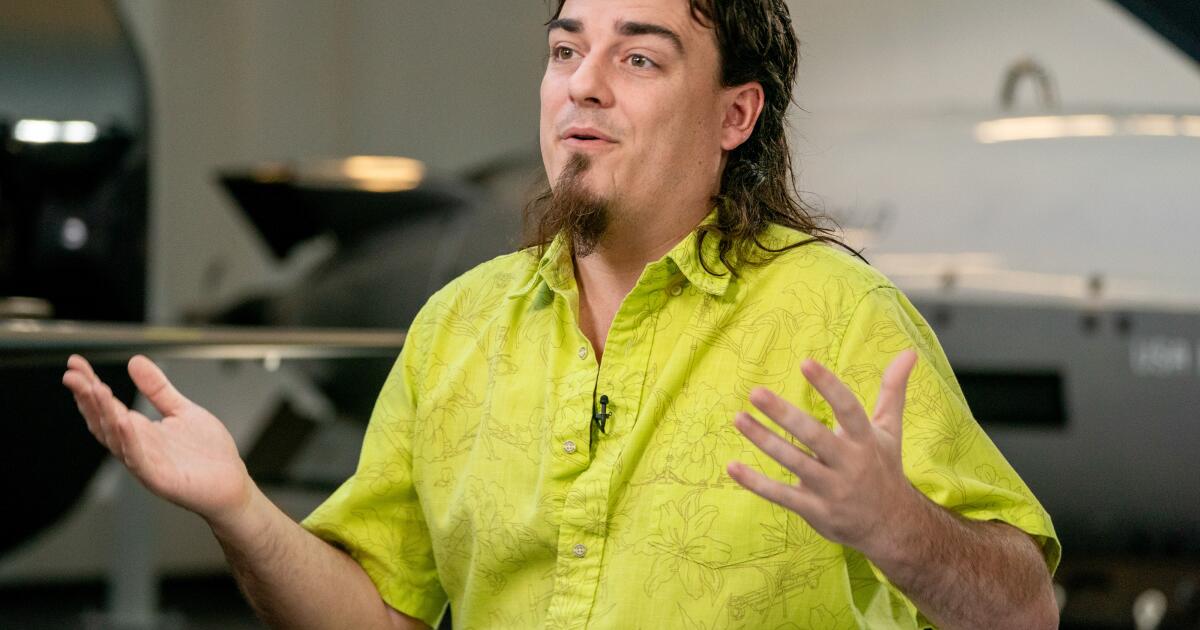
Despite concerns that California’s costs and regulations are bad for business, the state has attracted an unprecedented pile of capital this year, and no other state is even close.
The Golden State’s deep pool of talent, rich investors and other tech infrastructure have made it ground zero for the artificial intelligence explosion. That has helped it attract more than $335 billion in venture capital funding this year, according to PitchBook’s private market funding data released Thursday.
Its next biggest competitor, New York, raised less than a tenth of California’s total. Texas raised 1/40th of the amount.
“California has far and away the most [deals], obviously, a huge amount of that sits in the [San Francisco] Bay Area,” said Kyle Stanford, director of U.S. venture capital research at PitchBook. “Los Angeles, San Diego has a really strong tech market that I think benefits a lot from capital moving easily between San Francisco and L.A.”
Although a campaign for a new tax on billionaires has convinced some ultra-rich residents to shift to other states and businesses often complain that high property and energy costs and an anti-business regulatory regime make it too tough to make money in the state, the inability of the top talent, companies and investors in AI to set up elsewhere shows California’s enduring attraction.
The state’s economy grew 5% last year to a record $4.25 trillion, making it larger than every country other than the U.S., China and Germany. It is home to nearly 400 billion-dollar startups — more than any other state, according to CB Insights.
Southern California has emerged as a go-to address for fast-growing space and defense tech companies.
“California’s workers, entrepreneurs, and innovators continue to prove that investing in California delivers real results,” Gov. Gavin Newsom said in a statement last week in response to strong productivity numbers for the state. “As one of the largest economies in the world, the Golden State demonstrates that a strong workforce, economic growth, innovation, and performance go hand in hand.”
In the three months that ended in June, 1,087 California companies raised $108.8 billion in venture capital. Just three companies — Anthropic, Jeff Bezos’ Project Prometheus and Anduril Industries — absorbed 75% of that total. Anthropic alone raised $65 billion, which valued it at nearly $1 trillion.
Among metropolitan regions, Los Angeles ranked behind only Silicon Valley and New York, which attracted $98 billion and $11.5 billion in venture investment, respectively.
“Capital is flowing back into American innovation with real force,” said Bobby Franklin, president of the National Venture Capital Assn., an industry group that put out the report with PitchBook. “Investment activity is picking up, fundraising is improving, and there are early signs the IPO market is beginning to reopen.”
Investors poured in nearly $8 billion across 207 deals in the Los Angeles, Long Beach, and Santa Ana metro areas, up 28% from a year earlier, according to PitchBook.
The top deals in the region were led by aerospace and defense companies Anduril Industries, which raised $5 billion, and Impulse Space, which attracted $500 million.
Companies in industrial parts, software, consulting and life sciences were the other sectors in the Southland that attracted venture investments. El Segundo-based industrial supplies company Advanced Manufacturing Company of America and Huntington Beach-based aerospace company Mach Industries each raised $300 million.
To be sure, the surge in the size and number of monster deals could be overshadowing other money-raising efforts from smaller companies and investment by smaller funds, industry experts said.
Nearly 90% of invested dollars went to AI firms, up from last year, when around 65% of new funds were allocated to AI.
“If you’re a tech company and you’re not an AI company, you have a very, very difficult opportunity ahead of you to raise capital,” Stanford said.
This concentration of capital in AI leaves smaller, middle-of-the-road venture funds without large AI holdings struggling to return capital to their investors.
Only the largest funds, such as Andreessen Horowitz and Sequoia Capital — which possess the war chest to back OpenAI, Anthropic, and SpaceX — stand to gain from their initial public offerings of stock.
“It’s going to concentrate the fundraising over the next few years as well into these already very large names,” Stanford said.
Beyond the two potential blockbuster listings — Anthropic and OpenAI, each valued around $1 trillion — the IPO pipeline is thin.
“We don’t really have a strong IPO market,” Stanford said. “Obviously, SpaceX’s IPO is great. OpenAI and Anthropic, if they go out this year, will be very large drivers of distribution. But a vast majority of investors do not have exposure to them, and so that money will not make it back to them.”
Whether California’s venture-investing boom can continue at this record-breaking pace now hinges on how the IPOs of Anthropic and OpenAI perform.
“If Anthropic and OpenAI have really strong financials, that’s a big push of support for the rest of the market,” Stanford said.
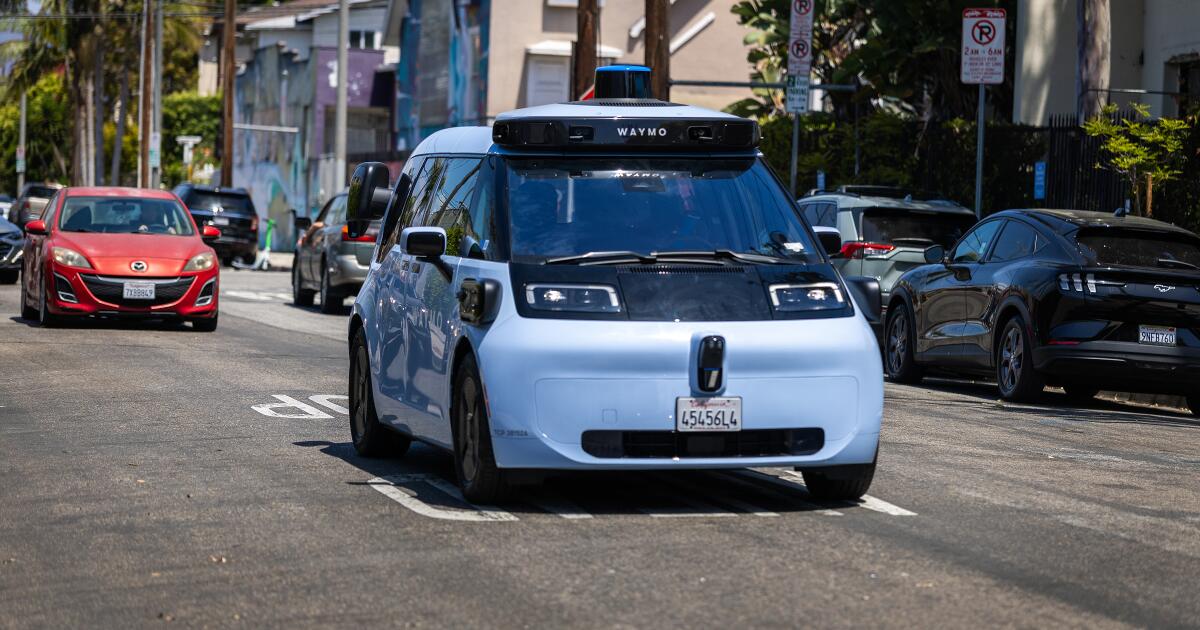
Waymo, the driverless taxi company that operates in more than 10 cities, will soon serve customers in San Diego.
The company has been testing its autonomous vehicles in San Diego with a safety driver behind the wheel since earlier this year. Rides without a human driver became available to employees Thursday and will open to members of the public later this year.
Waymo, which announced the expansion Wednesday, will also bring its taxis to Tampa, Las Vegas and Denver.
“If you’re in one of these four new cities, download the app to be notified when it’s time to ride,” the company said in a blog post.
Waymo has offered fully autonomous rides in San Francisco since 2022 and in Los Angeles since 2024.
It also serves customers in Nashville, Phoenix, Miami and other cities.
In May, Waymo launched a cheaper robotaxi dubbed the Ojai, which is better equipped for difficult driving conditions such as snowy roads.
The Ojai will supplement Waymo’s fleet of Jaguar I-Paces, the company said. In San Diego, services will be provided with the Ojai.
Waymo also announced Wednesday it’s beginning autonomous driving with a safety driver in its newest retrofitted vehicle, the Hyundai IONIQ 5.
“This phase allows us to validate our technology for fully autonomous operations as we work to bring riders even more ways to enjoy Waymo in the future,” the company said.
The company plans to eventually have tens of thousands of driverless taxis made per year, starting with the Ojai, then scaling using the IONIQ 5s.
The move into San Diego and three other cities widens the gap between Waymo and its competitors in the robotaxi race.
Elon Musk’s Tesla robotaxis and Amazon-owned Zoox are shuttling customers autonomously, but are nowhere near the scale at which Waymo operates.
Other companies are working on autonomous trucks and freight trains.
Waymo’s San Diego service area will include Pacific Beach, Normal Heights, La Playa and Southcrest, among other neighborhoods, the company said.
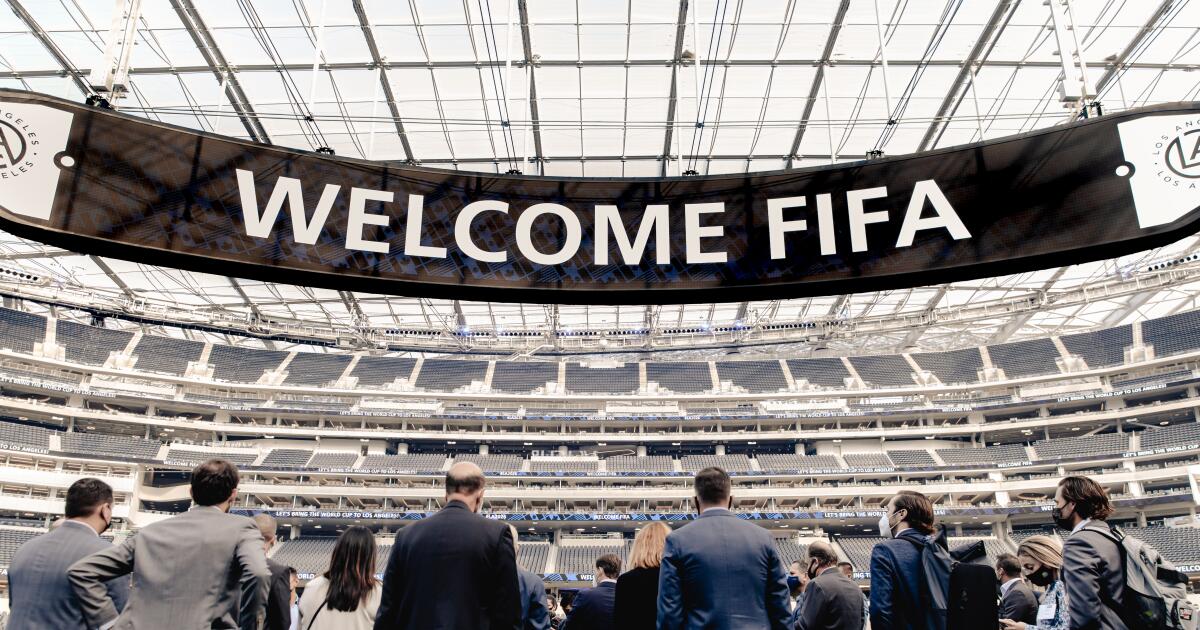
StubHub is getting a red card from some World Cup fans
Two World Cup customers are suing the New York-based ticket-selling company, alleging “false and misleading” advertising that left them without tickets or a refund for the World Cup games they paid to attend.
In federal court in New York last week, two Californians — Julia Reeker Moghal and Reuben Renteria — sued StubHub seeking monetary damages and a ban on the company selling World Cup tickets. The lawsuit aims to become a class action and comes after weeks of fierce criticism and complaints from customers regarding the company’s practices.
Throughout the World Cup, videos have emerged on Instagram and TikTok of StubHub customers describing their nightmare experiences with the ticket-selling platform.
Some said they had purchased tickets to World Cup games as early as November of last year, booked flights and hotels and arranged travel plans, then StubHub notified them days to weeks before the match of a refund for their tickets, which they never requested.
There were similar complaints about last-minute cancellations from people who bought Coachella tickets on StubHub.
In the lawsuit, Moghal said she had purchased three tickets for nearly $2,000 for the June 18 match between Switzerland and Bosnia-Herzegovina at SoFi Stadium in Inglewood, which were then canceled by StubHub. Moghal said she was contacted by StubHub and told her tickets would remain canceled, then was later told the tickets would be available one hour before the game.
When the match began, Moghal said she was at SoFi Stadium, but the tickets never came.
Renteria said he paid around $2,300 for the June 18 Mexico versus South Korea match in Guadalajara, Mexico, but they were canceled
“Devoted soccer fans have traveled from around the world to attend World Cup matches — and they reasonably relied on StubHub to provide the tickets they paid for as well as on StubHub’s warranty,” Blake Hunter Yagman, the attorney representing the two, said in a statement. “Instead of rewarding their business, StubHub sold them World Cup tickets that they either could not provide or on speculation, only to be stranded, in many cases, at the stadium gates without any recourse.”
According to StubHub’s website, its Fan Protect Guarantee states the platform will deliver valid tickets or refund in the event of a ticket issue, and that it will “go out of our way to find replacement tickets” of a comparable value. The lawsuit alleges the replacement tickets many fans were given by StubHub were worse than their original tickets.
FIFA, the World Cup organizer, states in its terms and conditions that the FIFA Marketplace, its own ticket-selling platform, is the only authorized platform for World Cup tickets, and that only tickets purchased through it are guaranteed by FIFA to be valid.
Despite the risk of purchasing through a third-party platform such as StubHub, many fans opted to do so to avoid the 30% FIFA resale tax, believing that the Fan Protect Guarantee would safeguard their order.
Since World Cup tickets began selling on FIFA Marketplace last September, fans have expressed disappointment in the expensive price tag. FIFA utilized a dynamic pricing system for the sale, and as sales phases progressed leading up to the games, the cost of tickets increased tremendously. In March, the extreme cost of tickets prompted 69 members of Congress to write a letter to FIFA urging them to lower their prices.
Tickets for the upcoming Friday match between Spain and Belgium in Los Angeles are selling on StubHub for over $1,300.
StubHub said in various statements to the news and in legal proceedings that ticket cancellations were a result of transfer problems and issues with FIFA’s ticketing infrastructure.
StubHub did not respond to requests for comment.
A FIFA spokesperson responded to this accusation in a statement, saying, “FIFA has no visibility over, or control of, secondary market ticket transactions carried out on third-party platforms. The transactions facilitated on these platforms occur entirely independently of FIFA’s official ticketing platform. With reference to the reliability of the services available to fans on FIFA’s official ticket platform, FIFA rejects any suggestion that the functional issues being experienced by users of third-party platforms with respect to FIFA World Cup 2026 tickets are the result of FIFA’s ticketing infrastructure.”
-

 Arizona2 minutes ago
Roller derby still has a home in Arizona despite myriad obstacles
-

 Arkansas9 minutes ago
Freshman OL Tucker Young never wavered through Arkansas football coaching changes | Whole Hog Sports
-

 California12 minutes ago
Northern California high school graduation shooting suspect arrested in Texas
-

 Colorado17 minutes ago
Colorado to weigh daily hunting limits, ban on fur sales for wildlife hunted for fur
-

 Connecticut24 minutes ago
Woman arrested, accused of murdering man in Farmington in March
-

 Delaware27 minutes ago
Rehab center, denied in Montchanin, buys Fort DuPont site | Exclusive
-

 Florida32 minutes ago
Snake hunters gather in Florida to kill invasive pythons for $25,000 in prizes
-

 Georgia39 minutes ago
“Operation Southern Slow Down” returns to target speeding drivers across Georgia and Florida

