Business
Commentary: Trump, the GOP and DOGE have launched their attack on Social Security. You should start worrying now


Perhaps the most frequently cited quote from Donald Trump relevant to his purported efforts to root out government waste has been “we’re not touching Social Security,” or variations thereof.
I expressed skepticism about this pledge shortly after the election by listing all the oblique ways the Trump administration could hack away at the program.
It gives me no pleasure to update my observation with the words, “I told you so.”
“We’re not touching Social Security.”
— Donald Trump makes a false promise
Among the weapons Trump could wield, I wrote, was starving the program of administrative resources — think money and staff. Sure enough, on Friday the program, which is currently led by acting Commissioner Leland Dudek, announced plans to reduce the program’s employee base to 50,000 from 57,000.
Its press release about the reduction referred to the program’s “bloated workforce.”
To anyone who knows anything about the Social Security Administration, calling its workforce “bloated” sounds like a sick joke. The truth is that the agency is hopelessly understaffed, and has been for years.
In November, then-Commissioner Martin O’Malley told a House committee that the agency was serving a record number of beneficiaries with staffing that had reached a 50-year low.
I asked the Social Security Administration to reconcile its claim of a bloated workforce with the facts. I got no reply.
Nearly 69 million Americans were receiving benefits as of Dec. 31, according to the agency. That figure encompassed 54.3 million retired workers, their spouses and their children, nearly 6 million survivors of deceased workers and more than 8.3 million disabled workers and their dependents. Agency employment peaked in 2009 at about 67,000, when it served about 55 million people.
“Without adequate staff at the agency,” Sen. Patty Murray (D-Wash.) said at a news conference Monday, “there will be people who can’t get their benefits, period.”
Not only beneficiaries could be affected by Trump’s raid on Social Security. About 183 million people pay Social Security taxes on their earnings. Their right to collect what they’re entitled to based on their contributions is dependent on the system recording those payments and calculating their benefits accurately, to the last penny. Any incursion by DOGE into the program’s systems or the scattershot firings that Dudek forecasts puts all that at risk.
In his testimony, O’Malley talked about how the agency had struggled to establish an acceptable level of customer service. In 2023, he said, wait times on the program’s 800 number had ballooned to nearly an hour. Of the average 7 million clients who called the number each month for advice or assistance, 4 million “hung up in frustration after waiting far too long.” The agency had worked the wait down to an average of less than 13 minutes, in part by encouraging customers to wait off the line for a call back.
Disability applicants faced the worst frustrations, O’Malley said. The backlog of disability determinations, which often require multiple rounds of inquiries, hearings and appeals, had reached a near-record 1.2 million. The program estimated that about 30,000 applicants had died in 2023 while awaiting decisions.
O’Malley had asked for a budget increase in fiscal 2025 to add at least 3,000 workers to the customer-service ranks, but it wasn’t approved.
Make no mistake: The starving of Social Security’s administrative resources, which is currently taking place under the guise of ferreting out fraud and waste, is no accident. It’s part of a decades-long Republican project aimed at undermining public confidence in the program.
Back in 1983, for example, the libertarian Cato Institute published an article by Stuart Butler and Peter Germanis calling for a “Leninist” strategy to “prepare the political ground” for privatizing Social Security on behalf of “the banks, insurance companies, and other institutions that will gain from providing such plans to the public.” Political opposition, as it happens, resulted in the death of George W. Bush’s push to privatize Social Security in 2005.
Germanis has since become a fierce critic of conservative economics and politics. Butler, who had spent 35 years at the right-wing Heritage Foundation before joining the Brookings Institution in 2014, told me by email he now advocates a private retirement system as an “add-on” private option rather than an alternative to Social Security. He also said he thinks “cutting staff and the claim that Social Security is rife with fraud and abuse are both ridiculous.”
The Trump acolytes have already taken an ax to some Social Security operations, as announced by Dudek — a former mid-level agency worker who stepped into the vacuum created by the departure of several managers who had dustups with Elon Musk’s DOGE outfit and by a delay in Senate confirmation of Commissioner-designate Frank Bisagnano, a banking and Wall Street veteran.
Last week, Dudek closed the agency’s office of transformation, which he called “wasteful” and “redundant.” The office was engaged in helping to keep the agency’s website operational and to develop usable online resources for beneficiaries and applicants. He closed its office of civil rights and equal opportunity, certainly functions relevant to the program’s operations. Employees in both offices were laid off or fired, and their pages on the website were removed.
On Monday, Dudek bragged about having “identified” some $800 million in cost savings, including through the cancellation of contracts that, for all he knows, may be crucial to the agency’s functioning. The largest “savings” came from a freeze on hiring and overtime in disability determination services, worth $550 million, according to Dudek.
But that’s an area where hands-on contact between applicants and the agency is indispensable. Academic researchers reported in 2019 that the closing of field offices dealing with disability applications led to “a persistent 16% decline in the number of disability recipients in surrounding areas, with the largest effects for applicants with moderately severe conditions and low education levels.”
In an appearance Friday on Joe Rogan’s webcast, Musk called Social Security “the biggest Ponzi scheme of all time,” a repetition of an ancient meme that demonstrates only that he knows nothing about Social Security, and nothing about Ponzi schemes. The program boasts an 85-year unbroken record for paying beneficiaries what they’re owed, and currently holds a reserve of nearly $2.8 trillion in Treasury securities, all publicly disclosed.
The GOP brain trust has accepted the claim that Social Security is rife with fraud without devoting a moment’s thought to it. House Speaker Mike Johnson absurdly claimed Sunday on “Meet the Press” that Musk’s “algorithms crawling through the data” are “finding enormous amounts of waste, fraud and abuse.”
There’s absolutely zero evidence for that. Can we trust Musk to find it? This is the guy whose claim that “millions” of people aged 150 or older were receiving payments was decisively debunked — the notion that benefits were going to people that old was merely an artifact of the software program used by the agency. No payments are going to anyone in that category; Social Security automatically ceases payments to anyone who has reached the age of 115. The chief bug in the system is Musk’s ignorance.
By the way, the search for waste, fraud and abuse — call it WFA — has a long and discreditable history. Ronald Reagan pledged to ferret out enough WFA to cut the federal budget by more than 6% (sometimes he said 10%). One of his first steps, however, was to fire 15 departmental inspectors general, whose jobs involved finding WFA. Sound familiar? One of Trump’s first orders upon taking office was to fire inspectors-general at 17 federal agencies.
Reagan impaneled the so-called Grace Commission, whose chairman, industrialist J. Peter Grace, promised to unearth billions of dollars of the elusive WFA. The commission’s eventual proposals included taxing Social Security benefits, adding soy meat-extender to school lunches ($84-million savings over three years), and eliminating the regulatory agencies that oversaw industries represented by the panel’s members.
The truth is that Social Security is one of the most efficient agencies in the federal government. Its administrative costs are one-half of one-percent of its total costs, which include benefit payments.
What’s the goal of this raid on Social Security, the nation’s premier anti-poverty program and one whose beneficiaries live by the tens of thousands in every congressional district in the land?
It’s as if Trump and Musk are intent on staging a natural experiment on whether Republicans can tick off or terrify 69 million Americans at one fell swoop by taking away their sustenance in old age or disability — and still win election.
They’re bound to learn, to the contrary, that there isn’t a federal program that Americans value more than Social Security. Are they dumb enough to try killing it? We shall see.


The luxury shopping center in Pacific Palisades will reopen next month after more than $100 million in renovations forced by the January 2025 wildfire that devastated the Los Angeles neighborhood.
Palisades Village will reopen Aug. 15, owner Rick Caruso announced Wednesday. The outdoor center survived the blaze that destroyed homes and other businesses but needed refurbishment to eliminate contaminants that the fire could have spread.
Crews are putting finishing touches on mall buildings after tearing them down to the studs, treating the wood and rebuilding the walls, Caruso said.
“Everybody’s working, and stores are moving their products in,” he said. “It’s a really cool feeling that people have really locked arms and are working together.”
An electrician installs lighting for a restaurant at Rick Caruso’s Palisades Village on Thursday. The shopping center is scheduled to reopen mid-August.
(Myung J. Chun / Los Angeles Times)
Pacific Palisades resident Allison Polhill, who is rebuilding the home of 30 years that her family lost in the blaze, said she is “thrilled” at the prospect of returning to the mall she used to frequent. Its comeback is a boost for the community, she said.
“Every single step that we make to reopen our commercial corridors is going to bring more people back into the Palisades,” said Polhill, who expects to move back into her home at the end of August.
A total of 6,822 structures were destroyed in the Palisades fire, including more than 5,500 residences and 100 commercial businesses, according to the California Department of Forestry and Fire Protection.
Caruso previously attributed the mall’s survival to the hard work of private firefighters and the fire-resistant materials used in the mall’s construction.
The $200-million shopping and dining center opened in 2018 with a movie theater and a roster of upmarket tenants, including Erewhon, which may be the only grocer in the heart of the fire-ravaged neighborhood when it opens.
Caruso’s company was able to fill the mall with tenants despite the long shutdown.
Palisades Village is 99% leased, with the majority of tenants returning, said Jackie Levy, chief financial and revenue officer. Nearly one-third of the shops and restaurants are new to the property.

A firefighter carries a hose back to his rig while walking through a destroyed home from the Palisades fire in Pacific Palisades on Jan. 7, 2025.
(Genaro Molina / Los Angeles Times)
Last year, Pacific Palisades-based fashion designer Elyse Walker said she would reopen her eponymous store in Palisades Village after losing her 25-year flagship location on Antioch Street to the inferno.
Other neighborhood shops destroyed in the fire that are reopening at the mall include K Bakery and Loomey’s Toys, which caters to children up to age 12 and used to be across the street from Palisades Elementary Charter School.
“It’s been a journey and I’m excited because I wasn’t sure that there was going to be a place to come back to,” said toy store owner Amanda Rastegar. “Hopefully we can bring some of that magic back.”
Rastegar’s home in the Palisades survived but was damaged by the fire. The family returned about eight weeks ago. Her last memory of the fire was a burning supermarket.
“I just couldn’t wrap my brain around what was happening,” she said. “By the time I left, Gelson’s was on fire.”
Among the returning tenants is Angelini Ristorante & Bar. Well-known Los Angeles chef Gino Angelini said he will be in the kitchen next month for a return of the Italian restaurant.
“We won’t do a big celebrity open,” he said. “We want to have a very soft opening and see our customers come back.”

Construction takes place at Rick Caruso’s Palisades Village on Thursday. The shopping center is scheduled to reopen mid-August.
(Myung J. Chun / Los Angeles Times)
An elaborate celebration would not feel “correct for me,” Angelini said, because the devastation has been “very sad” for so many.
Other new tenants include local chef Nancy Silverton, who has agreed to move in with a new Italian steakhouse called Spacca Tutto. Women’s activewear retailer LESET will open its first West Coast location.
Caruso said he is optimistic that customers will return to the center, even though many Pacific Palisades residents are still dispersed. One tracking system estimated that about 30% of the Village’s customer base was impacted by the fire, he said.
“That means 70% did not get impacted, so there’s a lot of customers still left out there,” Caruso said. Historically, the center drew customers from as far away as Beverly Hills and Calabasas, as well as Malibu, Brentwood and Santa Monica.
He also hopes many will be inspired to visit the revived mall.
“I believe in the goodness of people and I believe that people are going to want to support the Palisades,” he said. “They’re going to want to be there and support the businesses that have had the courage and the heart to reopen.”

Walmart is rapidly expanding its network of electric vehicle chargers designed for customers to use while they shop.
The network could help fill gaps in EV infrastructure in states with greater need for chargers. Walmart, which has more than 5,000 locations in the U.S. and hundreds in California, says more than 90% of Americans live within 10 miles of one of its stores.
The chargers also offer an incentive for customers to choose Walmart — Walmart Plus members will receive a 10% discount off an average price of $0.46 per kilowatt-hour of energy at the company’s chargers.
Walmart chargers are already available at more than 75 locations in 17 states, with Texas boasting the most charging stations, followed by Florida and Arizona.
Matthew Nelson, Walmart’s director of energy policy, said last week on LinkedIn that the network will soon reach 29 states, including California.
“We are delivering on the promise of affordable, reliable and convenient charging,” Nelson said in his post.
According to Walmart’s website, six charging stations are coming to California soon, though the company did not offer a specific timeline.
The chargers will be installed at stores in Antelope, Brea, Fresno, Stockton, Suisun City and Vallejo.
Most charging sites in California will include eight to 16 fast-charging stalls, said Walmart spokesperson Kelsey Bohl.
The company first announced plans in April 2023 to install its own EV chargers at Walmart and Sam’s Club stores, with a goal of installing thousands of chargers by 2030. Partnering with ABB E-Mobility and Alpitronic, it added 25 new charging sites this past May and six more in June.
“Walmart is building a leading retail-integrated EV fast-charging network, focused on delivering an affordable, reliable and convenient charging experience where customers already shop,” Bohl said in an emailed statement. “Customers can charge while they shop, access stations through the Walmart app they already use, and benefit from affordable pricing.”
The charging stations already available include 612 individual charging stalls using 400-kilowatt chargers. Each stall has a dual charging cord with both Combined Charging System and North American Charging Standard connectors. The standard connectors, designed by Tesla, are smaller and lighter than the combined systems.
The primary way to pay for the chargers is through the Walmart app, but the company is also experimenting with built-in credit card readers to allow those without the app to use the stations.
Customers can check charger availability on the Walmart app. The company said the chargers will be available 24 hours a day.

Robotaxis could be turning into robocops.
A self-driving Waymo reported two teens to San Mateo, Calif., police on Monday after they were found drinking alcohol and shooting toy guns in the back of the vehicle.
According to a social media post from the San Mateo Police Department, officers detained two 15-year-olds after the Waymo they were riding in contacted the department and stopped in a parking lot until law enforcement arrived.
“Parents do you know where your teens are?” the San Mateo Police Department wrote on Facebook following the incident. “Waymo does!”
Officers removed both teens from the vehicle and determined they were using toy guns to shoot Orbeez out the windows. Orbeez are small, water-absorbing beads sold at toy stores.
“Toy guns, water guns, and BB guns all pose real dangers, especially to an untrained eye,” the Police Department said. “The simple handling of them can cause fear in [passersby].” “
A video posted on Facebook shows at least five officers and a police dog responding to the scene and approaching the Waymo with their weapons raised.
Waymo did not immediately respond to a request for comment.
Waymo vehicles have internal cameras and microphones that may be used in an emergency or to “promote safety and security,” according to Waymo’s online support page.
The cameras are also used to ensure the vehicles are clean and to help find lost items, according to the support page.
The company said it does not use facial recognition or other biometric identification technologies to identify individuals.
“In more urgent circumstances, support may access live video during a trip,” the Waymo page said.
The San Mateo Police Department’s Facebook post has garnered nearly 60 comments, with one user accusing Waymo of “snitching.”
“At least they got a designated driver?!” one user commented.
-

 Washington, D.C4 minutes ago
Police search for suspect caught on camera slashing tires in Georgetown
-

 Cleveland, OH11 minutes ago
Ohio ICAC Task Force’s “Operation Guardians’ Watch” Results in 25 Individuals Arrested and Charged for Attempting to Meet with an Underage Child to Engage in Sexual Activity
-

 Austin, TX14 minutes ago
Texas’ Goosby hosts camp to benefit heart research
-

 Alabama19 minutes ago
Alabama teen charged with stabbing mom to death issued vile threat to dad — as new pic shows bloodbath left behind
-

 Alaska26 minutes ago
Outmigration, inflation, choice schools: Alaska school closures likely to continue without changes
-
 Arizona29 minutes ago
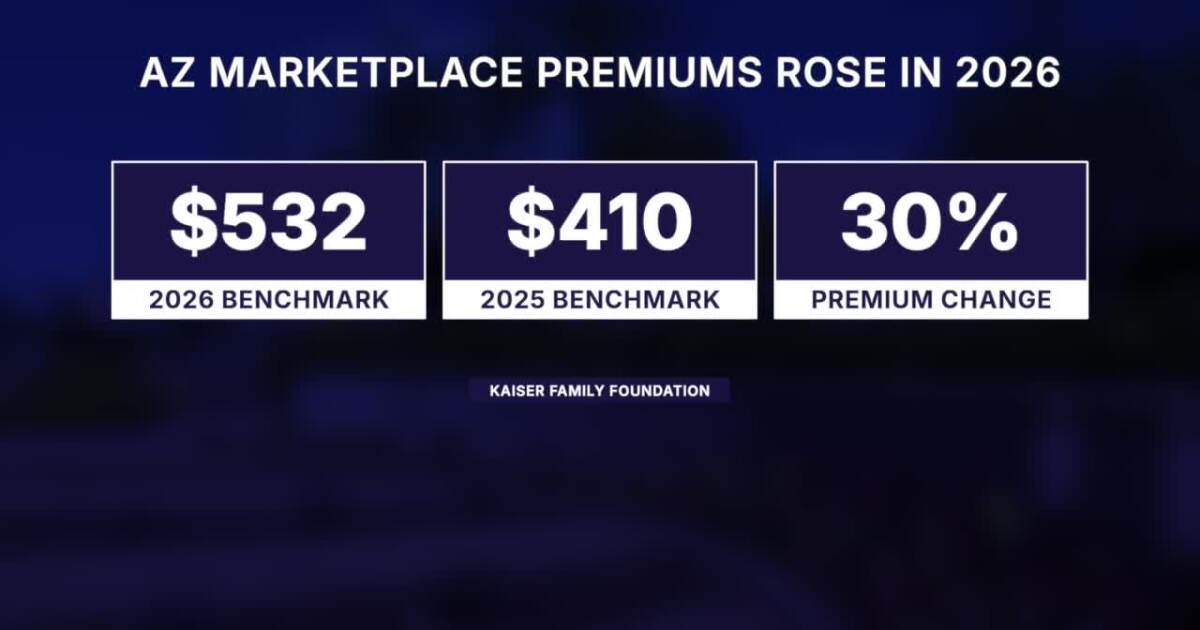
WATCH: Arizona’s health insurance marketplace is seeing dropping enrollment
-

 Arkansas34 minutes ago
ARKANSAS SIGHTSEEING: Randolph County can claim many firsts in Arkansas | Northwest Arkansas Democrat-Gazette
-

 California41 minutes ago
Toddler sustains brain injury in fall after California childcare worker threw him into the air, lawsuit says

