Business
Column: The George Carlin auto-generated comedy special is everything that’s wrong with AI right now

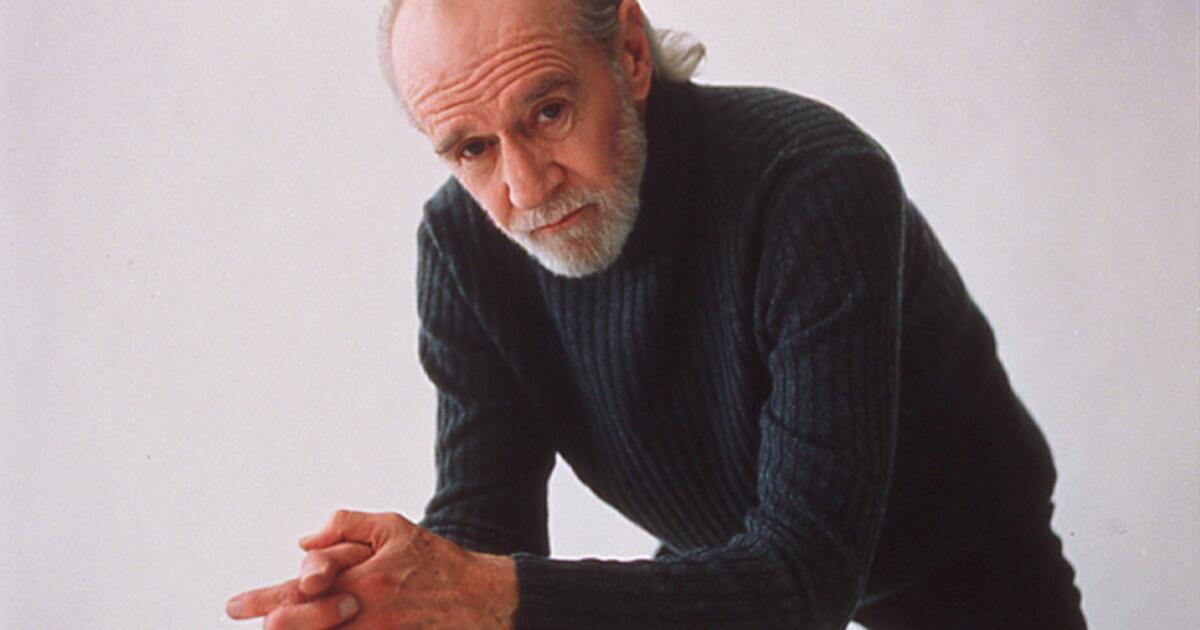
I knew it was going to be bad. By the time I sat down to watch the thing, much of the internet was already furious that a “state-of-the-art-entertainment AI” called Dudesy had generated an hourlong comedy special in the style of George Carlin, without the consent of the late comic’s horrified family. But I wasn’t prepared for it to be so bad.
The special, tastefully titled “George Carlin: I’m Glad I’m Dead,” is one of the most unpleasant things ostensibly produced for entertainment purposes that I have ever sat through. It’s a stroll through an uncanny valley of Carlin’s comedy, an audio program in which a serviceable replica of the familiar raspy voice delivers “jokes” on topics from mass shootings to Taylor Swift to artificial intelligence.
It’s all set to an unsettling rotating gallery of AI-generated images that roughly correlate to whatever Carlin’s simulacrum is discussing. When the Carlin voice is hitting on the malign influence of money in politics, there’s a bizarre diagram of politicians being bought off, with figures labeled “The guluar citizen” and “Liolbolist”; when AI Carlin says the you-know-what “has hit the fan,” a hyper-stylized brown tube protrudes from one.
It’s a nightmare. If I were to have to watch this whole thing in a darkened room, eyeballs peeled like the guy in “A Clockwork Orange,” there is a non-zero chance I would have a complete psychotic break.
Sadly, that’s the point. This thing wasn’t produced to convince anyone AI can produce great work in the style of one of our iconic comedians. It was, like the AI Drake song and those Harry Potter-directed-by-Wes Anderson images before it, a provocation. It was supposed to cause a stir, to go viral in a way that vaguely unsettles or irks people, and it did that exactly. Part of that calculation may have, depressingly, included pissing off Carlin’s family and estate, which it also did.
Carlin’s daughter, Kelly, responded to the special in a statement about her dad. “No machine will ever replace his genius,” she wrote on X. “These AI generated products are clever attempts at trying to recreate a mind that will never exist again. Let’s let the artist’s work speak for itself. Humans are so afraid of the void that we can’t let what has fallen into it stay there… Here’s an idea, how about we give some actual living human comedians a listen to?”
George Carlin fans have expressed disgust with the content itself, too: Vice’s Matthew Gault, a self-described longtime fan of the comic, described the special as “worse than you could possibly imagine.” Writer and PR pro Ed Zitron, another Carlin stalwart, wrote that “the jokes were bad, the voice was soulless and inaccurate, the pace was languid, and the world will have forgotten about it in two weeks unless Carlin’s estate sues (and I desperately hope they do so).”
But what bothers me uniquely about this episode is that it serves as a grim snapshot of where so much of the AI industry is at, a year into its reign as the dominant tech trend: Here we have an apparently impressive technology — we can’t know for sure, because the details are concealed in the production process, and almost surely involve ample human labor — designed not to meaningfully entertain, or to present any actual utility, but to exist wholly as a warped advertisement for itself.
So much of AI is smoke and mirrors right now, clouding what too often seems to have amounted to automated digital reappropriation (it’s no accident that the special begins with a long disclaimer that what you’re about to see is not actually George Carlin and was created by an AI that “learned” from his specials, in a laborious effort to avoid allegations of copyright infringement) and rank opportunism.
Notice the pattern of chief AI spokesman Sam Altman himself, who spent last year publicly extolling the vast and potentially terrible power of the AI he was building — a CNN headline from October noted that “Sam Altman warns AI could kill us all” — but has now pivoted to assuring business leaders in Davos, Switzerland, that actually, it’s just good for business. “It will change the world much less than we all think,” Altman said this week at the World Economic Forum there, adding that it’s an “incredible tool for productivity.”
The cynical observer might conclude that the apocalyptic AI hype tour Altman and his peers embarked on in 2023 was merely a sustained auto-generated George Carlin special: a stunt designed to generate interest in the power of a product that tech companies want to sell you.
That’s likely the case with Dudesy, the “AI” that allegedly created the special, though we can’t say for certain because what Dudesy actually is remains shrouded in the dumbest kind of secrecy. The Dudesy “AI” is the animating conceit of a comedy podcast hosted by ex-”MadTV” cast member Will Sasso and comedian Chad Kultgen. The premise is that both comics have handed over all their personal data to Dudesy — a bot created by an unnamed tech company, and which the hosts have told journalists that a nondisclosure agreement precludes them from discussing — and the “AI” runs the show.
I keep putting “AI” in scare quotes because it’s not entirely clear to what extent Dudesy exists as a technology, whether it’s fabricated by the comedians, or stitched together from ChatGPT output or voice manipulation technology or actually some proprietary chatbot or what. Honestly, I don’t know what would be worse: if two washed-up comedians stitched together a stunt that made it appear as though an AI generated a facsimile of George Carlin, insulting his memory, fans and family in order to flog their floundering podcast, or if there was a real tech company behind this and its bad-taste advertising for some voice-replication product.
The podcast, which isn’t all that popular, appears to rely on its central hook to juice its numbers. Before the Carlin stunt, Dudesy had produced another comedy special, this one performed by an AI version of quarterback Tom Brady, which was immediately met with the threat of legal action and taken down.
I want to pause here to note that one of the stories about that fiasco I found was published by Sports Illustrated, which recently faced down its own scandal over allegations the once-iconic sports magazine was using AI to write articles, which were posted to the site in uncharacteristically weird and unintelligible prose. And, well, here’s the opening sentence of the Sports Illustrated article about AI Tom Brady: “Comedy comes in many different forms and is portrayed in a multitude of ways, but a newly generated AI comedy special — created by comedians Will Sasso and Chad Kultgen — created some buzz last week.”
Can’t say for certain, but that scans as AI-generated to me! It felt like a glimpse of one plausible, fast-arriving future: generative AI products reviewing other generative AI products ad infinitum — bad AI content all the way down.



The Ryan Gosling-led “Project Hail Mary” rocketed to the top of the box office this weekend, marking a big win for Amazon MGM Studios.
The film — which stars Gosling as a science teacher who embarks on a space mission to save humanity — hauled in $80.5 million in the U.S. and Canada, making it the biggest domestic debut of the year so far. Globally, “Project Hail Mary” brought in $140.9 million.
The movie is an adaptation of a novel by Andy Weir, author of “The Martian” — another successful book-to-screen adventure. The big opening weekend for “Project Hail Mary” is a boost for Amazon MGM Studios, which had heavily promoted the film as an example of the big blockbusters it could produce.
“We believe deeply in the Hail Mary, and it’s clear audiences do as well,” Kevin Wilson, head of domestic theatrical distribution for Amazon MGM Studios, said in a statement. “What we’re seeing in theaters —the energy, the exit scores, the word of mouth — is everything we believed this film would deliver.”
Walt Disney Co. and Pixar’s “Hoppers” came in second at the box office this weekend with a domestic total of $18 million. The original animated film has now garnered $120.4 million in the U.S. and Canada since it debuted in theaters earlier this month.
Indian action film “Dhurandhar The Revenge” came in third with $10 million, followed by Disney-owned Searchlight Pictures’ horror film “Ready or Not 2: Here I Come” and Universal Pictures’ romance “Reminders of Him” rounding out the top five.
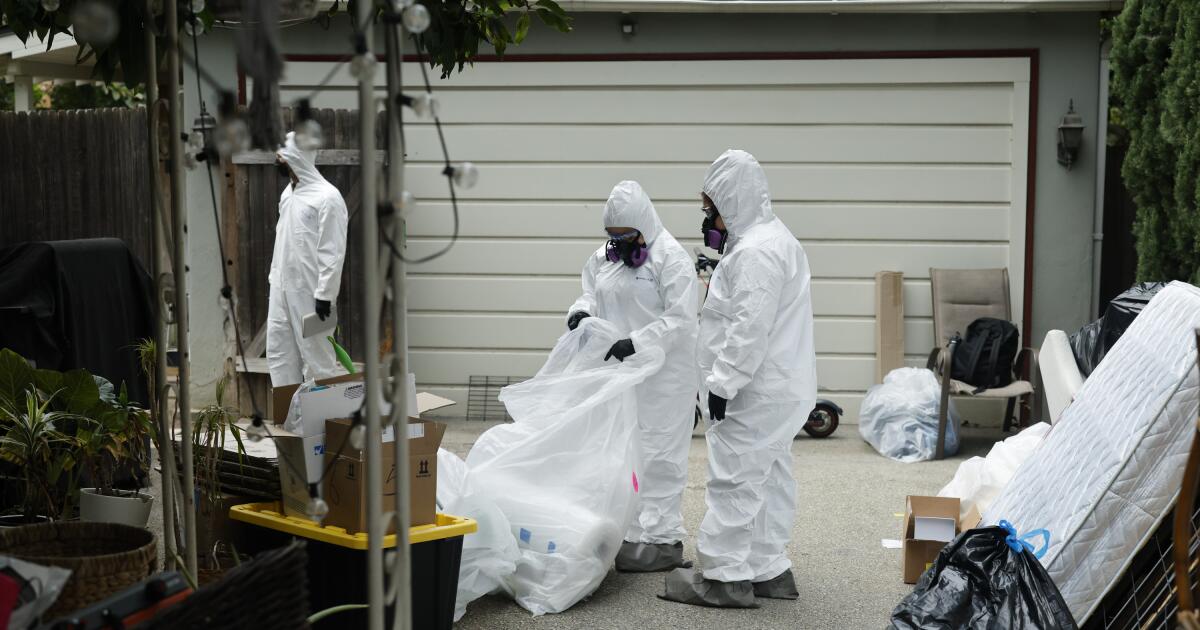
When the January 2025 firestorms swept through Altadena and Pacific Palisades they not only burned down homes but left thousands still standing riddled with smoke damage.
The disaster set the stage for lawsuits by fire victims who alleged their homes were filled with toxic contaminants, yet insurers refused to do hygienic testing and properly clean and make them habitable again.
This week, a much-anticipated bill was unveiled in the Legislature that would establish first-in-the-nation limits for smoke-damage contaminants, require testing and force insurers to restore homes to their prior condition.
The proposed law specifically applies to homes damaged in urban or “wildland-urban interface” fires — such as those in January 2025 — where burning structures, cars, utilities and other items generate more toxins than a rural wildfire.
Authored by Assemblymember Mike Gipson (D-Carson) and sponsored by Insurance Commissioner Ricardo Lara, Assembly Bill 1795 follows similar legislation introduced by Assemblymember John Harabedian (D-Pasadena).
That bill would apply to homes, schools and workplaces — and their properties — requiring insurers to meet existing health standards for lead and asbestos cleanup, while having the state develop additional ones for other contaminants.
Lara’s bill also follows a report issued last week by a smoke-damage task force he established last year, which established the framework for the bill. However, consumer advocates said it was stacked with members tied to the insurance industry.
Lara, who has been asked to step down by critics over his handling of insurers’ claims practices, has defended the task force and his handling of the wildfires, noting his department is investigating insurers.
Here’s what to know about the legislation, which still must go through legislative hearings before an Assembly vote.
Why is this bill a big deal?
Under the current system, insurers are not required to pay for expensive hygienic testing for toxins in smoke-damaged homes. That has been a big source of friction with fire victims, fueling the ongoing litigation over the matter.
Under the bill, however, insurers would be required to cover testing for lead, asbestos and other contaminants that have been found in soot, char and ash inside homes after a wildfire. Such testing would be required both before and after any cleanup work has begun to ensure the home is left in “preloss” condition. Additionally, it sets timelines for claims payments and prohibits insurers from halting payments for temporary housing until a home is cleared as safe, if a state of emergency has been declared.
Who will determine what levels of various contaminants are safe?
The bill requires the California Environmental Protection Agency to develop minimum sampling, testing and chemical screening levels by June 30, 2027. The requirements would be most rigorous in a “high-impact” zone within six miles of a fire perimeter, with potentially lesser requirements for residences as they get further away. The zones and testing requirements could be adjusted for specific fires.
The agency also is required to establish training standards and certification requirements for inspectors and others involved in the testing and restoration of properties.
How does this help the January 2025 fire victims?
More than 40,000 insurance claims have been filed as a result of the Eaton and Palisades fires, with more than 13,000 for smoke damage.
The bill allows the EPA, state and local agencies to establish expedited “interim” standards. Insurance department spokesman Michael Soller said this provision was written with the January 2025 fires in mind.
What do consumer advocates say?
They generally support the proposed changes. Amy Bach, executive director for United Policyholders in San Francisco, who sat on the smoke task force and was critical of its makeup, said she was pleased that the bill “acknowledges the perspectives of the homeowners and will advance their interests in an important way.” But she expects insurers will complain it’s too costly and threaten to leave the state if the bill is not toned down.
Attorney Dylan Schaffer, who has sued the California Fair Plan, the state’s insurer of last resort, over its smoke-damage practices, said the bill was a “very strong nod in the right direction” though it will be the final standards established by the state for testing and cleanup that will be most important. “It always gets down to the details,” he said.
What is the industry’s reaction?
The insurance industry is expected to lobby for changes to the bill, suggesting it could impose burdensome costs on companies.
Karen Collins, a vice president of the American Property Casualty Insurance Assn., said that “insurers support science‑based approaches to evaluating smoke damage and guiding appropriate remediation” but want to “help ensure the bill strikes a reasonable balance — protecting consumers while preserving insurance affordability, availability, and market stability.”
Rex Frazier, president of the Personal Insurance Federation of California, an industry group representing state property and casualty insurers, also said the bill lacks analysis of the “tradeoffs” between the higher claims payments that will result from it and and its effect on consumer premiums.
He also was concerned that the bill appears to bypass traditional rule-making procedures and allow the state EPA to establish the toxic contaminant and other standards without public hearings.
Soller said the intent of the bill is to allow the agency to forgo hearings only in developing interim standards.
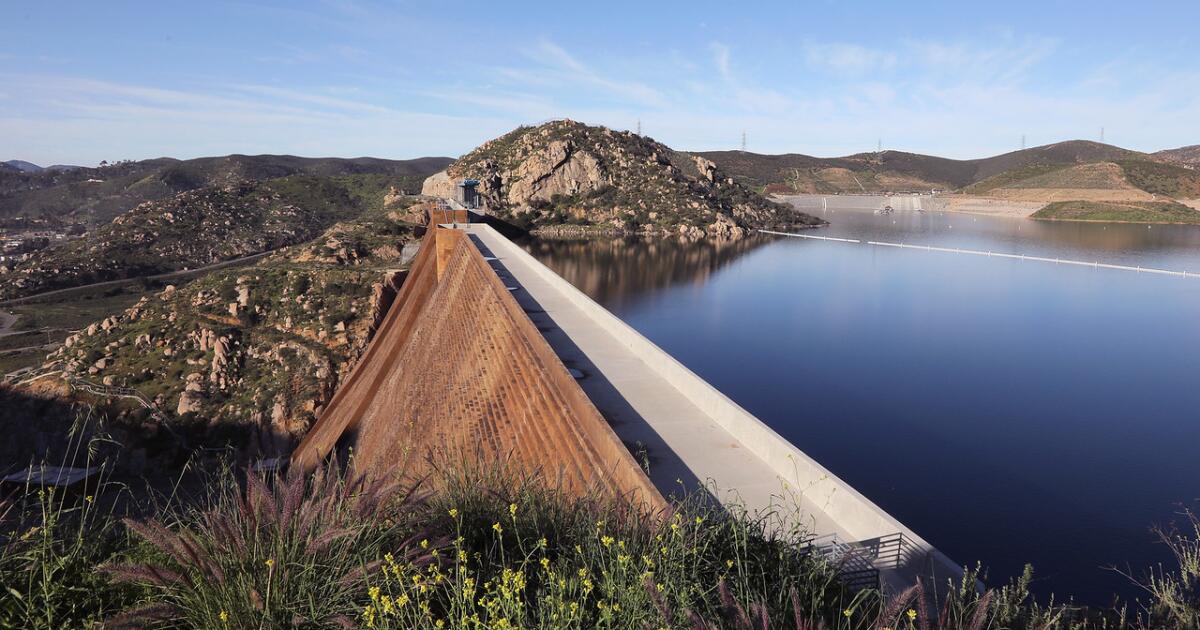
San Diego County’s water agency is selling some of its water to another Southern California agency to help limit increasingly high water costs for 3.3 million people.
The water is going to Western Municipal Water District, which serves a growing area of nearly 1 million people in Riverside County, including Corona, Riverside and Temecula.
The San Diego County Water Authority will transfer at least 10,000 acre-feet of water per year over the next 21 years, enough for about 30,000 typical households.
The agencies said the deal will be worth about $100 million over the first five years.
The San Diego County agency has invested heavily to get more water in recent decades. In 2003, it struck an agriculture-to-urban transfer deal and it also buys water from the Carlsbad desalination plant under a 30-year agreement. These actions have brought San Diego County plentiful water — also some of the most expensive in the state. At the same time, conservation efforts in San Diego County have reduced water needs.
The San Diego County Water Authority delivers water to 22 cities and other agencies. Last year its board approved raising wholesale water rates 8.3%, which drew criticism from residents who said they were already struggling to afford their water bills.
Board Chair Nick Serrano said the deal “allows us to maximize the value of the investments San Diego County residents made over decades, strengthen water reliability, and do so in a way that is mindful of affordability.”
The two agencies said in a joint statement on Thursday that for Western Municipal, the additional water will help during drought and ensure reliable water without the cost and time involved in developing new water infrastructure projects.
The water will move from one area to the other through the pipelines of the Metropolitan Water District of Southern California, the regional wholesaler that imports water from the Colorado River and Northern California. Both San Diego County and Western Municipal are members of the MWD.
An agreement between the MWD and the San Diego County Water Authority last year ended a 15-year legal battle over water costs and cleared the way for San Diego County to start selling some of its excess water to areas that need it.

World Cup teams finalize US base camps as host cities prepare for global crowds

Amazon Health AI brings a doctor to your pocket
Amazon MGM Studios’ ‘Project Hail Mary’ rockets to the top of the box office

Chappell Roan responds to Jorginho’s accusations that singer’s actions left girl in tears

‘Bluey’ experience opens at Disneyland. Here’s what it’s like

Florida High School Football Rankings: Top 25 teams – Oct. 21

How old is Bo Nix? What to know about Oregon quarterback ahead of 2024 NFL Draft

Cleary's 21 help Le Moyne down Central Connecticut State 69-64 in OT

99th annual Pony Swim held in Virginia

Indiana Members Credit Union announced as new anchor tenant at Bottleworks District

French elections: Paris stays left as far right makes mixed gains

ICE officers set to deploy to airports as delays mount, border czar Homan confirms

Video: ICE Agents Will Be Deployed to U.S. Airports, White House Confirms

Schumer knocks Trump on Iran, plan to send ICE to airports: ‘Asking for trouble’

‘Risk of escalation is extremely high as Iran shows it can retaliate’
-

 Detroit, MI4 days ago
Drummer Brian Pastoria, longtime Detroit music advocate, dies at 68
-

 Oklahoma1 week ago
Family rallies around Oklahoma father after head-on crash
-

 Nebraska1 week ago
Wildfire forces immediate evacuation order for Farnam residents
-

 Georgia7 days ago
How ICE plans for a detention warehouse pushed a Georgia town to fight back | CNN Politics
-

 Alaska1 week ago
Police looking for man considered ‘armed and dangerous’
-
 Science1 week ago
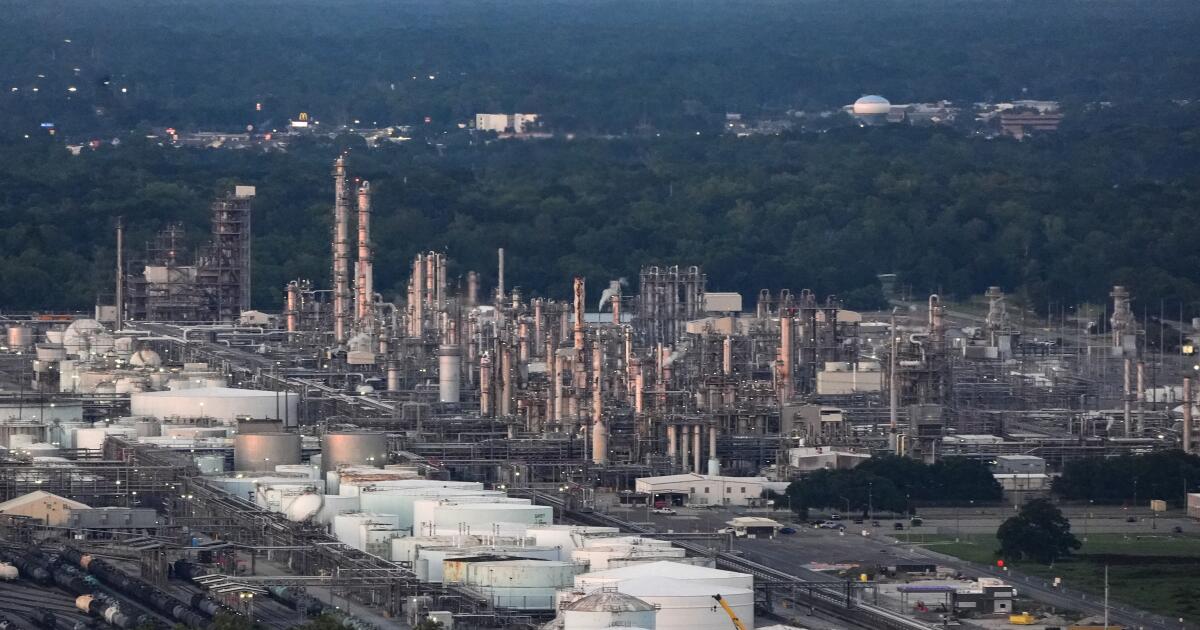
Federal EPA moves to roll back recent limits on ethylene oxide, a carcinogen
-

 Movie Reviews4 days ago
‘Youth’ Twitter review: Ken Karunaas impresses audiences; Suraj Venjaramoodu adds charm; music wins praise | – The Times of India
-

 World1 week ago
Thousands march worldwide in solidarity with Palestine, Iran on al-Quds Day