Business
Beyond 'Emilia Pérez': Inside 7 of the nastiest Oscar campaigns in history


By the time “Emilia Pérez” had garnered 13 Oscar nominations, including for best picture, Netflix’s Spanish-language musical about a transgender drug lord had already been mired in controversy. Critics skewered the film’s portrayal of trans issues and Mexican culture.
Then Karla Sofía Gascón’s old social media posts resurfaced in which the first out trans performer to receive a lead actress nod maligned Muslims, George Floyd and diversity and seemed to body-shame the singer Adele.
Gascón apologized, deactivated her X account and then went on the defensive, sometimes tearfully, in an interview with CNN en Español, on her Instagram account and in a letter to the Hollywood Reporter in which she denounced “this campaign of hate.”
After the social media storm erupted, during a talk on podcast “The Town,” Netflix chief content officer Bela Bajaria called the controversy “a bummer” that distracted from the film and its accolades. Gascón has largely been sidelined from the movie’s awards drive.
Yes, it’s Oscar season, where the road to the red carpet is often littered with unforced errors, smear campaigns, opposition research and sometimes dirty tricks in efforts to undermine if not outright torpedo the front-runners’ chances.
The Academy Awards are not just an evening of self-congratulation. In addition to prestige, an Oscar is a huge publicity generator that can translate into box office grosses, home video sales and streaming viewership.
While in years past such campaigns usually were fueled by awards consultants and frequently aimed at a single movie or actor, this season has seen controversies served upon multiple contenders.
It’s not just the professional consultants and studio marketers involved in these so-called whisper campaigns. Now small armies of amateur Internet sleuths and movie fans have joined the fray, turning gripes and teapot tempests into social media scandals.
“The big difference in the last 10 years is social media fanning the flames,” said Jason E. Squire, host of “The Movie Business Podcast” and professor emeritus at USC‘s School of Cinematic Arts. “The real question is whether it impacts Oscar voters.”
In addition to the travails of Gascón, best picture nominee “The Brutalist” has been slammed for admittedly using an AI speech tool to aid stars Adrien Brody and Felicity Jones’s Hungarian language skills. Fernanda Torres, the lead actress nominee for “I’m Still Here,” came under fire for appearing in blackface on a Brazilian television show in 2008. Torres apologized.
Then there’s “Anora,” another best picture nominee, which was lambasted for not hiring an intimacy coordinator on set. At a London screening, Sean Baker, the film’s director, said that he had offered one to the lead actors.
With this year’s Academy Awards just weeks away, we take a look at notable controversies of the past, some of which perhaps deserve their own statuettes for spite and nastiness: putting the tin in Tinseltown.
Gwyneth Paltrow and Joseph Fiennes in “Shakespeare in Love.”
(Miramax Films)
“Shakespeare in Love”
Oscar year: 1999
Backstory: Steven Spielberg’s World War II epic “Saving Private Ryan” was considered the favorite, but Miramax co-founder Harvey Weinstein, known for turning awards campaigns into a blood sport, had other plans.
Controversy: “Shakespeare in Love’s” best picture win is widely seen as the capstone to one of the most controversial award campaigns in Oscar history.
Mark Gill, then Miramax‘s L.A. president, told the Hollywood Reporter, “We used the playbook for ‘The English Patient’ — turbocharged, on steroids. It was just absolutely murderous the whole way through.”
Miramax staffers called voters to make sure they had received a VHS copy of “Shakespeare in Love.” Weinstein enlisted First Lady Hillary Clinton to host the film’s world premiere in New York, unleashed a blizzard of ads, hosted parties with the film’s stars and set up screenings and private dinners with Oscar voters.
Weinstein also was accused of badmouthing the Spielberg film, a DreamWorks release.
Terry Press, DreamWorks’ marketing chief at the time, later said that she received calls from reporters telling her that Miramax publicists were “trying to get us to write stories saying that the only thing amazing about ‘Ryan’ is the first 20 minutes, and then after that it’s just a regular genre movie.”
And the Oscar goes to: “Shakespeare in Love” won seven Academy Awards including best picture and lead actress (Gwyneth Paltrow). “Saving Private Ryan” won five, including director (Spielberg).

Russell Crowe played mathematical genius John Nash in “A Beautiful Mind.”
(Universal Studios)
“A Beautiful Mind”
Oscar year: 2002
Backstory: The life of mathematician John Nash, a Nobel laureate who triumphed over schizophrenia, was chronicled in this acclaimed Ron Howard-directed biopic, earning eight Oscar nominations, including best picture.
Controversy: A narrative caught fire with critics who began charging that the more negative parts of Nash’s life were omitted from the film. Accusations that Nash was an antisemite, adulterer and homophobe began to appear in reviews, gossip sites and news articles, prompting him to appear on “60 Minutes” to refute the claims.
Angered by the reports, Sylvia Nasar, the author of the book on which the movie was based, wrote an op-ed for The Times, rebuking journalists and saying they had “distorted” material from her book and “invented ‘facts.’”
And the Oscar goes to: “A Beautiful Mind” won four Oscars including best picture, supporting actress (Jennifer Connelly) and director (Howard).

Whoopi Goldberg in “The Color Purple.”
(Michael Ochs Archives / Getty Images)
“The Color Purple”
Oscar year: 1986
Backstory: Spielberg’s adaptation of Alice Walker’s Pulitzer Prize-winning novel earned 11 nominations, including best picture, director and adapted screenplay, and was Oprah Winfrey’s film debut, garnering her a supporting actress nomination.
Controversy: When the film was released in 1985, it immediately sparked a backlash, coming under fire for its depiction of rape and stereotypical representations of Black men, a portrayal that Spike Lee decried as “one-dimensional animals.” It also faced criticism for having been directed by a white man. During a special screening in Los Angeles, the Coalition Against Black Exploitation staged a protest.
And the Oscar goes to: “Out of Africa” took home the best picture trophy. “The Color Purple” was shut out, vying with 1977’s “The Turning Point,” which also earned 11 nods, for the most nominated film to take home zero awards.

Jessica Chastain starred in “Zero Dark Thirty.”
(Jonathan Olley / Sony Pictures Releasing)
“Zero Dark Thirty”
Oscar year: 2013
Backstory: Kathryn Bigelow directed this thriller about the decades-long manhunt for 9/11 mastermind Osama bin Laden, and the U.S. military raid on his Pakistani compound where he was killed. The film received five Oscar nominations including best picture and original screenplay.
Controversy: When it was released, the film earned plenty of critical huzzahs, with The Times calling it “cinematic storytelling at its most effective.”
But it also drew opprobrium, with detractors taking aim at the movie’s depiction of torture and questioning its veracity. The film became a flash point for partisan bickering when critics of the Obama administration claimed that the film’s planned October release was timed to boost his reelection campaign — it was later moved to December.
There also were claims by some conservative activists that the CIA provided classified information to Bigelow and her team as they researched the film, charges that were denied by the filmmakers. A Senate inquiry into the matter was later dropped, Reuters reported.
And the Oscar goes to: “Zero Dark Thirty” took home the award for sound editing. Ben Affleck’s “Argo” won the top prize.

Viggo Mortensen and Mahershala Ali in “Green Book.”
(Patti Perret / Universal Pictures)
“Green Book”
Oscar year: 2019
Backstory: The film chronicles the real-life friendship between a Black classical pianist, Donald Shirley, and Tony “Lip” Vallelonga, his Italian American driver, as they travel across the segregated South during Shirley’s concert tour in the 1960s. Directed by Peter Farrelly, it starred Mahershala Ali as Shirley and Viggo Mortensen as Vallelonga and earned five Oscar nominations including best picture.
Controversy: A swirl of charges surrounded the film, with many involving racial politics. Shirley’s family castigated the filmmakers for excluding them, saying the movie’s portrayal of Shirley as estranged from his family and the Black community was “hurtful.” They also called into question the depiction of his friendship with Vallelonga. Dr. Maurice Shirley, Donald’s brother, described the movie as a “symphony of lies.”
And the Oscar goes to: “Green Book” took best picture as well as statuettes for original screenplay and supporting actor (Ali).

Joan Crawford as Blanche Hudson, left, and Bette Davis as Baby Jane Hudson in ‘Whatever Happened to Baby Jane?”
(Silver Screen Collection / Getty Images)
“Whatever Happened to Baby Jane?”
Oscar year: 1963
Backstory: The bitter rivalry between screen legends Bette Davis and Joan Crawford helped propel this film about an aging onetime child star who torments her sister, a paraplegic former actor.
Controversy: The actresses’ discord played out offscreen as Crawford actively campaigned against Davis, who earned a nomination for lead actress — her 10th and final nod.
Crawford, who was snubbed, ended up onstage and accepted on behalf of Anne Bancroft, who won for “The Miracle Worker,” beating Davis. Bancroft was appearing on Broadway and was unable to attend the ceremony.
And the Oscar goes to: “Whatever Happened to Baby Jane” won one Oscar, for costume design.
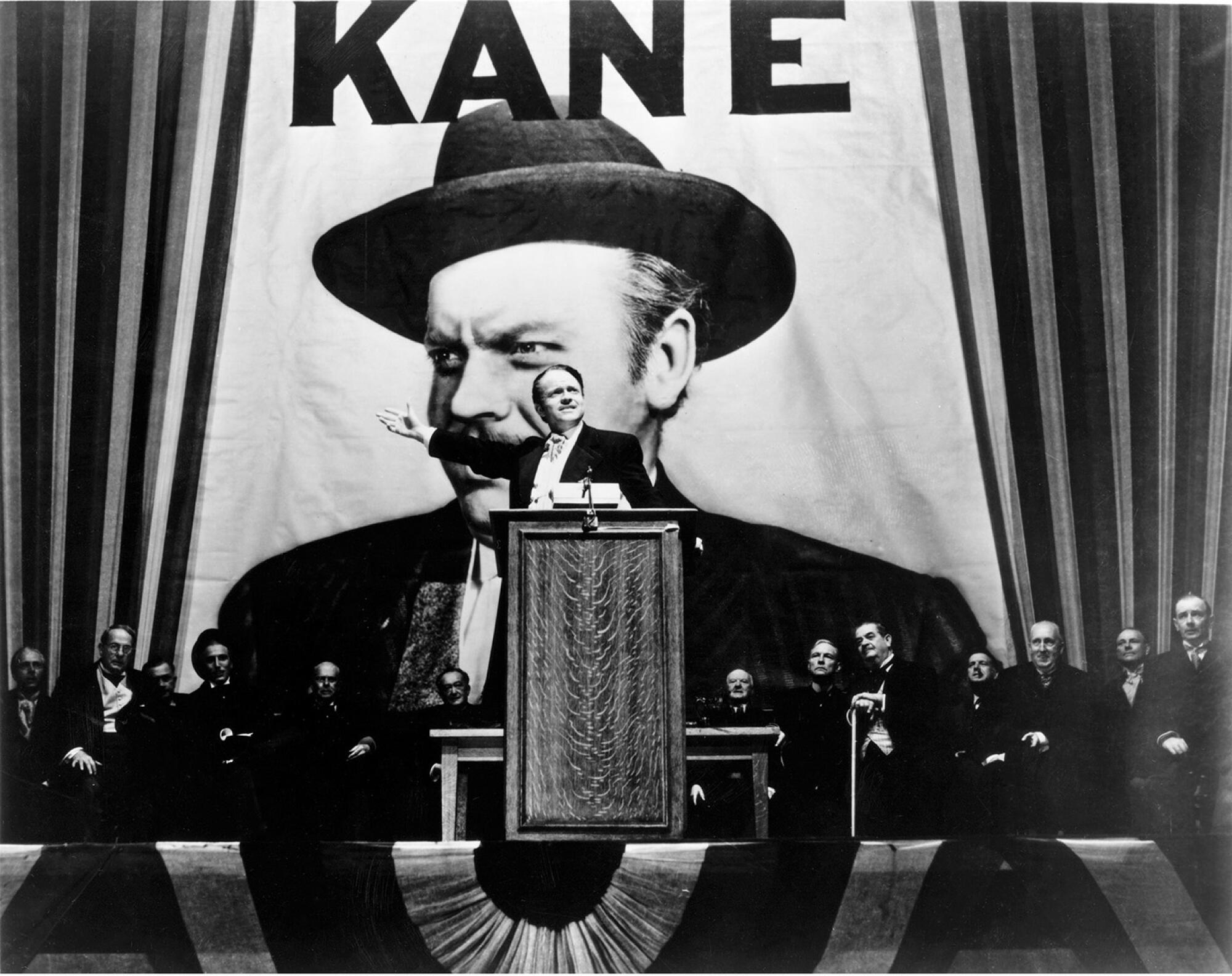
Orson Welles as Charles Foster Kane in “Citizen Kane.”
(Warner Bros.)
“Citizen Kane”
Oscar year: 1942
Backstory: Often cited as the greatest film ever made, “Citizen Kane” tells the story of Charles Foster Kane (played by Orson Welles, who co-wrote and directed), a wealthy newspaper publisher whose death becomes a global sensation. It earned nine Oscar nominations including best picture and director.
Controversy: The movie was considered a thinly veiled swipe at real-life newspaper tycoon William Randolph Hearst, who did not take kindly to the celluloid portrait. He attempted to blacklist it through negative press in his Hearst newspaper chain and, along with his defenders, pressured theaters not to show it.
And the Oscar goes to: “Citizen Kane” won a single Oscar, for original screenplay. “How Green Was My Valley” won best picture.



The iPic dine-in movie theater chain has filed for Chapter 11 bankruptcy protection and intends to pursue a sale of its assets, citing the difficult post-pandemic theatrical market.
The Boca Raton, Fla.-based company has 13 locations across the U.S., including in Pasadena and Westwood, according to a Feb. 25 filing in U.S. Bankruptcy Court in the Southern District of Florida, West Palm Beach division.
As part of the bankruptcy process, the Pasadena and Westwood theaters will be permanently closed, according to WARN Act notices filed with the state of California’s Employment Development Department.
The company came to its conclusion after “exploring a range of possible alternatives,” iPic Chief Executive Patrick Quinn said in a statement.
“We are committed to continuing our business operations with minimal impact throughout the process and will endeavor to serve our customers with the high standard of care they have come to expect from us,” he said.
The company will keep its current management to maintain day-to-day operations while it goes through the bankruptcy process, iPic said in the statement. The last day of employment for workers in its Pasadena and Westwood locations is April 28, according to a state WARN Act notice. The chain has 1,300 full- and part-time employees, with 193 workers in California.
The theatrical business, including the exhibition industry, still has not recovered from the pandemic’s effect on consumer behavior. Last year, overall box office revenue in the U.S. and Canada totaled about $8.8 billion, up just 1.6% compared with 2024. Even more troubling is that industry revenue in 2025 was down 22.1% compared with pre-pandemic 2019’s totals.
IPic noted those trends in its bankruptcy filing, describing the changes in consumer behavior as “lasting” and blaming the rise of streaming for “fundamentally” altering the movie theater business.
“These industry shifts have directly reduced box office revenues and related ancillary revenues, including food and beverage sales,” the company stated in its bankruptcy filing.
IPic also attributed its decision to rising rents and labor costs.
The company estimated it owed about $141,000 in taxes and about $2.7 million in total unsecured claims. The company’s assets were valued at about $155.3 million, the majority of which coming from theater equipment and furniture. Its liabilities totaled $113.9 million.
The chain had previously filed for bankruptcy protection in 2019.

In an expansion of its business of processing pharmaceuticals in Earth’s orbit, Varda Space Industries is renting a large El Segundo plant where toy manufacturer Mattel used to design Hot Wheels and Barbie dolls.
The plant in El Segundo’s aerospace corridor will be an extension of Varda Space Industries’ headquarters in a much smaller building on nearby Aviation Boulevard.
Varda will occupy a 205,443-square-foot industrial and office campus at 2031 E. Mariposa Ave., which will give it additional capacity to manufacture spacecraft at scale, the company said.
Originally built in the 1940s as an aircraft facility, the complex has a history as part of aerospace and defense industries that have long shaped the South Bay and is near a host of major defense and space contractors. It is also close to Los Angeles Air Force Base, headquarters to the Space Systems Command.
Workers test AstroForge’s Odin asteroid probe, which was lost in space after launch this year.
(Varda Space Industries)
Varda is one of a new generation of aerospace startups that have flourished in Southern California and the South Bay over the last several years, particularly in El Segundo, often with ties to SpaceX.
Elon Musk’s company, founded in 2002 in El Segundo, has revolutionized the industry with reusable rockets that have radically lowered the cost of lifting payloads into space. Though it has moved its headquarters to Texas, SpaceX retains large-scale operations in Hawthorne.
Varda co-founder and Chief Executive Will Bruey is a former SpaceX avionics engineer, and the company’s spacecraft are launched on SpaceX’s workhorse Falcon 9 rockets from Vandenberg Space Force Base in Santa Barbara County.
Varda makes automated labs that look like cylindrical desktop speakers, which it sends into orbit in capsules and satellite platforms it also builds. There, in microgravity, the miniature labs grow molecular crystals that are purer than those produced in Earth’s gravity for use in pharmaceuticals.
It has contracts with drug companies and also the military, which tests technology at hypersonic speeds as the capsules return to Earth.
Its fifth capsule was launched in November and returned to Earth in late January; its next mission is set in the coming weeks. Varda has more than 10 missions scheduled on Falcon 9s through 2028.
For the last several decades, the Mariposa Avenue property served as the research and development center for Mattel Toys. El Segundo has also long been a center for the toy industry as companies like to set up shop in the shadow of Mattel.
The Mattel facility “has always been an exceptional property with a legacy tied to aerospace innovation, and leasing to Varda Space Industries feels like a natural continuation of that story,” said Michael Woods, a partner at GPI Cos., which owns the property.
“We are proud to support a company that is genuinely pushing the boundaries of what’s possible, and are excited to watch Varda grow and thrive here in El Segundo,” Woods said.
As one of the country’s most active hubs of aerospace and defense innovation, El Segundo has seen its industrial property vacancy fall to 3.4% on demand from space companies, government contractors and technology startups, real estate brokerage CBRE said.
Successful startups often have to leave the neighborhood when they want to expand, real estate broker Bob Haley of CBRE said. The 9-acre Mattel facility was big enough to keep Varda in the city.
Last year, Varda subleased about 55,000 square feet of lab space from alternative protein company Beyond Meat at 888 Douglas St. in El Segundo, which it started moving into in June.
Varda will get the keys to its new building in December and spend four to eight months building production and assembly facilities as it ramps up operations. By the end of next year, it expects to have constructed 10 more spacecraft.
In the future, Varda could consolidate offices there, given its size. Currently, though, the plan is to retain all properties, creating a campus of three buildings within a mile of one another that are served by the company’s transportation services, Chief Operating Officer Jonathan Barr said.
“We already have Varda-branded shuttles running up and down Aviation Boulevard,” he said.

Ships near the Strait of Hormuz before and after attacks began
Every day, around 80 oil and gas tankers typically pass through the Strait of Hormuz, the narrow waterway off Iran’s southern coast that carries a fifth of the world’s oil and a significant amount of natural gas.
On Monday, just two oil and gas tankers appear to have crossed the strait, according to a New York Times analysis of shipping activity from Kpler, an industry data firm. Since then, one tanker passed through.
“It’s a de facto closure,” said Dan Pickering, chief investment officer of Pickering Energy Partners, a Houston financial services firm. “You’ve got a significant number of vessels on either side of the strait but no one is willing to go through.”
Tankers have been staying away from Hormuz since the U.S.-Israeli attacks on Iran that began on Saturday. A prolonged conflict could ripple broadly across the global economy, threatening the energy supplies of countries halfway around the world and stoking inflation.
International oil prices have climbed 12 percent since the fighting began, trading Tuesday around $81 a barrel, and natural gas prices have surged in Europe and in Asia.
A senior Iranian military official threatened on Monday to “set on fire” any ships traveling through the Strait of Hormuz. Vessels in the region have already come under attack. Several oil and gas facilities have also been struck or affected by nearby shelling, though the damage did not initially appear to be catastrophic.
Where ships and energy facilities have been damaged
A fire broke out Tuesday at a major energy hub in Fujairah, United Arab Emirates, from the falling debris of a downed drone, the authorities said. On Monday, Qatar halted production of liquefied natural gas, or fuel that has been cooled so that it can be transported on ships, after attacks on its facilities.
The sharp reduction in tanker traffic is reducing the supply of oil and gas to world markets, pushing up prices for both commodities. And the longer that ships stay away from the Strait of Hormuz, the less oil and gas get out to the world, which could raise prices even more.
Shipping companies have paused their tankers to protect their crew and cargo, and because insurance companies are charging significantly more to cover vessels in the conflict area.
On Tuesday, President Trump said that “if necessary,” the U.S. Navy would begin escorting tankers through the strait. He also said a U.S. government agency would begin offering “political risk insurance” to shipping lines in the area.
In addition to tankers, other large vessels regularly go through the strait, including car carriers and container ships. In normal conditions, nearly 160 make the trip each day.
Some ships in the region turn off the devices that broadcast their positions, while others transmit false locations — making it hard to give a full picture of the traffic in the strait.
The Shiva is a small oil tanker that has repeatedly faked its location, according to TankerTrackers.com, which tracks global oil shipments. It is suspected of carrying sanctioned Iranian oil, according to Kpler. The Shiva was one of the two tankers that crossed the strait on Monday.
The oil and gas that typically move through the strait come from big producing countries like Saudi Arabia, Iraq, Iran and United Arab Emirates, and are exported around the world.
Where tankers moving through the Strait have traveled
In 2024, more than 80 percent of the oil and gas transported through the Strait of Hormuz went to Asia. China, India, Japan and South Korea were the top importers, according to the U.S. Energy Information Administration.
Countries have energy stockpiles that could last them into the coming months, but a continued shutdown of the strait could damage their economies.
Several big disruptions have roiled supply chains in recent years, but the tanker standstill in the Strait of Hormuz could have an outsize impact.

Abercrombie’s Career-High 33 Lifts Augusta Past Middle Georgia in PBC Tournament Quarterfinals – Augusta University

Storm Team4 Forecast: Thick fog to clear before storms, rain Thursday night

Several Ohio schools placed under lockdown after threat

Texas Plans Second Execution of the Year

Alabama Baseball Ties Stolen Base Record In Win Over Hornets

Florida High School Football Rankings: Top 25 teams – Oct. 21

Cleary's 21 help Le Moyne down Central Connecticut State 69-64 in OT

How old is Bo Nix? What to know about Oregon quarterback ahead of 2024 NFL Draft

99th annual Pony Swim held in Virginia

Indiana Members Credit Union announced as new anchor tenant at Bottleworks District

DHS defends McLaughlin against allegations husband’s company profited millions from ad contracts: ‘Baseless’

Sánchez defies Trump in political gamble as Madrid say no to war

Satellite images show Iran school strike hit more buildings than earlier reported

US submarine sinks Iranian warship by torpedo in a first since World War II

Which oil and gas facilities in the Gulf have been attacked?
-

 World1 week ago
Exclusive: DeepSeek withholds latest AI model from US chipmakers including Nvidia, sources say
-

 Massachusetts1 week ago
Mother and daughter injured in Taunton house explosion
-

 Wisconsin3 days ago
Setting sail on iceboats across a frozen lake in Wisconsin
-

 Maryland4 days ago
AM showers Sunday in Maryland
-

 Denver, CO1 week ago
10 acres charred, 5 injured in Thornton grass fire, evacuation orders lifted
-

 Florida4 days ago
Florida man rescued after being stuck in shoulder-deep mud for days
-

 Oregon6 days ago
2026 OSAA Oregon Wrestling State Championship Results And Brackets – FloWrestling
-

 Massachusetts2 days ago
Massachusetts man awaits word from family in Iran after attacks